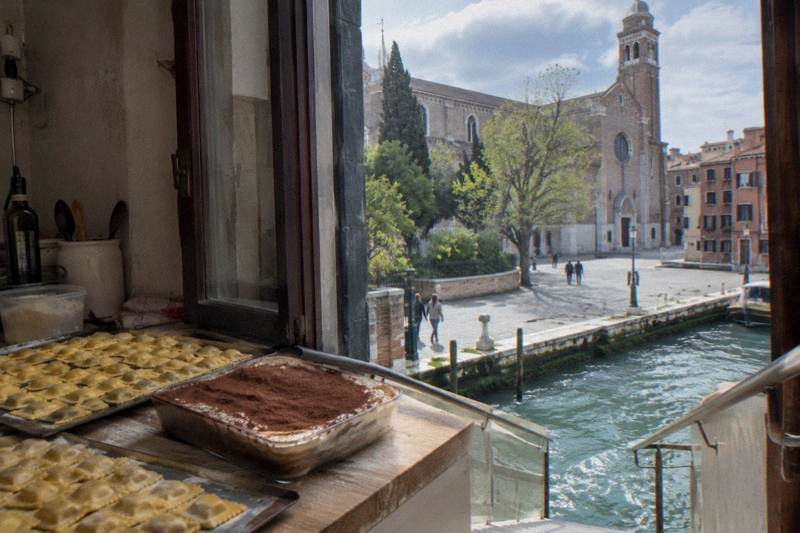
Pasta And Tiramisu Classes In Venice
Pasta and tiramisu classes are among the most-reviewed hands-on food experiences in Venice, and the range is wider than most visitors expect: shared sessions in a local host's home, market-to-table classes that start at the Pescheria, private family classes, and short dessert-focused workshops near St Mark's Square.
Short answer
A typical shared pasta and tiramisu class in Venice runs about 3 hours and covers fresh egg pasta from scratch plus tiramisu assembly, finishing with the meal you cooked, usually with wine. Shared groups are commonly capped at 12. Shared pasta and tiramisu classes listed here run from $57 to $154 per person; each class's exact price is on the live listing.
Fresh pasta and tiramisu are the two dishes Venice cooking classes teach most, and the pairing is not accidental. One is a technique dish, kneading, resting, rolling and cutting egg dough by hand, and the other is an assembly dish, mascarpone, savoiardi, espresso and cocoa layered in the right order. Together they fill roughly three hours, end with a full meal, and leave you with two recipes you can genuinely reproduce at home. This guide lays out the formats on offer, what happens during a session, and how to choose between them.
What A Pasta And Tiramisu Class In Venice Includes
Almost every pasta and tiramisu class in Venice bundles the same core elements: hands-on dough work from scratch, tiramisu assembly, and a sit-down meal of what you cooked, with wine served during the meal in most cases. What varies is the setting, a private home kitchen, a studio or a restaurant space, the group size, and whether a market visit comes first. Durations range from 2 to 4 hours.
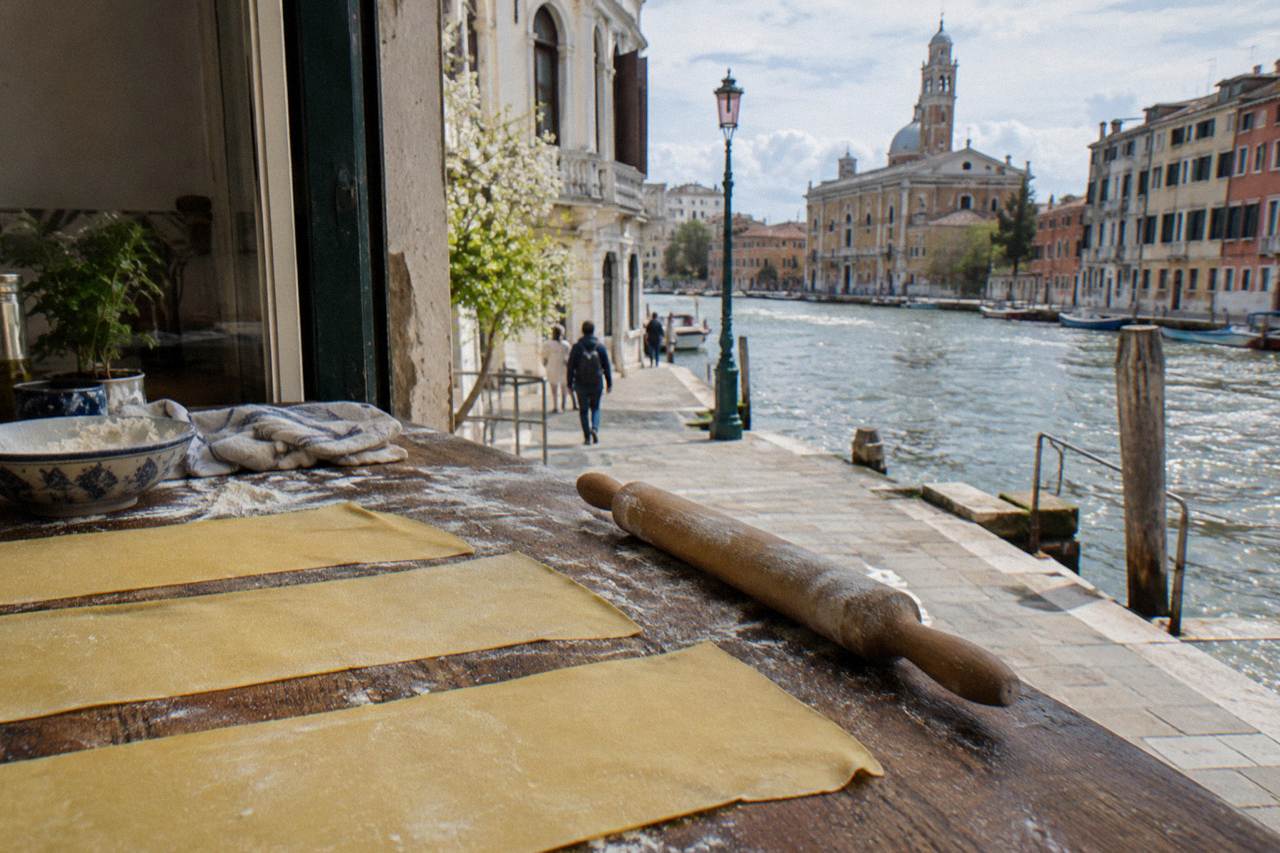
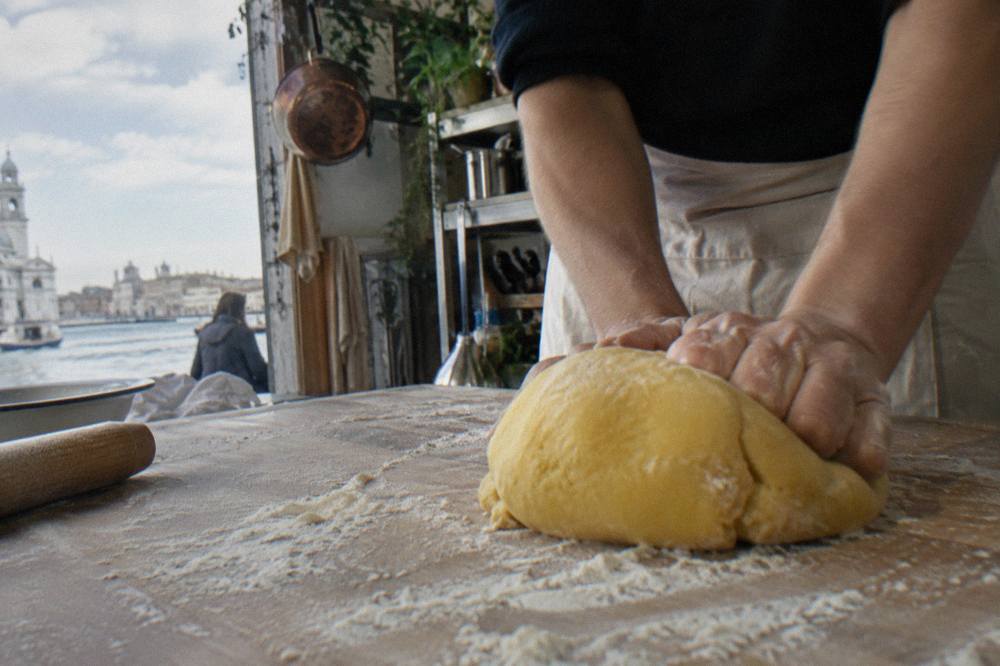
The session almost always opens with the pasta dough: flour, eggs, a pinch of salt, worked by hand on a wooden board. Venetian and Veneto traditions lean on egg-rich fresh pasta, and the shapes you roll depend on the host. Some classes teach tagliatelle and ravioli, others include regional shapes such as bigoli, the thick Venetian strand traditionally pressed through a press. Where a listing names the shapes it covers, we say so below; where it does not, the booking page is the place to confirm, since hosts rotate shapes by season and group.
The tiramisu half is lighter on technique but strict on method. You whip the mascarpone base, prepare the coffee, dip the savoiardi quickly so they soften without collapsing, and layer. Most hosts emphasize one rule that home cooks break constantly: the dipping must be fast, a second per side, or the biscuits turn to mush. Classes that finish with chilling time usually serve the tiramisu at the end of the meal; a few send you off with your portion to eat later. Check the listing if serving timing matters to you.
Wine with the meal is standard on most Venice pasta classes, though not all. The Cooking Italy pasta and tiramisu class with wine states wine in its title; other listings mention wine in the inclusions or leave it unstated. If a glass with your meal matters, read the inclusions list before booking rather than assuming.
How The Three Main Class Formats Compare
Venice pasta and tiramisu classes come in three formats: a shared class in a local host's home, a market-plus-cooking class that starts with shopping, and a private class for your own group. Shared sessions run around 3 hours and are the most common; market classes run 3 to 4 hours; private sessions cost more and follow your pace. Each format suits a different kind of traveller.
“Fantastic night at Rosa’s home! This was an incredible way to spend a delicious evening with family or friends. Rosa was warm, funny, and friendly and knows her cooking! I was with my family who are between the ages of 14-72 and all had a great time. Will come visit again the next time we are in Venice!”
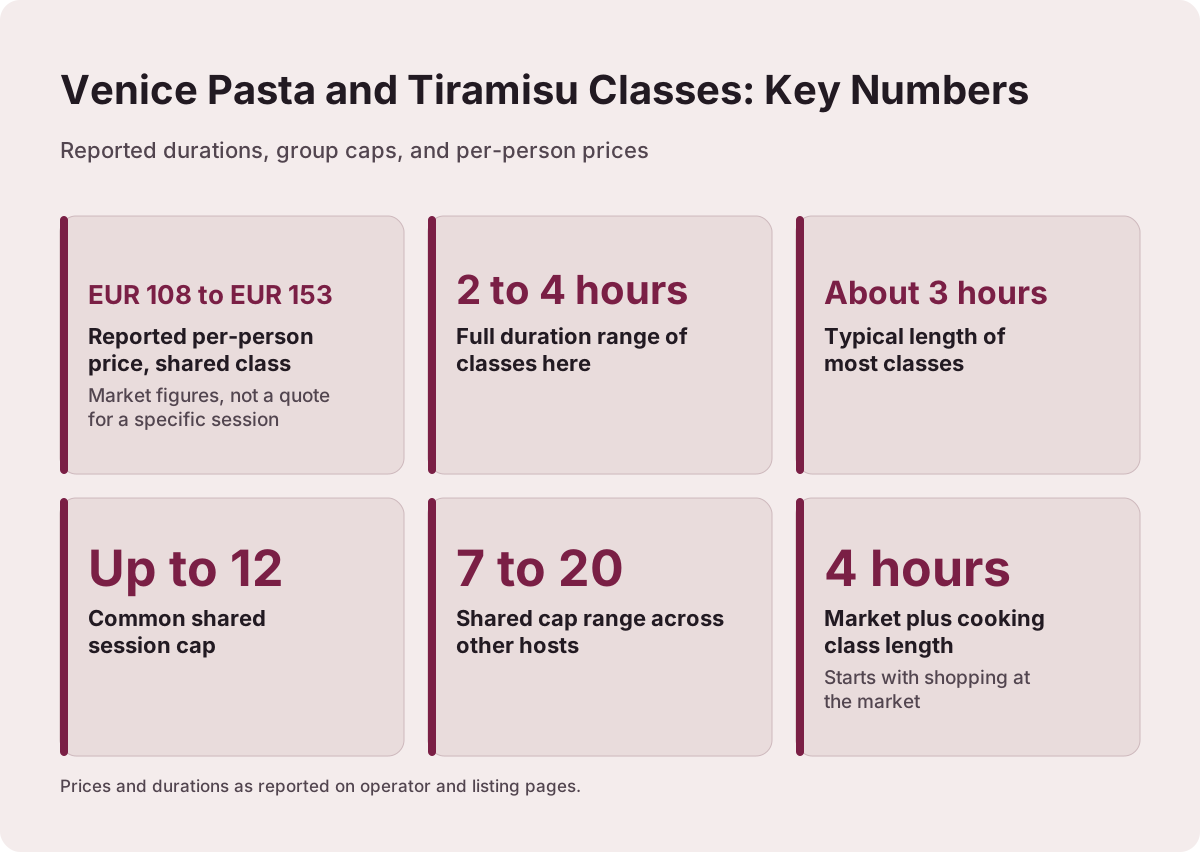
The shared home class is the classic Cesarine-style format: you cook in a Venetian's kitchen alongside up to a dozen other guests, and the host does the teaching. Operator pages for these sessions report typical class lengths of about 3 hours and shared group caps of 12, with other hosts listing maximums anywhere from 7 to 20. The attraction is the setting and the price, which sits lower than private options. The trade-off is pace: a shared class moves at the group's speed.
Market classes add a shopping leg, usually at the Rialto market, before the cooking starts. The Rialto market tour with tasting explains what that first hour looks like in detail. These run longer, 3 to 4 hours in the sessions listed here, and they teach selection as well as cooking: what a fresh sardine looks like, how to read the fish market's days. If your interest is Venetian food culture broadly, this format gives the most context.
Private classes, such as the session hosted by Cesarine listed here, are priced per group rather than per person and follow your group's pace, which makes them the fit for families with young children, celebrations, or travellers who want to ask endless questions. If you are still weighing a class against a guided food walk, the food walk or cooking class decision guide breaks down which delivers what.
| Format | Typical length | Typical group | Best for |
|---|---|---|---|
| Shared home class | About 3 hours | Up to 12 | First-timers, solo travellers, value |
| Market plus cooking class | 3 to 4 hours | Small shared groups | Food culture, market lovers |
| Private class | About 3 hours | Your group only | Families, celebrations, pacing |
The three sessions below the table cover all three formats between them: a wine-included shared class, a pasta-and-gelato session near St Mark's Square that swaps tiramisu for gelato, and a longer combined tiramisu-and-pasta workshop. Read the inclusions on each listing before choosing, because the dessert half is where they genuinely differ.
What You Cook: Pasta Shapes, Bigoli, And Tiramisu Method
Expect to make fresh egg pasta dough by hand and shape it into one or two forms, commonly tagliatelle or ravioli, then build a tiramisu from mascarpone, savoiardi and espresso. Classes that start at the market may add a seasonal Venetian element. The exact shapes vary by host and by listing, so treat the booking page's description as the definitive menu.
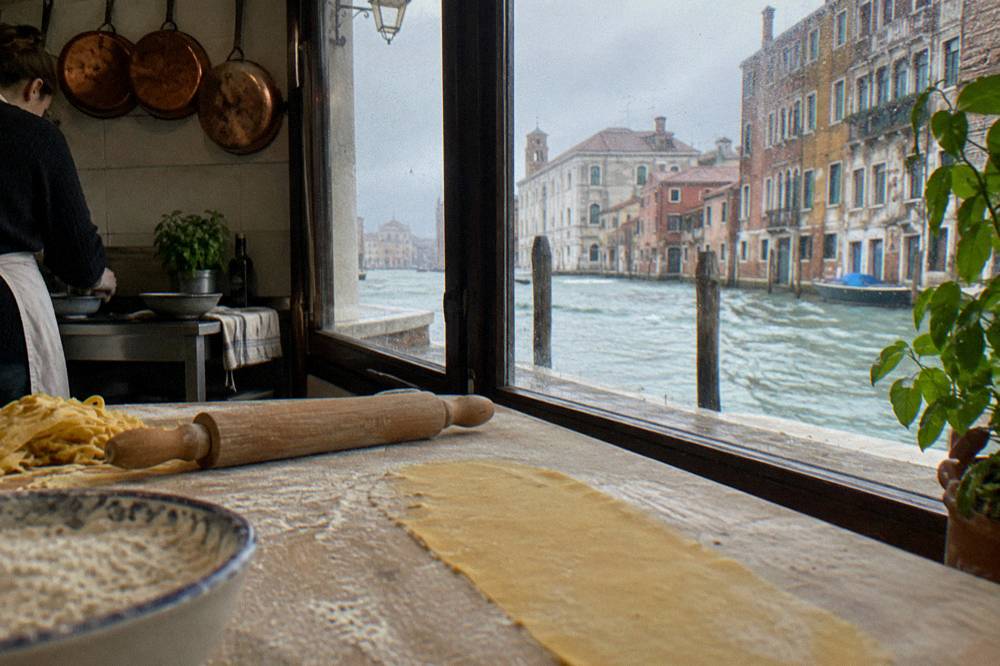
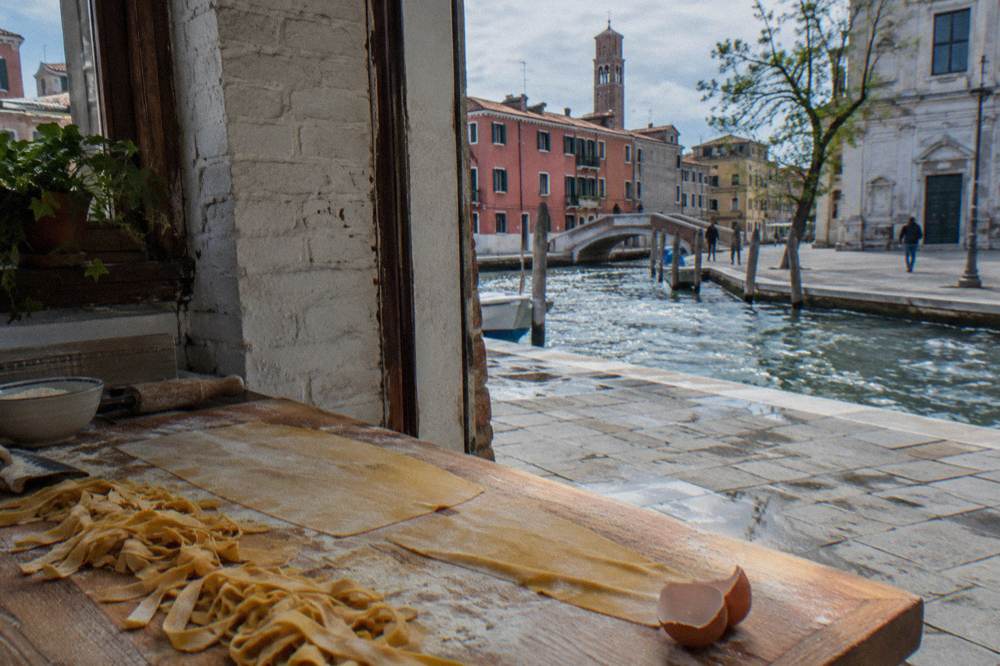
The pasta half teaches feel more than recipe. You learn when the dough has taken enough flour, how long to rest it, and how thin to roll before cutting. Hosts demonstrate, then watch you repeat the motion. Rolling by hand with a mattarello, the long rolling pin, is traditional; many kitchens use a pasta machine for the final passes to keep a class of twelve moving. The shapes named in the listings here include tagliatelle and ravioli; the Venetian classic bigoli, thick strands traditionally worked from a firmer dough, appears on some Venetian menus but is named in few class descriptions, so confirm on the booking page if a specific shape is your goal.
The tiramisu method, by contrast, is short and rule-bound. Espresso, cooled. Savoiardi dipped for about a second per side. Mascarpone cream layered while still airy. Cocoa sieved over the top, never stirred in. A good host explains why each step exists, and the reason the dessert is nearly foolproof in a class setting is that the layers forgive: even a first-timer's tiramisu tastes close to the host's if the dipping discipline holds. Most classes chill the assembled dish through the pasta course and serve it as the finale.
“Our host and culinary chef Carolyn was absolutely wonderful. We were welcomed into her beautiful family home - learning the history and skill of Italian cooking. Highly recommend Carolyn's class to anyone interested in taking your cooking skills to a higher level.”
A note on expectations: no listing here promises a specific sauce beyond what its inclusions name. Some sessions cook a simple seasonal sauce with the pasta, others serve the pasta with a prepared dressing. If a full multi-course Venetian meal is what you want, the seafood and risotto cooking guide covers the classes that go further into the savoury repertoire.
Class Length, Group Size, And Where Classes Actually Happen
Most pasta and tiramisu classes in Venice run about 3 hours, with the full range here spanning 2 to 4 hours. Shared sessions are commonly capped at 12 guests, though some hosts allow up to 20. Classes take place in hosts' home kitchens, dedicated studios, or restaurant spaces, and several listings release the exact address only after booking, a normal Venice practice.
Length tracks content. The 2 to 3 hour sessions cover pasta and tiramisu with a shorter meal; the 3.5 to 4 hour sessions either add a market visit, as with the 4-hour market tour and cooking class with a local Venetian chef, or extend the meal to a fuller spread, as with the 4-hour sessions listed here. Shorter is not worse: a 2.5-hour class, like the award-winning chef's pasta and dessert session listed here, still includes both dishes and the meal, just with less dwell time.
Group size shapes the experience more than length does. Operator pages report a 12-guest cap as the standard for shared Cesarine-style sessions, with other hosts ranging from 7 to 20. In practice, a class of 12 around one long table is social and slightly slower; a class of 7 is closer to a private lesson at a shared price. The listings state their caps where they enforce them.
The venue question trips up more bookings than any other. Several classes here are hosted in a local's home, and the listing says plainly that the exact address is shared after booking. This is not a red flag; it is how home-hosted classes protect hosts' privacy. Studios and restaurant venues usually publish a meeting point, often near a landmark such as the Rialto market or St Mark's Square. Read the meeting-point field on the booking page before the day, and screenshot it.
For travellers who want the market leg folded in, the market tour and cooking class with a local Venetian chef runs 4 hours and starts with shopping. Note the timing trap if you book any market-linked class: the Rialto fish market operates Tuesday to Saturday, 7:00 to 14:00, closed Sunday and Monday, and the produce market runs Monday to Saturday, 7:00 to 20:00, per the official Venezia Unica listing. A Monday market class will see produce but no fish.
Which Class Fits Which Traveller
Solo travellers and couples wanting the classic experience should book a shared 3-hour home class with wine included. Families with children do better in a private session, where pacing bends to the kids. Travellers short on time should pick a 2 to 2.5-hour class near their hotel base, and food obsessives should take a market-plus-cooking class. The dessert half, tiramisu versus gelato, is the final tiebreaker.
The decision usually comes down to three questions. First, how much time do you have? Venice rewards slow mornings, and a class eats a half-day block; a 2.5-hour session leaves room for both. Second, who is in your party? A shared class of twelve with a tired six-year-old is hard on everyone; private exists for exactly that. Third, which dessert do you actually want to learn? Tiramisu is the transferable skill; gelato, taught in the session near St Mark's Square, is fun but needs a machine at home.
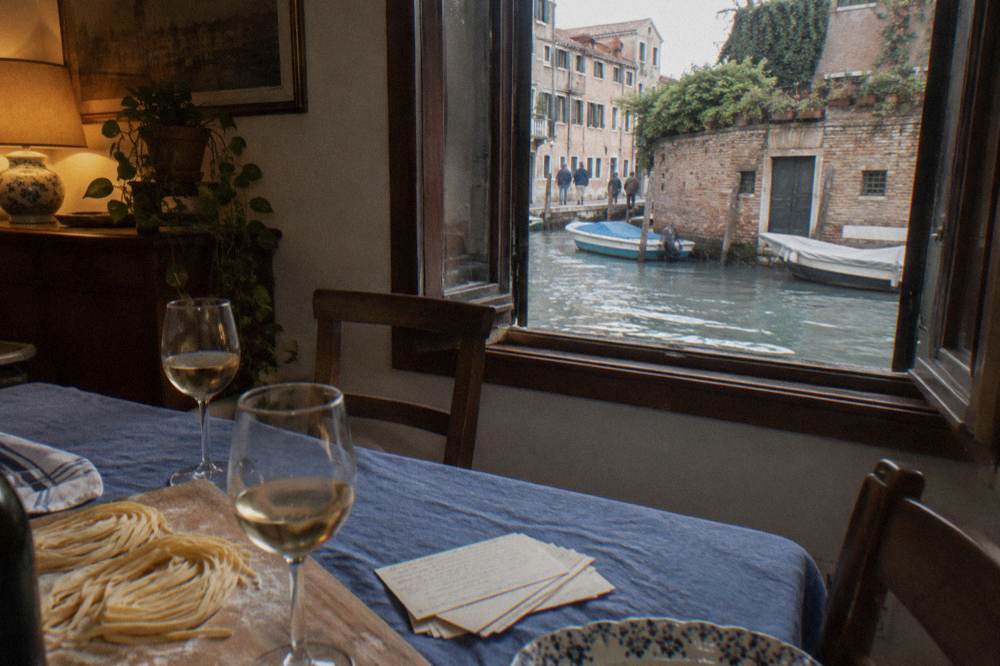
Budget is the fourth, quieter question. Reported per-person prices for shared pasta and tiramisu classes in Venice run from $57 to $154 on operator and listing pages, with private options varying by group size. Those are reported market figures, not a quote for any specific session here; each class's live price is on its own booking page, and several listings run limited-time discounts. Never compare a shared per-person price against a private per-group price: they are different products.
| Traveller | Format to pick | Session here that fits |
|---|---|---|
| Solo or couple, first visit | Shared 3-hour class with wine | Cooking Italy pasta and tiramisu class with wine |
| Family with children | Private class, own pace | Cesarine private pasta and tiramisu class |
| Short on time | 2 to 2.5-hour session | Award-winning chef's pasta and dessert class |
| Want gelato too | Pasta plus gelato near St Mark's | Pasta making and gelato session |
| Market lover | 4-hour market plus cooking | Market tour and cooking class with a local chef |
One more fit factor: evening people should check start times carefully. Most pasta classes here run daytime slots, and only some listings offer evening sessions. If your Venice days are already booked with galleries and lagoon trips, filter the booking page's departure times before falling for a listing.
What The Day Looks Like Start To Finish
A standard session runs: arrival and aprons, about 15 minutes; pasta dough and shaping, roughly 90 minutes; tiramisu assembly while the pasta rests, about 30 minutes; cooking and sitting down to eat, the final hour. Wine, where included, arrives with the meal. Hosts handle cleanup. Total elapsed time, 2.5 to 4 hours depending on the class.
Arrival is low-drama. You meet at the stated point, often a campo or a landmark near the venue, and the host walks the group in. Home-hosted classes send the address after booking, so allow ten extra minutes for navigation; Venice addresses follow sestiere and number logic that confuses every map app at least once. The host supplies aprons and stations the group around the work surface.
“My kids and I did this pasta making class. It was very fun and the instructor was friendly and patient. We had linguine with tomato sauce and two different ravioli (we just made the pasta; not the sauce or filling). Only wish we would have gotten written instructions on how to make it at home (she told us we would receive it but we never did).”
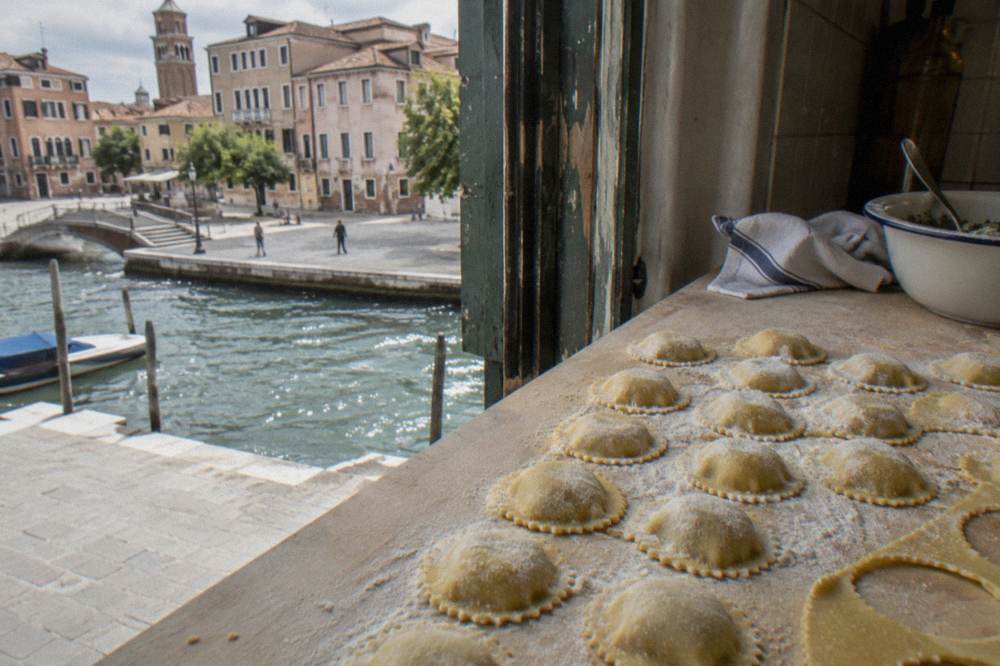
The dough hour is the heart of it. You measure flour, crack eggs, and work the dough by hand until it stops sticking and starts feeling alive, which is the moment every class waits for. Then rolling, cutting, and shaping. In shared classes the host circulates; nobody's ravioli has to be perfect, and the deliberately rustic ones often hold sauce better anyway. This is also when the class's social side peaks: twelve strangers elbow-deep in flour talk more in ninety minutes than they would in three days of sightseeing together.
Tiramisu assembly slots into the pasta's rest period, a deliberate piece of scheduling. While the dough relaxes, you whip, dip and layer. The assembled dessert goes into the fridge, the pasta gets cooked, and the group sits down. The meal is the payoff: your tagliatelle with sauce, wine where the listing includes it, and the tiramisu cool and set at the end. Hosts typically email the recipe afterward, a detail worth confirming on the booking page if cooking it again at home is part of your plan.
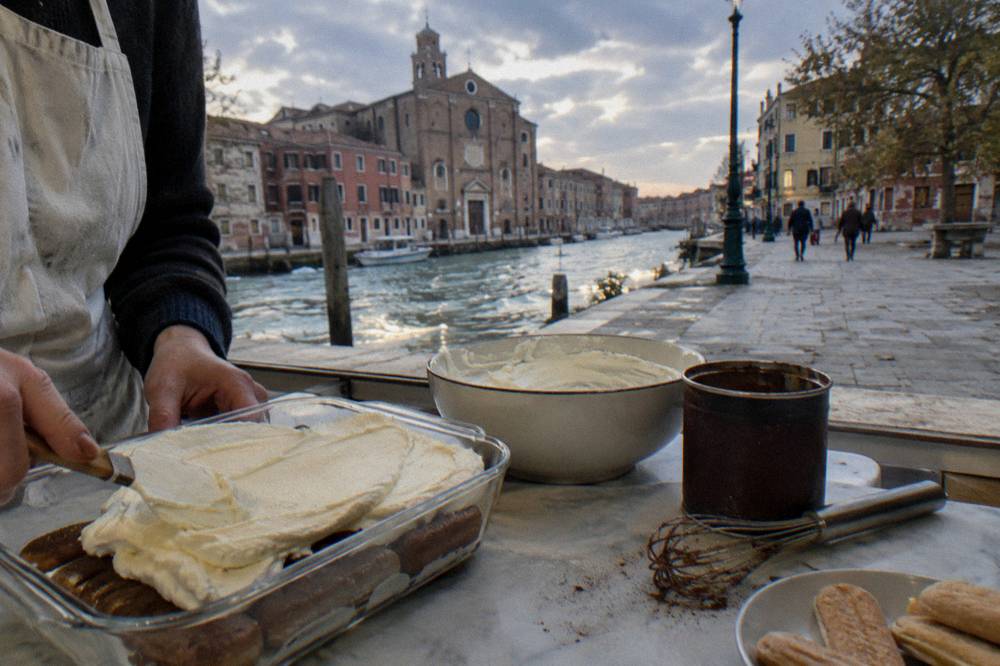
For a sense of how a home session feels in practice, the pasta and tiramisu class at a local's home runs 2 to 3 hours and keeps the group in a Venetian kitchen for the whole session. The authentic home cooking class with a three-course meal runs longer at 3 hours 30 minutes and adds a fuller savoury spread for travellers who want more than two dishes.
Booking, Prices, Cancellations, And Dietary Questions
Book pasta classes one to several weeks ahead for spring through autumn dates, since shared sessions cap at roughly a dozen seats. Prices are per person on shared sessions and per group on private ones, shown on each live listing. Vegetarian needs are often workable but must be raised with the operator before booking, since listings do not uniformly state dietary accommodations. Free cancellation up to 24 hours applies to the classes listed here.
On dietary needs, be direct and early. The listings here do not uniformly state vegetarian, vegan or gluten-free suitability, and the absence of a statement means unknown, not no. Pasta class menus are wheat, egg and dairy by nature, so gluten-free in particular needs a host who runs a dedicated session; message the operator through the booking page before you pay. Nut allergies and the espresso in tiramisu are likewise worth flagging in advance.
On money: pay attention to what the price basis is. Shared classes quote per person; private classes often quote per group, which looks higher and is not. A listing that reads "from" a price usually varies it by date or group size. The classes compared here state their prices, inclusions and cancellation terms on their own booking pages, and those pages are the final word before you commit. For the wider question of what a Venice food experience costs across formats, Venice Food Tours keeps a dedicated cost guide that puts classes next to food walks and tastings.
On timing your booking, the two pinch points are group caps and Venice's own calendar. A shared class with 12 seats sells out on peak weekends even though the city's group-size rules, which cap guided tour groups at 25 in the historic centre as reported, do not bind small cooking classes. And a practical note for day-trippers: the 2026 day-visitor access fee trial ended, and per the official access fee page no fee applies as of 27 July 2026; it returns in 2027 with dates already listed and amounts not yet published, so check the official page if your visit falls on a 2027 date. Overnight guests pay the separate tourist tax through their accommodation, reported at EUR 0.10 to EUR 5.00 per person per night depending on the property.
| Question | Answer | Where to confirm |
|---|---|---|
| How far ahead to book | Weeks ahead in peak season; seats are few | Live listing availability |
| Price basis | Per person shared; per group private | Each listing's price line |
| Dietary accommodations | Not stated on all listings; ask first | Message operator before booking |
| Cancellation | Free up to 24 hours on classes listed here | Listing's cancellation terms |
| Exact venue address | Some hosts share it after booking | Post-booking confirmation |
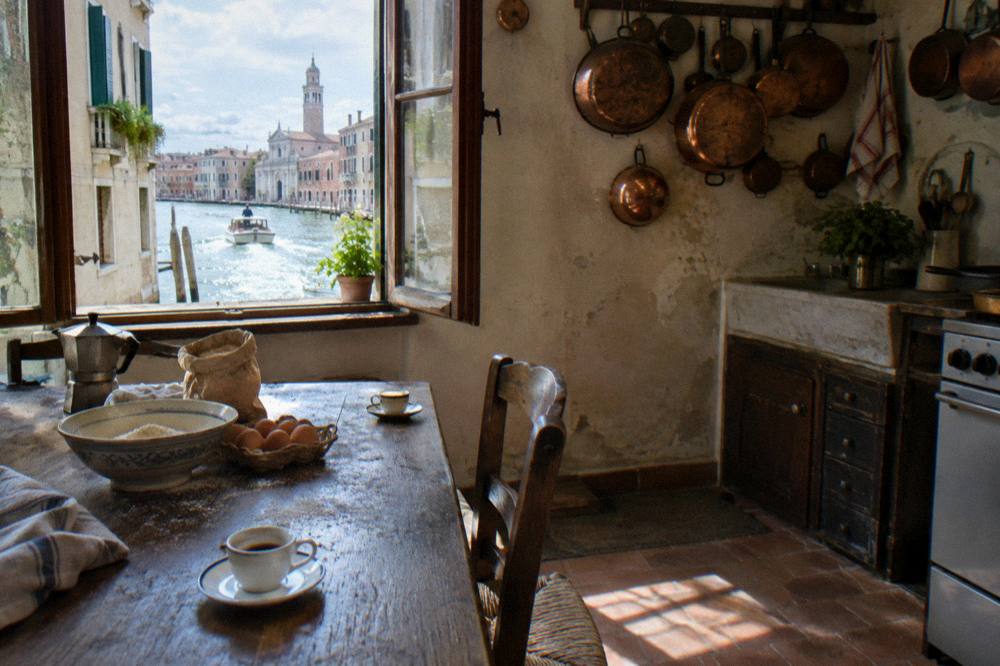
A closing thought on choosing well. The best predictor of a good class is not price or platform but fit: a market class for the curious, a private session for families, a short class for the time-poor, and a wine-included shared session for everyone else. Pick the format first, then the listing. For the broader map of class types beyond pasta and tiramisu, from risotto sessions to full Venetian home dinners, the Venice cooking class guide covers the whole field.
Common Questions About Pasta And Tiramisu Classes In Venice
How Long Is A Pasta And Tiramisu Class In Venice?
Most shared sessions run about 3 hours, with the range across Venice listings spanning 2 to 4 hours. The shorter classes still cover both dishes plus the meal; the 4-hour sessions add a market visit or a fuller menu.
Do You Eat What You Make In The Class?
Yes, on every class listed here the session ends with a sit-down meal of the pasta you shaped, and the tiramisu is served after chilling through the meal. Wine is included where the listing states it.
Is A Pasta Making Class In Venice Suitable For Beginners?
Completely. The classes assume no prior skill; hosts demonstrate each step, from kneading to rolling to layering tiramisu, and the recipes are chosen precisely because first-timers can finish them in one session.
Can Children Join A Pasta And Tiramisu Class?
Many hosts welcome children, and family sessions are a recognized format. Pacing in a shared class of twelve can be demanding for young kids, so a private session is usually the better fit; check the listing's minimum-age notes first.
How Much Does A Pasta And Tiramisu Class In Venice Cost?
Reported per-person prices for shared sessions run from $57 to $154, with private classes priced per group. Each specific class's live price, and any limited-time discount, is shown on its own booking page.
Where Do Venice Cooking Classes Take Place?
In hosts' home kitchens, dedicated studios, or restaurant spaces, depending on the class. Several home-hosted listings share the exact address only after booking; studio and restaurant classes publish a meeting point, often near the Rialto market or St Mark's Square.