Seafood And Risotto Cooking Classes In Venice
Venetian cooking runs through the fish market and the rice pot. Here is how the seafood-minded cooking classes in the city differ, what a market-to-table day looks like, and which format fits the way you like to cook.
Short answer
Most seafood cooking classes in Venice run 3 to 4 hours and pair a Rialto market visit with hands-on cooking in a home kitchen or studio. The Venetian sailor's class runs 3 hours, the local chef's version 4, and the Rialto market, cooking class and lunch option 4. Prices are on each listing.
What A Seafood Cooking Class In Venice Actually Covers
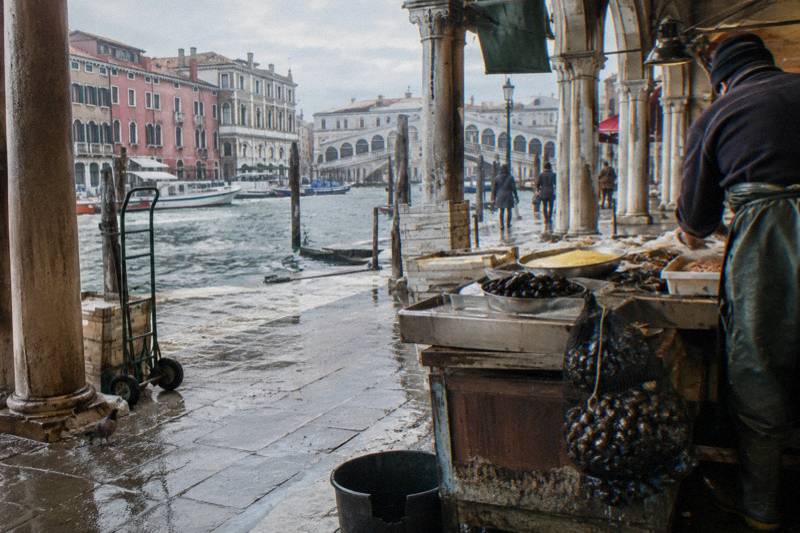
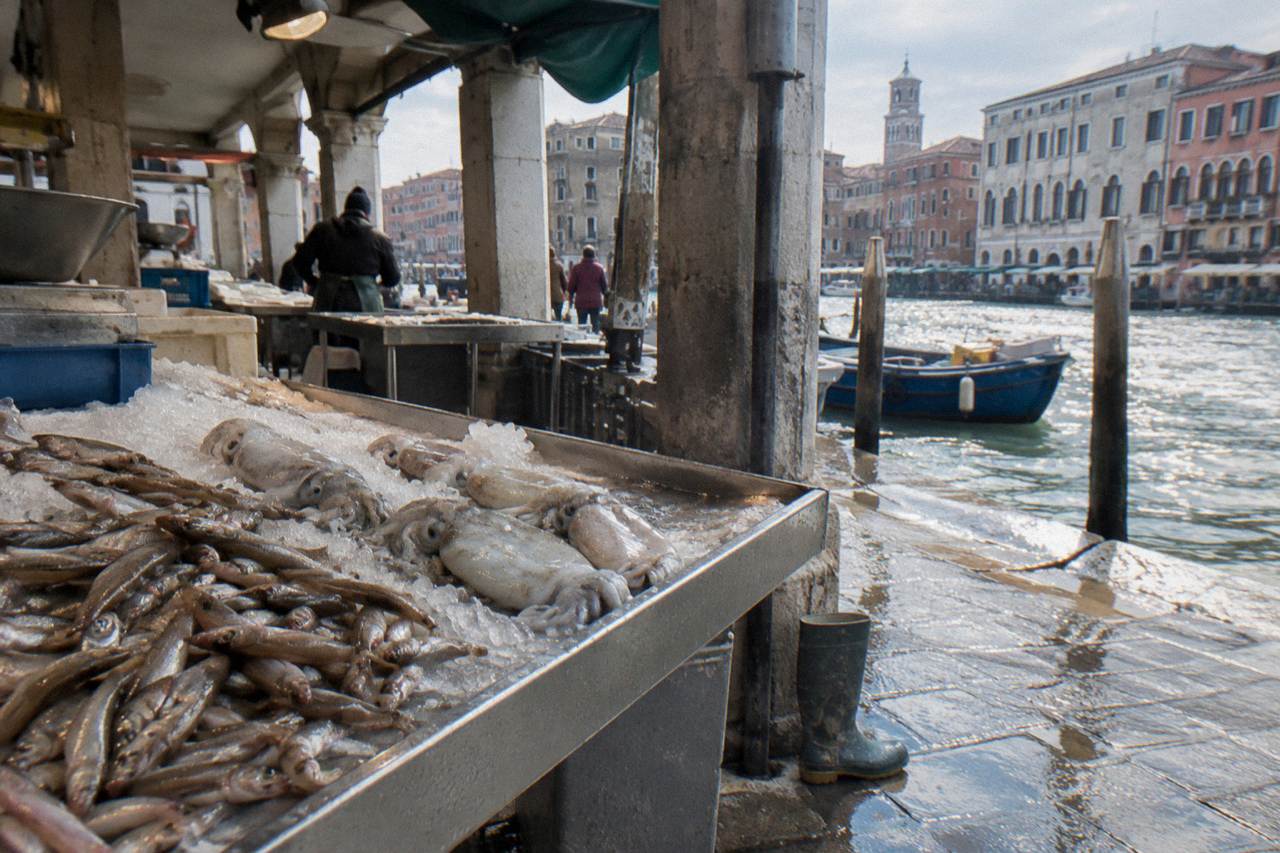
A seafood class in Venice is usually a two-part day: a guided walk through the Rialto fish and produce stalls, then hands-on cooking in a host's home kitchen or a studio, finishing with the meal you cooked, and in several cases wine poured alongside. Durations across the classes compared here run from 3 to 4 hours, and the cooking half centers on pasta, risotto and lagoon fish rather than generic Italian favorites. The format is older than it looks. Venice has always cooked from its market: the Pescheria has sold lagoon and Adriatic catch under its loggias for centuries, and the dishes the classes teach, risotto al nero di seppia, baccalà mantecato, sarde in saor, are market dishes first and restaurant dishes second. That is why nearly every serious class starts at Rialto rather than in the kitchen.
The classes compared on this page come in three shapes. Some are hosted in a local's home, where a small group shops and then cooks in a domestic kitchen. Some run in a dedicated studio near the centre. One, the class with a Venetian sailor, is led from start to finish by a host billed as a Venetian sailor. Each listing states where the cooking happens; several say the exact address is shared after booking, which is normal for home-hosted experiences and worth knowing before you assume a venue.
What the day produces also varies. The three market-plus-cooking options all include the meal you cook; whether wine is poured is stated per listing, so check the booking page for the class you have in mind rather than assuming. If you want a broader look at class types first, the Venice cooking class format guide breaks down pasta classes, market classes and home classes side by side.
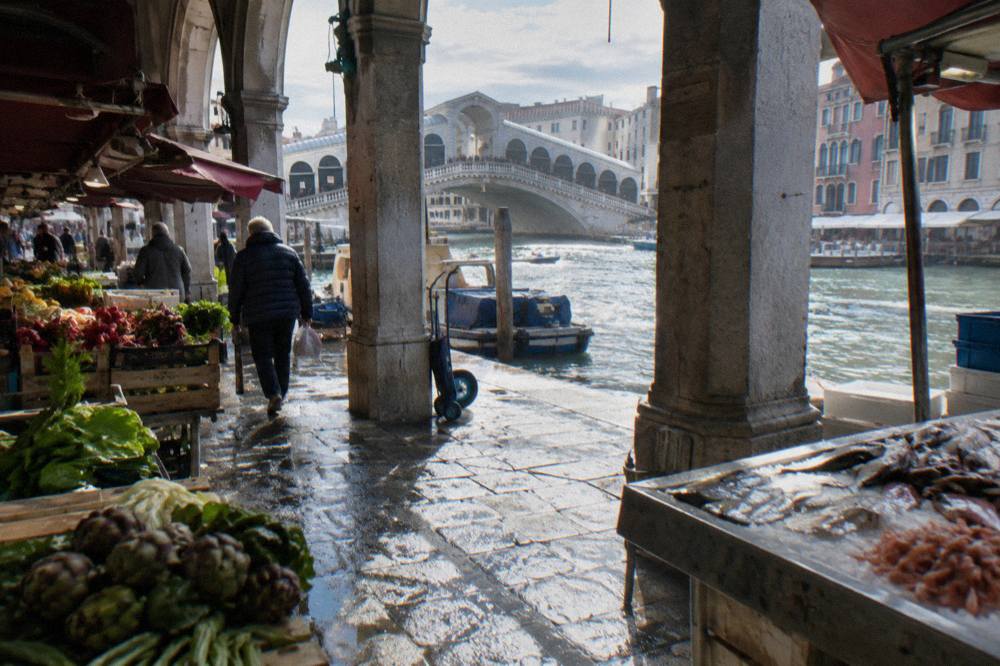
The one thing every version shares is the market education. Even a confident home cook rarely knows how to read a Venetian fish stall, what a gò is, or when the soft-shell moleche season falls. That half of the day is often the part reviewers mention first, and it is the half you cannot replicate at home. A good host teaches you how the stalls are organized, which fish are lagoon and which are Adriatic, and how a Venetian cook decides what to cook based on what the morning gave, a decision process that predates every menu in the city.
For first-time visitors there is also a confidence dividend. Shopping the Pescheria on your own, with no Italian and no idea what a canocchia is, is intimidating; doing it behind a local who is buying for your own class turns the same stalls into a demonstration. Most travelers leave the market half able to order fish on their own for the rest of the trip, which is worth as much as the recipes.
“My kids and I did this pasta making class. It was very fun and the instructor was friendly and patient. We had linguine with tomato sauce and two different ravioli (we just made the pasta; not the sauce or filling). Only wish we would have gotten written instructions on how to make it at home (she told us we would receive it but we never did).”
The Sailor's Class: A Market Day With A Lagoon Cook
The Market Tour and Cooking Class with a Venetian Sailor runs 3 hours and frames the day around the lagoon itself: you shop the Rialto market with a host who styles himself a Venetian sailor, in a private class, then cook and eat what the stalls gave you. It is the class most rooted in the working lagoon, and its shorter runtime makes it the easiest to fit around a morning or an afternoon of sightseeing. The concept is simple and unusually Venetian. Instead of a restaurant chef, the host is a sailor, and the through-line of the class is how the lagoon's own catch and produce become the city's cooking. The listing describes a market visit followed by hands-on cooking and the meal at the end; the exact dishes depend on the market that day, which is the honest way a market-driven class has to work.
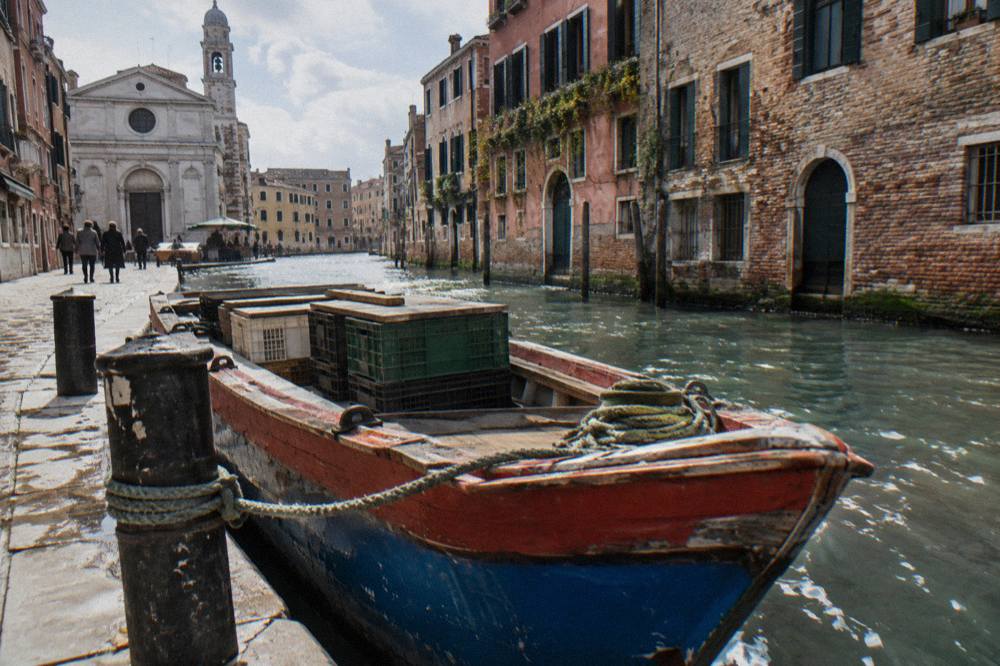
Timing matters for this one, as it does for every Rialto-based class. The fish market, the Pescheria, operates Tuesday to Saturday from 7:00 to 14:00 and is closed Sunday and Monday, per the official Venezia Unica listing, and tour listings themselves warn that it shuts on Italian holidays too. The produce stalls at the Erbaria run Monday to Saturday, 7:00 to 20:00, closed Sunday. Book a morning start and you see both markets doing real trade; book an afternoon slot and you will cook, but the fish counters will be closing or closed. Our Rialto market hours page covers the timing trade-offs in detail.
The market's own schedule is worth having in one place, because it drives every decision on this page:
| Market | Location | Days and hours | Closed |
|---|---|---|---|
| Pescheria (fish market) | San Polo, Campo de le Becarie, Loggia Grande e Piccola | Tuesday to Saturday, 7:00 to 14:00 | Sunday, Monday, Italian holidays |
| Erbaria (produce market) | San Polo, Casaria, Campo de la Pescheria | Monday to Saturday, 7:00 to 20:00 | Sunday |
Who fits this class best: travelers who want the lagoon story, not just technique, and anyone with a half-day budget of time. If your interest is really the market half rather than the cooking half, a dedicated Rialto market tour with tastings does the shopping and eating without the stove.
How The Market-To-Table Classes Compare
Of the three market-plus-cooking options compared here, the Venetian sailor's class runs 3 hours, the local Venetian chef's version runs 4 hours, and the Rialto market tour with cooking class and lunch runs 4 hours. All three include the meal you cook; prices vary by date and group size and are shown on each listing rather than fixed. The real choice is the host: sailor, professional chef, or a class built around a seated lunch.
The table below is the decision core of this page. Figures are the durations and formats as each listing states them; where a detail is not stated, the answer is to check the booking page before you book.
| Class | Host format | Duration | Market visit | Meal included |
|---|---|---|---|---|
| Market Tour and Cooking Class with a Venetian Sailor | Hosted by a working sailor | 3 hours | Yes, Rialto | Yes, what you cook |
| Market Tour and Cooking Class with a Local Venetian Chef | Professional chef-led | 4 hours | Yes, Rialto | Yes, what you cook |
| Venice: Rialto Market Tour, Cooking Class, and Lunch | Class built around a seated lunch | 4 hours | Yes, Rialto | Yes, sit-down lunch |
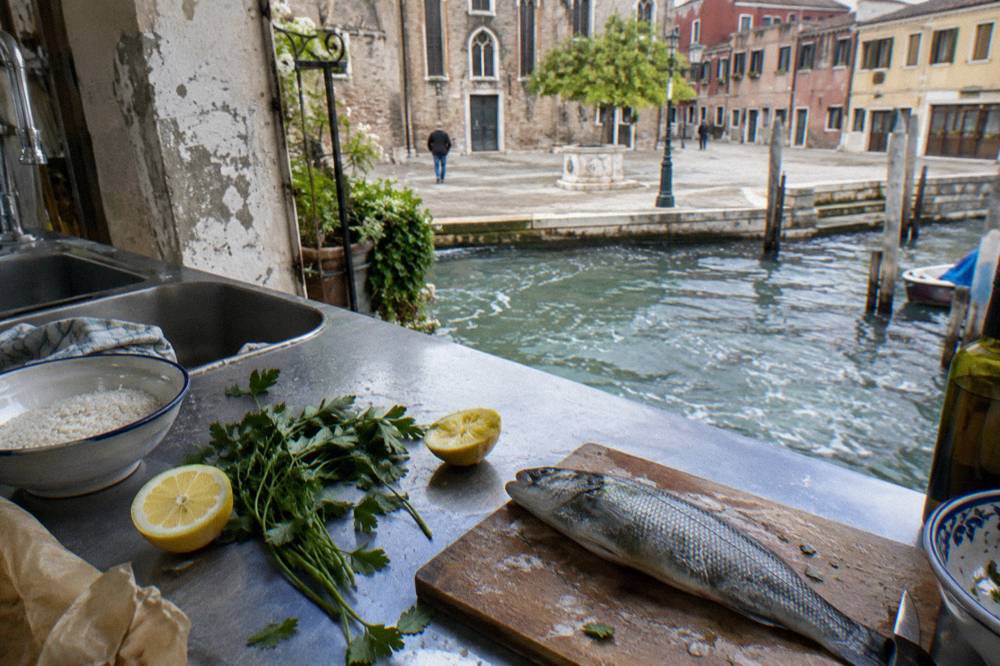
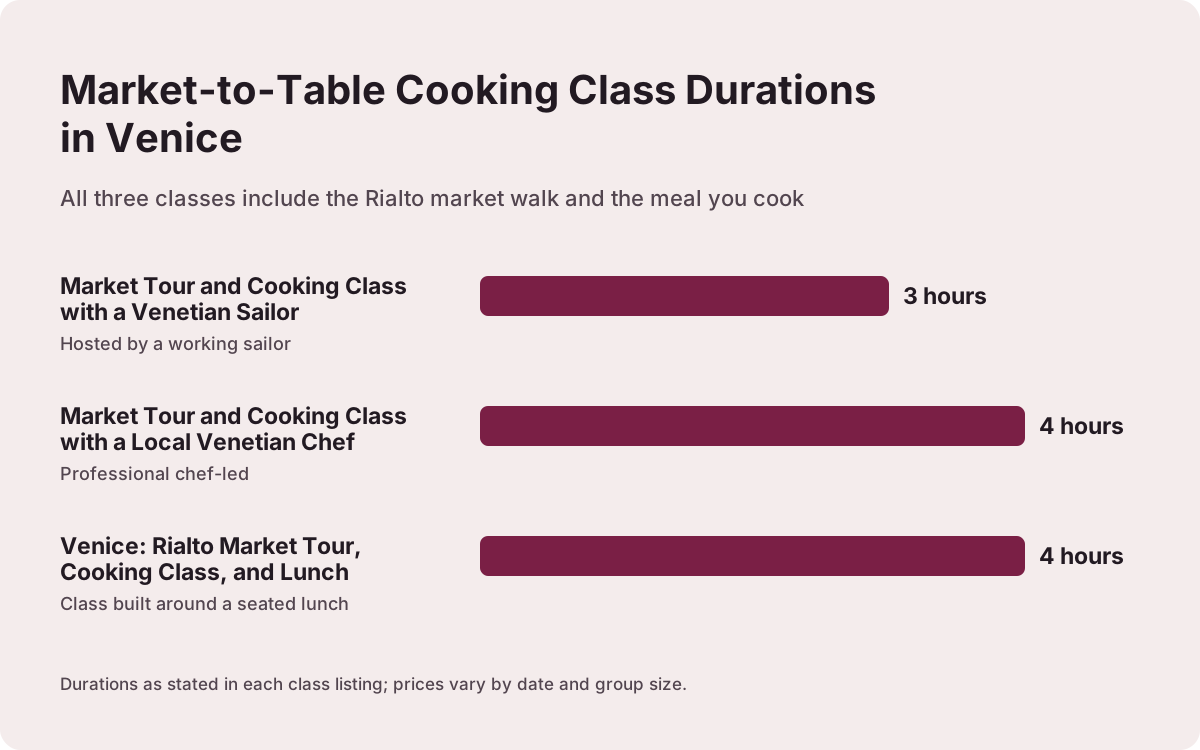
The four-hour options buy you a slower market walk and more cooking time, which matters if risotto is your reason for booking. Proper Venetian risotto is stirred in stages, rested, and finished off the heat, and a rushed class compresses exactly the parts that make the dish. Shared class sizes for pasta and tiramisu formats in Venice commonly cap around 12 guests per the 2026 operator listings, and guided groups citywide are capped at 25 by municipal rule, with loudspeakers banned and guides on headsets; a given class's own size cap is stated on its listing, so read it there.
One scheduling note that surprises people: none of this requires an access-fee payment right now. The 2026 day-visitor access-fee trial ended, and per the official page no fee applies from 27 July 2026, with 2027 arrangements to be announced by 31 December 2026. Check the official access-fee page closer to a 2027 trip.
If four hours in a kitchen sounds like too much stove time for one day, the market-to-table classes are not the only shapes available. The home-hosted formats below trade the market walk for a longer, calmer cooking session around one table, and the city's pasta-and-tiramisu classes occupy the middle ground for travelers whose priority is technique over lagoon ingredients.
What Makes Venetian Risotto And Seafood Cooking Distinct
Venetian risotto differs from the inland versions in its broths and its rice-to-lagoon logic: the classic local dishes draw on cuttlefish ink, goby, and salt-cod, ingredients that only make sense in a city built on a fishing lagoon. The most distinctly local version is risotto di gò, a Burano specialty built on lagoon goby fish and its stock, a dish you will not find cooked this way outside the northern lagoon. The gò is a small goby that lives in the lagoon's shallows, and on Burano it gives its name and its broth to the island's signature risotto, alla buranella. It is a poor-cooking dish turned emblem: a fish once used because it was cheap and everywhere, now the thing people cross the lagoon to eat. The Burano and Murano food stops guide covers where it fits in an island day.
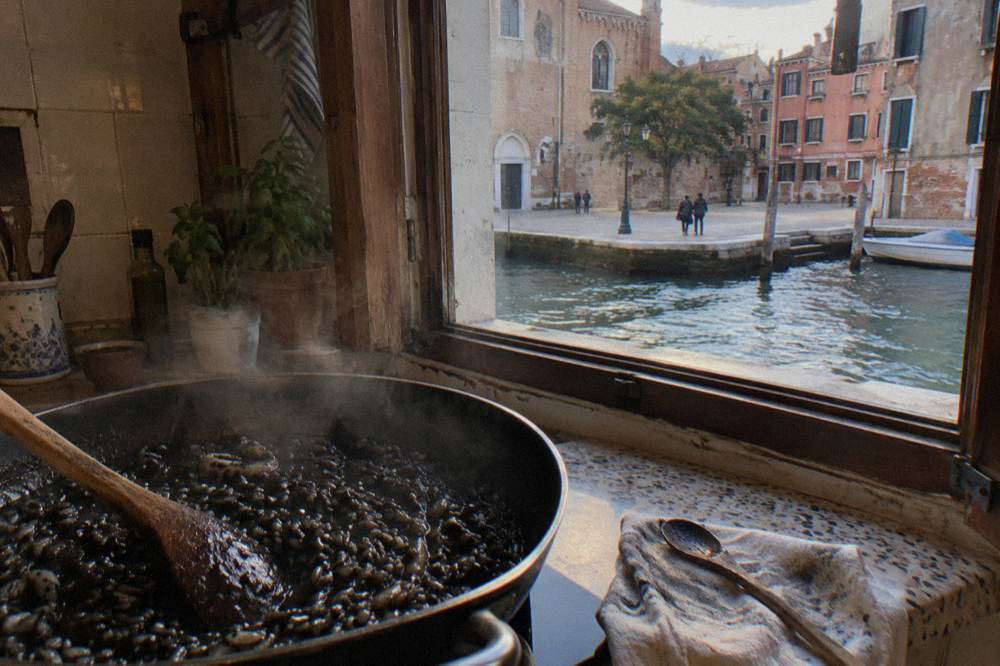
The other anchors of the Venetian seafood repertoire are baccalà mantecato, salt cod whipped with oil into a spread for polenta, and sarde in saor, sardines in a sweet-and-sour onion and raisin preparation born of preservation at sea. Whether a specific class teaches any one of these depends on the day's market and the host's menu; the listings describe the general format, and the honest instruction is to check the booking page or message the operator if one dish is the reason you are booking. A class that promises a fixed menu is not promising you the market.
Seasonality runs deeper here than on most Italian menus. Spring brings the small violet castraure artichokes from Sant'Erasmo, the lagoon's market-garden island, harvested for only a short window. Spring and autumn bring moleche, soft-shell crabs at their molt. A market-driven class in the right week quietly becomes a lesson in why Venetian cooking changes month to month, and the Venice food by season guide maps the calendar.
The Official page of the Comune di Venezia listing the city's daily markets, including both Rialto food markets, is the reference point for what a class's market walk is walking through: the municipal daily markets listing.
Meeting Points, Group Sizes And What Is Included
Plan on meeting at or near the Rialto market for every class that includes the market walk, and expect the exact kitchen address only after booking where the listing says so; home-hosted classes routinely withhold the address until confirmation. All three market-to-table classes include the meal, durations run 3 to 4 hours, and per-person pricing varies by date and group size on each listing. The meeting-point detail is the one travelers most often get wrong. A class that starts at the Pescheria at 9:00 means arriving at a working market at peak trade, which is the point, but it also means knowing which loggia, the Grande or the Piccola, before you go. Confirm the meeting spot on the booking page the day before; operators message it with the confirmation.
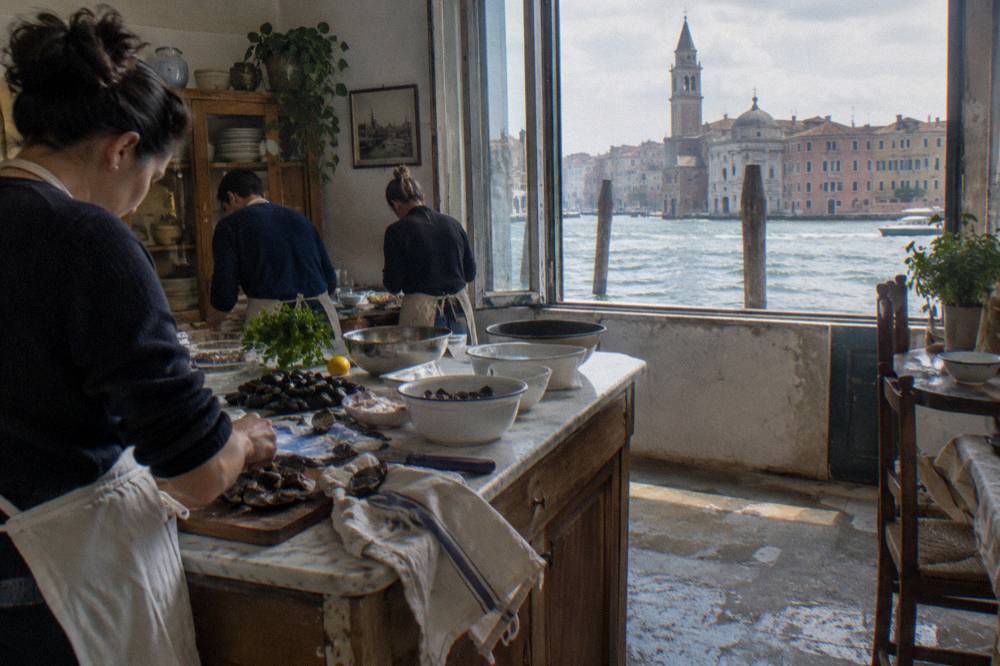
On inclusions, the practical checklist is short. Look for four flags on each listing: whether wine is served with the meal, whether the market purchases are covered in the price, whether the class is shared or private, and the group cap. The listings compared here state each of these, and where one does not, the answer is a message to the operator before booking rather than an assumption. Dietary needs work the same way: no listing here is described as vegetarian, vegan or gluten-free, so if that matters, ask first.
| What to confirm | Why it matters | Where it is answered |
|---|---|---|
| Wine with the meal | Not every class pours wine; assuming it is the most common letdown | The listing's inclusions section |
| Market purchases covered | Some prices include the shopping, some collect it separately | The listing's price basis note |
| Shared or private | Private formats cost more per person and book out earlier | The listing's format description |
| Group cap | Shared pasta formats commonly cap around 12; caps vary by host | The listing's group-size line |
| Exact kitchen address | Home-hosted classes often share it only after booking | The operator's confirmation message |
| Dietary accommodations | No listing here is described as vegetarian, vegan or gluten-free | Message the operator before booking |
Getting to Rialto is simple from almost anywhere in the historic centre on foot, and from the islands by vaporetto: a single 75-minute ACTV ticket is reported at around EUR 9.50, with a 24-hour pass reported at around EUR 25, per the operator's current fares, worth checking before you buy. The official network page is the ACTV ticket and pass information.
Two smaller logistics notes. Standing at a bacaro counter avoids the coperto cover charge that sit-down meals can carry, typically around EUR 1 to 4 where applied, per recent reporting, useful if you are grazing after class. And Venice's municipal rules ban drinking from glass containers in public streets outside permitted seating, as reported in the current regulation, so any leftover wine stays in the kitchen.
Choosing Between A Seafood Class And Other Food Experiences
Book a seafood cooking class if the cooking is the point: you want to handle the fish, stir the risotto, and take the technique home. Book a guided food walk instead if you would rather taste the city's repertoire across five bacari than cook one version of it, and book the sailor's class specifically when the lagoon story is what draws you. The distinction sounds obvious and the mismatch is common. Travelers who really wanted a tasting crawl sometimes land in a three-hour class and wish they had been walking; confident cooks occasionally book a walk and find it is a meal, not a lesson. The food walk or cooking class decision guide walks the trade-off in detail, including cost expectations per format.
For cooks who want a longer evening around one table, the home-hosted formats fill that slot. The Authentic Venice Home Cooking Class runs 3 hours 30 minutes in a local's home with a three-course meal and wine, a shape that suits couples and small groups more than solo travelers looking to mingle.
At the other end of the scale, the Venice: Yummy Cooking Class runs a full 4 hours and leans into a bigger menu build, which suits travelers treating the class as the day's main event. And for a first taste of the city's food before committing stove time, this site's own Venice Food Tours pages compare the tasting walks that cover cicchetti, ombra and the bacaro ritual in two to three hours.
A reasonable first-day pattern: a food walk on day one to taste the whole repertoire, then a market-to-table class on day two to cook the two or three dishes that stayed with you. Booked in that order, the class makes more sense, because you arrive knowing what sarde in saor is supposed to taste like.
Common Questions About Seafood And Risotto Cooking Classes In Venice
How Long Is A Seafood Cooking Class In Venice?
The market-to-table classes compared here run 3 to 4 hours: the Venetian sailor's class is 3 hours, and the local chef's class and the Rialto market tour with cooking class and lunch are both 4 hours. Home-hosted formats run 3 to 4 hours as well.
Do Venice Cooking Classes Include The Fish Market?
The three classes compared here all include a Rialto market visit before the cooking. Home-hosted formats may cook without the market walk; each listing states whether the market is included.
What Fish Dishes Do You Cook In A Venetian Class?
The repertoire centers on lagoon dishes such as risotto, baccalà mantecato and sarde in saor, with the exact menu depending on the day's market. No specific dish is promised on a market-driven class; check with the operator if one dish is your reason for booking.
How Much Does A Seafood Cooking Class In Venice Cost?
Per-person prices vary by date and group size, so this page points to each listing rather than printing a figure. The pasta and tiramisu classes listed here run from $57 to $154 per person in recent operator listings, as a general planning range.
Is The Class Location Shared Before Booking?
Not always. Several home-hosted classes give the exact address only after booking, which is standard for experiences in a local's home. The meeting point for market-based classes is at or near Rialto and is confirmed on the booking page.
Can Dietary Needs Be Accommodated?
None of the classes described here is listed as vegetarian, vegan or gluten-free, and a seafood-focused menu is inherently fish-based. Message the operator before booking; hosts commonly adjust where they can.