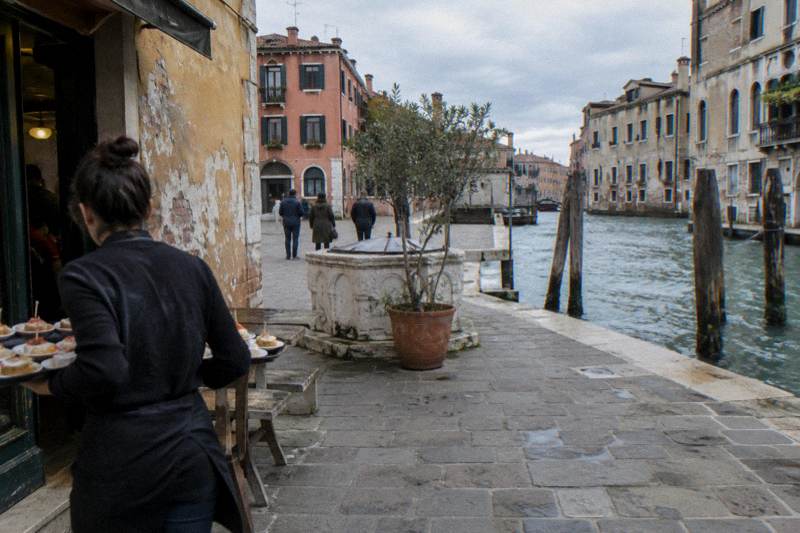
Best Cicchetti Bars In Venice And What To Order At Each
The best cicchetti in Venice is not one bar, it is a route: a counter in Cannaregio at noon, a Rialto stop as the market winds down, a Dorsoduro ombra at sunset. Here is how to build that route, what to point at, and what it costs at the counter.
Short answer
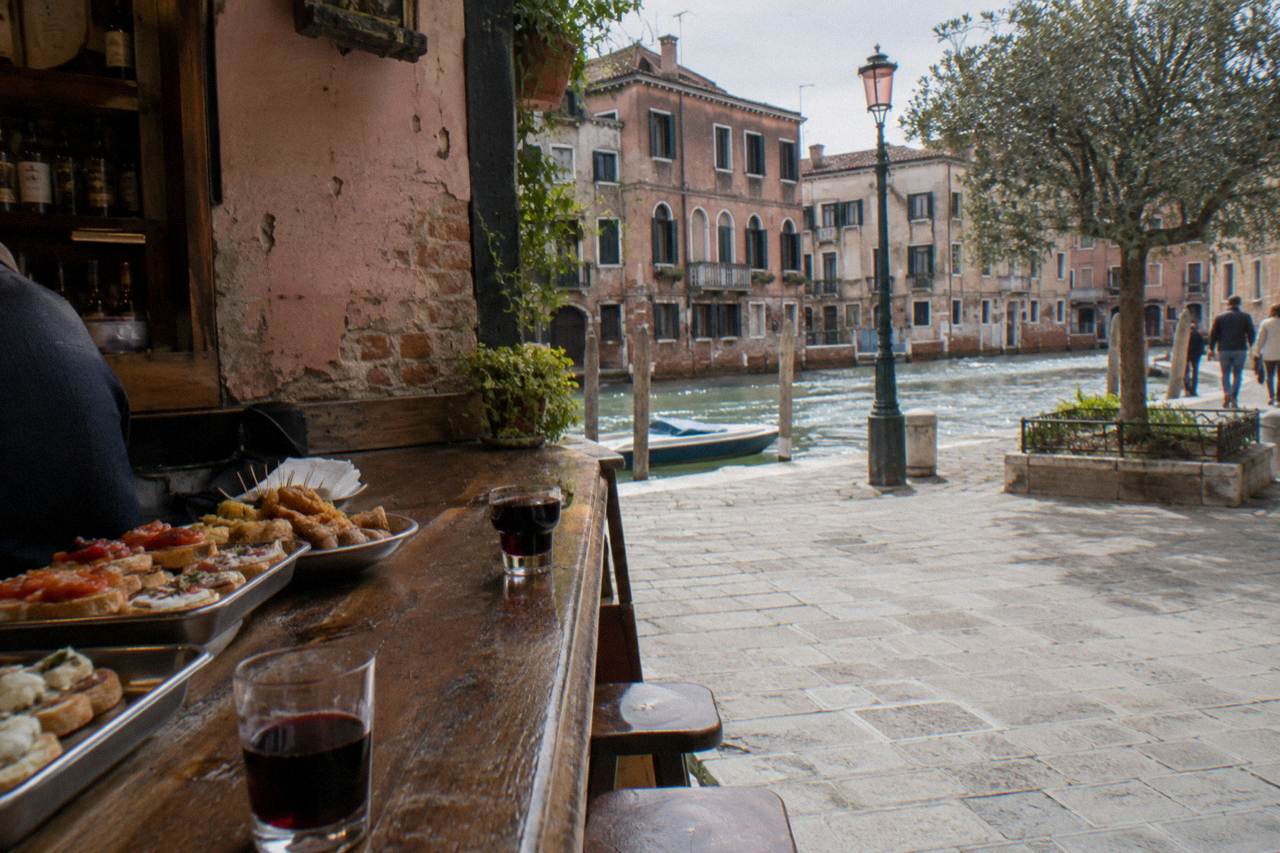
Cicchetti at a standing bacaro counter run about EUR 1.50 to 4 a piece as of 2026 data, with an ombra of house wine around EUR 1 to 2.50. The strongest crawl pairs Cannaregio at lunch, the Rialto orbit mid-afternoon and Dorsoduro at aperitivo hour, ordering sarde in saor, baccalà mantecato and polpette by pointing at the tray.
The best cicchetti in Venice is not a single address. It is a habit: Venetians stand at a bacaro counter, point at two or three pieces from the tray, take a small glass of house wine called an ombra, and move on. Visitors who copy that habit eat better and spend less than visitors who sit down at the first tourist menu they pass. This page breaks the city into its bar districts, explains what to point at, what the counter habit costs, and when a guided walk beats a self-guided list. If you are new to the format itself, start with how a bacaro crawl works before planning the route.
How A Standing Bacaro Crawl Actually Works
A bacaro crawl is a sequence of short standing stops, not a meal in one room: you order cicchetti by the piece from a display tray, take an ombra of house wine beside it, eat at the counter or on the street side, then walk to the next bar. Two or three stops is a normal lunch, four or five is a full evening. Most crawls cover under 2 km on foot.
The word bacaro covers everything from a hole-in-the-wall counter with a few barrels to a larger osteria with tables in the back. The classic move is the same everywhere: you look at what is on display, point, pay by the piece, and drink standing. Nothing about it requires Italian beyond the names of the dishes. Some counters post a printed price list; in others you learn the total when you pay. There is no fixed city tariff, as the official Venice tourism information notes, so posted lists apply bar by bar.
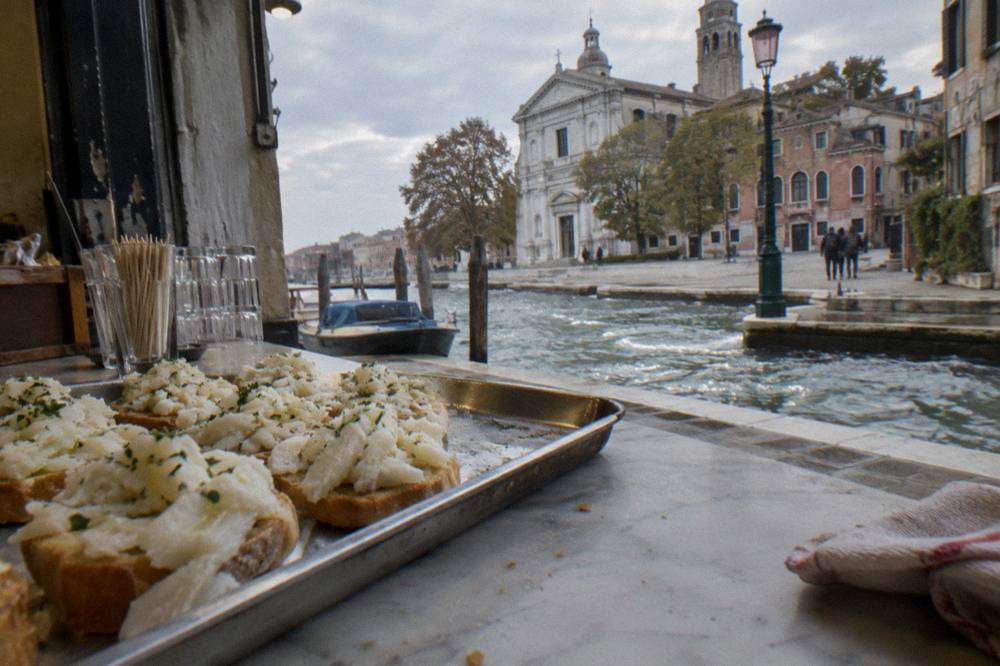
What makes the format work for visitors is pacing. A crawl spreads a meal across three or four rooms and several sestieri, which turns lunch into a walk. It also spreads the risk: if one counter disappoints, the next one is ten minutes away. For the mechanics of ordering, glass in hand and bill at the end, the companion guide on what cicchetti is and how to order it walks through the vocabulary.
The dish vocabulary is short and worth learning once. Sarde in saor is sweet-and-sour sardines with onion and raisins, a lagoon preservation technique older than refrigeration. Baccalà mantecato is whipped salt cod on polenta, the city's single most recognizable ciccheto. Polpette are fried meatballs, crostini are topped breads, and in season you may see fried moleche, soft-shell crabs. Any of these can appear or disappear from a tray on a given day, which is the point: the tray is the menu.
What Cicchetti And An Ombra Cost At The Counter
Expect roughly EUR 1.50 to 4 per piece of cicchetti and about EUR 1 to 2.50 for an ombra, the small roughly 100 ml glass of house wine, according to 2026 data from the official Venice tourism site. A stand-up counter lunch of four pieces and two glasses costs somewhere between a snack and a full meal.
Those figures are reported ranges, not a tariff. Simple pieces, a crostino or a fried ball, sit at the bottom of the scale; more elaborate pieces sit at the top. Cheaper local counters often pour the ombra at EUR 1.50 to 2, while tourist-oriented rooms charge more for the same pour. The coperto, a per-person cover charge disclosed on the menu where it exists, is frequently avoided simply by standing at the counter rather than taking a table, and tipping is optional everywhere: rounding up is appreciated, but no tip is expected when you stand for cicchetti.
| Item at a standing counter | Reported range | Notes |
|---|---|---|
| Cicchetto, simple piece | around EUR 1.50 to 2.50 | Crostini, fried pieces, polpette |
| Cicchetto, more elaborate | around EUR 3 to 4 | Seafood pieces, larger compositions |
| Ombra (small house wine, about 100 ml) | around EUR 1 to 2.50 | Often EUR 1.50 to 2 at local counters |
| Coperto, where applied | around EUR 1 to 4 per person | Disclosed on menus; often avoided standing |
| Tip | optional | Rounding up is appreciated, not expected |
The counter arithmetic is why locals defend the format. Even at the top of the range, a generous crawl of five pieces and three ombre stays in the territory of a modest restaurant main course. The trade-off is comfort: there is rarely anywhere to sit, and at peak hours there is rarely anywhere quiet to stand. Groups larger than four or five find a crawl awkward on their own, which is one honest argument for a guided walk with reserved counter space.
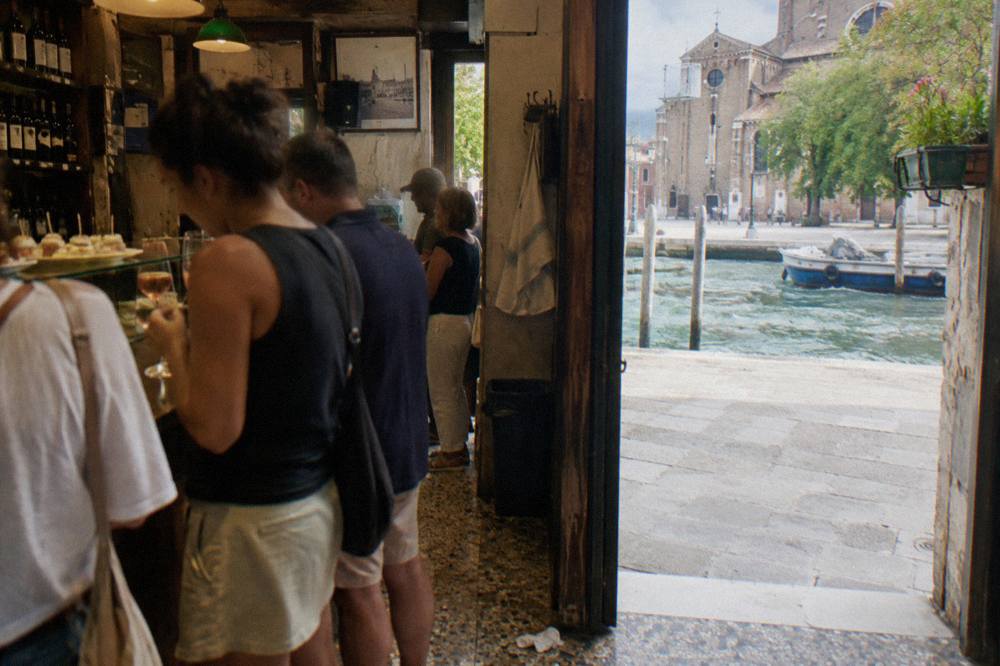
A guided walk also fixes the price question in advance. The featured Eat Like a Local small-group tasting walk, about 3 hours long, prices its tastings on the operator's listing rather than by the piece at the counter. Whether a fixed tasting menu beats the pay-per-piece counter depends on how much you want to organize yourself.
When To Go: Timing The Crawl Right
Midday, roughly 11:30 to 14:00, and aperitivo hour, roughly 17:30 to 20:00, are the two windows when bacari fill and trays are freshest. Mid-afternoon is the dead zone: many counters run down their display after the lunch rush and the fish market side of Rialto closes at 14:00. Evening crawls should finish by 21:00, since standing counters thin out before Venetian dinner service.
The morning-to-lunch window rewards early risers. Trays come out fresh, the crowd is mixed office workers and visitors, and you can route through the Rialto market area while the produce stalls are still working. The official market hours matter here: the produce market at Rialto runs Monday to Saturday from 7:00 to 20:00 and closes Sunday, while the fish market runs Tuesday to Saturday from 7:00 to 14:00 and closes Sunday and Monday. A Sunday or Monday crawl should skip the fish-market orbit entirely and head for Cannaregio or Dorsoduro instead, and tour listings themselves warn that the fish market closes on Sundays, Mondays and Italian holidays.
Aperitivo hour is the more social window. Counters refill the trays, the spritz crowd arrives, and Dorsoduro in particular fills with students and after-work drinkers. The risk is crowds at the famous counters and queues at the bar itself, though no reliable queue-length claim exists and none is made here. If standing room matters to you, arrive at the start of the window rather than the middle of it.
For anyone who would rather have the timing handled, a walk like the Venice Bacaro Food Tour, Eat and Drink like a Venetian, 3 hours 30 minutes long, is built around the evening window, with the exact start time on the operator's listing. Timing, not cuisine, is the most common self-guided mistake: a crawl that starts at 15:00 finds tired trays and closed markets.
Cannaregio: The Stand-Up Heartland
Cannaregio, the long northern sestiere between the station and the Jewish Ghetto, has the densest concentration of small standing counters in the city and the most local lunch trade, so it is the best single district for a first crawl. Expect narrow bacari with limited or no seating, mid-range counter prices and a mix of residents and visitors from about noon. The Strada Nova corridor carries the tourist flow, the side calli off it carry the quieter counters.
Cannaregio's advantage is arithmetic. Because the district is residential, its counters refill for the local lunch hour rather than for a single tourist wave, so the trays you see at 12:30 look like the trays a resident would point at. The classic Cannaregio crawl is three or four counters strung along a walk from the Rialto side toward the Ghetto, sampling a piece or two and an ombra at each. Nothing about this requires a reservation; it requires a willingness to move on.
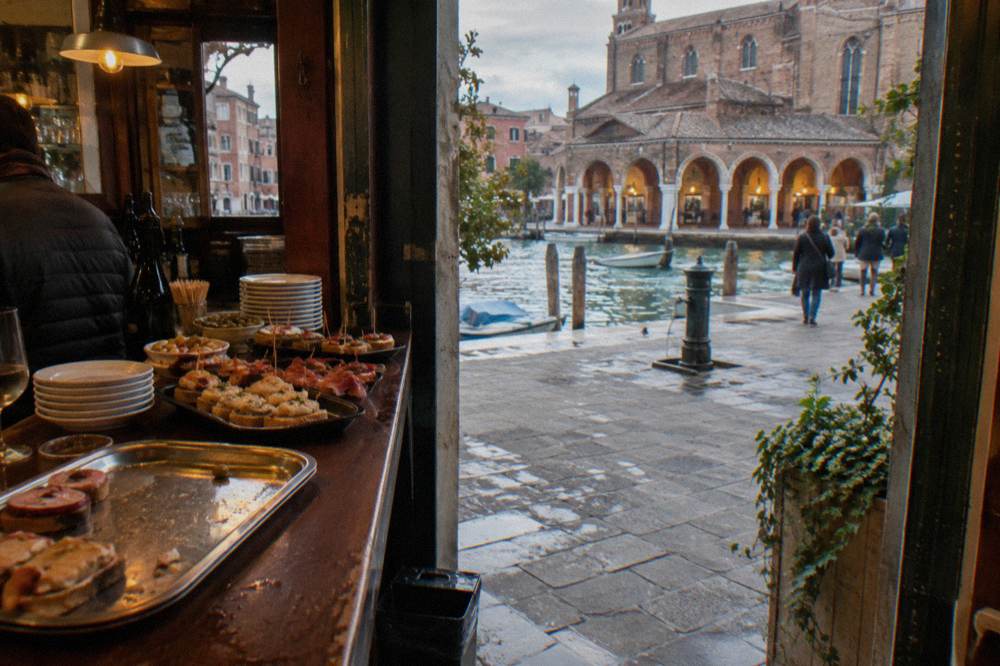
What to point at here follows the general Venetian repertoire rather than any house speciality that could be promised: baccalà mantecato on polenta, sarde in saor, fried polpette, and whatever seasonal fish piece is on the top tray. Prices at the counter are the reported EUR 1.50 to 4 range like everywhere else; this page does not name individual bars with prices, since posted lists change and no claim is made that a given bar has a given dish today. Choose by the tray and the crowd, not by a logo.
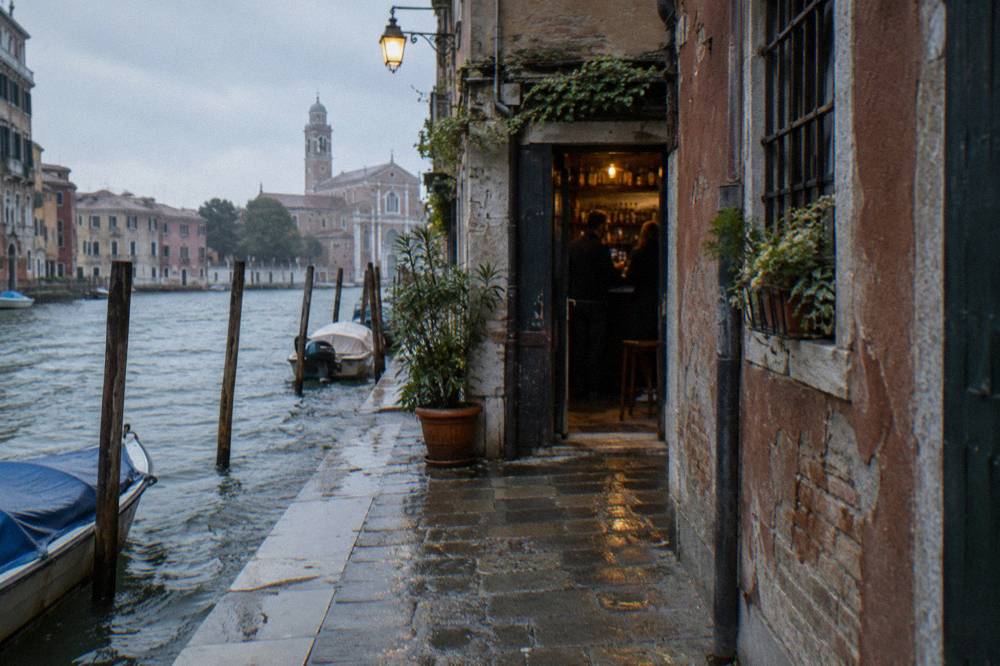
Cannaregio is also where guided evening walks concentrate, because the Ghetto and the northern canals give a walk a route with a story. One option that pairs the district with its food culture is described in the companion piece on Venice food by neighborhood. If your crawl falls on a Sunday, Cannaregio is the safest choice of district: it depends least on the Rialto market's schedule.
San Polo And The Rialto Orbit
San Polo, the sestiere around the Rialto market, is the best district for a mid-morning-to-lunch crawl because the counters here feed the market trade: trays come out early, seafood pieces dominate, and the walk from the Pescheria to the surrounding bacari takes minutes. The catch is the calendar, since the fish market closes Sunday and Monday and the whole orbit quietens on those days.
This is the district where the dish vocabulary tilts toward the lagoon. Whatever the boats brought in that morning decides the top tray, and a counter a hundred meters from the fish market will sell what the market sold. The classic move is to watch the market work for half an hour, then eat what came out of it. The produce market, Monday to Saturday 7:00 to 20:00, keeps the surrounding stalls lively later in the day than the fish side, which shuts at 14:00. Other pages covering the same trip are gathered on Venice Food Tours.
“Our market tour and cooking class with Lorenzo was a lovely experience. He is an engaging teacher, friendly and fun, and his kitchen provided a comfortable learning environment (and he played great music on the stereo, too). It was delightful to share the lunch we all cooked together: delicious ravioli, sea bass and tiramisu. A definite highlight of our trip to Venice!”
Rialto's counters are also the most exposed to through-traffic in the city, since every visitor walking between the station and St Mark's passes through. Two practical defenses: go at the local lunch hour rather than mid-afternoon, and step one or two calli off the main drag before choosing a counter. A posted price list is a good sign in any bacaro; the official tourism guidance confirms posted lists apply and there is no city tariff.
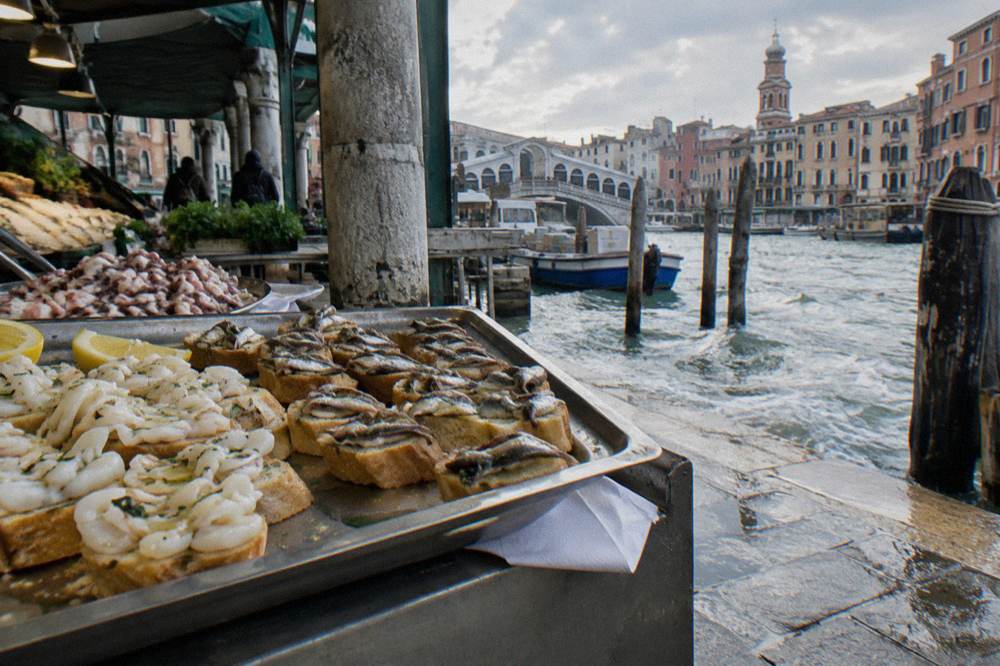
For visitors who want the market explained rather than just walked through, the Rialto market guide covers what each stall sells and what to taste, and a midday option like the market food and wine lunchtime walk pairs the stalls with seated tasting stops; its timing and inclusions are listed on the booking page. A market-first crawl in San Polo is the single best use of a Tuesday-to-Saturday morning in Venice.
Dorsoduro: Students, Spritz And Slow Evenings
Dorsoduro, the southern sestiere around the Zattere and Campo Santa Margherita, is the aperitivo district: counters here fill from late afternoon, spritz orders rival ombre, and the crawl pace slows to match the squares. It is the right district for a sunset-to-dinner crawl of three or four stops, and the wrong district for a quick lunch, since much of its trade is evening trade.
Campo Santa Margherita is the student anchor, and student money keeps counter prices honest in the surrounding calli. Around the Zattere, the long sunny quay, the crawl becomes a walk with a view: an ombra here is drunk facing the Giudecca canal rather than facing a wall. What to order tilts toward the spritz family alongside the standard cicchetti repertoire, and the companion guide on spritz in Venice, Aperol, Select and the local way explains what locals actually order.
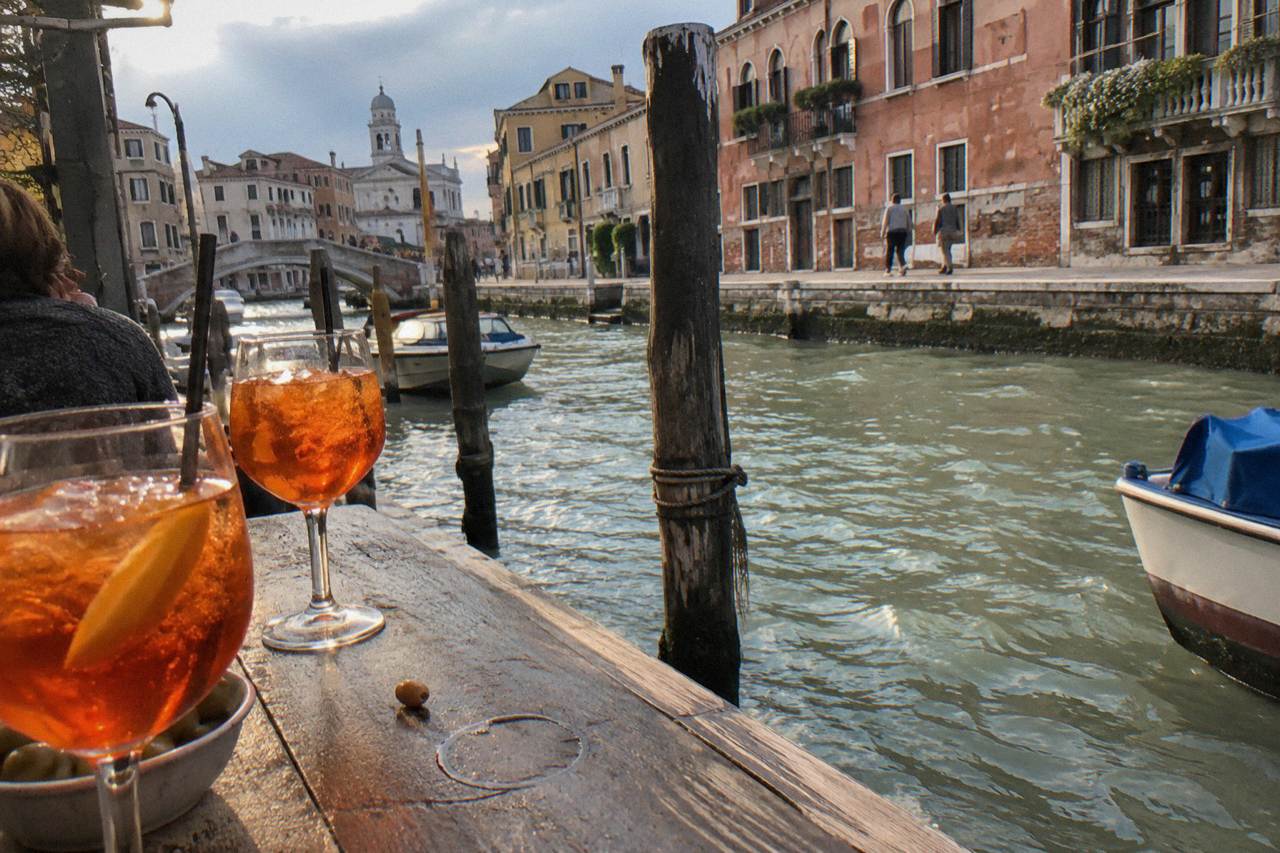
The evening window has one rule worth repeating: start early. By 19:00 the popular counters are three-deep and the trays are picked over. A crawl that begins at 17:30 gets the fresh display and a place to stand; one that begins at 19:30 gets neither. Pair Dorsoduro with an earlier Cannaregio stop only if your legs are up for it, since the two districts are a 25-minute walk apart through San Polo or across the Accademia bridge.
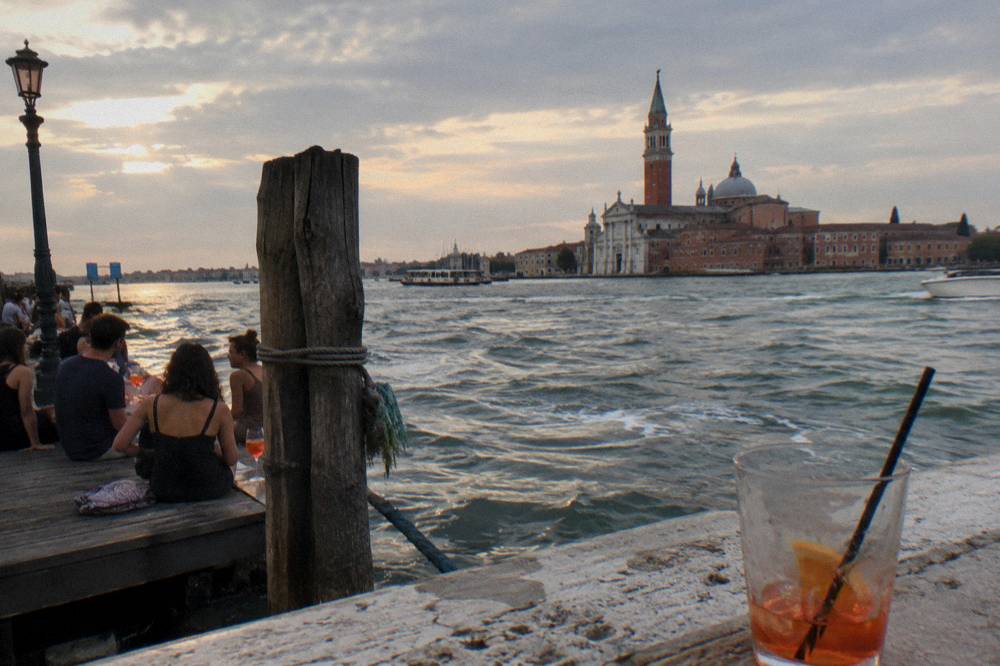
Dorsoduro is also the district where a sunset-format walk earns its fee, because timing the light over the Giudecca with the counters is a planning problem. The evening side of the format is covered in the guide to an evening food walk in Venice at aperitivo hour, and a short two-and-a-half-hour option like the Taste Venice Like a Local walk, price on the listing, is built for exactly this window.
Castello, San Marco And The Back-Street Option
Castello, the large eastern sestiere behind St Mark's, and the back calli of San Marco itself hold the city's quietest counters: fewer famous rooms, more neighborhood trade, and trays that serve residents rather than itineraries. These districts reward a wander rather than a route, and they are the fallback when Cannaregio and Dorsoduro feel crowded.
Castello's advantage is distance from the main tourist corridors. Ten minutes east of St Mark's Square the visitor density drops sharply, and a counter there is more likely to be running a local lunch than a visitor service. The same caution applies as everywhere on this page: no individual bar is endorsed, no opening hour is promised, and the tray you find is the tray that exists that day. Choose the room with the posted price list and the mixed crowd.
The San Marco back streets are the surprise. Behind the souvenir streets, small bacari survive on office and boatyard trade, and a crawl threaded through them puts you minutes from the sights without the sight prices. This is also where the gondola-and-food combinations launch from, a format covered separately in the guide to food and gondola combos in Venice, if you want a crawl with a ride attached.
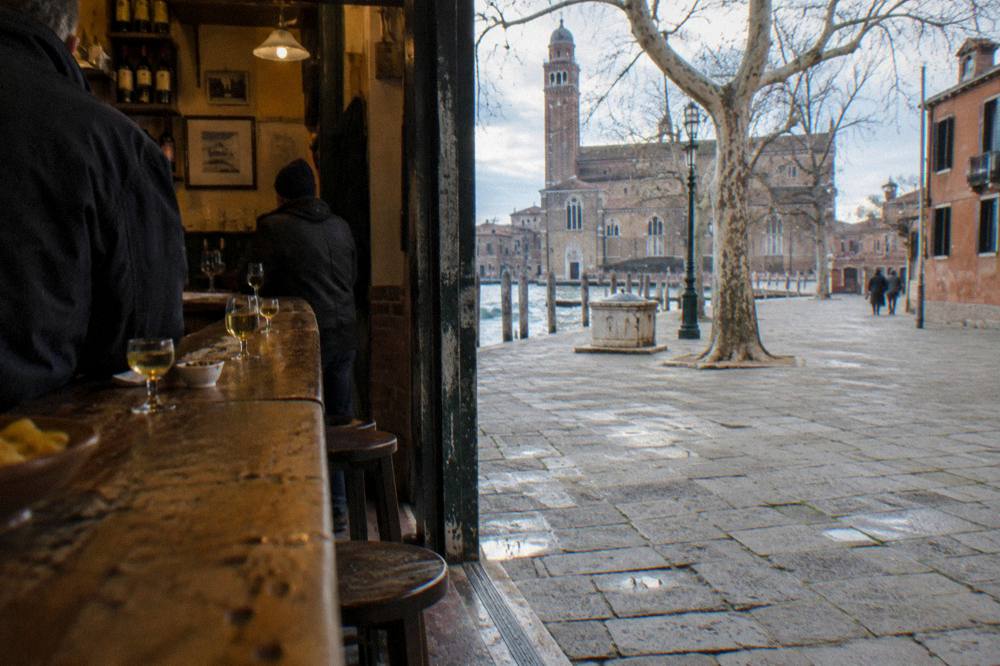
For a crawl that adds ten counted tastings and wine to the walking, a short two-hour cicchetti format like the ten-tastings walk below suits visitors who want the back-street experience without building it themselves. Its price and meeting point are on the booking page, and its short length leaves the evening free for a second, self-guided round in Dorsoduro.
Self-Guided List Or Guided Walk: Which Fits You
A self-guided crawl fits confident walkers who like choosing by tray and paying by the piece, at roughly EUR 1.50 to 4 a bite; a guided walk fits anyone who wants the hour, the counters and the dish count fixed in advance. Guided tastings cost more, but they hold space at busy bars, translate the trays and often add seated stops, so pick guided if timing worries you and self-guided if it does not.
The honest comparison is about what you are buying. On your own, you buy freedom and the counter price, and you accept the risks: tired trays at 15:00, crowds at 18:30, and no one to explain what you are pointing at. On a guided walk, you buy timing, a route that works on the day of the week you are there, and a fixed list of what is included, at a price stated on the booking page rather than summed piece by piece.
| Decision factor | Self-guided crawl | Guided walk |
|---|---|---|
| Cost basis | Per piece at the counter, about EUR 1.50 to 4 reported | Fixed price on the booking page, tastings included |
| Timing | You choose, and you carry the risk | Operator schedules around market and bar hours |
| Dish knowledge | You point at what you can name | Guide names and translates every tray |
| Crowds | You queue like everyone | Group is expected and often served first |
| Flexibility | Stop, skip and linger at will | Fixed route and pace with the group |
| Group size | Your problem above four people | Stated on the listing; city rules cap guided groups at 25 |
Two formats deserve a specific mention for bar-shoppers comparing options. A two-hour pure bacaro experience like the Bacaro Tour Unblended walk is the short, focused version, price on the listing. At the other end, a sweet-toothed alternative, the pastries, chocolate and gelato stroll, swaps the counters for pastry shops entirely, and is covered alongside the classic format in the guide comparing which Venice food walk you should book.
Dietary needs tip the decision toward the guided option, because no counter publishes an allergen matrix and the operator can be messaged before booking. The rules on that are in the guide to vegetarian, vegan and gluten-free food in Venice. Whatever you book, check the cancellation terms on the operator's listing before you pay; the featured walks on this site allow free cancellation, but terms belong to the operator, not to habit.
Ordering Etiquette, The Glass Rule And How To Not Get It Wrong
Order by pointing at the tray, pay when told rather than when served in most counters, keep your voice at room level, and take drinks from the bar rather than walking off with glass: Venice bans drinking from glass containers outside permitted seating areas, with reported fines of EUR 25 to 500, so an open glass stays at the counter or on the permitted terrace. Standing also usually avoids the coperto that tables carry.
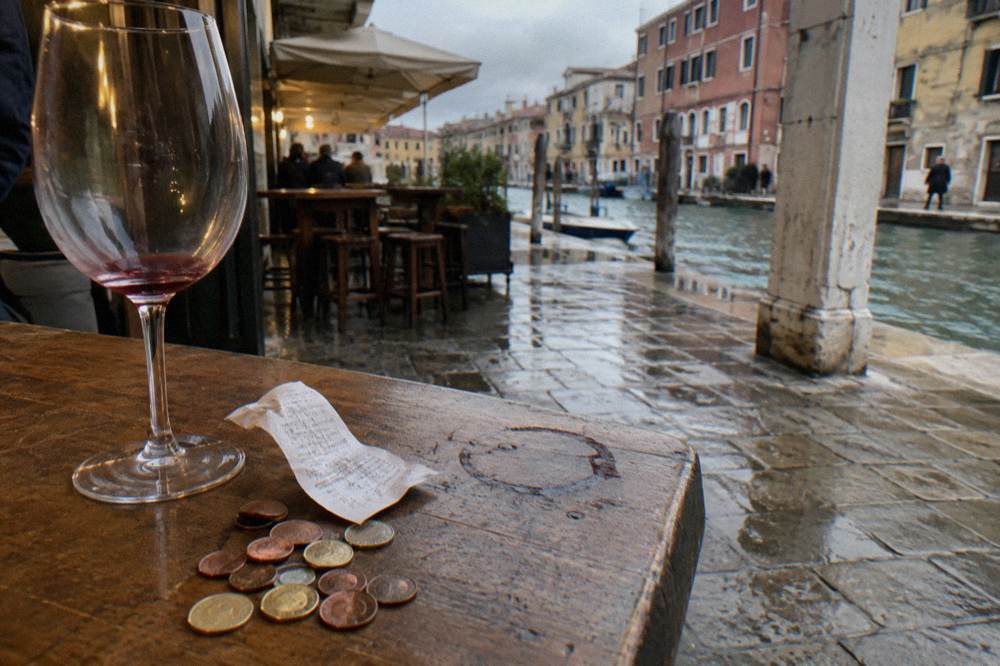
The etiquette is short because the format is short. Look before you order, since the tray is the menu. Take what you can eat while it is warm. Do not occupy a counter stool with a phone for twenty minutes at 12:45. Round the bill up if the service was good, and do not tip on top of a coperto as though it were a service charge, since the coperto is a cover charge, not a gratuity. The full ritual around the ombra, from the word's history to when to switch to a spritz, has its own guide on bacari etiquette and the Venetian wine ritual.
The glass rule is the one with legal teeth. The municipal regulation, as reported from the city's own rules document, prohibits consuming food and drinks in glass, ceramic or similar containers outside permitted outdoor seating, and bans takeaway sales of alcohol in glass for public consumption, with fines reported from EUR 25 to 500. In practice this means a cicchetto eaten at the counter and a drink finished where you bought it, or a drink poured into an permitted outdoor seat. Check the current rules before your trip; the fine range is reported, not a promise of enforcement on any given calle.
One last planning note that has nothing to do with bars: the 2026 day-visitor access fee trial ended on 27 July 2026, so no fee applies to visiting now, and the official page states no payment or exemption is needed. The fee is set to return in 2027 with listed dates but amounts not yet announced, so spring 2027 visitors should re-check the official access-fee page after 31 December 2026. Bar money and access-fee money are separate budgets.
| Situation | What locals do | What to avoid |
|---|---|---|
| Ordering at a full counter | Point at the tray, order drinks in the same breath | Waiting for table service that does not exist |
| Paying | Settle when the bar indicates, keep the receipt | Walking out without checking the bill |
| Coperto on the menu | Stand at the counter to skip it, or accept it seated | Tipping on top as if it were a service charge |
| Open glass of wine | Finish it at the counter or permitted terrace | Carrying glass into the street |
| Sunday or Monday crawl | Head to Cannaregio or Dorsoduro | Expecting the Rialto fish market to be open |
Common Questions About The Best Cicchetti In Venice
What Is The Best Sestiere For Cicchetti In Venice?
Cannaregio has the densest standing-counter culture and the most local lunch trade, so it is the strongest single district for a first crawl. San Polo and the Rialto orbit are best mid-morning on a Tuesday to Saturday, and Dorsoduro owns the evening aperitivo window.
How Much Do Cicchetti Cost In Venice?
About EUR 1.50 to 4 per piece at a standing counter, as of 2026 data reported by the official Venice tourism site, with an ombra of house wine around EUR 1 to 2.50. A coperto of around EUR 1 to 4 per person may apply where you sit at a table.
What Should I Order At A Bacaro Counter?
The core repertoire is sarde in saor, baccalà mantecato on polenta, fried polpette and topped crostini, plus whatever seasonal seafood piece is on the top tray. The display is the menu: what is on the tray that day is what exists.
When Do Bacari Fill Up In Venice?
The two windows are the local lunch hour, roughly 11:30 to 14:00, and aperitivo hour, roughly 17:30 to 20:00. Mid-afternoon trays run down after the lunch rush, and standing counters thin out before dinner service.
Is A Guided Cicchetti Walk Better Than Going Bar To Bar Alone?
A guided walk buys timing, a route that respects market days and bar hours, and a counted tasting list at a fixed price on the booking page. A self-guided crawl buys freedom and the per-piece counter price. Pick the guided option if your group is larger than four or your day is short.
Can You Drink A Glass Of Wine On The Street In Venice?
No. As reported from the municipal rules, drinking from glass containers outside permitted seating areas is prohibited and takeaway alcohol in glass is banned, with reported fines of EUR 25 to 500. Finish your ombra at the counter or on a permitted terrace.
The through-line of every section here is that the counter rewards whoever arrives at the right hour with the right expectations. Venice Food Tours exists to make that hour easier to find, and the three walks below cover the lunch, evening and short-format versions of the same crawl.