Venice Food By Neighborhood: Cannaregio, Dorsoduro And San Polo
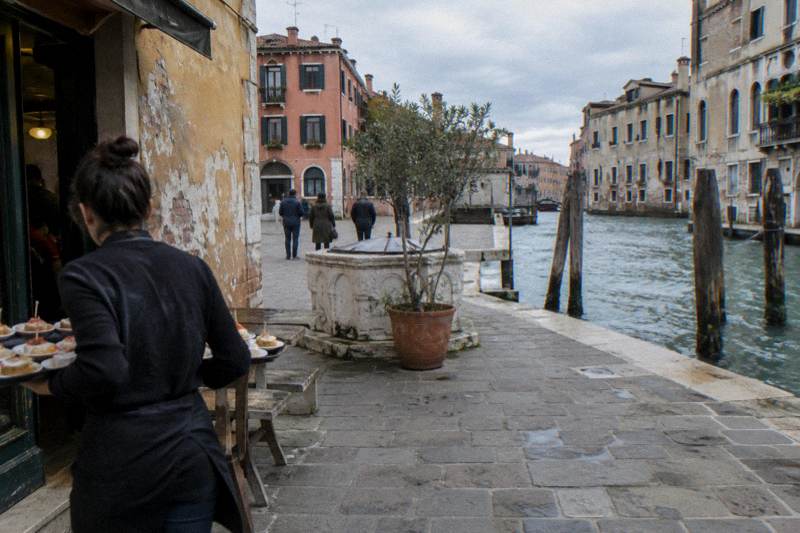
Venice is six small cities stitched together by bridges, and each one eats differently. Cannaregio, Dorsoduro and San Polo hold most of the city's food character, and knowing which is which turns a generic visit into a directed one.
Short answer
Cannaregio is the bacaro and Jewish Ghetto district in the north, San Polo is where the Rialto markets and their fish and produce stalls operate, and Dorsoduro is the southern student quarter of spritz bars and quiet canals. Guided food walks in each sestiere start at landmarks like Campo San Giacomo di Rialto, Campo Santi Apostoli and Campo San Pantalon.
Venice divides itself into six sestieri, and three of them carry nearly all of the city's everyday food life. The produce market at Rialto opens Monday through Saturday from 7:00 to 20:00, the fish market runs Tuesday through Saturday from 7:00 to 14:00, and the bacari that serve cicchetti to standing locals are clustered within walking distance of those markets and of the residential lanes of Cannaregio and Dorsoduro. A visitor who understands these divisions eats in a different city from one who drifts.
Which Venice Neighborhood Suits Which Food?
Cannaregio suits the traditional bacaro crawl and the layered history of the Jewish Ghetto, San Polo suits market mornings and the dense cluster of stalls around Rialto, and Dorsoduro suits long aperitivo evenings and student-priced standing bars. Each sestiere has a distinct rhythm, and guided food walks are built around those rhythms rather than around them. Matching the two is the single biggest upgrade a first visit can make.
The three sestieri sit in a rough arc around the Grand Canal's upper loop. San Polo and its attached San Marco fringe hold Rialto, the commercial heart of the city for a thousand years. Cannaregio stretches north and west from the train station side, residential, wide-laned in parts, and home to the Ghetto and some of the best known standing bars in the city. Dorsoduro lies south of the canal's final bend, holding the Accademia gallery, two universities' worth of students, and the evening promenade along the Zattere.
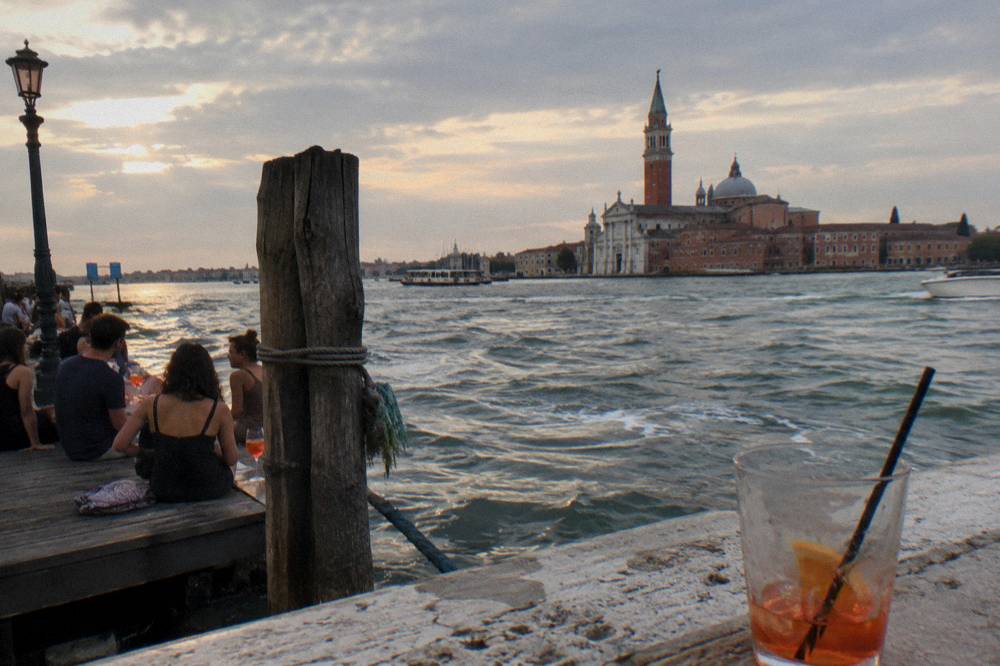
The practical difference shows up in timing. San Polo's food life is morning-first, tied to the market schedule. Cannaregio works from midday through the evening giro d'ombra, the traditional wine-stop circuit. Dorsoduro peaks late, when the spritz crowd spills out of the bars near Campo Santa Margherita and the canalside fondamenta. A walker who plans around those peaks sees each neighborhood at its most alive.
| Sestiere | Food Character | Best Hours | Typical Walk Format |
|---|---|---|---|
| Cannaregio | Traditional bacari, Jewish Ghetto eateries, residential lanes | Midday to evening | Cicchetti and bacaro crawl, 2 to 4 hours |
| San Polo | Rialto produce and fish markets, market-adjacent bars | Morning to early afternoon | Market walk with tastings, lunchtime focus |
| Dorsoduro | Spritz bars, student bacari, canalside strolling | Late afternoon to night | Evening tasting walk, aperitivo-heavy |
The sestieri also differ in how touristed their cores are. The Rialto bridge and the market approaches draw heavy foot traffic all day, while five minutes into Cannaregio's side lanes or Dorsoduro's western blocks the crowds thin noticeably. This is why guided walks rarely stay in one place: the good operators move between a landmark meeting point and the quieter lanes where the standing bars actually are. On Venice Food Tours, the walk families follow this same logic, with market walks starting near Rialto and evening crawls starting in Cannaregio or Dorsoduro.
Cannaregio: Bacari, The Ghetto And The Northern Lanes
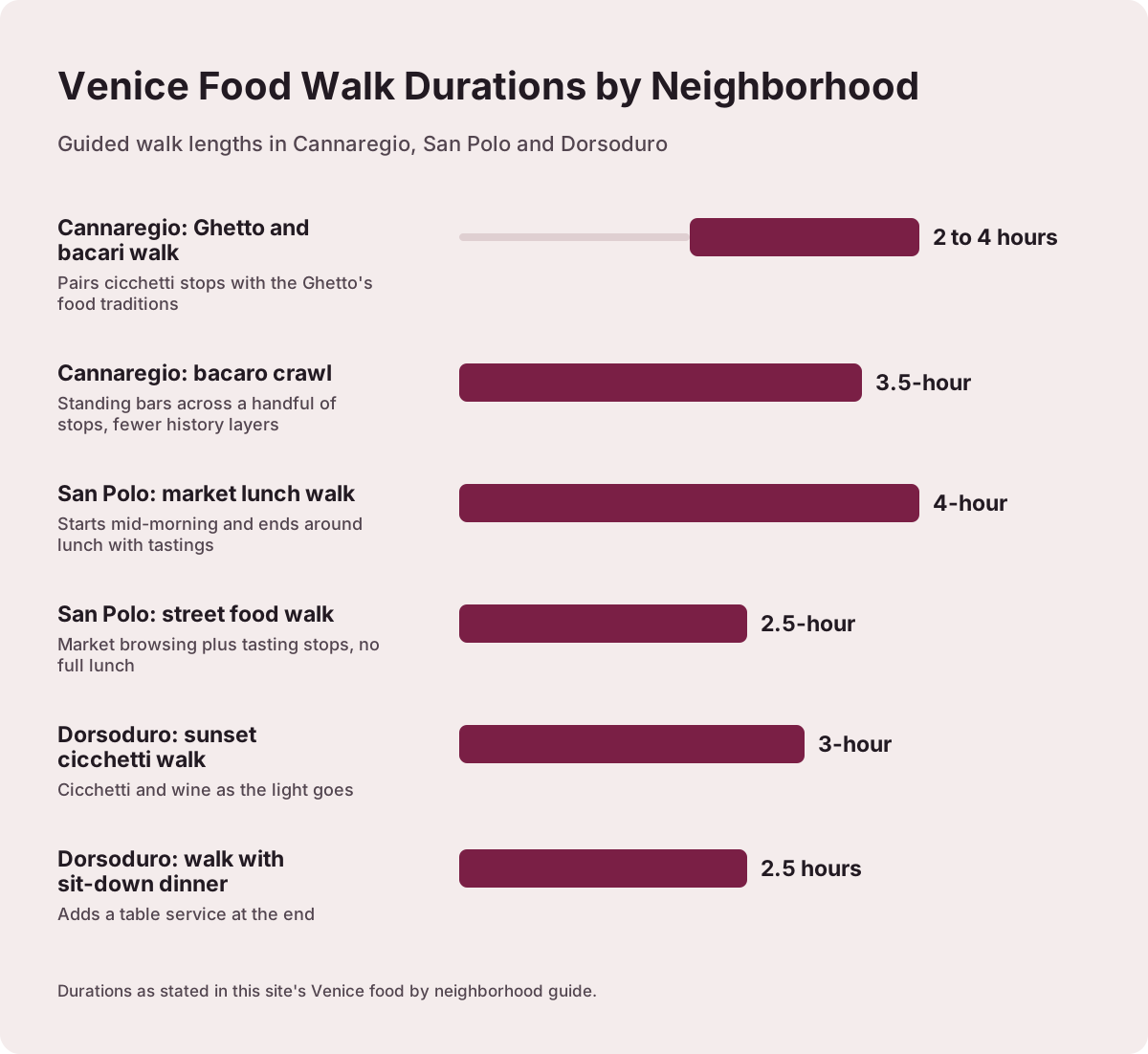
Cannaregio is the northernmost sestiere and the one most associated with traditional bacaro culture, holding the Jewish Ghetto, long residential lanes, and a dense band of standing wine bars between the Strada Nova and the quieter canals west of it. Guided walks here typically run 2 to 4 hours and pair cicchetti stops with the Ghetto's separate food traditions. The meeting point most often used is the Jewish Ghetto itself or Campo Santi Apostoli.
The Ghetto, the historic Jewish quarter of Venice and one of the oldest of its kind in Europe, sits in Cannaregio's north. A food walk that starts there covers ground most visitors never reach: the campo itself, the surrounding lanes, and then a route south and east toward the bacari band. The Jewish Ghetto and Cannaregio food walk with wine is a 4-hour format built exactly on this shape, pairing the Ghetto's history with the sestiere's standing bars. Its price and current rating are on the listing rather than printed here, since per-person from-prices move with date and group size.
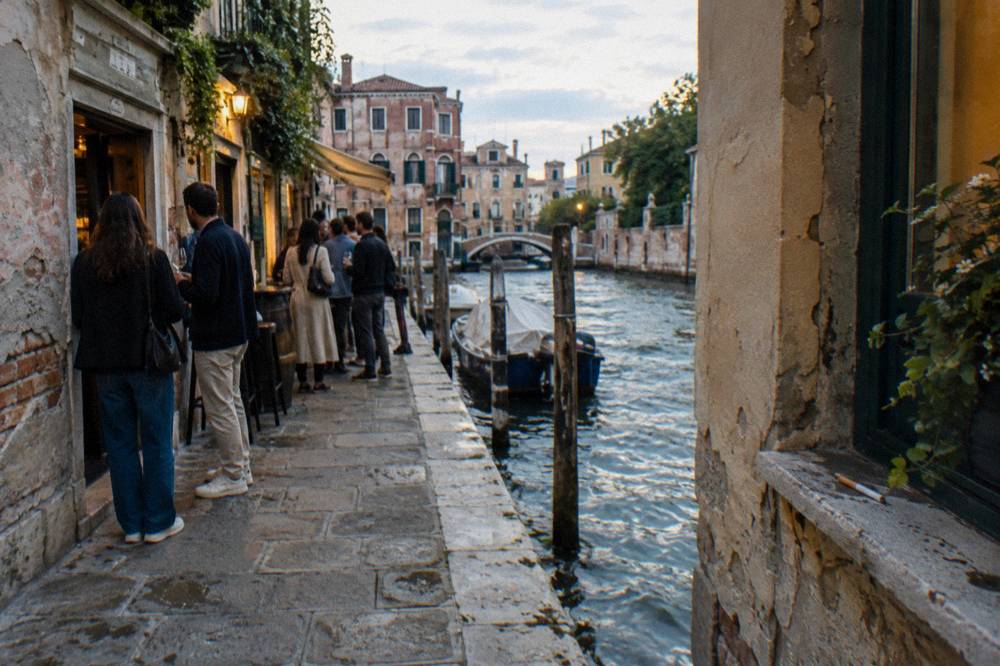
South of the Strada Nova, the main processional street from the station toward Rialto, Cannaregio turns residential fast. The reported price of standing food here is among the friendliest in the city: cicchetti typically run around EUR 1.50 to 4 a piece at the counter, and an ombra, the small house-wine glass, around EUR 1 to 2.50 at local spots, as the official Venice visitor site's cicchetti page records. Standing at the counter, rather than taking a table, also avoids the coperto cover charge that sit-down service can add, typically EUR 1 to 4 where applied.
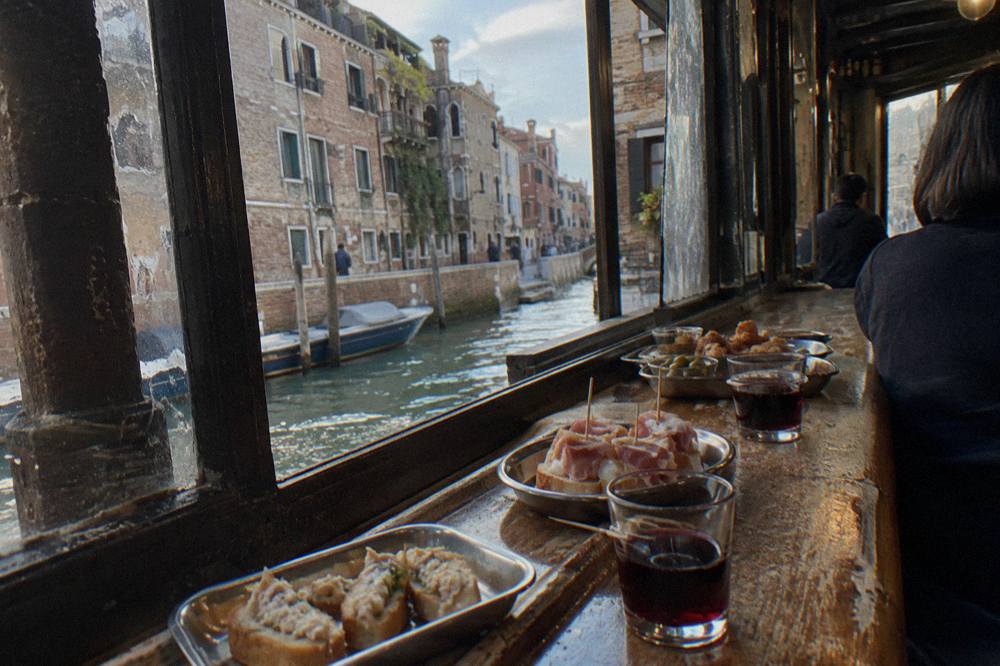
For visitors who want Cannaregio without a 4-hour commitment, shorter formats exist. A 3.5-hour crawl such as the Venice Bacaro walk, which explores eating and drinking like a Venetian across a handful of stops, covers the same bacaro culture with fewer historical layers. Check availability on its listing for current times and meeting details.
The giro d'ombra, the moving circuit from one wine bar to the next, is Cannaregio's native food format, and it is worth knowing the etiquette before joining any version of it. Order at the counter, point at what you want, take your plate and glass to wherever there is standing room, and move on when finished. The bacari etiquette and wine ritual guide covers the customs in full, including how Venetians pace an ombra against a cicchetto.
One planning note matters more here than elsewhere: Cannaregio's market connections are weak, so morning walks in this sestiere skip the market entirely. If a market visit is the priority, base the day in San Polo instead and save Cannaregio for afternoon and evening. The neighborhood pairing question of which format suits which traveler comes up constantly, and the sestiere choice usually answers it.
San Polo: Rialto Market Territory And Market-Fed Bars
San Polo is the sestiere of Rialto, where the produce market runs Monday to Saturday from 7:00 to 20:00 and the fish market Tuesday to Saturday from 7:00 to 14:00, with both closed Sunday. Food walks here are morning-first, usually starting at Campo San Giacomo di Rialto, and they pair market browsing with tastings in the bars that the market feeds. The 4-hour lunchtime market format is the deepest option.
The Pescheria, the fish market under its neo-Gothic loggia at Campo de le Becarie, is the working heart of Venetian seafood retail. Lagoon catch, Adriatic fish and shellfish are laid out on inclined marble slabs, and the traders work fast: by early afternoon the stalls are winding down, which is why the official hours stop at 14:00. Across the way, the Erbaria produce stalls at Campo de la Pescheria run the longer day, to 20:00. Both markets close Sunday, and the fish market also closes Monday, as the official Venezia Unica listing of the city's markets states.
Guided walks time themselves around this. A market walk that starts mid-morning sees the fish market at work and then moves to tastings before the stalls clear. The Rialto market food and wine lunchtime tour format, a 4-hour walk ending around lunch, is built on exactly that sequence. Operators warn, in their own listing notes, that the fish market is closed Sundays, Mondays and Italian holidays, so a Monday visitor should expect the produce side only.
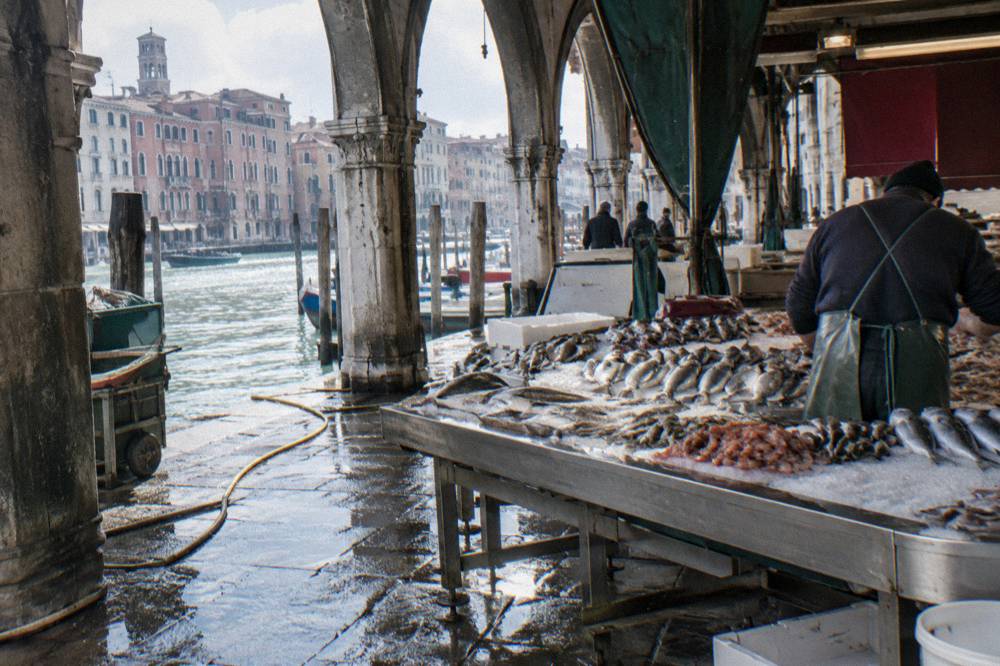
Around the market, San Polo's bars serve the traders as much as the visitors. A midday glass near Rialto is a real local habit, not a performance for tourists, and the reported ombra prices hold closest to the low end in this working district. The bars closest to the bridge itself are the most touristed and the most expensive; two lanes away in any direction, prices and tone shift back toward local. The best cicchetti bars guide covers how to tell the difference at the counter.
| Rialto Market | Days | Hours | What It Sells |
|---|---|---|---|
| Erbaria (produce) | Monday to Saturday | 7:00 to 20:00 | Fruit and vegetables |
| Pescheria (fish) | Tuesday to Saturday | 7:00 to 14:00 | Fish and shellfish |
| Both markets | Closed Sunday | All day | Nothing; plan elsewhere |
For a shorter market experience, a 2.5-hour street food format with a local guide covers market browsing plus tasting stops without the full lunch. Details and starting points are on each listing, since the exact route depends on what the stalls have that day.
Should a full market walk anchor the morning of your trip? A question like that is worth answering directly, and the answer is yes if seafood and market theater appeal, no if you would rather sleep in.
Dorsoduro: Spritz, Students And The Evening Passeggiata
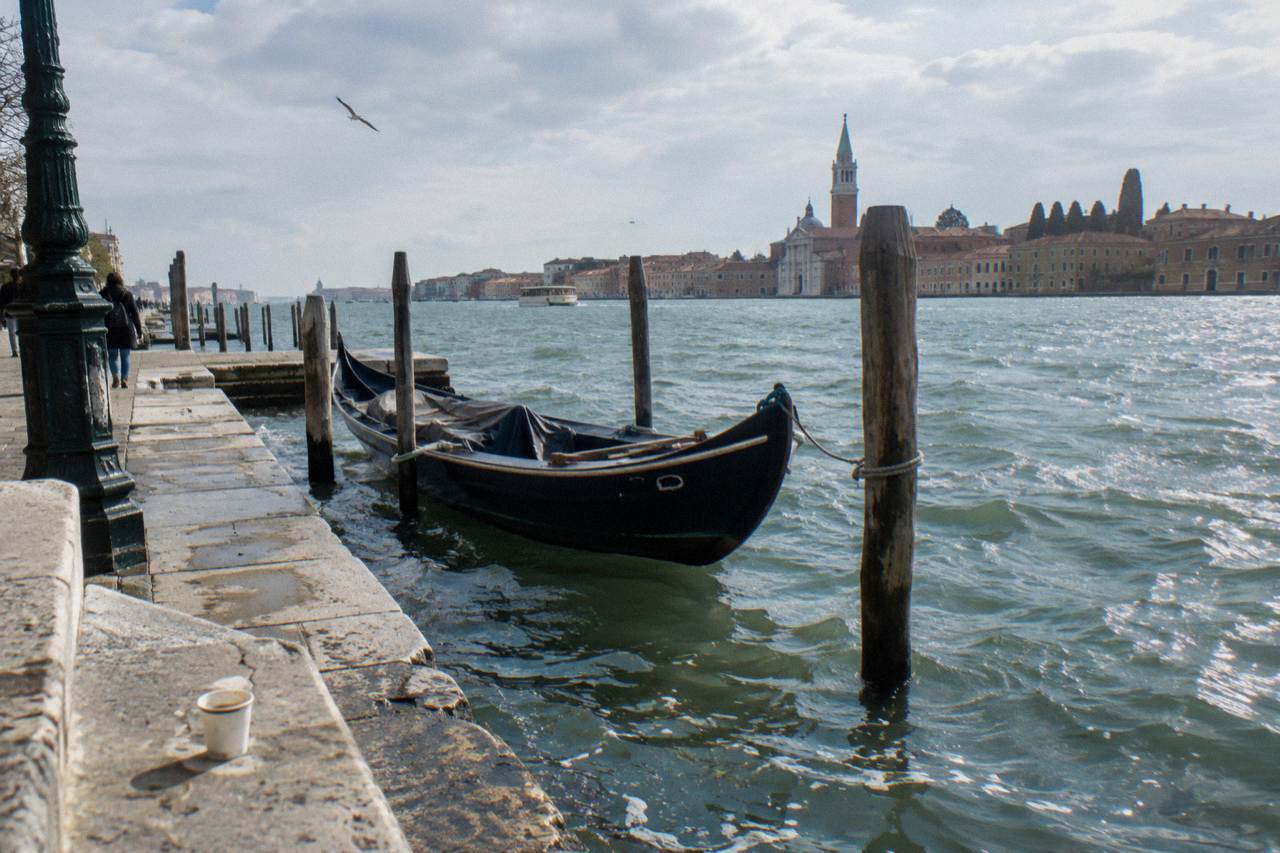
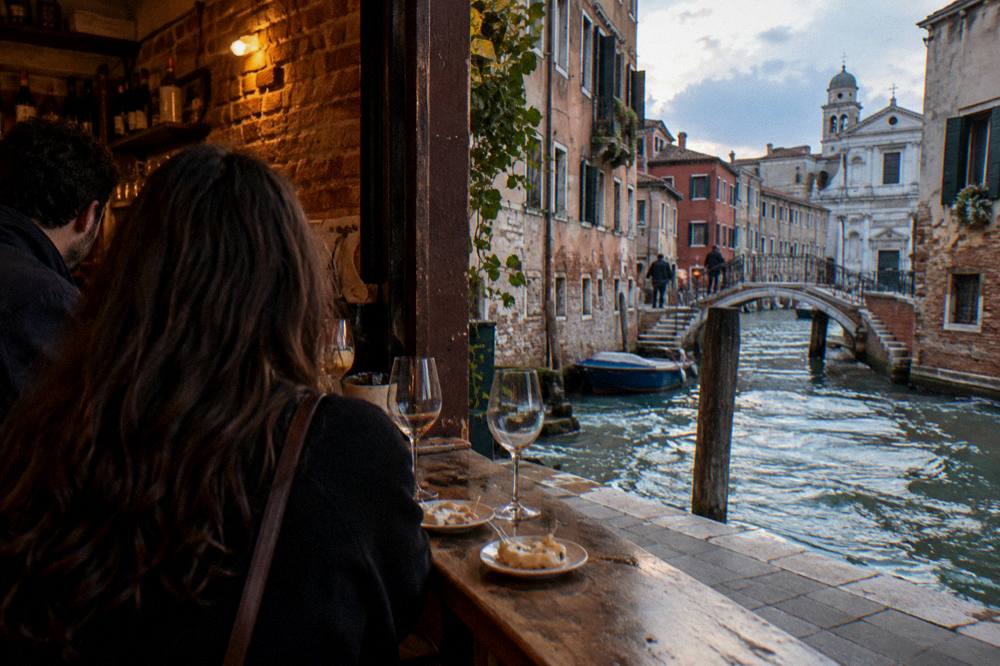
Dorsoduro is the southern sestiere holding Campo Santa Margherita, the Zattere waterfront and two university campuses, which makes it the city's natural evening district. Its food life is aperitivo-first: spritz and cicchetti from late afternoon onward, with guided evening walks commonly meeting at Campo San Pantalon or near the Accademia. Prices at the counter stay close to the city's lower reported ranges away from the Grand Canal frontage.
The sestiere's shape explains its character. Cut by the Grand Canal on two sides and the Giudecca Canal on the third, Dorsoduro faces water on nearly every edge, and its interior is a grid of quiet residential lanes with a student population that keeps the bars full and the prices honest. Campo Santa Margherita is the informal square at the center of it all, wide, tree-lined, and busy from late afternoon. The spritz itself has its own story and its variations, which the spritz guide covers in detail.
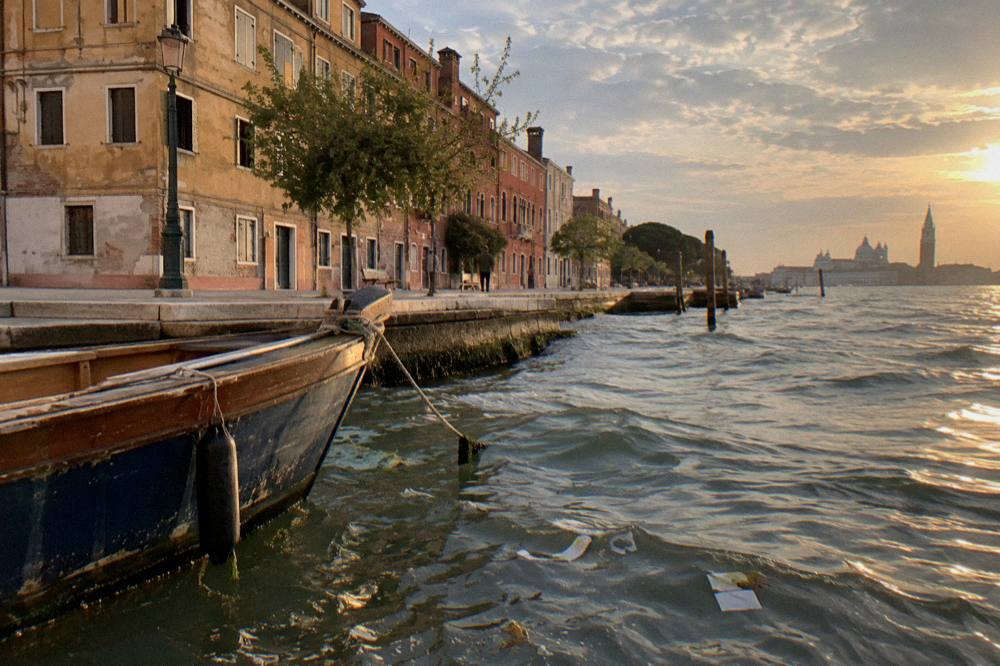
Evening formats suit Dorsoduro best. A sunset cicchetti and wine tasting walk, a 3-hour format, moves through the sestiere as the light goes, and an evening walk with bites, drinks and a sit-down dinner, at 2.5 hours, adds a table service at the end for travelers who want a full meal rather than a standing crawl. Both are described on their listings with current schedules.
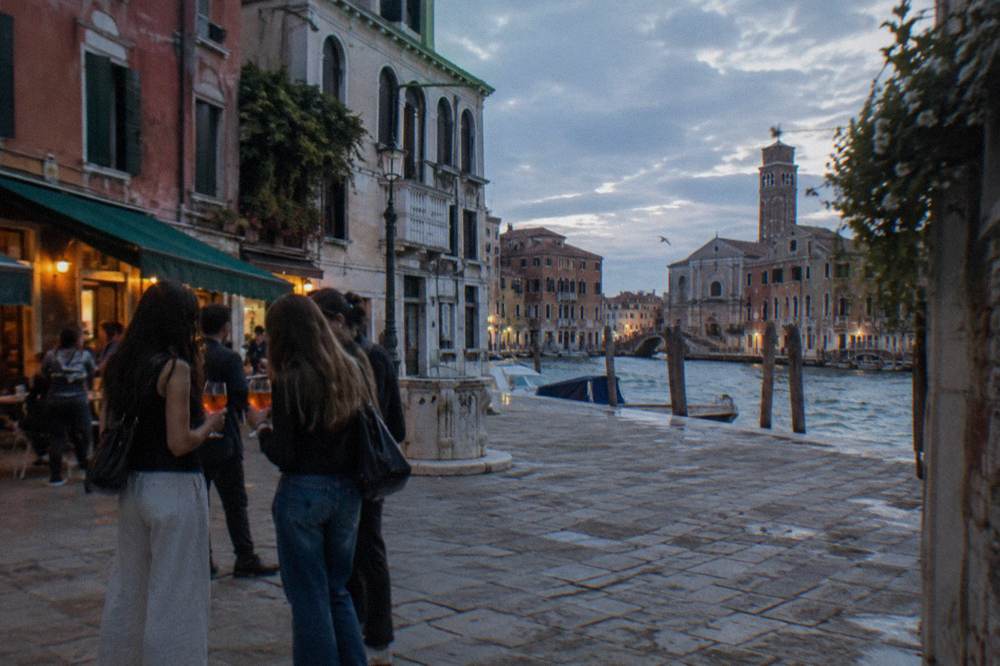
One city rule matters more in Dorsoduro's evening squares than anywhere else, because it is where the outdoor drinking happens. Venice prohibits drinking from glass, ceramic or similar containers outside permitted outdoor seating areas, and bans takeaway sales of alcohol in untapped glass bottles or glass glasses, with reported fines of EUR 25 to 500 under the municipal regulation. In practice: stay within the bar's seating or standing area with your glass, and do not walk off with it. The rule is on the comune's own site, and current enforcement details are worth a check before your evening.
The Zattere, the long sunny fondamenta facing the Giudecca Canal, is Dorsoduro's other food axis, more about a seated spritz with a view than a bacaro crawl, and it is where many evening walks end. For readers deciding between an evening crawl and a sunset sailing format, the evening food walk guide sets out the trade-offs.
Where Food Walks Start: Meeting Points By Sestiere
Guided walks in these three sestieri meet at named campi, not hotel lobbies or bridge corners: Campo San Giacomo di Rialto and Campo San Bortolomio for market and Rialto-based walks, the Jewish Ghetto and Campo Santi Apostoli for Cannaregio, and Campo San Pantalon for Dorsoduro. Operators state the exact point on the booking page, and group sizes are capped at 25 by city rule.
The meeting-point list is practical knowledge: it tells you where you will be standing at the start, and therefore which part of the city you can explore on your own beforehand. A walk starting at the Ghetto pairs naturally with a self-guided morning along the Cannaregio canals. A walk starting at Campo San Giacomo di Rialto, the square immediately west of the bridge, pairs with a dawn look at the Pescheria before the group forms.
| Meeting Point | Sestiere | Typical Walk Type |
|---|---|---|
| Campo San Giacomo di Rialto | San Polo | Market walks, market-adjacent tasting walks |
| Campo San Bortolomio | San Marco fringe | Central cicchetti walks heading toward Rialto |
| The Jewish Ghetto, Cannaregio | Cannaregio | Ghetto and Cannaregio food walks |
| Campo Santi Apostoli | Cannaregio | Bacaro crawls covering eastern Cannaregio |
| Campo San Pantalon | Dorsoduro | Dorsoduro and Zattere evening walks |
The 25-person group cap is a standing city regulation covering the historic centre and the lagoon islands, paired with a ban on loudspeakers, so larger guided groups use headsets, as reported in coverage of the 2024 rule. What any single tour's group size actually is comes from its listing, not from the city rule: the rule sets a ceiling, and operators set their own lower limits.
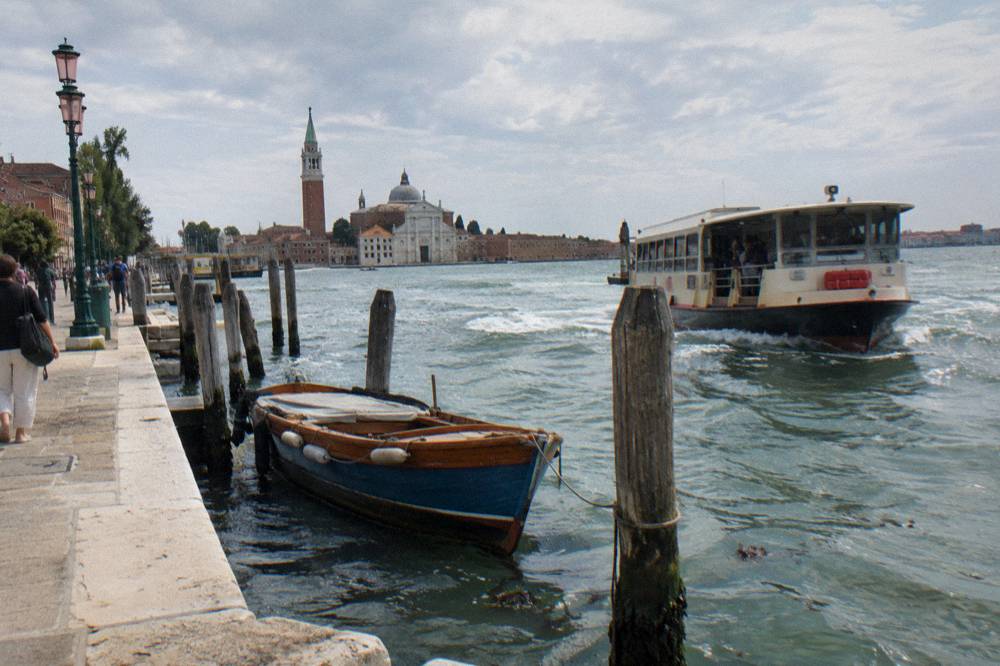
Getting between sestieri is a vaporetto question at the edges. A single 75-minute ACTV ticket is EUR 9.50 as reported, with a 24-hour pass at EUR 25, and children under 6 ride free. Within the three sestieri discussed here, walking is nearly always faster than the boat, since the distances are short and the vaporetto loops the outside of the islands rather than crossing them. Check current fares on the operator's official page before relying on them.
One further point of trip-level planning: the 2026 day-visitor access fee trial ran on 60 dates from April to late July and ended, so as of 27 July 2026 no fee applies and no payment or exemption is needed to visit, per the official access-fee portal. It returns in 2027 on listed dates between late March and mid-August, with amounts not yet published and arrangements due to be announced by 31 December 2026. Check the official page before a 2027 trip.
Local Versus Tourist Zones: Reading A Street Before You Sit
The reliable markers of a local-standing bar are counter-only service, posted price lists, a wall of wine bottles, and cicchetti priced around EUR 1.50 to 4. The markers of a visitor-oriented spot are host staff soliciting outside, a photographed English menu at the door, and table service pushed over the counter. The price gap between the two zones is real, and the coperto only applies at the table.
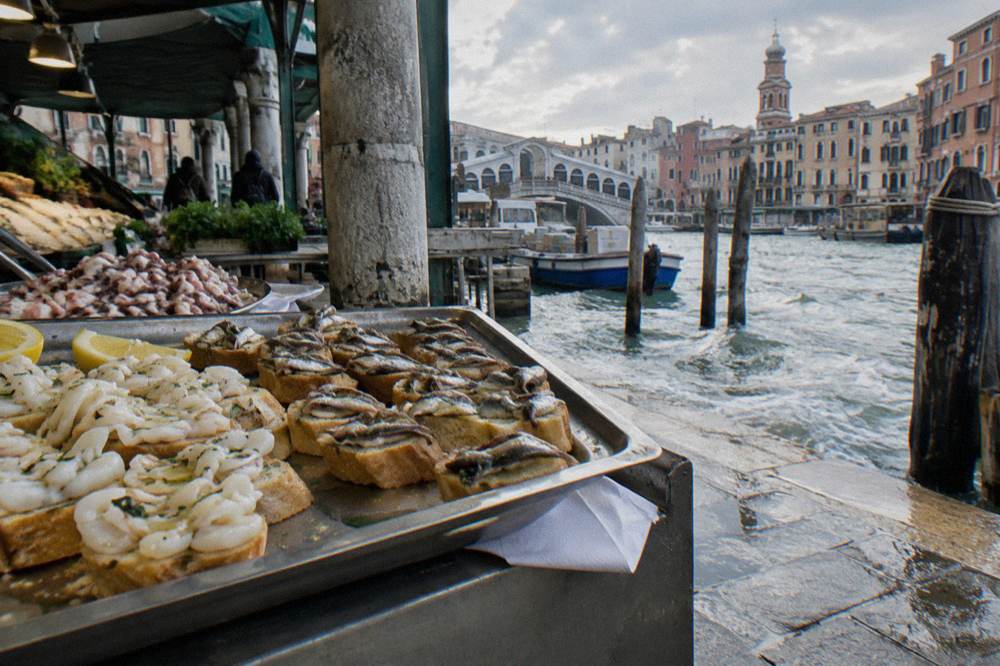
Cannaregio, Dorsoduro and San Polo each contain both zones, sometimes on the same street. The strip between the Rialto bridge and Campo San Bortolomio is the most touristed food corridor in the three sestieri, and the lanes two blocks north of it in San Polo revert quickly to market-facing bars. In Cannaregio, the Strada Nova frontage skews toward passing trade while the lanes west toward the Ghetto and the canals around Campo dell'Orto skew residential. In Dorsoduro, the Accademia and Zattere waterfronts carry the visitor pricing, and the interior around Santa Margherita carries the student pricing.
The standing-versus-table decision does more work than any menu choice. Standing at the counter, the coperto does not apply and tipping is essentially not expected, with rounding up appreciated at most, as current reporting on Venetian practice notes. At a table, the cover charge of typically EUR 1 to 4 appears on the bill where the venue applies it, disclosed on the menu as the law requires. The tipping and restaurant etiquette guide covers the full picture for sit-down meals.
Dietary needs cut across all three sestieri, and the honest position is that listings vary. Where a tour description does not state vegetarian, vegan or gluten-free suitability, message the operator before booking rather than assuming, since the standing-bar canon leans heavily on bread and seafood. The vegetarian and gluten-free guide sets out what travels well in Venice.
Matching A Walk To Your Sestiere
Pick Cannaregio for a bacaro crawl with Ghetto history, San Polo for a market morning that ends in lunch, and Dorsoduro for an evening of spritz and standing bars. Then match the format: 2 to 3 hours for a focused crawl, 4 hours for market-to-lunch or Ghetto-plus-bacari depth. Booking the walk that matches the sestiere you are already staying in or near saves the crossing and puts you in the right district at its peak hours.
The three formats that cover these three sestieri between them are the Ghetto and Cannaregio walk with wine at 4 hours, the Rialto market lunchtime tour at 4 hours, and a taste-locals walking format with food, wine and spritz at 2.5 hours for a shorter central option. Prices and current ratings sit on each listing and shift with date and group size, so compare them at the point of booking rather than against printed numbers that age badly. Free cancellation terms are common on these listings, which makes locking in a morning or evening slot early a low-risk move.
| If You Want | Sestiere | Format That Fits |
|---|---|---|
| Ghetto history plus bacari | Cannaregio | 4-hour Ghetto and Cannaregio walk with wine |
| Market theater and seafood | San Polo | 4-hour Rialto market lunchtime walk |
| A short central introduction | Any, meeting centrally | 2.5-hour food, wine and spritz walk |
| Evening spritz culture | Dorsoduro | 3-hour sunset cicchetti and wine walk |
Travelers with more than one food slot in the city can chain the sestieri deliberately: a San Polo market morning, an afternoon gap for the Accademia or the Ghetto museums, then a Dorsoduro or Cannaregio evening crawl. That sequence follows both the market clock and the aperitivo clock, and it is the shape most repeat visitors settle into without naming it. The first-timers restaurant guide covers the sit-down evenings between the two.
Whatever the choice, verify the details at the source: the market hours on the official city listings, the access-fee position on the official portal if traveling in 2027, and each walk's meeting point, inclusions and price basis on its own booking page. The sestieri will still be there in their same order, doing their same things, and knowing which one does what is most of the plan.
Common Questions About Venice Food Neighborhoods
Which Venice Neighborhood Is Best For Food?
There is no single best, but Cannaregio holds the densest band of traditional bacari plus the Jewish Ghetto, San Polo holds the Rialto markets and market-fed bars, and Dorsoduro holds the evening spritz culture. Match the sestiere to your preferred hour: markets in the morning, bacari midday to evening, spritz squares late.
Are Food Walks In Venice Worth It If I Have Already Eaten My Way Around?
A walk earns its cost when it covers ground you would not find alone, such as the Ghetto's layered history in Cannaregio or a market route timed to the Pescheria's working hours. If you know your sestieri and your bacari already, a short 2 to 2.5-hour format adds more value than a 4-hour one.
Where Do Venice Food Tours Usually Meet?
Common meeting points from tour descriptions include Campo San Giacomo di Rialto and Campo San Bortolomio for central and market walks, the Jewish Ghetto and Campo Santi Apostoli for Cannaregio walks, and Campo San Pantalon for Dorsoduro walks. The exact point for any departure is stated on the booking page.
How Much Does A Bacaro Crawl Cost On My Own?
At reported counter prices, cicchetti run around EUR 1.50 to 4 a piece and an ombra around EUR 1 to 2.50, so a self-guided crawl of a few bars costs far less than a guided walk. What a guide adds is the route, the ordering help and the history, not cheaper food.
Is The Venice Access Fee Something I Need To Pay When Visiting The Food Neighborhoods?
No. The 2026 trial ended and, per the official portal, from 27 July 2026 no fee applies and visiting needs no payment or exemption. It returns in 2027 on listed dates between late March and mid-August, with amounts not yet published, so check the official page before a 2027 trip.