Rialto Market Guide: Fish, Produce And What To Taste
The Rialto has fed Venice for centuries: a produce market that trades until evening and a fish market that is finished by early afternoon. Knowing which stalls open when, and what is genuinely local, is the difference between a good visit and a wasted one.
Short answer
The Rialto produce market runs Monday to Saturday, 7:00 to 20:00, closed Sunday. The fish market, the Pescheria, runs Tuesday to Saturday, 7:00 to 14:00, closed Sunday and Monday. Go before 10:00 for the fullest stalls. A guided market tour or cooking class adds translation of the stalls, tastings, and a local's shopping routine.
Rialto is the working heart of Venetian food. Long before the tourists arrive on the bridge, crates of lagoon fish come off the boats at dawn and the produce stalls of the Erbaria open their awnings along San Polo's western edge. The market's rhythm has barely changed in centuries: fish first, early and fast, then vegetables and fruit through the day, with restaurant buyers and home cooks working the same counters in the same order. This guide covers the official hours, what each part of the market actually sells, what most visitors walk straight past, and when a guided walk or market cooking class earns its price.
What Is The Rialto Market?
The Rialto market is two distinct daily markets side by side in the San Polo district: the Mercato ittico di Rialto, the fish market housed under the Pescheria's loggia near Campo de le Becarie, and the Mercato ortofrutticolo di Rialto, the fruit and vegetable market at the Casaria side of Campo de la Pescheria. Together they have supplied Venetian kitchens since the market's medieval heyday, and both are open to anyone, not just trade buyers.
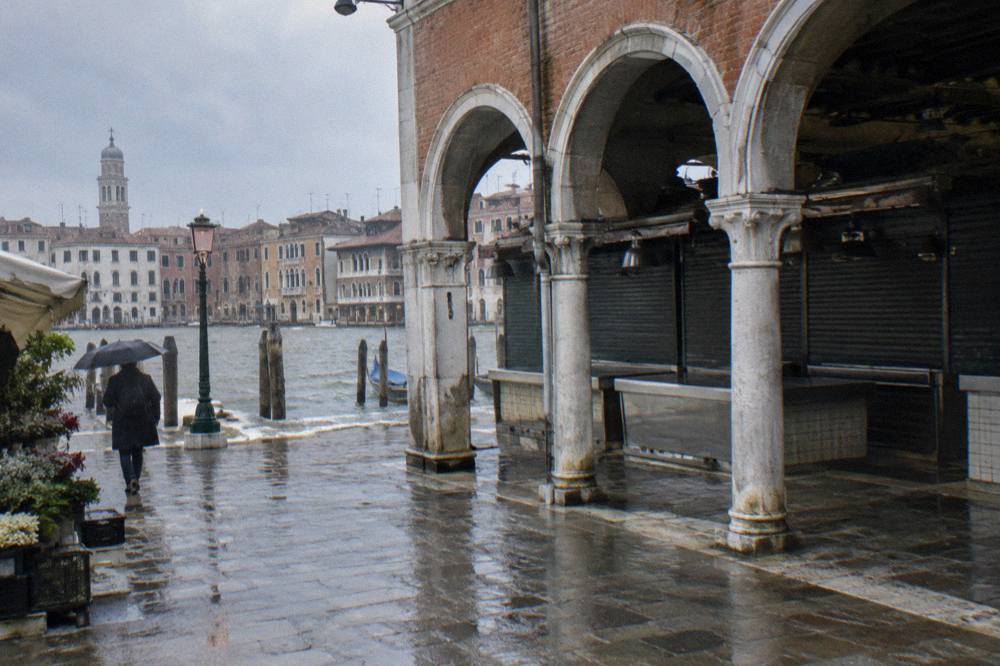
The geography matters more than most first-time visitors expect. The two markets sit a few minutes' walk from each other, but they keep completely different schedules and attract different crowds. The Pescheria is a covered loggia of purpose-built market architecture, its counters emptied and hosed down by mid-afternoon. The produce stalls spill across the open Casaria, busier later in the day and easier to browse at leisure.
The Comune di Venezia lists both the fish and produce markets, plus a tourist market at Rialto, among the daily markets of the historic centre on its official markets page. That official standing is worth remembering: this is a working wholesale-and-retail market, not a themed attraction built for visitors, and it behaves like one.
For context on how a visit fits into a wider trip, see How Many Days In Venice, A Food-First Itinerary, and for the neighbourhood itself, Venice Food By Neighborhood, Cannaregio, Dorsoduro And San Polo.
Rialto Market Hours And The Best Time To Go
The produce market trades Monday to Saturday from 7:00 to 20:00 and is closed Sunday. The fish market trades Tuesday to Saturday from 7:00 to 14:00 and is closed Sunday and Monday. Mornings before about 10:00 are the fullest at both; after mid-afternoon only the produce stalls remain, and on Sundays and Mondays the whole complex is quiet.
Those hours are as reported by the official Venice tourism site on its markets page, and they are the single most useful planning fact about Rialto. Tour listings themselves warn that the fish market is closed Sundays, Mondays and Italian holidays, and that in the afternoon the fish market is shut. A visit timed wrong does not mean a smaller market; it means no fish market at all.
| Market | What it sells | Days | Hours | Closed |
|---|---|---|---|---|
| Pescheria (Mercato ittico) | Fish and shellfish | Tuesday to Saturday | 7:00 to 14:00 | Sunday, Monday, Italian holidays |
| Erbaria (Mercato ortofrutticolo) | Fruit and vegetables | Monday to Saturday | 7:00 to 20:00 | Sunday |
The best time to go is early, ideally between 7:30 and 9:30, when trade is at its liveliest and counters are full. By 11:00 the fish market is winding toward its close, and by early afternoon the Pescheria is empty stone. The produce market gives you more slack, but its best produce also moves in the morning. If your only free slot is late afternoon, browse the Erbaria and save the Pescheria for another day.
This timing reality is exactly why guided market walks start in the morning. The four-hour Rialto Market Food and Wine Lunchtime Tour from this site's market-and-street-food category is built around the same clock: stalls first, then tastings and lunch after the buying is done.
A note on getting there and the wider rules of the moment. The vaporetto network surrounds Rialto on the Grand Canal, and reported ACTV fares stand at EUR 9.50 for a single 75-minute ticket and EUR 25 for a 24-hour pass, worth checking on the operator's own pages before you travel. On the city's entry rules: the 2026 day-visitor access-fee trial ended, and as of 27 July 2026 no fee applies, per the official access-fee portal. It returns in 2027 with listed dates but amounts not yet published, so check the official page if your trip falls next year.
The Pescheria: Inside Venice's Fish Market
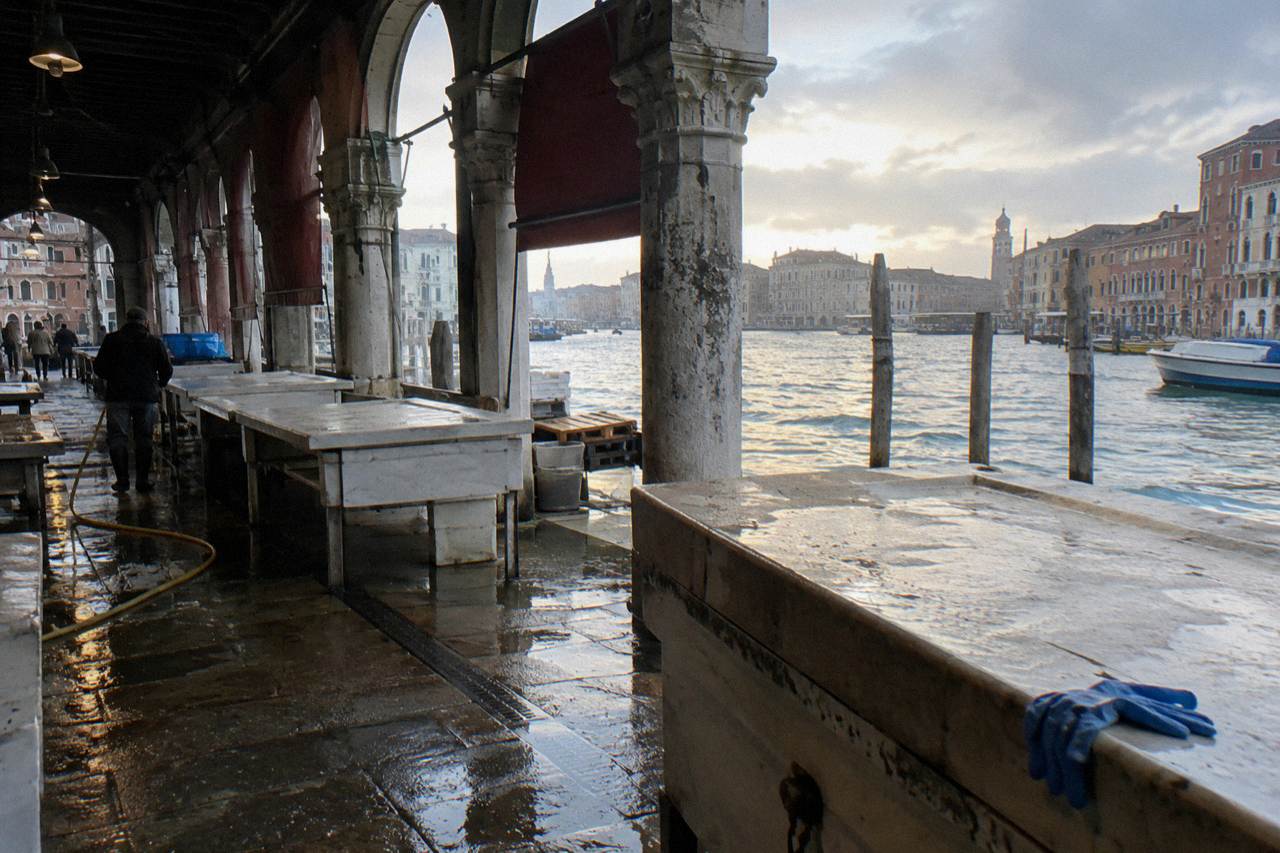
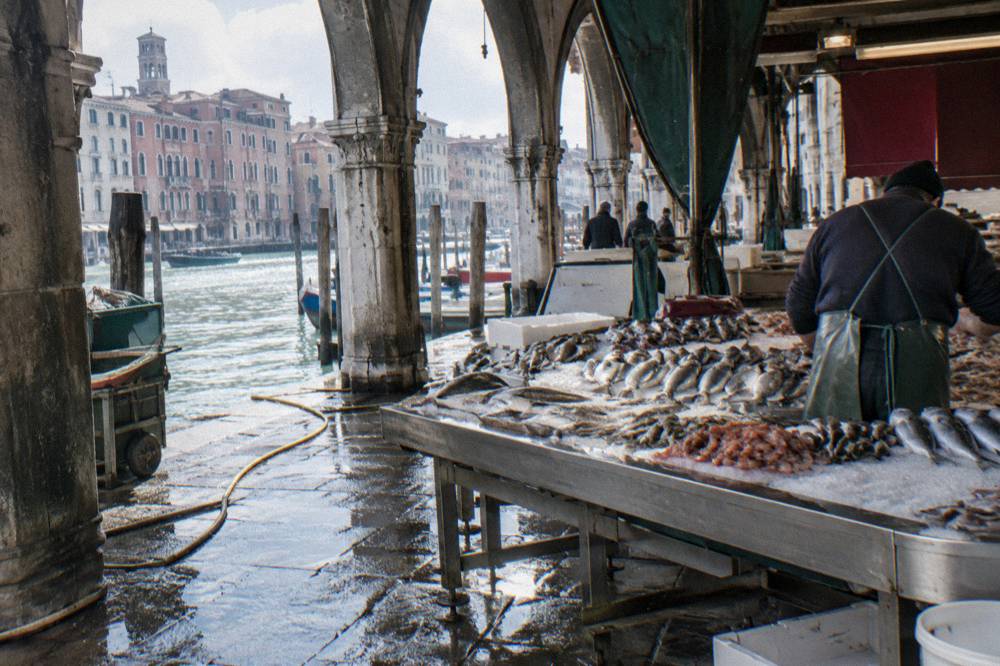
The Pescheria is the covered fish market under the loggia at Campo de le Becarie, trading Tuesday to Saturday mornings only. Expect lagoon and Adriatic catch laid out on steeply angled stone and steel counters, buyers moving fast, and no performance for visitors: photograph politely, buy something if you linger, and accept that specific fish on any given day depends entirely on what the boats brought in.
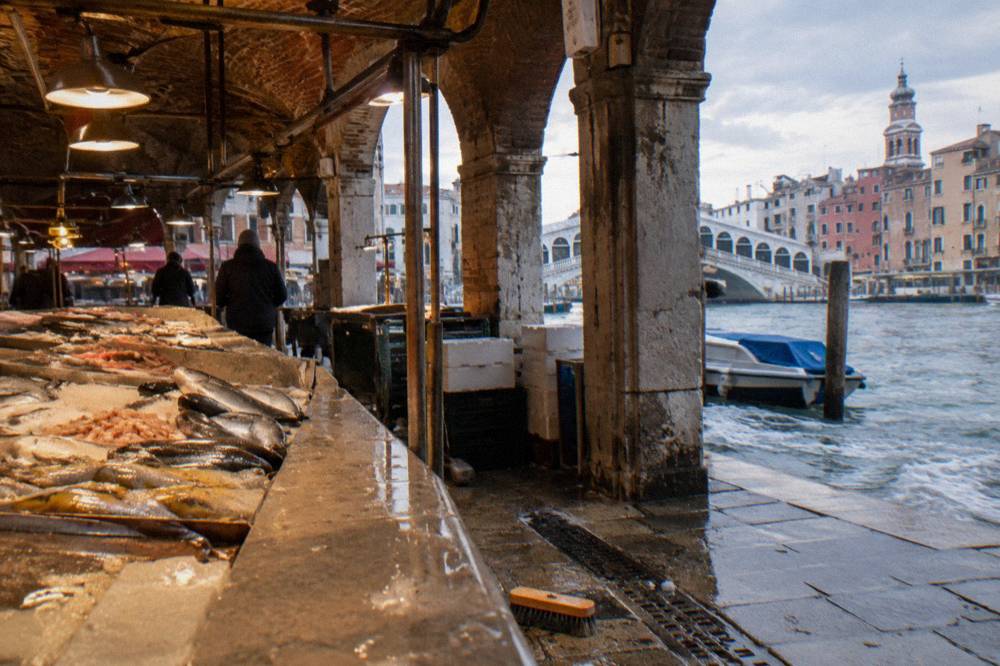
The building itself repays a look. The loggia's angled counters were designed so melted ice drains away from the fish, a piece of functional market architecture rather than decoration. Trade here starts before most visitors are awake and the energy is concentrated into a few hours; restaurant staff, shop owners and home cooks all work the same rows before the 14:00 close.
What is on the counters varies with the day and the season, and no honest guide can promise particular fish on a particular morning. What the market reliably shows is the range Venice's kitchens are built on, and the lagoon's own specialties sit at the centre of that tradition. The lagoon-islands food research for this site records risotto di gò, a risotto made with lagoon goby, as a signature Burano preparation, and the same lagoon catch supplies Rialto's counters. Spring brings its own short seasons: the first violet artichoke buds from Sant'Erasmo, the lagoon's vegetable island, are noted in the same research as a brief spring harvest.
This is where a guide genuinely changes the experience. A stall translated is a stall you actually learn from: what the fish is, how Venetians cook it, what a fair portion looks like, why one crate commands a higher price than the next. Without that, the Pescheria can read as an impressive but closed book, fifteen minutes of looking and moving on. Our companion guide, Rialto Fish Market, Pescheria, What You See, goes deeper on the market itself, and Rialto Market Hours And The Best Time To Go covers timing scenarios in more detail.
Fruit And Vegetable Stalls: What Is Actually Local
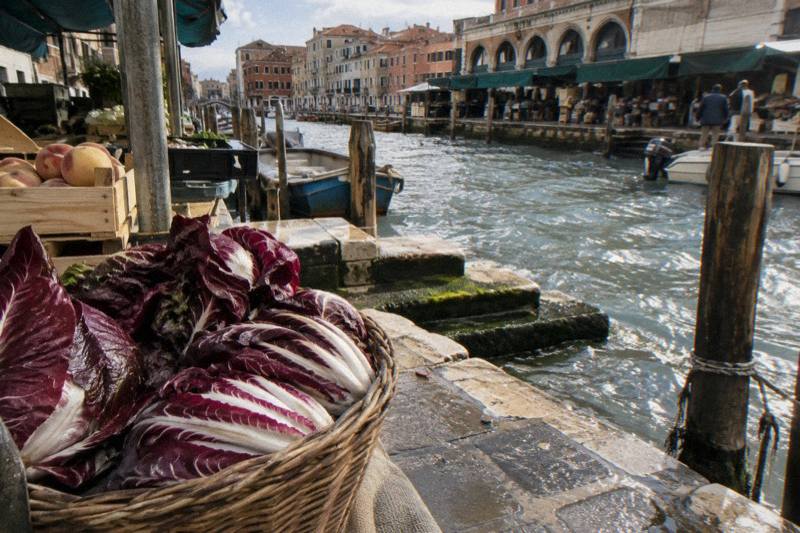
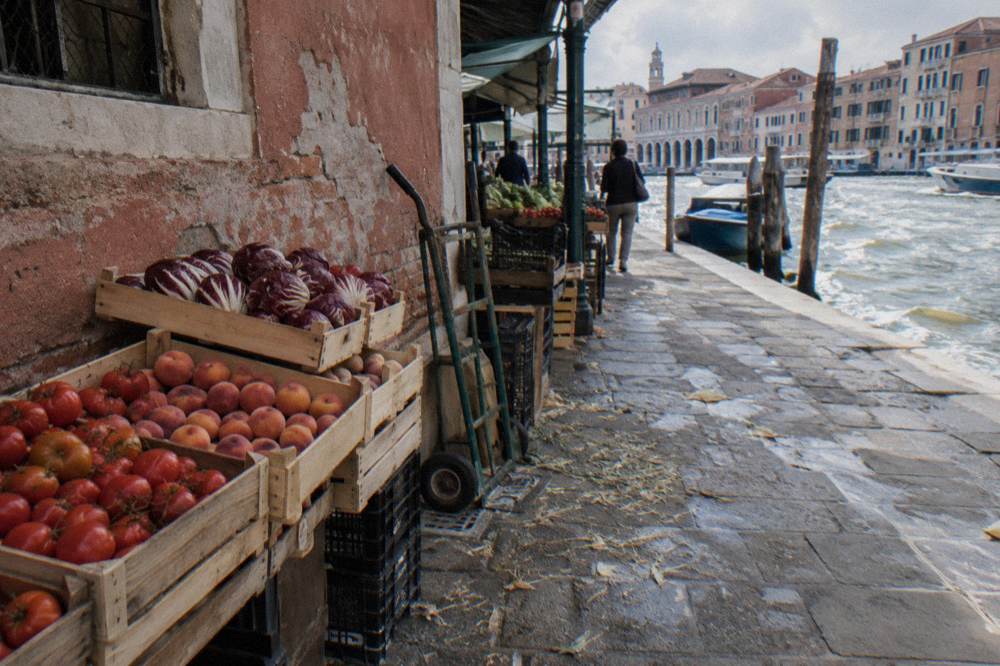
The Erbaria's fruit and vegetable stalls run Monday to Saturday, 7:00 to 20:00, and mix genuine Venetian and lagoon produce with imported goods, so locality is not automatic. Look for what the season and the lagoon actually produce: spring artichokes and white asparagus, autumn radicchio, and the small-grower stalls whose stock changes week to week rather than staying identical all year.
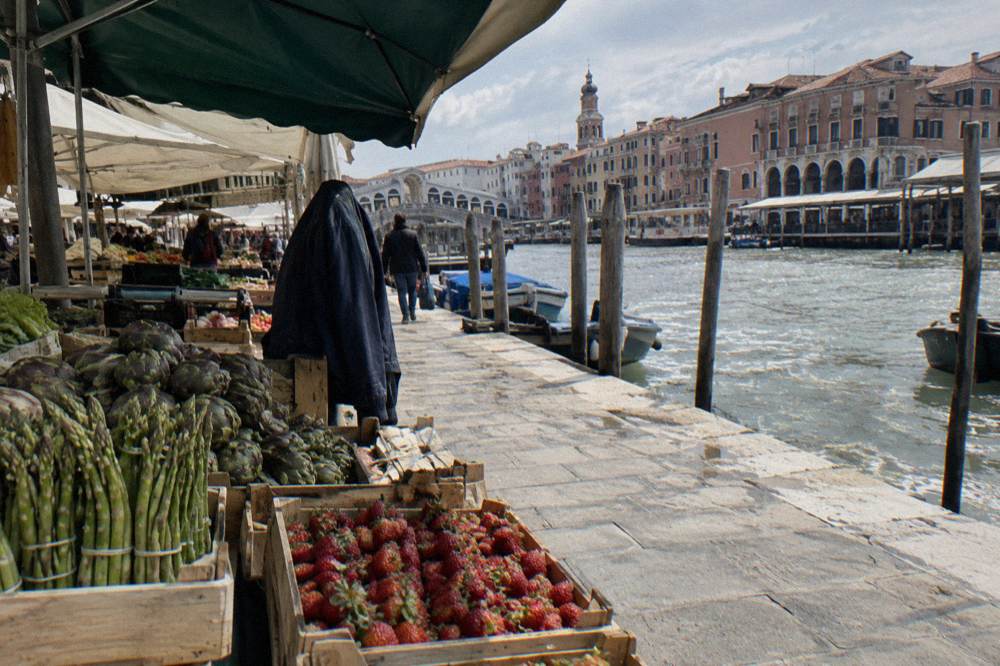
The honest rule of thumb: a stall selling the same twelve items in every month of the year is not selling the seasons. Venice's own food calendar, covered in Venice Food By Season, Moleche, Radicchio And White Asparagus, is built around short windows. Sant'Erasmo's violet artichokes are a spring item; the island is described in this site's lagoon research as the orto di Venezia, the city's garden, and its produce reaches Rialto when it reaches it.
Squid, cuttlefish and shellfish have their own rhythms on the fish side, but on the produce side the visitor's advantage is simple: ask. Stallholders at a working market answer questions about their own goods, and a few words of Italian plus a pointing finger will get you further than a translation app. Buying a piece of fruit for immediate eating is normal market behaviour, not a tourist intrusion.
For shoppers, the standing local prices are worth knowing before you go. Reported cicchetti at traditional bacari run around EUR 1.50 to 4 a piece, and an ombra, the small house-wine glass, around EUR 1 to 2.50, as confirmed on the official Visit Venice food pages. Those are bar prices rather than market prices, but they frame what a snack detour after shopping should cost.
What Most Tourists Miss At Rialto
Most visitors see the market's architecture and miss its content: they arrive after the Pescheria closes, browse the Erbaria without knowing what is seasonal, and leave without tasting anything. What they miss is the buying culture, restaurant staff sourcing the day's fish, the interplay of lagoon and island produce, and the bacari around the market's edges that exist to serve the people who work it.
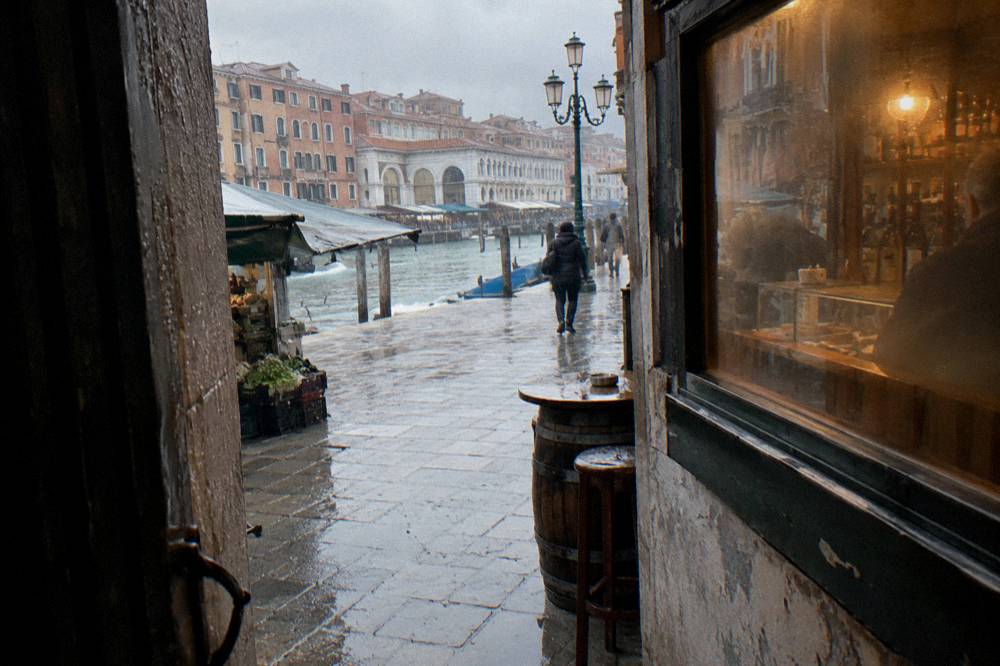
The streets around Rialto are as much a part of the experience as the stalls. The bacari here serve the market's workers, which means early opening, quick cicchetti and wine at the counter, and a pace set by people with somewhere to be. The etiquette of that ritual, standing, ordering, paying, moving on, is covered in Bacari Etiquette, Ombra And The Venetian Wine Ritual, and the dishes you will find on those counters in What To Eat In Venice, Traditional Dishes.
The second thing tourists miss is timing itself. A 14:00 arrival finds a fish market that has been scrubbed and shut for hours. A Sunday arrival finds both markets closed, or nearly so, with only the tourist market the comune lists still trading. Neither is a failure of the market; both are failures of planning, and both are avoidable with the hours table above.
Guided Market Food Walks Compared
Three guided formats cover Rialto well: a four-hour market-and-lunch walk with wine, a 2.5-hour street food tour with a local guide and tastings, and a 2.5-hour semi-private market and cicchetti experience. All three are morning-weighted, all include tastings, and the differences are duration, group intimacy and how much of the visit is market versus bacari.
| Tour | Length | Category | Format focus |
|---|---|---|---|
| Venice: Rialto Market Food and Wine Lunchtime Tour | 4 hours | Market and street food | Market visit, tastings, wine and lunch |
| Venice: Street Food Tour with a Local Guide and Tastings | 2.5 hours | Market and street food | Street food tastings with a local guide |
| Semi-Private Venice Market and Cicchetti Food Experience | 2 hours 30 minutes | Wine and private tours | Small-group market visit plus cicchetti |
The four-hour lunchtime tour, the Rialto Market Food and Wine Lunchtime Tour, is the fullest version: market, tastings, wine and a sit-down lunch in one arc, which suits travellers who want Rialto to be the morning's main event rather than a stop on a longer walk. Prices and current meeting points are on the operator's booking page, since these vary by date.
The street food tour suits a shorter morning or a first day in the city, when you want the market's flavour plus the surrounding stalls and counters without committing half a day.
For travellers who put small groups first, the semi-private market and cicchetti experience trades a bigger group for more room to ask questions at each counter.
Deciding between a walk and a class is a genuine fork, and Food Walk Or Cooking Class In Venice, Which To Book works through it. The short version for Rialto: the walk shows you how Venetians shop, the class shows you what they do with it.
Going Solo: Prices And Practicalities
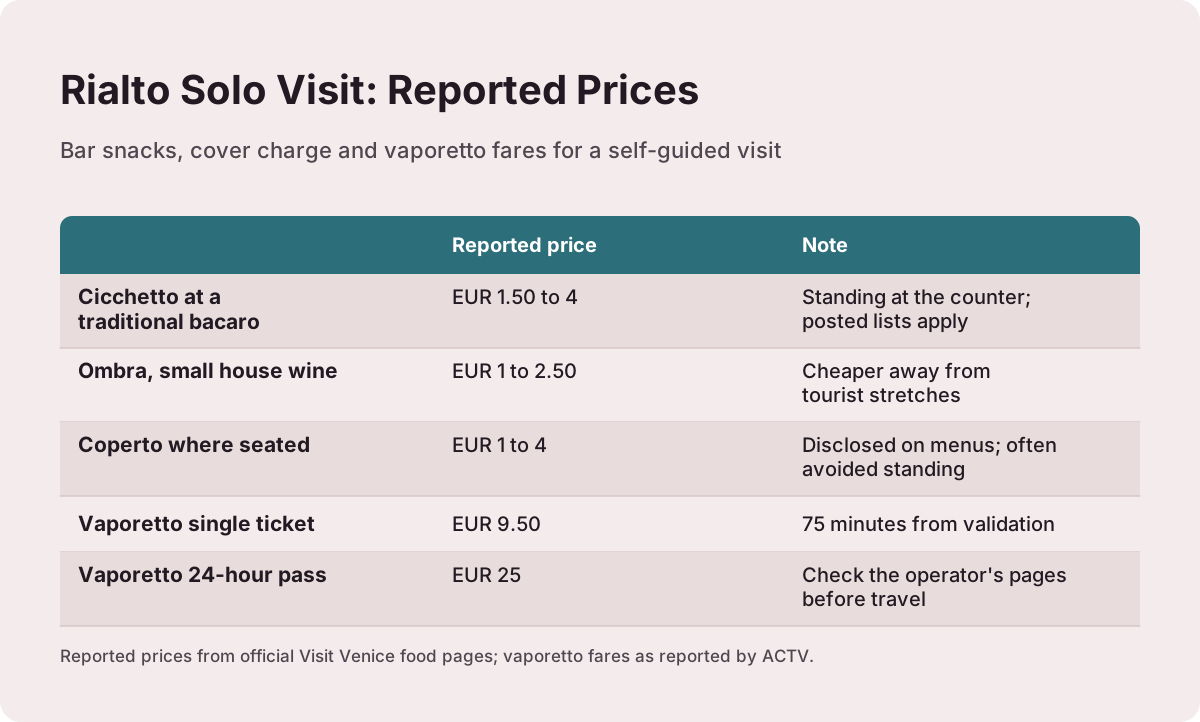
A self-guided Rialto visit costs nothing to enter, and the spend is whatever you choose at stalls and nearby bars: reported cicchetti around EUR 1.50 to 4, an ombra around EUR 1 to 2.50, and a coperto of roughly EUR 1 to 4 per person where you sit down. Bring cash for small stalls, go early, and check any tour or bar's own page for current prices.
| Item | Reported price | Note |
|---|---|---|
| Cicchetto at a traditional bacaro | EUR 1.50 to 4 | Standing at the counter; posted lists apply |
| Ombra, small house wine | EUR 1 to 2.50 | Cheaper away from tourist stretches |
| Coperto where seated | EUR 1 to 4 | Disclosed on menus; often avoided standing |
| Vaporetto single ticket | EUR 9.50 | 75 minutes from validation |
| Vaporetto 24-hour pass | EUR 25 | Check the operator's pages before travel |
Two practical points round out a solo visit. First, the group-size cap of 25 applies to guided groups in the historic centre, with loudspeakers banned; it does not affect independent visitors, but it explains why the guided walks around you move in neat, headset-wearing clumps. Second, if you carry a drink out of a bar, the municipal rule on glass containers applies: no drinking from glass outside permitted seating areas, with fines reported at EUR 25 to 500. Standing at the counter, as Venetians do, sidesteps the question entirely, and more on that ritual sits in Spritz In Venice, Aperol, Select And The Local Way.
From Stalls To Table: Market Cooking Classes
Market cooking classes combine a Rialto shopping walk with a hands-on session cooking what you bought, typically around three to four hours total, and they suit travellers who want to leave with a dish they can repeat. The Rialto Market Tour, Cooking Class, and Lunch runs four hours; a Venetian chef version runs the same length, putting the market at the front of the day and the stove at the end of it.
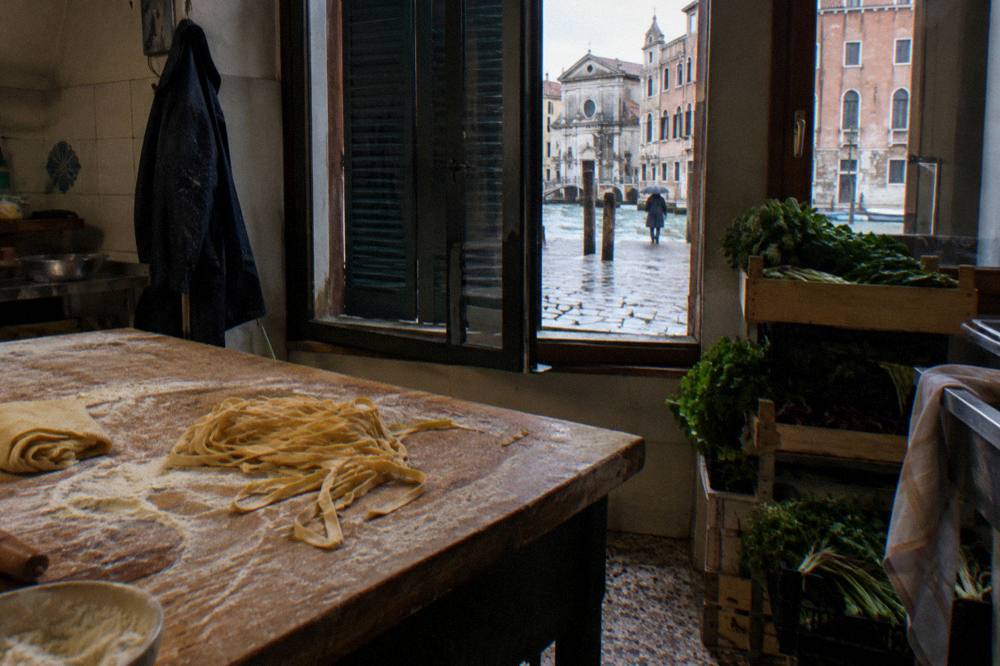
The format answers the question a walk cannot: now that you have seen the catch and the produce, what happens next? Research for this site's cooking-class coverage reports typical pasta and tiramisu class lengths of around three hours and shared groups capped around 12 guests, with shared class prices range from $57 to $154 per person. Those are planning ranges from operator pages, not promises; confirm the exact price and group size on the booking page of whichever class you shortlist.
For a first Venice trip, the choice rarely needs to be agonised over. If your mornings are precious and you want maximum food per hour, book the walk. If you like cooking, or the weather looks wet, book the class. Either way, the market itself is free to wander before or after, and Meeting Points And What To Bring On A Venice Food Walk covers the practical packing side.
The combined format, market tour, cooking class and lunch in one four-hour block, is the strongest version of the idea, and this site's Venice Cooking Class Guide, Which Type Fits You sorts the other options.
Rialto rewards early risers and punishes late ones, but it rewards every level of commitment. Browse free, snack cheaply at the counter, or hand the morning to a guide who can read the stalls; the market holds up its end in every case. The pages of Venice Food Tours cover the rest of the city's food in the same spirit, from cicchetti crawls to lagoon lunches.
Common Questions About The Rialto Market
What Are The Rialto Market Hours?
The produce market, the Erbaria, trades Monday to Saturday from 7:00 to 20:00 and is closed Sunday. The fish market, the Pescheria, trades Tuesday to Saturday from 7:00 to 14:00 and is closed Sunday and Monday. Tour listings warn the fish market is also closed on Italian holidays and shuts in the afternoon.
When Is The Best Time To Visit The Rialto Fish Market?
Between about 7:30 and 10:00 on a Tuesday to Saturday morning. The fish market closes at 14:00 and winds down well before that, so an afternoon visit finds empty counters. Early morning also catches the trade at its liveliest.
Is The Rialto Market Open On Sunday?
No. The produce market is closed Sunday, and the fish market is closed both Sunday and Monday. The comune also lists a tourist market at Rialto among the historic centre's daily markets, but the food stalls themselves take those days off.
How Much Does It Cost To Visit The Rialto Market?
Nothing; the market is a public daily market open to anyone. Your spend is what you choose: fruit or snacks at the stalls, or cicchetti and an ombra at nearby bacari, reported at around EUR 1.50 to 4 per piece and EUR 1 to 2.50 per glass.
Is A Guided Rialto Market Tour Worth It?
It is if you want the stalls translated: what the fish is, how Venetians cook it, and what is genuinely local. Guided options range from a 2.5-hour street food walk to a four-hour market, wine and lunch tour, and a market-plus-cooking-class format. Prices and inclusions are on each operator's booking page.
Does The Venice Access Fee Apply When Visiting The Market?
No. The 2026 access-fee trial ended, and as of 27 July 2026 no fee or exemption is needed to visit Venice, Rialto included. The fee returns in 2027 on listed dates, with amounts not yet published, so check the official access-fee page if your trip falls next year.