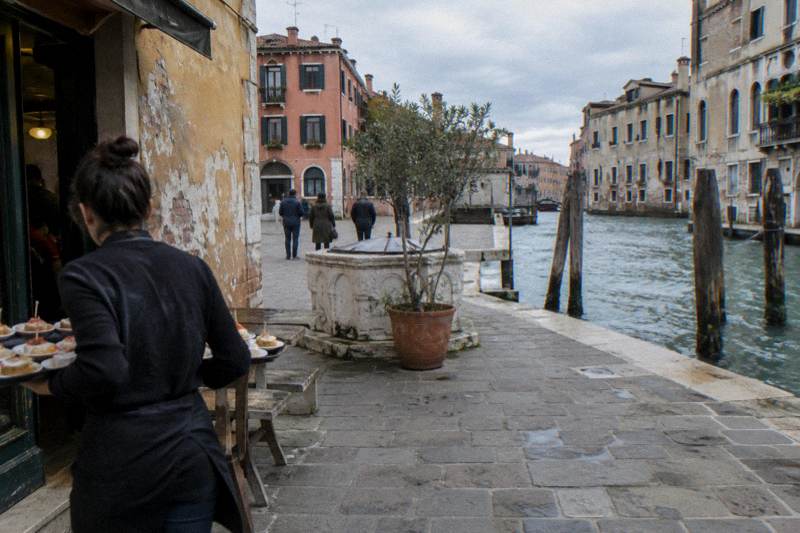
What To Eat In Venice: Traditional Dishes And Where To Try Them
Venetian cooking is lagoon cooking: small fried fish, salt cod whipped with oil, sweet and sour sardines, rice with peas, and a counter culture built around a small glass of wine. Here is what to order, dish by dish, and how a first-timer gets to taste it.
Short answer
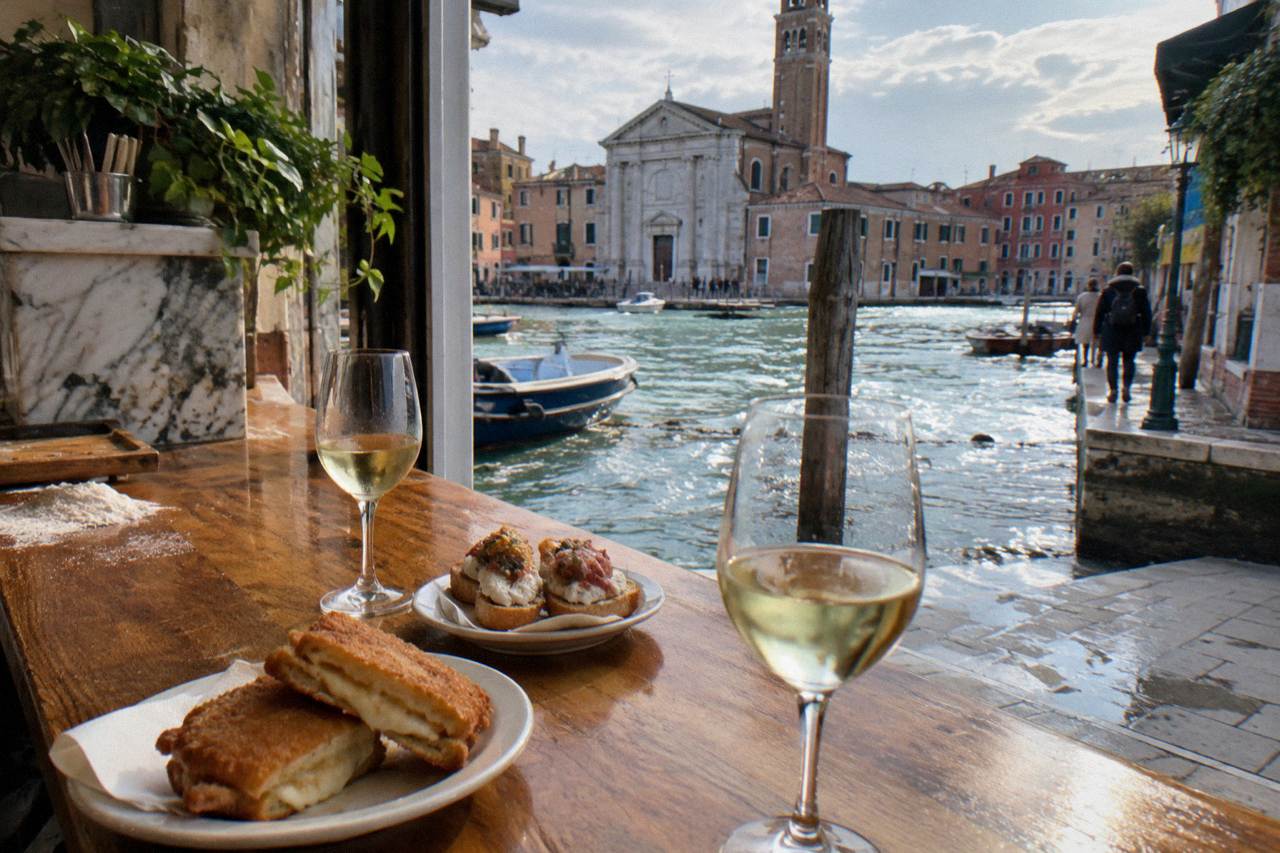
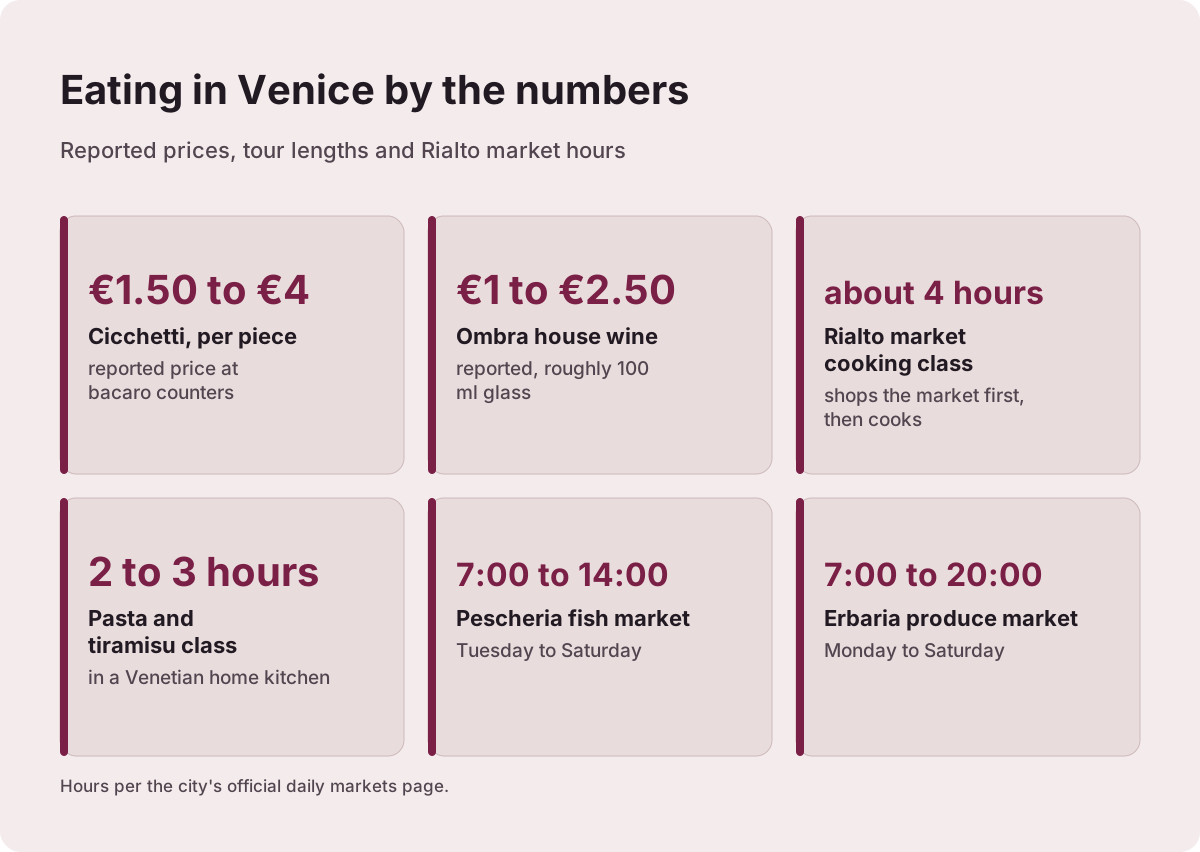
Start with cicchetti, the small snacks sold at bacaro counters for a reported €1.50 to €4 a piece, paired with an ombra of house wine at a reported €1 to €2.50. Follow with sarde in saor, baccalà mantecato, risi e bisi, bigoli in salsa and spaghetti al nero di seppia, then finish with fritole. Guided walks cover the counters in about three hours.
What To Eat In Venice: The Short Answer
If you eat one thing in Venice, make it a round of cicchetti at a standing bacaro counter: small snacks, a reported €1.50 to €4 a piece, with a small glass of house wine. Then work through the plates the city is known for: sarde in saor, baccalà mantecato with polenta, risi e bisi, bigoli in salsa, fegato alla veneziana and spaghetti al nero di seppia, finishing with fritole or a bussola biscuit.
Venetian food is not Italian food in the generic sense. It is a lagoon cuisine built on salt cod rather than fresh tuna, on small fry rather than steaks, on rice and polenta rather than big plates of pasta, and on sweet and sour preservation, a legacy of the days when fishermen needed their catch to survive a sea voyage. The onion and vinegar marinade of sarde in saor exists because sardines once had to last days in a boat. The whipped salt cod called baccalà mantecato exists because dried cod kept through winters when the lagoon gave nothing.
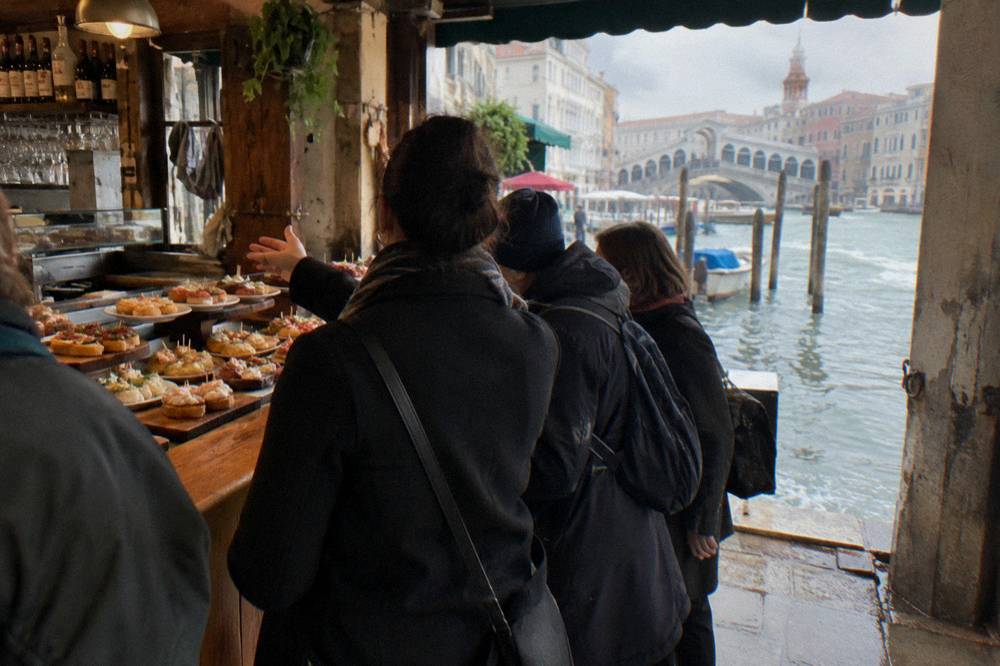
That history shapes how you should eat here. The best introduction is not one long restaurant dinner but a crawl: a piece or two at one counter, a glass of wine, a walk to the next bridge, another counter. The city's own tourism site describes this culture plainly, with the reported price ranges for cicchetti and the small glass of wine locals call an ombra, on its page on cicchetti. Stand at the counter, order by pointing, pay by the piece.
This guide walks through the dishes one by one, then explains how to read a Venetian menu without being steered to the tourist version of any of them. Where a guided food walk is the practical way to taste several of these dishes in one evening, it says so, and names which walks cover what. The table below is the whole article in miniature: the dishes, what they are, and where you will meet them.
| Dish | What it is | Where to eat it |
|---|---|---|
| Cicchetti | Small counter snacks, reported €1.50 to €4 a piece | Standing at a bacaro bar |
| Sarde in saor | Sardines marinated sweet and sour with onion | Counter on bread, or as a plate |
| Baccalà mantecato | Salt cod whipped with oil, on polenta or bread | Counters and restaurants citywide |
| Risi e bisi | Peas, pancetta and rice, soupier than risotto | Trattorie, best in spring |
| Bigoli in salsa | Thick wholewheat pasta, onion and anchovy sauce | Trattorie, a historic Friday dish |
| Spaghetti al nero di seppia | Pasta with cuttlefish and its ink | Fish restaurants |
| Fegato alla veneziana | Calves' liver stewed with onions, with polenta | Traditional restaurants |
| Tramezzini | Crustless soft sandwiches with many fillings | Bars, all day |
| Fritole | Small sweet carnival fritters | Bakeries and fry shops in season |
Cicchetti: The Dish That Is Also A Way Of Eating
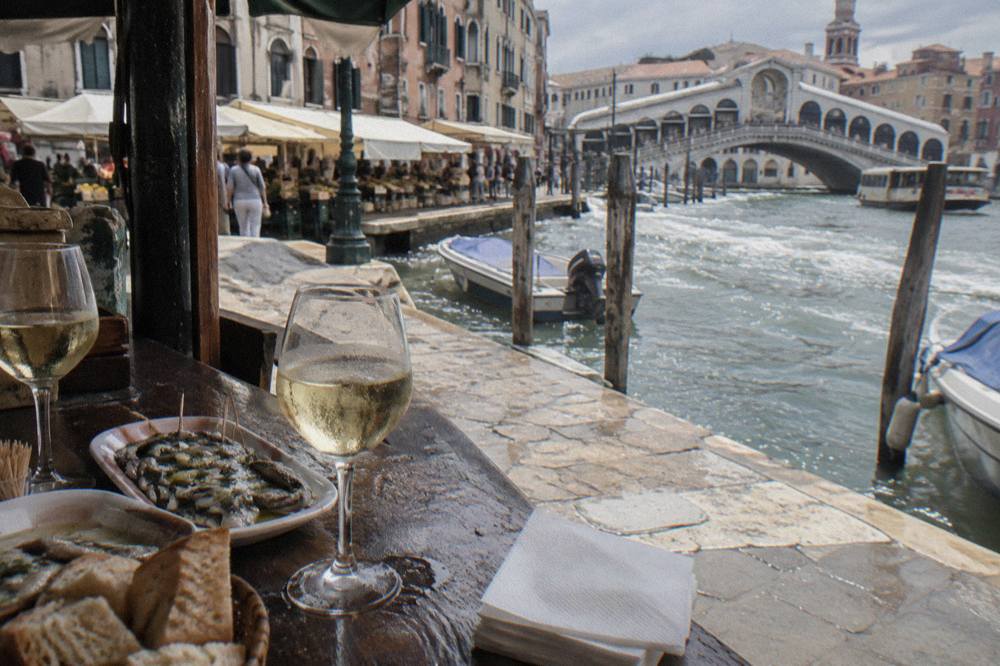
Cicchetti are small snacks served at bacaro counters, priced by the piece at a reported €1.50 to €4, designed to be eaten standing at the bar with an ombra, a small roughly 100 ml glass of house wine that runs a reported €1 to €2.50 in local spots. Together they are the closest thing Venice has to a national sport, and no first visit is complete without them.
The word covers a wide range: baccalà mantecato on a slice of polenta, fried mozzarella in carrozza, sarde in saor on bread, a wedge of cured meat, a fried ball of rice, a marinated anchovy. You order at the counter, often from a glass display case, and you pay per piece. The counter itself matters: standing, rather than sitting at a table, is the traditional and cheaper way, and it often avoids the coperto, the per-person cover charge that commonly runs €1 to €5 where applied and must be disclosed on the menu.
There is a whole etiquette to this, from how to order an ombra to which wine words to use, and it is worth learning before you arrive: the details are in how a bacaro crawl works and in the guide to bacari etiquette and the ombra ritual. If you would rather have someone order for you on day one, a guided walk does exactly that. The featured Eat Like a Local walk, about 3 hours in a small group, is built around this counter culture; its inclusions and price are on the operator's listing. Two other good fits are the street food walk with a local guide and the Venice Bacaro Food Tour.
One practical warning: no verified bacaro openings or closures have been reported in Cannaregio, Castello, San Polo or Dorsoduro in recent months, so old recommendations generally still stand, but hours change. Check before you cross the city for one specific counter.
Sarde In Saor And Baccalà Mantecato: The Two Pillars
Sarde in saor is sardines marinated sweet and sour with softened onions, vinegar and raisins; baccalà mantecato is air-dried salt cod rehydrated and whipped with oil and milk into a pale cream, almost always served on polenta or bread. Order one of each at a counter and you have tasted the two oldest ideas in Venetian cooking: preservation and transformation.
Both dishes began as survival food. Saor, the marinade, kept sardines edible on fishing voyages; the raisins and pine nuts arrived later through the spice trade that made Venice rich. Baccalà comes from a different sea entirely: the cod is dried in northern waters and shipped south, and the Venetian trick was to beat it with oil until it becomes something entirely new, light and almost mousse-like. It is one of the few dishes that appears everywhere in the city, from the humblest counter to serious restaurants, and it rarely disappoints anywhere.
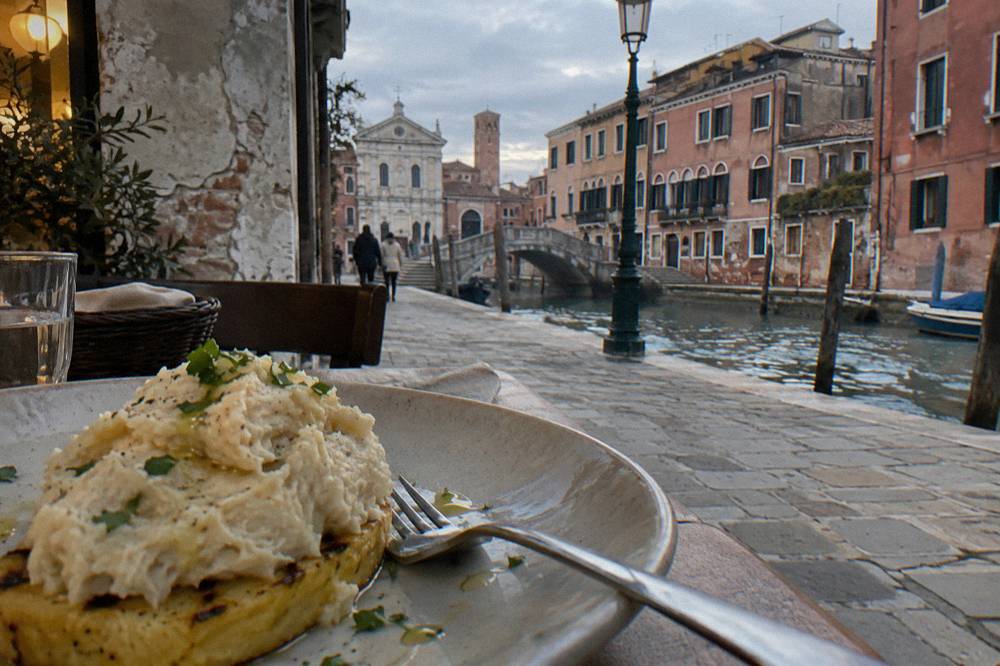
Each dish has its own deep dive on this site if you want the full story: the sweet and sour history in sarde in saor, Venice's sweet and sour sardines, and the technique in baccalà mantecato and polenta, Venetian staples. What matters at the counter is simple: baccalà mantecato is one of the most common cicchetti in the city, and sarde in saor appears both as a cicchetto on bread and as a full plate. Neither is expensive by Venetian standards.
Not sure a counter crawl is for you? Every walk compared here can be cancelled for free, so you can lock in a stop-heavy evening now and adjust your plans without penalty.
A note on how these dishes reach you on a tour: only a tour's stated inclusions can tell you what is actually served, so never assume a specific cicchetto is on a specific walk. The listings describe their tastings in detail, and that description, not this article, is the promise.
Risi E Bisi, Bigoli And The Pasta Course
Risi e bisi is Venice's signature rice dish, peas and pancetta cooked almost risotto-style but soupier, traditionally eaten on 25 April for the feast of Saint Mark; bigoli in salsa is thick wholewheat spaghetti dressed only with slow-cooked onion and salted anchovy, and both are the city's answer to the pasta course the rest of Italy expects.
Risi e bisi sits between a soup and a risotto, all'onda as locals say, waving, because the plate should ripple when tapped. It is a spring dish at heart, when the peas are fresh, but it appears on menus year round. Bigoli are the Venetian noodle: thick, rough-surfaced, originally made with duck eggs and pressed through a bigolaro, and the salsa version, onion and anchovy melted into a sauce over hours, is the historic Friday dish, meatless by the rules of the old calendar. Bigoli also turn up with duck ragù or onion and livers.
Neither dish is hard to find, but both are easy to do badly. The sign of good bigoli in salsa is that the onion has genuinely melted, not just softened; the sign of good risi e bisi is that the rice still has bite under the peas. If a menu photograph shows a stiff pile of rice, order something else.
If your interest in Venetian food runs deeper than tasting it, a cooking class is the other way in, and pasta is what most classes teach. The Rialto Market Tour, Cooking Class, and Lunch option, about 4 hours, shops the market first and then cooks what it bought; details and price are on the operator's listing.
For choosing between a walk and a class, the trade-offs are laid out in food walk or cooking class in Venice. The short version: walks feed you the city, classes send you home with a recipe.
Spaghetti Al Nero Di Seppia And Lagoon Seafood
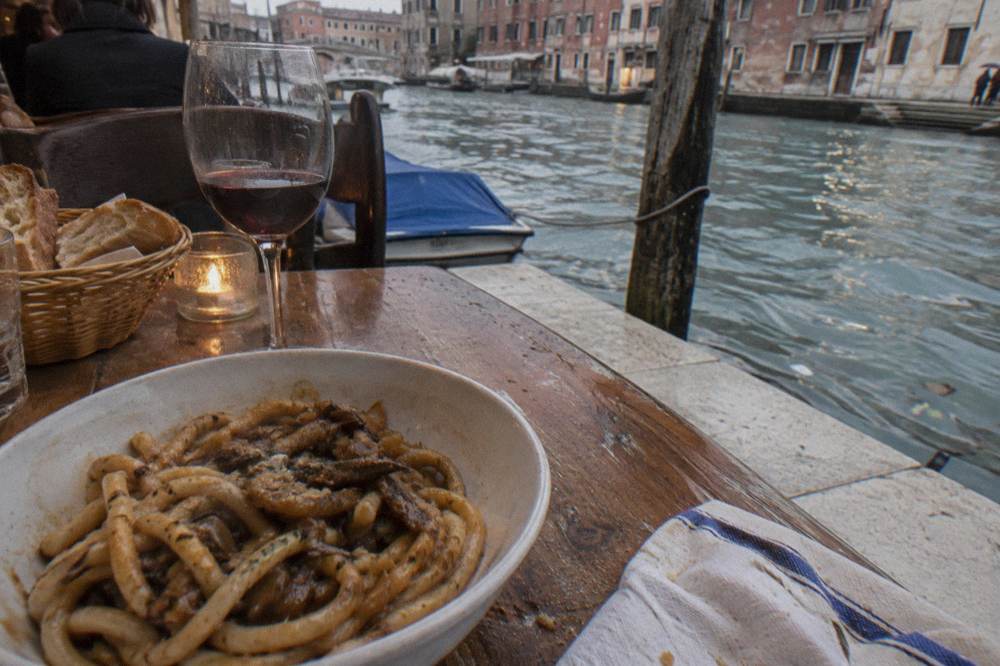
Spaghetti al nero di seppia is pasta tossed with cuttlefish and its own ink, black as the lagoon at night and tasting intensely of it; around it sits a whole school of Venetian seafood standards, from fried moleche, the soft-shell crabs that appear briefly in spring, to risotto with gò, the goby fish that is the classic dish of Burano.
The ink pasta divides visitors. Some find it a gimmick; anyone who has had it made well, with the cuttlefish braised until tender and the ink bound into the sauce, understands why it survives. Moleche are the true seasonal prize: crabs that have just shed their shells, eaten whole and fried, available only in short windows, and part of why spring is a fine time to eat in Venice. The seasonal calendar, including radicchio and white asparagus, is covered in Venice food by season.
The seafood connection to the islands is real too. Risotto di gò belongs to Burano, and the lagoon islands have their own food culture, from the bussolà butter biscuits of Burano to the Michelin-starred kitchen at Venissa on Mazzorbo, a walled vineyard holding the world's only hectare of the revived Dorona grape. That side trip has its own guide in Burano and Murano with food stops.
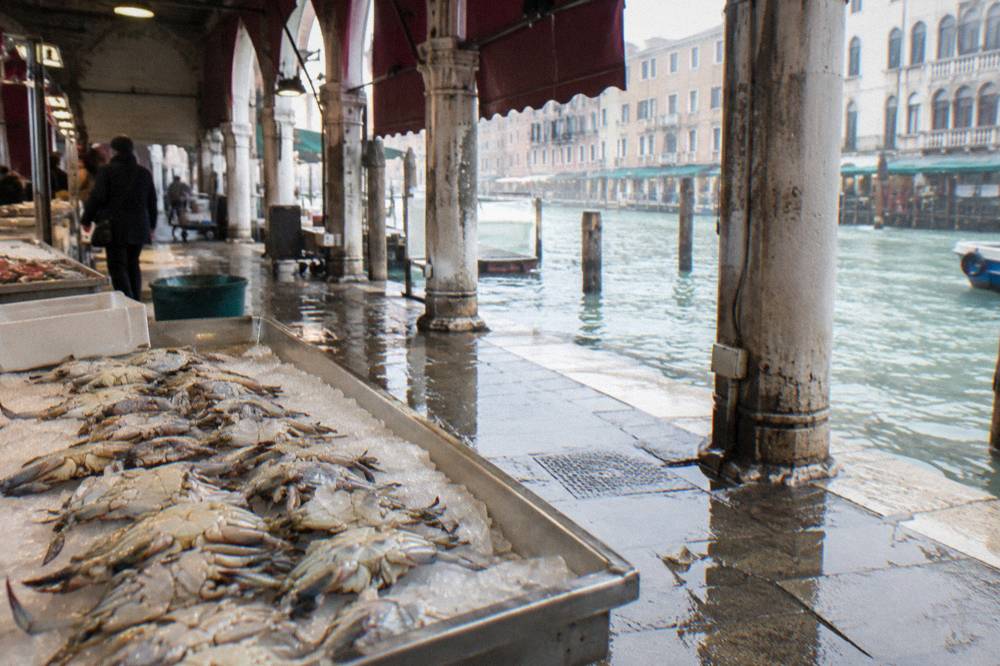
Where the fish comes from is worth knowing: the Rialto markets, whose official hours are below. Tour listings warn the fish market is also closed on Italian holidays, so a Monday or Sunday visit shows you the building, not the trade. Other pages covering the same trip are gathered on Venice Food Tours.
| Rialto market | Days | Hours | Closed |
|---|---|---|---|
| Pescheria (fish) | Tuesday to Saturday | 7:00 to 14:00 | Sunday, Monday, Italian holidays |
| Erbaria (produce) | Monday to Saturday | 7:00 to 20:00 | Sunday |
The city's official page on daily markets lists both markets, and the Venezia Unica tourism site publishes the hours above. A lunchtime market visit is therefore a Tuesday-to-Saturday plan, and an early one: the fish stalls wind down toward 14:00.
Fegato Alla Veneziana And The Meat Dishes
Fegato alla veneziana is calves' liver sliced thin and stewed with a great quantity of onions until sweet, served with polenta, and it is the one meat dish that defines the city's cooking; around it sit risotto with pig's liver and peas, duck bigoli, and the simpler grilled meats of the butcher-shop tradition.
Liver is a hard sell to visitors and a point of pride to locals. The technique makes the dish: the onions cook long and slow until they collapse into sweetness, and the liver goes in only briefly, at the end, so it stays tender. Done right, it does not taste metallic; it tastes of onion and butter and the slight bitterness that makes it interesting. Polenta is the standard partner, soft or grilled.
This is restaurant food more than counter food, though it appears as a cicchetto occasionally. It is also the dish most often ruined for tourists in the worst-located dining rooms, which is a reason to eat it somewhere a guide or a local sent you rather than wherever the evening happened to end.
Venetian meat cooking runs through the braising pot more than the grill, and the portions are smaller than in much of Italy, another habit of a city that traded for everything and wasted nothing. A guided walk that ends with a sit-down dinner, such as the evening food tour with bites, drinks and a sit-down dinner, about 2 hours 30 minutes, is one way to reach a proper restaurant table with the ordering already handled; what it includes is on its listing.
For a kitchen-table version of the same tradition, some classes teach full Venetian meals rather than pasta alone. The pasta and tiramisu class at a local's home, 2 to 3 hours, takes place in a Venetian home kitchen; check the listing for the menu and price.
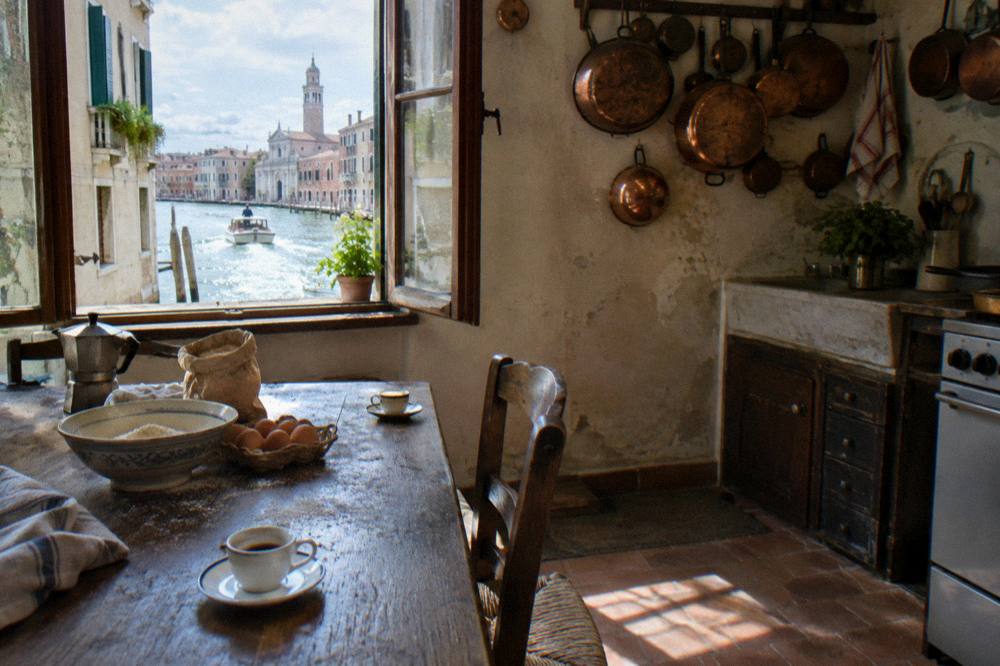
Tramezzini, Fritole And The Sweet Finish
Tramezzini are crustless white-bread sandwiches, soft and overstuffed, sold in bars all day for a standing lunch; fritole are small sweet fritters, the historic carnival doughnut of Venice, and the year-round sweet to look for is the bussola, a butter-rich ring biscuit from Burano. Together they cover the gaps a meal schedule leaves.
The tramezzino is underrated. Venetian bars stack them under glass, and the fillings, tuna and olives, prosciutto and artichoke, ham and mushroom, are a reliable €2-class lunch, though the exact price varies by bar, so check the posted list. The bread is pulled soft, not toasted, which surprises visitors expecting a panini. The full story, including how to spot a good one, is in the guide to tramezzini and Venetian sandwiches.
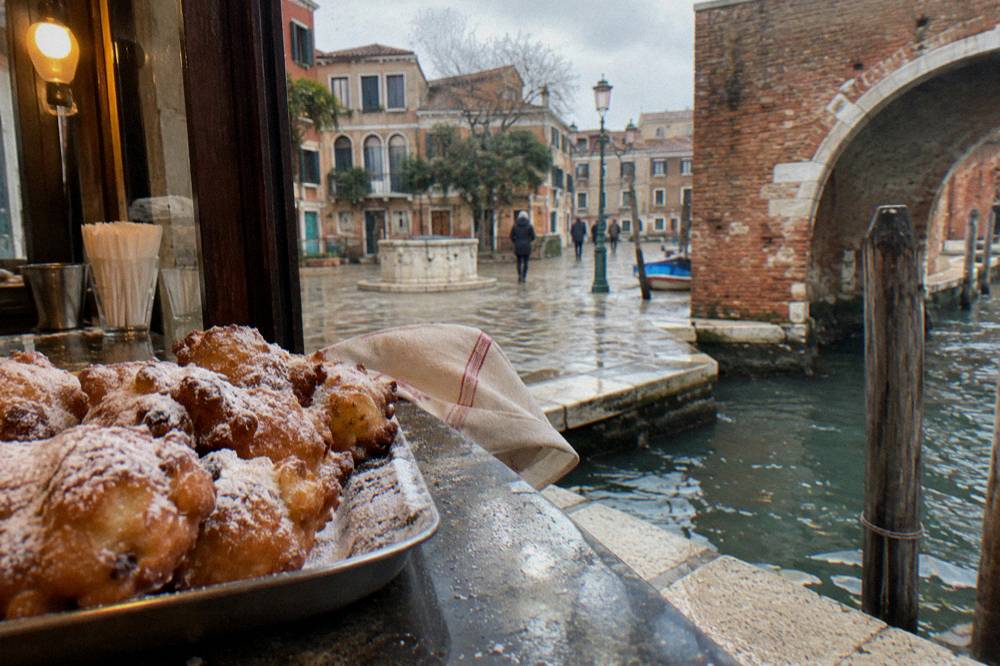
Sweets run deep here: fritole in their season, baicoli, the dry ship's biscuits meant for coffee, and the bussolà of Burano with its egg-yolk dough. The full tour is in Venetian sweets and pastries. If sweets are your priority over savoury, there is even a walk for it: A Sweet Stroll Through Venice, about 2 hours of pastries, chocolate and gelato; inclusions and price are on the listing.
One pairing worth learning early is the spritz, the orange aperitivo that opens most Venetian evenings. It has its own rules, and its own guide in spritz in Venice, Aperol, Select and the local way.
How To Read A Venetian Menu
A Venetian menu gives itself away in a few lines: a good one is short, seasonal, weighted to fish and lists baccalà, sarde in saor and bigoli by name; a bad one is long, laminated, illustrated, offers lasagne and pizza alongside everything else, and posts no prices per dish, which is illegal in Italy. Every menu must display prices, including the coperto if one is charged.
The signals are consistent. Handwriting beats lamination. A menu that names its fish supplier or lists the daily catch by weight is a fish restaurant doing its job. A menu with photographs is aimed at people who will eat once and never return. And the coperto, typically €1 to €5 per person where applied, must be printed; if it appears on the bill unannounced, that is worth questioning politely.
Dish words worth knowing on sight, collected in the decoder below, tell you a lot before you order anything. When a menu lists something out of season, such as moleche in October, be skeptical.
| Menu term | What it means | What it tells you |
|---|---|---|
| Saor | Sweet and sour onion marinade | Classic preservation cooking |
| In tecia | Cooked slowly in a pot | Braised, traditional preparation |
| Alla buranella | Onion and fish cooking of Burano | Island-style dish |
| Moleche | Soft-shell crabs, spring only | Seasonal, worth ordering |
| Castraure | First violet artichoke buds, spring | Sant'Erasmo island specialty |
| Ombra | Small glass of house wine | Counter drinking, not a bottle |
A practical word on dietary needs: unless a tour listing explicitly says vegetarian, vegan or gluten-free, assume it does not say, and message the operator before booking. The listings are the only source for what a walk can adapt, and the options are laid out in vegetarian, vegan and gluten-free food in Venice.
Tying The Dishes To A Day In Venice
A realistic food day: coffee and a pastry standing at a bar in the morning, tramezzini or a market browse at lunch, an afternoon cicchetti crawl from counter to counter, and one proper sit-down dinner built around sarde in saor, fegato alla veneziana or lagoon fish. Most visitors fit two of those four well; a guided walk compresses the crawl into a single led evening.
The timing of the city matters. Bacari fill toward evening, the Rialto fish market closes at 14:00 and rests on Sunday and Monday, and Venetians eat dinner later than many visitors expect. The rhythm of the day, and how many days to give it, is worked through in how many days in Venice, a food-first itinerary, and the neighbourhood question, Cannaregio versus Dorsoduro versus San Polo, is settled in Venice food by neighborhood.
For the crawl itself, the featured Eat Like a Local walk remains the simplest single booking: about 3 hours, small group, built on the counters where most of the dishes in this article live. Its price and inclusions are on the operator's listing, alongside the street food walk and the bacaro tour below. The comparison sums up how the three fit a first-time taster's day.
| Walk | Length | Best fit for a first-timer |
|---|---|---|
| Eat Like a Local food tasting tour | About 3 hours | Small-group counter culture, the classic crawl |
| Venice street food tour with a local guide | About 2.5 hours | Quick market-and-street-food orientation |
| Venice Bacaro Food Tour: Eat and Drink like a Venetian | About 3 hours 30 minutes | Longer bacaro evening, more drinking stops |
One last logistical note for 2026 and 2027: day-trippers pay no access fee right now, but the official page states the fee returns in 2027 on listed dates, with arrangements to be announced by 31 December 2026. The official access fee page is the source to check before a spring 2027 trip.
Common Questions About What To Eat In Venice
What Is The Most Traditional Food In Venice?
Baccalà mantecato, whipped salt cod on polenta, and sarde in saor, sweet and sour marinated sardines, are the two dishes with the deepest claim. Cicchetti, the counter snacks sold at a reported €1.50 to €4 a piece, are the traditional way to eat them.
What Should A First-Time Visitor Eat In Venice?
A cicchetti crawl covering baccalà mantecato, sarde in saor and a fried snack, paired with an ombra of house wine, then one sit-down meal with risi e bisi or bigoli in salsa and spaghetti al nero di seppia, finished with fritole or a tramezzino at lunch the next day.
Is Venice Expensive For Food?
Not necessarily. Cicchetti run a reported €1.50 to €4 a piece and an ombra €1 to €2.50, so a counter crawl can cost less than a restaurant starter. The coperto, €1 to €5 where applied, and tourist-zone menus are where budgets stretch.
What Time Do Venetians Eat Dinner?
Later than many visitors expect, with restaurant tables filling through the evening. The aperitivo hour, a spritz or an ombra with cicchetti, comes first, and bacari are busiest then.
Do I Need A Food Tour To Eat Well In Venice?
No, but a walk speeds up the learning curve: a guide orders at the counter, translates the menu and picks the neighbourhood stops. The featured Eat Like a Local walk, about 3 hours, small group, does this; what it tastes is listed on the booking page.
What Sweet Things Is Venice Known For?
Fritole, the carnival fritters; baicoli, dry dipping biscuits; and the bussolà, the egg-yolk butter ring biscuit of Burano. A dedicated sweets walk covering pastries, chocolate and gelato also runs in about 2 hours.