Venice Street Food: What To Try And What To Skip
Venice does not have a classic street food scene of food trucks and stalls. What it has is better: a centuries old culture of standing counters, fried seafood cones and small sandwiches eaten on the go.
Short answer
Venice street food means cicchetti at a bacaro counter, a fritto misto cone of fried lagoon seafood, a soft tramezzini sandwich and a glass of ombra house wine. Reported prices run about EUR 1.50 to 4 per cicchetto and EUR 1 to 2.50 for an ombra. Skip pizza slices, reheated arancini and anywhere with a tout outside.
Venice does not do street food the way Naples or Palermo do. There are no fry carts parked on corners and no evening market of skewers. Instead the city runs on a standing culture that is older than any of it: the bacaro, a small bar where cicchetti, bite sized snacks, are laid out on the counter and eaten standing with a small glass of house wine called an ombra. Add fried seafood cones near the Rialto market and soft tramezzini sandwiches cut from loaves the size of a briefcase, and you have a full day of eating without ever sitting at a table with a menu.
That standing culture is also why the city is easy to get wrong. Plenty of places near San Marco will sell you a sad slice of pizza or a reheated arancino at prices that would buy a proper plate of sarde in saor two bridges away. Knowing what Venice actually eats on the street, and what it never really ate at all, is the difference between a great eating day and an expensive disappointment. This page walks through the dishes worth hunting, the ones to walk past, what things should cost, and when a guided walk earns its price. If you are building a whole trip around eating, Venice Food Tours covers the wider ground: cooking classes, market walks and wine tasting included.
What Counts As Street Food In Venice
Venice street food is counter food, not stall food: the real categories are cicchetti at bacari, fried seafood cones from fry shops near the markets, tramezzini sandwiches from bars, and pastries like fritole from bakeries in season. Almost everything is eaten standing or walking, and almost none of it comes from a cart. Understanding that distinction is the single fastest way to eat well here.
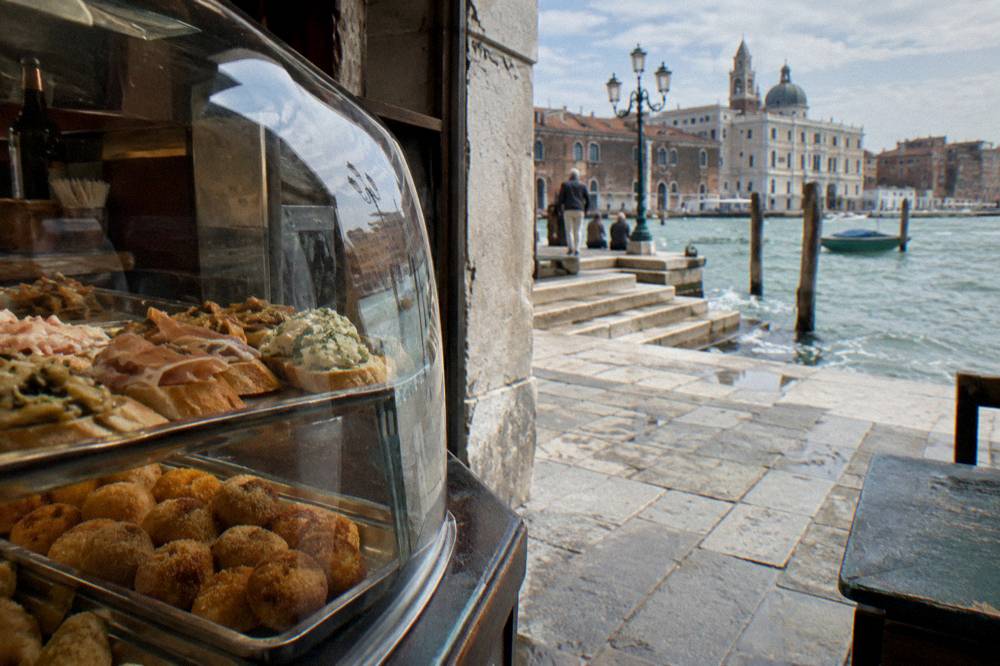
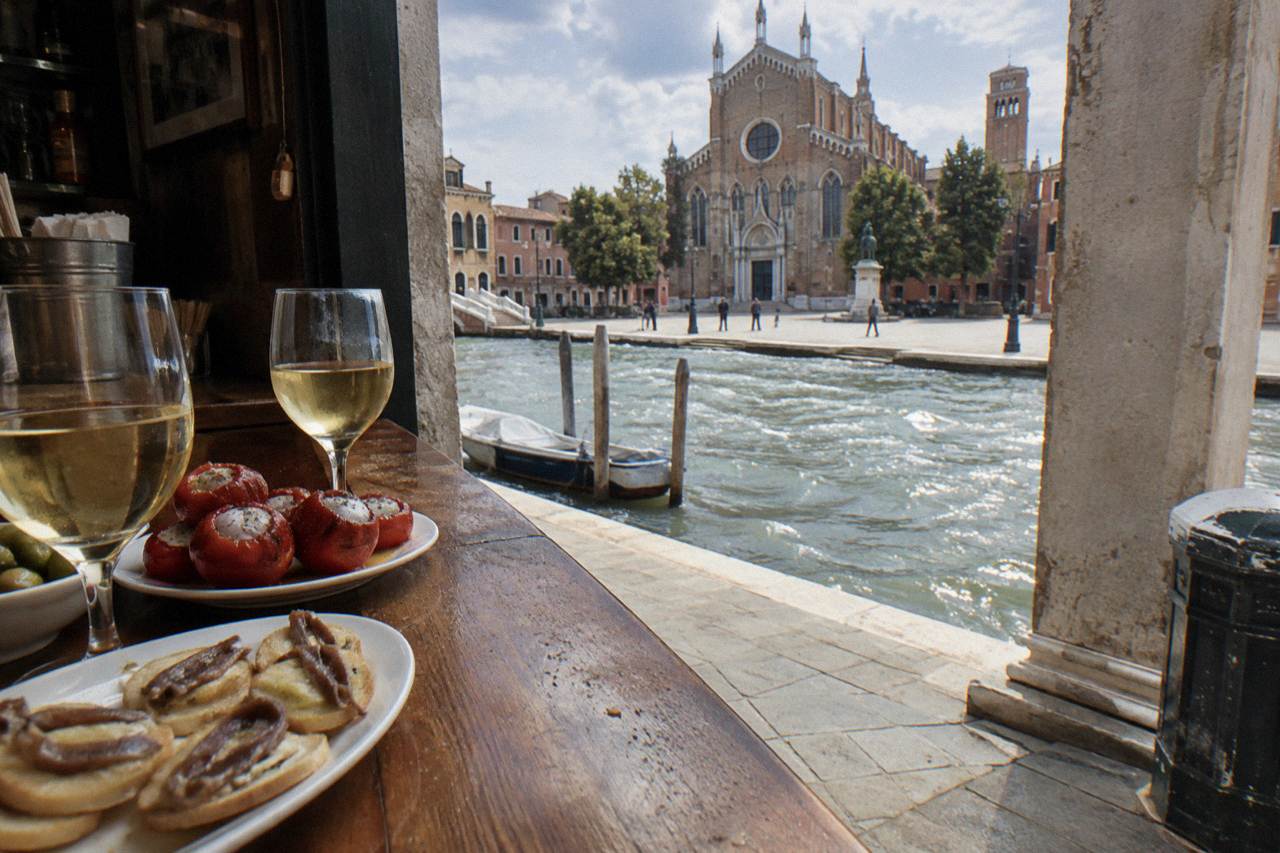
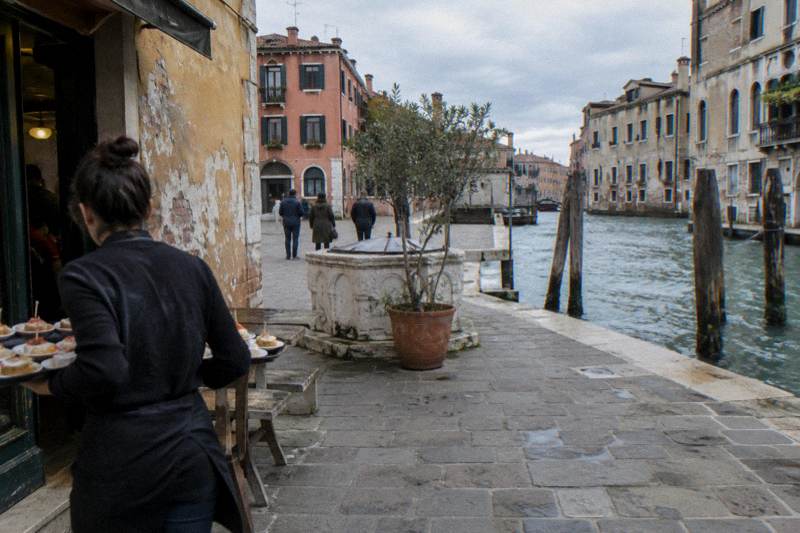
The bacaro is the core of it. These are small, often standing room only wine bars, sometimes just a counter and a few barrels, where the day's cicchetti are displayed under glass or on trays. You point, you pay, you eat on the spot or carry the plate outside. The word ombra, Venetian dialect for shade, dates to when wine sellers kept their barrels in the shadow of the Campanile in Piazza San Marco, and the ritual of an ombra with a bite has barely changed since.
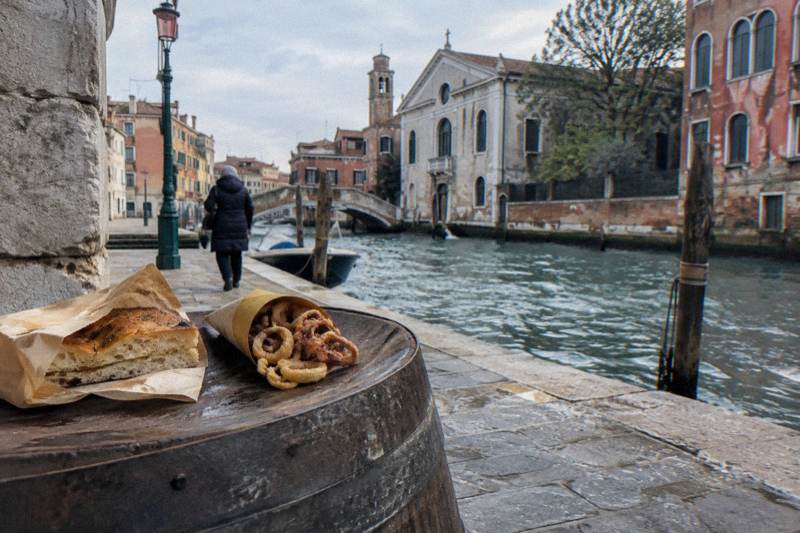
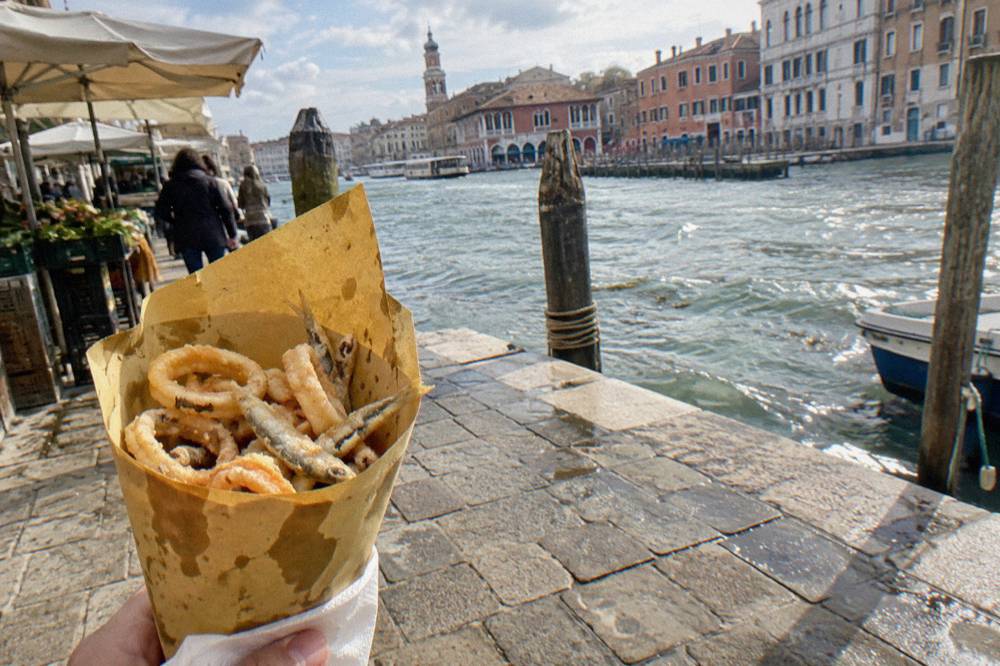
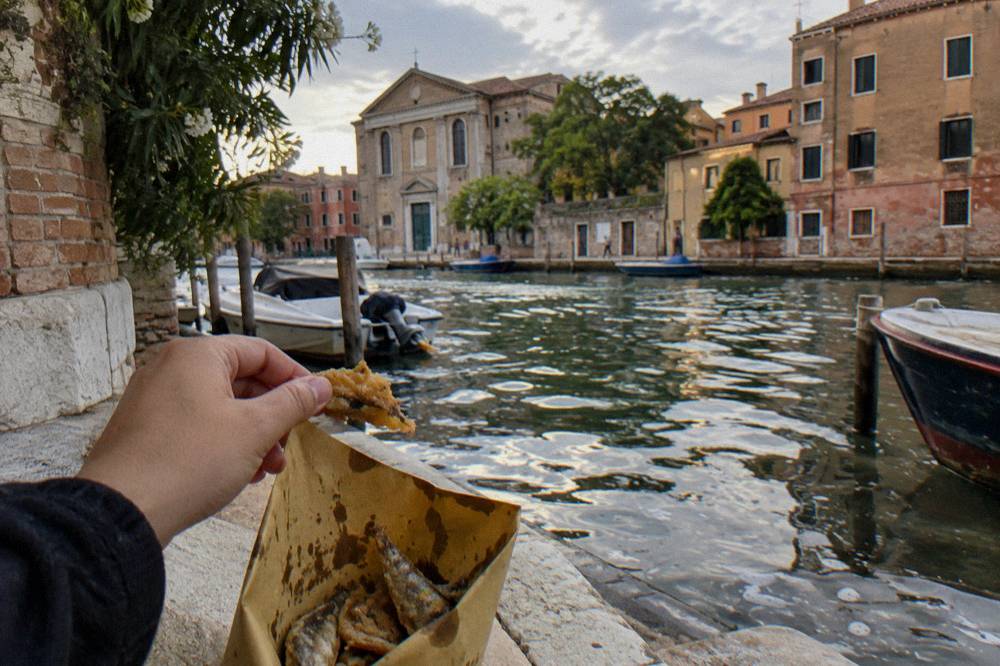
The second pillar is fried food. Fritto misto, a mixed fry of small fish, calamari and vegetables from the lagoon, is sold in paper cones from shops clustered around the Rialto market and the Strada Nova. It is the closest thing Venice has to true eat while walking food, and it is at its best in the late morning when the fry is fresh. Third come tramezzini, crustless sandwiches on soft white bread, stacked in bar windows across the city. They are cheap, quick and entirely local in their own way. Fourth are the sweets: fritole, small fried doughnuts dusted with sugar, appear in pastry shops through the carnival season, while baicoli and bussola biscuits are year round.
None of this needs translation into tourist formats. What trips visitors up is expecting the street food of southern Italy, pizza al taglio and arancini, to be native here. It is not, and the places selling it are usually selling it to people who do not know that. For a proper grounding in the counter ritual itself, the guide to what cicchetti are and how to order covers the vocabulary, and the rundown of bacari etiquette and the ombra ritual covers the customs.
The Foods Worth Trying
The short list of Venice street food worth hunting is cicchetti, an ombra of house wine, a fritto misto cone, tramezzini, and in sit down form the classic dishes behind them: sarde in saor, baccalà mantecato on polenta, bigoli in salsa and risi e bisi. Reported prices are roughly EUR 1.50 to 4 per cicchetto and EUR 1 to 2.50 for an ombra, so a serious crawl stays cheap.
Start with cicchetti, because they are the format everything else hangs on. Typical pieces at an authentic counter run EUR 1.50 to 4, the simpler items at the bottom of that range and the more elaborate ones at the top, as the official Venice visitor site reports. The ombra beside it, a small glass of about 100 ml of house wine, typically runs EUR 1 to 2.50, often EUR 1.50 to 2 at local spots. There is no fixed city tariff; each bar posts its own list, so the posted prices at the counter are the ones that count.
Behind the cicchetti sit the great Venetian dishes, and many of them show up on counters in miniature. Sarde in saor, sardines in a sweet and sour onion and pine nut marinade, is one of the oldest preparations in the lagoon, invented as a way to preserve fish for fishermen at sea. Baccalà mantecato, whipped salt cod, is the city's signature spread, usually served on a small disc of polenta as a cicchetto. Bigoli in salsa, thick whole wheat pasta in an onion and anchovy sauce, is more often a sit down plate, and risi e bisi, rice and peas, is the spring dish of the city. Fegato alla veneziana, calves liver with onions, and spaghetti al nero di seppia, cuttlefish ink pasta, belong to restaurants rather than counters, but they are part of the same repertoire and worth knowing when a menu offers them.
| Food | What It Is | Where You Get It | Reported Price |
|---|---|---|---|
| Cicchetti | Bite sized snacks on bread or polenta | Bacaro counters | EUR 1.50 to 4 each |
| Ombra | Small glass of house wine, about 100 ml | Bacaro counters | EUR 1 to 2.50 |
| Fritto misto cone | Fried mixed lagoon seafood and vegetables | Fry shops near Rialto and Strada Nova | Varies by weight, check the board |
| Tramezzini | Crustless soft white bread sandwiches | Bar windows | Cheap, posted at the till |
| Fritole | Small fried doughnuts with sugar | Pastry shops in carnival season | Posted at the till |
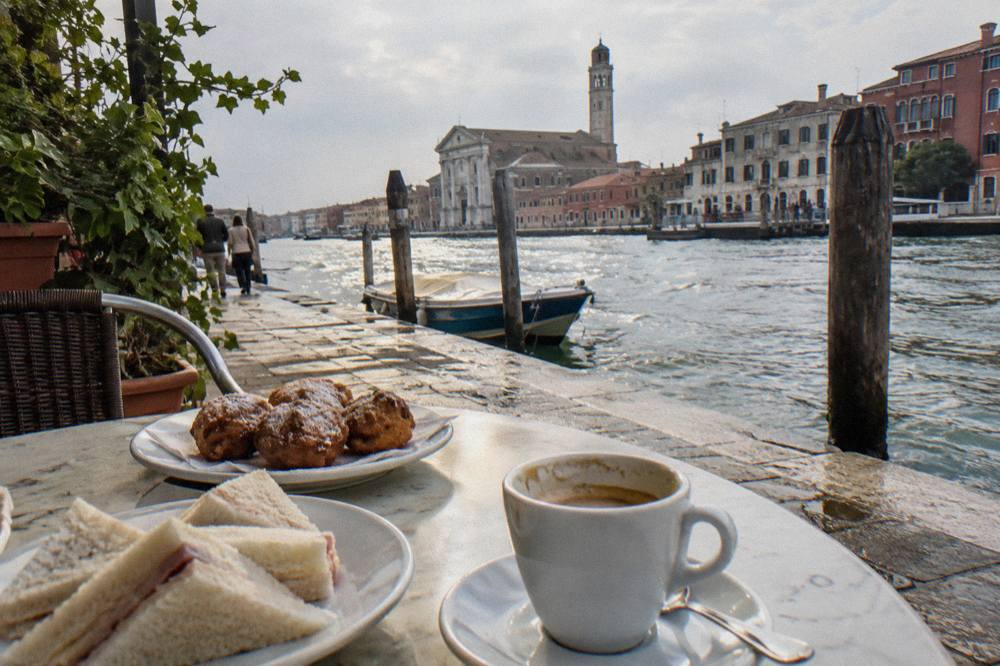
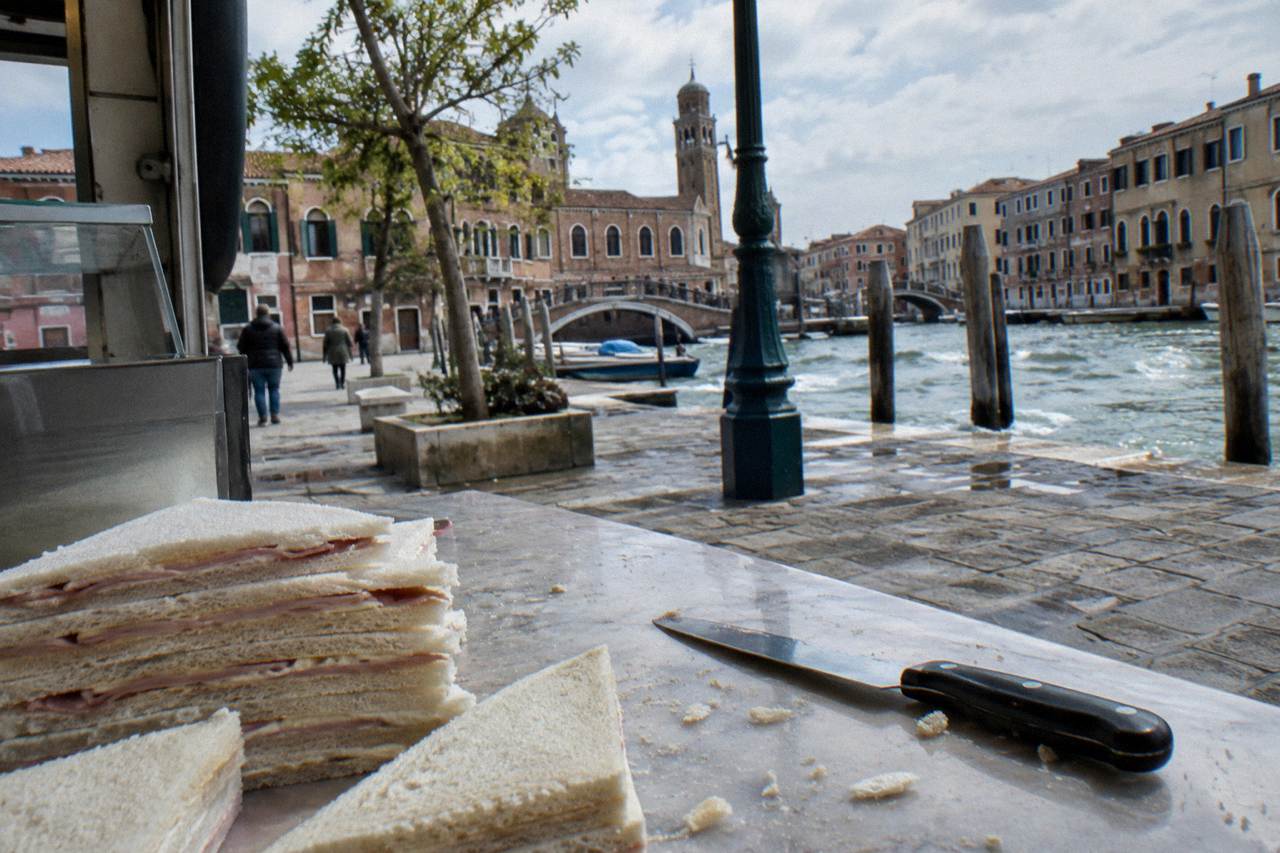
Tramezzini deserve a paragraph of their own because they are the most underrated item on the list. They are built on soft white bread with the crusts cut off, filled with anything from prosciutto and mozzarella to tuna, olives and artichoke, and pressed until the filling holds the bread together. Venetians eat them standing at the bar's shelf ledge at any hour. The full guide to tramezzini and Venetian sandwiches goes deeper, and the round up of cicchetti bars worth standing at covers where to start.
A couple of dishes deserve a seasonal note. Fritole belong to the carnival run up, so do not expect them in July. Moleche, soft shell crabs, appear in spring and autumn when the crabs moult, and the guide to eating Venice by season tracks what is on counters when. If any of the classic dishes intrigue you beyond the counter, what to eat in Venice, the traditional dishes is the fuller reference.
The Foods To Skip Or Question
The foods to skip in Venice are pizza by the slice, reheated arancini, pre made sandwiches in refrigerated cases near major sights, anywhere with a host beckoning from the door, and anything already plated and sitting under lights. Venice has no native pizza al taglio or arancini tradition; those items exist here to catch tourists, and their quality reflects that.
The logic is simple: a kitchen cooking food its city never asked for is cooking for people it will never see again. Pizza by the slice is Roman, not Venetian, and the slice joints near the Rialto bridge and Piazza San Marco are not serving it well. Arancini are Sicilian; a lukewarm rice ball under a heat lamp on Strada Nova has nothing to do with either island. Neither is a crime, but both crowd out the fritto misto cone twenty meters away that is actually made from lagoon catch.
Then there are the structural traps. A refrigerated display case of sandwiches means the bread was cut hours ago, and soft bread goes stale fast. A tout outside a restaurant is a reliable signal that the food inside does not need to be good. Menus with photographs, menus in five languages with three pages, and waiters inviting you in are all the same signal in different clothes. None of this is unique to Venice, but Venice's geography concentrates it: the walk between the Rialto and San Marco is short, expensive real estate, and the places along it face almost no repeat customers.
There is also a rule about price perception. A EUR 4 cicchetto at a busy counter where locals are standing is normal. A EUR 4 cicchetto at an empty bar on the direct tourist route is a coin flip. The guide to tipping, coperto and restaurant etiquette explains the cover charge you may meet if you sit down instead, commonly EUR 1 to 5 per person where it is applied, disclosed on the menu. Standing at the counter often avoids it, which is one more argument for the crawl format.
Deciding between the trial and error approach and a guided one is a real choice, and it is where a guided walk starts to earn its keep.
The two formats answer different needs. A walk like the Venice street food tour with a local guide, about two and a half hours, is built around exactly this filtering problem: the guide picks the counters, the tastings are counted and stated on the booking page, and you are not gambling on which tray has been sitting out since noon. The cicchetti street food and sightseeing walk mixes the same idea with landmarks, which suits a first day in the city. Both cost more per bite than doing it alone, and both remove most of the ways a self guided crawl goes wrong.
What A Guided Walk Adds Over A Solo Crawl
A guided street food walk adds three things a solo crawl cannot: access to counters that are hard to find or slow to serve outsiders, a decoded explanation of each dish, and tastings that are counted and named on the booking page rather than gambled on at the glass case. The trade off is price per bite, which is higher than a self guided crawl, and a fixed route rather than your own pace.
The value depends on how much Venice eating culture you already know. If you can walk into a bacaro, read a handwritten price list, recognize baccalà mantecato versus sarde in saor on sight, and know that the fish market closes on Mondays, a solo crawl will cost you a third of a guided walk and be just as good. If any of that is new, the first two hours of a guided walk compress a week of learning into an afternoon, and you leave with counters you can return to on your own.
The Eat Like a Local three hour small group tasting tour is the deeper version of the format, spending more time per stop and covering more ground across the city's food culture. For readers who want the standing crawl format at a different hour, the cicchetti walk with ten tastings and wine, two hours, moves fast and covers a lot of counters in a short window. The exact tasting lists, inclusions and meeting points for each are stated on each booking page, and those pages are the authority on what is included, since menus shift with the season and the market.
There is one structural reason a guide helps here that has nothing to do with food knowledge: the group rules. Guided groups in Venice's historic centre and lagoon islands are capped at 25 people and loudspeakers are banned, as reported, so guides work with headsets and small groups. That cap shapes every walking experience in the city, guided or not. A good guide also handles the market calendar for you, which matters more than most visitors expect, because the eating day in Venice is organized around when the market is open.
Dietary needs are the one case where booking ahead matters most. If anyone in your party is vegetarian, vegan, gluten free or needs kosher food, do not assume: the booking pages do not all state dietary accommodations, so message the operator before booking to confirm what can be adapted. The guide to vegetarian, vegan and gluten free eating in Venice covers the wider city picture.
Eating Around The Rialto Market
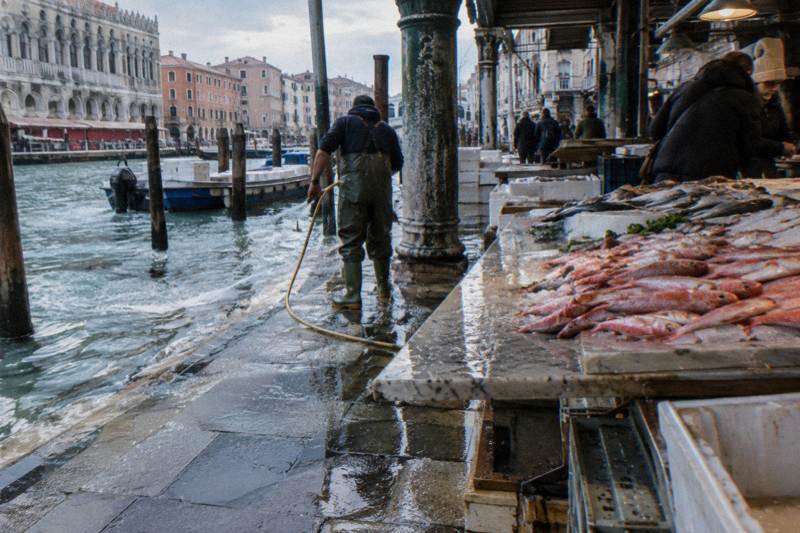
The Rialto market anchors the whole street food day: the produce market runs Monday to Saturday from 7:00 to 20:00 and the fish market Tuesday to Saturday from 7:00 to 14:00, both closed Sunday, per the official Venice tourism site. Tour listings themselves warn that the fish market is closed Sundays, Mondays and Italian holidays, and it is finished by early afternoon on the days it does open.
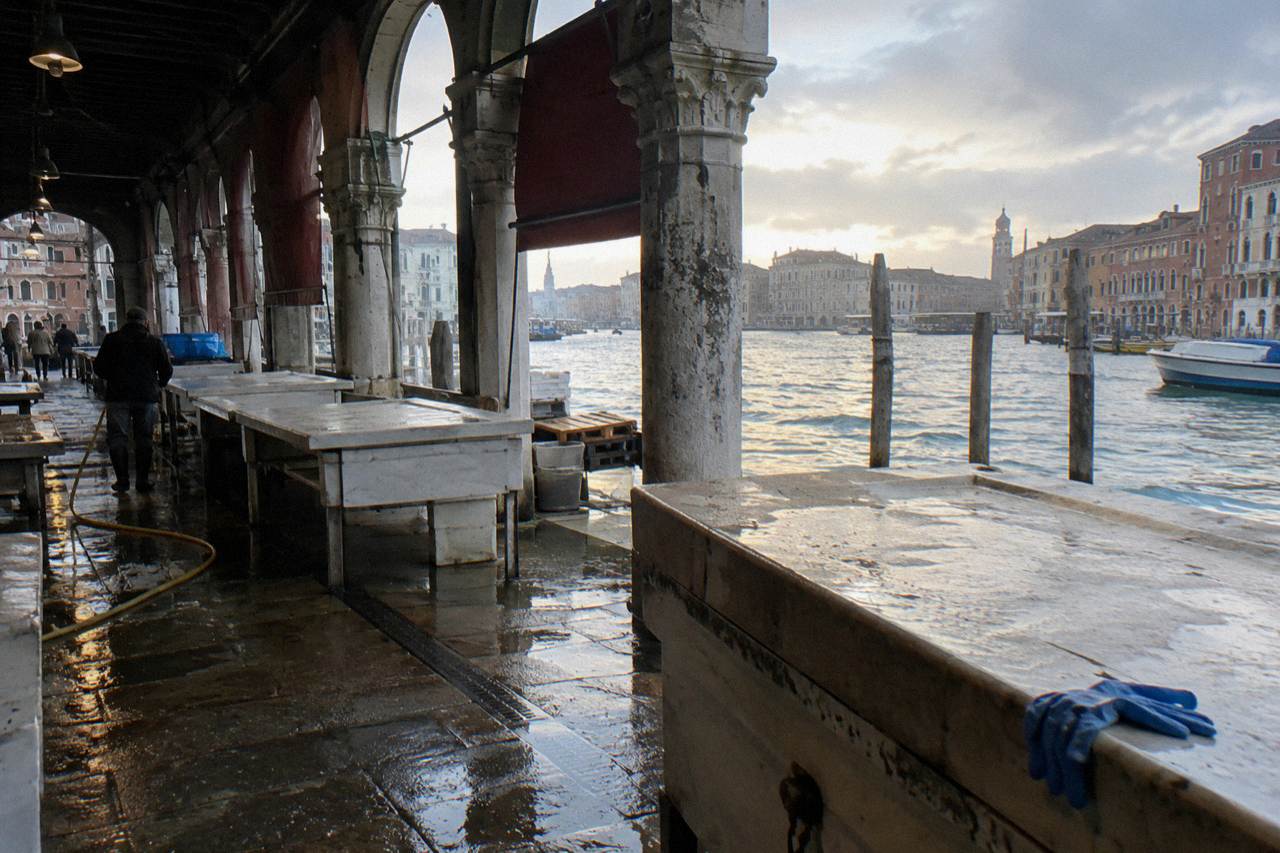
The practical consequence is that the eating day has a rhythm. Morning is when the Pescheria is working and the fry shops near the market are turning over fresh seafood. By mid afternoon the fish stalls are hosed down, and the counters shift toward whatever the bacari have left or freshly prepared for the aperitivo hour. Evening is its own thing entirely, and the guide to the evening food walk and aperitivo hour covers that shift.
The produce side, the Erbaria, runs longer hours, to 20:00, and browsing it costs nothing. This is also where the street food day is cheapest: market fruit, a piece of cheese from a stall, and a look at the seasonal arrivals, castraùre artichoke buds from Sant'Erasmo in spring among them, cost nothing to admire and little to buy. The full Rialto market guide and the page on market hours and the best time to go cover the stalls in detail.
| Market | Days | Hours | Notes |
|---|---|---|---|
| Produce, Erbaria | Monday to Saturday | 7:00 to 20:00 | Closed Sunday; fruit and vegetables |
| Fish, Pescheria | Tuesday to Saturday | 7:00 to 14:00 | Closed Sunday, Monday and Italian holidays |
| Fry shops near Rialto | Varies by shop | Best in late morning | Freshest fry when the market is working |
| Bacari counters | Varies by bar | Many close mid afternoon, reopen for evening | Check hours, posted at the door |
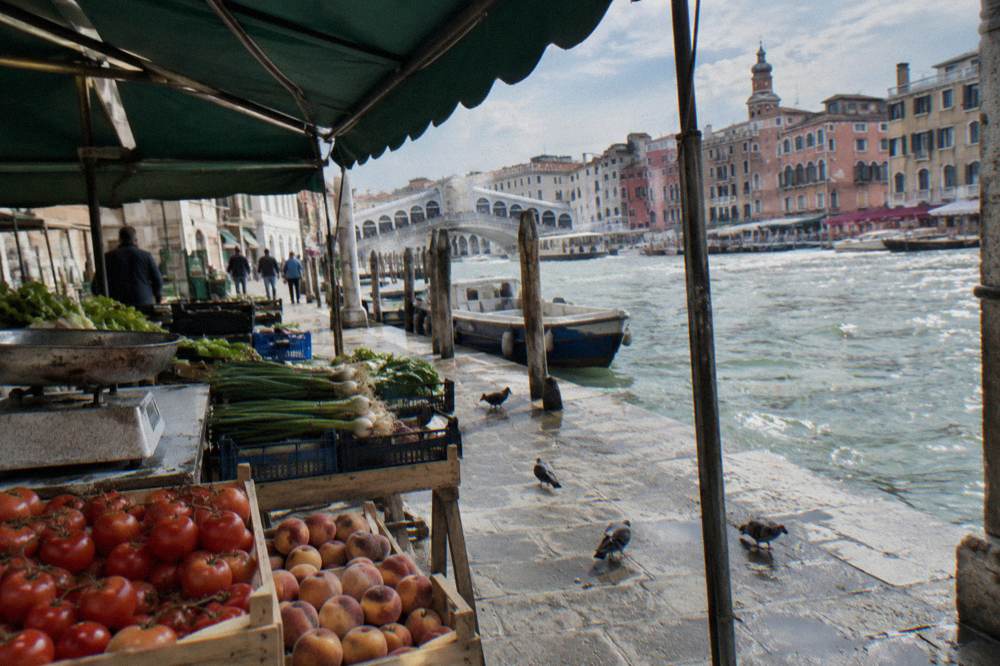
The official listing of the city's daily markets, including both Rialto markets, appears on the Comune di Venezia's markets page, and the hours above come from the official Venezia Unica tourism site. Hours shift for Italian holidays, so a quick check on the day is worth it.
If a market focused format appeals, the Rialto market food and wine lunchtime tour, four hours, ties the morning market directly to the eating, and the page on what a Rialto market tour with tasting covers sets expectations for the format.
Prices, Rules And Practicalities
The reported numbers that matter: cicchetti run EUR 1.50 to 4 each, an ombra EUR 1 to 2.50, coperto EUR 1 to 5 where applied, a single vaporetto ticket EUR 9.50 and a 24 hour pass EUR 25. No day visitor access fee applies as of 27 July 2026, and drinking from glass containers in public spaces is restricted under a standing municipal rule.
The access fee is the one that confuses people, because it existed for most of 2026 and then stopped. The 2026 trial ran on 60 days between April and July, charging EUR 5 or EUR 10 per day visitor, and it ended; per the official access fee page, from 27 July 2026 no fee applies and visiting requires no payment or exemption. The fee is scheduled to return in 2027 on listed dates between late March and mid August, with amounts and arrangements to be announced by 31 December 2026, so check that page before a 2027 trip.
The glass rule matters to street eating specifically. A standing municipal regulation prohibits consuming food and drinks in glass, ceramic or non single use containers outside permitted outdoor seating areas, and bans takeaway sales of alcohol in untapped glass bottles or glass glasses, with reported fines of EUR 25 to 500, as the regulation text on the comune's site sets out. In practice: eat your cicchetti at the counter or from a paper plate, drink your ombra at the bar, and take your spritz in plastic if you take it outside at all. Check current rules before your visit, as enforcement details are reported rather than guaranteed.
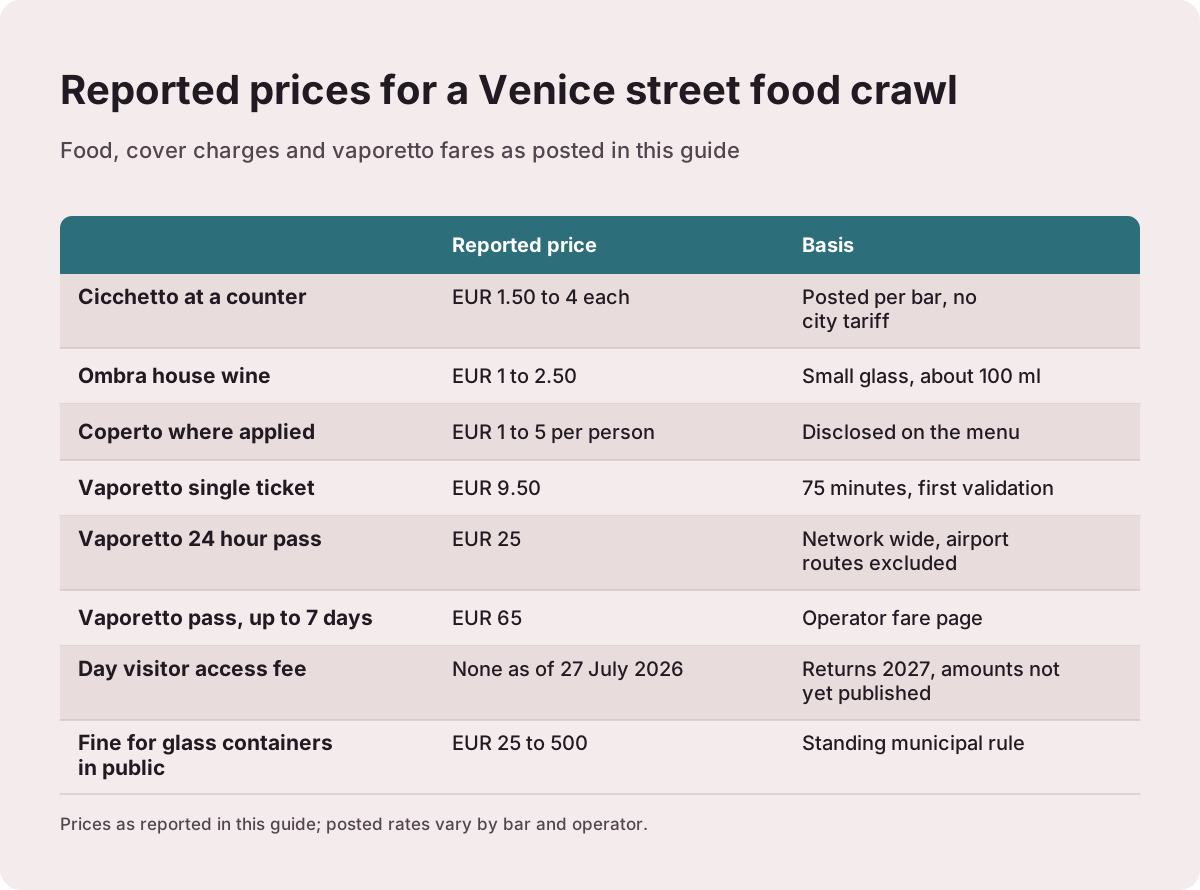
Getting around is part of the cost picture, since Venice is a walking and boat city. A single ACTV vaporetto ticket, valid 75 minutes, is reported at EUR 9.50, a 24 hour pass EUR 25, and passes up to 7 days at EUR 65, per the operator's official fare page. Children under 6 ride free. For a crawl inside one sestiere, you will walk, so comfortable shoes matter more than transport tickets.
| Item | Reported Figure | Basis |
|---|---|---|
| Cicchetto at a counter | EUR 1.50 to 4 each | Posted per bar, no city tariff |
| Ombra house wine | EUR 1 to 2.50 | Small glass, about 100 ml |
| Coperto where applied | EUR 1 to 5 per person | Disclosed on the menu |
| Vaporetto single ticket | EUR 9.50 | 75 minutes, first validation |
| Vaporetto 24 hour pass | EUR 25 | Network wide, airport routes excluded |
| Day visitor access fee | None as of 27 July 2026 | Returns 2027, amounts not yet published |
Sweet finishes deserve a slot in the day too. The sweet stroll through Venice, two hours, covers pastries, chocolate and gelato as its own guided format, and the guide to Venetian sweets, fritole, baicoli and bussola covers what to look for on your own. Prices for all the tours named here are stated on their booking pages, which reflect any current deals, so treat those pages as the price authority rather than any figure quoted elsewhere.
Putting Together Your Own Eating Day
A solid self guided day looks like this: a morning tramezzino and coffee at a bar, a late morning fritto misto cone near the Rialto while the fish market is still working, a cicchetti crawl through two or three bacari at lunch, and an aperitivo hour standing stop before dinner. Priced at the reported ranges, that day costs less than a single sit down dinner on a tourist street.
Build it around the market calendar rather than the clock. Tuesday through Saturday mornings the Pescheria is the liveliest theatre in the city, and the fry shops around it are at their best. Monday, the fish market is closed, so lean on the produce market and the bacari, which do not depend on the morning catch arriving. Sunday, both markets are closed and the crawl becomes the whole plan; the bars that open are the ones locals use, which makes it a good filter.
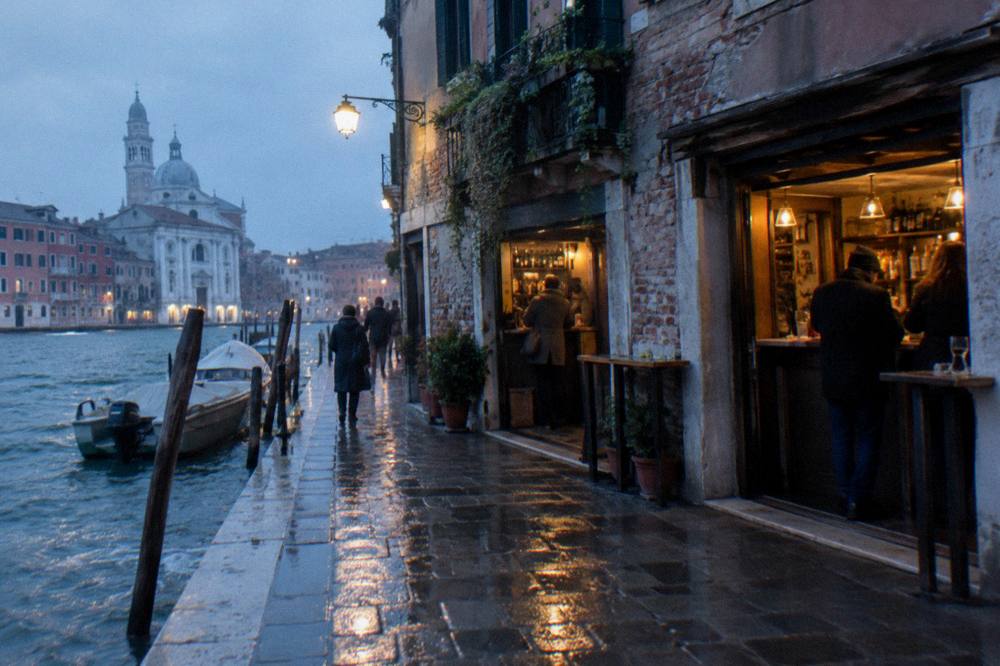
Neighborhood choice shapes the day as much as timing. Cannaregio, along the Strada Nova and the canals off it, has the densest cluster of standing counters and a strong local crowd. San Polo puts you at the market's doorstep, and the Jewish Ghetto and Cannaregio food walk, four hours, is the guided version of that route with wine included. Dorsoduro around Campo Santa Margherita runs younger and later. The neighborhood guide to Cannaregio, Dorsoduro and San Polo compares all three for eating.
One honest gap to flag: a self guided crawl has no counted tastings. You choose, you pay as you go, and you can absolutely end up with three fried things in a row because they looked good under the lamp. That is the trade a guided walk closes: the tastings are listed on the booking page, the stops are chosen, and the bill is known in advance. Whether that certainty is worth the premium is a fair question, and the comparison of which Venice food walk to book and the breakdown of what a food walk costs and what is included work through it stop by stop. What to bring and where tours meet is covered in the meeting points and packing guide.
However you structure it, the core rule survives every format: Venice rewards standing, posted prices, counters with locals at them, and dishes the city actually invented. It punishes heat lamps, touts and anything that looks like street food from somewhere else. Keep to the first list and the eating day takes care of itself.
Common Questions About Venice Street Food
What Street Food Is Venice Known For?
Venice is known for cicchetti eaten standing at bacaro counters, fritto misto cones of fried lagoon seafood, tramezzini sandwiches from bar windows, and seasonal pastries like fritole. Unlike Naples or Sicily, it has no native pizza by the slice or arancini tradition.
How Much Does Street Food Cost In Venice?
Reported prices run EUR 1.50 to 4 per cicchetto, EUR 1 to 2.50 for a small ombra of house wine, and posted prices for tramezzini and fritto misto vary by shop. There is no fixed city tariff; each bar posts its own list, so the posted prices at the counter are what count.
What Street Food Should I Skip In Venice?
Skip pizza by the slice, reheated arancini, sandwiches sitting in refrigerated cases near major sights, and anywhere with a host beckoning from the door. None of those foods are native to Venice, and the places selling them mostly serve one time visitors.
Is It Safe To Walk And Eat In Venice?
Eating while walking is normal, but a standing municipal rule restricts consuming food and drinks from glass, ceramic or non single use containers outside permitted seating, and bans takeaway alcohol in glass. Eat from paper at the counter or nearby, and check current rules before your visit.
Do I Need To Pay The Venice Access Fee To Eat Street Food?
No. The 2026 access fee trial ended, and as of 27 July 2026 no fee applies and no exemption is needed. The fee is scheduled to return in 2027 on listed dates, with amounts to be announced by 31 December 2026, so check the official access fee page for a 2027 trip.
Is A Street Food Tour Worth It In Venice?
It is worth it if you do not already know the counter culture, since a guide picks the bacari, decodes each dish, and delivers counted tastings stated on the booking page. If you can navigate the counters yourself, a self guided crawl costs less per bite and runs on your own schedule.