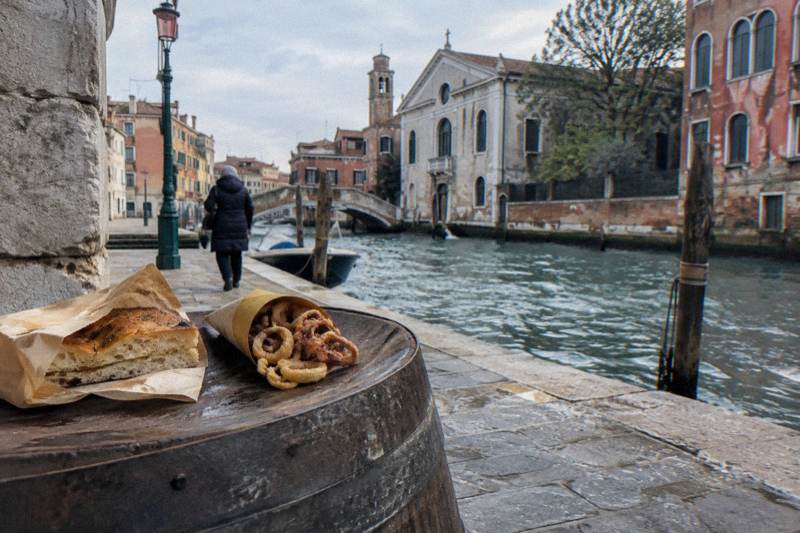
Tramezzini And Venetian Sandwiches Guide
The tramezzino is Venice's everyday lunch: a soft white-bread triangle, filled with anything from tuna and olives to baccala mantecato, eaten standing at a bar counter for a couple of euros. This guide explains the format, the classic fillings, what it costs, and where the habit fits into a food-first day.
Short answer
A tramezzino is a crustless soft white sandwich, cut diagonally into triangles and served cold at Venetian bars, usually eaten standing at the counter. Reported bar-counter prices put cicchetti at about EUR 1.50 to 4 a piece and a small house wine (ombra) at EUR 1 to 2.50, so a sandwich lunch is one of the cheapest full meals in the city.
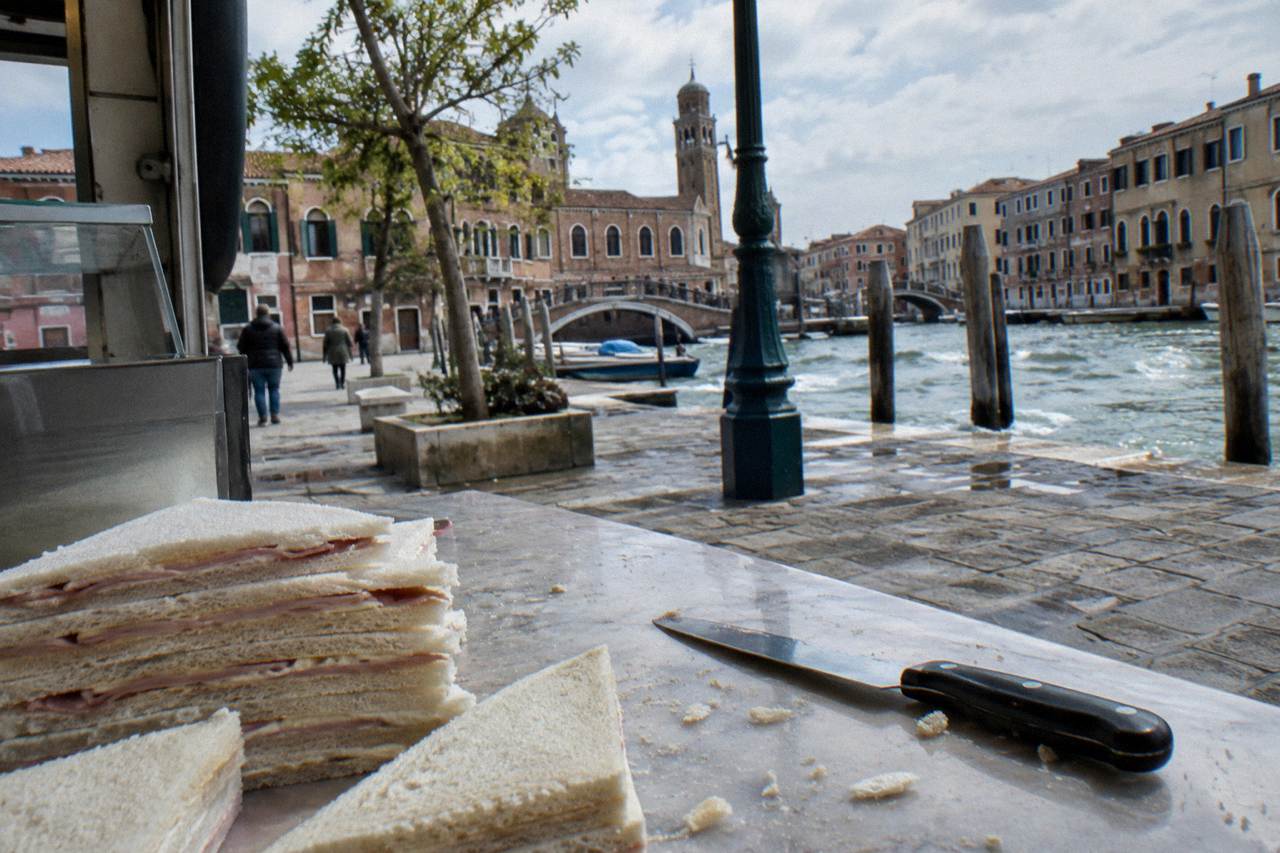
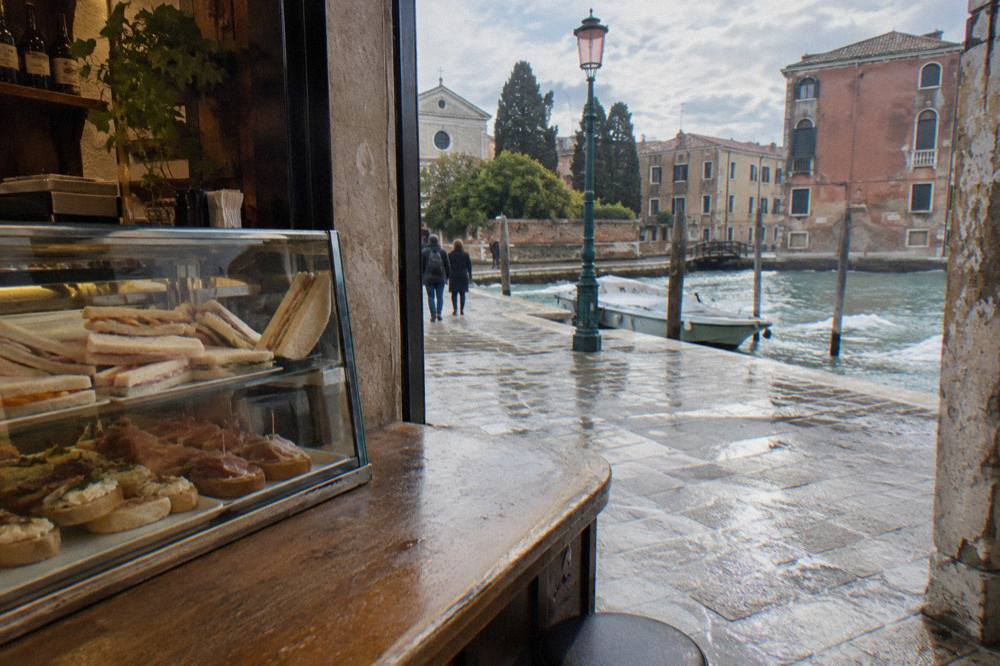
Somewhere between a snack and a full lunch sits the tramezzino: two slices of soft white bread, crusts removed, filled and pressed, then cut corner to corner into triangles that sag under their own weight. Venetians eat them standing, mid-morning or midday, with a small glass of wine or a coffee, in the same bars that serve cicchetti at the counter. For a visitor on a budget it is the cheapest complete meal shape in the city, and this guide covers the format, the fillings, the prices, and how a sandwich-first day can still take in the Rialto market, a bacaro crawl, and the city's bigger dishes.
What Exactly Is A Tramezzino?
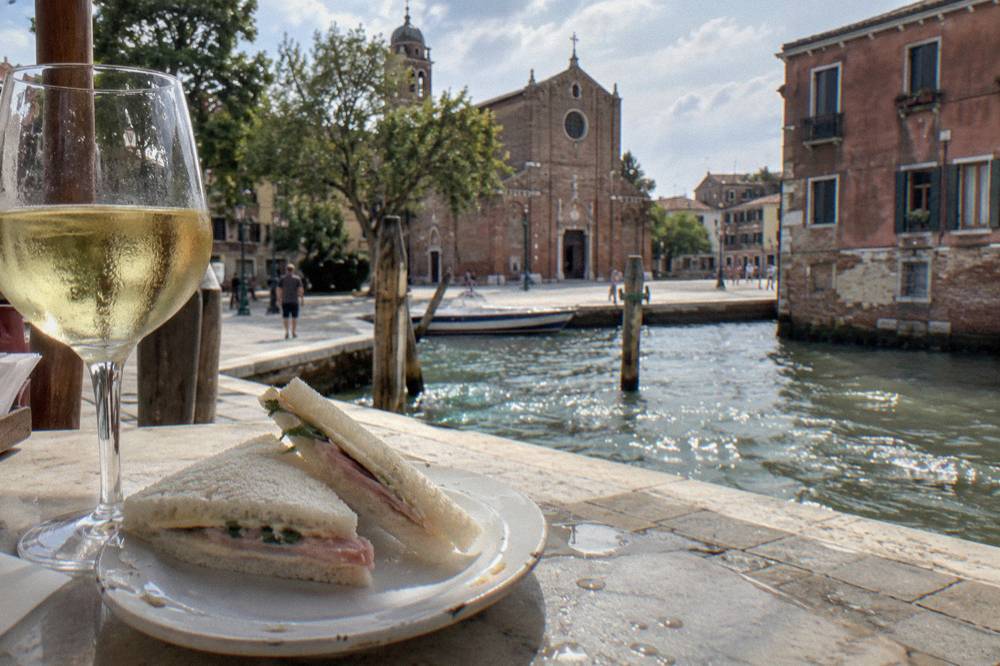
A tramezzino is an Italian crustless sandwich made from soft white sandwich bread, typically milk bread, filled with cold ingredients, pressed so the filling settles, and sliced diagonally into two triangles. In Venice it is standard bar food: you order at the counter, eat standing, and pay bar-counter prices rather than table prices. The word comes from the Italian for "in between", as in something eaten between meals.
The bread is the defining feature. It is soft, faintly sweet, and structurally weak in a way that is deliberate: a well-made tramezzino droops when you pick it up, and locals judge a bar partly on whether the triangles are made that morning or have dried out under cling film since yesterday. The crusts are trimmed off entirely, which distinguishes the tramezzino from a toast, the grilled pressed sandwich that sits beside it in most Venetian display cases.
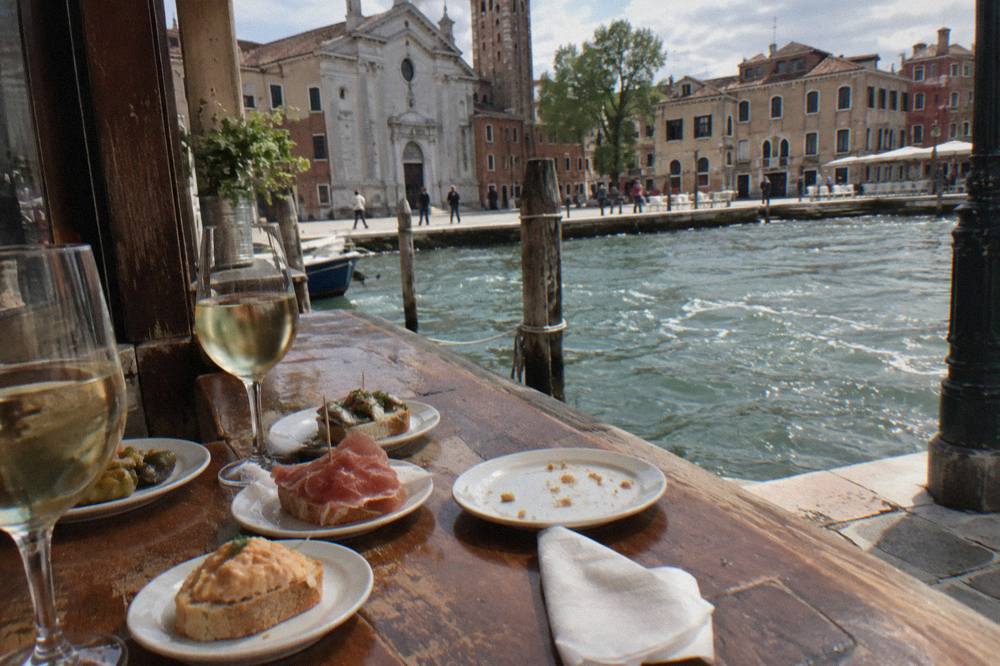
The format is not uniquely Venetian. The tramezzino was standardized in Turin as a pre-packaged product before spreading to bar counters across Italy, and the word appears on display cases nationwide. What Venice adds is the setting: the sandwich shares the counter with cicchetti, the small open-faced or skewered bar snacks, and with the ombra, the roughly 100 ml glass of house wine. A sandwich, a snack, and a small wine together form the classic standing lunch, and the price logic rewards standing. Coperto, the per-person cover charge, typically runs EUR 1 to 4 where applied and is often avoided by eating at the counter rather than sitting, as reported in current Venice guidance on tipping and cover charges.
If the distinction between a tramezzino and cicchetti is fuzzy to you, the companion piece on the snack format itself is worth a read: what cicchetti are and how to order.
The Classic Fillings, From Tuna To Baccala
The most common tramezzino fillings in Venice are tuna with olives, ham, prosciutto with mozzarella, egg, wurstel and sauce, pomodoro, and tonno with artichoke or mushroom, alongside Venetian specialties like baccala mantecato, whipped salt cod on soft bread. Bars usually display ten to twenty triangles under glass, and the filling list rotates rather than being fixed.
The Paninoteca standards are national: prosciutto e mozzarella, tonno e olive, fegato, pomodoro, and the pink-sauce combinations that mix tuna, egg, or ham with mayonnaise-based dressing. Those are the safe choices and they are everywhere. The distinctly Venetian entries borrow from the cicchetti counter: baccala mantecato, whipped salt cod piled into white bread, and occasionally sarde in saor, the sweet-and-sour sardine preparation, though the onion-and-pine-nut topping makes that one messier and less common in sandwich form.
The fillings connect directly to the city's broader dish list, covered in detail in the traditional Venetian dishes guide. What travels into a tramezzino is generally the spreadable or salad-like preparations: whipped cod, tuna mixes, vegetable spreads. What does not travel well is anything saucy or hot. Bigoli in salsa, risi e bisi, fegato alla veneziana, and spaghetti al nero di seppia are plate dishes, and no honest bar pretends otherwise.
Two practical notes on fillings. First, the mayonnaise-heavy ones are the ones that spoil fastest in a warm display case, so late-afternoon triangles of tuna-and-egg are a risk the cautious skip. Second, if you have a dietary restriction, no assumption is safe: fillings change daily, the bread is standard wheat, and a bar that has a gluten-free or vegan option one week may not the next. The same caution applies to tours; unless a listing explicitly states a dietary accommodation, message the operator before booking.
What A Tramezzino Lunch Costs
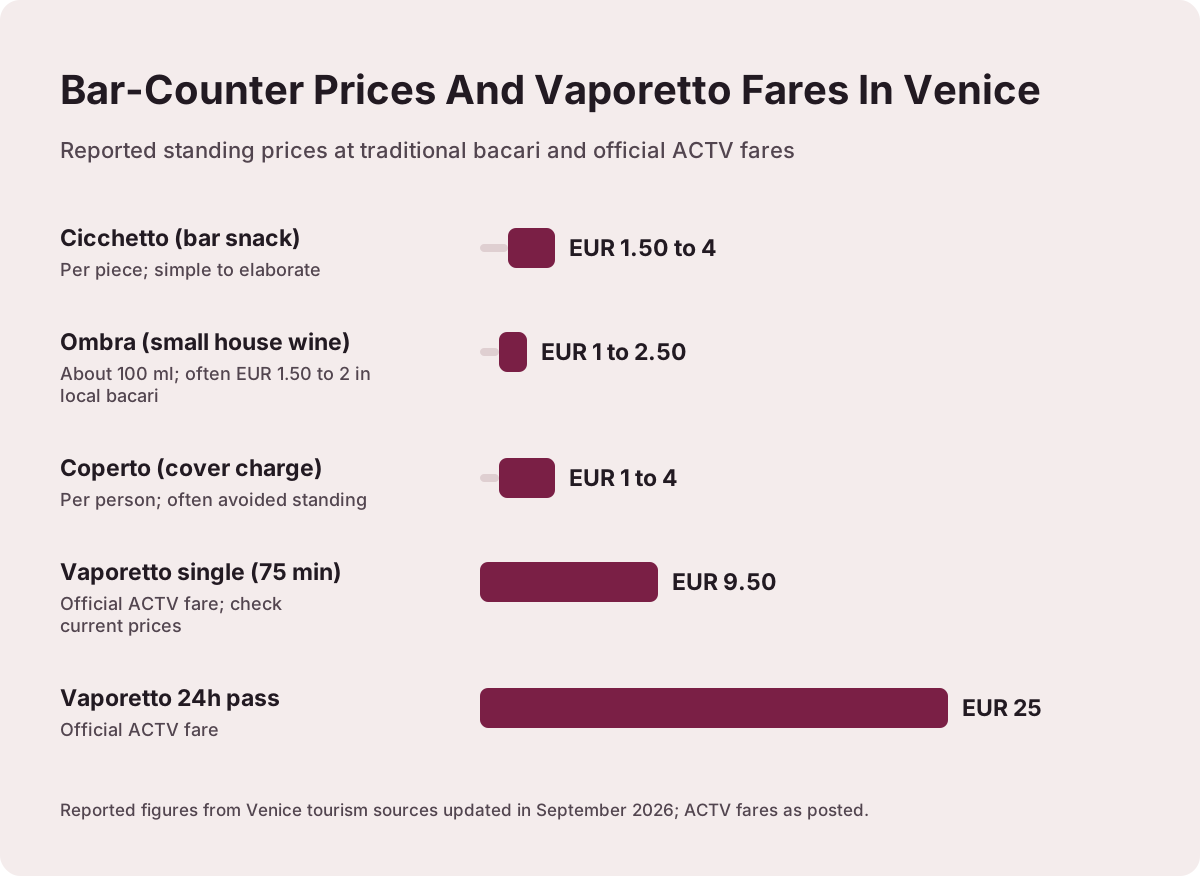
Reported bar-counter prices put cicchetti at about EUR 1.50 to 4 per piece and an ombra, the small glass of house wine, at EUR 1 to 2.50, with cheaper local spots often at EUR 1.50 to 2 for wine. There is no fixed city tariff; each bar posts its own price list, and standing at the counter rather than sitting at a table is the main lever on the total.
Those ranges are reported figures from Venice tourism sources, and they describe prices at traditional bacari rather than canal-front bars aimed at tourists, where both numbers run higher. A realistic standing lunch of two triangles and a small wine, at the reported ranges, lands somewhere between the cost of two cicchetti and a modest restaurant main, before any coperto. Coperto, where a bar applies it, typically runs EUR 1 to 4 per person and must be disclosed on the menu; eating at the counter commonly avoids it.
| Item | Reported price range | Notes |
|---|---|---|
| Cicchetto (bar snack) | EUR 1.50 to 4 per piece | Simple to elaborate; posted list applies |
| Ombra (small house wine, about 100 ml) | EUR 1 to 2.50 | Often EUR 1.50 to 2 in local bacari |
| Coperto (cover charge) | EUR 1 to 4 per person | Where applied; disclosed on menus; often avoided standing |
| Vaporetto single (75 min) | EUR 9.50 | Official ACTV fare; check current prices |
| Vaporetto 24h pass | EUR 25 | Official ACTV fare |
The vaporetto rows are there for scale: one return boat trip across the historic centre costs more than the food half of a standing sandwich lunch. On sandwich economics alone, Venice is far cheaper to eat in than to move around in.
Guided walks change the arithmetic differently. A guided tasting walk bundles several stops, with the stops and tastings counted and listed on the booking page, so you are buying the selection and the explanation rather than just the food. For readers whose priority is a cheap lunch, a self-guided counter crawl using the reported prices above is the leaner option. For readers who want the sandwich and snack stops chosen and contextualized, the guided route is the efficient one.
The three walks above span the format range: a street-food tour with a local guide, a cicchetti-and-sightseeing combination, and a small-group tasting walk. Prices and current inclusions are on each operator's live listing, since from-prices vary by date and group size.
Where Venetians Actually Eat Their Sandwiches
Venetians eat tramezzini at neighborhood bars rather than in the tourist corridors: in Cannaregio's back streets, around Campo Santa Margherita in Dorsoduro, and near the Rialto market where market workers take their mid-morning break. The pattern is the same everywhere, a bar with a glass display case, a counter to stand at, and prices posted, not a table service restaurant.
The neighborhood logic is covered more fully in the food-by-neighborhood guide. In short: the bars within sight of San Marco's flagstones price for the view, and the bars a ten-minute walk away in Cannaregio or Dorsoduro price for locals. The Rialto side deserves special mention because of the market calendar. The produce market at Rialto runs Monday to Saturday, 7:00 to 20:00, closed Sunday, and the fish market runs Tuesday to Saturday, 7:00 to 14:00, closed Sunday and Monday, per the official Venezia Unica listing of market hours. Bars around the market fill with traders mid-morning on trading days, which is both a good sign and a crowded one.
| Market | Days and hours | Closed |
|---|---|---|
| Rialto produce market (Erbaria) | Monday to Saturday, 7:00 to 20:00 | Sunday |
| Rialto fish market (Pescheria) | Tuesday to Saturday, 7:00 to 14:00 | Sunday and Monday |
Timing matters more than geography. The standing lunch happens between about 11:30 and 14:00, and by mid-afternoon the display cases in local bars are picked over. Late in the day your odds improve at bars that make to order rather than from the case, but in a traditional bacaro the freshest triangles are a morning thing. Pair the habit with the market: the official market pages on the Comune di Venezia site list the Rialto markets among the historic centre's daily markets, and a morning market walk slides naturally into a counter lunch.
One honest limit: no independent ranking of the city's sandwich bars exists that this site can verify, so this guide does not name winners. What is verifiable is the price structure, the market calendar, and the neighborhood pattern, and those three tools will get you a good counter lunch on your own.
Tramezzini Versus Cicchetti: Which Bar Order Wins?
Cicchetti are the smaller, usually cheaper option, about EUR 1.50 to 4 a piece, built on bread or polenta or skewered; tramezzini are the fuller, softer, more filling option. For a cheap grazing crawl, order cicchetti and an ombra at each stop. For an actual lunch that ends hunger, order one or two tramezzini plus a cicchetto or two, and sit or stand accordingly.
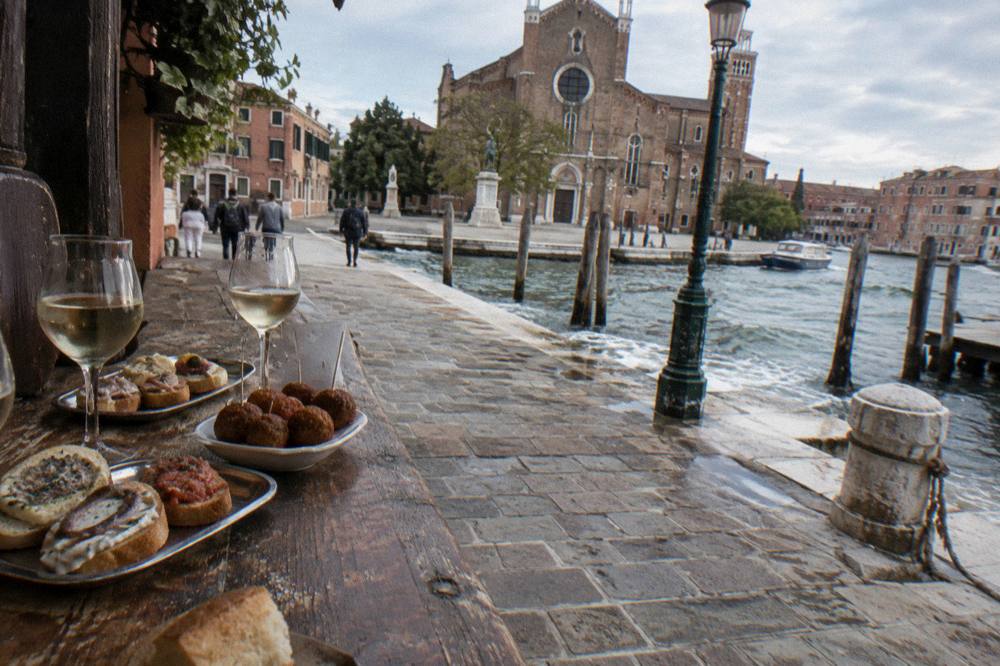
The two formats share a counter and a payment logic, but they answer different questions. A cicchetto is a bite with a glass of wine; the crawl across several bacari, the giro d'ombra, is the subject of its own guide on how a bacaro crawl works. A tramezzino is lunch. The bread is substantial, the fillings are denser, and two triangles plus a drink is a meal in a way that two cicchetti are not.
| Cicchetto | Tramezzino | |
|---|---|---|
| Base | Bread slice, polenta, or skewered bite | Crustless soft white sandwich, cut in triangles |
| Reported price | EUR 1.50 to 4 per piece | Posted per piece at the bar; check the price list |
| Role | Grazing with wine | A full standing lunch |
| When | Any time the bar is open | Best mid-morning to early afternoon |
| Venetian specialties | Baccala mantecato, sarde in saor on bread | Baccala mantecato among national fillings |
| Served | Cold, at the counter | Cold, from the display case |
Price-wise, note what the table does not claim: a per-piece tramezzino price. Bars post their own lists and the fresh sources here verify cicchetti and ombra ranges, not sandwich tariffs, so the honest instruction is to read the posted list at the counter. What the sources do support is that both formats sit at bar-counter price levels, well below a seated restaurant meal once coperto and table service enter the picture.
A Sandwich-First Day In Venice
A practical sandwich-first day runs: Rialto produce market after 7:00 on a trading day, fish market by mid-morning, a standing tramezzini and ombra lunch in the market's back bars, an afternoon cicchetti crawl in Dorsoduro or Cannaregio, and a seated dinner only if you still want one. The market days are fixed, Tuesday to Saturday for both markets, so the day is built around the calendar, not around your appetite.
Start with the calendar. The produce market runs Monday to Saturday, 7:00 to 20:00; the fish market, Tuesday to Saturday, 7:00 to 14:00; both are closed Sunday, and the fish market is also closed Monday. Tour listings themselves warn that the fish market is closed Sundays, Mondays, and Italian holidays. Arriving on a Monday means you see the produce side and the Pescheria's empty loggia, which has its own appeal but is not the full scene.
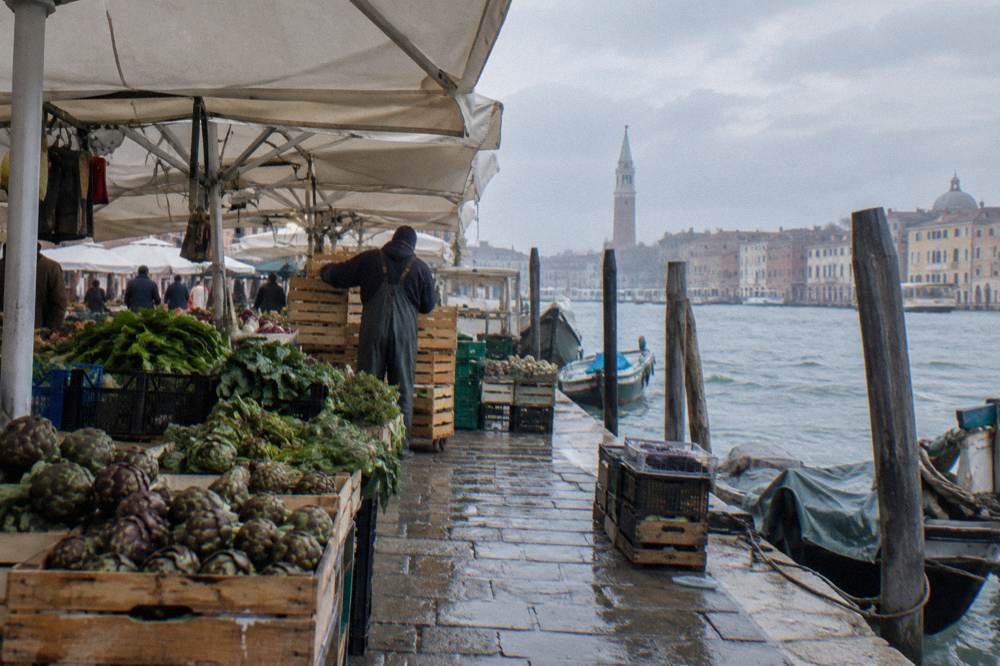
Mid-morning, the market-side bars are at their busiest and their freshest. Order at the counter, take your triangles and your ombra, and eat where the traders eat. Afternoon is the crawl: pick one neighborhood, Dorsoduro around Santa Margherita or Cannaregio's Strada Nuova side streets, and move between two or three bacari. The etiquette of the ombra, when to drink it and how, is its own small ritual, covered in the ombra and Venetian wine guide.
Evening splits the budget. Aperitivo hour with a spritz extends the standing habit into the early evening, and the evening food walk guide covers it. One rule to keep in mind if you carry your drink outside: current municipal rules prohibit drinking from glass containers outside permitted outdoor seating areas, and ban takeaway sales of alcohol in glass bottles or glasses for public consumption, with reported fines of EUR 25 to 500. Check the current rules rather than testing them.
When A Guided Walk Beats The Counter Crawl
A guided walk earns its cost when you want stops chosen, dietary questions handled in advance, and the food put in context; it costs more than the reported counter prices, since you are paying for a guide and a route as well as the food. The self-guided crawl wins on price and flexibility. The guided walk wins on efficiency and on access to bars you would not otherwise walk into.
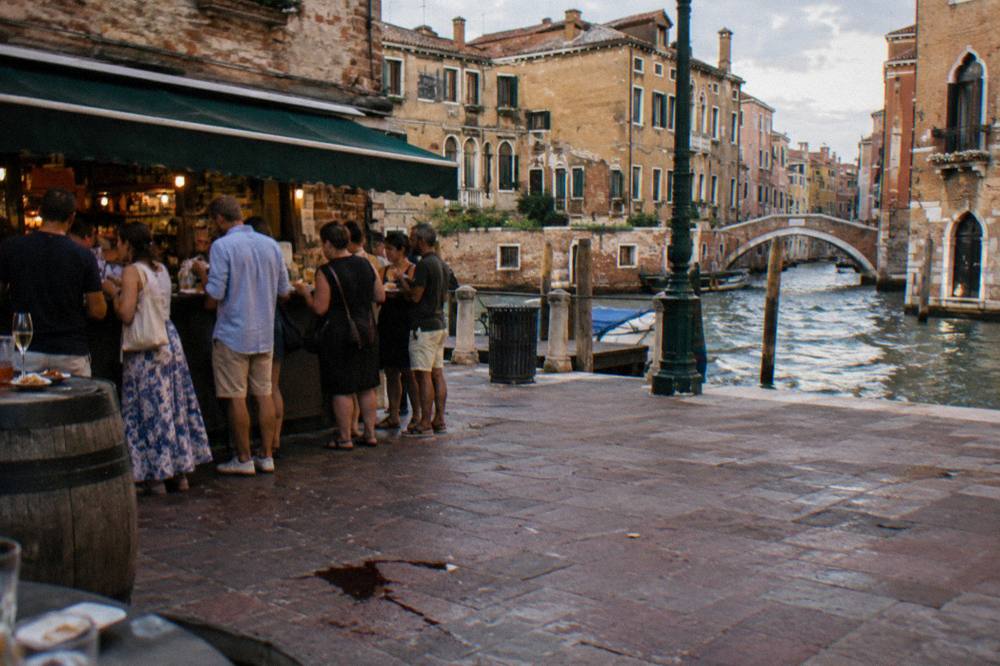
The decision splits cleanly. If your priority is the cheapest possible lunch, the counter prices in this guide are all you need, plus a neighborhood and a market day. If your priority is understanding what you are eating, or you have a short stay and want the selection problem solved in one booking, a guided tasting walk is the efficient route. The featured street-food walk on this site, a 2.5-hour tour with a local guide and tastings, sits in that second category; its stops, inclusions, and price are on the operator's live listing.
A different reader, weighting romance over efficiency, might prefer the sunset cicchetti and wine format above, a 3-hour evening walk rather than a daytime one. The comparison between booking a walk at all versus a cooking class, for readers torn between eating and learning to cook, is set out in food walk or cooking class.
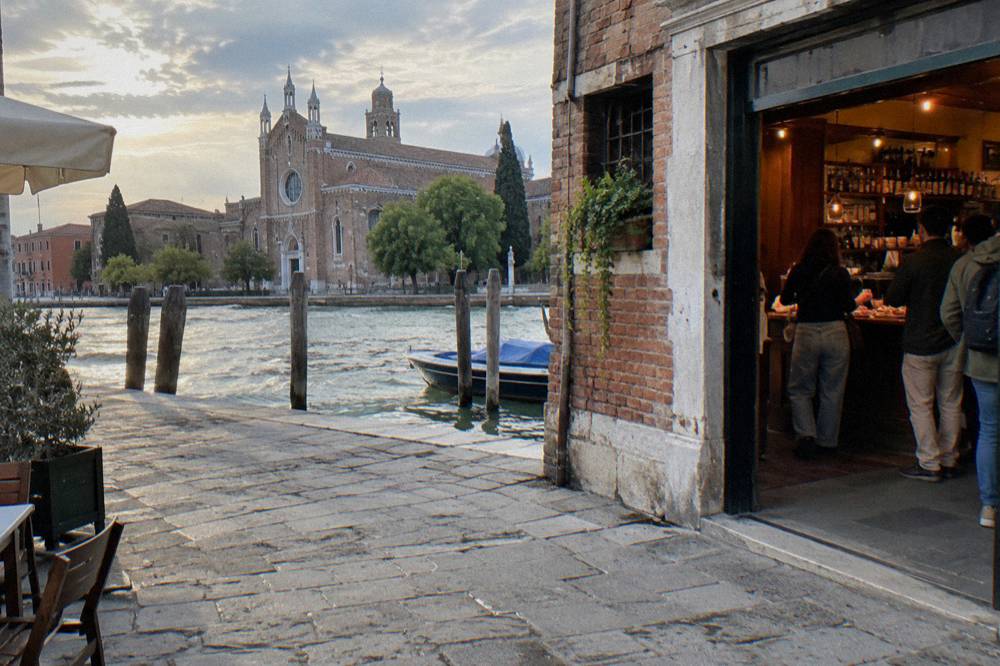
For families or mixed groups, the arithmetic changes again. Guided groups in Venice are capped at 25 people by city rule, and many food walks run smaller than that; the cap is a standing regulation reported as ongoing. If your group includes children or picky eaters, the check-with-the-operator rule applies to tours exactly as it does to bars: unless the listing names an inclusion, assume nothing and ask.
Common Questions About Tramezzini In Venice
What Is A Tramezzino?
A crustless sandwich made from soft white bread, filled with cold ingredients, pressed, and cut into two triangles. In Venice it is standard bar food, eaten standing at the counter, often with a small glass of house wine.
How Much Does A Tramezzino Cost In Venice?
Bars post their own price lists, so there is no fixed city price. For scale, reported bar-counter prices put cicchetti at EUR 1.50 to 4 per piece and an ombra of house wine at EUR 1 to 2.50; read the posted list at the counter before ordering.
What Fillings Are Typical?
National standards include prosciutto and mozzarella, tuna and olives, egg, and ham with sauce. Venetian bars add local preparations such as baccala mantecato, whipped salt cod, among the filling options.
What Is The Difference Between A Tramezzino And Cicchetti?
Cicchetti are small bar snacks, one or two bites each, built on bread or polenta or skewered; a tramezzino is a full soft sandwich. Cicchetti suit a grazing crawl; a tramezzino is a standing lunch.
Where Do Locals Eat Tramezzini?
At neighborhood bars in Cannaregio, Dorsoduro, and around the Rialto market, standing at the counter, generally between late morning and early afternoon when the display cases are freshest.
Are Tramezzini Included On Food Tours?
Only if the tour listing says so. Each listing states its own stops, tastings, and inclusions; never assume a dish is on a walk unless the booking page names it.
The sandwich is the humblest item in Venice's food inventory, and it earns its place precisely because it is ordinary. Build a morning around the Rialto market on a trading day, take lunch standing with the traders, and the rest of the day's eating, the crawl, the spritz, the proper dinner, has a cheap and solid foundation. For everything else, Venice Food Tours compares the city's guided tasting walks, cooking classes, and market tours in detail.