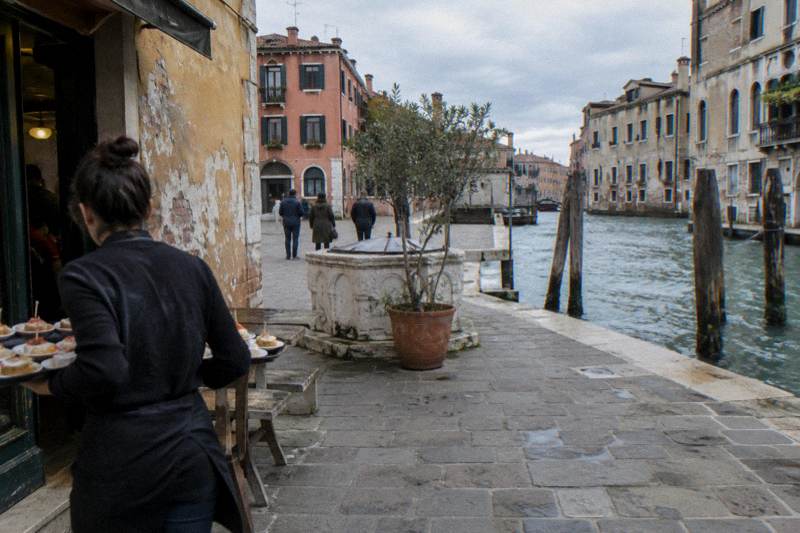
Where Do Locals Eat In Venice?
Where Venetians actually eat: bacaro counters, neighbourhood trattorie and the ombra custom, with what cicchetti and house wine cost reported, and how a guided tasting walk fits in.
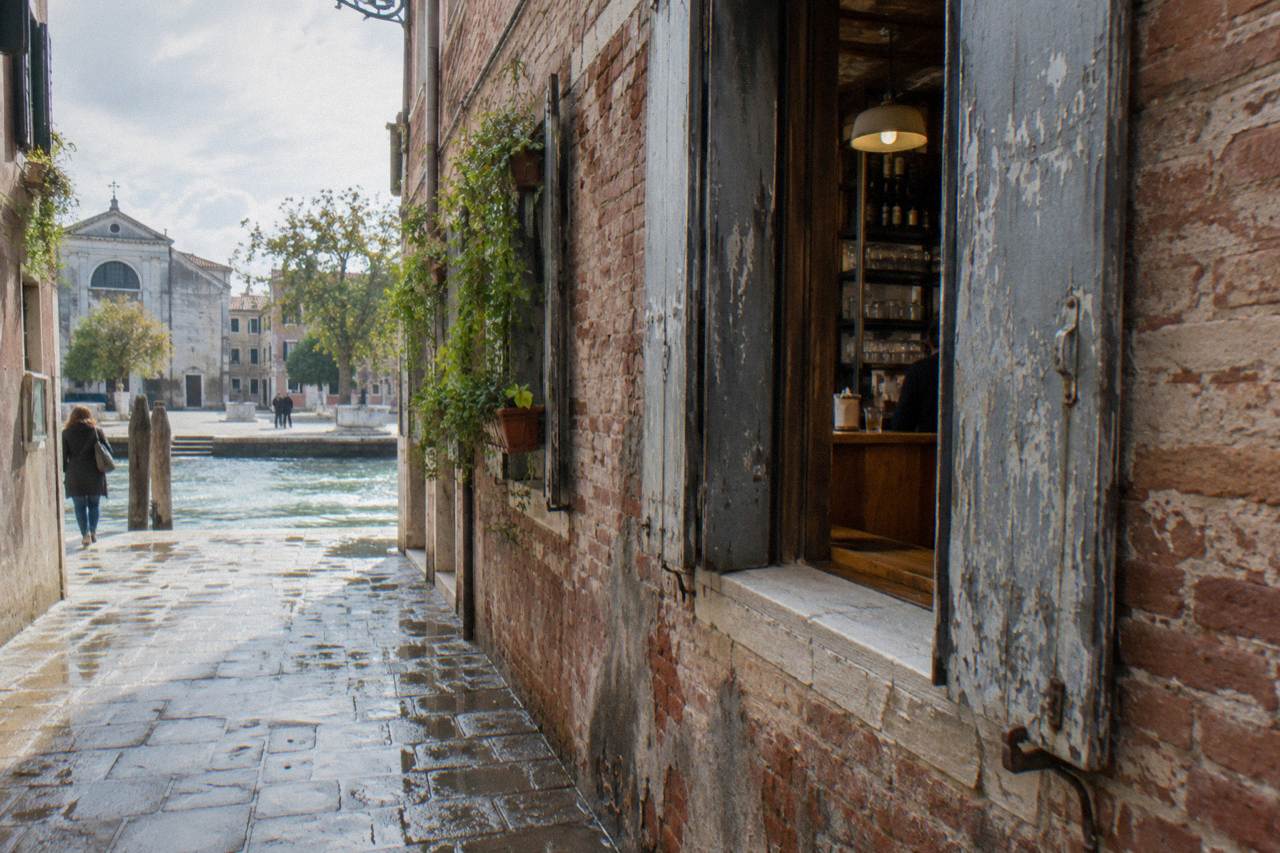
Locals in Venice eat standing at bacaro counters, not at canal-side restaurant tables. A bacaro is a small neighbourhood wine bar where you take an ombra, a small glass of house wine, with cicchetti, the snacks laid out on the counter, and Venetians do this through the day in Cannaregio, Castello and Dorsoduro. Sitting down at a trattoria is for later, for a proper meal with lagoon fish.
The honest answer to this question disappoints people expecting a secret restaurant. There is no hidden list of places only Venetians know, because the local way of eating is not built around restaurants at all. It is built around the counter. A Venetian on the way home from work stops at a bacaro, stands at the marble or wooden counter, points at two or three cicchetti, drinks a small pour of house wine, pays a few euro and leaves. The whole event takes ten minutes. It can happen again an hour later at a different bar.
This habit shapes the whole city. Bacari are small, often just a room with a counter and a few barrels, because nobody expects to sit. They cluster where people actually live and shop rather than where the main sightseeing corridors run. That is why the search for "where locals eat" is really a search for the neighbourhoods where the counters survive, and for the hours when the counters are busy with people who live nearby rather than people passing through.
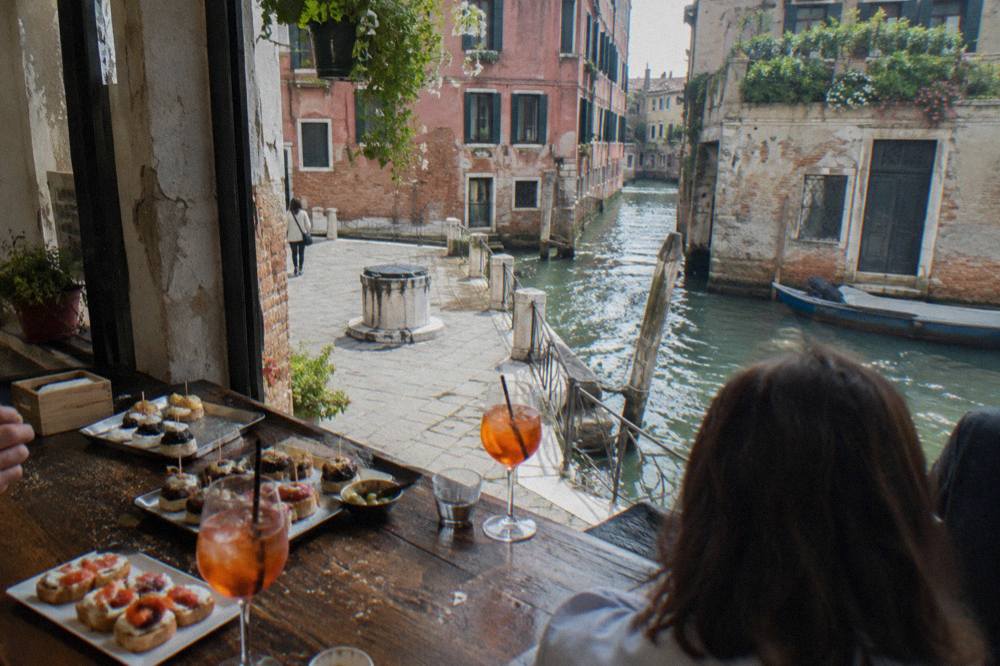
A second, quieter part of the answer matters just as much: what locals eat at those counters. Baccalà mantecato, whipped stockfish on polenta, is the city's most recognisable counter snack. Sarde in saor, sweet and sour sardines with onion and raisins, sits beside it. There are fried things, small sandwiches, cured fish, seasonal vegetables. If you want the background on the snacks themselves, the guide to what cicchetti are and how to order them covers the vocabulary, and the page on baccalà mantecato and polenta covers the dish you will see most often.
The tourist version of Venice eating, a long sit-down dinner near San Marco, exists mostly for visitors. The local version is quicker, cheaper, more frequent and far more social, in the way a queue at a good counter is social. This article walks through how it works, what it costs, which neighbourhoods to aim for, and where a guided tasting walk genuinely helps if you do not want to find the counters on your own.
Why The Bacaro Counter Is The Real Local Table
The bacaro counter is where the local eating happens because it is cheap, fast and embedded in daily routines. Standing at the counter often avoids the coperto cover charge that seated service can carry, reported at around EUR 1 to 4 per person where applied, and it puts you shoulder to shoulder with the people who use the bar every day. The counter is the point, not an inconvenience.
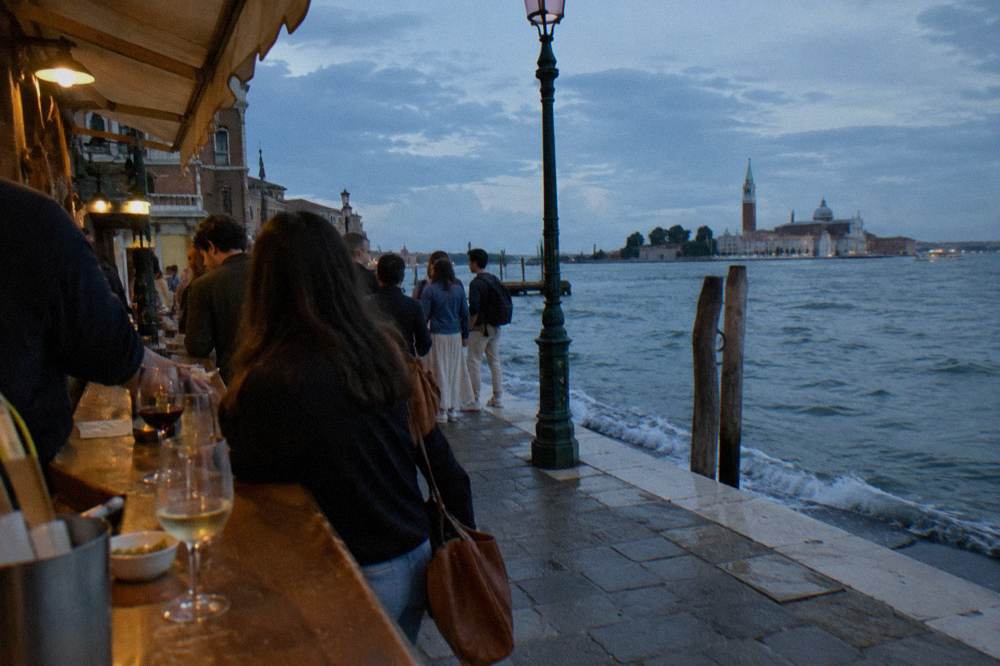
An ombra, the word Venetians use for a small glass of house wine of roughly 100 ml, is the anchor of the ritual. The name is old slang with a story about shadow and the Rialto, but what matters practically is that an ombra is small, cheap and meant to be finished quickly. You drink it standing. Reported prices run from around EUR 1 to 2.50, often EUR 1.50 to 2 in the simpler neighbourhood bars. The wine is usually unglamorous, a tap pour, and that is deliberate: it is a mid-morning or early-evening drink, not a tasting event.
Beside the wine sits the food. Cicchetti are the bar snacks of Venice, and at authentic standing counters a piece typically runs EUR 1.50 to 4 depending on how elaborate it is, as reported on the official Visit Venice food pages. There is no fixed city tariff; each bar posts its own prices, and the posted list is what applies. This matters for anyone budgeting a crawl: three cicchetti and two ombre at the simple end of the scale is a genuinely cheap lunch, while a dozen pieces at an elaborate bar with seated service adds up to a real meal with a real bill.
The etiquette is light but real. You order at the counter, often by pointing, you eat where you stand, and you settle up when you leave unless the bar asks for payment on the spot. Nobody expects a tip in the standing tradition; rounding up is appreciated for exceptional service, but there is virtually none expected at the counter. The guide to bacari etiquette and the ombra ritual goes deeper on the customs, including how the rounds work when a group moves from bar to bar.
For visitors, the counter habit is the single biggest unlock in Venice. It replaces one expensive seated meal with a moving sequence of small, cheap, high-energy stops, and it puts you in the same room as residents doing exactly the same thing. The hard part is knowing which counters are the real ones, which is exactly where a guided walk earns its keep. If you want that scaffolding, the Venice Bacaro Food Tour built around this habit runs 3 hours 30 minutes and moves through bacari in the local style; meeting point, inclusions and the current price are on the operator's booking page.
What An Ombra And Cicchetti Cost When You Stand
At a standing counter, reported prices are around EUR 1 to 2.50 for an ombra of house wine and EUR 1.50 to 4 for a cicchetto, with each bar's posted list applying. The coperto cover charge, reported around EUR 1 to 4 per person where applied, is largely a seated-service item, and tipping is not expected when you stand. Budget a crawl by pieces, not by meals.
The numbers deserve their own section because they change how people plan a day. A visitor who assumes every meal is a restaurant meal budgets for restaurants. A visitor who understands the counter can eat a full afternoon on the price of one seated main. Take a realistic string of stops: two cicchetti and an ombra here, a small fried snack and a spritz there, and you are eating well for the cost of a sandwich in most northern European capitals. The figures are reported ranges, not promises; each bar posts its own prices and the post is what counts.
The comparison below sets the standing habit against the alternatives a visitor actually chooses between.
| Way of eating | Typical cost basis | What it includes | Where it fits |
|---|---|---|---|
| Standing at a bacaro counter | Reported EUR 1.50 to 4 per cicchetto, EUR 1 to 2.50 per ombra | Snacks and small wine pours, no table | Quick lunch, aperitivo hour, crawl between stops |
| Seated trattoria meal | Menu prices plus coperto, reported around EUR 1 to 4 per person where applied | Table service, courses, often lagoon fish | A proper dinner, a long lunch |
| Guided tasting walk | Per-person from-price on the operator's booking page | Multiple stops, counted tastings, a guide | First visit, anyone who wants the counters decoded |
A few practical notes sit behind those rows. First, the seated meal is not a trap: coperto is standard, legal practice in Italy, disclosed on the menu, and a long fish dinner at a neighbourhood trattoria is a genuine local pleasure too. Second, the guided walk is priced per person with the current figure and exactly what is included, tastings, drinks, group size, on the operator's booking page rather than in a review; check there before you book, since inclusions vary by tour. Third, no drinking-outdoors shortcuts: a current municipal rule bans consuming drinks from glass containers outside permitted seating areas and bans takeaway sales of alcohol in glass, with fines reported from EUR 25 to 500, so the ombra stays at the counter, which is where it belongs anyway.
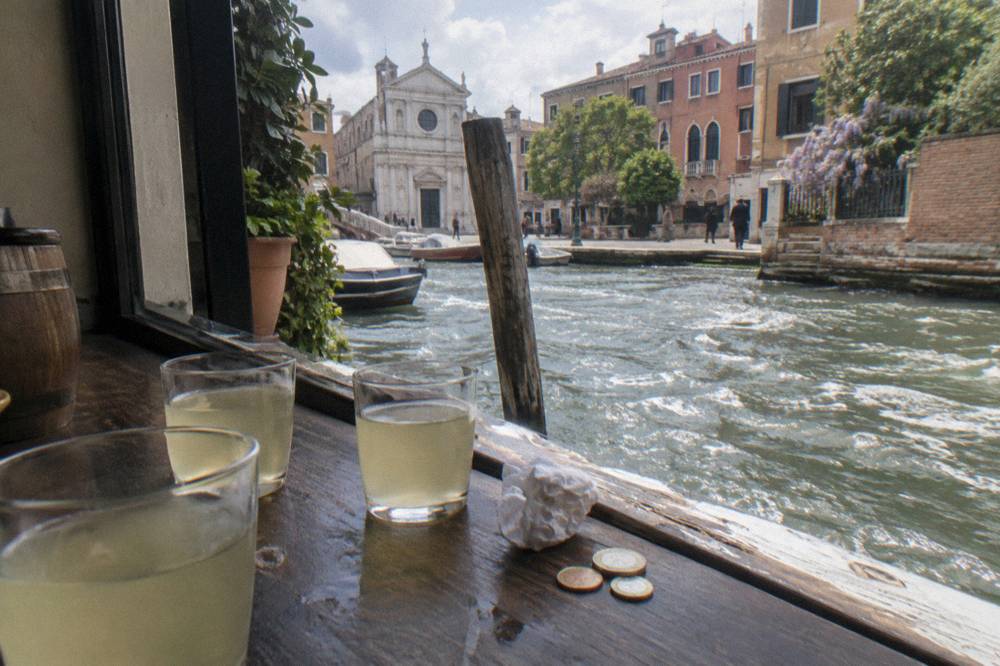
Which Neighborhoods Locals Actually Eat In
Cannaregio, Castello and Dorsoduro carry most of the everyday eating in the historic centre, with San Polo holding the market quarter around Rialto. These are residential sestieri where bacari serve regulars, and the counters thin out as you approach the San Marco sightseeing core. The neighbourhood, more than any single bar, is the answer to the question.
Cannaregio in the north is the classic starting point. It is the most populous of Venice's six districts, it has the long Strada Nova artery but also the quieter side lanes off it, and its bacari range from busy canal-front counters to small rooms that feel like somebody's kitchen. The Jewish Ghetto sits in Cannaregio, and there are food walks built around the Ghetto and its surroundings; the Venice Jewish Ghetto and Cannaregio Food Tour with Wine runs 4 hours in this area, with what is tasted listed on the operator's booking page.
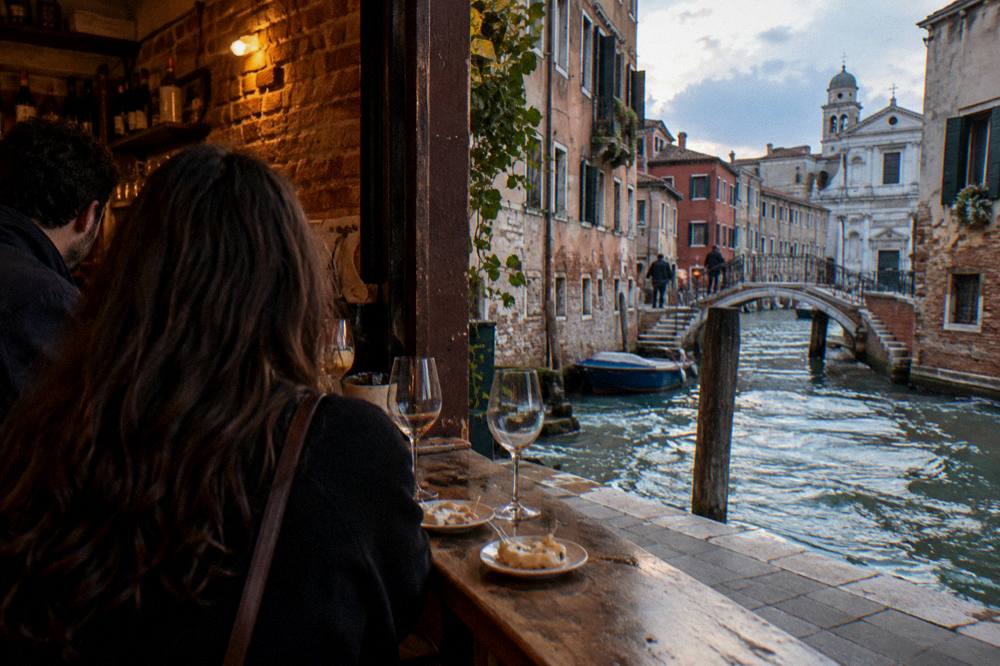
Castello, east of San Marco, is the least tourist-visited of the central districts and rewards wandering. It is where you are most likely to find a counter with no menu in English and a line of locals at 12:30, which is the experience people are asking for when they type this question into a search box. Dorsoduro, across the Accademia bridge, holds the student population around the university, and student neighbourhoods anywhere in Italy mean reliable, cheap standing food. San Polo wraps around Rialto and the markets, so its eating culture runs on market hours and market people.
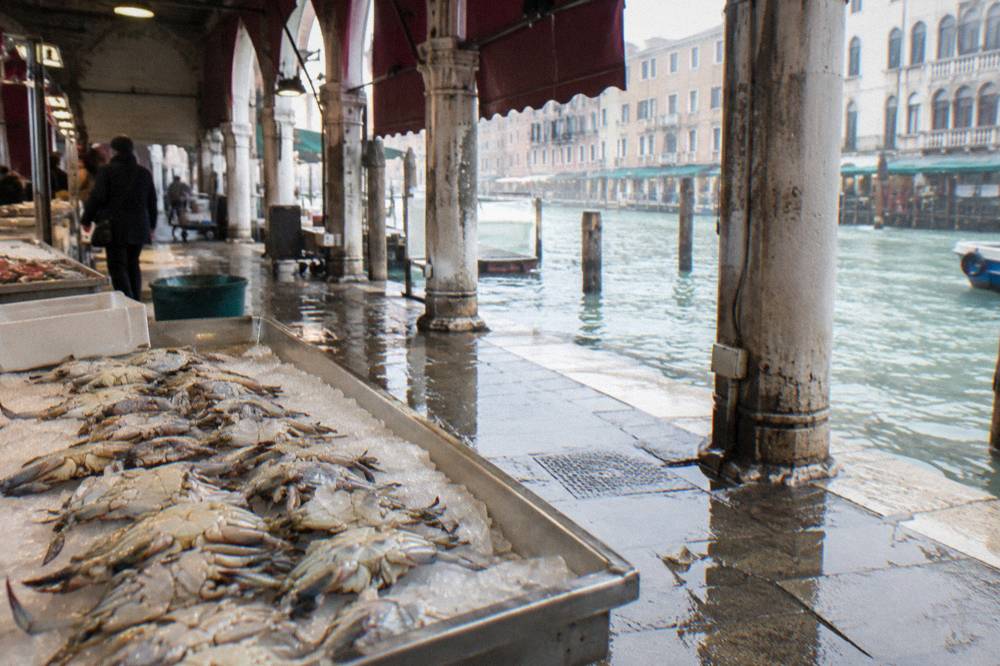
The Rialto markets themselves are part of the local food geography rather than a tourist show. The official hours: the produce market runs Monday to Saturday, 7:00 to 20:00, closed Sunday, and the fish market Tuesday to Saturday, 7:00 to 14:00, closed Sunday and Monday. Tour listings themselves warn that the fish market is also closed on Italian holidays, so a morning visit should be planned against those days. The full background, including what you see at the Pescheria, is in the Rialto market guide, and the neighbourhood-by-neighbourhood detail is in the guide to Venice food by neighborhood.
This is also where the lagoon islands deserve a mention, because locals eat there too, differently. Burano's food identity runs through risotto di gò, a risotto made with lagoon goby, and the island's butter biscuits, bussolà, while Sant'Erasmo grows the small violet artichokes that appear on Venetian counters in spring. Getting there is straightforward: vaporetto line 12 runs from Fondamente Nove through Murano to Burano, with a single 75-minute ACTV ticket reported at EUR 9.50. The day-trip version of that story, with the food stops, is covered in the guide to Burano and Murano with food stops.
What Locals Order At A Trattoria Table
When Venetians sit down, it is for a full meal built on lagoon fish and seasonal vegetables: sarde in saor, baccalà, risotto, grilled catch, and radicchio or artichokes depending on the season. Portions follow courses rather than one plate, dinner runs late by visitor standards, and the bill carries menu prices plus coperto. This is the seated half of local eating.
The seated meal starts where the counter leaves off. Sarde in saor and baccalà mantecato appear on trattoria menus as well as counters, then the meal moves to pasta or risotto, with seafood risotto a signature, then to a grilled or fried second course. The kitchen works with the lagoon and the Rialto stalls, so the honest plates follow the market: what the boats brought, what the season gives. Late winter brings radicchio, spring brings the small artichokes, autumn brings the soft-shell moleche crabs when the season allows. The seasonal calendar is laid out in the guide to Venice food by season.
The first-timer trap is ordering everything at once. A local table orders in sequence, takes its time, and treats the meal as the evening's main event. Dinner starts late; the customs around hours are worth knowing in advance, and there is a full page on what time Venetians eat dinner. On the bill, expect coperto where it is applied, reported around EUR 1 to 4 per person, disclosed on the menu, with tipping optional rather than expected. The etiquette detail, including how service charge and coperto differ, is unpacked in the guide to tipping, coperto and restaurant etiquette.
“My husband and I had so much fun with this experience! We had a great group of fellow Americans and Chef Filippo took great care of us. He is so knowledgeable, with lots of good local tips, and he made us laugh as well! We learned so much about Venice and cooking - truly a memorable time - and we had a delicious meal to enjoy when we were finished. I highly recommend this tour to anyone visiting Venice! Grazie!”
Not every dietary need is covered at every counter or trattoria, and this is worth saying plainly. Unless a listing or a venue states vegetarian, vegan, gluten-free or kosher options, assume nothing and ask ahead. Venice does have a kosher food history connected to the Ghetto, but kosher status of any specific venue is not something to guess at; the questions are covered in the guide to vegetarian, vegan and gluten-free food in Venice, and for any booked walk the right move is to message the operator before booking.
One caution that belongs in any honest article on this topic: the internet is full of claims that specific named restaurants are "where locals eat". No such ranking is verifiable, and this article will not hand out verdicts on named venues. What is verifiable is the pattern, counters in residential neighbourhoods, market-scheduled eating, small glasses and small snacks, and the pattern is reliable even when individual bars change. The wider set of guides lives on Venice Food Tours.
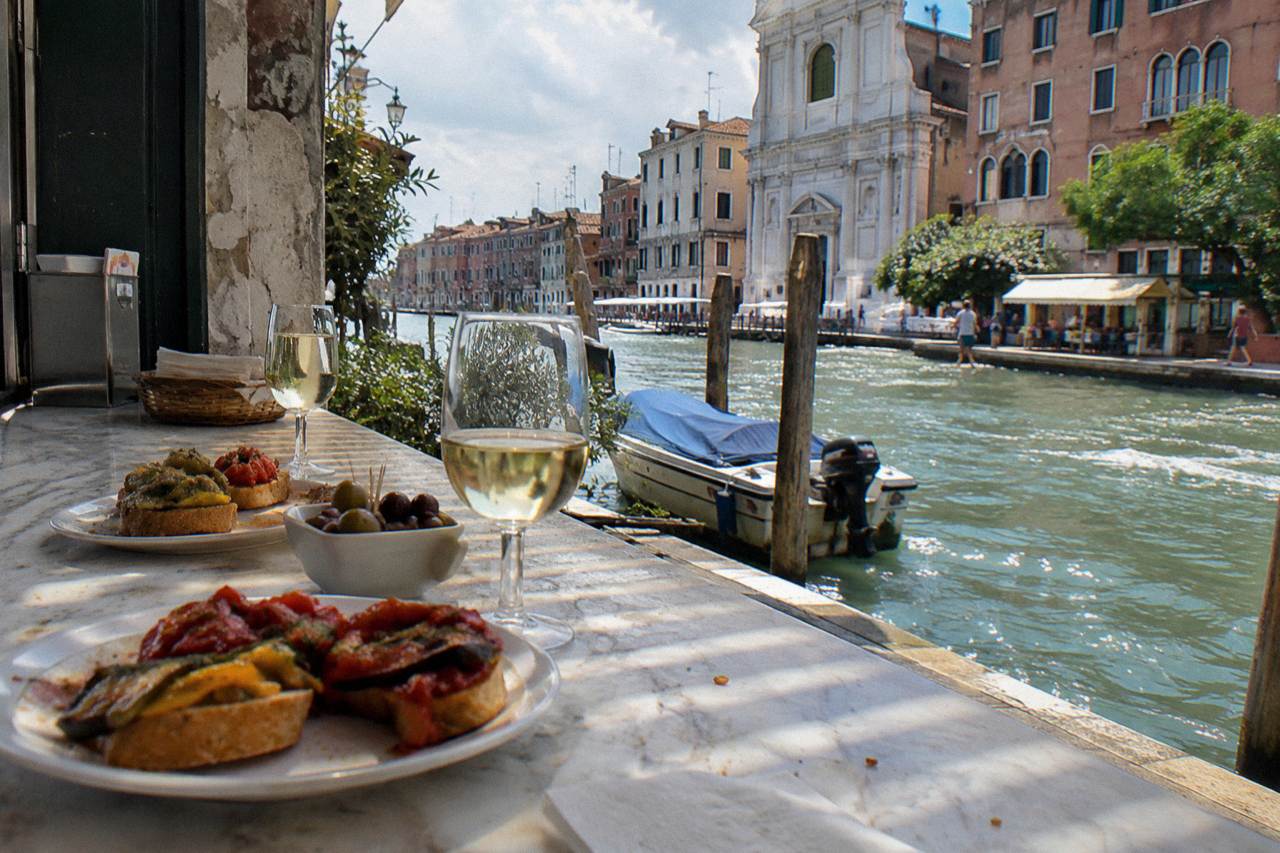
Eating Hours The Venetian Way
Local eating runs on a clock most visitors miss: a mid-morning stop, a proper standing lunch around 12:30 to 13:30, an aperitivo window from roughly 18:00, and dinner starting well after 20:00. Kitchens close between meals, and the fish market is finished by 14:00. Matching the local clock matters more than matching a specific address.
The morning belongs to coffee and a sweet something standing at a bar, cheap and fast, often a couple of euro for coffee and pastry combined. Lunch at the counter peaks in the early afternoon. Then comes the gap: many kitchens pause, the streets quieten, and the city that looks closed to a hungry visitor at 16:00 is simply between meals. The aperitivo hour from around 18:00 is the second great counter moment of the day, spritz or ombra plus a snack, and it runs long into the evening because dinner is late. The spritz culture has its own guide, covering Aperol, Select and the local way with what the different bitter aperitivi mean.
For planning a food-first day, this clock argues for mornings at Rialto when the fish market is working, an early afternoon crawl in Cannaregio or Castello, and an aperitivo window in Dorsoduro. Visitors who try to eat dinner at 18:30 will find the trattorie empty and sometimes not yet serving, and the counters at their most local, full of people finishing work. Anyone structuring a whole trip around this rhythm can lift the itinerary in the guide to how many days in Venice, a food-first plan.
There is a rules footnote to the day-trip version of this clock. Venice ran a day-visitor access fee trial in 2026 on 60 dates from April to late July, at EUR 5 or 10 per person; as of 27 July 2026 the fee does not apply and visiting needs no payment or exemption. It returns in 2027, with dates already listed from late March through mid-August but amounts and arrangements not yet published, so check the official page before a 2027 visit. This does not change where locals eat, but it changes who is standing next to you at the counter on peak days.
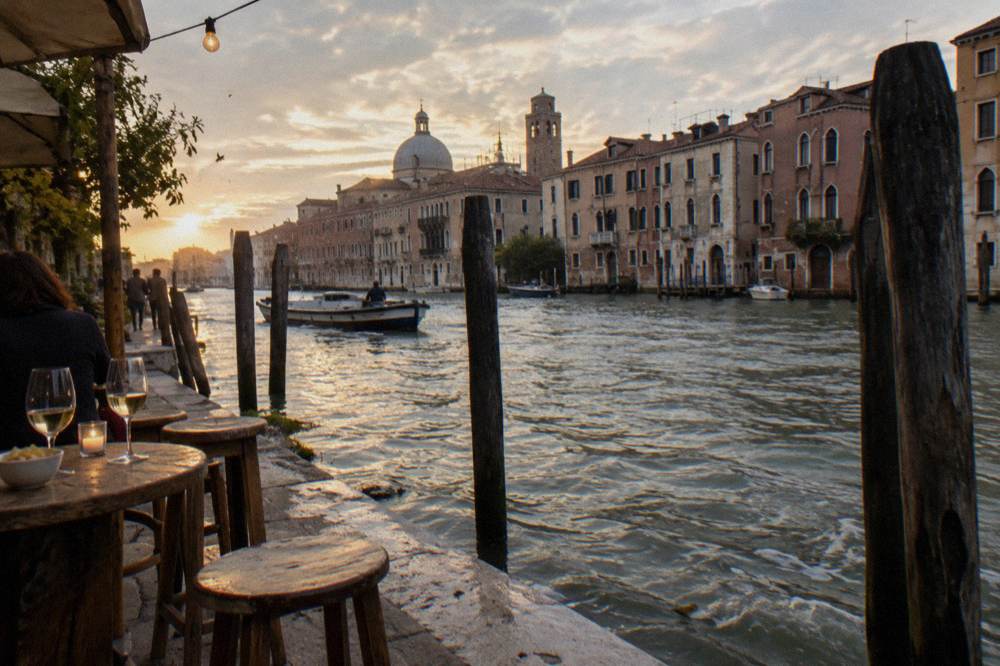
How A Guided Walk Helps You Find The Counters
A guided tasting walk is worth booking on a first visit because it finds the counters for you, orders for you and explains what you are eating, all in two to three hours. The best fit here is a bacaro-style walk: multiple stops, counted tastings and drinks, a small group. Prices, group sizes and inclusions are stated on each operator's booking page, so check before booking.
The case against needing a guide is simple and fair: the counter habit requires no qualification, the words baccalà and ombra fit on a card, and anyone willing to wander Cannaregio will find good bars. The case for a guide on day one is also simple: a walk compresses two days of trial and error into an afternoon, and it buys access to the pattern, which bars move, what to order at each, how the rounds work, plus enough context that the food means something. On a short trip that trade is often worth the ticket.
Beyond the bacaro walk that anchors this article, two other formats fit the "eat where locals eat" brief. The Eat Drink Repeat walk runs 2.5 to 3 hours around 10 tastings and 6 wines, a bigger, faster crawl for people who want volume and variety, with the current price on the operator's booking page.
The street-food and sightseeing format suits travellers who want the counters and the city in one ticket. That walk pairs cicchetti stops with the sights along the way, 2.5 hours, inclusions and price on the booking page.
Two practical notes close the case. Group sizes: guided groups in Venice's historic centre and lagoon islands are capped at 25 by city rule, with loudspeakers banned and headsets in use, so walks are inherently small even before an operator sets its own limit, which the booking page states. And dietary needs: none of these walks should be assumed vegetarian, vegan or gluten-free unless the listing says so; message the operator before booking and the good ones will adapt. If you are torn between a walk and a cooking class, the guide comparing a food walk or a cooking class walks through that decision, and the page on which Venice food walk to book compares the formats directly.
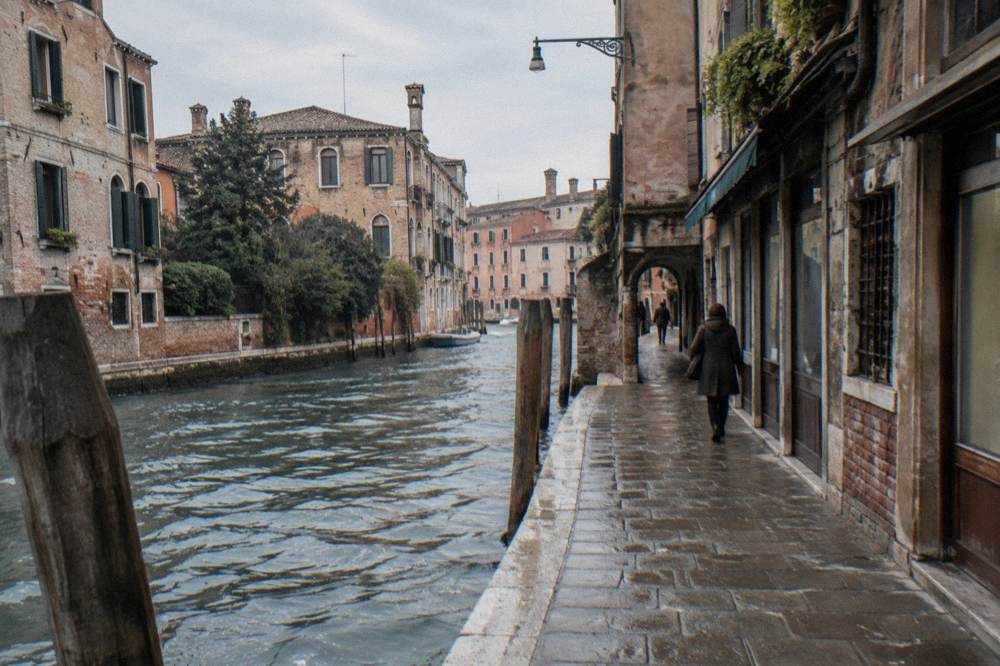
Practical Rules To Know Before You Stand At The Counter
Know four things before your first counter: posted prices apply with no fixed tariff, glass drinks stay inside at the counter under a current municipal rule, market-scheduled foods follow the Rialto clock, and guided groups are capped at 25. None of it is complicated, and all of it marks you as someone who has done a little homework.
The posted-list rule first. Every bar prices its own cicchetti and its own ombre, and the ranges quoted here, reported and worth re-checking on the day, describe the market rather than any guarantee. A bar in a heavy tourist lane can charge multiples of a bar two bridges away. The reliable strategy stays the same: walk away from the main sightseeing axis, look for counters with standing locals, and read the posted prices before pointing.
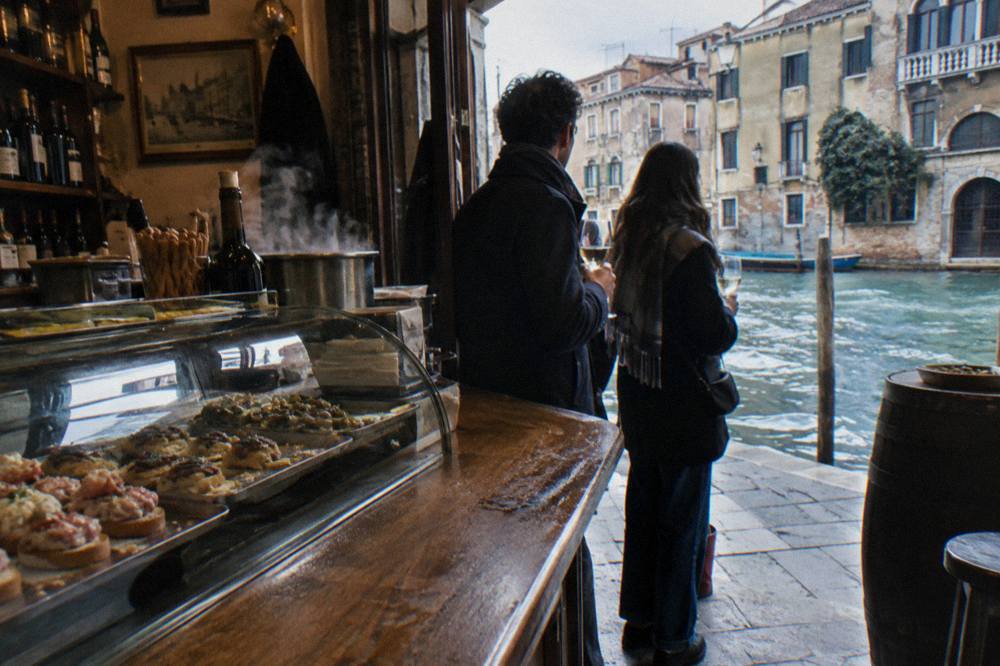
The glass rule next, because it catches visitors who take their drink outside. The municipal regulation bans consuming food and drinks in glass, ceramic or similar containers outside permitted outdoor seating areas, and bans takeaway sales of alcohol in glass for public consumption, with fines reported from EUR 25 to 500. The ombra is a counter drink by design, so this rule and the custom point the same way. The same honesty applies to closing times: no verified changes to bacaro hours or practices surfaced in recent reporting, but hours are each bar's own, and the counter habit happens in the daytime and early-evening windows when bars are reliably open.
Last, mind the calendar around the market. A Sunday or Monday visit means no fish market, and Italian holidays move more than one schedule. Plan the market morning for a working weekday if you can, and give the rest of the day to the counters, an afternoon in Cannaregio or Castello, an aperitivo in Dorsoduro, and a late trattoria dinner if the day still has room for one. That sequence, counter to market to table, is as close to a local answer as this city gives.
Common Questions About Where Locals Eat
Where Do Locals Eat In Venice?
Mostly standing, at bacaro counters in the residential districts: Cannaregio, Castello, Dorsoduro and around the markets in San Polo. The pattern is small snacks plus a small glass of house wine, repeated across the day, with seated trattoria meals reserved for later in the evening.
What Does An Ombra Cost?
Around EUR 1 to 2.50 for a small glass of house wine at a standing counter, as reported, with cheaper local spots often in the EUR 1.50 to 2 range. Each bar posts its own prices, and the posted list is what applies.
Is Eating Where Locals Eat Cheaper Than The Restaurants?
Generally yes. Cicchetti run a reported EUR 1.50 to 4 per piece and standing service usually avoids the coperto cover charge. A crawl of several counters can cost less than a single seated main course.
Which Neighborhood Is Best For Finding Local Bacari?
Cannaregio and Castello are the strongest bets in the historic centre, with Dorsoduro's student quarter close behind. San Polo works around the Rialto market clock. All are covered in the neighborhood-by-neighborhood guide linked above.
Do I Need A Guided Tour To Eat Like A Local?
No, but a guided bacaro walk saves a day or two of trial and error on a first visit by finding the counters, ordering for you and explaining the food. A bacaro-style guided walk is the format that matches the local standing custom.
Is It Free To Walk Around Venice While Doing This?
Yes. The 2026 day-visitor access fee trial ended on 27 July 2026, and no fee applies now. A 2027 scheme is listed with dates but amounts are not yet published, so check the official access-fee page before a 2027 trip.