Do And Don'ts In Venice, Italy?
The practical do and don'ts for visiting Venice in 2026 and 2027: access fee status, street drinking rules, bacaro etiquette, market hours and group rules, with a food walk pairing.
In Venice, do check the official access fee page before you travel, since the 2026 trial ended on 27 July 2026 and no fee applies now, do stand at bacaro counters, do time market visits to the official morning hours, and do keep drinks out of glass on the street; don't eat on bridges, don't sit anywhere a table appears without reading the menu, and don't expect huge guided groups, as 25 is the cap.
Venice is a small city that receives an outsized number of visitors, and over the past few years it has responded with written rules rather than just sighs. Some of those rules carry fines. Others are simply local habits that make the difference between being welcomed at a counter and being tolerated at a table.
The written rules first. The day visitor access fee, called Contributo di Accesso, ran as a trial on 60 days between early April and late July 2026, charged at EUR 5 or EUR 10 depending on when you paid, and then stopped applying entirely from 27 July 2026. As of today, no payment and no exemption registration are needed to visit. That changes for 2027: the city has already published the fee dates for next year, running from late March through mid August, but the amounts and arrangements will be announced by 31 December 2026. The single most useful thing you can do is check the official access fee page before your trip, because the practical details for 2027 are still being finalized.
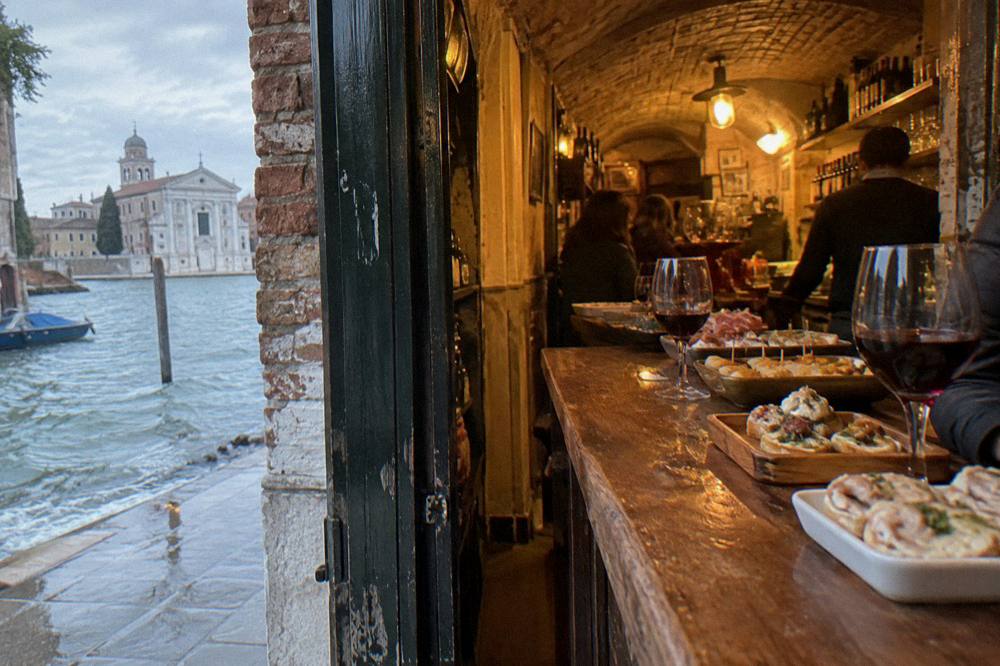
The unwritten rules matter just as much. Venetians eat standing at bacaro counters, drink small glasses of house wine called ombre, and consider a bridge or a church steps a place to walk, not a place to picnic. The sections below cover both kinds, with the food customs given the most space, because eating well in Venice rewards preparation more than almost anything else you will do there.
Here is the whole picture in one table, then the details section by section.
| Do | Don't |
|---|---|
| Check the official access fee page before travelling | Assume the 2026 fee still applies, or that 2027 rules are known |
| Stand at the bacaro counter for cicchetti and an ombra | Order takeaway drinks in glass and walk the streets with them |
| Visit the Rialto markets in the morning on the right days | Show up at the fish market on a Sunday or Monday expecting action |
| Read the menu for coperto before sitting down | Assume a canal table is free just because no price is posted |
| Wear comfortable shoes and expect stairs, not elevators | Ride the vaporetto without validating a ticket |
| Ask your guide about dietary needs before booking | Assume every listing can handle vegan, gluten-free or kosher needs |
If food is the centre of your trip, a guided walk is one of the most efficient ways to absorb these customs in a single evening, because the guide orders, translates and explains while you taste.
Do Check The Access Fee Rules Before You Travel
No access fee applies right now. The 2026 trial ran on 60 selected days from April to July 2026 at EUR 5 or EUR 10 per person, and it stopped applying on 27 July 2026. For 2027 the city has published fee dates from 26 to 29 March through 13 to 15 August, but amounts and arrangements are not yet set and are due to be announced by 31 December 2026. Check the official page before you go.
The fee applies to day visitors, not to overnight guests, who instead pay the separate tourist tax through their accommodation. During the 2026 trial, children under 14 were exempt and payment was made in advance through the official portal with a QR code. Whether the same mechanics return in 2027 is exactly the kind of detail the city has not yet confirmed, which is why the official page is the only source to rely on.
The 2027 dates as currently listed cluster around weekends and holidays in spring and summer: late March, then blocks in April, May, June, July and the first half of August. If your trip falls on one of those dates and you are not staying overnight, budget for the possibility of a fee and plan to register in advance, since the 2026 trial made advance booking mandatory for paying visitors.
Two related numbers worth knowing. The tourist tax, collected by hotels and other accommodation, runs from about EUR 0.10 to EUR 5.00 per person per night depending on the property type, is capped at five consecutive nights, and is entirely separate from the access fee. And getting around is not free either: a single 75 minute ACTV vaporetto ticket costs EUR 9.50 as reported on the operator's official page, while a 24 hour pass is EUR 25, so a day of island hopping usually justifies a pass. Check the official ACTV fares page for current prices before you buy.
Wondering whether a food walk is worth adding to this kind of trip planning?
Don't Drink From Glass In The Street
Venice bans consuming food and drinks from glass, ceramic or similar containers outside the permitted outdoor seating of bars and restaurants, and it bans takeaway sales of alcohol in untapped glass bottles or glass glasses. Reported fines run from EUR 25 to 500. The practical version: if you buy a drink to walk with, it needs to be in a permitted container, and alcohol is not for the street at all.
This is a municipal regulation, the Regolamento SPU, and it exists because the city's calli and campi are narrow, crowded and full of history that does not survive dropped glass well. The rule is quoted as reported; you can read the regulation on the comune's site and check current rules before your trip.
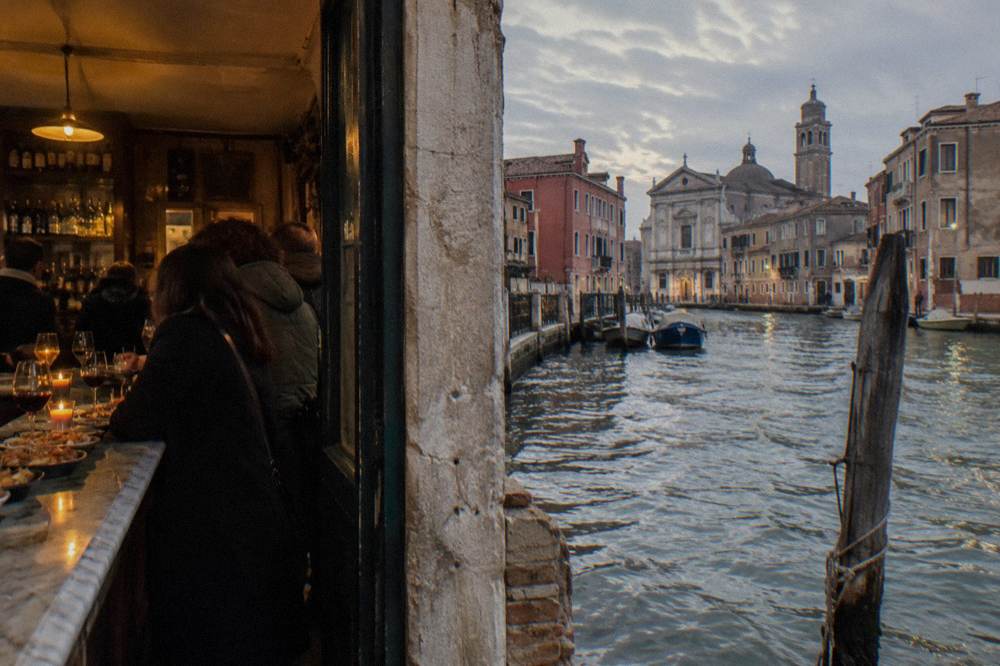
For visitors the consequence is simple and actually pleasant: drinking in Venice is meant to happen in specific places. You stand at a bacaro counter with your ombra. You sit in the campo on a bench with a permitted container if you like, though alcohol is still off limits outside licensed seating. You drink your spritz at a table belonging to the bar that sold it.
This is one of several reasons the bacaro crawl works so well as a format. The wine stays where the rule wants it, at the counter where it was poured, and the evening moves from bar to bar on foot with a glass in hand only indoors. If you want to understand the ritual before you attempt it alone, the customs around standing, ordering and ombre are covered in detail in the bacari etiquette and wine ritual guide.
Do Stand At The Bacaro Counter
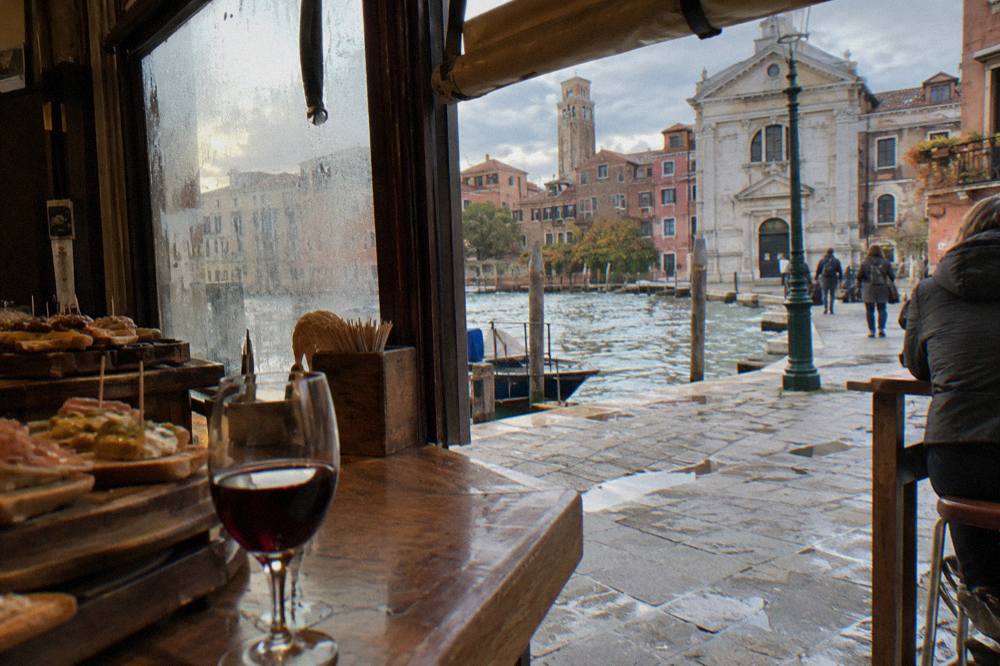
Standing at the counter is the local way to eat cicchetti, the small snacks that define Venetian drinking food. Reported prices run around EUR 1.50 to 4 per piece, and an ombra, the small roughly 100 ml glass of house wine, costs around EUR 1 to 2.50. Standing service often skips the coperto charge that sitting triggers, and no tip is expected at the counter.
The economics alone make the case. A few pieces of cicchetti and a couple of ombre can cost less than a single seated main course, and the standing counter is where the room actually is: the workers on their break, the regulars, the noise. Ordering is usually done by pointing at the tray, and paying is often settled at the end by a nod of trust.
Cicchetti themselves deserve a little study before you go, because the vocabulary is not obvious: baccalà mantecato is whipped salt cod on polenta, sarde in saor is sweet and sour sardines, and the range runs well beyond that. The full story of what to order and how is in the guide to what cicchetti are and how to order them, and the bar-by-bar specifics are in the best cicchetti bars guide.
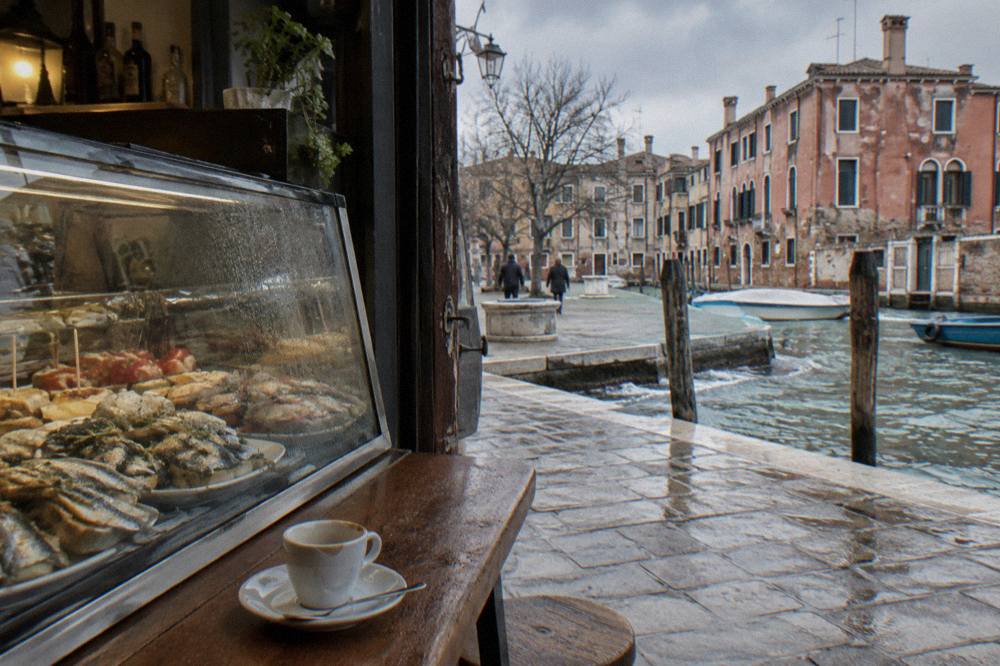
One caution that belongs here rather than repeated later: nobody can promise which bars will be open, how busy they will be, or what will be on the counter on the day you visit. Counters change daily. The habit that serves you best is walking a street with several bacari on it rather than betting everything on one address.
A guided crawl turns that uncertainty into someone else's problem. The Venice Bacaro Food Tour: Eat and Drink like a Venetian runs three and a half hours in the bacaro format, with the guide handling the stops, the ordering and the translating; what it costs and what it includes is on its booking page.
Don't Sit Down Blind: Coperto, Menus And Tourist Traps
Many restaurants add a coperto, a bread and cover charge, commonly EUR 1 to 5 per person as reported, disclosed on the menu. Before you sit, especially at a canal-side table, read the menu and its fine print. Tipping is optional and modest in Venice; rounding up or a few euros for good service is the local norm, and at a standing counter virtually nothing is expected.
“Ana was a great tour guide, providing lots of information about the history of Venice and it's food and drink culture. The food was all excellent, and is mostly chosen at each venue, making it easy for those with dietary requirements. The option to pay for a recommended drink pairing at some locations was also great.”
The seated experience in Venice can be wonderful or expensive, and the difference is usually information. A table with a view often prices that view, either in the dishes or in the cover charge. The coperto is legal and standard, not a scam, but it should be printed, and if it is not printed you are entitled to ask.
The same information habit applies to timing. Venetians eat dinner late by some standards, and kitchens keep their own hours; arriving far outside them limits your options. The question of when the city actually sits down to eat is covered properly in the dinner timing post, and the customs around tipping and cover charges in more depth in the restaurant etiquette guide.
On tourist traps generally, the honest answer is that most bad meals in Venice come from three decisions: eating within fifty metres of the biggest sights, eating at a place with a host outside summoning you, and eating without looking at the menu first. None of these guarantees a bad meal, and the reverse is not guaranteed either. But they tilt the odds, and the city is small enough that walking ten minutes in almost any direction changes the price and the quality of what you find.
Do Time Your Market Visit To The Official Hours
The Rialto produce market runs Monday to Saturday from 7:00 to 20:00 and closes Sunday. The fish market runs Tuesday to Saturday from 7:00 to 14:00 and closes Sunday and Monday. Morning is the right time for both, and tour listings themselves warn that the fish market is also closed on Italian holidays.
These are the official hours as published by the city's tourism body, and they matter more in Venice than in most cities because the market is not a museum piece: it feeds the restaurants you will eat in, and the fish stalls are genuinely finished by early afternoon. A visitor who arrives at 15:00 sees an empty loggia and concludes there is nothing here.
Sunday and Monday visitors are not out of luck, they just need to plan differently. The produce side still runs Monday, and on Sunday the smarter move is a bacaro crawl in Cannaregio or Dorsoduro, neighborhoods whose food character is described in the Venice food by neighborhood guide.
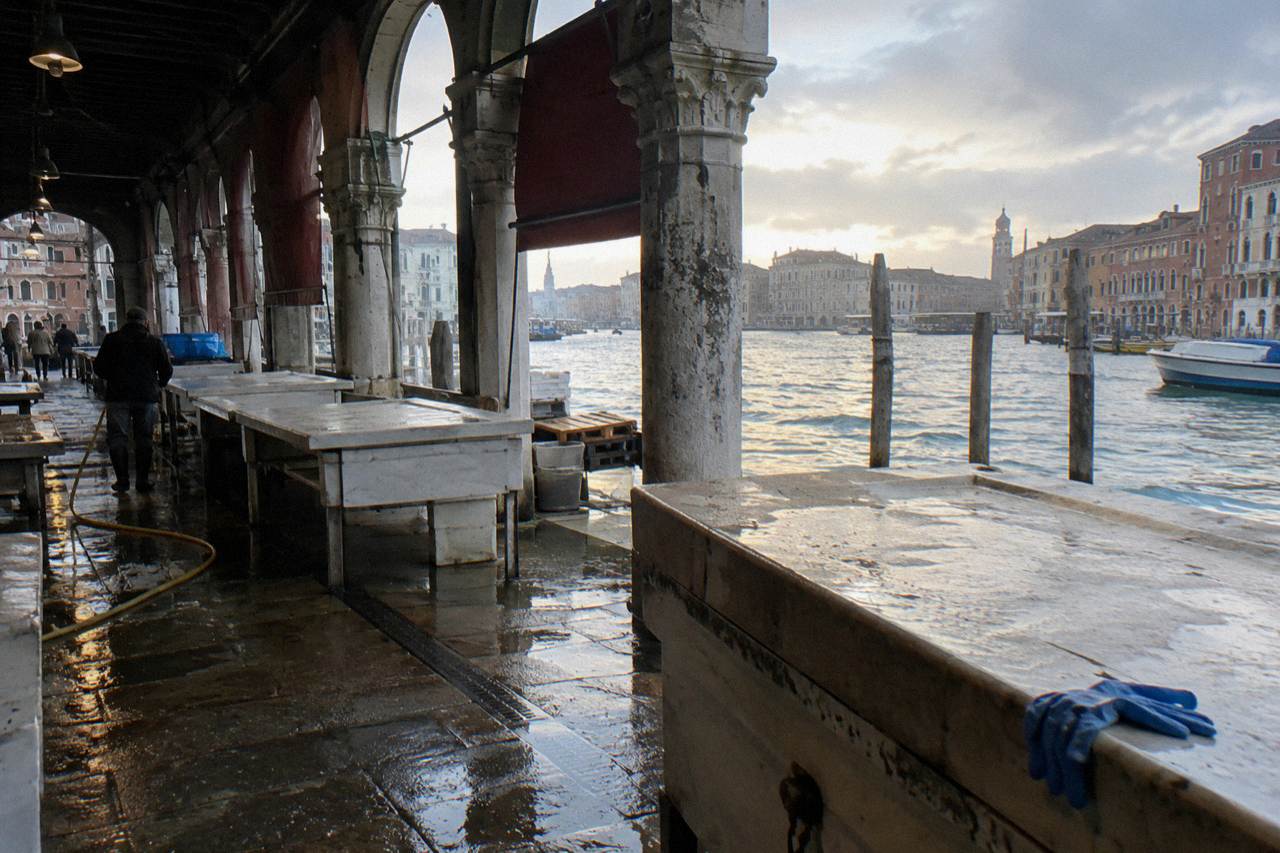
There is a subtlety worth knowing that a first page of search results rarely mentions: the guided market experiences lean hard on those hours, and the ones built around the fish market generally start early for exactly this reason. If a morning market walk with tastings appeals, the format and what to expect is laid out in the Rialto market tour with tasting guide, and the full hours and timing discussion is in the market hours guide.
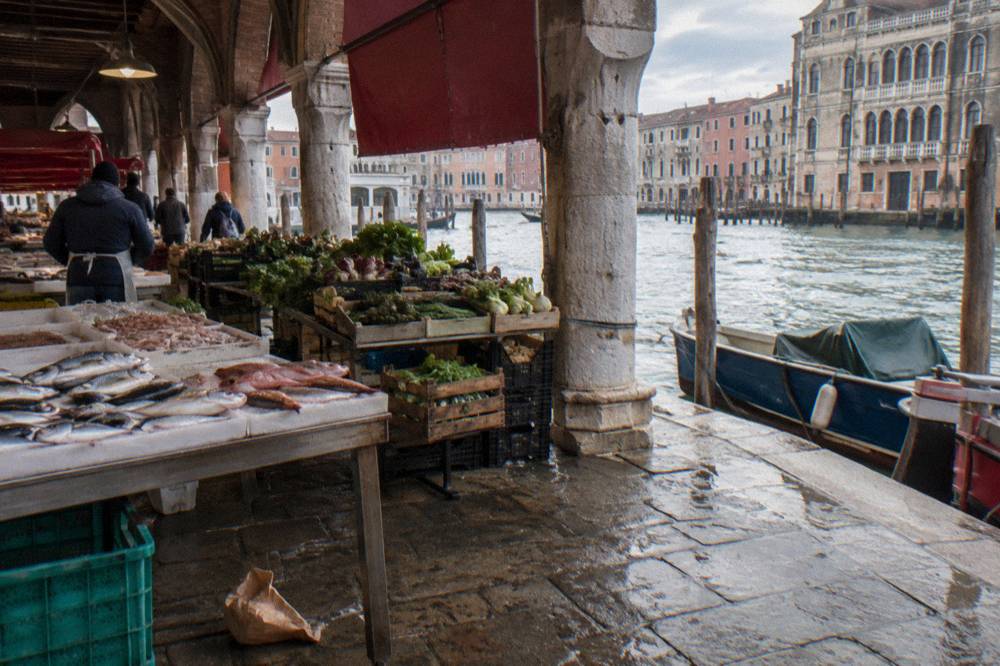
| Market | Days | Hours | Notes |
|---|---|---|---|
| Produce, Erbaria | Monday to Saturday | 7:00 to 20:00 | Closed Sunday |
| Fish, Pescheria | Tuesday to Saturday | 7:00 to 14:00 | Closed Sunday and Monday; listings also warn of holiday closures |
Don't Block The Calli: Street Sense And Group Rules
Guided groups in the historic centre and the lagoon islands are capped at 25 people, and loudspeakers and megaphones are banned, with guides using headsets instead, as reported. As an individual visitor, the matching habit is simple: keep moving on bridges and in narrow lanes, step into a campo to stop, and expect crowds to be the norm rather than an exception in peak season.
The group cap is an overtourism measure that has been in force since 2024, and it shapes the tours you can actually book: nobody is legally walking 40 people through San Polo. For you as a walker, the same logic applies in miniature. The Ponte di Rialto and the lanes around St Mark's are the pinch points, and the person who stops dead at the top of a bridge to take a photo is the one who causes the pileup behind them.
Practical street habits that locals will notice: keep right where the lane is narrow, step aside into a square to consult a map or a phone, and treat the vaporetto platforms with the same logic, letting people off before you board. Validate your ticket before boarding; inspectors do check, and an unvalidated ticket is treated much like no ticket.
If you are travelling with children or anyone with limited mobility, note that Venice is stairs, bridges and boats, with essentially no cars and few elevators. That is not a rule, just physics, but it changes what a comfortable day looks like, and packing shoes accordingly is the single most repeated piece of advice in any honest preparation list.
Do Know What A Guided Food Walk Actually Adds
A good tasting walk bundles the customs above into one evening: the guide orders in the right bars, keeps the group inside the 25 person cap, times the route around what is actually open, and explains the dishes as they arrive. The tours compared here run two to three and a half hours, cover the bacaro and market formats, and their prices and inclusions are stated on each booking page rather than assumed.
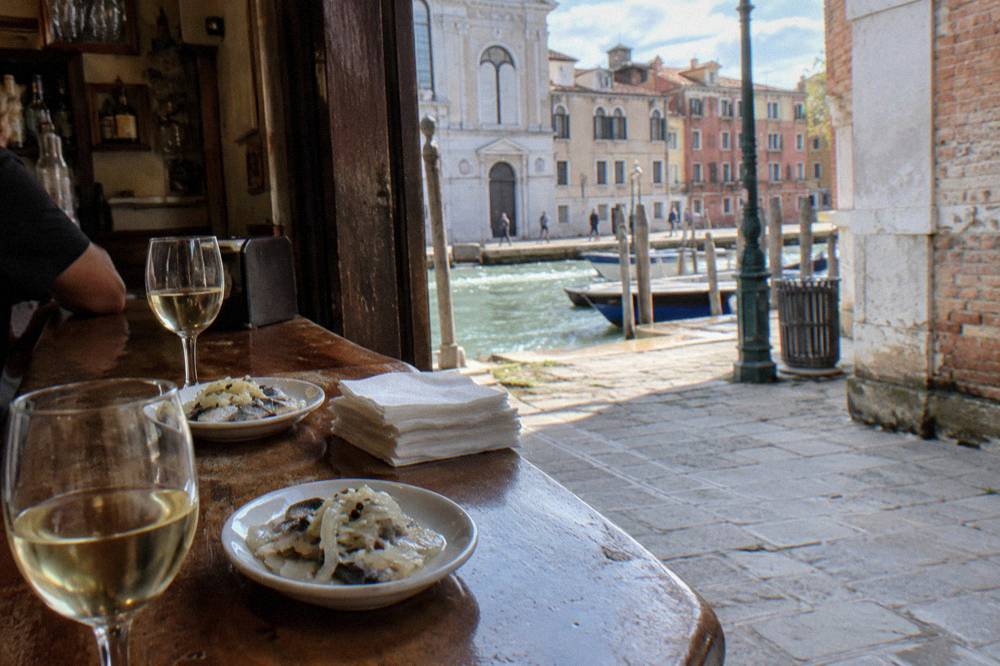
The do and don'ts in this article are learnable alone, and plenty of visitors learn them that way, usually over two or three evenings of small mistakes. What a walk compresses is time. The Eat Like a Local: Venice 3-Hour Small-Group Food Tasting Tour is the format most reviewed on this site, and it is built exactly around the counter culture described above; check its rating and review count on its booking page before deciding. For a shorter evening built around wine and a spritz rather than a full tasting spread, Taste Venice Like a Local: Food, Wine & Spritz runs two and a half hours in the same family of formats.
Two hygiene points worth adding, both drawn from how these walks work. First, dietary needs: unless a listing explicitly states vegetarian, vegan or gluten free provision, treat it as unstated and message the operator before booking rather than assuming. Second, meeting points: walks in Venice start at specific campos or landmarks, and being ten minutes late in a city of identical lanes is a real risk, so the meeting points and what to bring guide is worth a read.
Whether a walk beats a cooking class for your particular trip is a fair question, and it has its own treatment in the food walk versus cooking class comparison. The short version: walks show you the city's eating culture, classes teach you to reproduce one dish of it at home.
Don't Forget The Small Practical List
A few final habits complete the picture: carry some cash for small bacari even though cards are widely taken, keep drinks out of glass outdoors, recheck the access fee page close to your travel date, and read the coperto line before sitting. Beyond that, Venice rewards early mornings, comfortable shoes and low expectations of elevators. None of this is complicated, it is just easier to know in advance than to learn by mistake.
“Giovanni is so knowledgeable and hilarious. We had a fabulous time on this tour. It was one of the best we’ve done and it helped us to appreciate all of Venice, including the areas that are off the beaten path. The food was delicious (best pizza and gelato in Italy yet!).”
Booking patterns deserve one line: the popular food walks fill first in spring and summer, and the group cap of 25 means supply is genuinely limited in a way it is not in bigger cities. Booking ahead costs nothing if the listing allows free cancellation, and many do; check the cancellation terms on the booking page rather than assuming.
Here is the whole article compressed into a final table you can screenshot.
| Situation | Do | Don't |
|---|---|---|
| Arriving as a day visitor in 2026 | Visit freely; no fee applies since 27 July 2026 | Assume you must pay or register now |
| Day visitor on a listed 2027 date | Check the official page after 31 December 2026 | Trust secondhand amounts for 2027 |
| Buying a drink to walk with | Use a permitted container, no alcohol outside seating | Carry glass or drink alcohol in the street |
| Eating cicchetti | Stand at the counter, pay at the end | Expect a table and table service |
| Sitting at a restaurant | Read the menu and coperto line first | Assume the canal view is free |
| Visiting Rialto fish market | Go Tuesday to Saturday, before 14:00 | Go Sunday or Monday expecting stalls |
| Joining any guided tour | Expect groups of 25 or fewer with headsets | Expect megaphones or giant groups |
| Getting around | Validate your vaporetto ticket, EUR 9.50 single as reported | Board without validating |
That is the honest version of Venice preparation: a handful of real rules, a handful of local habits, and a city that responds warmly to visitors who learned either one in advance. Venice Food Tours exists for exactly the eating half of that list, from cicchetti basics to market mornings.
If a guided evening is the piece you want, these are the three formats this article keeps coming back to.
Common Questions About Venice Do And Don'ts
Do And Don'ts In Venice, Italy?
Do check the official access fee page before travelling, since the 2026 trial ended on 27 July 2026 and 2027 dates are published but amounts are not. Do stand at bacaro counters, time market visits to the official morning hours, and keep drinks out of glass outdoors. Don't eat on bridges, don't sit without reading the coperto line, and don't expect guided groups larger than 25.
Is It Free To Visit Venice Right Now?
Yes, for day visitors. The 2026 access fee trial ended on 27 July 2026, and as of 3 November 2026 no payment or exemption is needed. The fee returns in 2027 on published dates from late March through mid August, with amounts to be announced by 31 December 2026, so check the official page before a 2027 trip.
Can You Drink Alcohol In The Street In Venice?
No. A municipal regulation bans consuming food and drinks from glass, ceramic or similar containers outside permitted outdoor seating, and bans takeaway sales of alcohol in glass for public consumption. Reported fines run from EUR 25 to 500. Drink your spritz at the bar's table or the bacaro counter instead.
Is Tipping Expected In Venice?
Tipping is optional and modest. At a standing bacaro counter virtually nothing is expected; at a restaurant, rounding up or leaving a few euros for good service is appreciated. The coperto, a cover charge commonly around EUR 1 to 5 per person as reported, is separate and appears on the menu.
What Days Is The Rialto Fish Market Open?
Tuesday to Saturday, from 7:00 to 14:00, closed Sunday and Monday. The produce market runs Monday to Saturday from 7:00 to 20:00, closed Sunday. Tour listings also warn that the fish market closes on Italian holidays.
How Big Can Guided Tour Groups Be In Venice?
Guided groups in the historic centre and the lagoon islands are capped at 25 people as reported, and loudspeakers and megaphones are banned, so guides use headsets. Any food walk you book should fall within that cap.