Which Venice Food Walk Should You Book
Ten tasting walks can look identical in a search result. They are not: the differences that matter are the number of stops, the neighborhood, the group size and whether a sit-down course is part of the deal.
Short answer
The walks compared here split into bacaro crawls of two to three and a half hours, market-and-street-food walks built around the Rialto, and hybrid formats that add a gondola ride or a sit-down dinner. Group rules cap guided groups at 25 in the historic centre. Prices vary by date and group size, so each listing's own page carries the current per-person figure.
A Venice food walk sounds like one product. In practice the city's tasting walks come in at least four distinct formats, and the one you pick changes what your afternoon looks like more than any other decision you will make about eating in Venice. A two-hour bacaro crawl with a small group and a guide who orders for you is a different experience from a four-hour market walk that ends at a table, and both differ again from a sunset cicchetti route built around an aperitivo pace.
This comparison lays out the walks available on Venice Food Tours by what actually differs between them: the length, the number and type of stops, the neighborhood each one works through, the group setup and what the listing includes. Where a price, a rating or a group maximum is not fixed, this guide says so rather than guessing, because per-person from-prices on these listings move with date and group size and a stale number is worse than none.
How Do The Venice Food Walks Compared Here Differ?
The walks compared here fall into three families: cicchetti and bacaro crawls of two to three and a half hours, market and street-food walks anchored on the Rialto or a specific sestiere, and hybrid formats that bolt a gondola ride, a sunset route or a sit-down dinner onto the tasting structure. Within each family the real variables are stop count, group size and neighborhood, not the general idea of eating cicchetti with a guide.
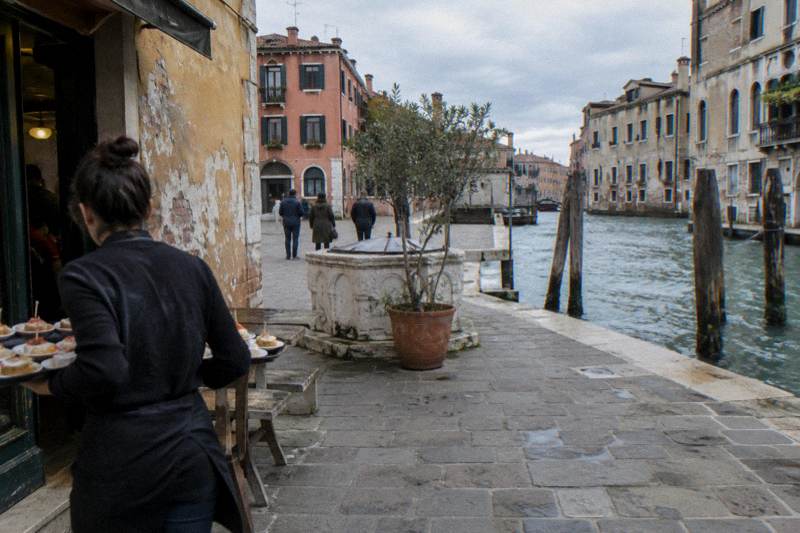
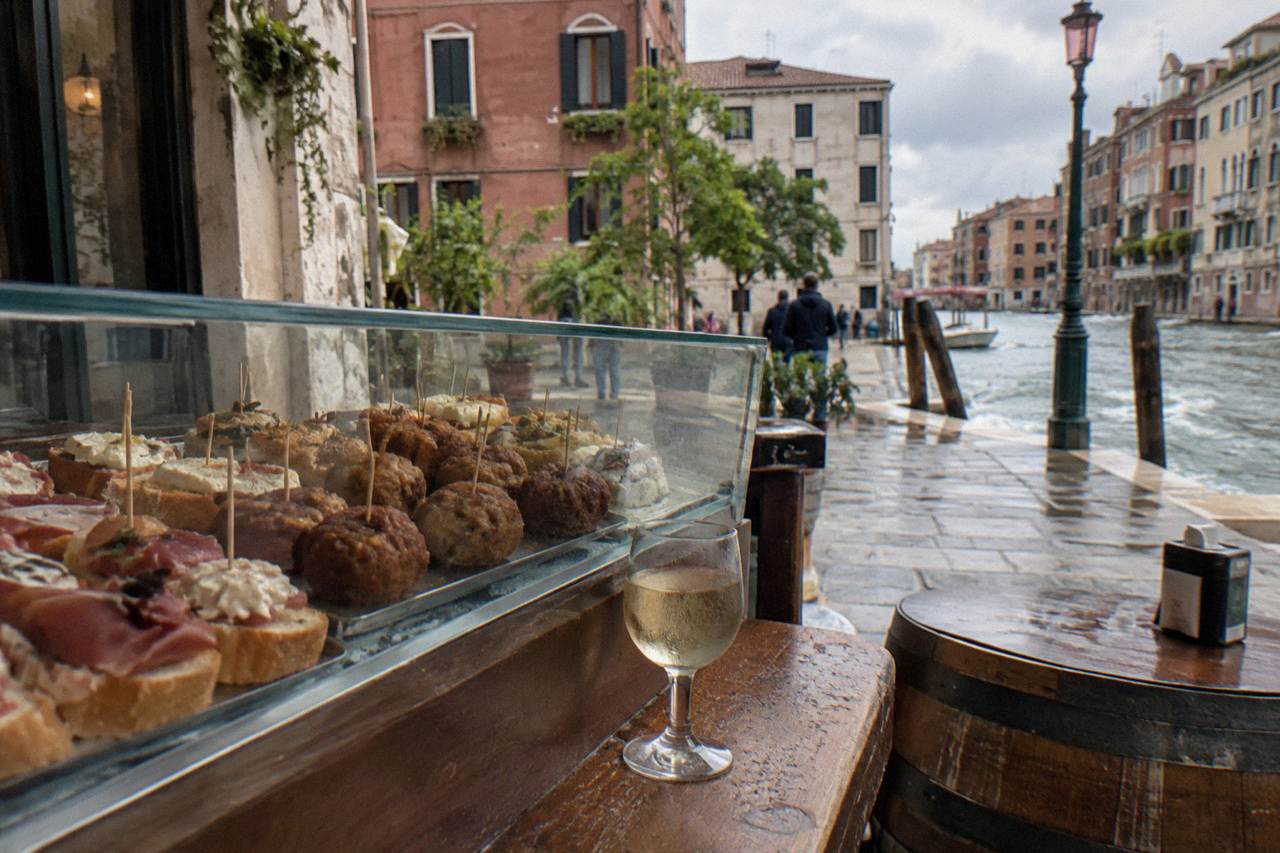
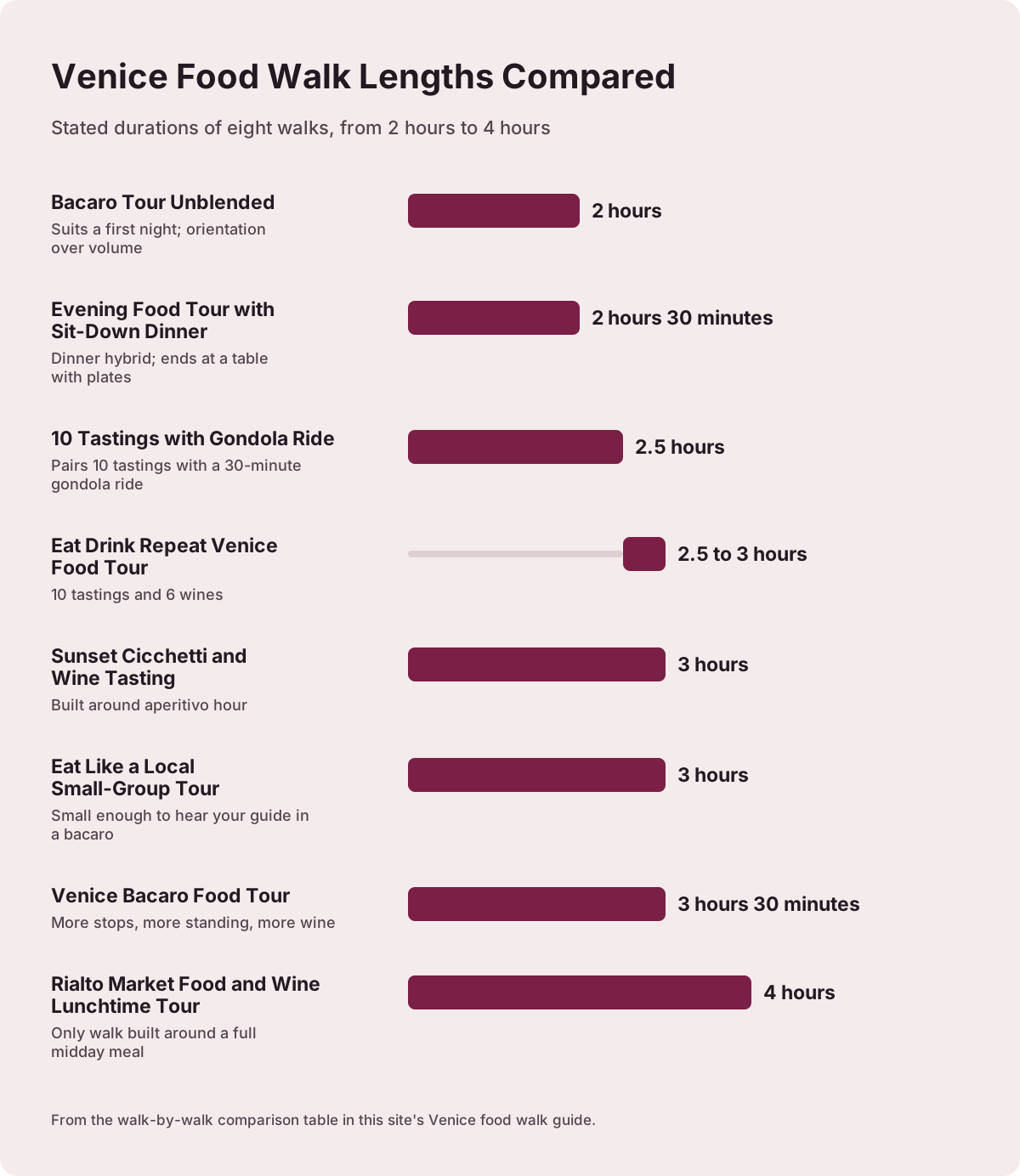
The cicchetti-bacaro family is the biggest. It includes the Eat Drink Repeat walk with 10 tastings and 6 wines at 2.5 to 3 hours, the Venice Bacaro Food Tour at 3 hours 30 minutes, the Bacaro Tour Unblended at 2 hours, the sunset cicchetti and wine walk at 3 hours, an evening tour with a sit-down dinner at 2 hours 30 minutes, a 6-plus tasting walk at 3 hours 30 minutes, and the small-group Eat Like a Local walk at 3 hours. Two more entries in the same family promise 10 tastings each, one of them paired with a 30-minute gondola ride. That is a lot of overlap on paper.
The differences that matter are structural. A walk with a sit-down dinner ends at a table with plates, which changes the pace of the whole evening. A two-hour crawl compresses the same culture into a shorter arc, which suits a first night in the city when you want orientation more than volume. A 3.5-hour walk usually means more stops, more standing and more wine, which is the right call for a group that treats the walk as the evening's main event.
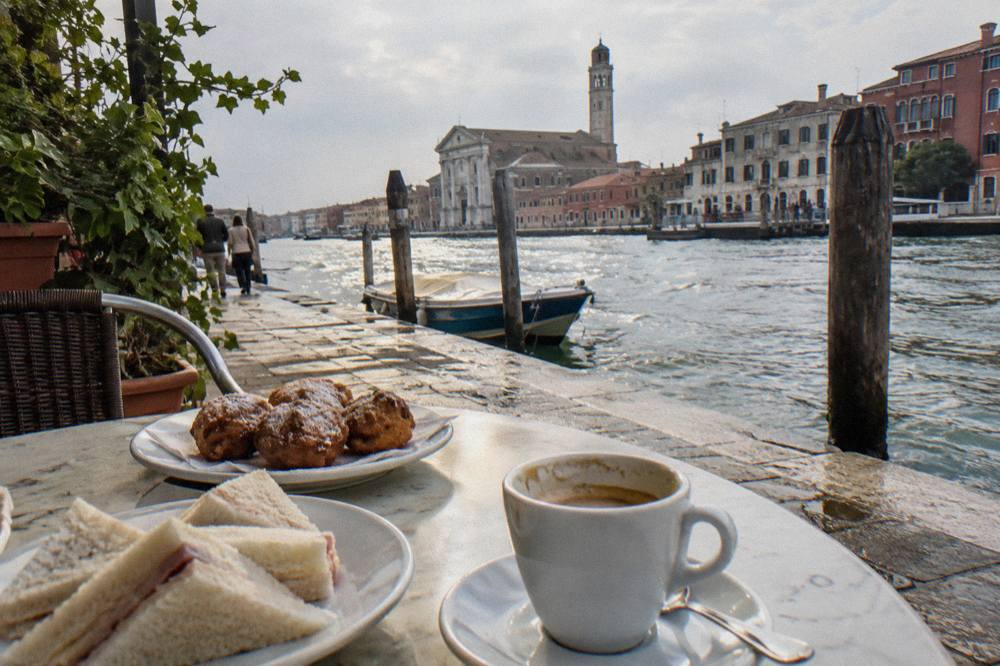
The market and street-food family works differently. Those walks, including a Rialto Market food and wine lunchtime tour at 4 hours and a street-food walk with a local guide at 2.5 hours, lean on the market and the stalls around it rather than on a crawl from bar to bar. The 4-hour lunchtime format is the longest food walk compared here, and the only one built around a full midday meal structure. The Jewish Ghetto and Cannaregio food tour, also 4 hours, sits in this family too and is the clearest neighborhood-specific option: it pairs a historic district walkthrough with tastings and wine.
If you are weighing a walk against a hands-on class instead, the food walk or cooking class decision comes down to whether you want to eat the culture or recreate it at home. This guide stays on the walk side of that line.
Which Walk Format Matches Your Trip: Crawl, Market Or Hybrid?
The reasoning behind that spread is straightforward. The small-group Eat Like a Local walk, at 3 hours, is the most reviewed tasting walk compared here and represents the classic crawl done at a group size small enough to hear your guide inside a busy bacaro. The street-food walk with a local guide, at 2.5 hours, is the market-family pick: it works the stalls and stands rather than the wine counters. The Venice Bacaro Food Tour, at 3 hours 30 minutes, is the long-evening version, the one to book when the walk is the whole evening plan and not a warm-up.
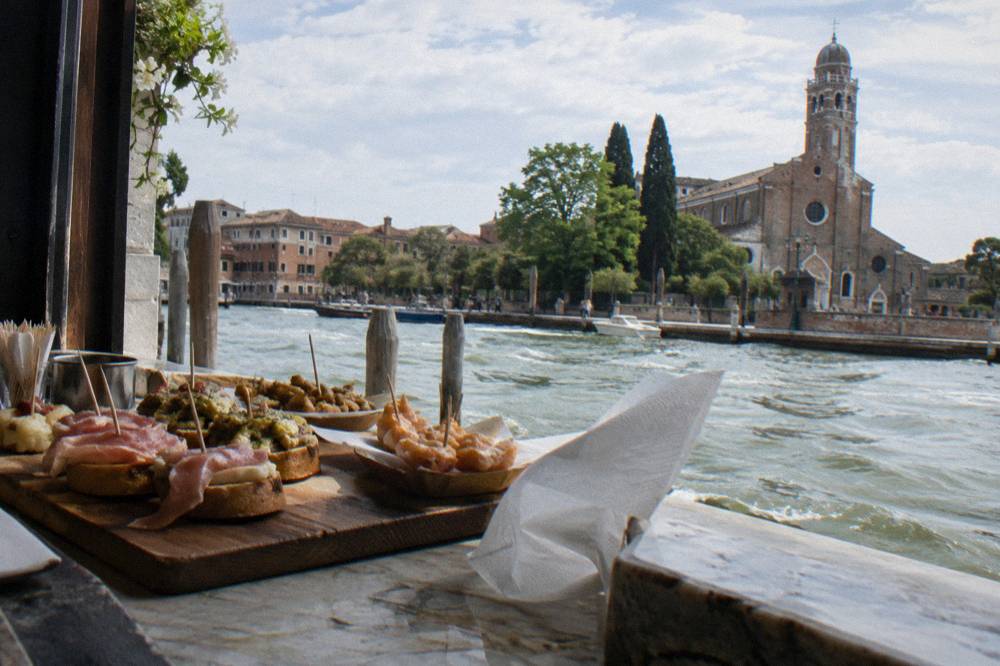
A useful way to choose: think about when your free hours fall. The fish market at Rialto runs Tuesday to Saturday, 7:00 to 14:00, and closes Sunday and Monday, so market walks lose their anchor early in the afternoon and entirely on two days of the week. Bacaro crawls, by contrast, are evening animals: the sunset cicchetti walk is built around aperitivo hour precisely because that is when the counters fill and the ombra ritual makes sense. If your only free slot is a Sunday or a Monday, a market walk is the weaker choice whatever its listing says.
The hybrid formats deserve one honest caution. A walk that combines 10 tastings with a 30-minute gondola ride in 2.5 hours is doing two things at once, and both halves will feel shorter than either dedicated version. That is not a reason to skip it: for a traveler with one evening and a gondola still unticked, it is an efficient trade. It is a reason to expect breadth rather than depth.
What Does Each Walk Actually Include?
Inclusions vary more than the listings' similar titles suggest: the walks compared here range from 6-plus tastings with spritz and wine, through 10 tastings paired with 6 wines, to formats that add a sit-down dinner or a gondola ride, and not every listing states drinks or a full meal in its inclusions. Always open the booking page and read the inclusions line for the specific walk before you commit.
The inclusion question matters most for drinks and for the meal. A crawl that includes wine at every stop is a different proposition from one where tastings are included but drinks are limited to one spritz, and a walk ending in a sit-down dinner replaces your evening restaurant plan rather than preceding it. The Eat Drink Repeat listing names 10 tastings and 6 wines in its own title, which is the clearest drink inclusion of the group. The evening tour's title promises bites, drinks and a sit-down dinner, so it covers the full arc. For the rest, the inclusions field on each booking page is the source of truth: this guide will not print an inclusion a listing does not state.
Dietary needs are the other inclusion trap. Unless a listing explicitly states vegetarian, vegan, gluten-free or kosher provision, treat it as unstated, not as yes. The right move is a message to the operator before booking: Venice's bacaro counters run heavily on bread, baccalà mantecato on polenta and fried seafood, and a guide who knows in advance can usually route around a restriction at some stops, but only if warned. The dedicated vegetarian, vegan and gluten-free in Venice guide covers what the cuisine itself can and cannot flex on.
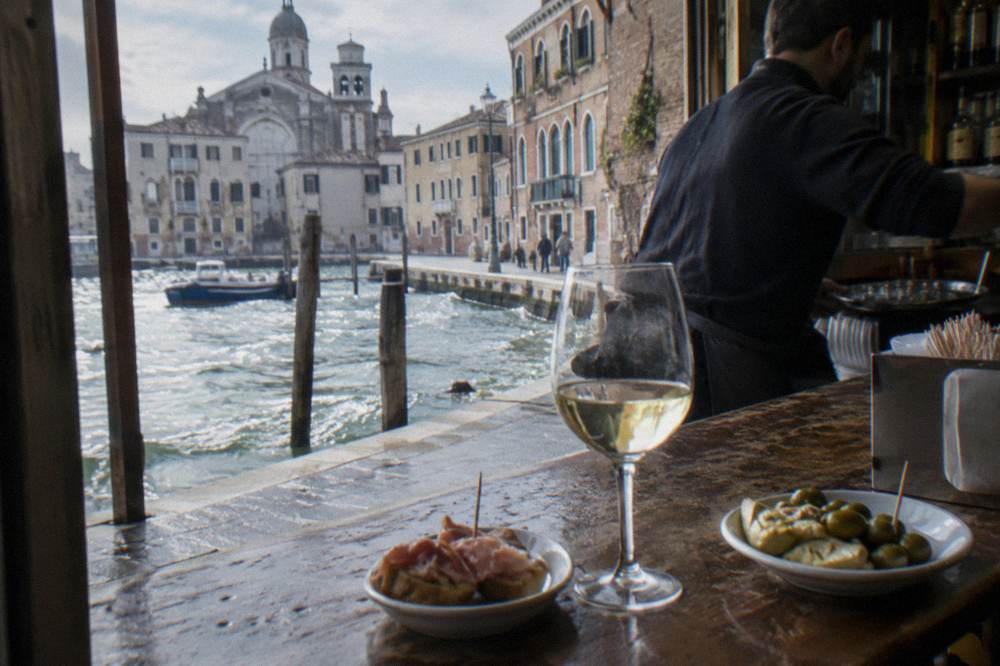
The table below groups the walks by what the listing name itself commits to. Anything beyond these named elements, exact stop counts, specific dishes, seat reservations, lives on the booking page.
| Walk | Length | Named format | Named inclusions in title |
|---|---|---|---|
| Eat Drink Repeat Venice Food Tour | 2.5 to 3 hours | Bacaro crawl | 10 tastings, 6 wines |
| Venice Bacaro Food Tour | 3 hours 30 minutes | Bacaro crawl | Eat and drink like a Venetian |
| Bacaro Tour Unblended | 2 hours | Bacaro crawl | Pure foodie experience |
| Sunset Cicchetti and Wine Tasting | 3 hours | Evening crawl | Cicchetti, wine, sunset timing |
| Evening Food Tour with Sit-Down Dinner | 2 hours 30 minutes | Dinner hybrid | Bites, drinks, sit-down dinner |
| Food Tour with 6+ Tastings | 3 hours 30 minutes | Bacaro crawl | Cicchetti, spritz, more |
| Eat Like a Local Small-Group Tour | 3 hours | Small-group crawl | Food tasting, small group |
| 10 Tastings with Gondola Ride | 2.5 hours | Gondola hybrid | 10 tastings, 30-minute gondola |
| Street Food Tour with a Local Guide | 2.5 hours | Street-food walk | Tastings |
| Rialto Market Food and Wine Lunchtime Tour | 4 hours | Market walk | Food and wine, lunchtime |
| Jewish Ghetto and Cannaregio Food Tour | 4 hours | Neighborhood walk | Tastings, wine |
One more inclusion habit worth copying from locals: standing at the counter rather than sitting is itself an inclusion of sorts. Reported practice is that coperto, the per-person cover charge, typically runs EUR 1 to 4 where applied and is often avoided by standing, and that tipping is optional and mostly a matter of rounding up. Standing at the counter, as bacaro crawls mostly do, often skips coperto, but the custom explains why the crawl format exists at all.
How Do Group Sizes And The 25-Person Cap Affect Your Choice?
Guided groups in Venice's historic centre and lagoon islands are capped at 25 people and loudspeakers are banned, so every walk compared here operates at 25 or fewer and guides use headsets on the larger end, which means the real question is not whether a group is legal but whether the listing's stated maximum matches the experience you want, from a handful of guests to a full two dozen.
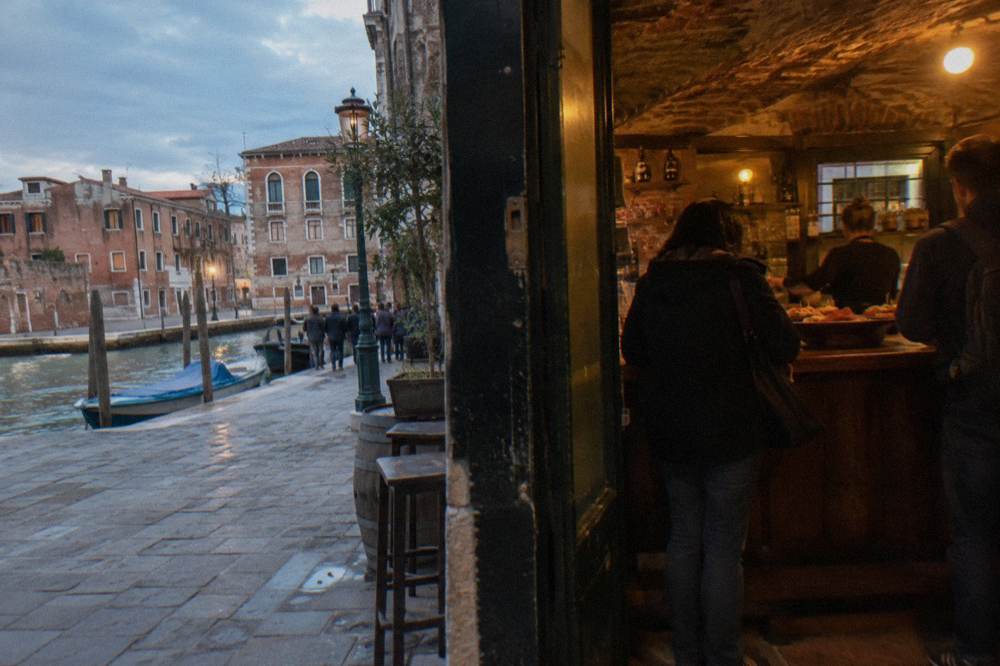
The cap is a municipal rule, reported in force since 2024 and confirmed ongoing, and it reshapes how these tours run. A guide with 20-plus guests cannot wedge the whole group against one bacaro counter, so larger walks stagger, split between bars or send half the group to order while the other half hears the story. Small-group listings, like the Eat Like a Local walk, exist precisely to avoid that choreography. For bacaro crawls specifically, small group is not a luxury upgrade, it is the difference between everyone getting a taste at the counter and taking turns.
What the listings can tell you is the stated maximum. What they cannot tell you is the day's actual headcount, which varies with season and demand. If a listing states a maximum and that maximum matters to you, that is the number to check on the booking page, and it is fair to assume peak-season departures run closer to the cap than shoulder-season ones. A private food walk is the way to collapse the variable entirely, and the semi-private market and cicchetti experience in the wine-and-private family is the middle path.
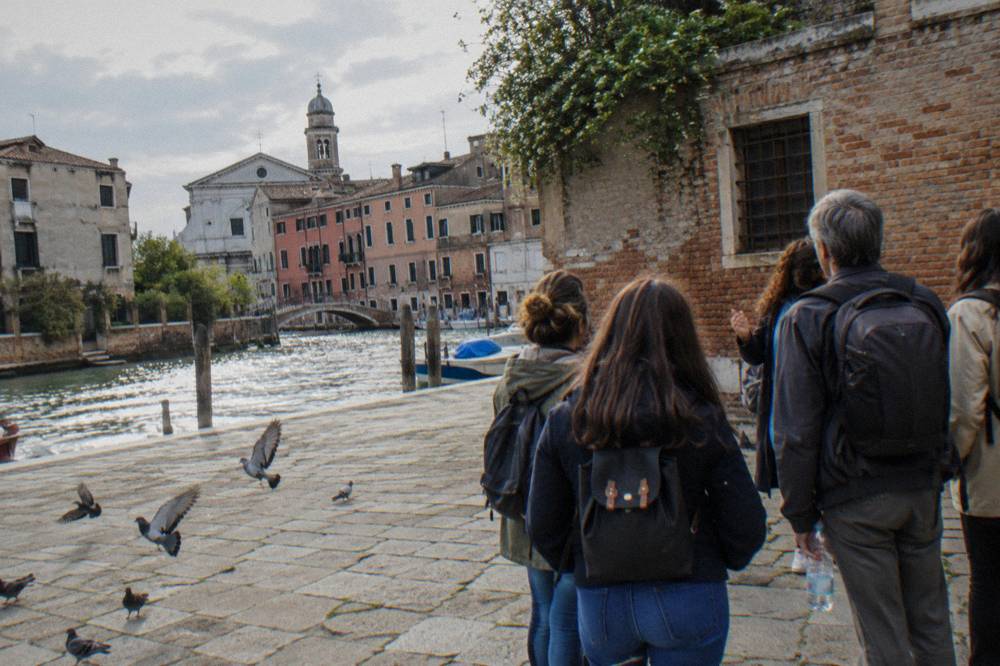
Group size also interacts with the headset rule. Because loudspeakers are banned, guides on bigger walks hand out receivers, which works well but means you listen through an earpiece rather than leaning into the conversation. On a walk of ten or fewer, the guide just talks. Travelers who list conversation with the guide among their reasons for booking a food walk should treat stated maximums above roughly 15 as a different product category, not a worse one, simply a lecture-and-taste format rather than a moving dinner party.
Which Neighborhood Should Your Walk Cover?
Most bacaro crawls compared here work the alleys between the Rialto and San Marco or the Cannaregio backstreets, the market walks belong to San Polo around Rialto, and the Jewish Ghetto and Cannaregio tour is the only one named for, and built on, a single district's food identity, so the neighborhood choice is really a choice between tourist-core convenience and Cannaregio depth.
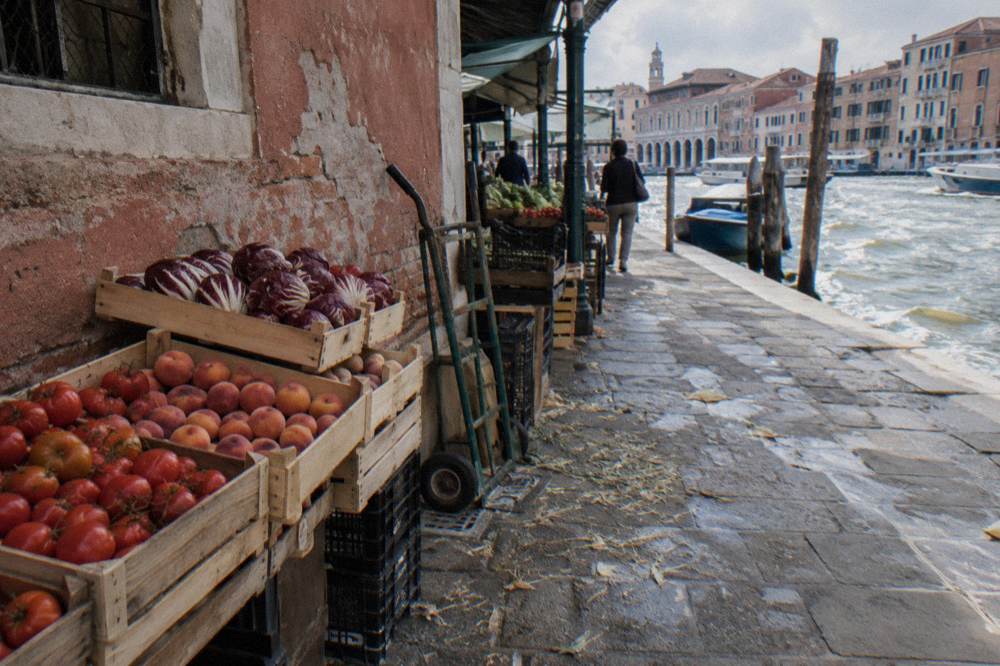
Venice's food geography is compact but not uniform. The Rialto area is where the market culture lives: the produce market at Campo de la Pescheria runs Monday to Saturday, 7:00 to 20:00, and the fish market at Campo de le Becarie runs Tuesday to Saturday, 7:00 to 14:00, per the official Venezia Unica listing of the city's daily markets. Walks that promise market stops are describing this square, and the Rialto market guide covers what you will actually see at the stalls.
Cannaregio is the other pole. The district holds a dense band of traditional bacari away from the San Marco crush, plus the Jewish Ghetto, whose food traditions are distinct enough to carry a dedicated 4-hour tour. If you are staying in Cannaregio or you have already spent a day around San Marco, a Cannaregio-based walk gives you a Venice that feels residential rather than performed. The food by neighborhood guide maps the same trade-off for your independent eating.
The meeting point follows from the neighborhood, and it is a practical detail worth checking on the booking page rather than assuming. Central walks tend to start within a few minutes of the Rialto bridge, where both vaporetto lines 1 and 2 stop; Cannaregio walks often start near the ghetto or the Strada Nova. If your evening plan has a hard end time, a Cannaregio start is a longer walk back to a San Marco hotel. The dedicated meeting points and what to bring guide collects the practicalities.
| Area | What the walks there give you | Best fit |
|---|---|---|
| Rialto and San Polo | Market stalls, historic bacari, the Pescheria | Midday walkers, market-first visitors |
| San Marco fringe | Classic crawl alleys, easy hotel access | First-time visitors, short stays |
| Cannaregio | Residential bacari, quieter counters, the ghetto | Second-time visitors, evening diners |
| Dorsoduro | Student bacari, sunset-facing routes | Aperitivo-hour walkers |
Is A Sunset Or Evening Walk Worth It Over A Daytime One?
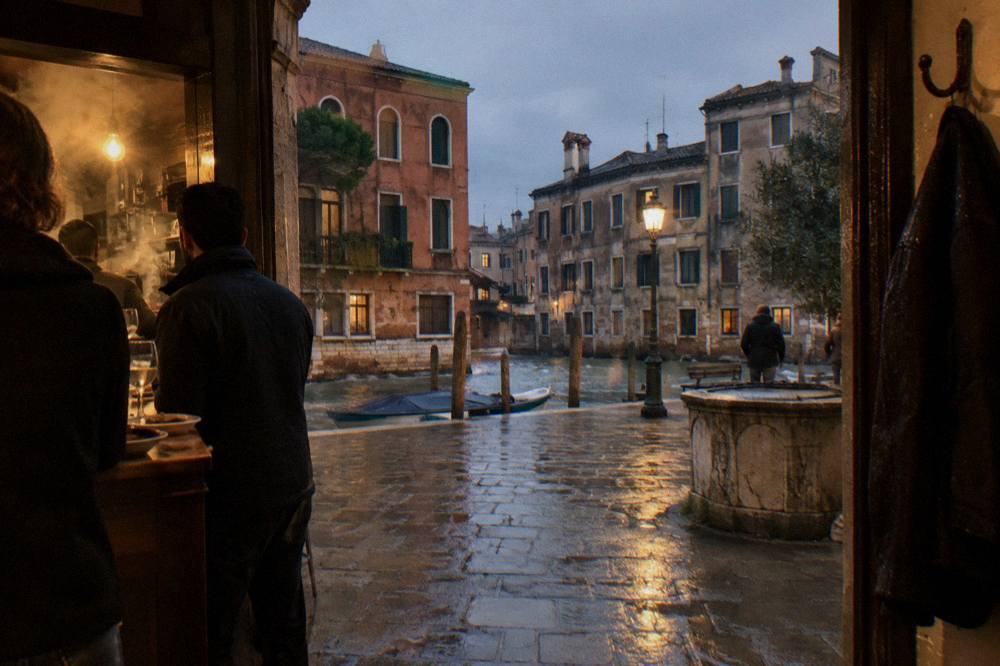
The sunset cicchetti walk and the evening dinner walk both convert aperitivo hour, roughly 6 pm onward, into the tour's backbone, and that timing is genuinely different in kind from a daytime walk: counters are at their busiest, the ombra ritual is in full swing and the city's pace shifts, so the choice is less about light for photos and more about whether you want Venice's evening food culture or its market morning.
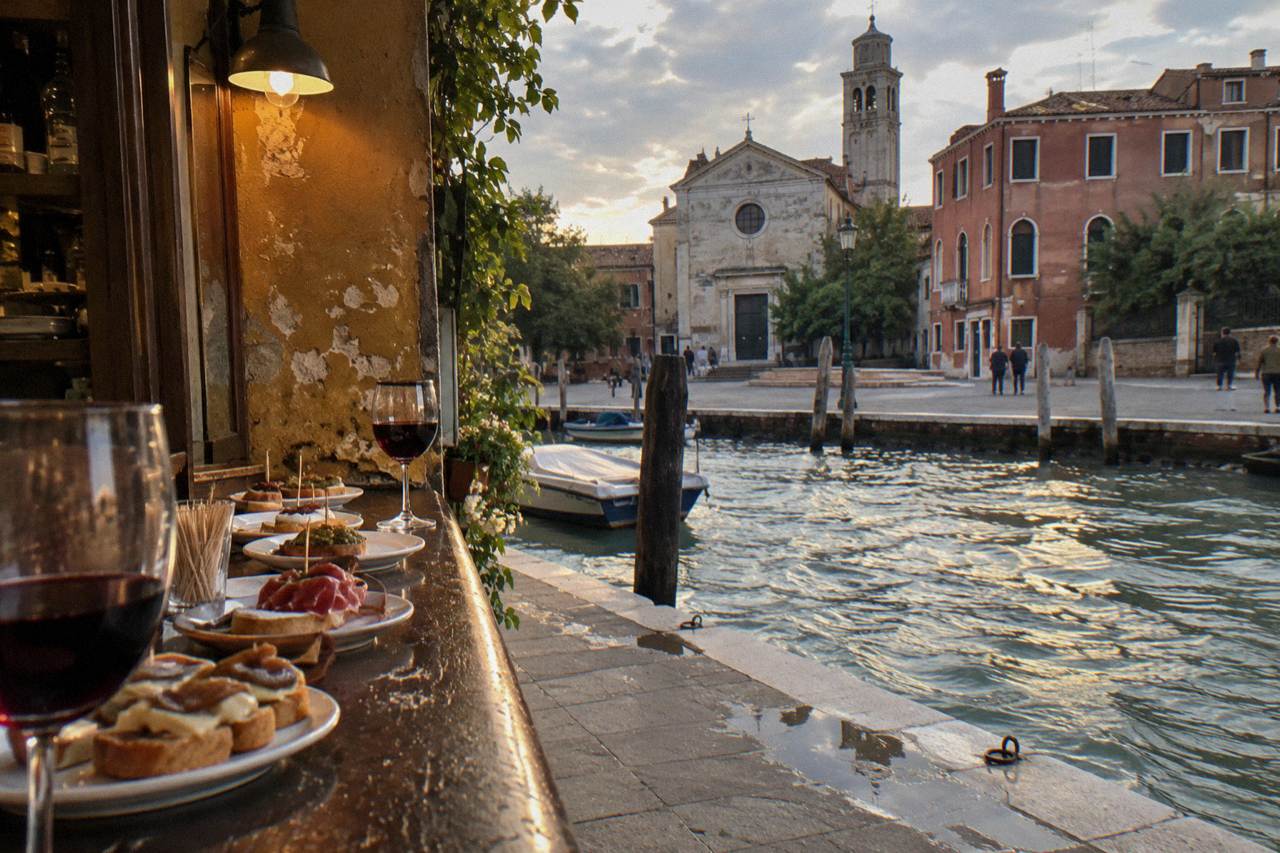
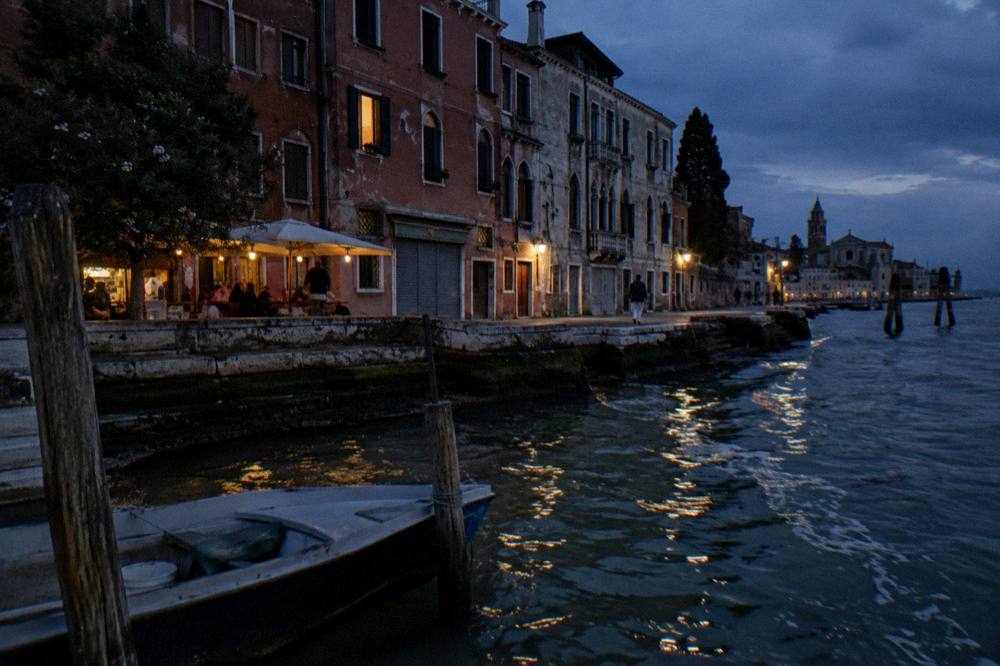
Venetians do not eat dinner early. Evening restaurant seatings run late by northern European habits, and the hours before them belong to the bacaro: an ombra, a couple of cicchetti, standing, moving on. A walk timed into that window puts you inside a living routine rather than watching a rehearsal of it. The sunset walk's 3-hour length and the evening dinner walk's 2.5 hours both fit naturally ahead of a late seating, or, in the dinner walk's case, instead of one.
The counterargument is stamina and schedule. A sunset walk that starts at 6 pm occupies the evening you might have wanted for a restaurant you have been saving. A daytime market walk leaves your night free and catches the stalls at their most active, though the fish market's 14:00 close means "daytime" really means morning. Travelers on a two-night stay often get more from the evening format, because aperitivo hour is the hardest Venetian ritual to stumble into correctly on your own, which bars, which counters, when to stand, what an ombra costs. The evening food walk guide unpacks that window in detail.
One regulation touches the evening walk specifically: the municipal rule, reported as current, that bans drinking from glass containers outside permitted seating areas and restricts takeaway alcohol sales in glass, with reported fines of EUR 25 to 500. A guided walk keeps you inside the bars, where none of this applies, which is quietly one of its advantages over a self-guided pub route. Check current rules on the comune's site before planning anything alfresco.
What Does A Food Walk In Venice Cost?
Per-person prices for the walks compared here are from-prices that vary by date and, on some listings, by group size, and every price shown is a per-person from-price that can change on the live booking page: the honest answer is that each walk's current per-person price is on its own booking page, and the structural comparison is what you can decide in advance.
What you can compare in advance is value structure rather than number. A 3.5-hour walk with a dozen stops costs more than a 2-hour crawl with four, and should. A walk with wine at every stop prices differently from one with a single included spritz. A class-format product, like the pasta and tiramisu classes that cluster around 3 hours in the cooking-class family, competes with the top of the food-walk range, and the what a food walk costs guide breaks the pricing logic down piece by piece.
| Cost factor | What drives it | Where to check |
|---|---|---|
| Base per-person price | Format family and length | The walk's booking page |
| Group-size variation | Private and semi-private listings scale with headcount | The listing's price basis note |
| Promotional rates | Time-limited deals on some listings | The booking page on the day |
| Drinks beyond inclusions | Anything the inclusions line does not name | Ask the guide or operator |
| Extras you add yourself | Extra cicchetti or ombra beyond the included stops | The bar's posted list |
Two cost notes from the reported local picture, both relevant if you extend a walk on your own afterward. Cicchetti at a counter run about EUR 1.50 to 4 a piece as reported by the official Visit Venice food pages, and an ombra, the small house-wine glass, runs about EUR 1 to 2.50. Those numbers make self-guided crawling cheap, which is exactly why the paid walk's value sits elsewhere: in the guide's ordering, the routed stops and the explanation, not in the food's sticker price. Never assume a walk's tastings are "worth" their menu price; they are part of an experience with a guide, a route and a schedule.
Cancellation terms are the last cost question. Several walks compared here offer free cancellation, and the booking page states the cutoff for each departure. If your itinerary has a wobble in it, a Gondola-hybrid or a market walk tied to fish-market days is the one to book with the most schedule slack.
Which Walk For Which Traveler?
A first-time visitor with one free evening gets the most from a classic 3-hour bacaro crawl; a midday window and a market curiosity point to the Rialto lunchtime walk; a group wanting the whole evening solved should take the sit-down dinner format; and anyone packing gondola, cicchetti and orientation into a single 2.5-hour slot has a hybrid built for exactly that.
The matching matters because the wrong walk at the wrong hour is a wasted slot. The market lunchtime tour is superb and useless on a Monday, when the fish market is dark. The sunset walk is the city at its best and clashes head-on with a dinner reservation. The 2-hour Unblended bacaro tour is a fine appetizer for a night out and a thin substitute for one. None of these are flaws; they are formats, and formats have hours they belong to.
There is also a planning-context layer worth a minute. Venice's 2026 day-visitor access-fee trial ended on 27 July 2026 and, per the official page, no fee applies now and visiting needs no payment or exemption; the fee returns in 2027 with dates already listed but amounts not yet published, so check the official access-fee page if your trip falls on a listed 2027 date. None of the walks' prices include that fee, and overnight guests were exempt from the trial in any case. The best time to visit for food and crowds guide handles the seasonal layer of the same question.
The short version of all of the above: pick the format that matches your free hours, then pick the group size that matches how you like to eat, and only then compare prices on the live pages.
Common Questions About Choosing A Venice Food Walk
Which Venice Food Walk Should You Book?
Book a classic 3-hour small-group bacaro crawl if it is your first food walk, the Rialto market lunchtime tour if your free window is midday, the sit-down dinner walk if you want the evening fully solved, and a gondola or sunset hybrid only if you are deliberately packing two experiences into one slot.
How Long Do Venice Food Walks Last?
The walks compared here run from 2 hours for the shortest bacaro tour to 4 hours for the Rialto market lunchtime tour and the Cannaregio neighborhood walk, with most cicchetti crawls clustering between 2.5 and 3.5 hours.
Do Venice Food Tours Include Drinks?
Some do and state it in the title, such as the walk naming 10 tastings and 6 wines, while others include a spritz or wine per the inclusions line on the booking page. Never assume: read the inclusions for the specific walk before booking.
What Is The Maximum Group Size On A Venice Food Walk?
Municipal rules cap guided groups at 25 in the historic centre and lagoon islands and ban loudspeakers, so all walks operate at 25 or fewer and larger groups use headsets. A listing's stated maximum, which may be well below 25, is on the booking page.
Are Venice Food Walks Suitable For Vegetarians Or Gluten-Free Diets?
Only where a listing explicitly says so. Treat any walk that does not state vegetarian, vegan, gluten-free or kosher provision as unstated, and message the operator before booking so the guide can route the stops.
Can You Do A Venice Food Walk On A Monday?
A bacaro crawl yes, a market walk poorly: the Rialto fish market is closed Sunday and Monday and the produce market closes Sunday, so market-based walks lose their anchor at the start of the week.