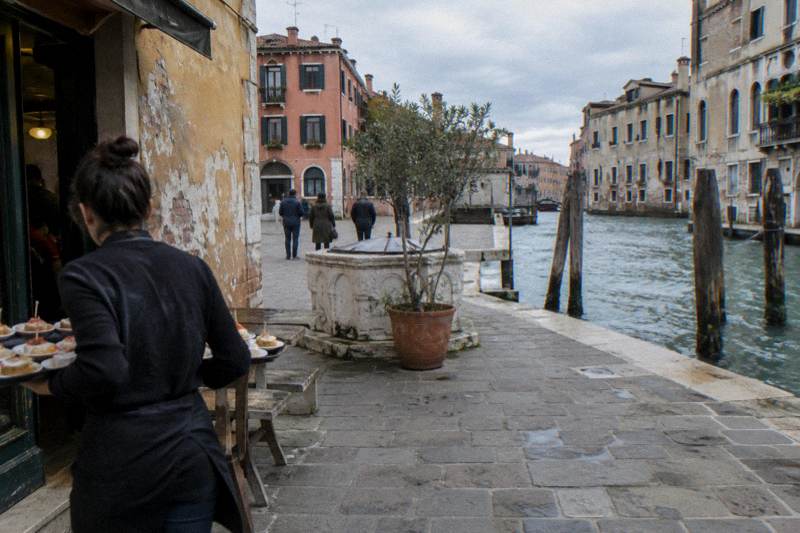
Where To Stay In Venice For Food Lovers
The neighborhood you sleep in decides how early you reach the Rialto stalls, how late you can linger over an ombra, and how far you walk home after a bacaro crawl. Here is how Cannaregio, San Polo, Dorsoduro and Castello compare as bases for eating well.
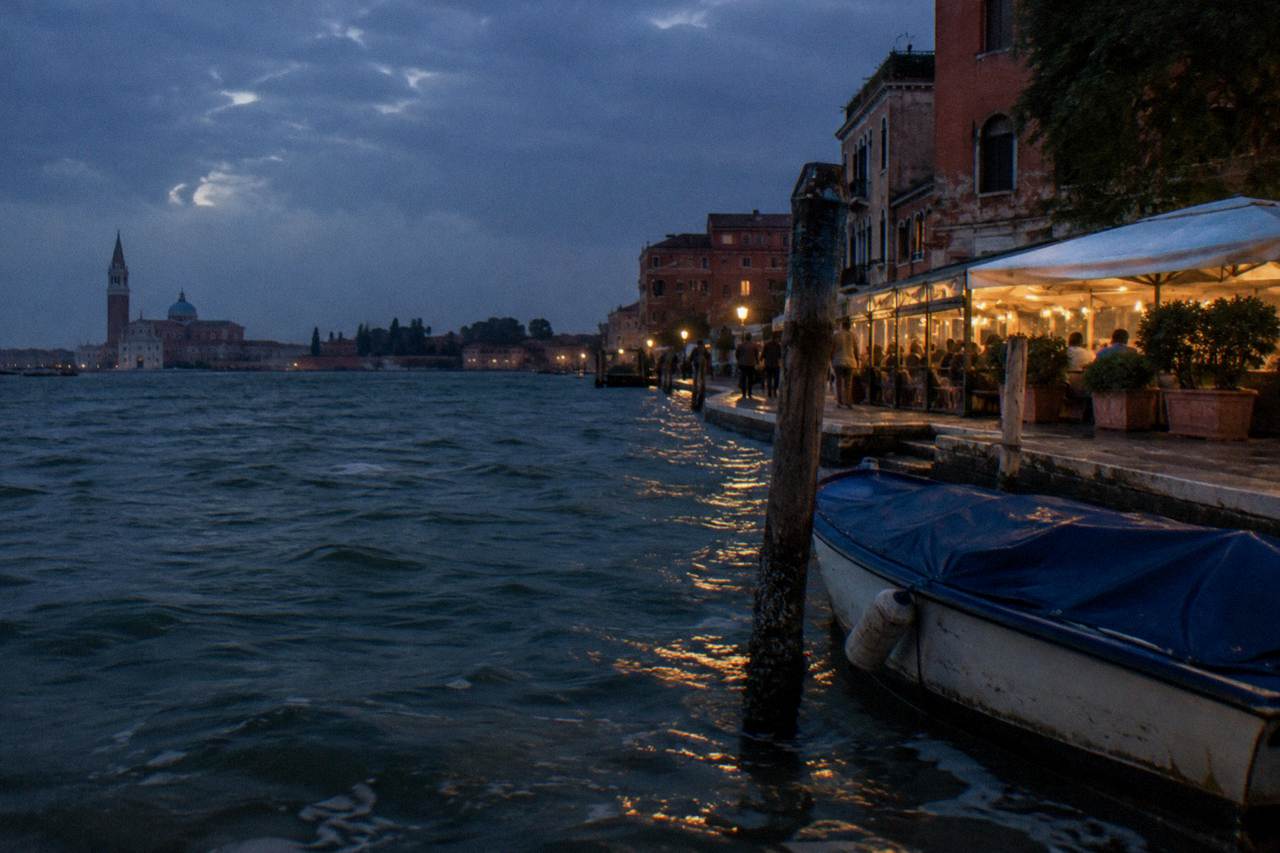
Short answer
For a food-first trip, stay in Cannaregio for bacaro density and local prices, San Polo to be steps from the Rialto markets, or Dorsoduro for wine bars and a quieter evening scene.
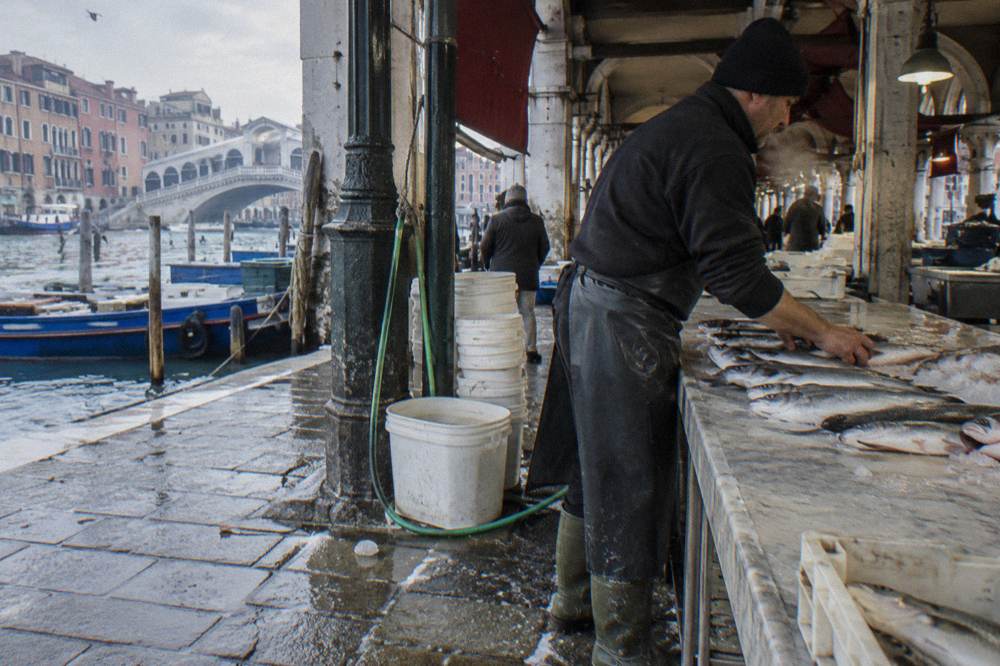
Venice is small enough that no hotel is truly far from dinner, yet the neighborhood you pick still shapes the trip. Cannaregio, San Polo around the Rialto, Dorsoduro and Castello each have their own rhythm: when the bars fill, where the counters stand shoulder to shoulder with locals, and how far you walk after the last ombra of the night. The produce stalls at Rialto open at 7:00 and the Pescheria's fish sellers pack up by 14:00, so a base near San Polo buys you a morning market walk that a San Marco hotel makes a project of.
This guide compares the main food bases using the things a food traveler actually cares about: standing-room bacari within a few minutes' walk, market access at opening time, and proximity to where guided tasting walks gather. Tasting walks sold on this site meet in Cannaregio, the Rialto area and Dorsoduro, which is no accident: those are the neighborhoods where the food is. A good base puts you inside that triangle.
One thing that does not affect your choice: the day-visitor access fee. The 2026 trial ended and, as the official page reports, from 27 July 2026 no fee applies and no payment or exemption is needed to visit. It returns in 2027 with dates already listed and amounts not yet announced, so check the official access-fee page closer to travel. Overnight guests were largely outside the trial anyway; the tourist tax, a separate per-night charge collected by your accommodation, is the one that applies to you, at reported rates of EUR 0.10 to 5.00 per person per night depending on the property.
Why Your Neighborhood Decides How Well You Eat
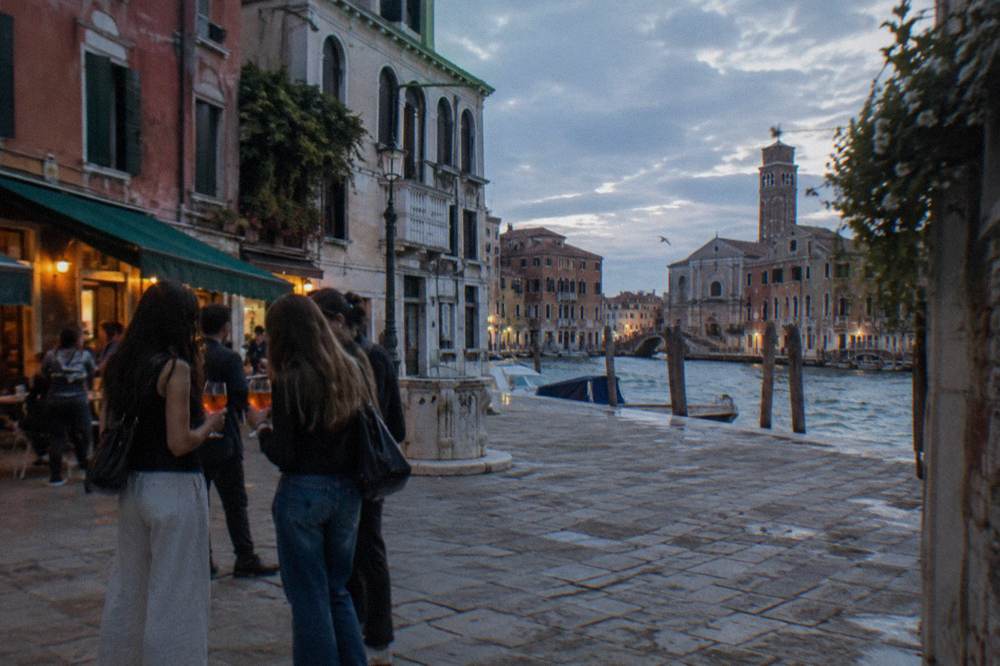
The right base puts you within a short walk of standing bacari, an early-morning market and your tasting walk's meeting point, which in practice means Cannaregio, San Polo, Dorsoduro or the Castello edge of San Marco, and it changes what your evenings can look like more than any single restaurant choice does.
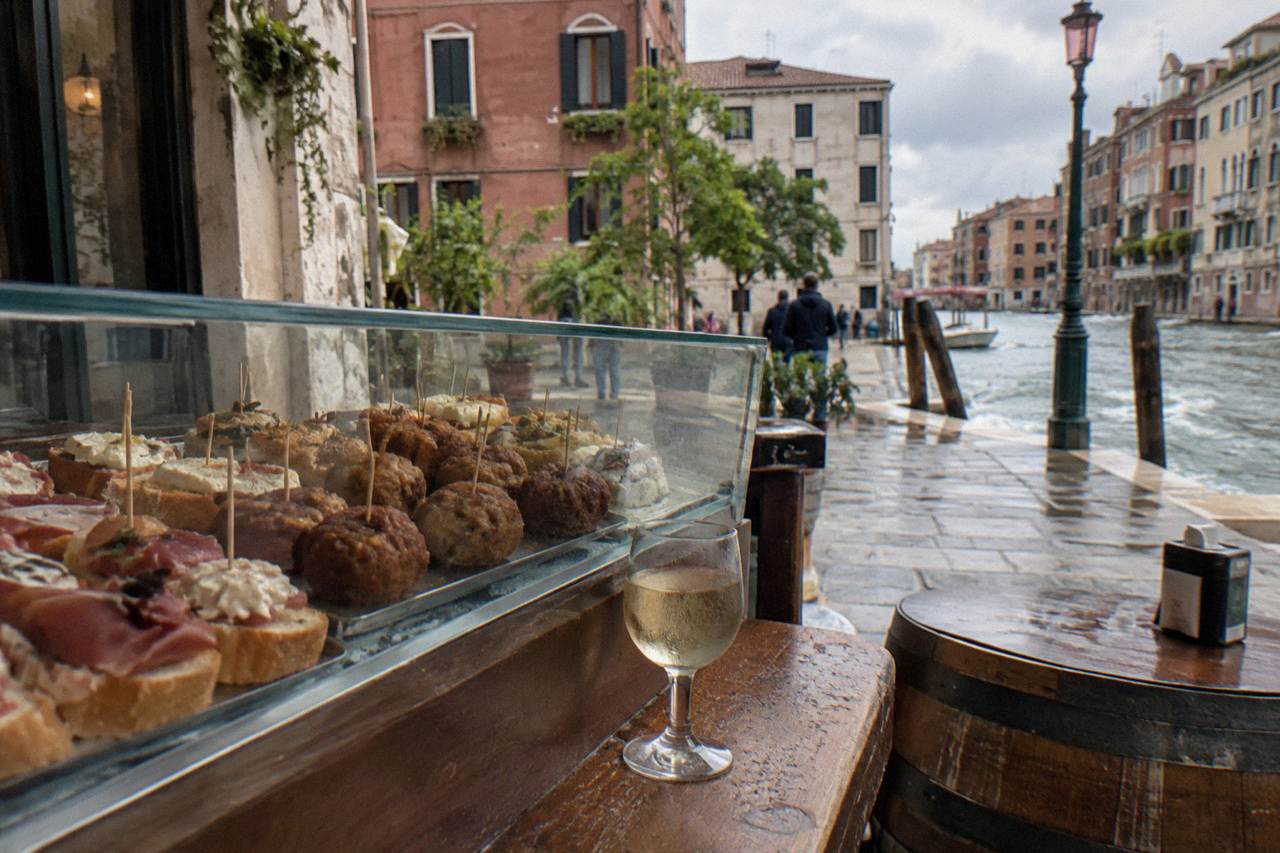
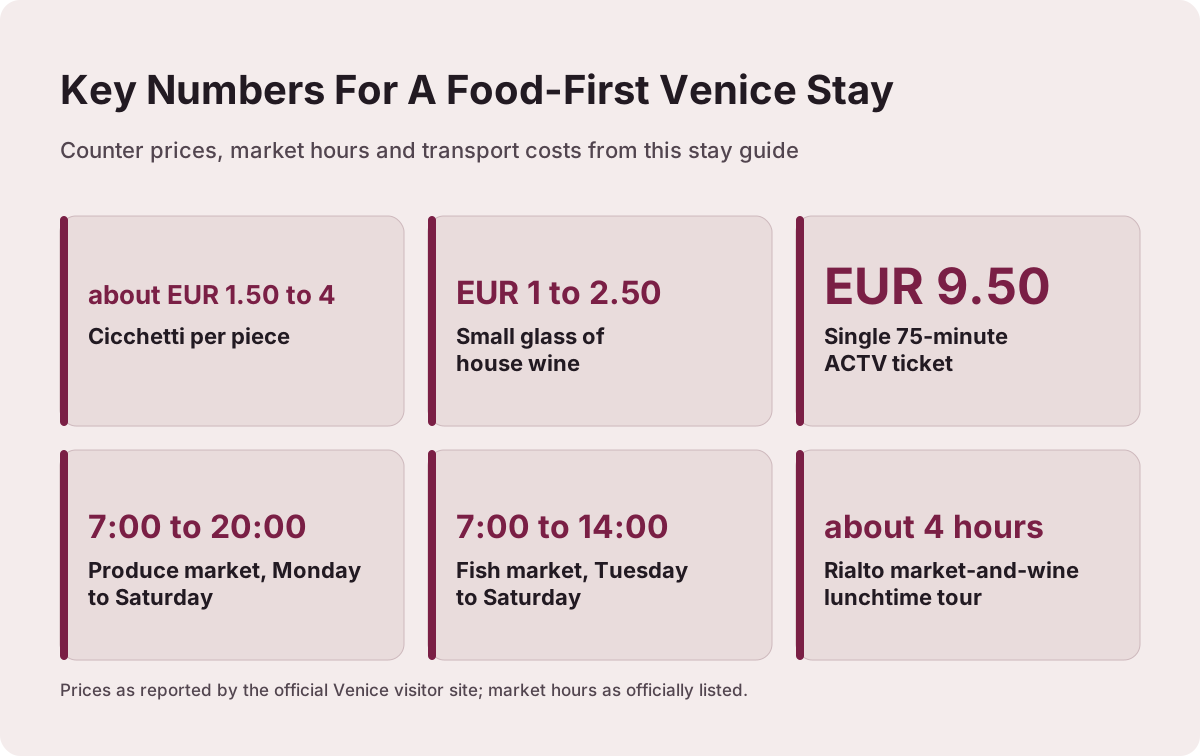
A cicchetto-and-ombra evening works because the bars are close together. Typical counter prices, as reported by the official Venice visitor site, run about EUR 1.50 to 4 for a piece of cicchetti and EUR 1 to 2.50 for a small glass of house wine, so a two-hour crawl of three or four bacari is a walk, not a commute. Stay a 30-minute walk from the bar district and the crawl collapses into one seated dinner instead. That is the real cost of a "quieter, cheaper" base on the far edge of the city.
The morning matters just as much. The produce market at Rialto runs Monday to Saturday, 7:00 to 20:00, and the fish market Tuesday to Saturday, 7:00 to 14:00, both closed Sunday, with the fish market also dark on Mondays and Italian holidays. Seeing the Pescheria at its liveliest means being there by mid-morning at the latest, and being there is far easier from San Polo or Cannaregio's western edge than from the eastern end of Castello.
Guided walks concentrate in the same areas. The tours compared here list meeting points in Cannaregio, the Rialto market area and Dorsoduro, all neighborhoods with heavy bacaro density. If eating is the point of the trip, sleeping inside that triangle is the single most consequential decision, ahead of any restaurant shortlist.
If you want a walk that anchors the whole stay, a market-and-wine lunchtime experience is a natural fit for a San Polo or Cannaregio base: it runs about 4 hours around the Rialto, and its listing describes the meeting point and current per-person price.
Cannaregio: The Local-Prices Base
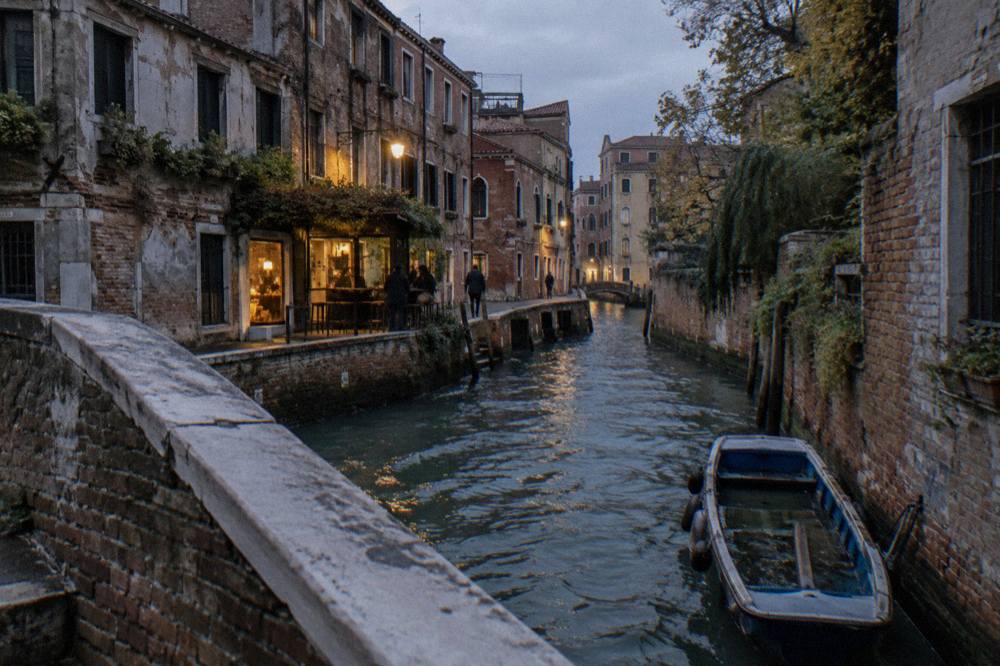
Cannaregio is the largest and most residential of the food neighborhoods, with dense bacari along the Strada Nova and the quieter side canals, generally lower counter prices than the San Marco fringe, and it is where several of the walks compared here meet, which makes it the strongest all-round base for a first food-focused trip.
This is the sestiere where Venetians still shop, and it shows in the price of a glass. Away from the Strada Nova's busiest stretch, a reported ombra of EUR 1 to 2.50 is realistic rather than a find, and the standing-bar scene along the canals near the Jewish Ghetto is among the most authentic in the city without being a secret. Cannaregio's western edge also puts you within a 15 to 20 minute walk of the Rialto stalls for a market morning.
The trade-off is simple: fewer postcard views on your doorstep and a longer walk to St Mark's Square, roughly 25 to 30 minutes along the Strada Nova. For a food-first itinerary that is barely a cost. The vaporetto network covers the Grand Canal side if your feet give out; a single 75-minute ACTV ticket costs a reported EUR 9.50, so walking wins on cost and Cannaregio rewards it.
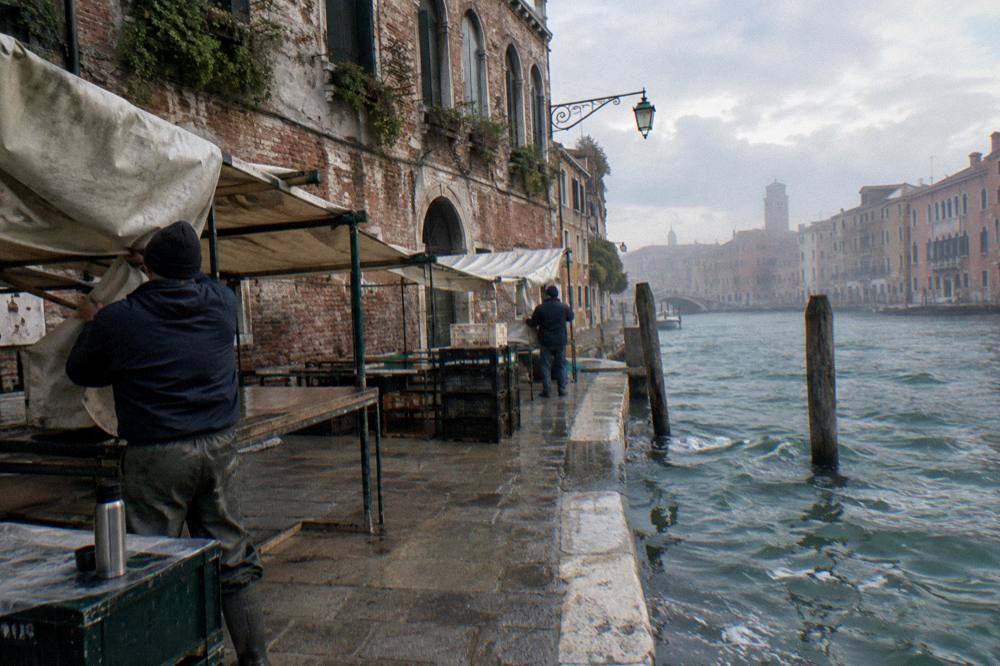
A food walk with a Ghetto-and-Cannaregio focus departs from this neighborhood and includes wine, which suits a base here: start the trip with it, learn the area's bars, then repeat the favorites on your own for counter prices the rest of the week. Check the operator's listing for the exact meeting point and inclusions before booking.
Dinner timing in Cannaregio follows the local pattern: Venetians eat early by Italian standards, with kitchens often filling from 19:00. If you want the fuller picture on where locals actually eat, the local-eating habits guide covers the neighborhoods and hours in detail.
San Polo: Wake Up Next To The Market
San Polo, the sestiere containing the Rialto markets, is the pick for travelers who want stalls at 7:00 and bacari at 19:00 without crossing a bridge between them, and its Erbaria and surrounding lanes hold some of the oldest standing bars in the city, at the cost of being the busiest food district at peak hours.
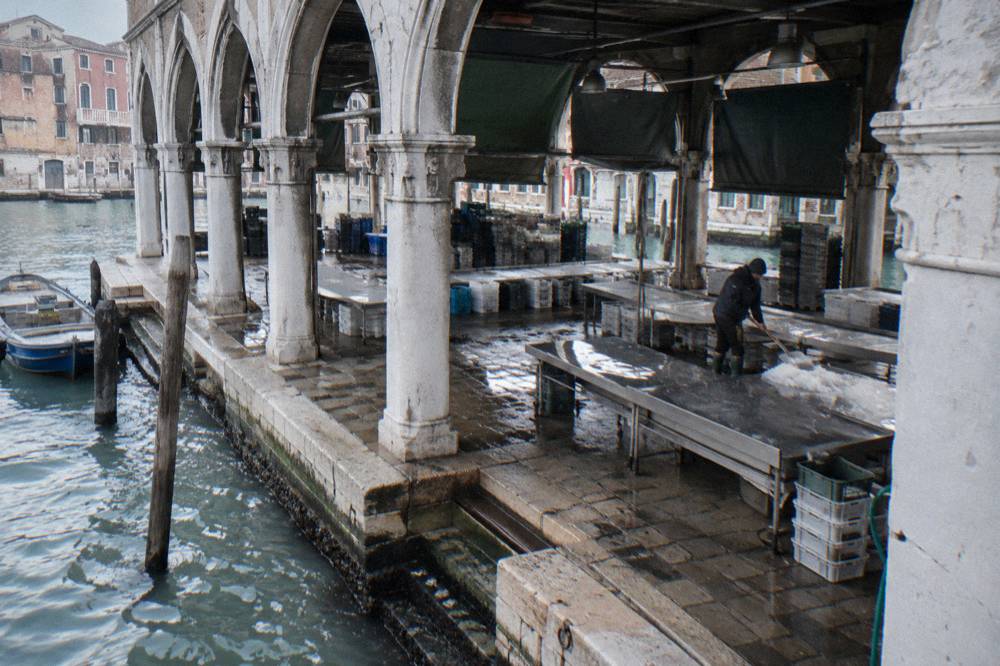
The argument for San Polo is purely positional. The produce market opens Monday to Saturday at 7:00 and runs to 20:00; the fish market runs Tuesday to Saturday, 7:00 to 14:00. From a San Polo base you can be at the Pescheria in five minutes with coffee still in hand. Tour listings for market walks themselves warn that the fish market is closed Sundays, Mondays and Italian holidays, so plan market mornings for Tuesday through Saturday and use Sunday for bacari instead.
San Polo's weakness is crowds at midday, when the Rialto bridge disgorges visitors into the Erbaria. Early morning and evening are different worlds. The same bars that are packed at 13:00 serve a calmer local crowd from 18:00 onward, and the surrounding lanes toward San Polo proper and Santa Croce hold quieter osterie worth the extra two minutes of walking.
The neighborhood is also where market-focused walks concentrate. The Rialto market food-and-wine lunchtime tour spends about 4 hours in and around the stalls, and its listing describes the meeting point and the per-person price; check it before booking, since meeting details and availability shift with the season.
| Market fact | Detail as officially listed |
|---|---|
| Produce market (Erbaria) days | Monday to Saturday |
| Produce market hours | 7:00 to 20:00 |
| Fish market (Pescheria) days | Tuesday to Saturday |
| Fish market hours | 7:00 to 14:00 |
| Closed days | Fish market dark Sunday, Monday and Italian holidays |
| Best morning from a San Polo base | Tuesday to Saturday, by mid-morning |
For a deeper look at the stalls themselves, the Rialto market guide covers what is sold and what to taste, and the market hours explainer has the timing details in full.
Dorsoduro: Wine Bars And A Slower Evening
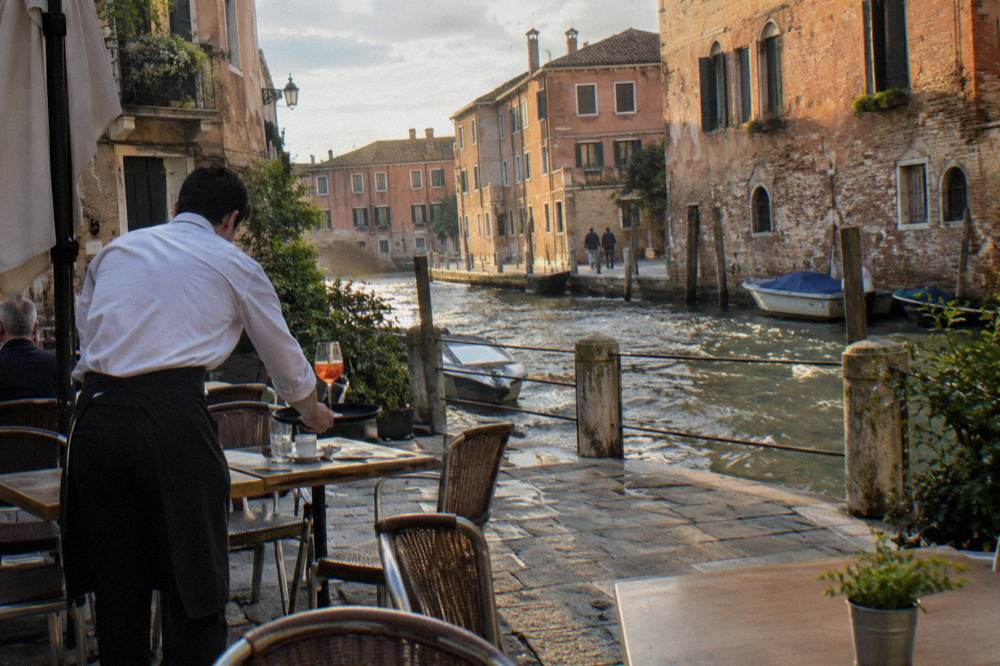
Dorsoduro pairs student-priced bacari around the Zattere and Campo Santa Margherita with a quieter, more residential evening scene, and it sits within about 15 minutes' walk of both the Rialto and San Marco fringes, making it the best base for travelers who want good food without the market's dawn schedule.
Campo Santa Margherita is the social center: a wide campo ringed with bars that fill from late afternoon, a short walk from the Accademia and the Zattere waterfront. The reported cicchetti range of EUR 1.50 to 4 a piece holds here better than almost anywhere, because the customer base includes students from the nearby university buildings rather than only visitors. Evening in Dorsoduro runs later and louder around the campo, then softens within two canals in any direction.
Positionally, Dorsoduro is the compromise: about 10 to 15 minutes on foot to the Rialto markets, similar to San Marco, and across the Accademia or Calatrava bridges from the southern San Marco fringe. You give up the five-minute market walk that San Polo buys and gain quieter nights and, typically, more standing bars per square meter than anywhere except Cannaregio.
Several walks in the sunset-and-wine family meet in or near Dorsoduro, since an aperitivo-hour start suits the neighborhood's rhythm. The evening food walk guide explains what an aperitivo-hour walk covers and how it differs from a daytime crawl.
Castello And The San Marco Fringe: Views First, Food Second
Castello and the area around San Marco trade food proximity for sightseeing proximity: the eastern half of Castello has the fewest bacari of any central sestiere, while the San Marco fringe is close to everything but carries the highest counter prices, so both suit travelers whose priorities sit partly outside food.
To be clear, neither is a food desert. The western edge of Castello, within 10 minutes of San Marco, has real neighborhood bars, and the streets just north of the square hold some historic cafes and cicchetti counters. The problem is price and density: closer to the Rialto or Cannaregio, a reported ombra at EUR 1.50 to 2 is routine; around San Marco the same glass trends toward the top of the EUR 1 to 2.50 range or above it, and standing-bar culture thins out in favor of seated, table-service venues. Everything else covered here is indexed on Venice Food Tours.
Eastern Castello, past the Arsenale, is genuinely quiet, with long stretches of residential lanes and a 20 to 30 minute walk to most food action. Travelers who book it usually do so for room size, price or views, all legitimate reasons that simply are not food reasons. If you do stay here, plan evenings around one focused destination rather than a crawl, and use the vaporetti for the return; a 24-hour pass costs a reported EUR 25 and covers the whole ACTV network.
A short small-group walk early in the stay is a good fix for a Castello or San Marco base: it introduces the bar districts in one guided sweep, so your later independent evenings start from knowledge instead of guesswork. The most reviewed small-group tasting walk compared here, Eat Like a Local, runs about 3 hours and its listing names its meeting point and per-person price.
How The Four Bases Compare
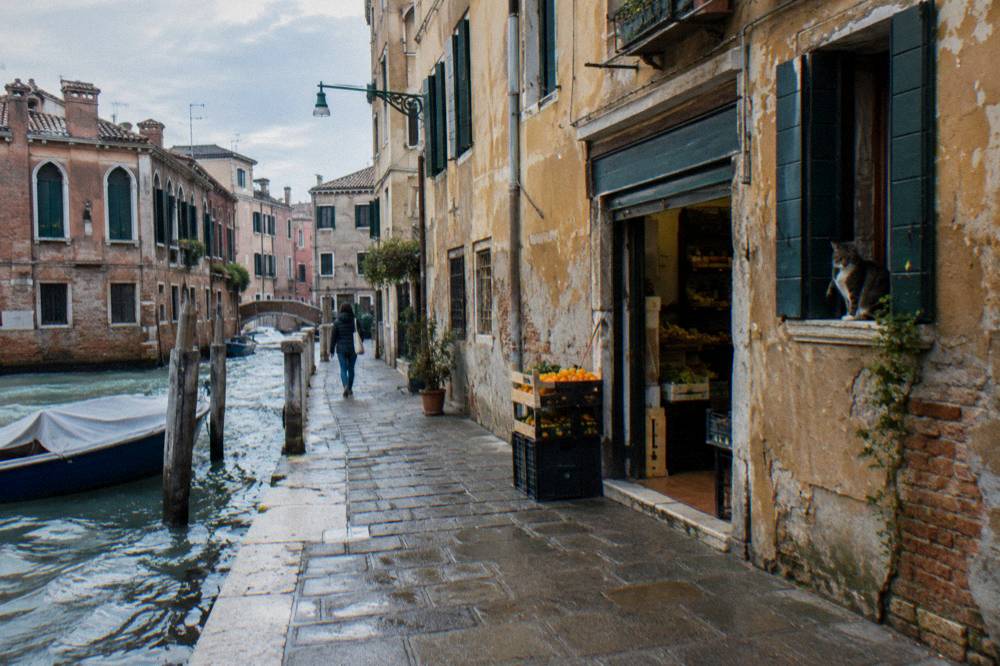
Cannaregio wins on bacaro density and local prices, San Polo on market access, Dorsoduro on evening atmosphere and value, and Castello on quiet and room for the money, with walk-to-meeting-point times of roughly 5 to 20 minutes for the first three and longer for eastern Castello, so the choice reduces to whether your trip starts at the stalls at 7:00 or at the counter at 18:00.
| Base | Best for | Market walk (Rialto) | Bacaro density | Reported counter prices | Evening character |
|---|---|---|---|---|---|
| Cannaregio | All-round food base | 15-20 min | Very high | Low to mid range | Local, lively early |
| San Polo | Market mornings | 5 min | High, historic bars | Mid range | Busy day, calmer night |
| Dorsoduro | Wine bars, value | 10-15 min | High around the campo | Low to mid range | Late, student energy |
| Castello / San Marco fringe | Sights, room value | 15-30+ min | Low to mid | Mid to high near San Marco | Quieter east, tourist fringe |
Two standing costs apply wherever you sleep. The tourist tax is collected by your accommodation at reported rates of EUR 0.10 to 5.00 per person per night depending on the property, capped at five consecutive nights, and is separate from anything at the table. At restaurants, a coperto, bread-and-cover charge, of a reported EUR 1 to 5 per person often appears on the bill at seated places, while standing at a bacaro counter usually avoids it. The official visitor guidance on tipping and table charges covers the standing-bar price ranges in detail.
Matching Your Base To A Tasting Walk
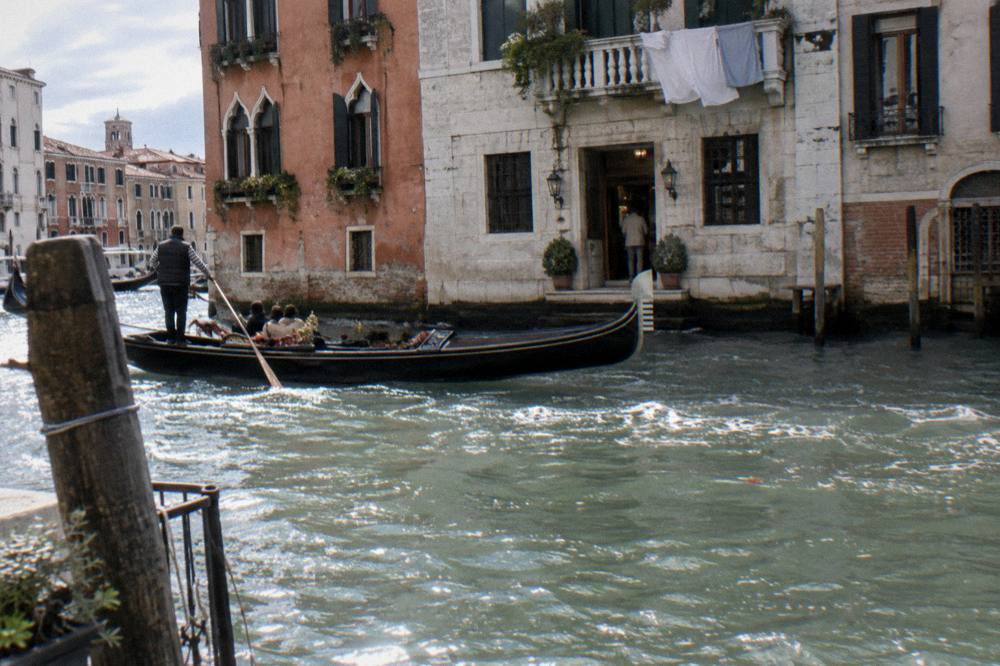
Pick the walk first if food is the trip's centerpiece, because each family of walk belongs to a neighborhood, and the reverse order, booking a hotel first and searching for walks nearby, is how travelers end up with a 30-minute pre-walk commute across the city in the dark.
The walks compared here fall into three rough families, and each suits a different base. Market walks of about 4 hours center on the Rialto and pair naturally with San Polo. Small-group tasting walks of about 3 hours, like Eat Like a Local, meet in the Cannaregio-and-Rialto corridor and suit Cannaregio or San Polo equally. Sunset-and-wine walks of about 3 hours start in the late afternoon and suit Dorsoduro or the San Polo fringe, where the aperitivo hour is a neighborhood event. Each listing names its exact meeting point and current price; those are the details to check on the operator's booking page before you commit, since they can change with the season.
| Walk family | Typical length | Where it centers | Best-matching base |
|---|---|---|---|
| Market and wine lunchtime walk | About 4 hours | Rialto stalls and surrounding bars | San Polo |
| Small-group tasting walk | About 3 hours | Cannaregio and Rialto corridor | Cannaregio or San Polo |
| Sunset cicchetti and wine walk | About 3 hours | Aperitivo-hour bar districts | Dorsoduro or San Polo fringe |
Dietary needs deserve one extra step. None of the listings compared here is described as vegetarian, vegan or gluten-free across the board, and a listing that does not say is not the same as one that cannot accommodate: message the operator before booking, and the same goes for allergies. The dietary guide has the fuller picture on eating plant-based in the city.
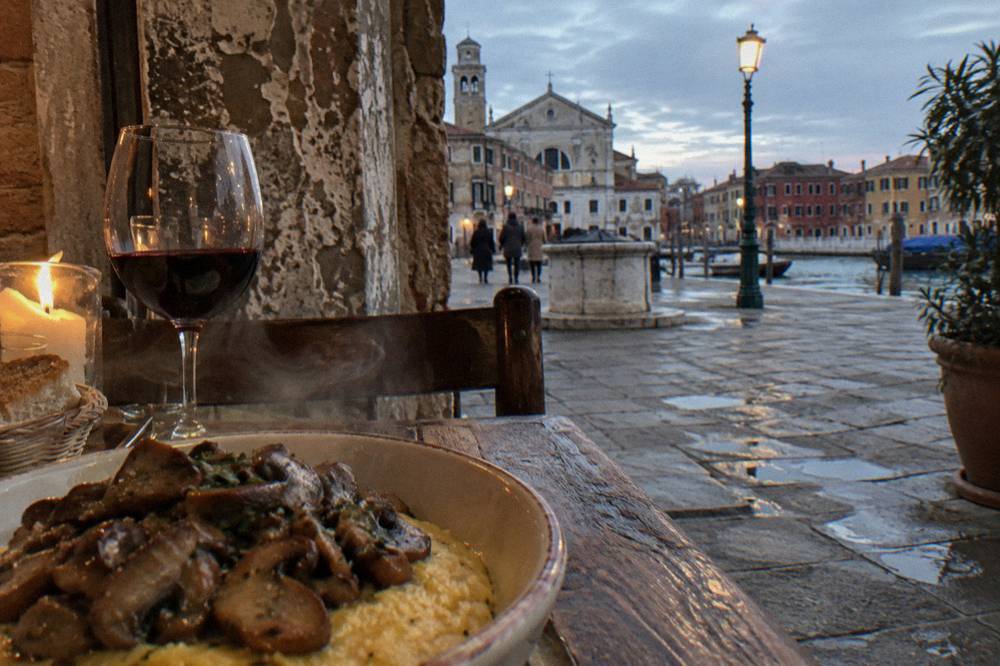
A sunset cicchetti-and-wine walk is the version that doubles as an introduction to the evening bar scene, about 3 hours with tastings and wine; its listing carries the meeting point and per-person price, and like the others sold here it can be checked and held with free cancellation before you commit.
Practical Rules For A Food-First Booking
Book a base inside the Cannaregio, San Polo, Dorsoduro triangle, keep the fish market's Tuesday-to-Saturday window in mind when choosing dates, treat the tourist tax and coperto as standing costs on top of the room, and remember that no access fee applies as of 27 July 2026, so the only payment your stay triggers is the per-night tax your hotel collects.
A few closing rules of thumb. Check the property's location against the walk you actually want, not the city's center of gravity: Venice's "center" is San Marco, but its food center is the Rialto-to-Cannaregio corridor. Confirm your walk's meeting point on the operator's listing before you book the hotel, then book the walk early in the trip so the rest of the week can repeat its stops at counter prices. And keep the seasonal calendar in view: the seasonal food guide explains what is on the stalls and counters month by month, which matters if soft-shell crab or white asparagus is the reason you are going.
For visitors planning around 2027, the access fee returns with dates already listed on the official access-fee page, running from late March into mid-August, with amounts to be announced by 31 December 2026. Overnight guests fall largely outside it, but day-trip companions joining you mid-stay should check the page rather than assume.
Common Questions About Where To Stay In Venice For Food Lovers
Which Neighborhood Is Best For A First Food-Focused Trip To Venice?
Cannaregio is the strongest all-round base: bacaro density is very high, reported counter prices sit at the low end of the city's ranges, and several guided tasting walks meet in or near it. San Polo is the alternative if market mornings are the priority.
How Far In Advance Should I Book A Food-First Hotel In Venice?
Venice fills year-round and food-adjacent rooms in the Cannaregio, San Polo and Dorsoduro core go first. Secure the neighborhood before the specific property, and check your tasting walk's meeting point on the operator's listing so the two bookings agree with each other.
Do I Need To Pay The Venice Access Fee If I Am Staying Overnight?
No fee applies to anyone as of 27 July 2026, per the official page, so overnight guests and day visitors alike currently pay nothing to enter. The fee returns in 2027 on listed dates with amounts not yet announced, but overnight guests have largely fallen outside it; check the official page before travel.
What Extra Charges Should I Expect At Venetian Restaurants?
A coperto of a reported EUR 1 to 5 per person often appears at seated tables, while standing at a bacaro counter usually avoids it. The separate tourist tax, reported at EUR 0.10 to 5.00 per person per night depending on the property, is collected by your accommodation, not by restaurants.
Can I Do A Bacaro Crawl From Any Neighborhood?
A crawl needs bars within a few minutes of each other, which is why Cannaregio, San Polo and Dorsoduro work and eastern Castello does not. Reported cicchetti run about EUR 1.50 to 4 a piece and an ombra EUR 1 to 2.50, so a three-bar crawl is short, cheap and best done on foot from a nearby base.
Are The Food Walks Suitable For Vegetarians Or Gluten-Free Travelers?
The listings compared here are not described as vegetarian, vegan or gluten-free across the board. A listing that does not say is not a refusal; message the operator before booking to confirm what the stops can accommodate, and do the same for allergies.