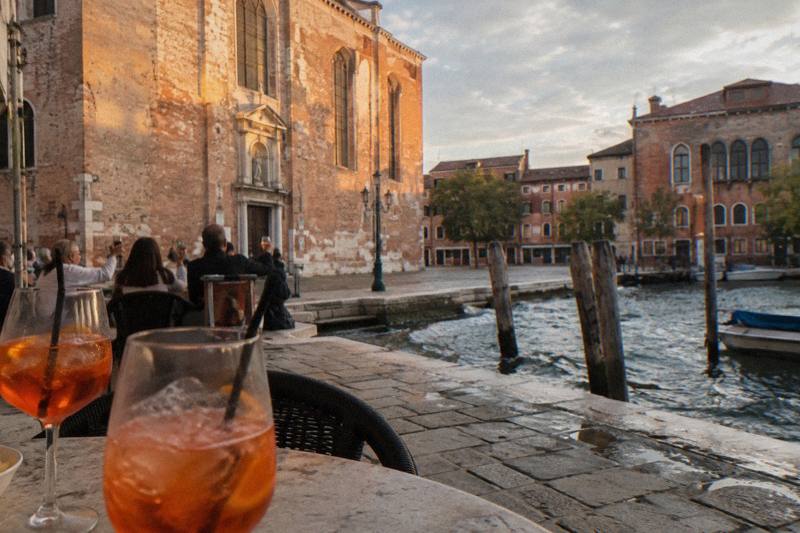
Evening Food Walk In Venice: The Aperitivo Hour
The hour before dinner is when Venetian bacari fill with locals stopping for an ombra and a plate of cicchetti, and it is also the slot where a guided tasting walk shows the city at its most photogenic and least crowded.
Short answer
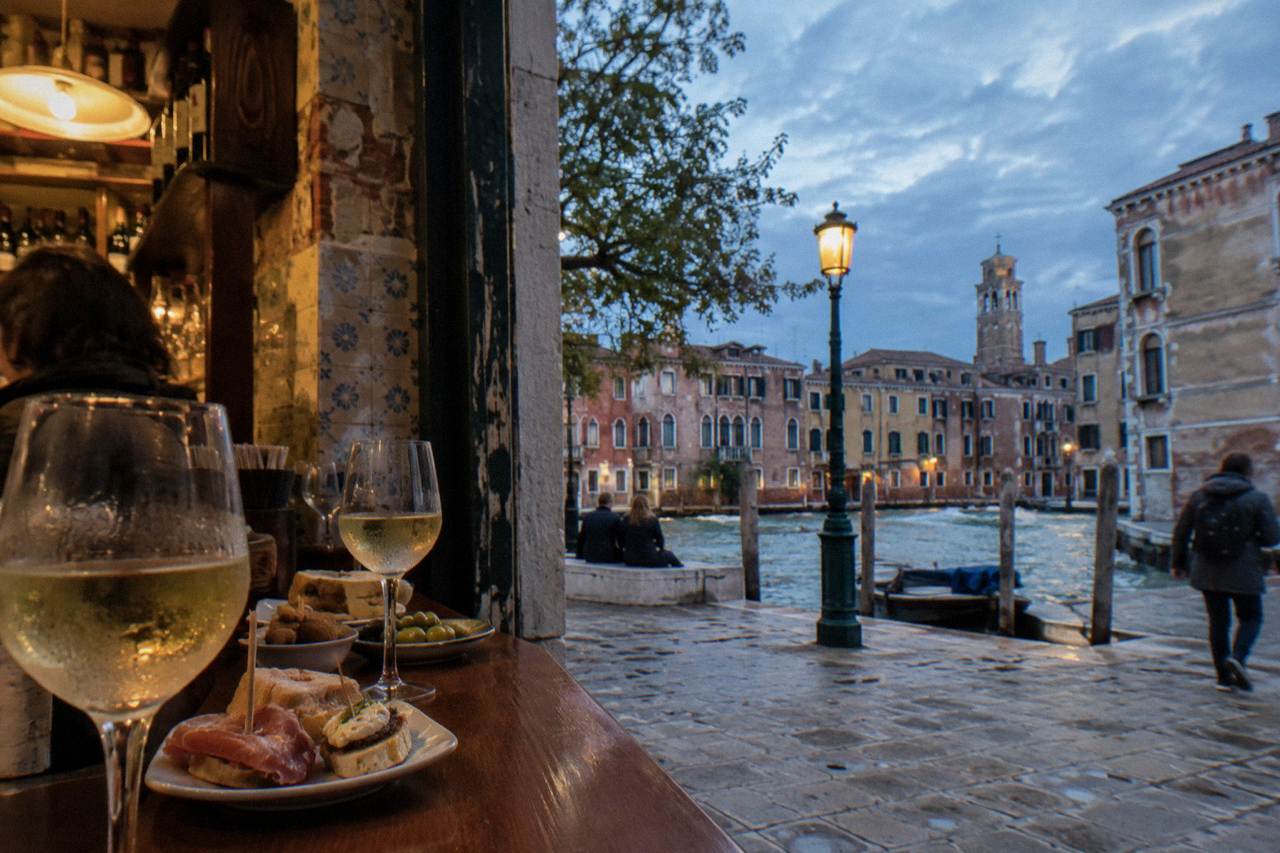
A Venice evening food walk pairs the aperitivo hour with a guided crawl through bacari, typically 2.5 to 3 hours for the sunset and dinner formats. Expect cicchetti, wine or spritz at each stop, fading golden light on the canals, and thinner daytime crowds. Prices and inclusions are listed on each operator's booking page.
Venice changes gear around six in the evening. The day-trip crowds funnel toward the vaporetto stops, the light drops low over the Grand Canal, and the bacari, the small standing wine bars that anchor Venetian drinking culture, start filling with people ordering an ombra and a plate of cicchetti on their way home. That shift is the aperitivo hour, and it is the single best window for a guided tasting walk in the city.
This guide explains what the aperitivo hour actually is, why dusk suits a food walk better than almost any other time of day, and how the evening formats differ. It also compares the lunch slot against the evening slot honestly, because the right answer depends on your itinerary, not on a universal rule. The featured option here is the Sunset Cicchetti & Wine Tasting walk, a roughly 3 hour evening tasting walk, and you can check availability on the operator's live listing.
Why Dusk Suits An Evening Food Walk
Dusk works because three things overlap: the bacari are at their liveliest between six and eight, the day-trip crowds have largely left the historic centre, and the low light turns the canals and calli golden for photographs. A walk timed to that window combines a working drinking culture with a nearly empty city, something a midday walk cannot match.
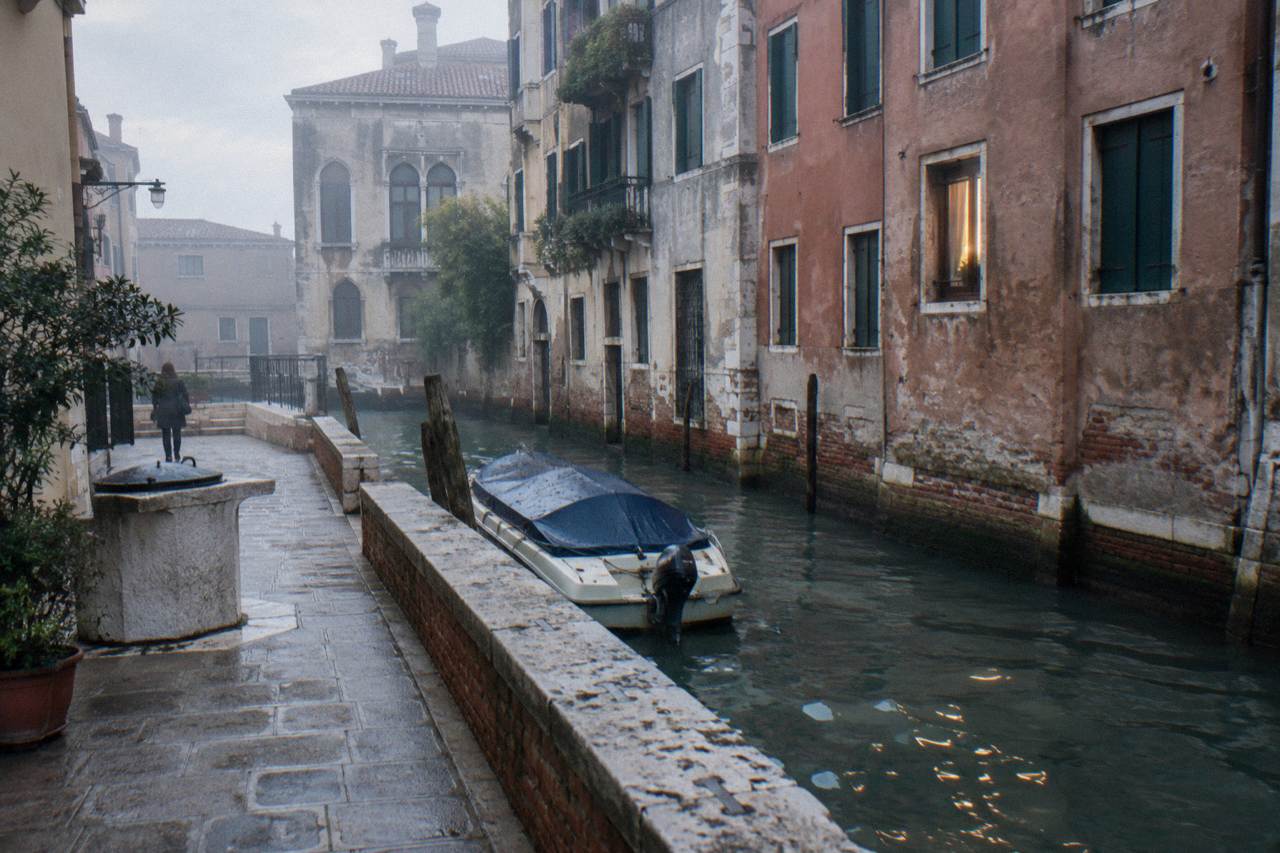
The rhythm of Venetian bacari follows the working day. They open in the morning, serve the market crowd and lunchtime trade, then quiet down in the early afternoon before filling again in the early evening. By the aperitivo hour the counters are stacked, the house wine is flowing, and the bars feel like neighbourhood places rather than visitor attractions. A guide walking you through that hour is showing you the bars in the state Venetians actually use them.
Crowd levels matter as much as the bars themselves. The bulk of Venice's day visitors arrive mid-morning and leave in the late afternoon, which means the alleys around Rialto and Campo Santa Margherita thin out noticeably as the evening draws in. Walking between bacari at dusk means shorter waits at counters and room to stand, where the same route at one in the afternoon can feel like a procession. The evening food walks compared here all run in that window by design.
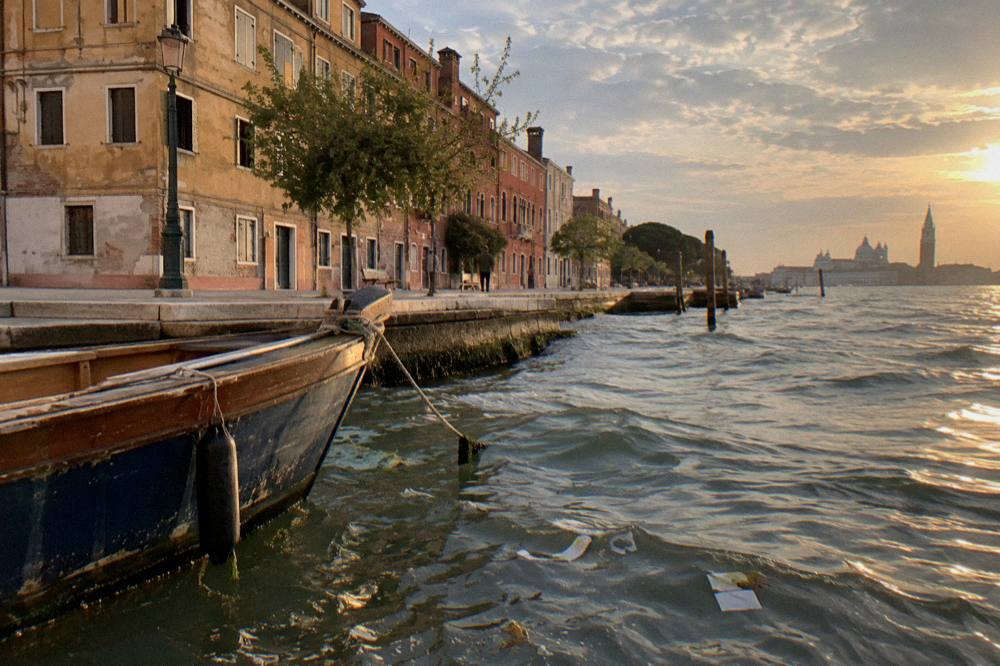
The light is the third reason. Venice faces onto open water on three sides, and the low sun of the early evening rakes across the lagoon and into the side canals, turning plaster walls amber and the water bronze. Photographers chase that light on the Zattere and along the Giudecca Canal for a reason. A food walk at dusk delivers dinner and the best photographic hour of the Venetian day in the same three hours.
What The Aperitivo Hour Actually Is
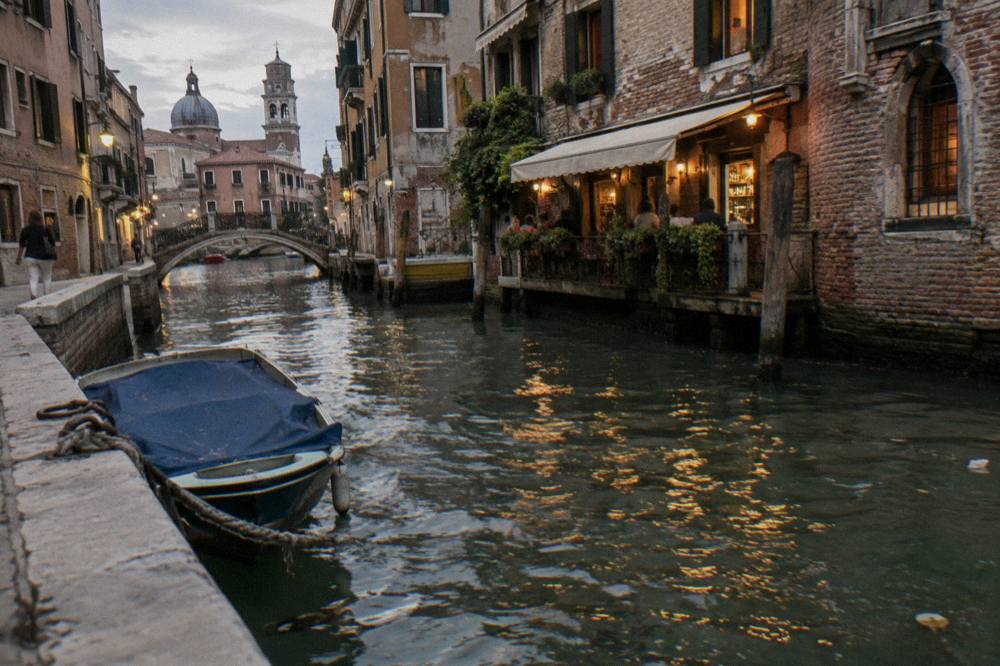
The aperitivo hour is the pre-dinner drinking ritual, roughly 6 to 8 pm, when Venetians stop at a bacaro for a small glass of wine or a spritz and a bite to eat. It is not a full meal and not a bar crawl in the party sense: it is a measured pause that takes the edge off hunger and opens the evening. Cicchetti and ombre are its core.
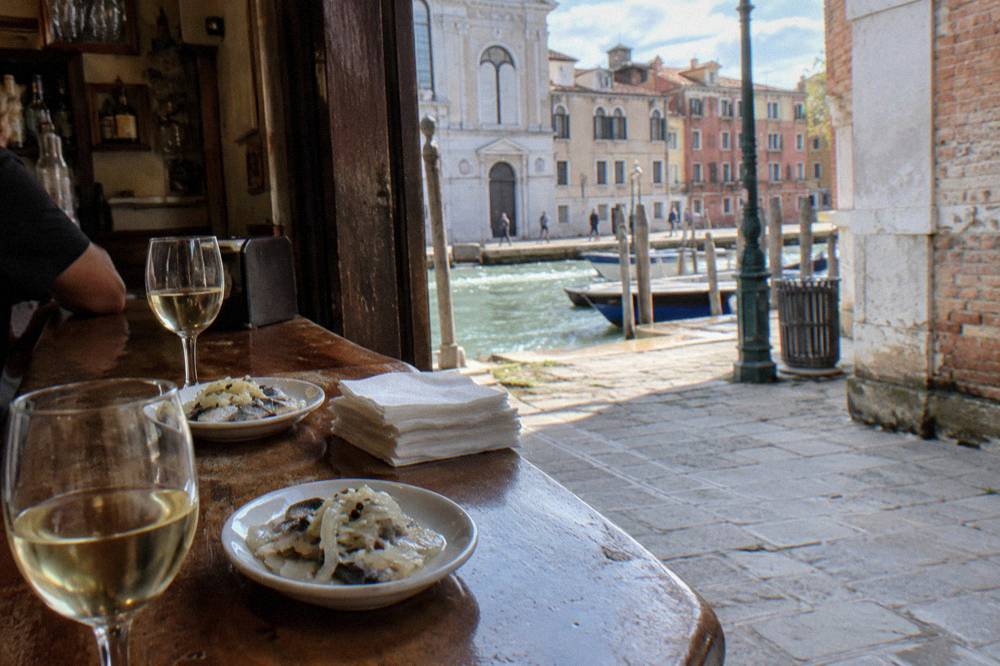
The mechanics are simple and old. An ombra, the small roughly 100 ml glass of house wine the Visit Venice site documents as part of the tradition, costs about EUR 1 to 2.50 as reported at the counter in local bacari, with the cheaper end in the more neighbourhood-oriented spots. Cicchetti, the small snacks set out on the counter, run about EUR 1.50 to 4 a piece as reported, from simple crostini to more elaborate fried or marinated bites. There is no fixed city tariff: posted lists at each bar apply, and the official Visit Venice page on cicchetti confirms those ranges.
Two practical notes shape the ritual. First, standing at the counter is the traditional posture and it often sidesteps the coperto, the cover charge that commonly runs EUR 1 to 4 per person where a venue applies it and which must be disclosed on the menu. Second, tipping in this context is optional rather than expected: rounding up or leaving something for genuinely good service is appreciated, but a standing cicchetti stop does not carry a tipping obligation. Our Venice Food Tours coverage of the wine ritual goes deeper if you want the full background.
A guided walk built around the aperitivo hour essentially runs this ritual on your behalf. The guide picks the bars, orders the right things, explains what each bite is, and paces the stops so you finish fed but not flattened before whatever you do next. The three evening formats below all work from that same base and differ in what they add to it.
If you already know the evening slot is right for you, these are the three options this site features for the aperitivo window:
Each pairs a different structure with the same dusk timing, from a straight sunset tasting walk to a version that ends with a proper sit-down dinner. The comparison table further down breaks out the differences in detail, including durations as stated on the listings.
Lunch Walk Or Evening Walk: Which Slot Fits
Book the evening slot if your days are full of sightseeing and you want the aperitivo atmosphere, thinner crowds and the best light; book a lunchtime walk if you want the Rialto market at its liveliest, since the fish market closes at 14:00 and the whole market shuts on Sundays. The right slot follows your itinerary, not a ranking.
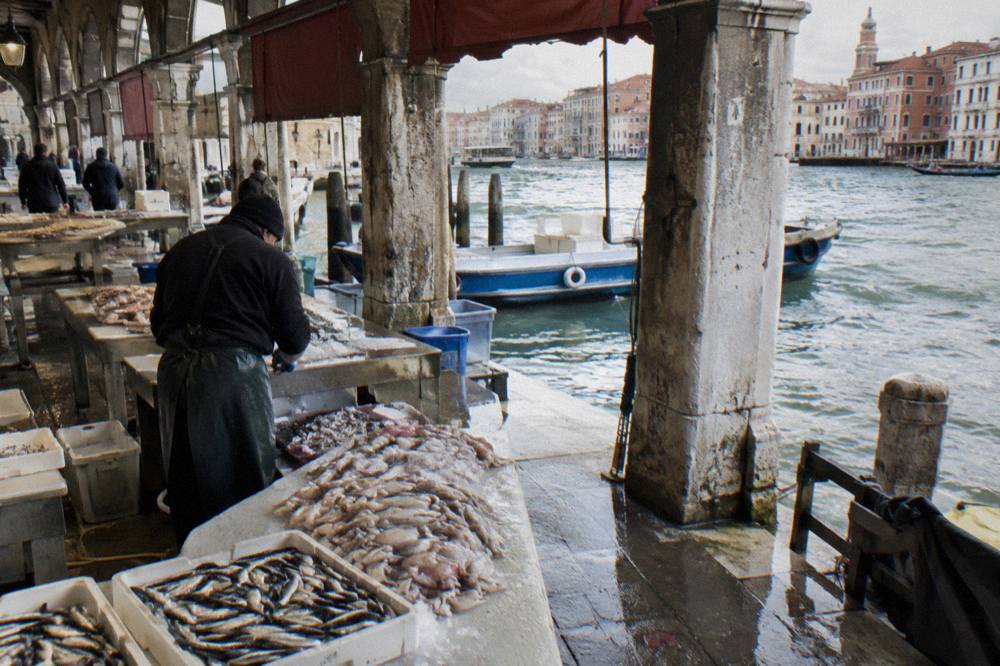
The honest case for lunch is the market. The Pescheria, Rialto's fish market, runs Tuesday to Saturday from 7:00 to 14:00 and closes Sunday and Monday, and the produce market runs Monday to Saturday 7:00 to 20:00, closed Sunday. A morning or lunchtime walk that includes Rialto catches stalls actually trading, with the catch of the lagoon on ice. Tour listings themselves warn that the fish market is closed Sundays, Mondays and Italian holidays, so a Sunday visitor loses the market half of that equation entirely. The Rialto market guide with tasting covers what that format includes.
The honest case for the evening is everything else. Aperitivo is a real, scheduled part of Venetian daily life rather than a visitor construct, and the bars are demonstrably busier at that hour. Crowds thin as day visitors leave, which makes the walking between stops more pleasant, and the light in the final two hours before dark is the city's best. If you have one food walk in you and your dinner plans are flexible, the evening slot gives more atmosphere per hour.
| Factor | Lunchtime Walk | Evening Walk |
|---|---|---|
| Bacaro atmosphere | Quieter counters, lunch trade | Busiest standing hour of the day |
| Crowds on the route | Peak daytime visitor levels | Thinning as day visitors leave |
| Photographic light | High, flat midday sun | Low golden light into dusk |
| Rialto fish market | Trading until 14:00, Tue to Sat | Closed by evening |
| Dinner afterwards | Needed separately | Standing formats often suffice |
| Seasonal sensitivity | Stable across the year | Start times track the sunset |
There is also a practical middle path worth naming: some travellers take a market-flavoured walk near midday, eat lightly, then do a short evening tasting walk at dusk and call the two of them the day's meals. That works only if your budget allows two paid walks, and the cost breakdown for Venice food walks helps you judge whether it does, since it explains exactly what the listed prices tend to cover and what stays extra.
Still deciding between the two slots?
The sunset cicchetti and wine format runs about 3 hours in the early evening and is the most direct way to test whether the aperitivo slot suits you before committing a whole day's plan around it.
The Three Evening Formats Compared
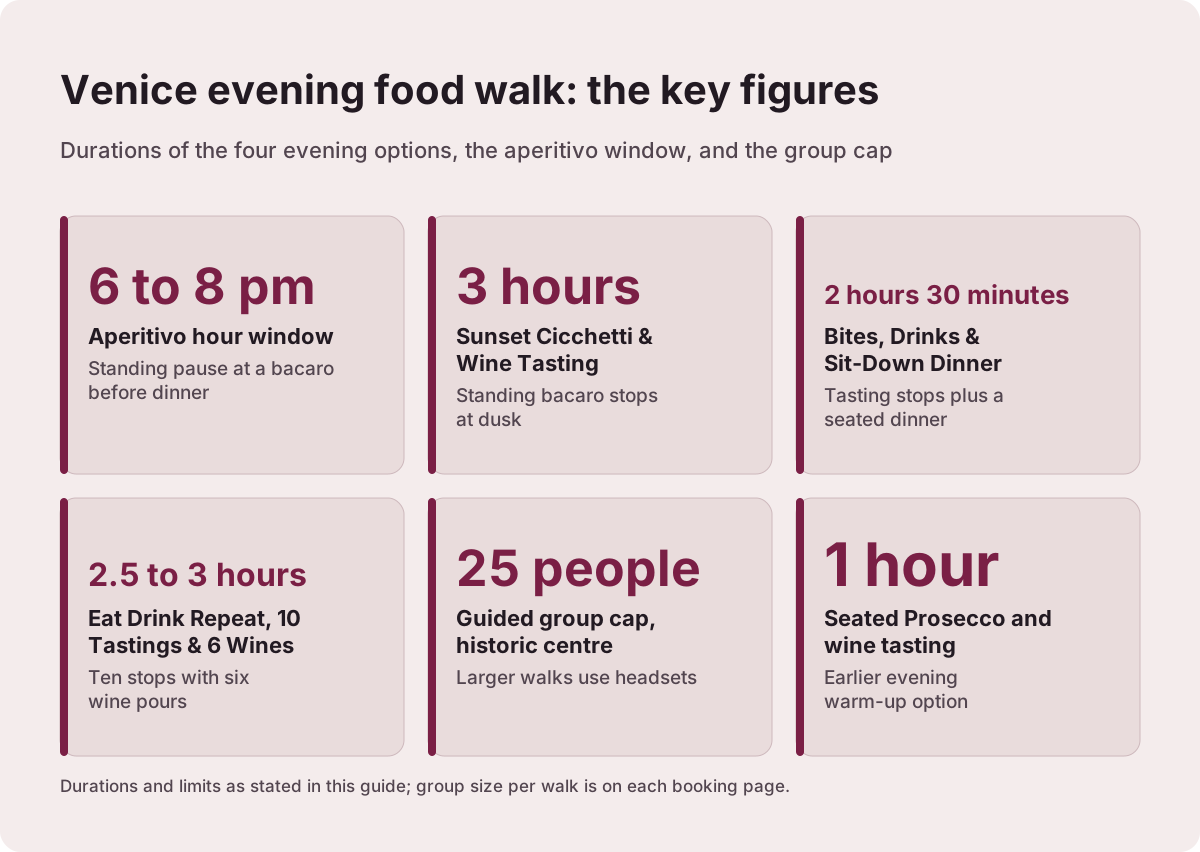
The three featured evening options differ in structure more than in slot: the sunset walk is a 3 hour standing cicchetti and wine experience, the dinner version runs 2 hours 30 minutes and ends with a seated meal, and the 10-tastings-and-6-wines walk runs 2.5 to 3 hours with the heaviest drinks emphasis. All three operate in the evening window; none is a market walk.
| Walk | Duration (as listed) | Structure | Best For |
|---|---|---|---|
| Sunset Cicchetti & Wine Tasting | 3 hours | Standing bacaro stops, cicchetti and wine at dusk | First-timers wanting atmosphere and light |
| Evening Food Tour: Bites, Drinks & Sit-Down Dinner | 2 hours 30 minutes | Tasting stops plus a seated dinner to finish | Anyone who wants the walk to be the whole evening meal |
| Eat Drink Repeat, 10 Tastings & 6 Wines | 2.5 to 3 hours | Ten tastings with six wine pours | Drinkers who want the widest wine spread |
The sunset walk is the featured option on this page because its format matches the aperitivo concept most literally: standing stops, small bites, wine, and a finish timed to the dying light. Its price and current availability sit on the operator's booking page rather than in any fixed print, since evening walk pricing moves with season and demand. The dinner version solves a real problem for travellers who do not want to hunt for a restaurant at 9 pm after a walk ends, and its sit-down finish makes it the most self-contained of the three.
The 10-tastings-and-6-wines walk is the most commitment-heavy option on the drinks side. Six pours across an evening is a genuine progression through Veneto wine styles rather than a token glass at each stop, so it rewards people who care about the wine as much as the food. If that appeals, the guide to Veneto wines to know is useful pre-reading: it explains Prosecco, Soave and Raboso, the styles most likely to appear in a bacaro's house pours.
One structural note that affects all three: guided groups in Venice's historic centre are capped at 25 people and loudspeakers are banned, as reported under the city's standing group rules, so larger walks use headsets. A given walk's actual group size is stated on its own booking page, not assumed here. Check that figure before booking if crowd sensitivity is part of why you chose the evening slot in the first place.
For travellers whose evening runs longer than one walk, a pre-walk option exists in the short tasting format:
That 1 hour seated Prosecco and Italian wines tasting works as an earlier evening warm-up before a bacaro walk, or as a low-effort alternative when a full walk does not fit the night.
Spritz, Ombra And What To Drink At Dusk
The three drinks you will actually meet on an evening walk are the ombra, the small house wine pour, the spritz, and Prosecco. The ombra is the traditional bacaro drink at about EUR 1 to 2.50 reported at the counter; the spritz is the bigger, bitter-edged aperitivo serve; Prosecco is the default sparkling option. All three fit the pre-dinner slot.
The ombra comes first because it is the native unit. The name, a Venetian word tied to the old habit of drinking in the shade, means a small glass of the house wine, red or white as the bar pours it, and it is priced by the glass rather than by the bottle's pedigree. The reported range of EUR 1 to 2.50 in local-oriented bacari is what makes a multi-bar evening financially survivable: you can taste across four bars for less than one restaurant carafe in many cases. The guide to the ombra and Venetian wine rituals covers the customs around ordering one.
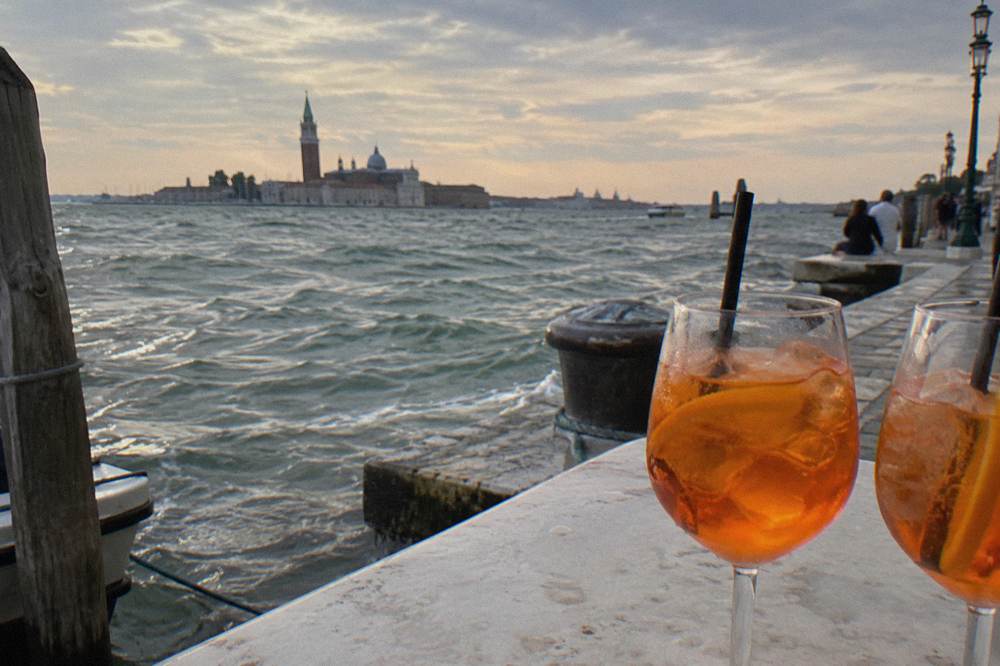
The spritz is the visible one. Built from a bitter aperitivo, Prosecco and a splash of soda, it is the orange drink on half the tables of every campo at six in the evening, and a proper Venetian walk will explain the local preference lines between brands without turning it into a lecture. The spritz guide on this site unpacks the Aperol-versus-Select question in full, including which serve the locals actually order. On a guided walk, spritzes typically appear at one or two stops rather than all of them, because the format's drink-by-drink pacing belongs to the wine.
One rule genuinely affects drinking at dusk, and it is worth knowing before you buy anything takeaway: the municipal regulation prohibits drinking from glass, ceramic or similar containers outside permitted outdoor seating areas, and bans takeaway sales of alcohol in untapped glass bottles or glass glasses, with reported fines of EUR 25 to 500. The rule exists on the city's published regulation; check current enforcement before assuming anything. In practice it means drinking happens at the counter or in a seated area, which is exactly how a bacaro crawl works anyway.
What You Actually Eat On An Evening Walk
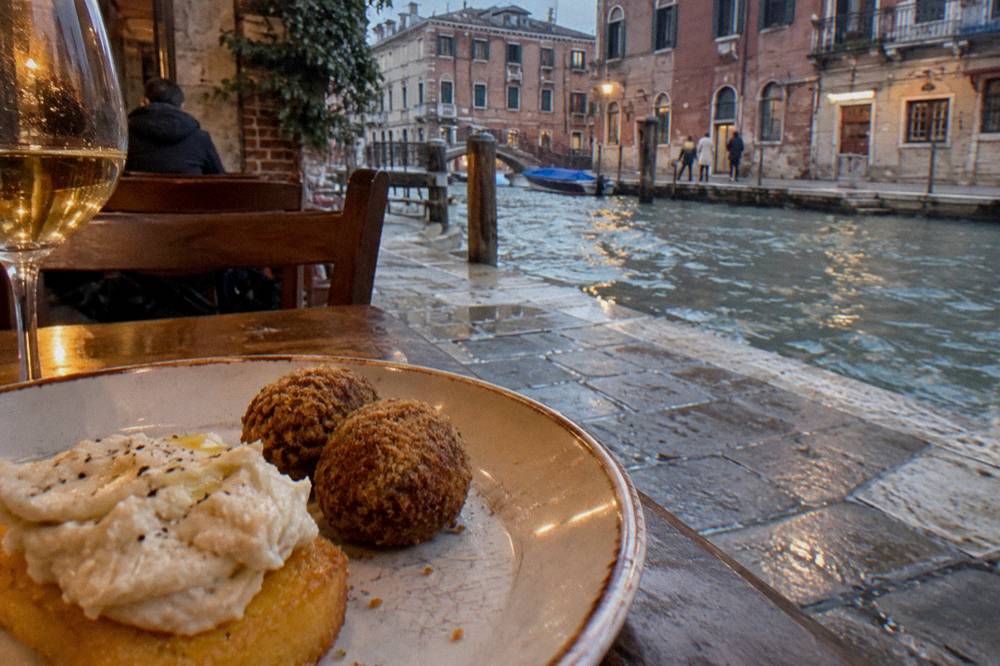
The cicchetti spread at dusk leans to hearty bar food: baccalà mantecato on polenta or bread, sarde in saor, polpette, and crostini with lardo or cheese, with fried bites common in the run-up to dinner. Exact stops and dishes vary by walk and by day, so treat any dish list from a booking page as the itinerary, not a guarantee.
The classics need a sentence each. Baccalà mantecato is whipped salt cod, airy and rich, served on a polenta slice or a crostino; sarde in saor is sweet-and-sour marinated sardines with onion and raisins, a lagoon preservation technique turned delicacy; polpette are the fried meatballs that anchor most bacaro counters; crostini cover everything else, from lardo to smoked fish to soft cheeses. The dedicated guides to sarde in saor and to baccalà and polenta go deeper on each.
Dietary needs are the one honest gap in the format. Most evening walks are built around the traditional counter spread, which is fish-heavy and bread-based. Where a listing does not state a vegetarian, vegan or gluten-free accommodation, the right move is to message the operator before booking rather than assume; operators regularly adapt when warned, and rarely can at the counter on the night. The vegetarian and gluten-free guide for Venice sets out what is realistically adaptable.
How much a walk feeds you depends on the format. The dinner-ending walk is designed to be a full evening meal; the standing formats are closer to a substantial grazing dinner, enough that many people skip a restaurant afterward, but individual appetites vary. The counting is per the listing's stated tastings, so a walk listing 10 tastings means ten counted items across the stops, and portions are bacaro-sized rather than restaurant-sized. The what's-included details on each booking page are the source for what is food, what is drink, and what is extra.
Dessert is a separate decision. None of the three evening formats above is a dessert walk, and Venice's own sweet tradition, from fritole to baicoli to Burano's bussolà, fills that gap on its own. Travellers who want sugar at the end of the night sometimes add the dedicated pastry and gelato stroll:
That 2 hour sweet-focused walk sits in the same general time-of-day territory and pairs naturally with an earlier aperitivo hour if your evening has room for both.
Light, Crowds And Photos At Golden Hour
Golden hour in Venice runs through the last two hours before sunset and shifts with the season: in summer it can stretch past 8 pm, while in late autumn it starts before 5 pm. Evening walks that bill themselves as sunset walks time their final stop to that window, so check the operator's start time against the actual sunset for your travel dates before booking.
The seasonal point matters more than most visitors expect. A 6 pm start in July lands you in full daylight for the first two stops with the golden hour arriving at the end; the same start in November is entirely after dark, with the canals lit by shopfronts and streetlamps instead. Neither is wrong. The November version is moodier and quieter, the July version warmer and more colourful, and the photos come out entirely differently. What you should not do is assume "sunset" means the same experience in every month.
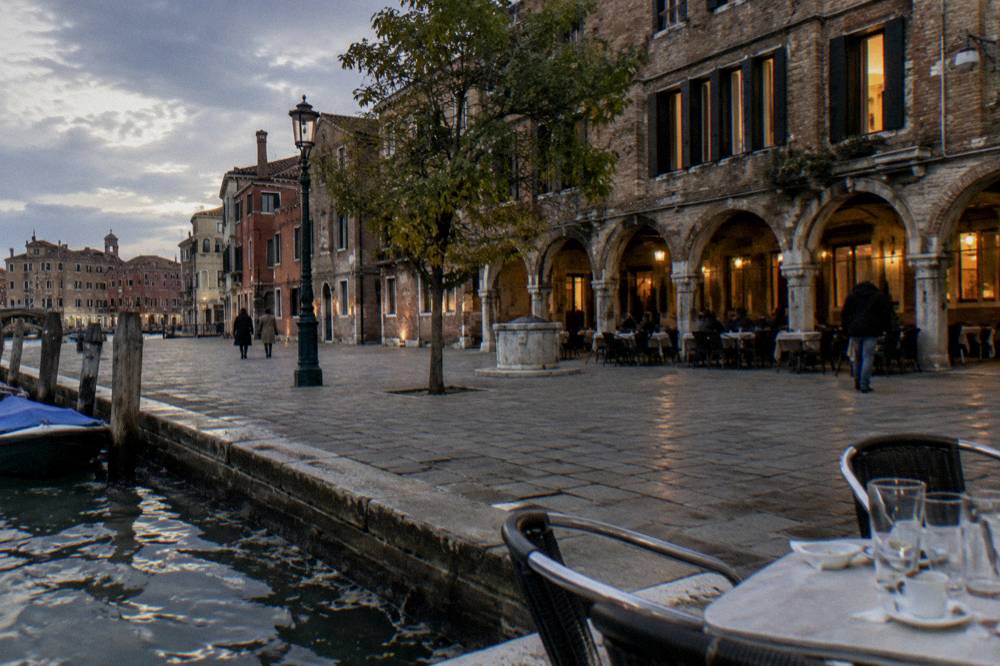
Crowd behaviour also shifts seasonally. The late-afternoon exodus of day visitors is most dramatic in peak summer months, when the difference between 3 pm and 7 pm in the alleys around Rialto is stark. In the off-season, when the visitor base is smaller and more overnight-based, the evening thinning is gentler, but the bacari are also less pressed, which makes counter space easier. Rain, conversely, empties the streets at any hour and packs the covered bacari, and Venice's acqua alta season brings its own drama to a dusk walk if you are dressed for it.
For photography, the practical advice is to let the guide lead and hang back a few steps between stops. The walks between bars are where the light shots happen: side canals facing west, bridges, and the long straight rii that funnel the low sun. Shooting the food is easier at dusk than at midday in one specific way, since bacaro lamp light is warm and forgiving, but a phone camera will struggle in dim bars, so take the food shots quickly at the counter rather than after you have carried the plate to a dark corner.
Meeting Points, Endings And Getting Home
Evening walks meet at a stated central point, usually near Rialto or a campo on the route, and end within walking distance of the last bacaro rather than back at the start; the exact points are on each booking page. Vaporetti run into the night, with a single 75 minute ticket at EUR 9.50 as reported, so getting back is rarely a problem, but check the last services for your destination.
The meeting-point detail is worth ten seconds of attention at booking time. A walk that meets near Rialto and ends in Cannaregio, for example, leaves you a 20 minute walk or a short vaporetto hop from where you started, which is fine at 9 pm and worth knowing in advance if your accommodation is at the far end of Dorsoduro. The meeting points and what to bring guide collects the practical checklist: comfortable shoes, a small bag, and no assumption of seating on a standing-format walk.
Getting home is the part evening walkers ask about most. ACTV water buses run evening and night services across the lagoon network, and the reported fare structure puts a single 75 minute ticket at EUR 9.50 and a 24 hour pass at EUR 25, per the official ACTV fares page. Children under 6 travel free. Those are reported figures and fares can change, so check the official page before you travel. If your walk ends late in Cannaregio or Castello, the Fondamente Nove stops connect onward toward the northern islands and the mainland ferries.
One citywide note that evening visitors keep asking about: the 2026 day-visitor access fee trial ended, and as of 27 July 2026 no access fee applies and no payment or exemption is needed to visit, per the official access fee page. The fee is set to return in 2027 with dates already listed but amounts and arrangements not yet published. Overnight guests were never in the paying category anyway, but evening walkers staying outside the historic centre should simply keep an eye on that page for their travel year.
| Evening Planning Item | Figure As Reported | Where To Check |
|---|---|---|
| Ombra at the counter | EUR 1 to 2.50 | Posted list at each bacaro |
| Cicchetti per piece | EUR 1.50 to 4 | Posted list at each bacaro |
| Coperto where applied | EUR 1 to 4 per person | Menu disclosure |
| Vaporetto single, 75 min | EUR 9.50 | Official ACTV fares page |
| Vaporetto 24h pass | EUR 25 | Official ACTV fares page |
| Access fee, day visitors | None applies since 27 July 2026 | Official access fee page |
Common Questions About Evening Food Walks In Venice
What Time Does An Evening Food Walk In Venice Start?
Most evening formats start in the late afternoon or early evening to catch the aperitivo hour, with the sunset walk running about 3 hours. Exact start times vary by season, since operators shift them to track the actual sunset, so the operator's live listing is the source for your dates.
Is An Evening Food Walk Enough For Dinner?
The version that ends with a sit-down dinner is designed as a full meal. The standing formats amount to a substantial grazing dinner across multiple bacari; many travellers skip a restaurant afterward, but appetites vary, so judge against your own habits rather than a promise.
Do Venice Bacari Take Reservations For A Walk?
Guided walks pre-arrange their stops with the bars they use, which is one of the main advantages of a guided format over going alone. Independent visitors generally stand at the counter without booking anything, and counter service is the norm.
Are Evening Food Walks Suitable For Vegetarians Or Gluten-Free Diets?
Only where the listing says so. The traditional cicchetti spread is fish-heavy and bread-based, and a listing that does not state an accommodation means the question is open: message the operator before booking rather than assuming adaptation is possible on the night.
What Happens If It Rains During An Evening Walk?
The walks proceed in rain, since bacari are indoor or covered spaces and the stops between them are short. Dress for the forecast, and check the operator's cancellation terms on the booking page before you commit, since weather policies differ between operators.
Is Venice Still Crowded In The Evening?
Generally less so than midday, because the bulk of day visitors leave in the late afternoon. The thinning is most dramatic in peak season; in off-season months the city is quieter all day and the evening bacari are less pressed, which makes counter space easier.