Venice Food By Season: Moleche, Radicchio And White Asparagus
Venice eats in seasons. Soft-shell moleche crabs appear briefly in spring and again in autumn, violet castraure artichokes come off Sant'Erasmo in spring, and winter radicchio changes what lands on a cicchetti counter. Knowing the calendar changes when you should book a tasting walk.
Short answer
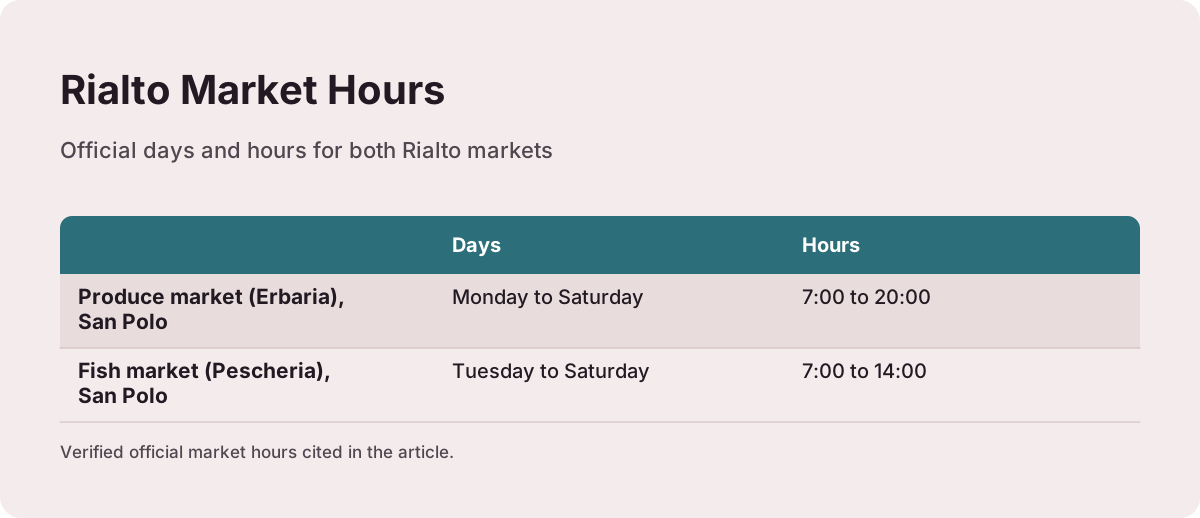
Spring brings castraure artichokes from Sant'Erasmo and white asparagus, typically April through June. Autumn means moleche soft-shell crabs and radicchio, roughly October onward. The Rialto produce market runs Monday to Saturday 7:00 to 20:00; the fish market Tuesday to Saturday 7:00 to 14:00, so season and day of the week both shape what a food walk serves.
The Venetian lagoon works like a kitchen calendar. What is on the bacaro counter in April has almost nothing to do with what is there in November, because the city still eats largely from its own water and its own island gardens. Moleche, the soft-shell crabs that shed their shells twice a year, appear for a few short weeks and then vanish. Castraure, the first small violet artichoke buds from Sant'Erasmo, are harvested in a brief spring window that cooks plan whole menus around. Winter brings radicchio from the Veneto plain and, with it, a different style of cicchetti altogether.
This matters for anyone planning a tasting walk, because a guide can only show you what the season actually offers. A market-focused walk in May is a different experience from the same route in February, and that difference is worth planning around. This guide walks through the Venice food year, what each season typically serves, and how to match a food walk to the month you are travelling. For the wider picture of how these tasting walks work, see how a bacaro crawl works, and for the dishes themselves start with what to eat in Venice.
What Tastes Best In Venice In Spring?
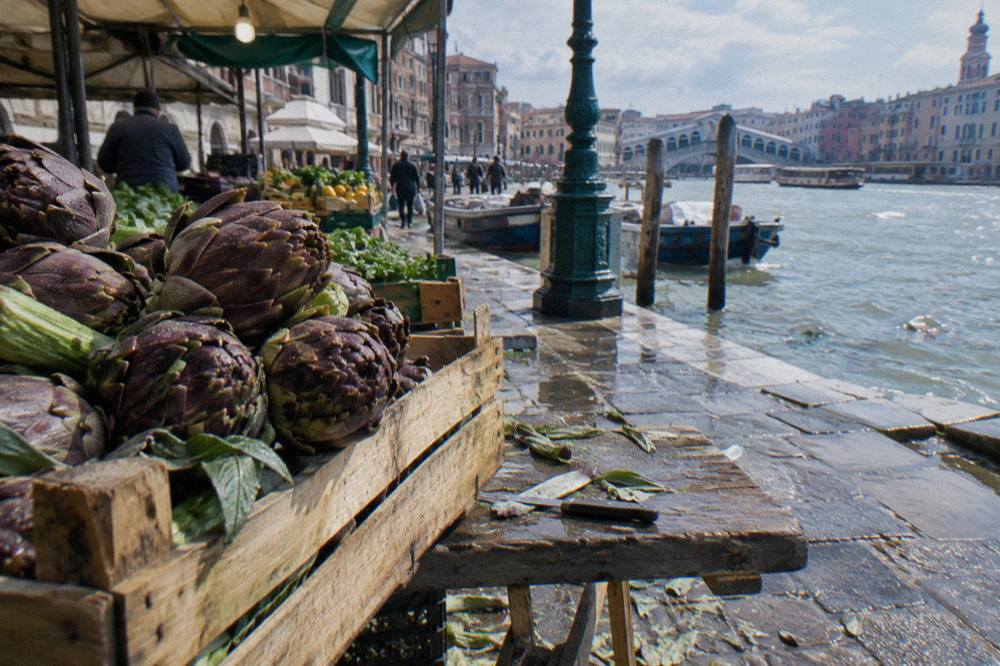
Spring is the season Venetian cooks wait for: castraure artichokes from Sant'Erasmo, white asparagus from the Veneto, and the first herbs of the year, typically from April into early June. The castraure harvest is brief, and the small violet buds are the very first cut of the plant, which is why they are treated as a delicacy rather than a vegetable. What a food walk serves in spring reflects this short window.
Sant'Erasmo is Venice's vegetable island, the orti or gardens of the lagoon, and its saline soil produces artichokes with a bitterness cooks prize. Castraure are the first small buds thinned from the plant in spring; later cuts become the larger carciofi that carry on through early summer. They are eaten raw with oil, fried, or stewed, and a fresh one snaps rather than bends. As reported in current island guides, the harvest is brief and spring-only, so any dish of castraure you find outside that window is likely something else on the menu.
White asparagus runs on a similar logic. The Veneto is asparagus country, and the white spears, grown under mounded soil so they never see light, typically appear in spring menus across the region. In Venice they show up as risotto, with eggs, or simply boiled with oil. Like the artichokes, this is a general seasonal pattern rather than a fixed calendar: exact timing shifts with the year's weather, so check what the venue or your guide's listing describes for the week you are there.
Spring also resets the cicchetti counter. Radicchio and winter greens give way to small artichoke bottoms, herbs, spring onions and the first tomatoes. If your trip falls in this window, a market-based walk is the best fit, because the Rialto stalls put the whole season on display. The lunchtime Rialto market food and wine tour runs four hours and centres on exactly this kind of seasonal browsing, with tastings and wine folded in. Check availability on the operator's live listing, since seasonal tours often sell out around the spring holidays.
| Product | Typical season | Where it comes from | How it is usually served |
|---|---|---|---|
| Castraure (first violet artichoke buds) | Spring, brief window | Sant'Erasmo island | Raw with oil, fried, stewed |
| White asparagus | Spring | Veneto mainland | Risotto, with eggs, boiled |
| Moleche (soft-shell crab) | Spring and autumn, brief windows | Lagoon fisheries | Fried whole, sautéed |
| Radicchio (late red chicory) | Autumn and winter | Veneto plain | Grilled, in risotto, with polenta |
| Baccalà mantecato | Year round, stock rises in winter | Dried cod, imported | Whipped with oil on polenta |
Is Autumn The Best Season For Venice Food?
Autumn is many Venetian cooks' favourite season: moleche soft-shell crabs appear in brief twice-yearly windows, radicchio arrives from the Veneto plain, and the lagoon fish market fills with the autumn catch. Typically running from October into November, this is the season of the richest, most savoury cicchetti counters of the year.
Moleche are green crabs caught at the moment they shed their shells, which happens in short phases rather than a steady season. A moleca is soft all over, so the whole crab is cleaned, dusted and fried, or sautéed with onion and polenta. The windows are brief and move with the water temperature, so no honest guide can promise them on a given day; what you can do is travel in the right months and ask. When they are on, they are one of the definitive Venice bites.
Radicchio is the other autumn arrival. The late-ripening red chicories of the Veneto, including the long-leaved tardivo type, come into the markets as the nights cool. They are grilled, baked, folded into risotto, or served alongside baccalà mantecato and polenta. The bitter edge is the point: it is the flavour that separates a November counter from a July one, and it pairs with the heavier wines that come back onto bacaro lists in cold weather.
This is also when the city itself is at its most liveable. The summer crowds thin, the spritz hour moves indoors, and bacari put out the fried, warm, substantive cicchetti that the season asks for. A tasting walk in autumn tends to feel fuller and slower than the same walk in spring. The guided options compared here reflect that: several of the longer walks, including the four-hour Rialto market food and wine tour, lean on whatever the stalls and counters hold that week, which in October and November means crab, radicchio and lagoon fish.
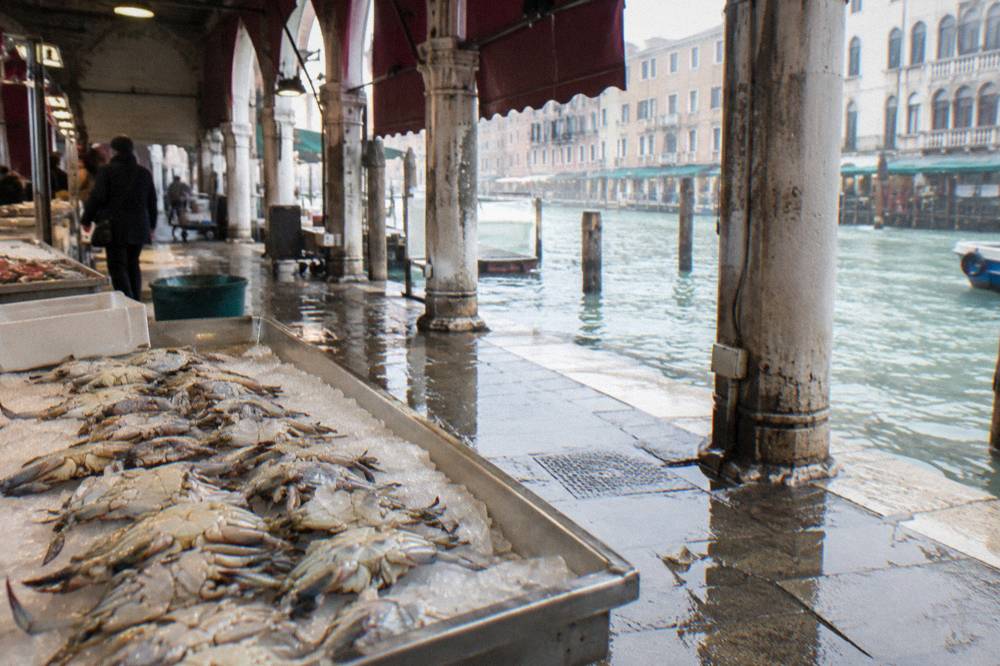
Between the two anchor seasons, the walk you pick matters less than the day you pick it. The Rialto market's rhythm is fixed by official hours: produce Monday to Saturday 7:00 to 20:00, fish Tuesday to Saturday 7:00 to 14:00, both closed Sunday. Tour listings themselves warn that the fish market is shut Sundays, Mondays and Italian holidays. A food walk on a Tuesday morning and the same walk on a Sunday afternoon are, quite literally, different products.
How Does The Season Change The Rialto Market?
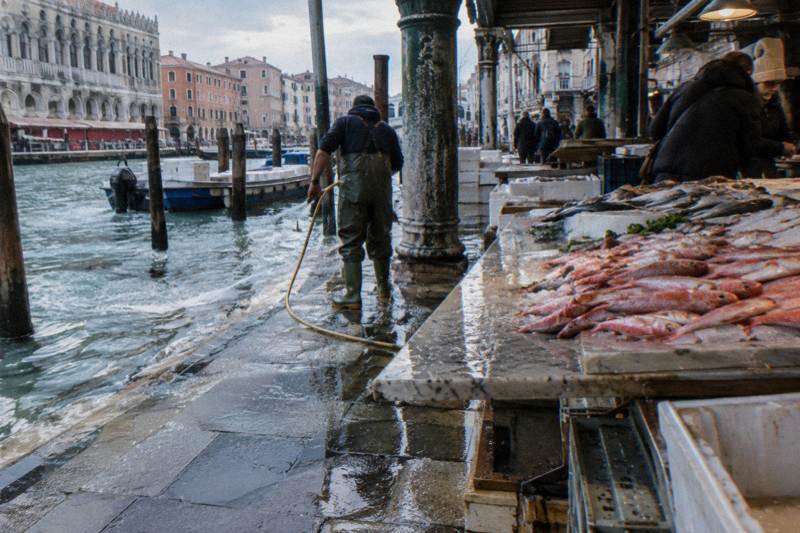
The market's opening hours stay the same all year, but its contents do not: spring stalls carry castraure and asparagus, autumn brings moleche and radicchio into the Pescheria, and winter leans on stored roots and lagoon fish. The fish market closes at 14:00 and on Sundays and Mondays, so the season and the day of the week together decide what a market tour can show you.
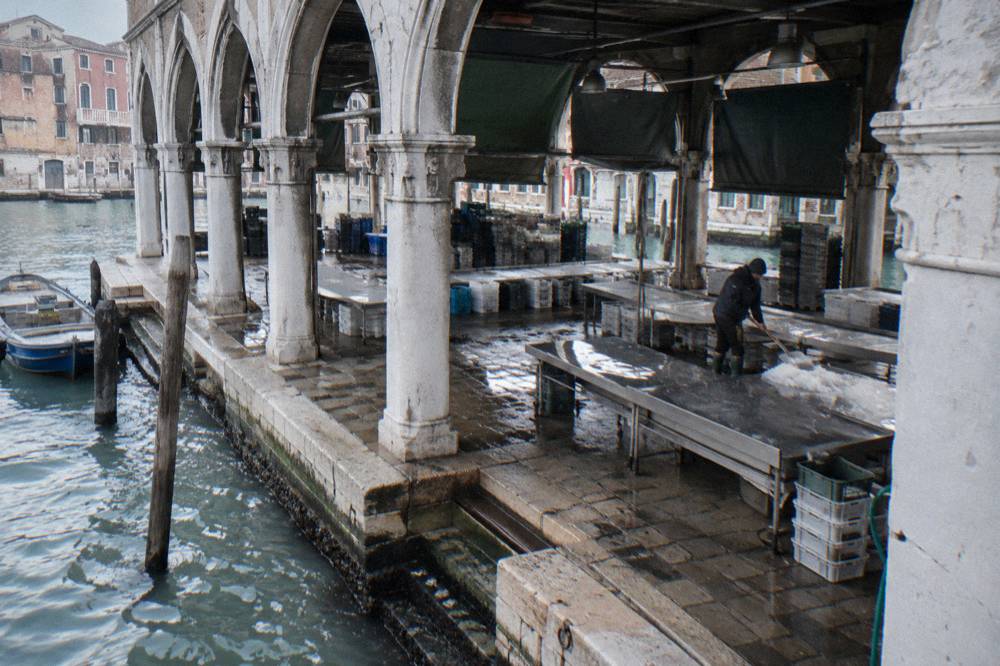
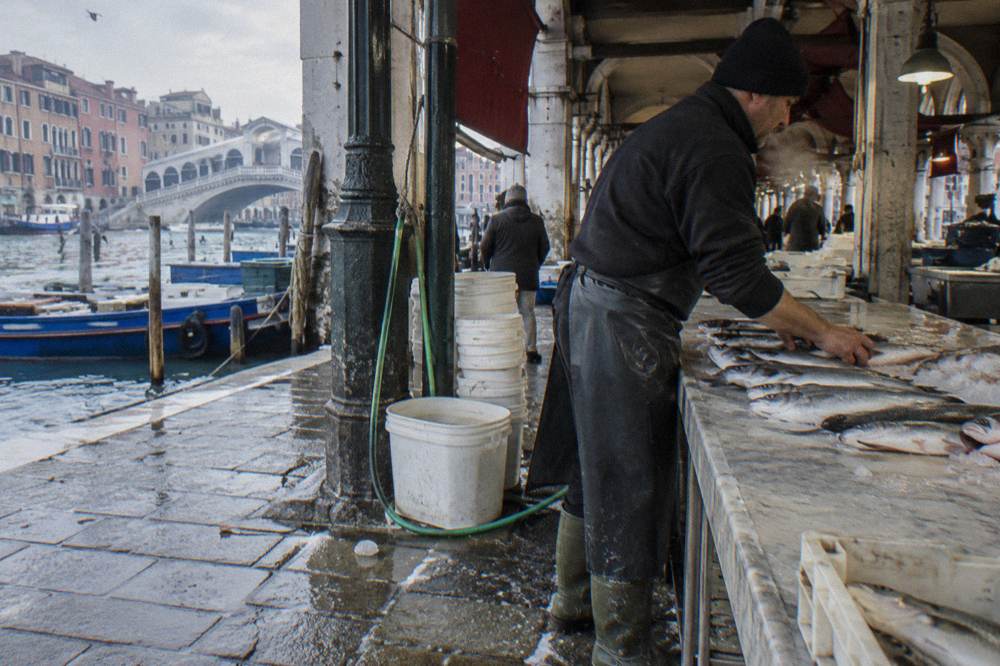
The verified official hours are worth memorising, because almost every food walk in Venice touches the Rialto at some point. The produce market at the Erbaria runs Monday to Saturday from 7:00 to 20:00; the fish market at the Pescheria runs Tuesday to Saturday from 7:00 to 14:00. That means a morning walk midweek sees both markets working, while a weekend walk sees the fish stalls shuttered no matter how good the season is. Anyone booking a market-centred tour should aim for Tuesday to Saturday and start early.
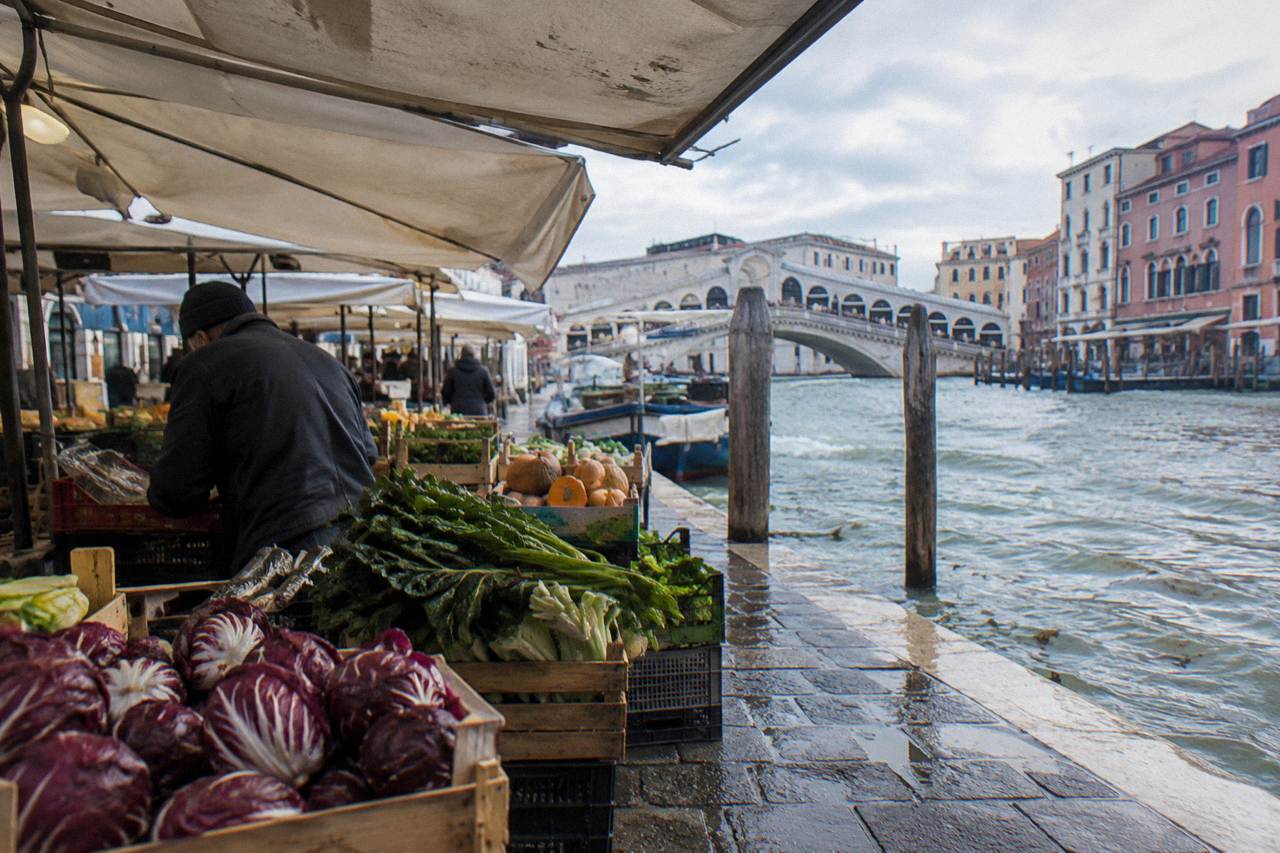
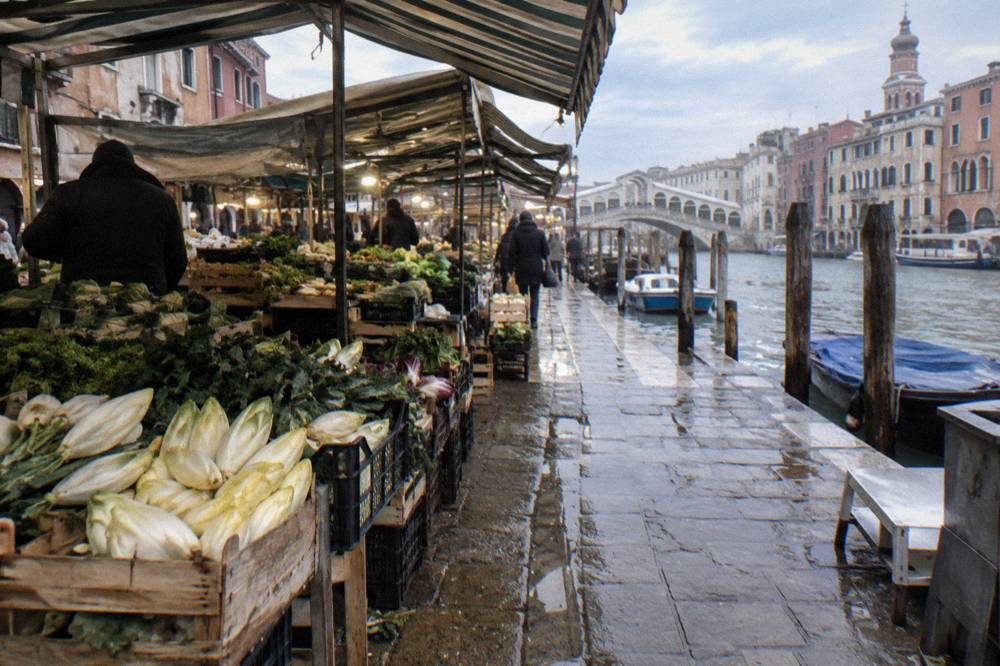
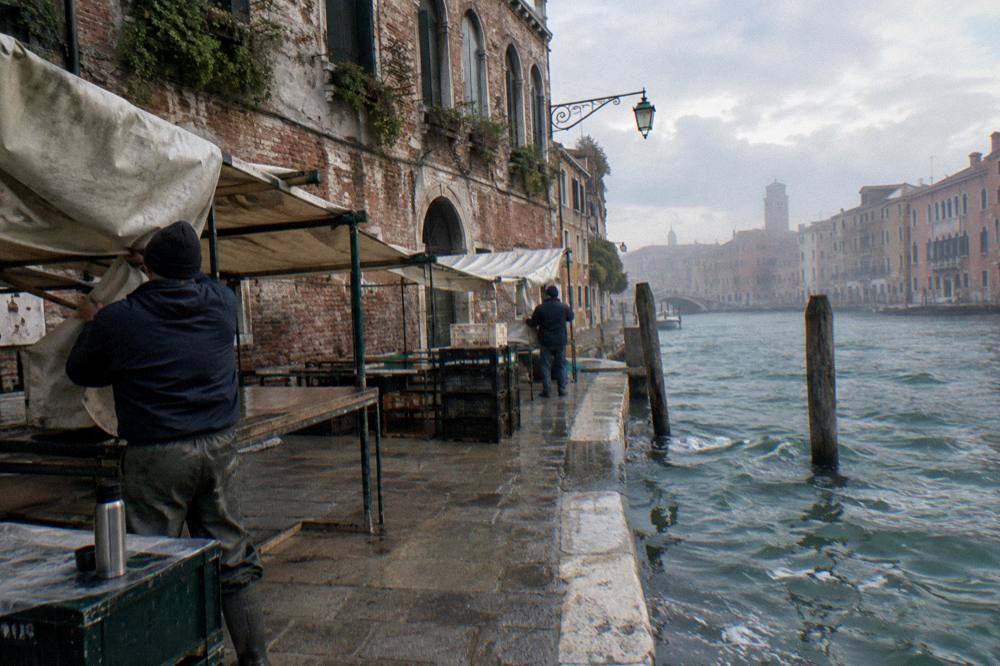
What changes by season is the produce itself. In spring the stalls carry the island harvest: artichokes, herbs, the first soft greens. In autumn and winter the balance tips to radicchio, squash, root vegetables and preserved fish. The Pescheria follows the lagoon and the Adriatic, so the day's catch shifts with the water. Moleche appear when they appear, and the fishmongers know the day's story better than any printed menu; that is one quiet argument for a guided walk, since a local guide can read the stalls with you. For the market itself in depth, see the Rialto market guide and the page on Rialto market hours and the best time to go.
| Market | Location | Days | Hours | Seasonal note |
|---|---|---|---|---|
| Produce (Erbaria) | San Polo, Casaria near Campo de la Pescheria | Monday to Saturday | 7:00 to 20:00 | Spring island vegetables; autumn radicchio and roots |
| Fish (Pescheria) | San Polo, Campo de le Becarie | Tuesday to Saturday | 7:00 to 14:00 | Moleche in autumn windows; lagoon and Adriatic catch year round |
If a market walk is the plan, book it for the start of your trip rather than the end. You will pick up more from the stalls in the first days, when everything is unfamiliar, than on your last morning. The lunchtime market tour this site features links the stalls straight to the table, with wine, over four hours; its meeting point and inclusions are described on the operator's booking page, and seasonal variation is part of the deal.
One planning note that no longer applies: the 2026 day-visitor access fee trial ended, and per the official page no fee applies from 27 July 2026, so visiting Venice currently needs no payment or exemption. The fee is set to return in 2027, with dates listed on the official portal but amounts not yet published. Check the official access fee page if your trip falls in 2027.
What Should You Eat In Venice In Winter?
Winter in Venice is the season of baccalà mantecato, radicchio, polenta and fried fritto misto, with the counters leaning rich and warm against the damp cold. Typically December through February, it is also the quietest time to stand at a bacaro counter, and the season when the city's preserved-fish tradition shows its full range.
Baccalà mantecato, whipped dried cod on polenta, is the constant of the Venetian winter counter. It is made from salted or dried cod, which keeps indefinitely, so it does not depend on the season's catch; what changes in winter is how central it becomes, alongside sardines in saor, the sweet-and-sour preparation that historically preserved fish for fishermen at sea. If these dishes are new to you, the guides on baccalà mantecato and polenta and sarde in saor cover them in detail.
Radicchio stays on through the cold months, grilled or baked, and winter greens, squash and beans fill out the vegetable side. Fritole, the fried sweet fritters that are the city's Carnival pastry, belong to the weeks before Lent, so a February trip can catch them at their peak; the guide to Venetian sweets covers the pastry calendar.
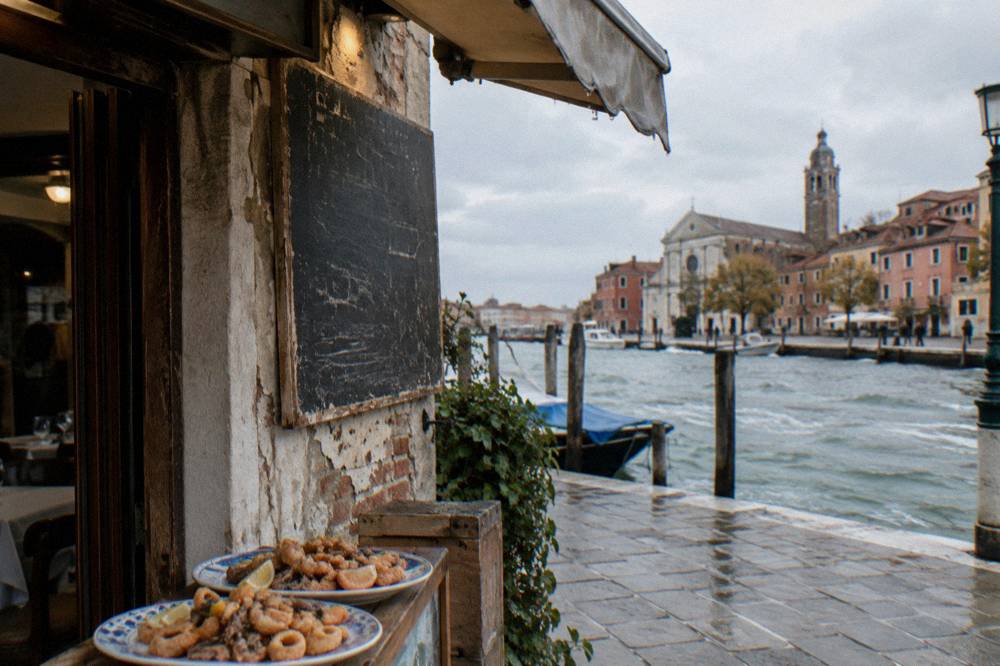
A winter food walk trades variety for depth. You will not see castraure or moleche, but the counters are at their most generous with the warm dishes, the ombra of house wine tastes more reasonable, and the tourist pressure is lower. Standing prices help too: reported typical cicchetti prices run around EUR 1.50 to 4 a piece and an ombra around EUR 1 to 2.50 in local spots, per the official Venice tourism site, though posted lists at each bar govern. Check the official cicchetti page for the current reported ranges.
Which Venice Food Walk Fits Which Season?
Market-centred walks fit spring and autumn best, when the stalls carry the seasonal specialities; evening cicchetti crawls work year round but shine from autumn to spring; and cooking classes with a market visit are strongest in spring, when the produce is at its peak. Match the format to your month and you get the season on the plate.
The range of food walks here splits into three families, and each has a season where it makes most sense. A market walk, like the four-hour lunchtime Rialto tour, is a spring and autumn product at heart: it lives on what the stalls hold. A cicchetti crawl through bacari is year-round, but the counters are richest from October to March. A market-plus-cooking class, such as the Rialto market tour with cooking class and lunch, is strongest in spring, when the island vegetables come in.
| Walk format | Best months, typically | Why | Example from the range compared here |
|---|---|---|---|
| Market walk with tastings | Spring and autumn | Stalls carry castraure, asparagus, moleche, radicchio | Venice: Rialto Market Food and Wine Lunchtime Tour, 4 hours |
| Small-group tasting walk | Year round, richest autumn to spring | Bacaro counters lean warm and fried in cold months | Eat Like a Local: Venice 3-Hour Small-Group Food Tasting Tour, 3 hours |
| Street food walk | Year round | Flexible route, follows whatever is fresh | Venice: Street Food Tour with a Local Guide and Tastings, 2.5 hours |
| Market visit plus cooking class | Spring | Cooking around the island vegetable harvest | Venice: Rialto Market Tour, Cooking Class, and Lunch, 4 hours |
Group size and timing also matter more than travellers expect. Guided groups in the historic centre and the lagoon islands are capped at 25, as reported, and loudspeakers are banned, so guides work with headsets; a listed tour's own group size is stated on its booking page. Dietary needs are the other check: unless a listing explicitly says vegetarian, vegan or gluten-free, message the operator before booking, since a seasonal menu built around crab or fish needs advance warning.
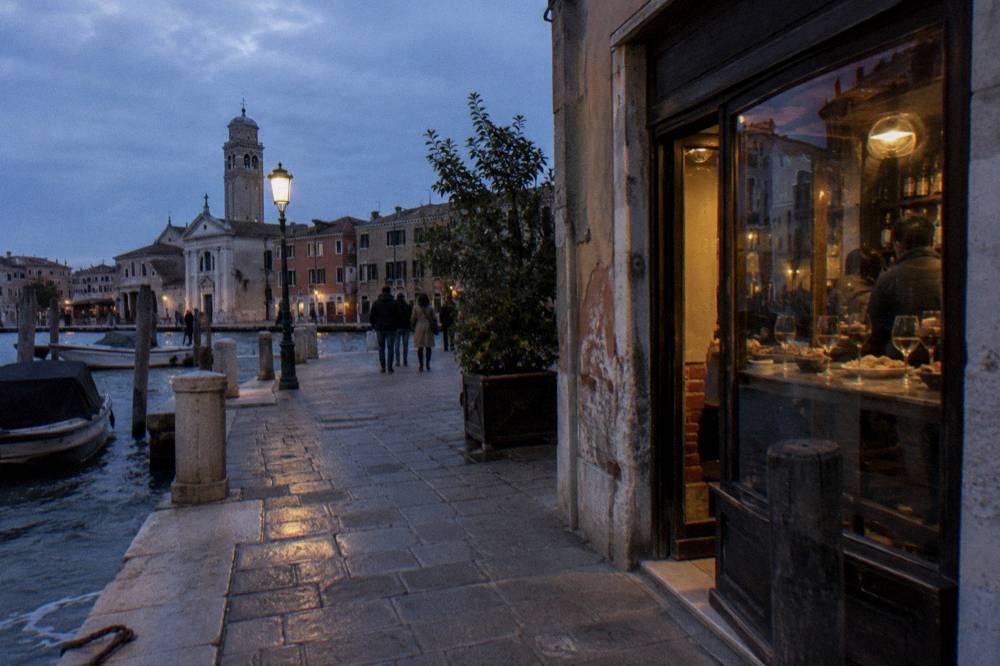
One habit worth copying from locals: eat the season, not the checklist. A visitor chasing a July plate of moleche will be disappointed, while the same visitor in late October may find them everywhere. Every dish this guide names has a natural moment, and a guide or bar owner will tell you honestly what is good right now, which is the single best argument for booking at least one guided walk early in your stay.
How Do Seasons Affect When To Book?
Book spring and autumn walks early, typically several weeks ahead, because the seasonal windows concentrate demand into short periods; winter walks are easier to book near the time; and any market walk should be scheduled Tuesday to Saturday, mornings, to match the official market hours. The day of the week matters as much as the month.
Spring around the Easter holidays and autumn weekends are the pressure points. When castraure or moleche are in, the walks that serve them fill, and the small-group formats fill first. If your dates are fixed around a holiday week, lock in the market walk first, then the evening crawl, then anything else. Prices and inclusions for each option are on the operator's live listing, and several listings carry free cancellation, which makes early booking low risk.
The weekday logic is simpler but easy to get wrong. The fish market is closed Sunday and Monday, the produce market closed Sunday, and both close early or empty by afternoon. A Monday arrival means your first full market day is Tuesday; plan the market walk for that morning and keep the evening crawl for the arrival night. Meeting points for the walks compared here are given on each booking page, and the guide to meeting points and what to bring covers the practical side.
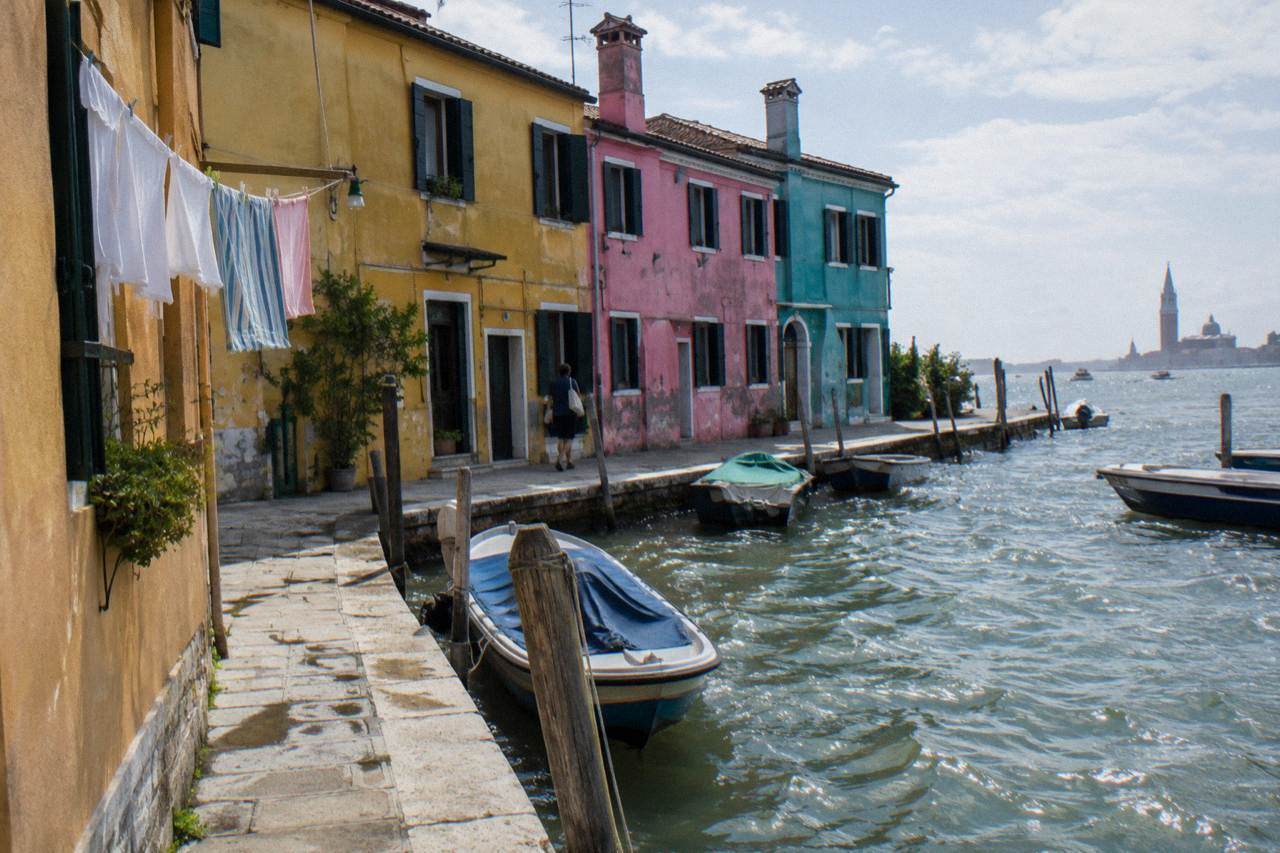
The last practical layer is transport to the seasonal sources themselves. If castraure send you toward Sant'Erasmo or a lagoon day calls, ACTV vaporetti are the way: a single 75-minute ticket is reported at EUR 9.50 and a 24-hour pass at EUR 25, per the official operator page, and line 12 runs from Fondamente Nove toward Murano and Burano. The Burano and Murano day trip with food stops covers the island food side, including the bussolà biscuits that are Burano's own year-round tradition.
Whatever month you choose, the underlying rule of Venice Food Tours is that the lagoon sets the menu. Book the walk that meets the season where it stands, on the right day of the week, and the counters do the rest.
Common Questions About Venice Seasonal Food
What Tastes Best In Venice In Spring?
Spring, typically April into early June, brings castraure artichokes from Sant'Erasmo and white asparagus from the Veneto, plus the first herbs and soft greens of the year. The castraure harvest is a brief spring window, and the small violet buds are the first cut of the plant, which is why cooks treat them as a delicacy. Exact timing shifts with the weather, so check with the venue or your guide's listing for the week you travel.
When Can You Eat Moleche In Venice?
Moleche, the soft-shell green crabs, appear in brief windows that typically fall in autumn, with a second shorter phase at other points in the year when the crabs shed their shells. The timing moves with water temperature, so no guide can promise them on a given day. Travel in October or November, ask at the fish market or your guide, and be ready to order them the moment they appear.
Is The Rialto Market Open All Year?
Yes, with fixed days. The produce market runs Monday to Saturday from 7:00 to 20:00, and the fish market Tuesday to Saturday from 7:00 to 14:00, both closed Sunday. Tour listings warn the fish market also closes on Italian holidays. What changes through the year is the contents, from spring island vegetables to autumn radicchio and the day's lagoon catch.
What Should You Eat In Venice In Winter?
Winter counters lean on baccalà mantecato whipped with oil on polenta, sarde in saor, grilled radicchio, and warm fried cicchetti. Fritole, the Carnival fritters, appear in the weeks before Lent. It is also the quietest season at the bacaro counter, with reported cicchetti prices around EUR 1.50 to 4 a piece and an ombra around EUR 1 to 2.50 in local spots.
Does The Season Change What A Food Tour Serves?
Yes, and it is the main reason to match your booking to the calendar. Market walks peak in spring and autumn when the stalls carry the seasonal specialities, evening cicchetti crawls are richest from autumn through winter, and market-plus-cooking classes shine in spring. Book spring and autumn walks several weeks ahead, and schedule any market walk for Tuesday to Saturday mornings.
Is There An Access Fee To Visit Venice?
No. The 2026 access fee trial ended and, per the official page, from 27 July 2026 no fee applies and visiting needs no payment or exemption. The fee returns in 2027, with dates listed on the official portal and amounts not yet published. Check the official page if your trip falls in 2027.