Tipping, Coperto And Restaurant Etiquette In Venice
Tipping in Venice is optional, the coperto is a legal line on the bill, and standing at the bar changes what you pay. Here is what the rules actually say, and how they shape a dinner or a food walk.
Short answer
Tipping in Venice is not mandatory: at a bacaro counter it is virtually never expected, and at a restaurant rounding up or leaving about five percent for good service is appreciated. Coperto, the bread and cover charge, is a legal charge commonly reported at EUR 1 to 5 per person, and it is separate from any service charge.
A bill in Venice can carry three lines that confuse visitors: a coperto, a servizio, and a price per person for bread that nobody ordered. None of them is a scam. The coperto is a legal, disclosed charge, the servizio is a stated service charge, and the price of standing at a bar versus sitting at a table is one of the oldest and most rational distinctions in the city. This guide separates what the rules say from what habit expects, from the bacaro counter to the full restaurant table, and covers where a tour guide fits into all of it. The short version: tipping is genuinely optional here, the cover charge is not, and knowing which is which makes every meal simpler.
Everything price-related below is reported from official and current sources: the municipal regulation on public drinking, the official access-fee page, and the typical standing-bar price ranges confirmed on the official Venice visitor site. Where something varies by venue, that is stated plainly, because in Venice the honest answer to most etiquette questions is "look at the menu first." That principle runs through everything published on Venice Food Tours, from market guides to dish histories.
Is Tipping Actually Expected In Venice?
No, tipping in Venice is not mandatory and never has been, and at a standing bacaro counter it is virtually never expected. At a sit-down restaurant, rounding the bill up or leaving roughly five percent for good service is appreciated but remains a choice, not a requirement. Italian service staff are paid a wage rather than working for tips, so nothing on the bill assumes a gratuity.
That cultural base matters, because it changes what a tip means here. In Venice a gratuity is a thank you, not a wage top-up. Nobody will chase you for leaving coins on the table, and nobody will note your absence of a tip either. What locals do is simple: at a bar or bacaro, nothing beyond the stated price, or perhaps the small change rounded up; at a restaurant, a few euros left in cash or a small amount added when paying by card, when the meal deserved it.
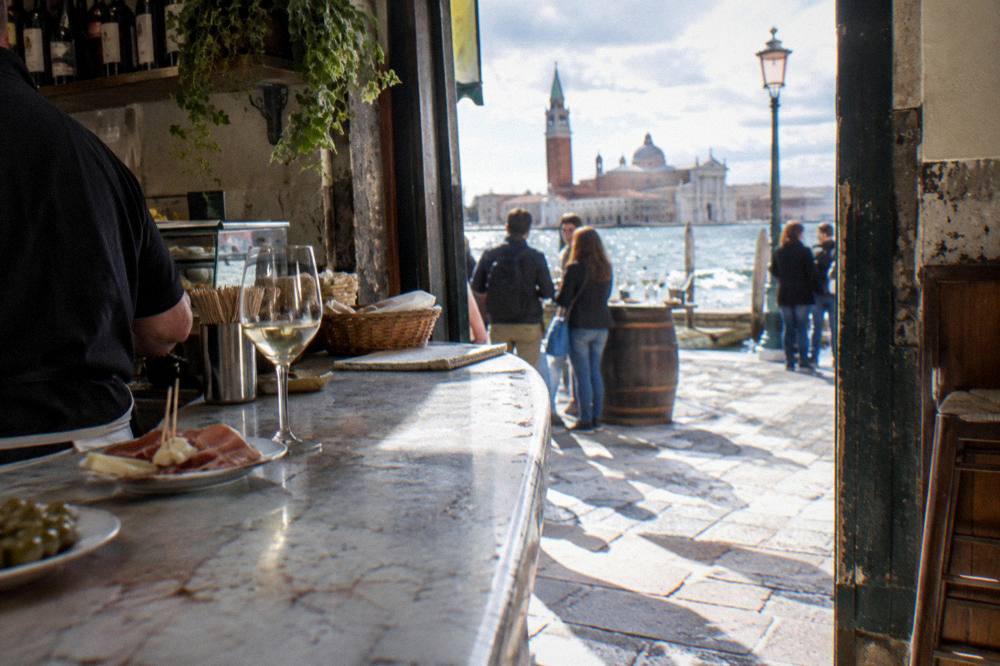
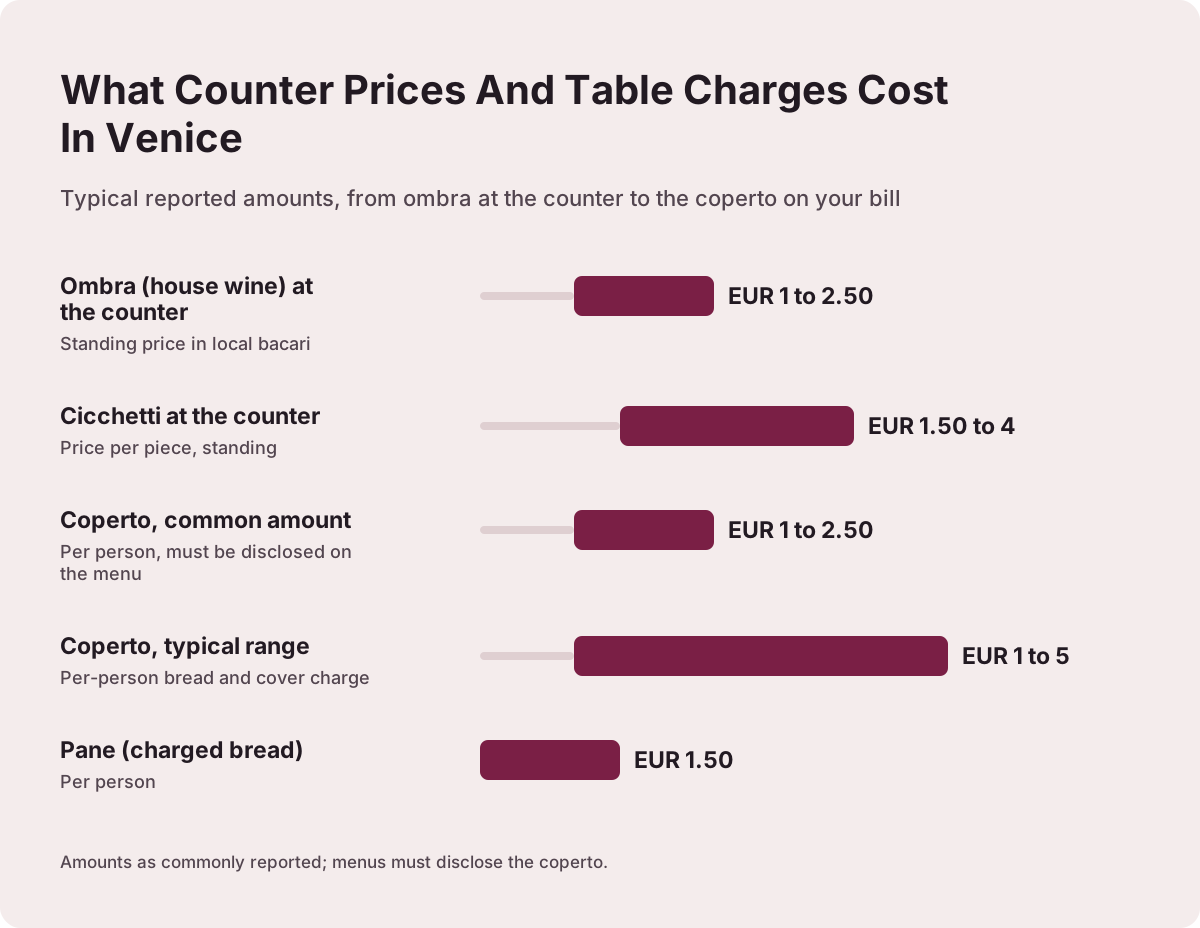
The distinction between standing and sitting runs through every money question in this city. At the counter of a bacaro, an ombra, the small roughly 100 ml glass of house wine, is reported at around EUR 1 to 2.50 in local spots, and a piece of cicchetti runs about EUR 1.50 to 4. Tipping in that setting is close to unheard of. At a table, prices rise, a cover charge may appear, and a small gratuity becomes a reasonable gesture for attentive service. The bacari etiquette and wine ritual guide covers the standing culture in more depth.
One practical note: card terminals in Italy usually ask whether you want to add a tip before you insert your card, and the suggested amounts are often preset percentages higher than local custom. You can skip it and add nothing, or type a small round figure. Neither choice raises an eyebrow.
What Is Coperto And Why Is It On Your Bill?
The coperto is a per-person bread and cover charge that Italian law allows restaurants to apply, and in Venice it is commonly reported at EUR 1 to 5 per person, often EUR 1 to 2.50. It must be disclosed on the menu, it is not a tip, and it is separate from a servizio, the stated service charge that some restaurants add as a percentage instead.
The word causes more confusion than the amount ever justifies. Coperto literally means "covered": it covers the table setting, the bread, and the use of the table for the evening. It appears as a line per person, it applies to children in many places, and it is legal when printed on the menu. If you never saw a menu, ask for one, because the disclosure is the requirement. A charge that was never disclosed anywhere is a different matter, and the honest response is to query it calmly at the table rather than assume bad faith at a named venue.
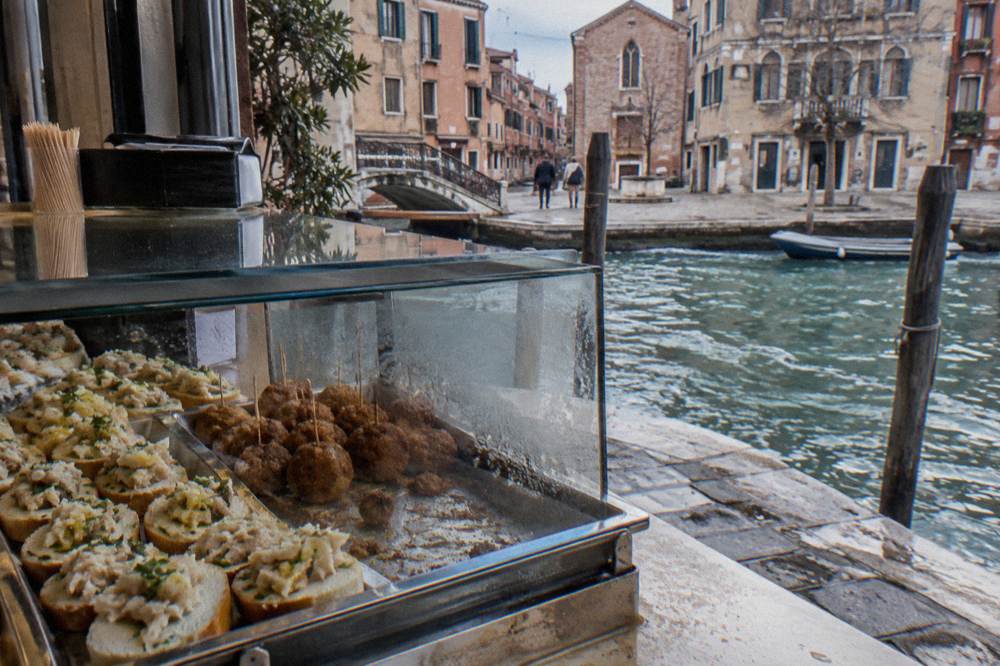
The practical alternative is the standing counter, and it is not a loophole, it is the local system. At a bacaro counter there is no table to cover and typically no coperto at all, which is part of why the same glass of wine costs less there. The guide to what cicchetti is and how to order it walks through that ordering ritual.
| Charge | What it is | Typical reported amount | Is it a tip? |
|---|---|---|---|
| Coperto | Per-person bread and cover charge, must be on the menu | EUR 1 to 5, often EUR 1 to 2.50 | No |
| Servizio | Stated service charge, sometimes a percentage | Varies by venue, check the menu | No |
| Ombra at the counter | Small glass of house wine, standing | Around EUR 1 to 2.50 | Price, not a charge |
| Cicchetti at the counter | Single piece, standing | About EUR 1.50 to 4 | Price, not a charge |
| Gratuity | Optional, for good sit-down service | Round up or roughly five percent | Yes, and optional |
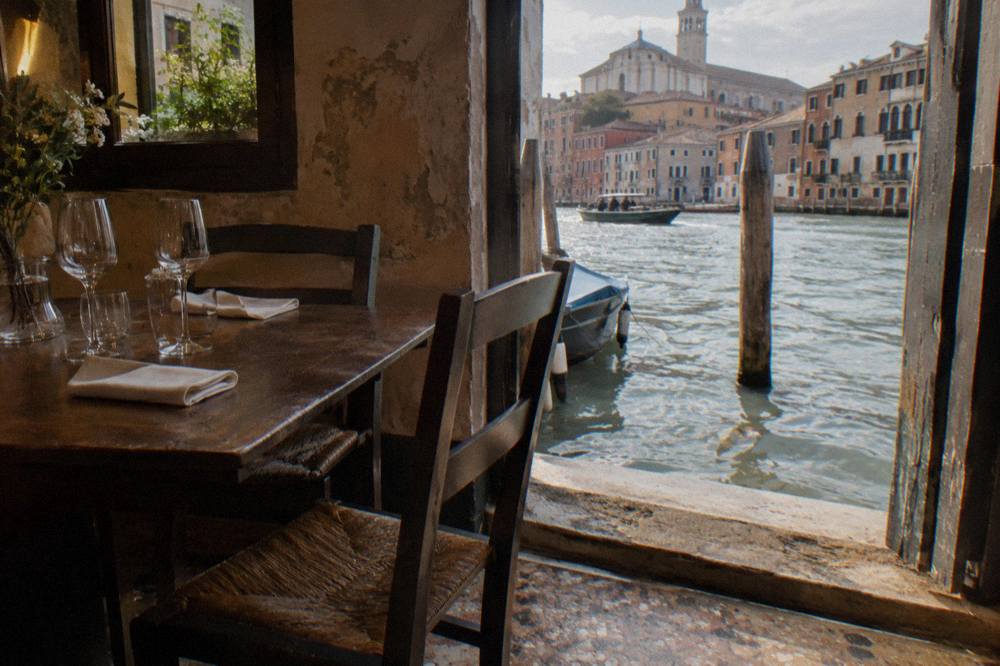
If a food walk is on your itinerary, most of these questions dissolve before dinner, because the tasting stops are prearranged. The selection below shows three walks that handle the counters, the ordering and the wine for you.
Does Standing At The Bar Really Cost Less Than A Table?
Yes, and the difference is structural, not a tourist trick. Standing at a bacaro counter you pay the posted counter price, commonly EUR 1 to 2.50 for an ombra and EUR 1.50 to 4 for cicchetti, with no coperto and no expectation of a tip. At a table, prices per item are higher, a cover charge may apply, and service expectations change with the seat.
Italian bars have priced this way for generations. The table costs money to maintain, staff to serve, and time to occupy, so the menu, or a board above the bar, often lists two tariffs: al banco and al tavolo. In a classic bacaro the table option may barely exist, which is itself the answer. In a café around St Mark's, the gap between sipping an espresso at the counter and sitting on a terrace can be a multiple, and every menu in the city discloses which tariff applies where. Read the small board before you sit, and the surprise disappears.
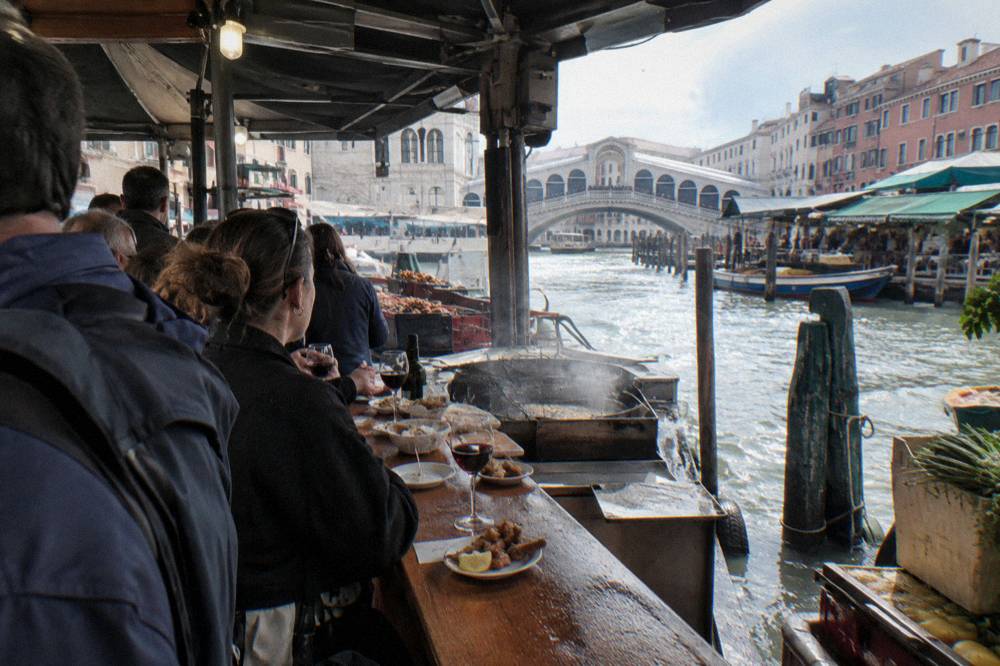
The sunset hours are when the standing culture is at its best, and a guided evening walk turns it into an event rather than a puzzle. The sunset cicchetti and wine tasting walk moves through bacari at aperitivo time, with tastings and drinks arranged in advance; the exact inclusions and price are on the operator's listing. It is also the format where etiquette questions come up least: the guide orders, the counter is part of the route, and nobody at the bar expects a gratuity from anyone.
A sunset walk solves the ordering; a longer sit-down evening solves the dinner. If your question is which format fits your trip, the comparison of evening food walk options breaks down the trade-offs.
How Do You Order And Pay Like A Local?
Locals order at the counter, pay when or shortly after they order, keep the receipt, and take their glass wherever the group is standing. The ritual is fast, cash-friendly and unceremonious: point at the cicchetti you want, take the ombra that comes with it, and hold onto the scontrino, the printed receipt, because leaving with it can technically matter.
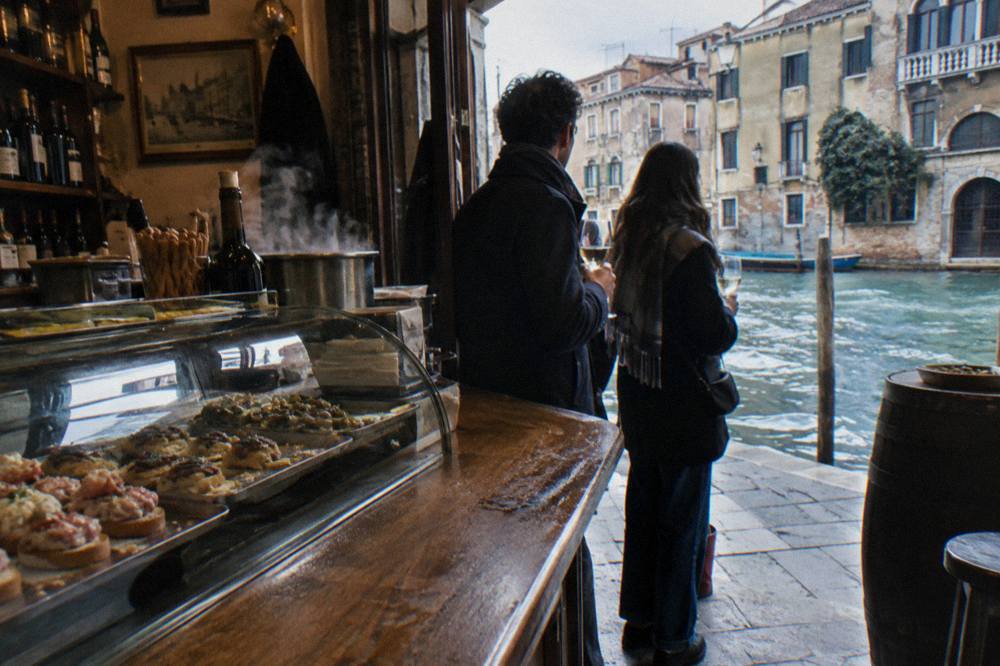
The receipt is a small thing worth a paragraph. Italian law requires businesses to issue a receipt and, historically, required customers to keep it until a short distance from the premises. Enforcement on visitors is effectively nil, but the habit explains why you will see locals pocketing small slips of paper all evening. It also settles arguments: if you think a charge looks wrong, the scontrino lists every line, including the coperto, item by item.
| Situation | What locals do | What to avoid |
|---|---|---|
| At the bacaro counter | Order verbally, pay up front or on leaving, no tip | Sitting at a table uninvited and expecting counter prices |
| At a café bar | Espresso standing at the counter, receipt kept | Sitting on a terrace and expecting the counter tariff |
| At a restaurant | Check menu for coperto or servizio first, round up if pleased | Stiffing on a bill you never questioned at the table |
| With a street snack | Eat near where you bought it, use bins | Walking into a church or shop mid-snack |
| Paying by card | Accept or decline the tip prompt calmly | Feeling pressured by preset percentages |
This is exactly the territory where a guided walk earns its price. The Eat Like a Local small-group tasting walk is built around the counter ritual: the guide handles the ordering in each stop, the tastings and drinks are included as stated on the listing, and the pace is set around the standing culture rather than fighting it. For anyone who finds the etiquette in this article more stressful than charming, three hours of someone else doing the ordering is a genuine relief, and the group format keeps it conversational.
Should You Tip A Food Tour Guide?
Guided food walks are the one place where a gratuity has become customary for good service, even though it stays optional. If a guide was knowledgeable, kept the group moving and chose stops you would never have found, rounding up a few euros per person is a normal thank you. For a short standing walk nothing is expected, and no operator lists a tip as included.
The economics differ from a restaurant. Tour guides across Italy work for a wage or a per-tour fee, but the guided-walk culture has absorbed a soft tipping expectation, especially in small groups where the guide has spent hours answering questions. There is no posted rate and no pressure. A reasonable approach: nothing for a mediocre walk, a couple of euros per person for a good one, more for an exceptional private guide who reshaped your trip. Cash in hand at the end is still the smoothest way.
The bacaro walk with a Venetian host runs three and a half hours, long enough that a guide's pacing and stop choices genuinely shape the evening. Inclusions and the current price are on the operator's listing; what a guest review consistently rewards is the feeling of being handed the keys to the standing-bar culture for a night.
A market morning works differently again: the Rialto fish market runs Tuesday to Saturday, 7:00 to 14:00, closed Sunday and Monday, so the day you pick changes what you see, and a lunchtime market walk pairs the visit with a meal. Timing, not tipping, is the etiquette question there.
What Are The Rules On Drinking In Public?
Venice bans drinking from glass, ceramic or comparable containers outside permitted seating areas, and bans takeaway sales of alcohol in glass for public consumption, with reported fines of EUR 25 to 500 under the municipal public-space regulation. In practice: your spritz stays at the bar's tables or standing area, and you drink from plastic where an outdoor vendor allows it.
The regulation, published by the Comune di Venezia, is the reason bacari hand you a plastic cup if you step away from the counter area, and it is enforced in the busiest squares. It is not an anti-drinking rule, it is an anti-glass rule: the city is walkable stone and canals, and broken glass is a permanent problem there. The practical etiquette that follows is easy: finish your ombra where you stood when you ordered it, which is what everyone does anyway, and check current rules on the municipal regulation page if your plans involve anything unusual.
While on official rules: the access-fee question comes up constantly, and the answer is current and clear. The 2026 trial ended on 27 July 2026, and as of that date no fee, payment or exemption is needed to visit Venice, per the official access-fee page. The fee returns in 2027 on listed dates between late March and mid-August, with amounts to be announced by 31 December 2026, so anyone traveling next year should re-check that page after the new year.
Service Charges, Receipts And Bill Confusions
A servizio is a stated percentage service charge, and when a restaurant applies one, an additional tip is genuinely not expected. The three confusions to avoid: mistaking coperto for a scam, tipping on top of a servizio out of guilt, and assuming the pane on the bill was free bread. Every one of these is answered by reading the menu before ordering and the receipt before paying.
Bread on the table is the classic trap, and it has a simple resolution: in most of Italy, bread on the table has been paid for, either as the coperto line or as a pane line per person. It is not a gift, and it is not dishonest, but a visitor who expected free bread can feel ambushed at the register. The menu discloses it, and the receipt itemizes it. When a servizio of, say, ten or fifteen percent appears, that is the service, and the standard local response is to add nothing further, or perhaps to round the total up as a courtesy.
| Bill line | Meaning | Do you add a tip on top? |
|---|---|---|
| Coperto EUR 2 (per person) | Bread and cover charge | Optional, small round-up if service was good |
| Servizio 10% | Service charge replacing a tip | No, not expected |
| Pane EUR 1.50 | Charged bread, per person | No |
| Coperto plus servizio | Some menus show both | Read the menu; query both at the table if undisclosed |
| No extras at all | Counter service or an all-inclusive menu | Nothing expected at a counter |
Splitting the bill is unremarkable in Venice, and most restaurants handle it without drama, though a card payment per couple is smoother than six separate cards. Asking for the bill is a hand gesture or a quiet "il conto, per favore": staff will never rush you, because lingering is part of the table you are paying to cover. That is the logic of the coperto in one sentence. You are renting the evening.
What Etiquette Mistakes Do Visitors Make In Venice?
The recurring mistakes are eating while walking through crowded calli, expecting table service at a bacaro counter, sitting at a café terrace and expecting counter prices, and treating the coperto as something to argue about after the meal. None of these is scandalous, but avoiding them changes how smoothly the whole day runs, from the first espresso to the last ombra.
Venice is a pedestrian city with narrow streets, and eating on the move is both awkward and, in the busiest areas, discouraged. The local pattern is to stop, stand, eat, and walk on: a tramezzino at the bar, a cicchetto at the counter, a fritto near the fryer. Dress codes barely exist outside a handful of formal hotel restaurants, and reservations matter more than attire, because kitchens are small and seatings are limited.
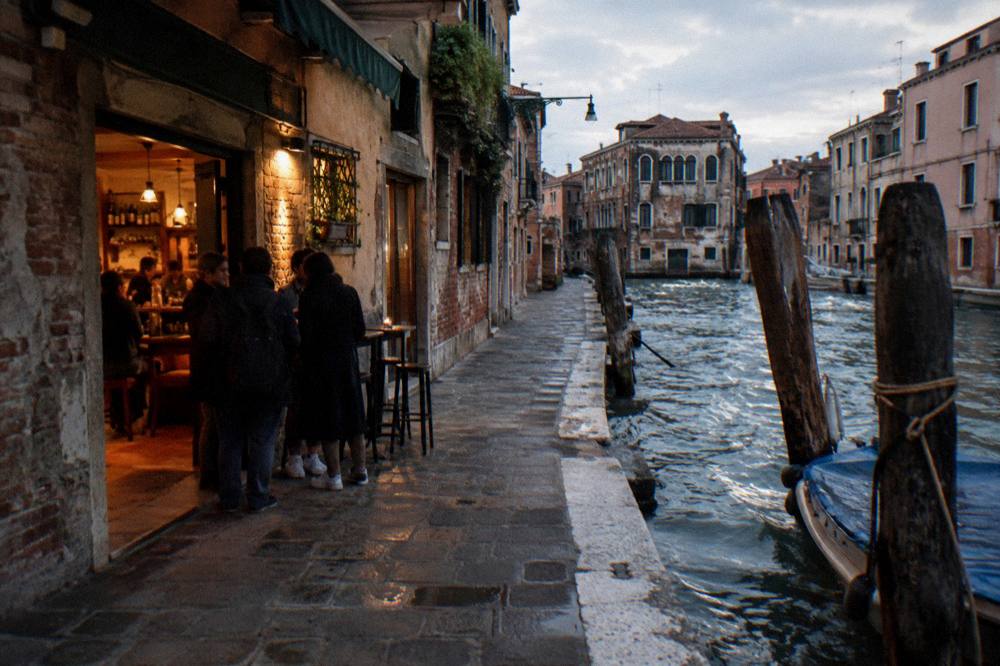
Hours are the other quiet etiquette rule. Dinner starts late by northern European habit, typically from around 19:30 onward with kitchens often closing their last orders well before midnight, and the blog piece on when Venice sits down to dinner covers the rhythm. Arriving at 18:00 hungry means finding a bacaro, not a restaurant, which is arguably the better outcome anyway.
For a first visit that wants the etiquette handled end to end, three walks stand out: the small-group local tasting walk, the three-and-a-half-hour bacaro crawl, and the sunset cicchetti route. Each takes the ordering, the counters and the wine ritual off your plate.
Common Questions About Tipping And Coperto In Venice
Is Tipping In Italy Legally Required?
No. Tipping is voluntary everywhere in Italy, including Venice. Service staff earn a wage, no bill assumes a gratuity, and at a standing bacaro counter a tip is virtually never expected. At a restaurant, rounding up or leaving about five percent for good service is appreciated but entirely your choice.
How Much Is Coperto In Venice?
Coperto is commonly reported at EUR 1 to 5 per person, often EUR 1 to 2.50. It must be disclosed on the menu, applies per person, and covers the table setting and bread. Standing at a bar counter usually avoids it.
Do You Tip On Top Of A Servizio Service Charge?
No, not expected. A servizio is a stated service charge, usually a percentage, that replaces the gratuity. If you received exceptional service you can still round the total up, but nobody will think twice if you do not.
Should You Tip A Food Tour Guide In Venice?
It is a soft custom rather than a rule. For a good guided walk, rounding up a few euros per person in cash is a normal thank you; for a short or mediocre walk, nothing is expected. No operator lists a tip as required.
Why Is Standing At The Bar Cheaper Than Sitting At A Table?
Italian bars price the service, not just the product. Standing at the counter you pay the posted counter price with no coperto, while a table carries higher per-item tariffs and possibly a cover charge. Menus and boards disclose which tariff applies where.
Can You Drink A Spritz While Walking In Venice?
Not in glass, and not outside permitted seating areas. The municipal regulation bans consuming drinks from glass or ceramic containers outside authorized areas, with reported fines of EUR 25 to 500. Drink at the bar's standing area or table, and take a plastic cup if a vendor offers one.
The habit underneath all of these answers is the same: read the menu, keep the receipt, and tip as a thank you rather than a duty. Venice rewards visitors who slow down to the city's own pace, and the money questions answer themselves once you know which line on the bill is which.