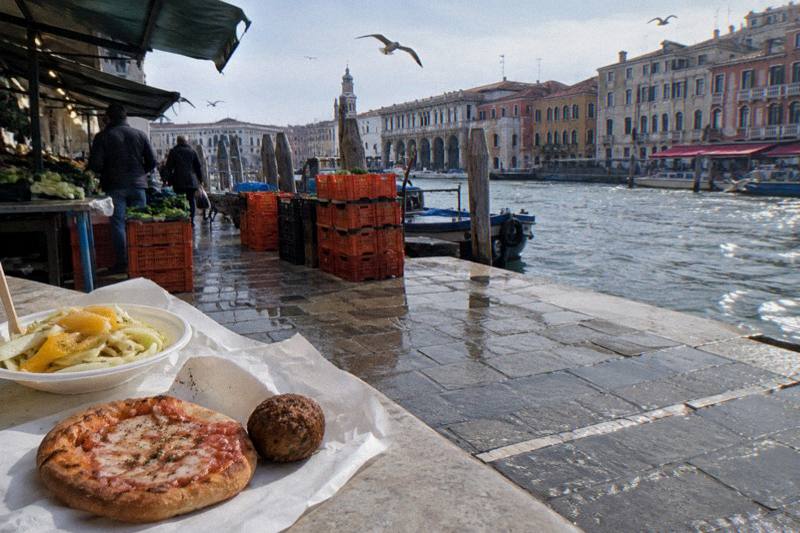
Spritz In Venice: Aperol, Select And The Local Way
The spritz was born in the Veneto, not in an advertising agency. Here is what the drink actually is, which bitter Venetians pour for themselves, and how to order one without standing out.
Short answer
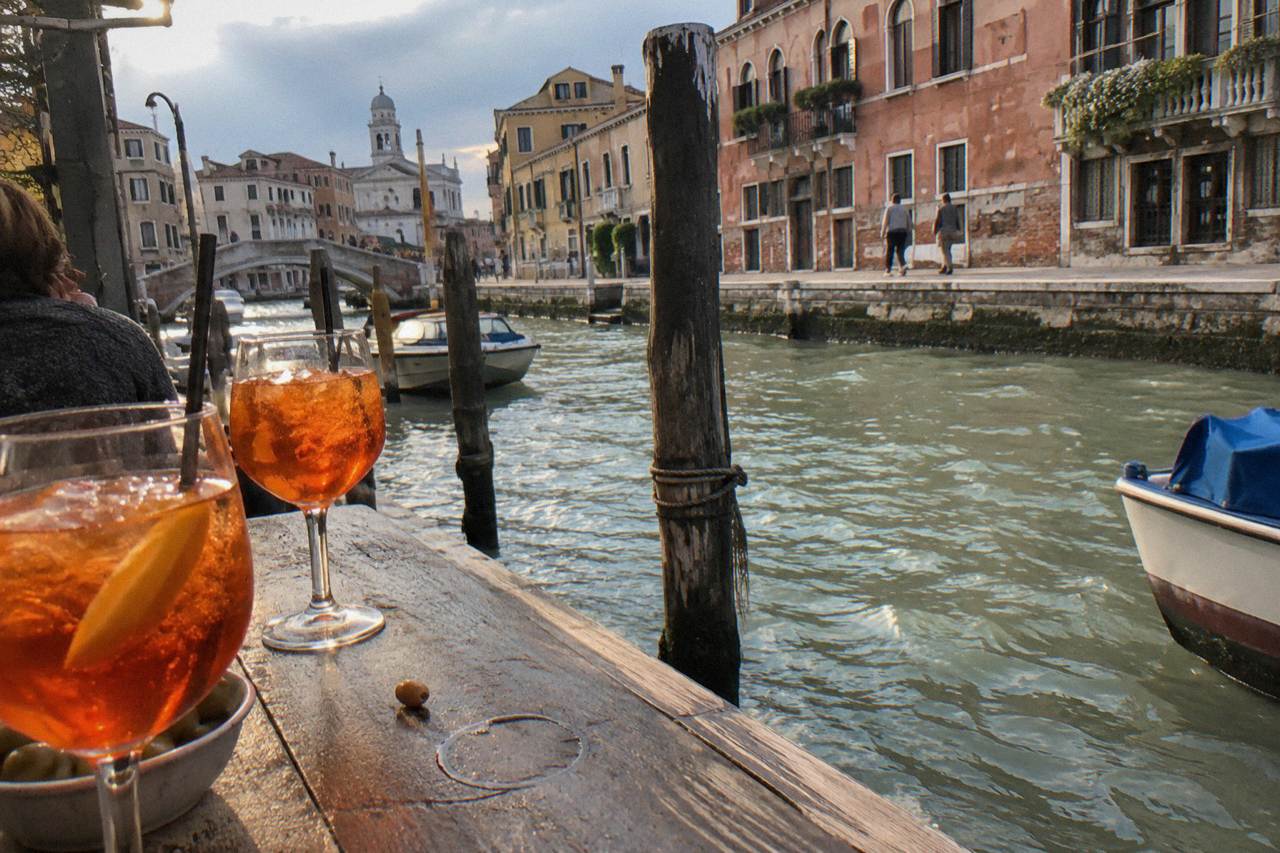
A Venetian spritz is prosecco, a bitter aperitivo and a splash of soda over ice, drunk standing at a bacaro counter in the early evening. Aperol is the famous name; Select is the local pour. An ombra, a small glass of house wine, runs around EUR 1 to 2.50 at local bacari, reported prices.
What Exactly Is A Spritz In Venice?
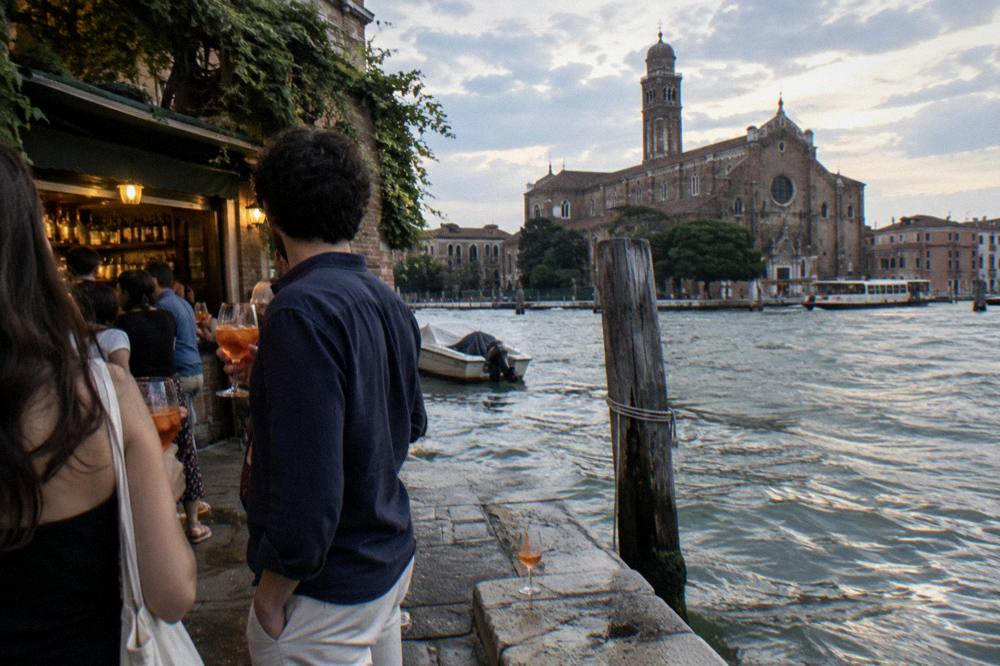
A spritz in Venice is a wine based aperitivo: roughly two parts prosecco, one part a bitter orange or herbal liqueur such as Aperol, Select or Campari, finished with a splash of soda and served over ice with a green olive. Venetians drink it in the early evening, standing at a bacaro counter, usually with a cicchetto in the other hand. It is an aperitivo, not a cocktail for sipping all night.
The drink's logic is straightforward. Northern Italian wine, at least the everyday stuff poured by the glass, was historically thin and dry, so drinkers softened it. The habit of diluting wine with water or a bitter liqueur predates every brand that now claims the spritz, and the word itself is tied to the Austrian soldiers of the Habsburg era who supposedly "splashed" (spritzen) soda into their Veneto wine. Whatever the exact origin, the template stuck: sparkling wine, bitterness, bubbles, ice.
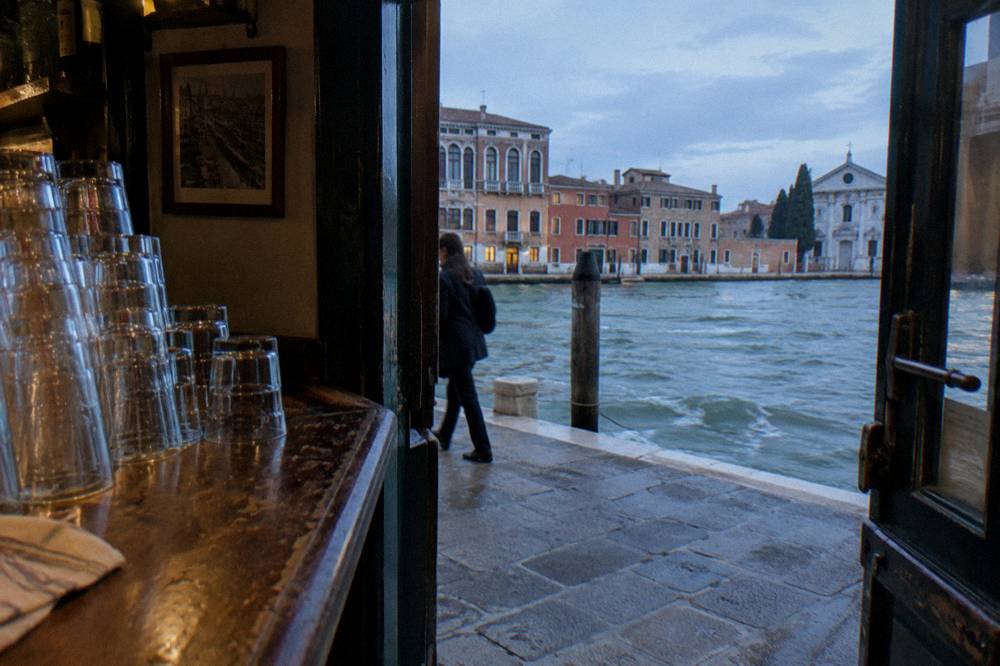
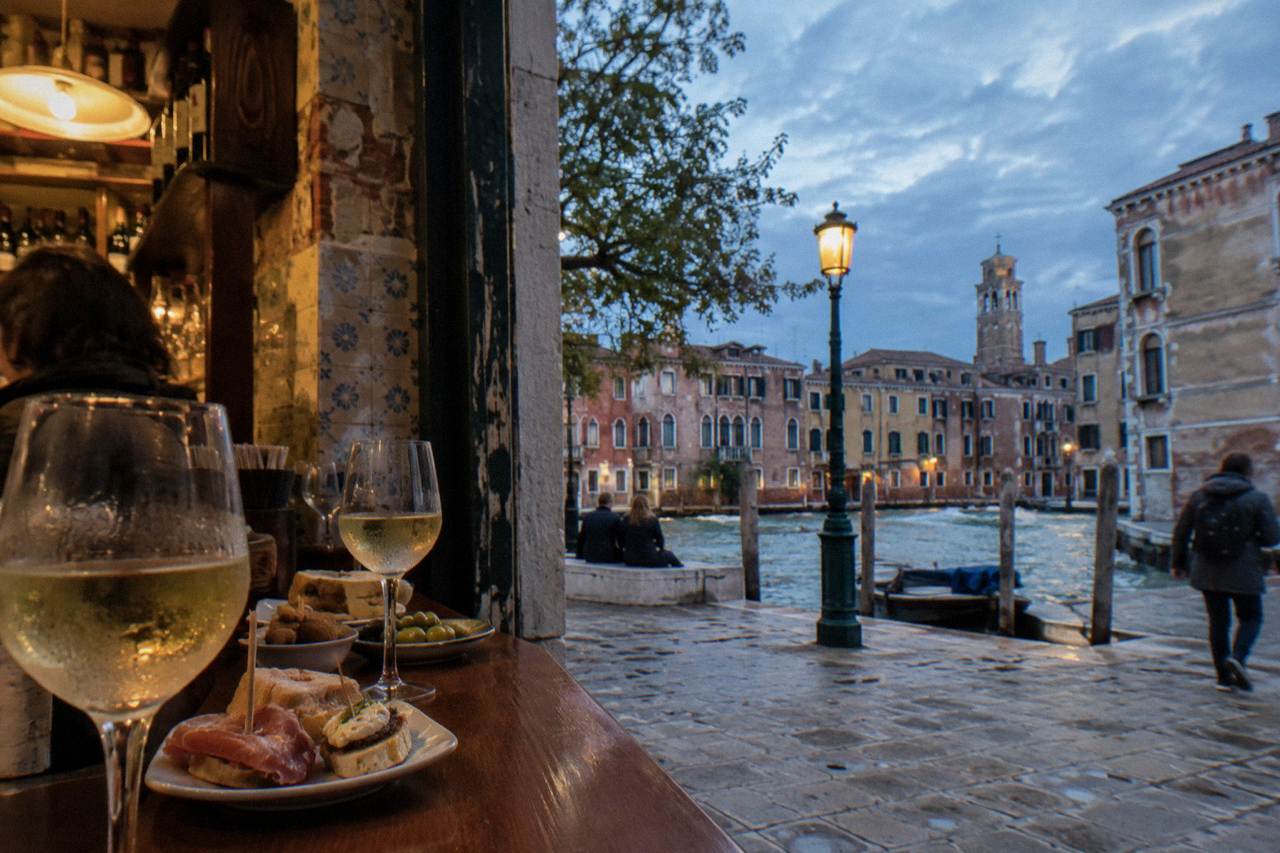
What separates the Venetian version from the bright orange drink photographed on every canal bridge is context. In a bacaro, the spritz is one option on a short list that also includes an ombra, a small pour of house wine, and maybe a Campari or Select version of the same formula. The glass is modest. The pace is quick. The point is to open the appetite and the conversation before dinner, not to work through a dessert sweetened cordial.
A few practical notes before the details. Groups on guided walks in the historic centre are capped at 25 people, as reported, and loudspeakers are banned, so guides use headsets. And the day visitor access fee that ran on 60 dates in spring and summer 2026 ended: as of 27 July 2026 no fee applies and no booking is needed, per the official access fee page, though it returns in 2027 with amounts still unpublished. None of that changes how you order a drink, but it clears the paperwork out of the way.
Where Did The Spritz Actually Come From?
The spritz belongs to the Veneto, and its roots are older than every brand now attached to it. The habit of diluting local wine is usually traced to Austrian soldiers stationed in the region, who reportedly found the wines too dry and splashed water into them. Bitter liqueurs, soda and prosecco came later, and Venice's bacari turned the result into the standing aperitivo that locals still drink today.
The story usually told is that Habsburg era troops, used to beer and sweeter drinks, found Veneto wine austere and cut it with a spritz of water. From there the drink evolved in stages: still water became sparkling, the water gave way partly to white wine, and bitter aperitivi, Aperol, Campari, later Select, replaced plain dilution with flavor. Aperol and Select are both products of Padua's long aperitivo culture, a short train ride from Venice. The prosecco based formula that the world now recognizes crystallized in the decades after the Second World War.
Venice's specific contribution is the setting. The bacaro, a small standing wine bar serving cicchetti, gave the spritz a home that was social, cheap and fast. You did not sit. You did not linger over a menu. You took an ombra or a spritz, ate whatever was on the counter, and moved on. That rhythm survives in the bars away from the main tourist arteries, even as the drink's fame has pulled it onto every terrace with a view.
The lesson for a visitor is that the "correct" spritz is less about proportions and more about time and place. The aperitivo hour in Venice runs late afternoon into early evening; locals typically eat dinner later, as covered in our piece on Venetian dinner timing and habits. The spritz is the bridge. If you are drinking one at 11 a.m. on a vaporetto, you have not discovered the local way, you have invented a new one.
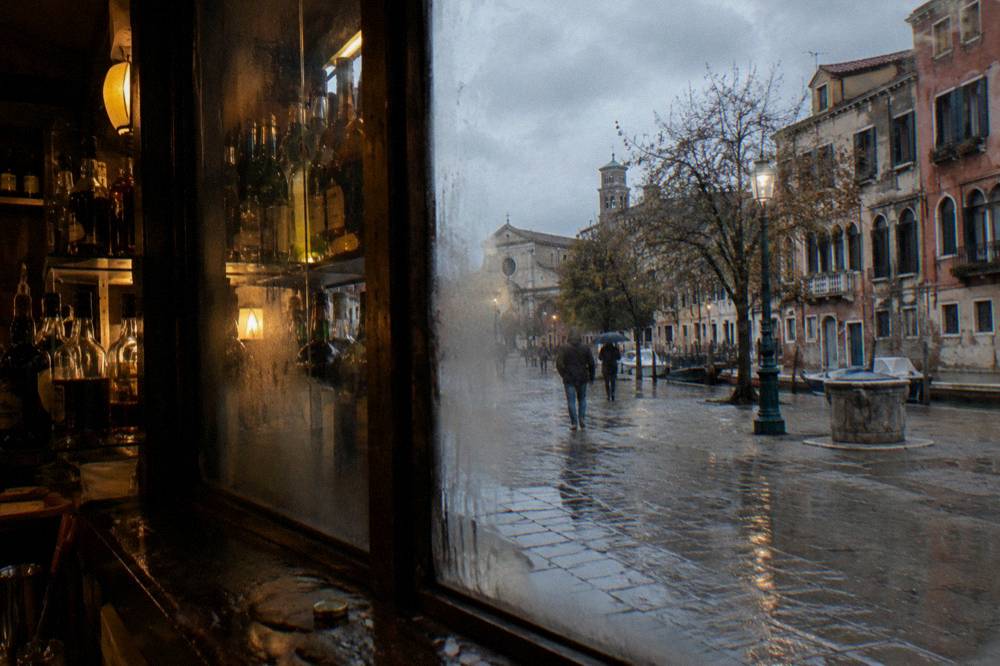
Aperol, Select Or Campari: Which Bitter Do Locals Pour?
Aperol is the name the world knows, but Select is the bitter many Venetians pour for themselves. Select, also born in Padua, is drier and more herbal than Aperol, which is sweeter, lighter and lower in alcohol. Campari sits furthest out: darker, more bitter, for drinkers who want the drink to bite. None is wrong; the local test is simply whether the spritz is balanced rather than sweet.
Comparing the three is the fastest way to understand what you are ordering. Aperol gives an approachable, orange forward drink that photographs well and needs no acquiring taste. Select, in its slim bottle, is the one you see behind local counters and in the hands of Venetians at the end of the workday; its bitterness reads closer to a proper aperitivo, something that actually stimulates appetite. Campari produces the sharpest, most adult version of the drink, ruby rather than orange, loved by some and too aggressive for casual sippers.
| Bitter | Origin | Character | Who It Suits |
|---|---|---|---|
| Aperol | Padua | Sweet, orange, low bitterness, lighter in alcohol | First time drinkers, sweet palates |
| Select | Padua | Drier, herbal, more bitter than Aperol | Drinkers who want an authentic local pour |
| Campari | Milan | Intensely bitter, dark red | Confirmed bitter lovers |
The practical move in a bacaro is simple: look at what the people standing around you are drinking, and if in doubt ask for a Select spritz or "un spritz con Select." Bar staff will not treat it as a test. Many locals mix and match depending on mood, and plenty of Venetians skip the spritz entirely and take an ombra of house red or white instead, a habit covered in detail in our guide to bacari etiquette and the ombra tradition.
If you would rather have the aperitivo hour organized for you, a guided walk that builds spritz and ombra stops into a cicchetti crawl is the easiest route. The featured walk on this page, Taste Venice Like a Local: Food, Wine & Spritz, runs about 2.5 hours and is built around exactly this rhythm; you can check availability on the operator's listing, and read more in our overview of which Venice tasting walk to book.
How To Order A Spritz At The Bacaro Like A Venetian
Order at the counter, in Italian, in one short phrase: "un spritz, per favore," or "un'ombra di rosso" for a small house red. Pay when prompted rather than running a tab. Drink standing at the counter or just outside the door, take the cicchetto offered with it, and finish the glass in the time it takes to talk, not the time it takes to photograph.
The mechanics of a bacaro are unfussy, and that is the point. There is usually no table service and no host; you approach the counter, order, and either pay immediately or when the staff totals your count. Cicchetti, the small snacks ranged along the counter, cost around EUR 1.50 to 4 a piece at standing bacari, reported prices confirmed on the official Visit Venice cicchetti page, and there is no fixed city tariff: posted lists apply, so read the board. If you want the full background on those snacks, our guide to what cicchetti are and how to order them covers the vocabulary.
Where you drink matters as much as what. Standing at the counter is the default and it has a small financial advantage: a coperto, the per person cover charge, typically EUR 1 to 4 where applied and disclosed on menus, is often avoided by standing rather than sitting. Sitting at a table on a terrace, by contrast, is a different product with a different price, and in the most tourist heavy spots it can multiply the cost of the same drink. Nobody will chase you off, but the Venetian default is vertical.
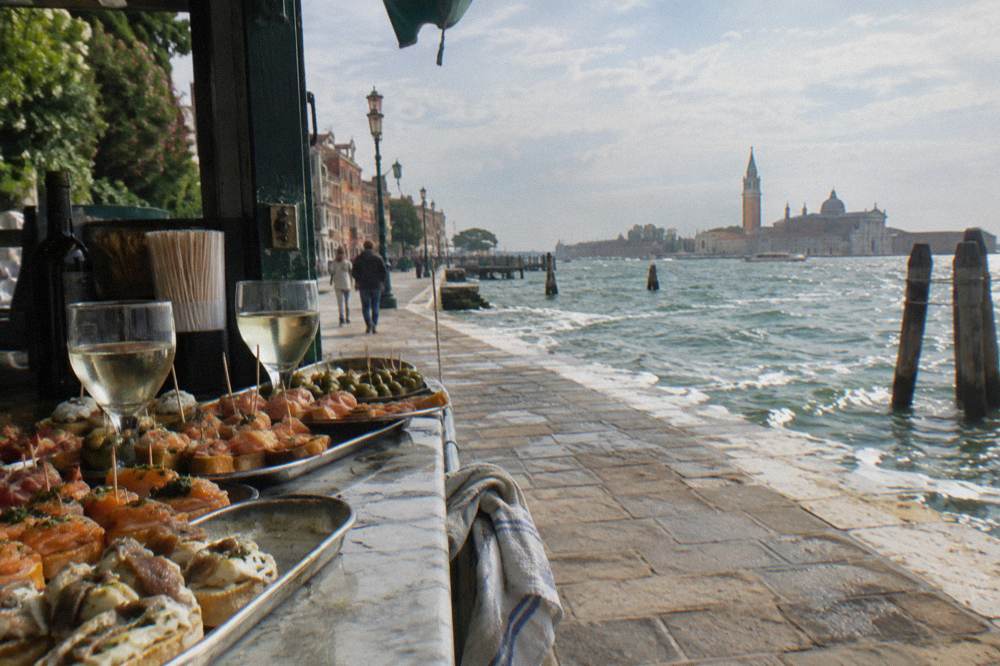
Timing is the last piece. The aperitivo window is late afternoon to early evening, roughly from when work ends until dinner begins, and our evening food walk guide covers how that hour unfolds across the city. Arrive at the same moment as the locals and you will find the bars full but moving; arrive at midday and you will mostly find other visitors. For the fuller tradition behind the drink itself, the deeper Venice wine tasting guide traces the path from the ombra to the cellar.
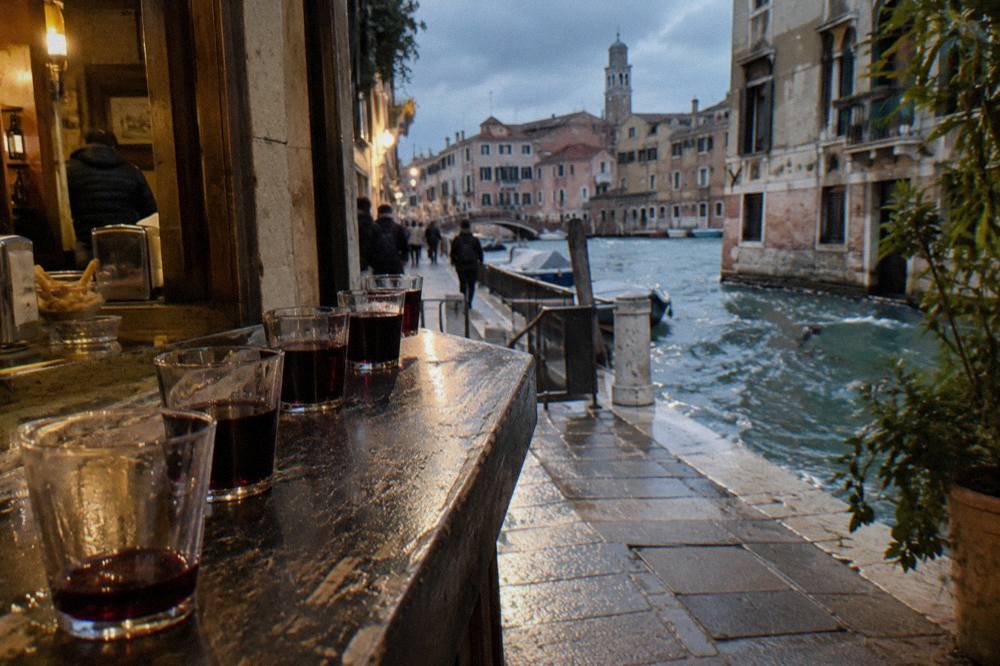
What A Spritz Or An Ombra Costs In Venice
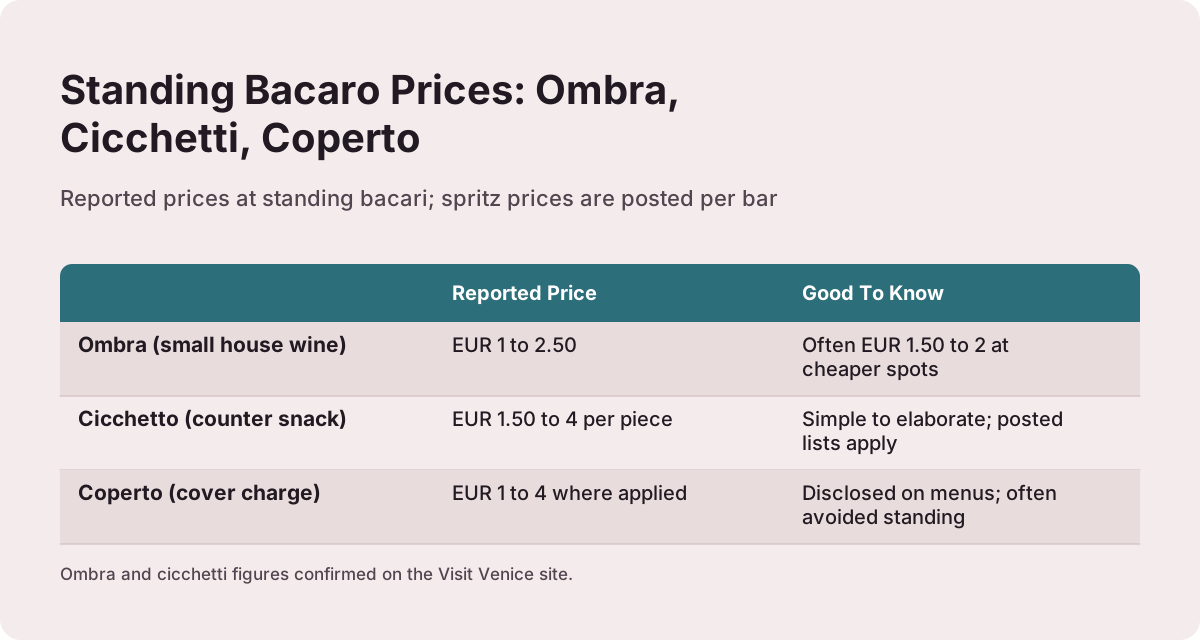
At a standing local bacaro, an ombra of house wine runs around EUR 1 to 2.50, reported, often EUR 1.50 to 2 at cheaper spots and more in tourist oriented bars. A spritz costs more than an ombra but there is no verified single figure for it in the official data; counters post their own prices, so the honest answer is to read the board before you order.
The cluster of verified price facts for Venice drinking is small but useful. Cicchetti run about EUR 1.50 to 4 per piece, confirmed on the Visit Venice site. The ombra range above comes from the same source. A coperto of roughly EUR 1 to 4 per person may apply where you sit, and tipping is optional: rounding up or leaving something for exceptional service is appreciated, and virtually nothing is expected when standing for cicchetti. These are planning ranges, not promises; check the posted list in each bar.
What the money buys changes with the setting. At the counter you are paying for the drink. At a canal side table you are paying for the chair and the view, and the gap between the two is the real price decision in Venice. The cheap seat is not a compromise; it is how the city's own residents drink. If you are building a full budget for the trip, our guide to what a Venice food walk costs breaks down what guided experiences charge and include.
| Item At A Standing Bacaro | Reported Price | Notes |
|---|---|---|
| Ombra (small house wine) | EUR 1 to 2.50 | Often EUR 1.50 to 2 at local spots, higher in tourist bars |
| Cicchetto (counter snack) | EUR 1.50 to 4 per piece | Simple to elaborate; posted lists apply |
| Coperto (cover charge) | EUR 1 to 4 where applied | Disclosed on menus; often avoided standing |
| Spritz | No verified single figure | Read the posted price in each bar |
The Glass Rule And Other Drinking Rules To Know
Venice bans drinking from glass, ceramic or non single use containers outside permitted outdoor seating areas, and bans takeaway sales of alcohol in untapped glass bottles or glass glasses, a standing municipal regulation with fines reported at EUR 25 to 500. In practice: take your spritz at the counter or at the bar's own tables, not walking down the street with the glass.
The rule exists for an obvious reason. A city of stone alleys and canal edges, packed with visitors carrying breakables, has an interest in keeping glass inside establishments. The regulation, published by the municipality on comune.venezia.it, is reported as current, and as with any municipal rule it is worth checking for changes before your trip. Enforcement at a bacaro door is rarely dramatic; the staff will simply point you back inside.
Beyond the glass rule, the local customs are gentle rather than legal. Do not block bridge crossings with a group and drinks. Do not expect a bar to serve a full meal at aperitivo hour; cicchetti are the food. Keep your voice at the level of the room, which in a small bacaro means low. And settle up when the staff indicate, since the count is often kept mentally rather than on a printed ticket. None of this is policed, all of it is noticed. For the wider picture on visitor conduct, our roundup of the do's and don'ts in Venice covers the ground.
One scheduling note belongs here too, since it affects bar mornings rather than evenings. The Rialto produce market runs Monday to Saturday from 7:00 to 20:00 and the fish market Tuesday to Saturday from 7:00 to 14:00, per the official Venezia Unica figures, and both are closed on the days stated. Tour listings warn the fish market also closes on Italian holidays. If your day pairs a market walk with an evening spritz crawl, plan the two halves around those hours.
Spritz As Part Of A Guided Evening
A guided evening walk pairs the spritz with what it was always meant to accompany: cicchetti, ombra and a route through bacari you would not find alone. Walks run roughly 2 to 3.5 hours depending on the operator, meet in central Venice, and include the drinks and snacks listed on each booking page. For aperitivo curious visitors, a crawl that includes spritz is the format that most often gets booked from this page.
The guided format solves three problems at once. It decides the stops, which removes the risk of landing in a tourist trap on your first night. It explains what you are drinking, from Select to the ombra tradition. And it converts a solo activity into a social one, which suits the spirit of the aperitivo hour better than a table for one. Among the walks compared here, Venice: Cicchetti Walking Tour with 10 Tastings & Wine runs a brisk 2 hours built around the crawl rhythm, while Venice Bacaro Food Tour: Eat and Drink like a Venetian stretches to 3 hours 30 minutes for a slower, fuller evening; prices and inclusions are on each operator's live listing.
| Guided Walk Format | Length | What It Suits |
|---|---|---|
| Cicchetti walk with 10 tastings and wine | 2 hours | A fast first evening that covers the crawl basics |
| Taste Venice Like a Local: Food, Wine & Spritz | 2.5 hours | Spritz and ombra built into one guided route |
| Bacaro food tour, Eat and Drink like a Venetian | 3 hours 30 minutes | A slower, fuller evening with more stops |
| Evening food tour with sit-down dinner | 2 hours 30 minutes | Crawl plus a seated plate at the end |
For a different shape of evening entirely, Venice Evening Food Tour: Bites, Drinks & Sit-Down Dinner combines the standing crawl with a seated dinner at the end, 2 hours 30 minutes in total, which suits travelers who want both the bar culture and a proper plate. Aperitivo only, no food, is also possible: a prosecco and Italian wines tasting experience runs just 1 hour for those who want the drinking education without the walk. Check each listing for what is poured and what is eaten, since inclusions vary.
Dietary needs deserve one honest paragraph here. No listing in this category is described as vegetarian, vegan, gluten free or kosher unless its own description says so; where it does not say, the right move is to message the operator before booking rather than assume. Alcohol free options follow the same rule: ask, do not presume. The vegetarian and gluten free guide covers the wider city picture for restricted diets.
Whether a guided walk beats going alone depends mostly on confidence. Venice rewards wandering, and a visitor who reads posted prices, drinks at the counter and orders one short phrase in Italian can build their own aperitivo hour for the price of a few ombre. The walks earn their keep when you want interpretation, company or a guaranteed route through the standing bars before you know the city. Our comparison of a food walk versus a cooking class walks through that trade off in more depth.
Common Questions About The Spritz In Venice
What Is A Spritz In Venice?
A wine based aperitivo: roughly two parts prosecco, one part a bitter liqueur such as Aperol, Select or Campari, a splash of soda, served over ice with an olive. Venetians drink it standing at a bacaro counter in the late afternoon and early evening, usually alongside cicchetti.
Which Is More Local, Aperol Or Select?
Select is the pour many Venetians choose for themselves: drier and more herbal than Aperol, which is sweeter and lighter in alcohol. Both were born in Padua, the heartland of the Italian aperitivo. Neither choice will raise an eyebrow at the counter.
How Much Does A Drink Cost At A Bacaro?
An ombra of house wine runs around EUR 1 to 2.50 at local bacari, reported, and cicchetti cost about EUR 1.50 to 4 per piece. There is no verified single price for a spritz; each bar posts its own list, so read the board. A coperto of EUR 1 to 4 may apply if you sit.
Can You Walk Around Venice With A Spritz?
No. A municipal regulation bans drinking from glass, ceramic or non single use containers outside permitted outdoor seating areas, and bans takeaway alcohol sales in untapped glass bottles or glasses, with fines reported at EUR 25 to 500. Drink at the counter or at the bar's own tables.
What Time Is Aperitivo Hour In Venice?
Roughly late afternoon into early evening, the bridge between the working day and a later dinner. Bars are busiest at that window, fuller with locals than at midday, when you will mostly meet other visitors. Timing your first spritz to the local window is half the experience.
Is A Spritz Tour Worth It In Venice?
It depends on confidence. A guided crawl that includes spritz and ombra stops, such as Venice Food Tours featured tasting walks, removes the guesswork of finding standing bars and explains what you are drinking. Confident visitors can replicate the evening alone for the cost of a few glasses, at the reported counter prices above.