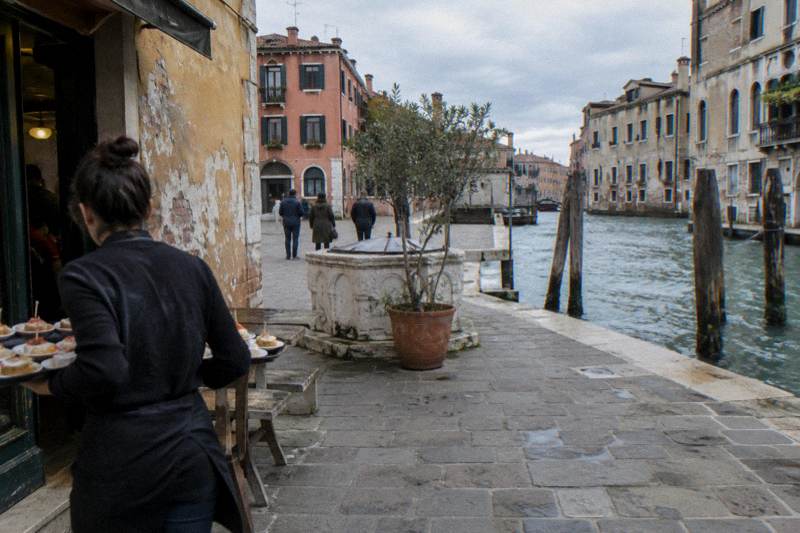
Best Time To Visit Venice For Food And Crowds
The season you pick decides which vegetables reach the Rialto stalls, whether the fish market is worth the early alarm, and how many people share your bacaro counter. Here is how the Venetian food year actually runs.
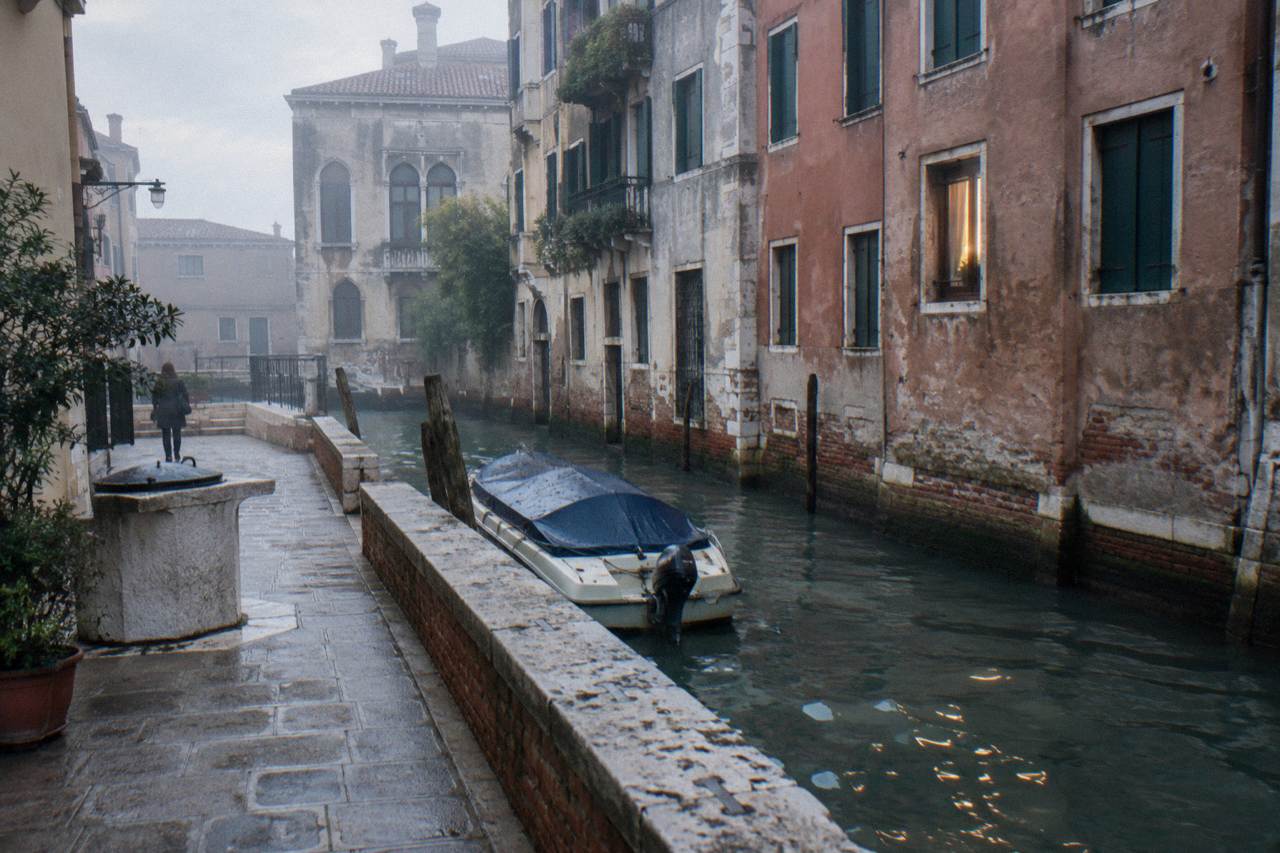
Short answer
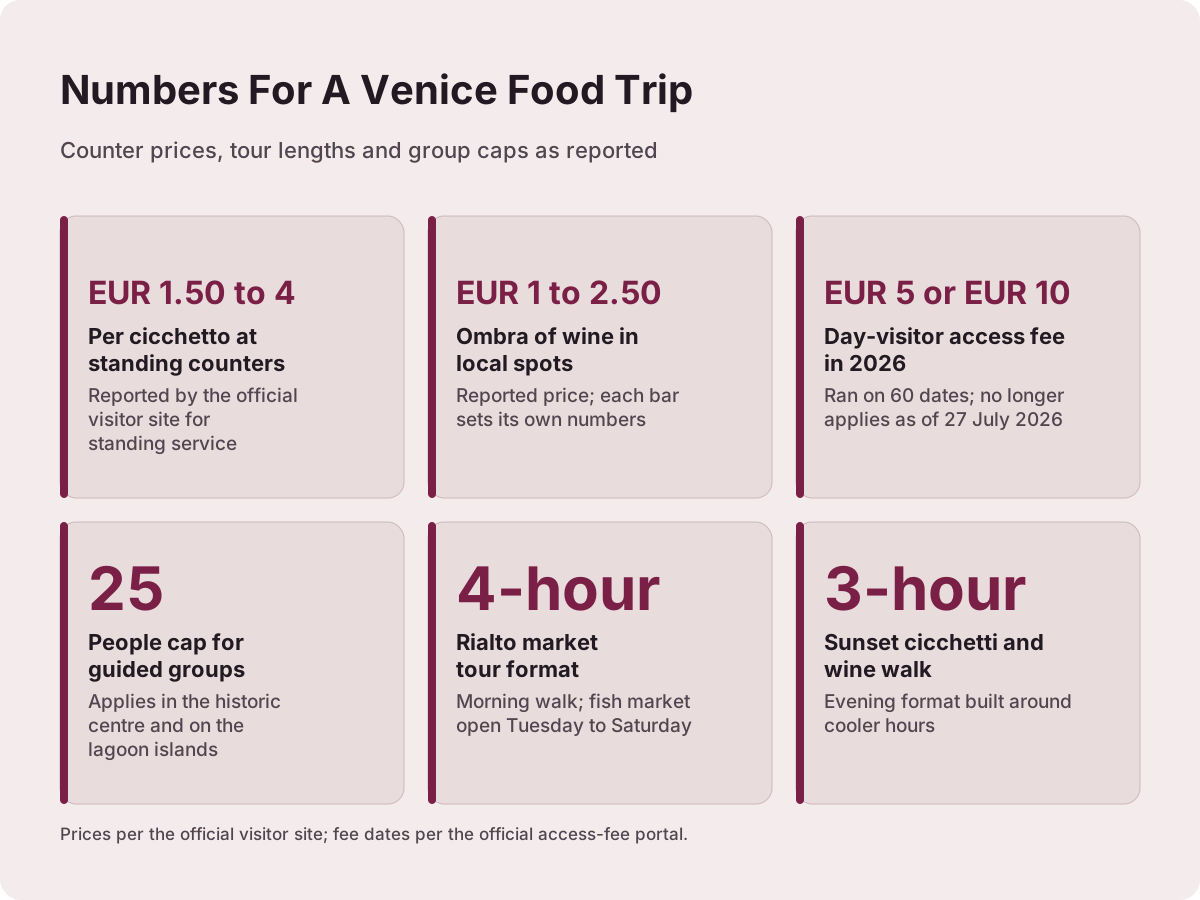
Late September through October is the strongest all-round window: summer crowds thin, the lagoon harvest is at its richest, and market stalls fill with radicchio and late seafood. Spring runs close behind, with castraùre artichokes from Sant'Erasmo and mild walking weather. Winter is the quietest and cheapest for standing bites, roughly EUR 1.50 to 4 a piece, reported.
When Is The Best Time To Visit Venice For Food?
The best months for eating in Venice are late September and October, when summer crowds drop away, the lagoon harvest is at its fullest, and standing bites still cost around EUR 1.50 to 4 a piece as reported by the official visitor site. April and May come close, bringing the brief castraùre artichoke season from Sant'Erasmo. Winter is the quietest and cheapest season for a bacaro crawl, if you accept shorter days and the risk of high water.
That ranking surprises people who assume Italy is a summer destination. For food specifically, high summer is the weakest link in the Venetian year: the city is at its most crowded, some family-run kitchens trim their menus, and the humid heat pushes everyone toward the same shaded routes. The lagoon's best raw materials, from artichokes to the seafood that ends up in risotto, peak in the shoulder seasons and in the cold months.
This guide walks through each season's produce, crowd levels and practical realities, then matches the timing to the food walks and market tours you can book. Nothing here promises a specific dish on a specific day; what a counter holds on a Tuesday in March is between the cook and the catch. What the seasons do change, reliably, is the raw material behind everything you taste.
Venice rewards travelers who plan around its calendar rather than against it, and Venice Food Tours exists to make that planning simpler: the articles here cover market hours, ordering etiquette and dish-by-dish background so the walk you book lands on a week when the eating is genuinely at its best.
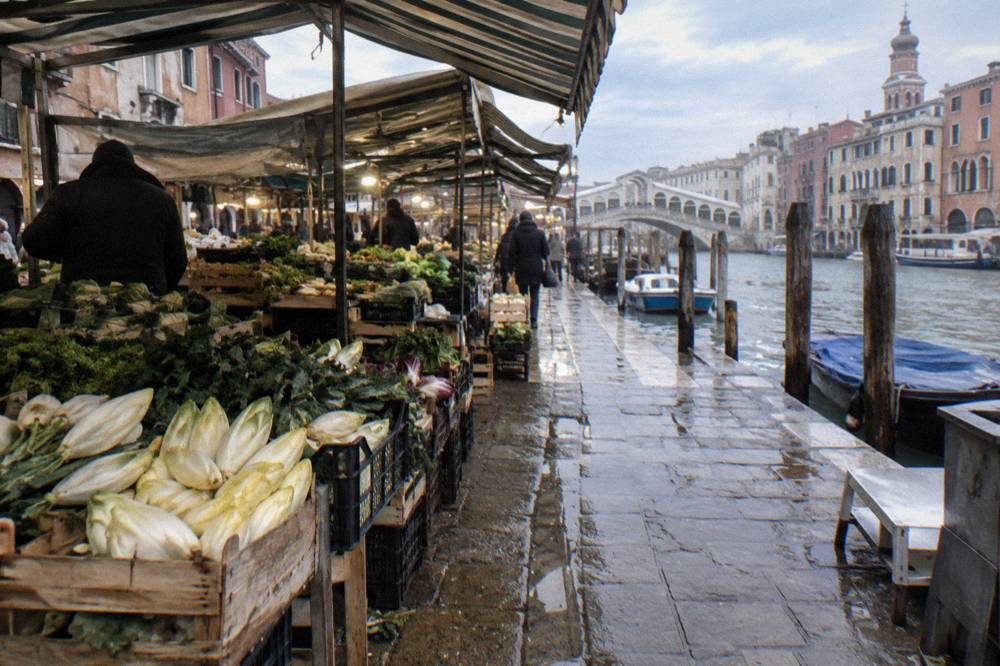
Venice Seasons At A Glance: Produce, Crowds And Prices
Spring, roughly March to May, pairs mild walking weather with the year's rarest vegetables, including the brief castraùre harvest from Sant'Erasmo. Summer, June to August, brings the thickest crowds and the longest queues. Autumn, September to November, is the richest table and the best balance of food against foot traffic. Winter, December to February, is the quietest and cheapest season, with fried sweets appearing for Carnival and the risk of high water at its peak.
The differences between these four windows are sharper in Venice than in most Italian cities because so much of the food is lagoon-driven. What the boats bring in, and what the market gardeners of Sant'Erasmo cut that week, moves the menu more than any fashion does. A cicchetto counter in February and the same counter in July share a name and little else.
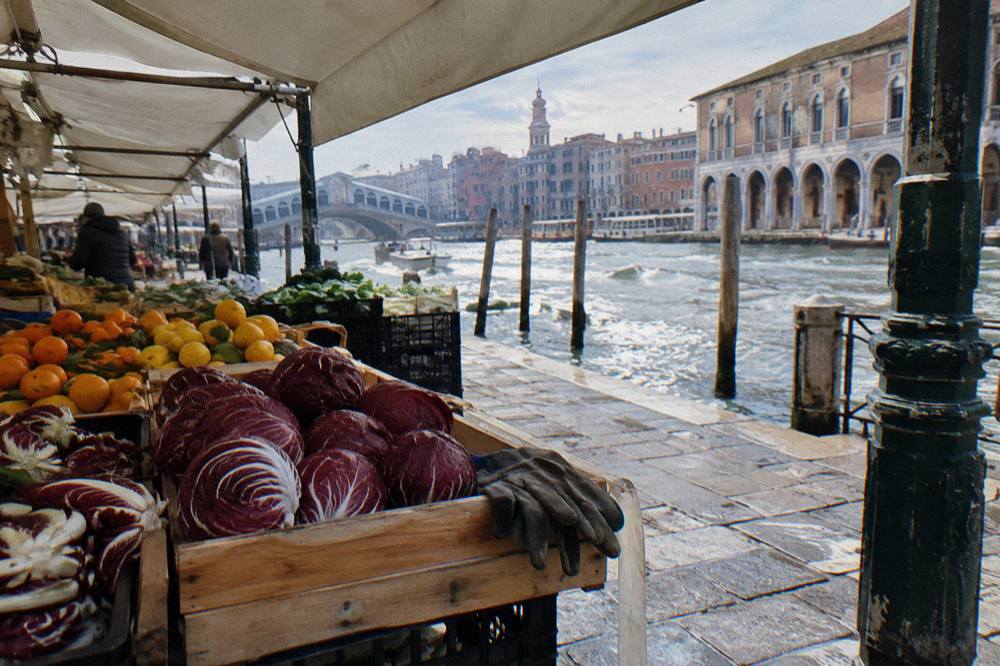
Crowd pressure matters more here than anywhere because the historic centre has no cars and few wide streets. The same calli that feel empty in January can be solid with people in July. That pushes eating toward the shoulders of the day: an early market morning or a late aperitivo works in any season, while a mid-afternoon wander in August is a test of patience.
| Season | Months | Food highlights | Crowd level | Notes |
|---|---|---|---|---|
| Spring | March to May | Castraùre artichokes, spring greens, early seafood | Moderate, rising | Brief artichoke season, reported |
| Summer | June to August | Summer produce, long evenings, aperitivo hour | Highest | Heat shifts eating early and late |
| Autumn | September to November | Radicchio, lagoon seafood, mushrooms | Moderate, falling | Best overall food-to-crowd ratio |
| Winter | December to February | Fried fritole, hearty baccalà, Carnival sweets | Lowest | Shorter days, acqua alta risk |
If you are booking a guided walk rather than eating solo, the season mainly changes the backdrop and the produce you pass, not the format. The tasting walks compared here run year-round, with the same counted stops and included drinks; the operator's booking page is the place to confirm exact dates and menus.
Spring: Castraùre, Mild Mornings And A City Waking Up
Spring is the season of scarcity made delicious. The violet artichoke buds called castraùre, the first small cuttings from Sant'Erasmo's saline soil, appear briefly and are served raw or barely cooked; the official tourism material describes them as the island's signature crop. Crowds are moderate before Easter and build steadily after. Walking weather is mild, and the produce market reaches San Polo stalls seven days a week minus Sundays.
Sant'Erasmo is Venice's market garden, the agricultural island the lagoon has farmed for centuries, and its spring output defines what good Venetian kitchens serve in April and May. The castraùre harvest is short, and because the buds are cut young, they never sit around. If your trip lands in that window, ordering anything with castraùre on the menu is one of the few genuinely seasonal bets you can make. The 2026 coverage of the island's vegetable gardens describes the same pattern visitors have known for years: spring is when this island earns its keep.
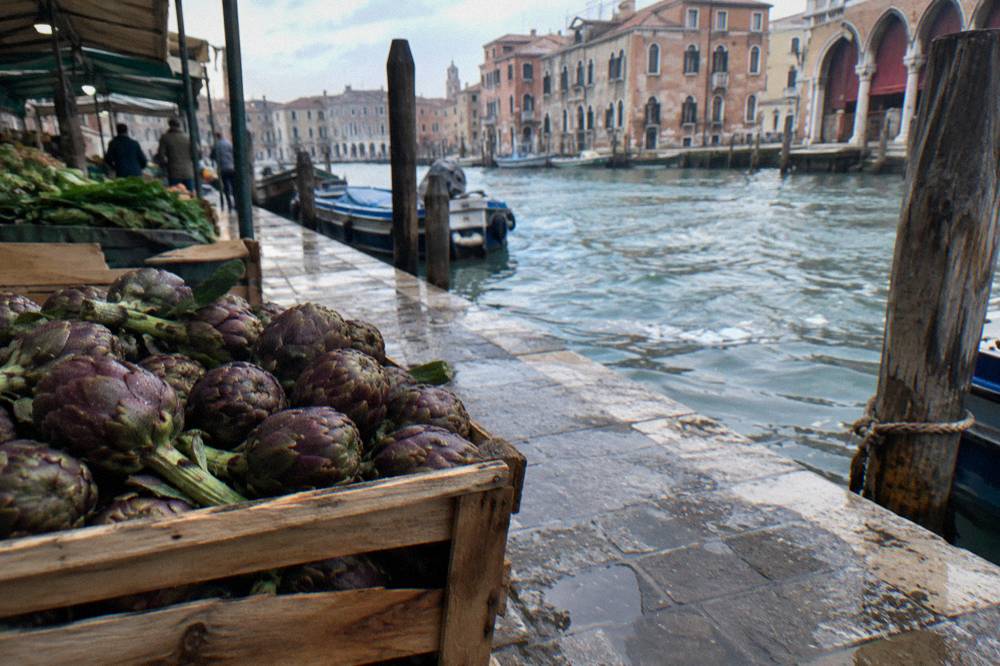
Spring is also when the guided-food year restarts in earnest. A market-based walk such as the Rialto market food and wine lunchtime tour, a 4-hour morning format, makes particular sense now: the fish market is in full Tuesday-to-Saturday swing, and the produce stalls are at their most varied. The fish market closes Sundays and Mondays, so spring visitors should still anchor a market morning midweek. The full official hours are on the Venezia Unica markets page.
One planning note specific to spring: the day-visitor access fee, which ran on 60 dates in spring and early summer 2026 at EUR 5 or EUR 10, no longer applies as of 27 July 2026, per the official access-fee portal. It returns in 2027 on listed dates from late March through mid-August, with amounts not yet published, so spring travelers for next year should re-check the official page after 31 December 2026.
Summer: Early Starts, Long Evenings And Peak Crowds
Summer eating in Venice works if you flip your day: market and cicchetti in the morning, a long shaded lunch, then aperitivo after the day-trippers thin. June through August brings the highest crowds of the year and the least forgiving walking heat, but also the longest evenings, and standing bites stay cheap, reported at EUR 1.50 to 4 a piece with an ombra of wine around EUR 1 to 2.50.
The official visitor site's cicchetti page lists those counter prices as typical for standing service in authentic bacari, with no fixed city tariff: posted lists apply, and each bar sets its own numbers. Summer does not change those prices, but it does change where you want to be standing. Away from the main drags between the Rialto and St Mark's, counters in Cannaregio and Dorsoduro stay local year-round.
Two practical rules shape a summer food day. First, the group-size cap: guided groups in the historic centre and on the lagoon islands are limited to 25 people, with loudspeakers banned, as reported, so booked walks use headsets and stay manageable even in August. Second, the municipal rule on glass: drinking from glass containers outside permitted seating areas is restricted, and takeaway sales in untapped glass are banned under the city's public-space regulation, with reported fines of EUR 25 to 500. An evening spritz belongs at a table or a bar's standing area, not on a bridge.
For summer bookings, evening formats beat midday ones. A sunset cicchetti and wine walk turns the crowd problem into a feature: the heat drops, the light does the famous thing it does to the canals, and the counted tastings arrive at the hour Venetians actually eat. The sunset cicchetti and wine tasting walk, a 3-hour format, is built exactly around that window. Check the booking page for summer start times, since operators shift them to follow the light.
Autumn: The Lagoon's Richest Table
Autumn is the strongest food season in Venice. September through November brings the richest lagoon seafood, bitter radicchio and the mushroom harvest to the Rialto stalls, while the August crowds fall away week by week. Weather stays walkable well into October, and standing prices hold at the reported EUR 1.50 to 4 per cicchetto, making this the best all-round month for a first visit built around eating.
The reason autumn outranks spring on many locals' calendars is depth. Spring gives you a few spectacular weeks of scarcity; autumn gives you volume. The fish market's Tuesday-to-Saturday rhythm continues, the produce stalls in San Polo are at their fullest, and restaurant kitchens shift to the heavier dishes the cooler air invites, baccalà mantecato and risotto rather than raw artichokes. For background on those staples, the guides to baccalà mantecato and polenta and to sarde in saor cover what to order once the weather turns.
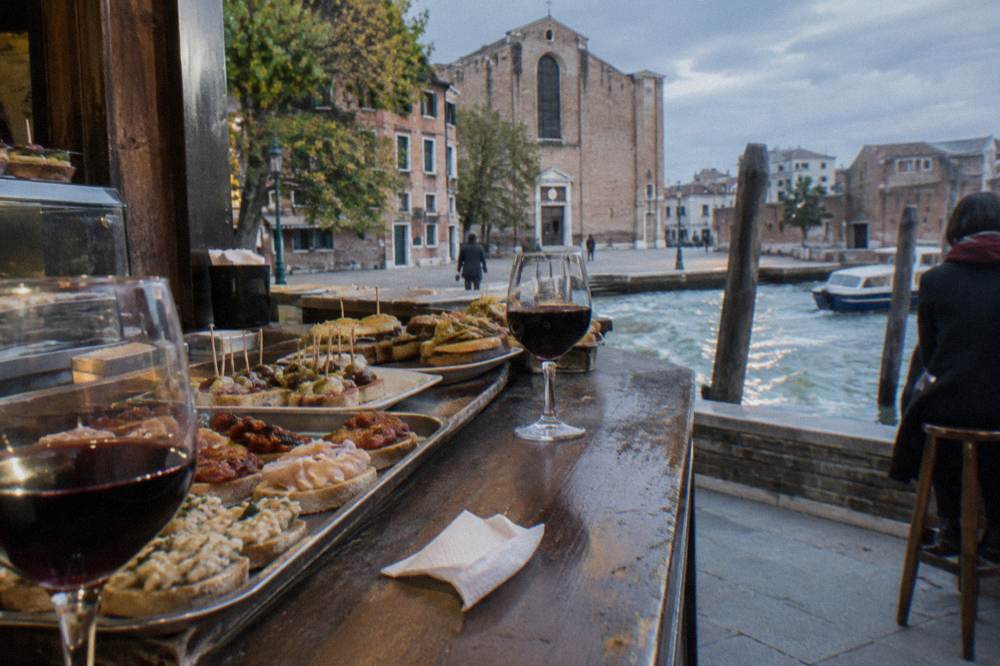
Autumn is also acqua alta season, and honest planning means naming that. High water typically arrives from late autumn into winter, flooding low-lying squares for hours at a time. It rarely stops the eating, raised walkways appear on the main routes and bacari simply keep pouring, but it can reshape a day's walking plan. Pack boots or be ready to buy the cheap ones sold everywhere, and treat a flooded morning as a market-hall morning rather than a lost one.
A 3-hour small-group tasting walk suits autumn particularly well. One example is the Eat Like a Local small-group tasting tour, the most reviewed walk described on this site, which moves between counters in the cooler air while a guide explains what the season put on each tray. Group sizes and exact stops are on the booking page, and operators ask about dietary needs in advance; nothing in the listing data marks any walk as vegetarian or gluten-free, so message the operator before booking if that matters.
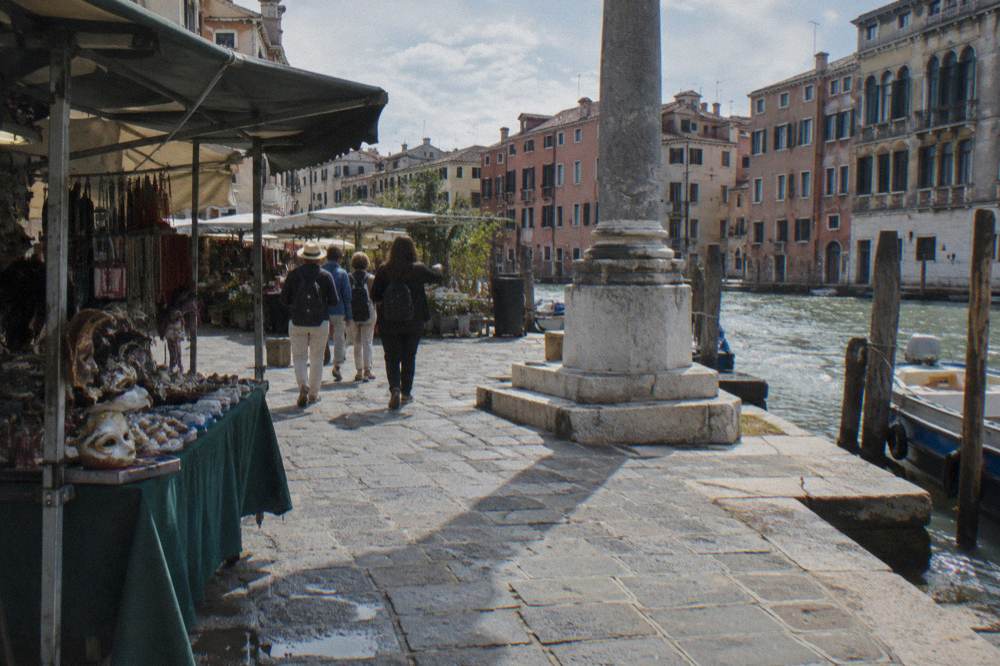
Late autumn has one more card: the season quietly rolls into winter's Carnival sweets, with pastry counters beginning their fritole as the calendar closes. A late-October or November visit often catches both the seafood peak and the first fried sweets, two seasons for the price of one.
Winter: Empty Calli, Fried Sweets And High Water
Winter is Venice at its emptiest and its most Venetian. December through February brings the lowest crowds of the year, the cheapest standing eating, and the fried sweets of Carnival, fritole above all, while the risk of acqua alta peaks. Days are short and some sitting restaurants trim hours, but bacari keep their counters full, and an ombra runs a reported EUR 1 to 2.50 in local spots.
This is the season for travelers whose first priority is the city rather than the weather. The calli empty out between storms, museum lines vanish, and a bacaro crawl in January feels like being let in on a secret. The trade-offs are real: fog and rain can settle in for days, high water can close a square for an afternoon, and the light is gone by early evening, which conveniently is also when the aperitivo hour starts.
| Winter consideration | What to expect | Practical answer |
|---|---|---|
| Acqua alta | Flooding in low areas, typically hours at a time | Raised walkways on main routes, cheap boots sold widely |
| Market rhythm | Fish market closed Sunday and Monday | Plan market mornings Tuesday to Saturday |
| Carnival | Crowds spike around Carnival dates | Book walks early or go before or after |
| Counter prices | Reported EUR 1.50 to 4 per cicchetto | Standing service keeps costs down |
| Coperto | Reported EUR 1 to 5 per person where applied | Standing at the counter often avoids it |
Carnival timing matters more than most winter visitors expect. When Carnival falls in February, the weeks around it see the year's sharpest short-term crowd spike outside of summer, with masks, costumes and processions filling the same narrow streets. If you want the spectacle, book everything well ahead. If you want emptiness, shift your dates to January or to early December, before the holidays.
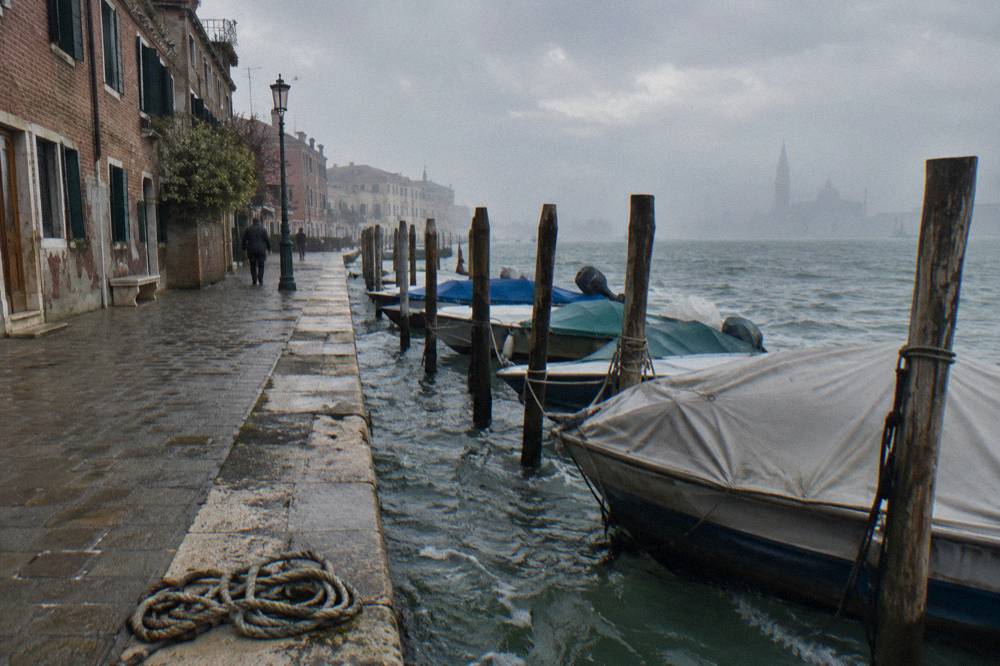
For a structured winter eat, a market-and-lunch format turns the short day to your advantage. The 4-hour lunchtime market tour pairs a morning in the halls with a sit-down meal, which is exactly the winter rhythm: outside while the light lasts, at a table by early afternoon. The sweet-toothed alternative is a pastries, chocolate and gelato stroll, a 2-hour format that works even in drizzle, since most of its ground is under arcades and in shops.
What Is Open When: Market Days, Fees And The Rules That Shape A Visit
The Rialto produce market runs Monday to Saturday, 7:00 to 20:00, and the fish market Tuesday to Saturday, 7:00 to 14:00, both closed Sunday, per the official Venezia Unica listing. No day-visitor access fee applies as of 27 July 2026, though it returns in 2027 on listed dates. Guided groups are capped at 25 with loudspeakers banned, and glass-container rules restrict outdoor drinking, all reported.
These are the fixed mechanics every seasonal plan sits on top of. The market hours are the ones to plan around first, because they are the least flexible: a Sunday or Monday visitor sees the Pescheria dark, and tour listings themselves warn the fish market is closed Sundays, Mondays and Italian holidays. Midweek mornings are the reliable slot in every season.
| Practical item | Detail | Source status |
|---|---|---|
| Produce market (Erbaria) | Monday to Saturday, 7:00 to 20:00, San Polo | Official Venezia Unica listing |
| Fish market (Pescheria) | Tuesday to Saturday, 7:00 to 14:00 | Official Venezia Unica listing |
| Access fee | Ended 27 July 2026; returns 2027, amounts unpublished | Official access-fee portal |
| Group cap | Max 25 per guided group, loudspeakers banned | Reported rule in effect since 2024 |
| Glass rule | No drinking from glass outside permitted seating; fines EUR 25 to 500 | Municipal regulation, reported |
| Tourist tax | EUR 0.10 to 5.00 per person per night by accommodation, max 5 nights | Standing rates, check official page |
The access fee deserves its own paragraph because it confuses returning visitors. The 2026 trial applied on 60 dates from April to late July at EUR 5 or EUR 10 per person, and it is over: per the official portal, as of 27 July 2026 no payment or exemption is needed to visit. The 2027 dates are already listed, running from late March through mid-August, but the amounts and arrangements will only be announced by 31 December 2026. If you are planning a spring 2027 trip, re-check the official access-fee page after that date. The lagoon islands, including Murano, Burano and Sant'Erasmo, sat outside the fee's scope.
Getting to the islands for their food is cheap and simple in every season: the ACTV network runs year-round, with a 75-minute ticket at a reported EUR 9.50 and a 24-hour pass at EUR 25, and line 12 connecting Fondamente Nove to Murano and Burano on a daytime interval of roughly 20 minutes in peak hours. Timetables shift seasonally, so check the operator's current schedule for your dates.
Matching A Food Walk To Your Travel Month
Book a market-and-lunch format in spring or autumn when the stalls are fullest, an evening or sunset cicchetti walk in summer when the heat pushes eating late, and a short sweet stroll or a small-group crawl in winter when days are short. Duration matters less than timing: the walks compared here run from 2 to 4 hours, and every one of them follows the same seasonal calendar of produce you read above.
The matching logic is simple. Formats that depend on the morning market, the 4-hour lunchtime tour above all, want the seasons when the market is richest and the walk to the halls is pleasant: April, May, late September and October. Formats built around aperitivo hour, like the 3-hour sunset walk, want the seasons with long evenings: June through August. Formats that move between counters under cover, like 2-hour sweet strolls and short cicchetti crawls, are the winter-proof options.
| Walk format | Length | Best season | Why it fits |
|---|---|---|---|
| Market and lunch tour | 4 hours | Spring, autumn | Fish market in full swing, midday sit-down |
| Sunset cicchetti walk | 3 hours | Summer | Shifts eating to the cool, light-filled evening |
| Small-group tasting tour | 3 hours | Autumn, winter | Counter-to-counter route works in cool or damp |
| Sweet stroll | 2 hours | Winter | Shops and arcades, short day, warm stops |
| Cooking class | 3 to 4 hours | Any, summer especially | Indoors at the hottest hours, full meal included |
Summer visitors should also weigh a cooking class, and the comparison of food walks versus cooking classes covers the trade-offs in depth. A pasta and tiramisu class puts the hottest midday hours indoors and ends with the meal you made, which suits July and August better than a long walk might. Typical class lengths run around 3 hours, with shared groups often capped at 12 guests, as reported on operator pages.
Whatever the month, book the walk before you book the restaurant. A guided tasting stops the guesswork of which counter is honest, which street is a trap and what the tray in front of you actually is, and the seasonal produce you read about here becomes the guide's problem to explain rather than yours to decode. Check the operator's live listing for dates, group sizes and dietary arrangements, since menus and stops shift with what the market brings in that week.
Planning Checklist By Season
Plan spring around the artichoke window and midweek market mornings, summer around early starts and evening walks, autumn around seafood and radicchio with a backup for high water, and winter around short days, Carnival dates and indoor stops. In every season, confirm the fish market's days, check the access-fee page for 2027 dates if your trip is next year, and book any guided walk ahead, since group caps of 25 limit how many travelers a departure can take.
A few final mechanics make any of the four windows work. Standing at the counter keeps costs down and often avoids the coperto, the reported EUR 1 to 5 per-person cover charge that sitting restaurants may add. Tipping is optional and round-up-at-most in bacari, as the recent etiquette summaries report, so a winter crawl is genuinely cheap. And the vaporetto prices quoted above, EUR 9.50 for a single 75-minute ticket and EUR 25 for 24 hours, are standing network fares; check the operator page for your travel dates.
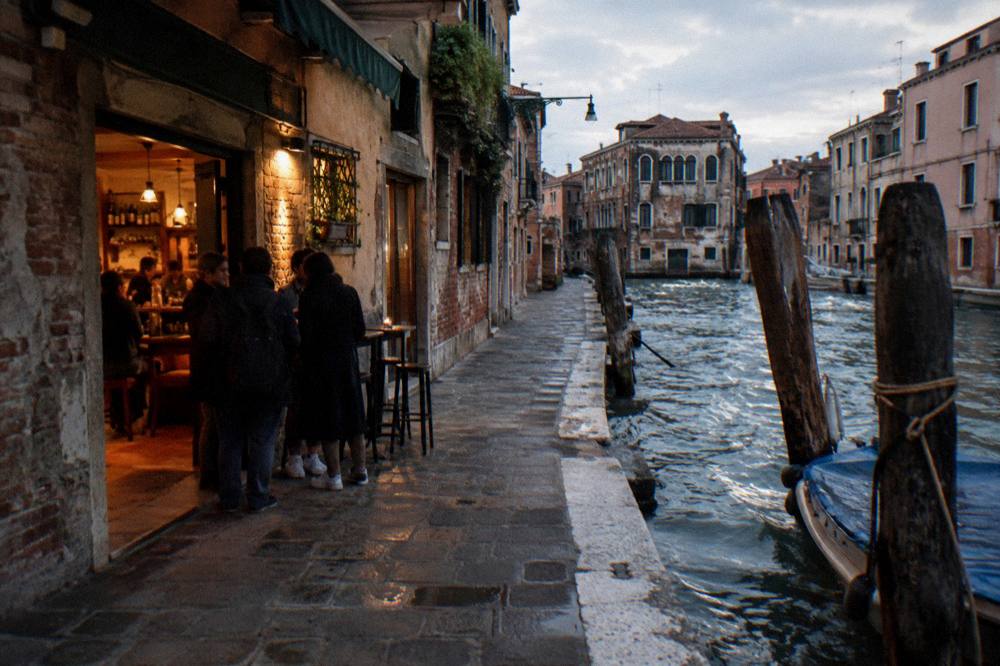
The one mistake worth avoiding is treating Venice as seasonless because the postcard looks the same in every month. It is not. The same EUR 2 cicchetto tastes different in a January fog with three people at the counter and in a July crush with thirty outside the door, and the market that dazzles in October is a half-stocked hall on a Monday in August. Pick the season that matches what you want from the city, then let the counters do the rest.
Common Questions About The Best Time To Visit Venice
What Is The Best Month To Visit Venice For Food?
Late September and October, when the lagoon seafood and autumn produce peak and the summer crowds have thinned. April and May follow closely thanks to the castraùre artichoke season from Sant'Erasmo and mild walking weather.
Is Winter A Bad Time To Visit Venice For Eating?
No. Winter is the quietest season, counters stay full, and standing bites run a reported EUR 1.50 to 4 with an ombra around EUR 1 to 2.50. The trade-offs are short days, occasional acqua alta flooding, and a crowd spike around Carnival.
When Is The Fish Market At Rialto Open?
Tuesday to Saturday, 7:00 to 14:00, closed Sunday and Monday, per the official Venezia Unica listing. The produce market runs Monday to Saturday, 7:00 to 20:00. Tour listings warn the fish market also closes on Italian holidays.
Do I Need To Pay The Venice Access Fee?
Not currently. The 2026 trial ended, and as of 27 July 2026 no fee, payment or exemption applies. The fee returns in 2027 on listed dates from late March through mid-August, with amounts to be announced by 31 December 2026; check the official page for your dates.
Which Food Tour Format Is Best In Summer?
Evening formats. A sunset cicchetti and wine walk moves the eating to the cool hours, while a cooking class puts the hottest midday stretch indoors and ends with a full meal. Check the operator's listing for summer start times.
When Does Acqua Alta Happen?
Typically from late autumn into winter. Flooding usually affects low-lying areas for hours at a time, raised walkways appear on main routes, and bacari generally keep serving. Pack boots or plan market-hall mornings on flooded days.