Why Is The Food In Venice So Bad?
An honest answer to why so many visitors eat badly in Venice: tourist menus, coperto charges and pure economics, plus how bacari and a guided tasting walk find the good food.
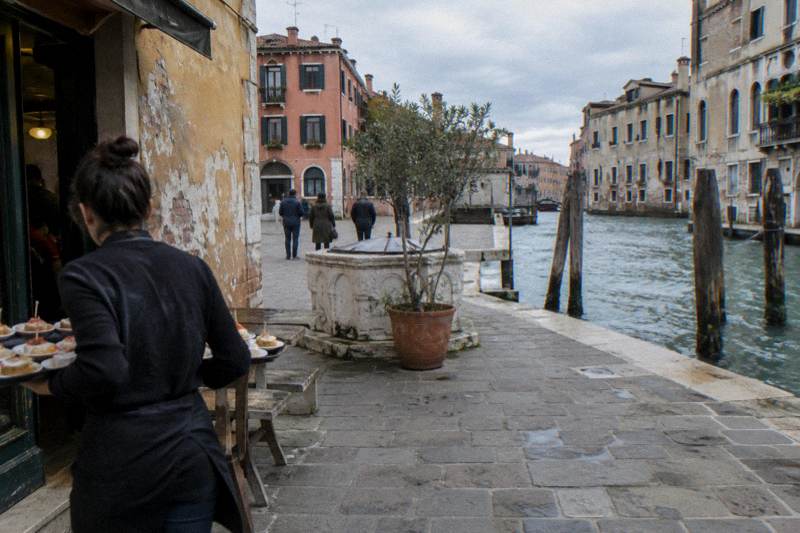
No, the food in Venice is not bad, but the food served to hurried visitors near San Marco and the Rialto bridge often is, and for economic reasons rather than culinary ones. Restaurants that never need a repeat customer have little reason to cook well, while the city's bacari, where Venetians stand for a piece of cicchetti and a small glass of wine, keep serving the real thing at reported prices of around EUR 1.50 to 4 a piece.
The question gets typed into search engines thousands of times a year, usually by someone sitting in a piazza feeling cheated. The pasta arrived gummy, the seafood tasted of the freezer, the bill carried a cover charge nobody mentioned, and the whole thing cost more than dinner in their home city. The disappointment is real. The conclusion, that Venice cannot cook, is wrong, and understanding why is the difference between a bad trip and a very good one.
This article walks through the mechanics of the bad meal in Venice: where the reputation comes from, what a tourist menu actually is, how the coperto works, and what eating well here looks like in practice, from the Rialto market to the standing counters of Cannaregio and Dorsoduro. The practical fix, a guided tasting walk with a local, appears along the way, because it is the single most reliable way for a first-time visitor to skip the traps entirely. The site's own Venice Food Tours guide collection covers each of these angles in depth if you want to go further.
Where The Bad-Meal Reputation Comes From
The reputation is built on a simple economic trap: Venice receives vastly more visitors than it has residents, most visitors eat exactly once within a few hundred metres of a major sight, and a restaurant whose customers will never return can cut quality without losing business. Add unknowing first orders, frozen supply chains and a language gap, and you get the one bad dinner that defines the whole trip.
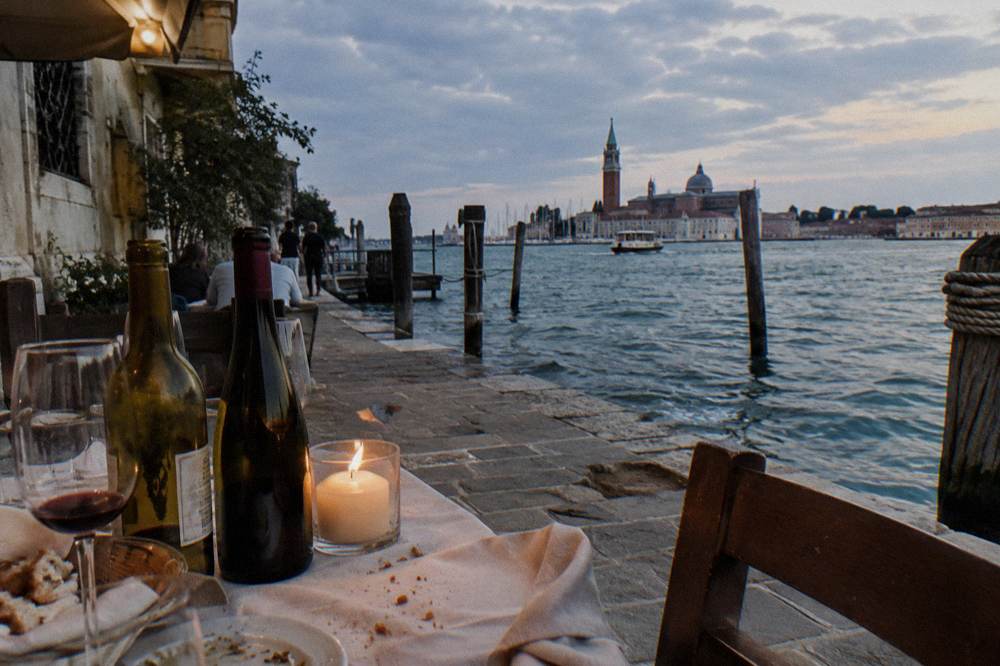
Start with the incentives rather than the food. The historic centre's resident population has shrunk year after year while the daytime flow of visitors keeps the lanes full, and that imbalance shapes every menu in the tourist core. A restaurant on the funnel between the Rialto bridge and San Marco can fill every table every night without a single local ever walking in. Repeat business, the force that keeps neighbourhood restaurants honest everywhere else in Italy, simply does not exist there.
That is not a claim that every restaurant near a sight is bad; some are very good, and no restaurant is called out here. It is a claim about incentives. When your customers arrive exhausted, hungry, unable to compare you with anyone, and will be gone tomorrow, the cheapest viable ingredients win. Tour operators' coach trade compounds it: set menus pushed through in ninety minutes, photographed plates, food cooked hours earlier and reheated.
The freezer is the second mechanism. Fresh lagoon fish is expensive and sells out; a kitchen serving three hundred covers of "grilled catch of the day" cannot run on what the Pescheria actually landed that morning, so the catch arrives from far away, portioned and frozen. The visitor paying lagoon-fish prices cannot see the difference until the first bite. None of this is unique to Venice, but few cities concentrate so many one-time customers in so few square kilometres.
The third mechanism is the mismatch between Italian meal structure and visitor expectations. A proper Venetian dinner is unhurried, with courses arriving in order and the kitchen closing late by northern European standards. A visitor who sits down at 18:30, orders one pasta and tap water, and expects to be gone in forty minutes is ordering wrong for the venue and often lands in exactly the venue built to absorb that order.
If you want the full anatomy of the good version of this cuisine, the traditional dishes guide on this site, what to eat in Venice and its classic dishes, lists what a Venetian kitchen actually cooks, from sarde in saor to baccalà mantecato.
Tourist Menus And The Economics Of A Bad Dinner
A tourist menu is a fixed-price or menu turistico offer built for volume: several courses at an attractive headline price, made possible by cheap ingredients, central prep and rapid table turnover. The warning signs are a host inviting you in from the street, a laminated multilingual menu with photographs, and dishes from every region of Italy at once, a range no honest kitchen could cover fresh.
Picture the scene from the operator's side. Rent near San Marco is among the highest in Italy, staff costs are high, and volume is the only way to cover it. The menu turistico solves that: one of four pastas, one of four mains, a drink, sometimes a dessert, at a price that looks reasonable until you notice what is missing. The pasta is likely dried, not fresh, and precooked. The "Venetian" dishes come from a supplier's freezer bag. The wine is the cheapest the wholesaler sells.
| Signal on offer | What it usually means | Better alternative |
|---|---|---|
| Host outside inviting you in | The restaurant depends on passers-by, not regulars | A place with no touts and no photographed menu |
| Menu in five languages with photos | Built for one-time visitors, dishes chosen to survive reheating | A short written menu, changing dishes, Italian first |
| Pizza, pasta, risotto and burgers together | No regional focus, no fresh supply chain | A kitchen serving only Venetian or only a few dishes |
| Very low fixed-price multi-course deal | Ingredients chosen to hit the price point | A bacaro counter, where the real food is cheap anyway |
| "Catch of the day" with no price per 100 g | Freezer stock, priced vaguely | Ask the price and the origin before ordering |
None of those rows makes a restaurant dishonest; they are patterns, not verdicts, and exceptions exist in both directions. But together they describe an economic model, and the model explains the meal better than any story about Italian cooking does. The visitor who reports that the food in Venice is bad almost always ate inside this model once or twice and never left it.
The contrast with how the city actually eats is stark. At a bacaro counter, a piece of cicchetti runs a reported EUR 1.50 to 4, an ombra of house wine a reported EUR 1 to 2.50, ranges published on the official Visit Venice cicchetti page, and the standing format skips most of the extras. The same money spent on a menu turistico buys a worse meal with a longer wait. For a fuller walk through the standing-counter culture, see how a bacaro crawl and cicchetti walk works.
A guided walk sidesteps the whole problem by construction. The Eat Like a Local three-hour small-group tasting tour exists precisely for this moment: three hours, a small group, a route through the bars Venetians use, with tastings and drinks included rather than negotiated at a counter in phrasebook Italian. Free-cancellation terms are shown on the booking page, so a change of plans does not cost you.
Coperto, Cover Charges And The Bill That Feels Wrong
Coperto is a per-person bread-and-cover charge, a standard and legal line on Italian restaurant bills, commonly around EUR 1 to 5 per person in Venice with the amount printed on the menu. It is not a scam, but on a bill for a mediocre meal it reads like one, and it is one more reason a bad dinner in Venice feels worse than the same dinner elsewhere.
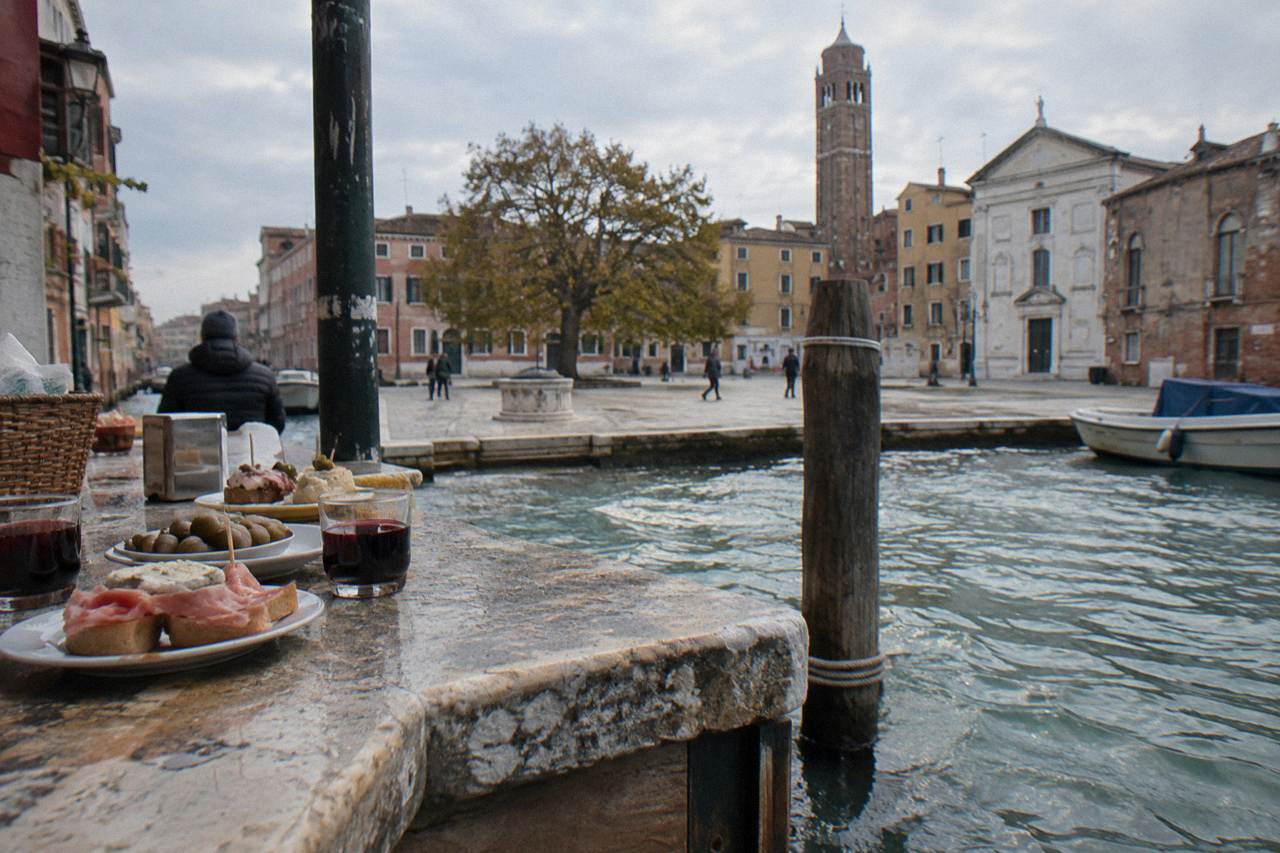
The charge is disclosure-based: the menu is supposed to show it, and standing at a bacaro counter usually avoids it entirely, which is exactly why locals stand. Tipping, by contrast, is genuinely optional in the standing-bar context; rounding up or leaving a little for exceptional table service is appreciated, and nothing is expected when you eat cicchetti at the counter. The practical rules, including how coperto interacts with service charges, are laid out in this site's guide to tipping, coperto and restaurant etiquette.
Two things make coperto the flashpoint of the "bad food" story. First, it arrives after a meal that was already disappointing, so it reads as an insult added to a cost. Second, visitors confuse it with the tourist tax and the access fee, a tangle of charges that makes every euro on the table feel extractive. Untangling them helps.
| Charge | What it is | Typical amount | Who pays it |
|---|---|---|---|
| Coperto | Per-person bread and cover charge at table-service venues | Reported around EUR 1 to 5 | Restaurant guests, shown on the menu |
| Tourist tax (imposta di soggiorno) | Overnight visitor tax collected by your accommodation | Reported EUR 0.10 to 5 per night by accommodation type | Hotel and rental guests, capped at 5 nights |
| Access fee (Contributo di Accesso) | Day-visitor entry fee trialled on 60 dates in 2026 | EUR 5 or EUR 10 during the 2026 trial, now ended | Applied 3 April to 26 July 2026 only; no fee applies from 27 July 2026 |
The access fee deserves its own sentence because it is widely misreported. The 2026 trial, EUR 5 paid in advance or EUR 10 late, ran on 60 listed dates and ended; per the official portal, from 27 July 2026 no fee applies and no payment or exemption is needed to visit. It returns in 2027 with dates already listed and amounts not yet announced, so check the official page rather than a forum thread before a spring trip. None of it touches your dinner, but knowing that stops the bill feeling like one long shakedown.
The coperto row of the table is the one that matters at the table. Check the menu's small print when you sit down, expect the line on the bill, and know that at the counter it disappears. That knowledge alone moves a visitor from the tourist economy into the local one, and the local economy is where the good food lives.
What Eating Well In Venice Actually Looks Like
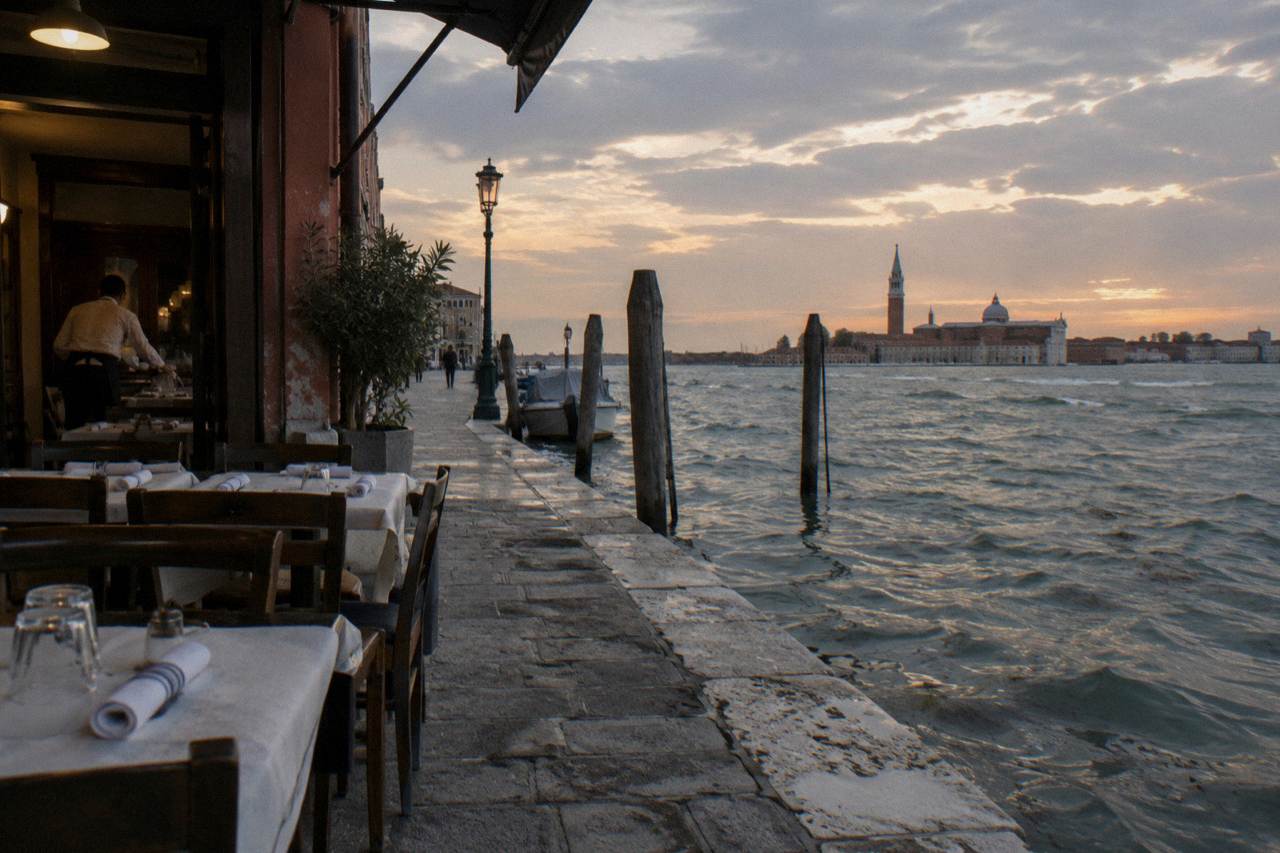
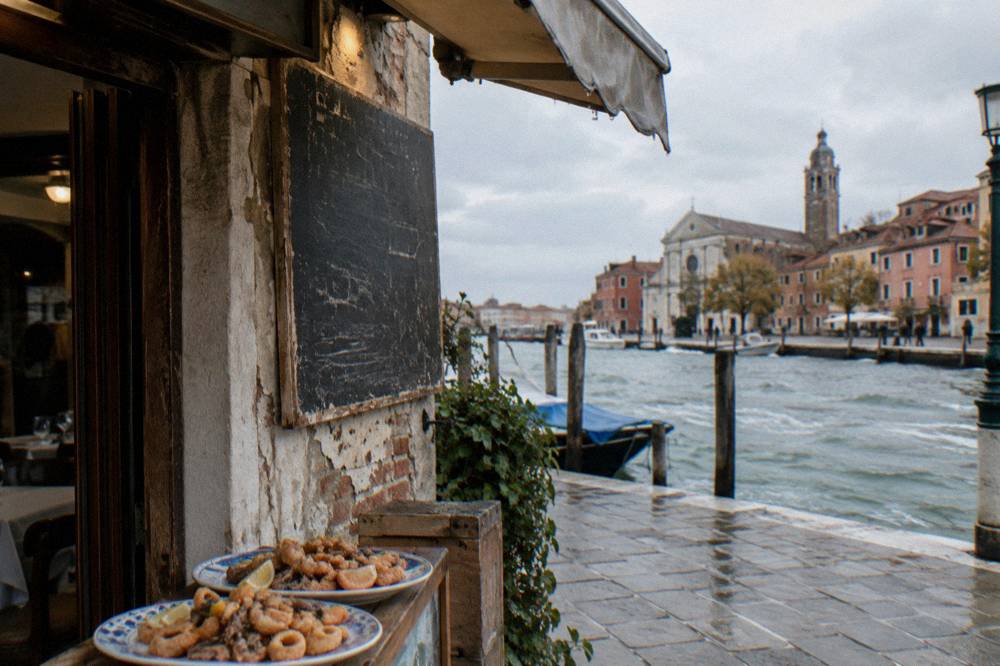
Eating well in Venice means leaving table-service restaurants near the sights for three local formats: the bacaro counter with cicchetti and an ombra, the Rialto market and its surrounding lunch stops, and the small sit-down trattorie in Cannaregio, Castello or Dorsoduro that depend on regulars. In all three, the reported price of the food is lower than a tourist menu, and the quality is higher.
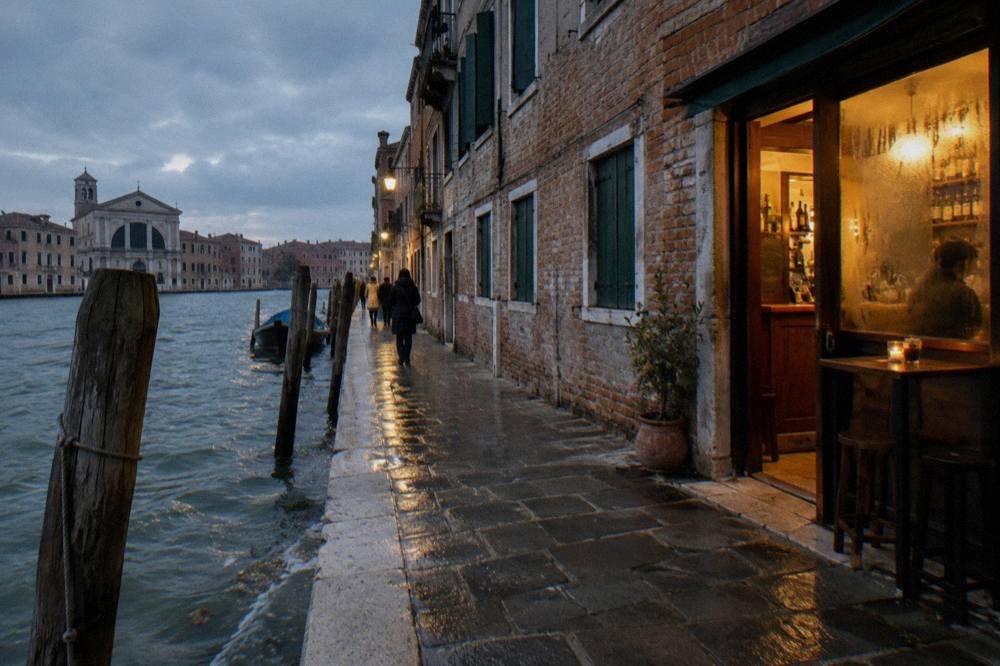
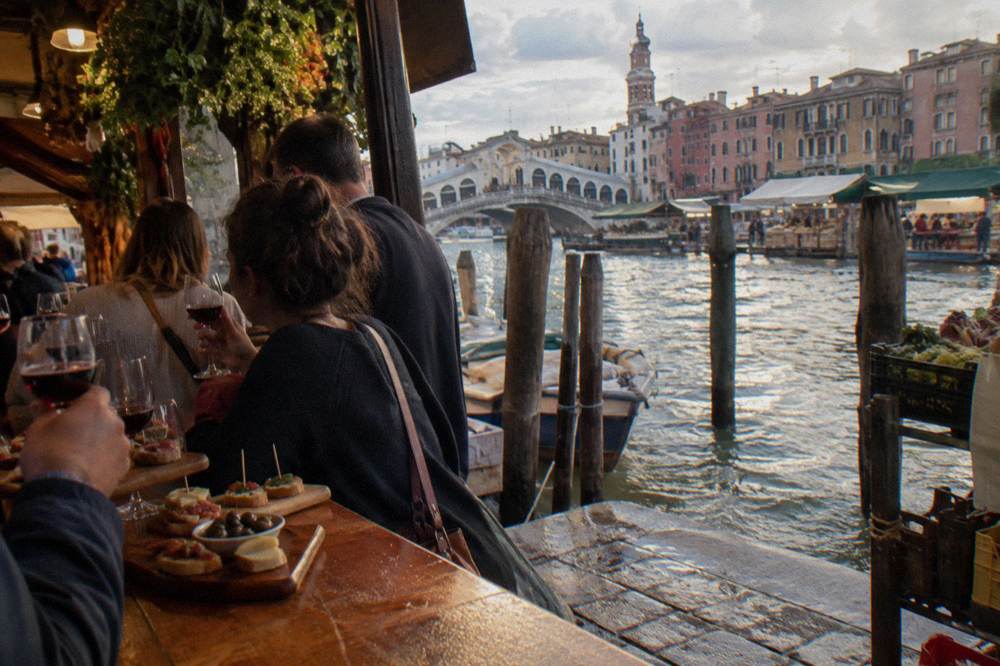
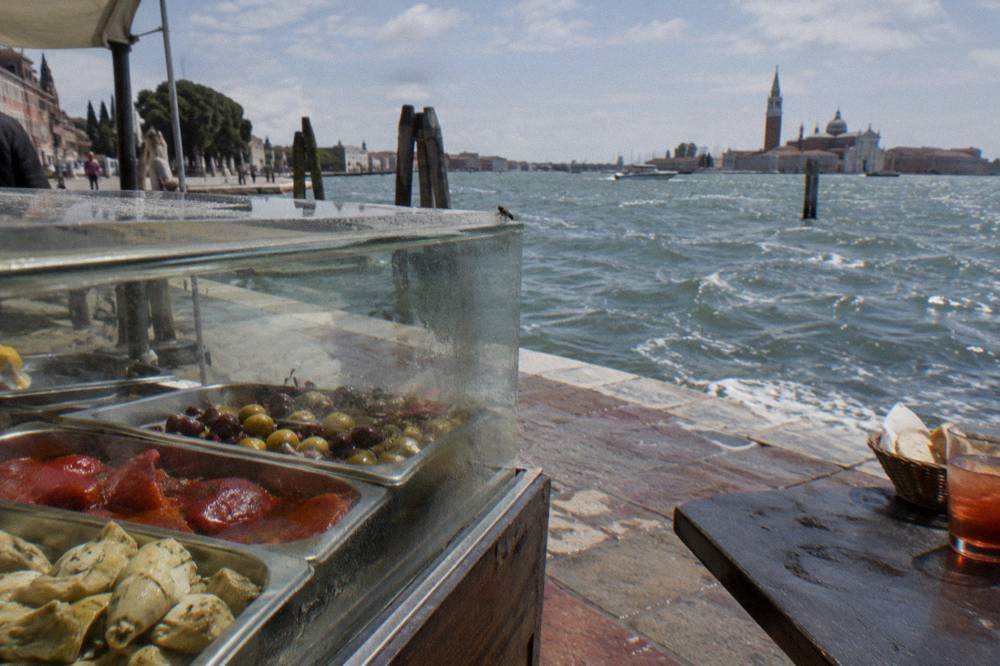
The bacaro is the core of it. A traditional standing bar, a dozen cicchetti under glass, baccalà mantecato on polenta, sarde in saor, fried mozzarella in carrozza, each piece a reported EUR 1.50 to 4. Order by pointing, take an ombra, the small roughly 100 ml glass of house wine at a reported EUR 1 to 2.50, and eat your way through dinner for less than one tourist pasta. How to order without a word of Italian is covered in the site's guide to what cicchetti is and how to order it.
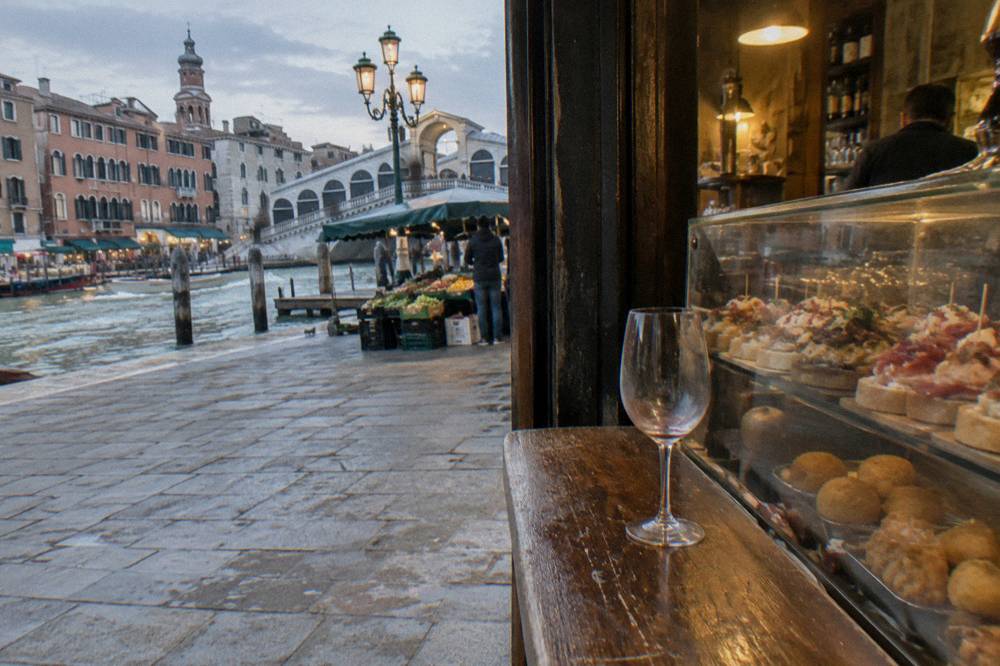
The Rialto market anchors the other half. The produce market, the Erbaria, runs Monday to Saturday from 7:00 to 20:00 and closes Sunday; the fish market, the Pescheria, runs Tuesday to Saturday from 7:00 to 14:00 and closes Sunday and Monday, hours listed by the city's official tourism channels and on the Comune di Venezia markets page. Go in the morning, browse the stalls, and then eat around the edge of the market where the bars refill with traders at lunchtime. Tour listings themselves warn that the fish market is closed on Sundays, Mondays and Italian holidays, which is worth knowing before you plan a Monday arrival around it.
The third format is the neighbourhood trattoria, and the honest advice is that finding one cold, on your first evening, in a city you do not know, is hard. That difficulty is exactly the gap a guided walk fills: a local guide walks you into the counter culture the first afternoon, and after that you have the pattern and can repeat it alone. The deeper neighbourhood breakdown, which streets and which sestieri reward wandering hungry, is in Venice food by neighborhood: Cannaregio, Dorsoduro and San Polo.
How A Guided Walk Sidesteps The Problem
A guided food walk solves the bad-meal problem structurally rather than by luck: the guide chooses venues with regulars, the tastings are pre-arranged and counted, the group is small, and the walking route links bacari and market stops you could not find or order in alone on day one. For a visitor with one or two evenings in the city, it converts the highest-risk meal of the trip into the safest one.
The economics of the tours compared here matter less than their format. The featured walk on this page, Eat Like a Local, is a three-hour small-group tasting experience, the most reviewed on this site, with tastings and drinks included in the price shown on its booking page. It is paired in the selection band above with two other formats for contrast: a street-food walk that leans on market and to-go stops, and a longer bacaro experience built around eating and drinking the way a Venetian does on an evening giro d'ombra.
Which format fits depends on the trip. If your bad meal has already happened and you want rescue on the first evening, an evening-format walk resets the trip immediately. If you want the market half of Venetian food culture as well, a walk that includes the Rialto in its route pairs well with a morning spent there alone afterwards, using the hours above. Travellers weighing the guided walk against a cooking class instead have a dedicated comparison in food walk or cooking class: which to book in Venice.
The street-food format suits visitors who want the market-and-counter culture in one compressed route, with a local guide doing the ordering. It is a shorter commitment than a full dinner walk, which makes it work on a tight arrival day. Whatever you book, the practical details, where walks meet and what to bring, are covered in meeting points and what to bring on a food walk, and dietary needs should always be raised with the operator before booking, since not every listing states vegetarian, vegan or gluten-free options.
Rules And Costs That Catch Visitors Out
Beyond tourist menus, four rules and costs regularly sour a Venice trip: the coperto line on the bill, the overnight tourist tax collected by your accommodation, the ended 2026 access fee that many visitors wrongly fear still applies, and a municipal ban on drinking from glass containers in public spaces. None of them is a food-quality problem, but each one lands on the same evening as a bad dinner and gets folded into the verdict.
The tourist tax is unavoidable and modest: a reported EUR 0.10 to 5 per person per night depending on the accommodation type and rating, collected at check-out by the accommodation itself and capped at five consecutive nights. The access fee, as covered above, does not apply now and its 2027 return has listed dates but no published amounts. Neither appears on a restaurant bill, but both are commonly confused with the coperto in post-trip retellings, which is how "Venice charges you for everything" hardens into "the food in Venice is bad".
The glass rule is worth knowing before you buy a bottle for a canal-side picnic. The municipal regulation, as reported, prohibits consuming food and drinks in glass, ceramic or similar containers outside permitted outdoor seating areas, and bans takeaway sales of alcohol in untapped glass bottles or glass glasses, with reported fines of EUR 25 to 500. That is why bacari serve the ombra in small glasses inside the bar, and why the classic move is the giro d'ombra, the round of wine bars, rather than a takeaway bottle. Check current rules before relying on any single detail.
One more cost shapes the evening more than visitors expect: getting around. A single 75-minute vaporetto ticket is a reported EUR 9.50, with a 24-hour pass at a reported EUR 25, figures from the ACTV operator's own fare page, so a dinner reached by two pointless boat hops can quietly add EUR 19 to the bill. Walking, which in the historic centre is usually faster than the boat for short hops, is both free and the best way to find the unmarked trattoria that no search result will show you.
Common Questions About Why Is The Food In Venice So Bad?
Why Is The Food In Venice So Bad?
It is not. The food served to one-time visitors in high-rent locations near the major sights often is, because those restaurants do not depend on repeat customers. Venetians eat well daily at bacaro counters, at the Rialto market and in neighbourhood trattorie, at reported prices far below the tourist menus.
Is Coperto A Scam In Venice?
No. Coperto is a legal, disclosed per-person cover charge, commonly a reported EUR 1 to 5, printed on the menu. Standing at a bacaro counter generally avoids it, and tipping at the counter is not expected.
How Do I Avoid Tourist Restaurants In Venice?
Walk ten minutes away from San Marco and the Rialto bridge, avoid venues with hosts outside and photographed multilingual menus, look for short written menus with Venetian dishes, and eat at least one meal standing at a bacaro counter.
Is Food In Venice Expensive?
It can be, but the local formats are among the cheapest eating in Italy: cicchetti run a reported EUR 1.50 to 4 a piece and an ombra of house wine a reported EUR 1 to 2.50. Tourist menus and lagoon-fish dinners in central locations cost multiples of that.
Does A Food Tour In Venice Actually Help?
Yes, structurally: a small-group walk with a local guide puts you in venues with local regulars, with tastings pre-arranged and counted, on your first day rather than your last. The Eat Like a Local three-hour tasting tour is this site's featured option and the most reviewed walk covered here.