Where Did Anthony Bourdain Eat In Venice?
An honest answer to where Anthony Bourdain ate in Venice, why sources conflict, and what a traveller can actually do to eat the way he liked to: bacaro counters, cicchetti and a guided tasting walk.
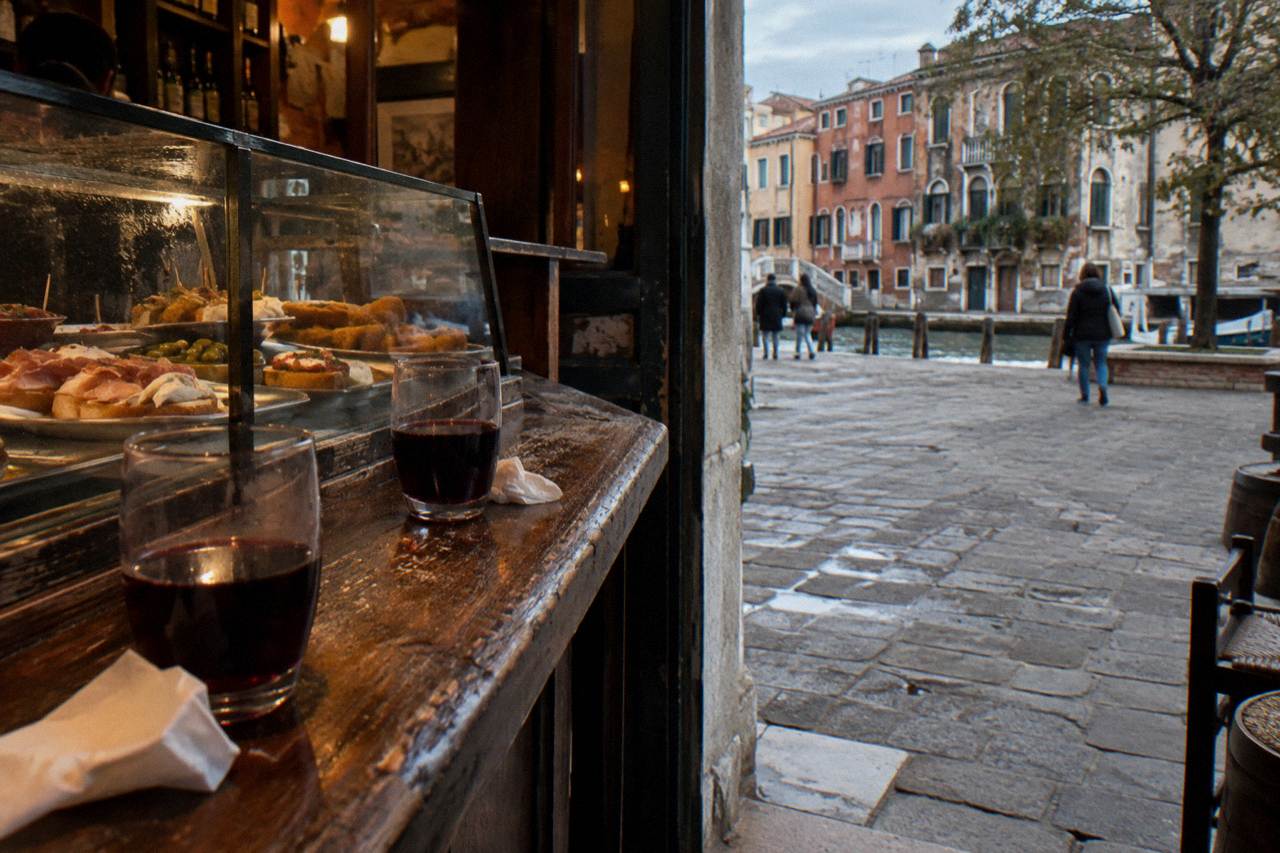
No specific Venice restaurants or bars where Anthony Bourdain ate can be verified; the lists of bacari and neighbourhood trattorie circulating online conflict with one another and none is confirmed by his books, his programmes or his estate. What is verifiable is the style of eating he championed there: standing at a bacaro counter, ordering cicchetti, sipping a small pour of house wine, and eating where Venetians actually eat.
That style, not a specific address, is what made Bourdain useful to travellers. He treated Venice as a working city with a food culture of its own rather than a museum with restaurants attached, and he pushed readers toward the unglamorous, standing, wine-and-a-snack tradition that Venetians have practised for centuries. If you arrive wanting to eat the way he described, that tradition is not only still alive, it is the cheapest and most open way to eat in the city.
The trap is the opposite move. Plenty of online articles will happily hand you a list of "Bourdain's Venice restaurants" with confident specifics. Those lists do not agree with one another, they rarely cite a source that can be checked, and several name venues that no verifiable record connects to him at all. Treating them as an itinerary means eating at whatever a blog writer guessed, not at anything Bourdain chose.
This article takes the question seriously instead: what he actually said about the city and its food culture in general terms, why the venue-level claims fall apart, and how to build a day around the bacaro crawl he celebrated, including the guided tasting walks that do the local-finding work for you.
Why No Reliable List Of His Venice Spots Exists
Every circulating list of Bourdain's Venice venues traces back to fan sites, listicles or second-hand回忆, not to a primary source. His books and episodes that touch on Venice describe the food culture in general terms, the bacaro ritual, the cicchetti, the spritz hour, without functioning as a restaurant guide. Where blogs do name specific bars, they contradict each other, which is the clearest sign that the details are inventions or embroidery rather than reporting.
Think about what a verified claim would require. It would need a scene in a broadcast episode, a passage in one of his books or articles, or a statement from him or his production company naming a venue in Venice. Anyone can check his published books and his television work, and none of them supplies a Venice venue list. What they supply instead is affection for a style: the cheap standing wine bar, the old drunk at the counter, the food that belongs to a place rather than to a chef's ego.
That absence has not stopped the internet. Search the question and you will find confident answers within seconds, complete with address pins and opening hours. Compare three of them and the same bar is credited to him in one and unmentioned in the next. One writer's guess gets copied by the next, gains a platform's polish, and starts to look like a fact. It is the same pattern that produces fake "hidden gems" in every heavily visited city, and Venice, one of the most written-about places on earth, amplifies it.
There is a second, quieter problem with chasing his footsteps. Even a genuinely documented Bourdain meal from years past would tell you almost nothing about a kitchen today. Chefs change, ownership changes, some closings and openings in Venice's bar scene simply are not tracked in verifiable sources at all. The reliable research sweep behind this article found no confirmed notable openings or closures of traditional bacari in Cannaregio, Castello, San Polo or Dorsoduro in recent months, which cuts both ways: the old guard tends to persist, but nobody can promise you the counter you read about is unchanged.
The useful conclusion is to stop asking which address and start asking which tradition. That question has a real, checkable answer, and it is the one Bourdain spent a career answering.
What Bourdain Actually Celebrated About Eating In Venice
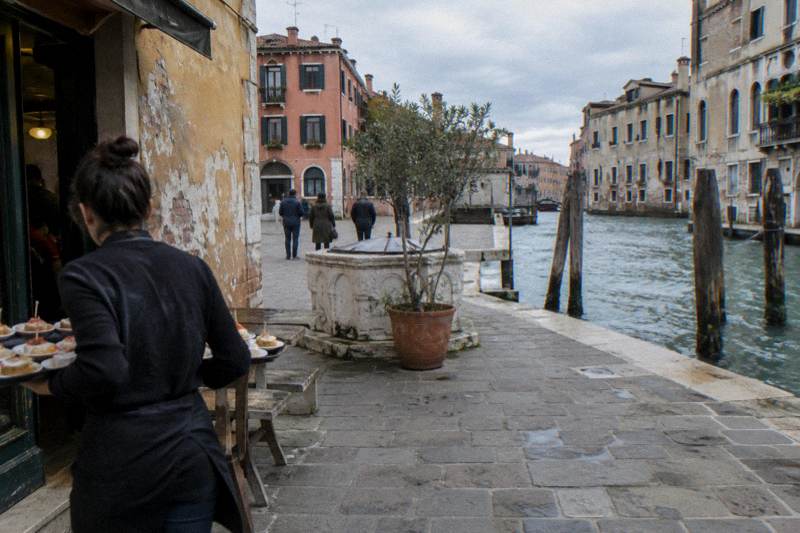
In general terms, without naming venues, Bourdain's writing on Venice praised the bacaro: the small standing wine bar where Venetians drop in for cicchetti and an ombra, the roughly 100 ml pour of house wine. He framed that ritual as the antidote to banquet-hall tourism, food eaten on foot, at the counter, in places with no incentive to impress anyone. That framing, not a pin on a map, is his real Venice legacy.
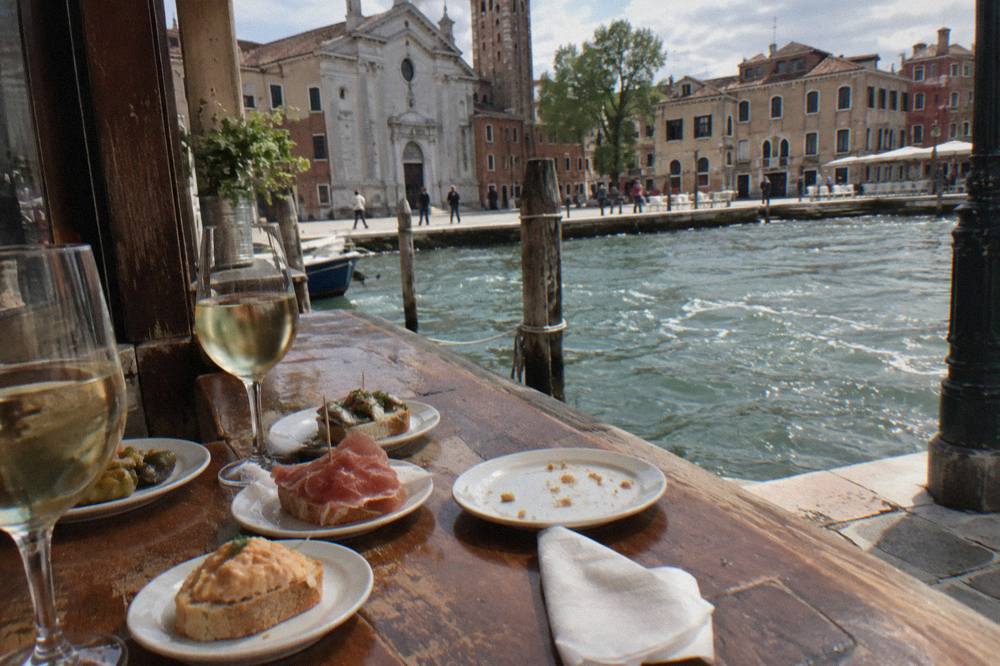
His whole sensibility was built on a suspicion of restaurants that exist to be photographed. The bacaro is the structural opposite. You stand, you point at what looks good from the tray, you hold your plate, and you drink a small glass of whatever the house pours. Nobody is performing hospitality for you. Regulars get their usual; strangers get the same food, which is the point. It is a food culture that has no velvet rope because it evolved for workers, not visitors.
The economics explain the survival. Reported prices on the official Venice visitor site put cicchetti at about EUR 1.50 to 4 a piece depending on how elaborate the topping is, and an ombra of house wine at around EUR 1 to 2.50, with cheaper local spots clustering near the bottom of both ranges. Those figures are reported typical ranges, not a tariff: each bar posts its own list, and tourist-oriented counters charge more. Even at the top of the range, though, a crawl of three bars costs less than one sit-down dinner, and eating standing often avoids the coperto, the cover charge that commonly runs EUR 1 to 5 per person where applied, as reported in recent Venice etiquette roundups.
| Item at a standing bacaro | Reported typical price | Notes |
|---|---|---|
| Simple cicchetto (one piece) | around EUR 1.50 | Posted list applies at each bar |
| More elaborate cicchetto | up to about EUR 4 | Seafood or layered toppings |
| Ombra (small house wine, about 100 ml) | around EUR 1 to 2.50 | Cheaper in local spots |
| Coperto (cover charge) | EUR 1 to 5 where applied | Often avoided by standing at the counter |
Bourdain also liked hours that belong to locals. Venetian bacari fill at midday and again in the early evening, when office workers and market porters take an ombra before lunch or dinner. A visitor who times a crawl to those windows sees the culture functioning; one who arrives at 19:30 expecting a restaurant dinner finds counters winding down, since many Venetians eat early by tourist standards. The ritual is flexible, but it is not nocturnal.
There is a legal footnote worth knowing that Bourdain never had to mention: the municipal rules on public drinking. As reported in the current city regulation, drinking from glass, ceramic or non-single-use containers outside permitted seating areas is prohibited in Venice, and takeaway sales of alcohol in glass are restricted, with fines reported from EUR 25 to 500. The practical version is simple: drink your ombra at the counter or at the bar's own standing tables, which is what the tradition asks anyway. The rules are stated as reported and you should check current city guidance before your trip.
If that counter ritual is what you came for, this is the walk built around it:
How To Build Your Own Bourdain-Style Bacaro Crawl
Pick three to five bacari within one walkable neighbourhood, order two or three cicchetti and one ombra at each, eat standing at the counter, and move on foot between stops. That structure, a short walk, a snack, a small drink, repeated, is the authentic thing itself, not a simulation of it. Budget using the reported ranges above and let each bar's posted list set the real price.
The crawl works because Venice is small and the neighbourhoods are distinct. A classic route strings together bars in the back lanes of San Polo or across the Rialto into the produce-market quarter, where the food culture grew out of the market trade. Another strong zone is Cannaregio in the north, wider lanes, more resident shops, and the historic Jewish Ghetto at its heart. Dorsoduro around the Zattere has its own afternoon scene. The mistake is zig-zagging across the whole city for specific names; the crawl is a neighbourhood activity by design. The rest of the planning pages sit on Venice Food Tours.
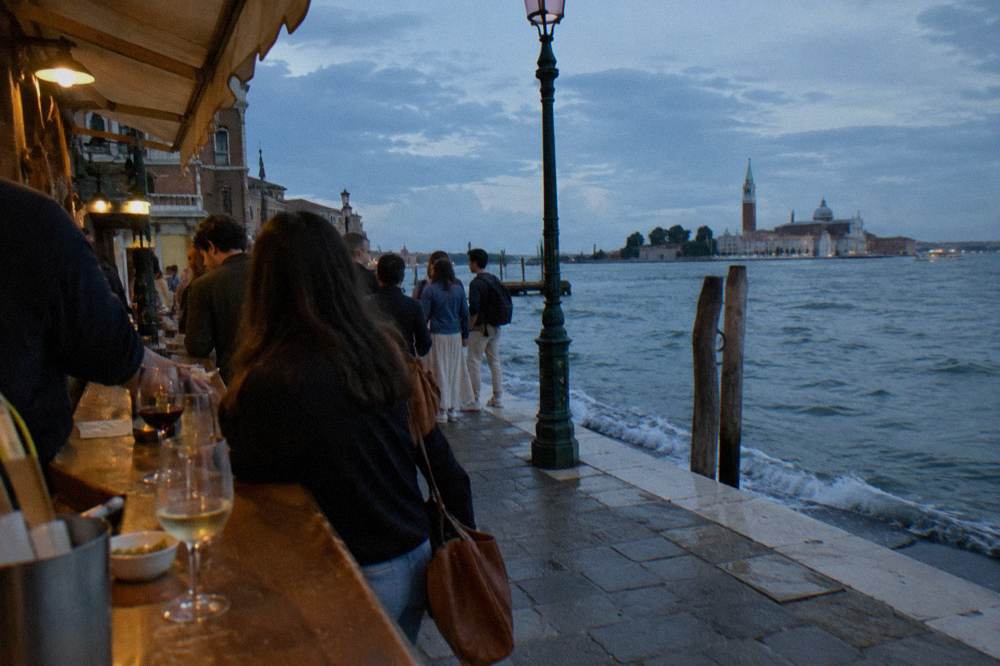
Ordering is simpler than guidebooks imply. Cicchetti are laid out on the counter or in a glass case; you point, count, and pay per piece. Baccalà mantecato, whipped salt cod on polenta or bread, is the canonical Venetian piece and appears almost everywhere. Sardine in saor, sweet-and-sour sardines with onion and raisins, is the other classic. Beyond those, whatever the bar made that morning is the honest answer, and variety between bars is the whole pleasure. For a fuller primer on ordering, our guide on what is cicchetti and how to order it covers the counter customs in detail.
A few habits make the crawl feel local rather than performed. Stand rather than asking for a table. Pay per round rather than running a tab if the bar looks busy. Take one drink per bar, the ombra is small on purpose, and keep groups to two or three people so you fit the counter. And time the market into it: the Rialto produce market runs Monday to Saturday from 7:00 to 20:00, and the fish market Tuesday to Saturday from 7:00 to 14:00, both closed around the weekend gaps, per the official Venice tourism site, so a morning crawl can end at the Pescheria while the trade is still active. Our Rialto market hours and best time guide has the full breakdown.
The guided version of the same idea exists for a reason. A local guide knows which counters are standing-friendly, which bars a first-timer would walk past, and how to sequence five stops without backtracking.
Cannaregio, The Ghetto And The Neighbourhood Table
If Bourdain's Venice has a spiritual address, it is the kind of residential neighbourhood where restaurants cook for regulars, and Cannaregio is the clearest modern example: a quarter of resident shops, standing bars and the historic Jewish Ghetto, with a food tradition that includes the ghetto's own dishes alongside standard Venetian fare. It is also where a guided walk adds the most, because the best counters here do not advertise.
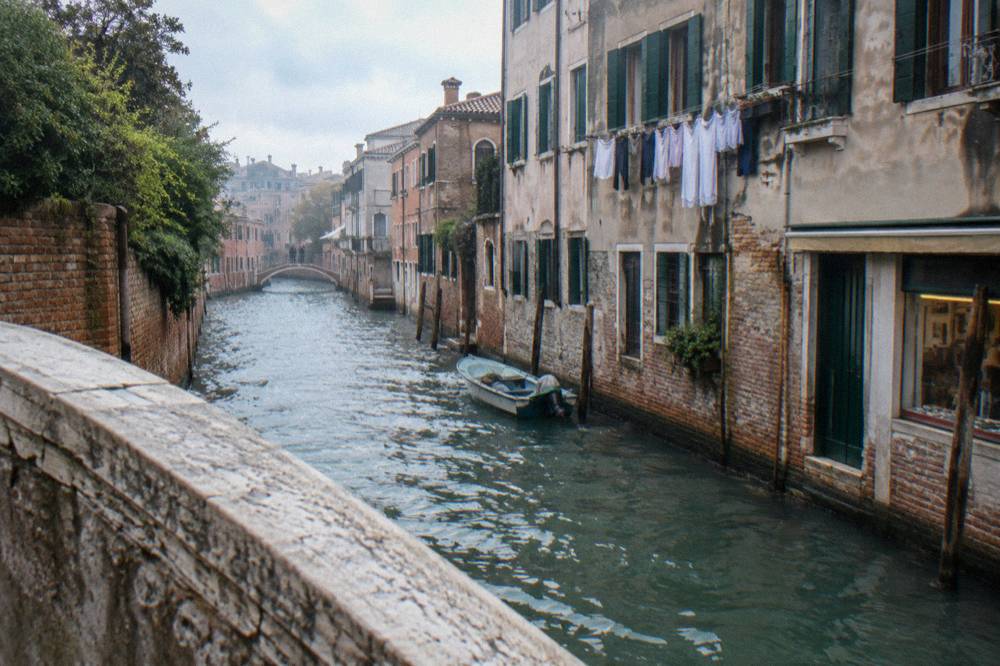
Cannaregio occupies the north-west of the historic centre and holds more of Venice's resident life than the museum quarter around St Mark's. Its food geography runs from the Fondamente Nove vaporetto stops at the lagoon edge down through the Strada Nova and into the lanes around the Ghetto, where the historic Jewish community of the quarter developed a cuisine of its own over the centuries. Eating through Cannaregio means mixing those traditions rather than choosing one, and the bars here are likelier to have Venetians at the counter in the late afternoon.
The Ghetto itself rewards a food-minded visit. The historic square, the museums and the small kosher food tradition of the quarter are real and documented, though the current kosher status of any individual venue is not something this site can verify, so check directly with each place before assuming. A guided walk that covers the Ghetto and Cannaregio together, with tastings and wine, is one of the formats offered among the tours compared here, and it solves the two problems a first-timer has in this quarter: knowing which lanes to turn down, and knowing which counters welcome a crawl.
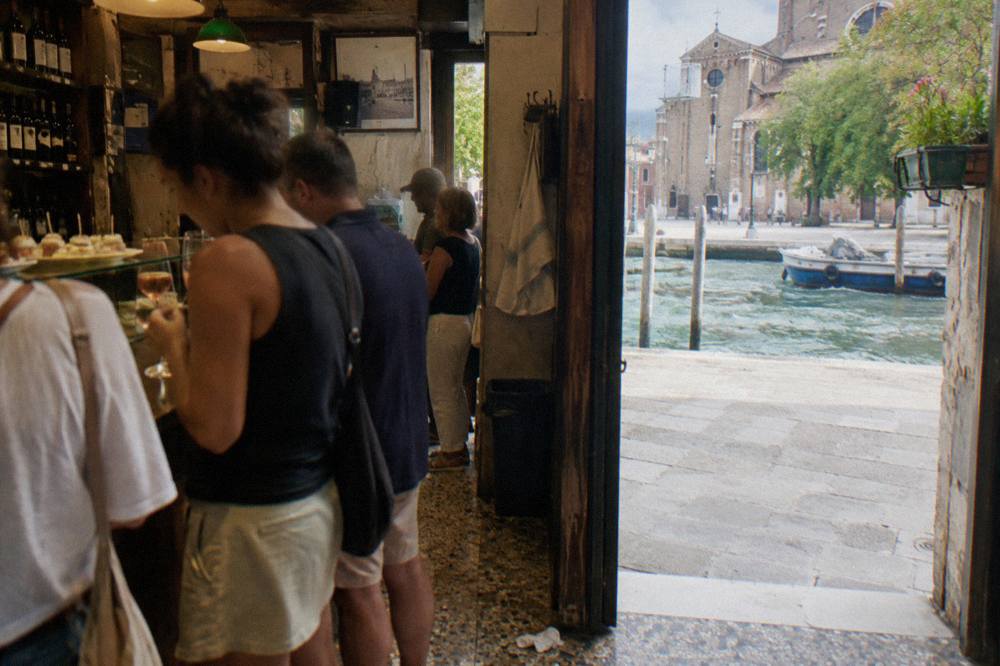
Timing matters less in Cannaregio than at Rialto but still matters. The midday and early-evening windows are when the standing bars are busy with locals; the mid-afternoon lull is when you will have counters to yourself but less atmosphere. Weekend midday is the most resident-feeling slot of all. As everywhere in Venice, guided groups are capped at 25 people in the historic centre and the lagoon islands, with loudspeakers banned, as reported in the standing city rules, so even a larger tour moves through lanes quietly with headsets.
What A Guided Tasting Walk Actually Gives You Over A Solo Crawl
A guided tasting walk trades your freedom to wander for three concrete things: a pre-vetted sequence of counters, tastings and drinks counted in advance per the listing, and a guide who can tell you what you are eating and why it exists. For a short trip it compresses the local-finding work of days into about three hours. For a long stay, one guided walk early in the visit teaches you the pattern, then you repeat it alone.
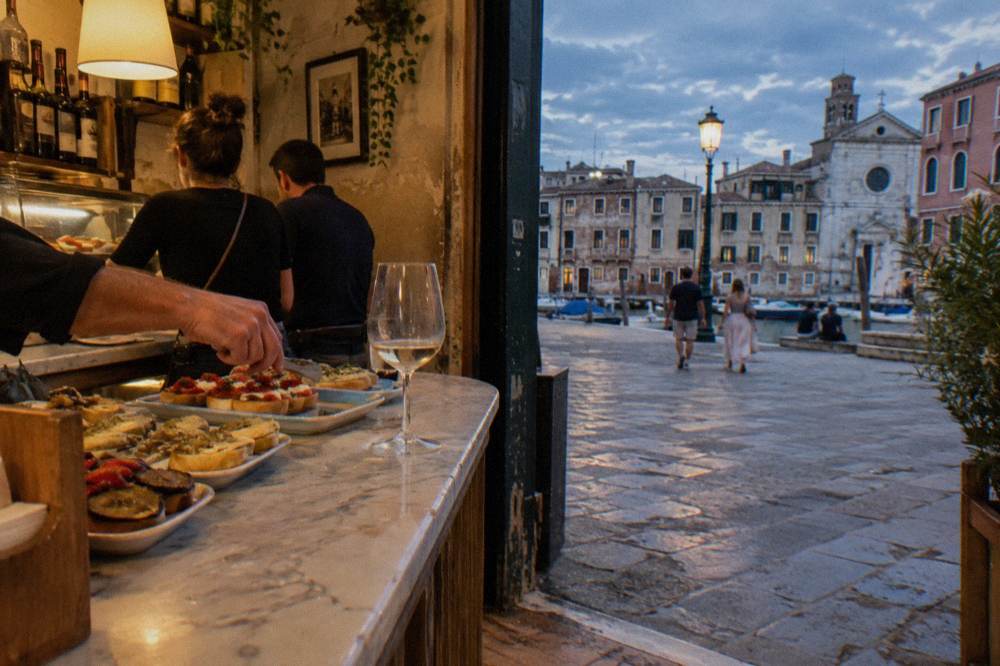
The featured walk for this piece, Eat Like a Local: Venice 3-Hour Small-Group Food Tasting Tour, runs about three hours in a small-group format and is built exactly on the counter-hopping structure described above. The specific stops, the number of tastings and the meeting point are stated on the booking page, and those details are the right things to check before you commit, since routes and inclusions vary with the season and the day of the week. Dietary needs deserve the same caution: unless a listing explicitly states vegetarian, vegan or gluten-free coverage, message the operator before booking rather than assuming.
The value question is fair. Everything a guide shows you is theoretically findable alone, and this article has just described how to crawl solo on reported prices of a few euros per stop. What you are paying for is curation and time. A good guide skips the counters that have drifted toward tourism, paces the walk so you are hungry at each stop rather than full, and translates the culture at the counter, why the ombra is small, why baccalà is everywhere, when to eat what by season. Venetian food is genuinely seasonal, from moleche crabs in autumn to white asparagus in spring, and a local guide is the fastest way to learn what the city is eating this month.
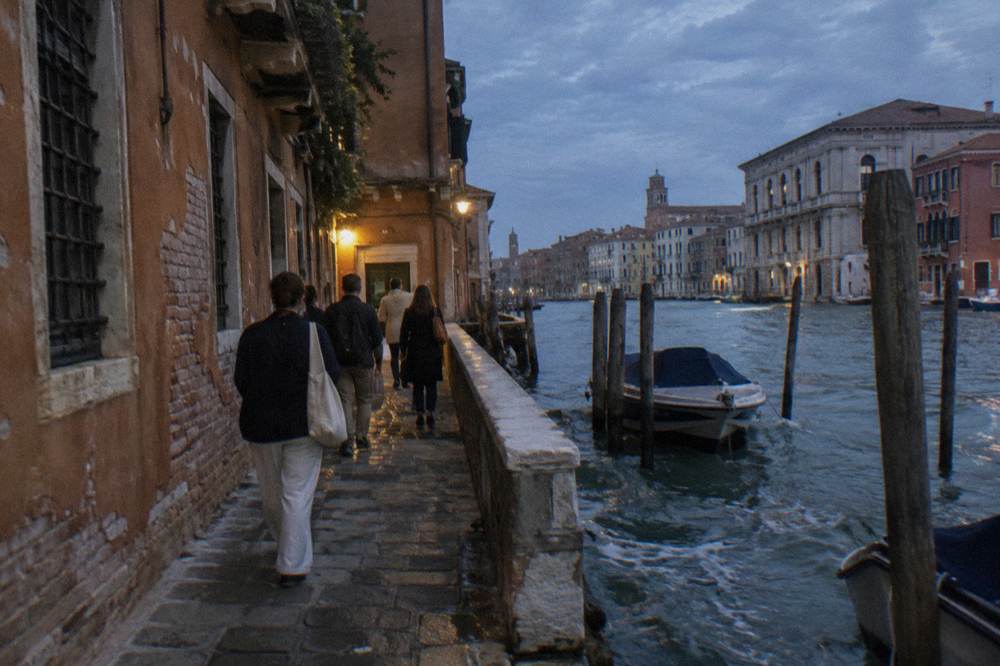
Cost comparison is honest only in structure, since tour prices vary by date and group size and are shown on each listing. The economic case for a walk is not that it undercuts a solo crawl, it will not, but that it removes the risk of spending your two evenings in Venice at the wrong counters. If the walk format appeals but you are torn with a hands-on class, our comparison of a food walk versus a cooking class in Venice breaks down which fits which traveller, and Venice Food Tours covers the full range of formats in depth.
One practical note on timing your trip around all of this: the 2026 day-visitor access-fee trial ended, and per the official city page no fee applies to visiting Venice since 27 July 2026, with 2027 dates listed and new arrangements to be announced by 31 December 2026. Check the official access-fee page before a 2027 spring trip. It never applied to the lagoon islands, so a Murano or Burano extension has no bearing on it either way; our Burano and Murano day trip with food stops covers that side trip.
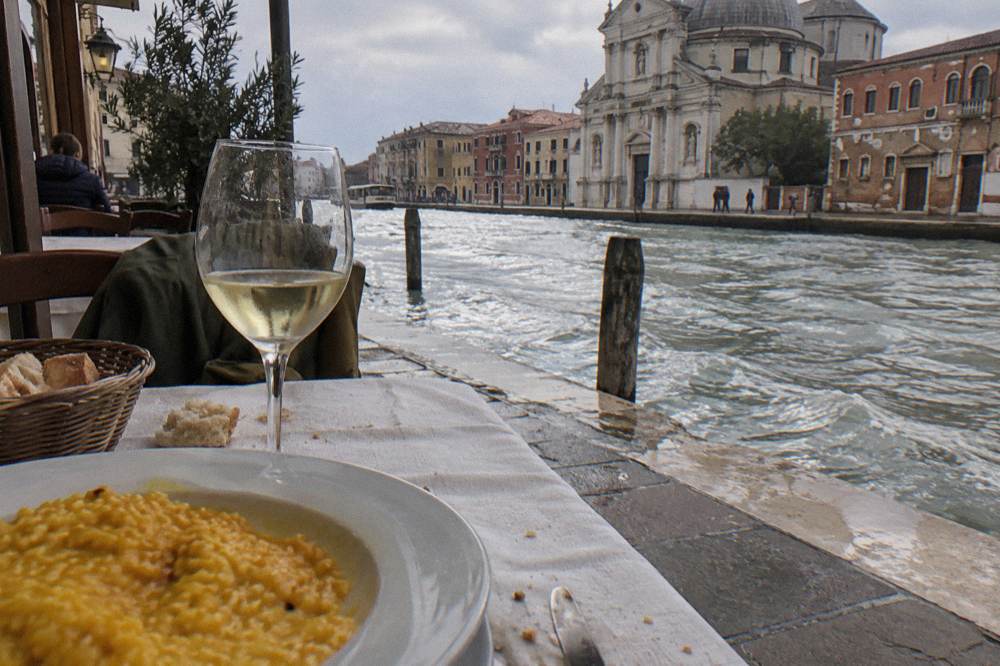
Three walks fit the Bourdain-style brief, the small-group counter crawl, the classic bacaro format and the Cannaregio and Ghetto route:
Common Questions About Bourdain And Venice Food
Where Did Anthony Bourdain Eat In Venice?
No verified source names the specific Venetian restaurants or bars he ate at. Popular lists conflict with each other and none traces to his books, programmes or estate. What is verifiable is the style he championed: standing bacaro counters, cicchetti and small glasses of house wine, which you can still do anywhere in the city.
Did Bourdain Have A Favourite Restaurant In Venice?
There is no verified record of a named favourite in Venice. His published comments on the city praise the bacaro culture in general terms rather than specific venues, so any blog claiming a particular favourite is repeating an unconfirmed story.
Can You Still Eat The Way Bourdain Described In Venice?
Yes, and cheaply. Cicchetti cost roughly EUR 1.50 to 4 a piece and an ombra of house wine around EUR 1 to 2.50 at standing counters, as reported on the official visitor site. Stand at the bar, order by pointing, and hop between three and five counters in one neighbourhood.
Is A Guided Food Walk Better Than Going Alone?
A guided walk compresses days of local-finding into about three hours, with stops, tastings and a guide who explains the culture. A solo crawl is cheaper and freer. Many travellers do one guided walk first, then repeat the pattern alone.
Which Venice Neighbourhood Is Best For A Bacaro Crawl?
San Polo around the Rialto market, Cannaregio including the Jewish Ghetto, and Dorsoduro along the Zattere all support strong crawls. Pick one quarter and stay in it, since the crawl works best as a short walk between nearby counters rather than a crossing of the city.
Do You Need To Book Venice Food Tours In Advance?
Small-group formats fill first, especially in high season and around holidays. Check the booking page for the dates you want; it shows current availability, the meeting point and exactly what the tastings include.