What Is Veneto, Italy Known For?
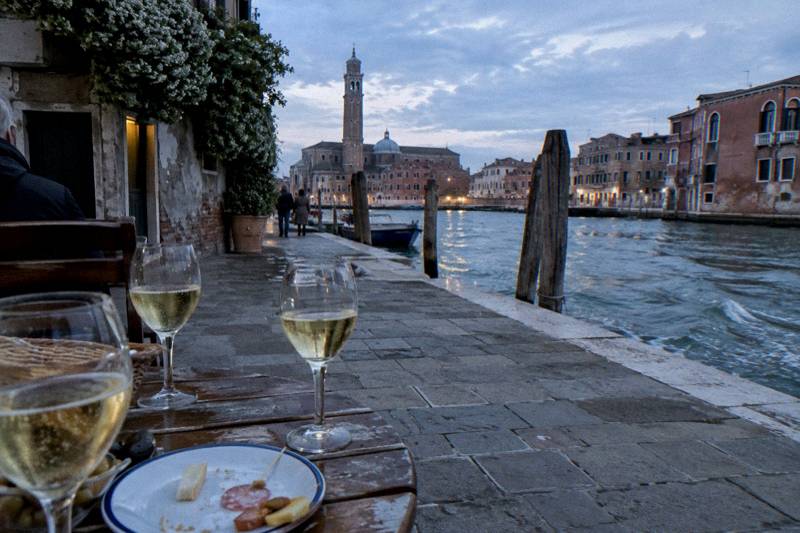
Veneto is known for Prosecco, Soave, Amarone, radicchio di Treviso, polenta, rice dishes, baccalà alla vicentina and the lagoon food culture of Venice. Here is what to taste and how to experience it.
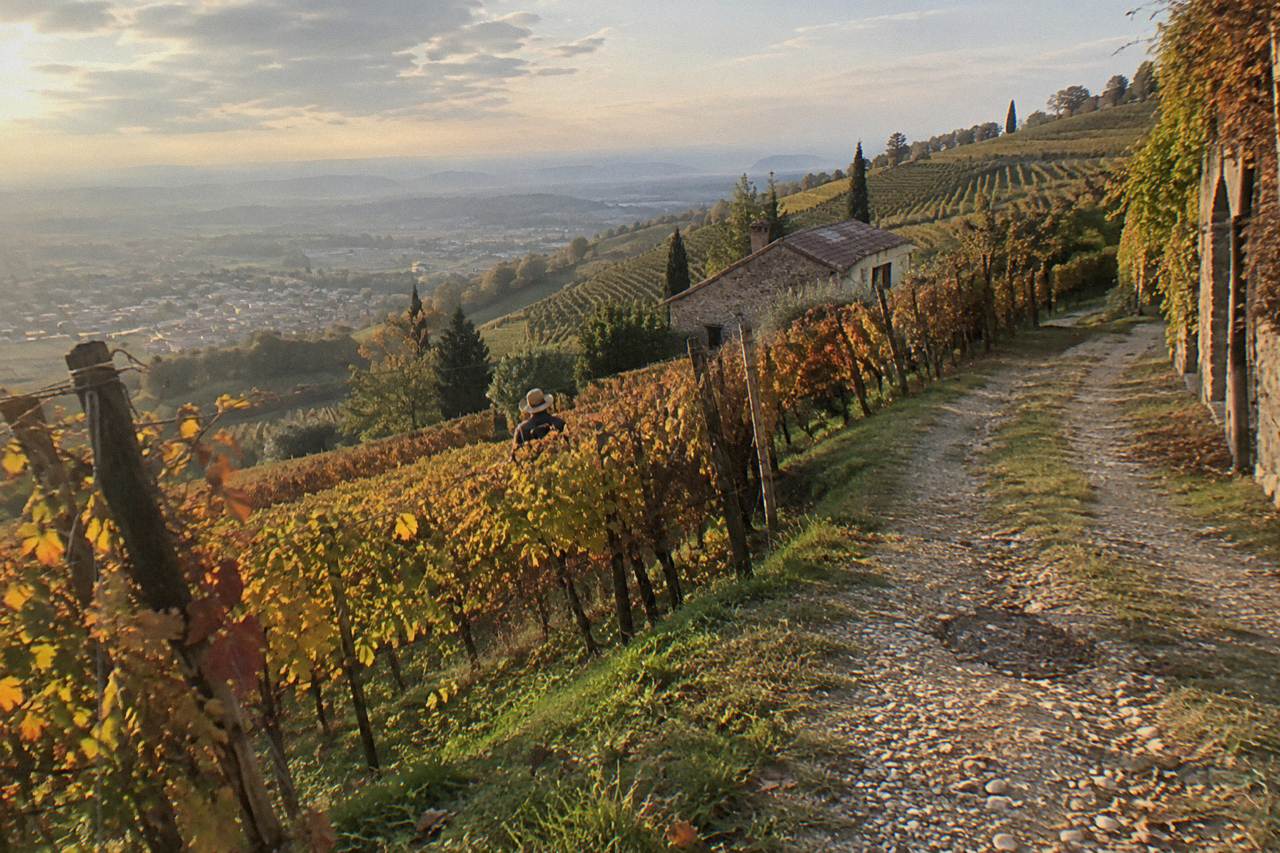
Veneto is known for its wines first: Prosecco, Soave, Valpolicella and Amarone all come from this region. Beyond the glass, it is famous for radicchio di Treviso, polenta, the rice dishes of the flatlands, baccalà alla vicentina, and the lagoon food culture of Venice itself, from cicchetti in bacari to the Rialto markets. It is one of Italy's most productive wine regions and one of its most varied food regions, stretching from the Dolomites in the north to the Adriatic coast, with Venice sitting in the middle of the lagoon like a fork in the road.
The region is larger and more varied than most visitors expect. Verona, Padua, Vicenza, Treviso and Venice are all Veneto cities, and each contributes something different to the table. Verona brings Valpolicella and Amarone, the powerful reds made from partially dried grapes. Treviso claims both Prosecco's heartland nearby and the bitter red chicory that carries its name. Vicenza is the home of baccalà alla vicentina, air-dried cod cooked slowly in milk and oil until it becomes a spreadable, almost custardy cream served with polenta.
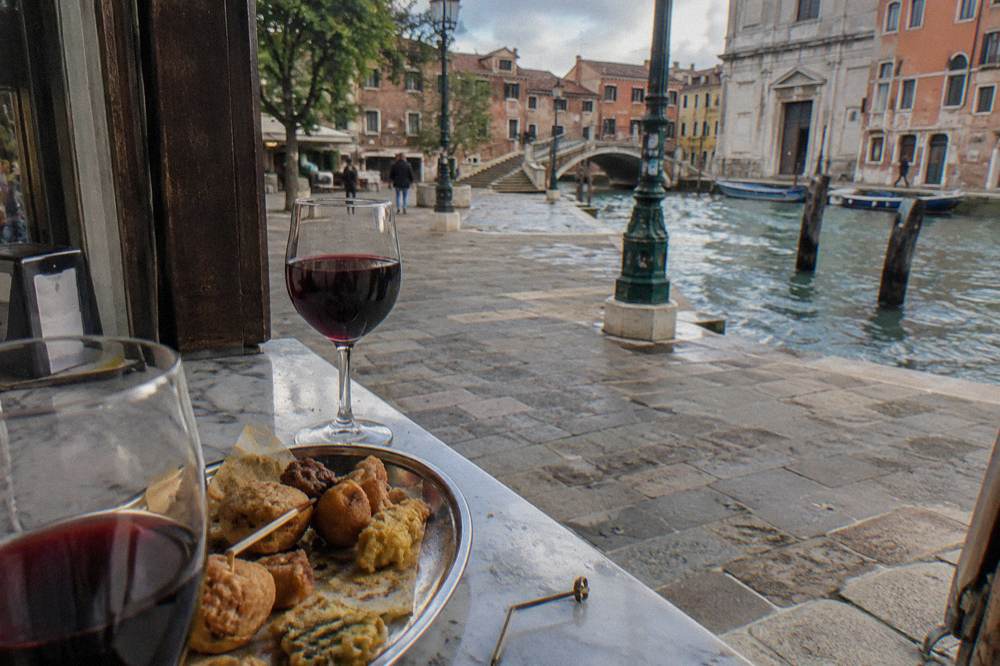
Venice, the regional capital, adds the lagoon's own vocabulary. Cicchetti, the small snacks sold across bacari counters, an ombra of house wine standing at the bar, sarde in saor, baccalà mantecato, and Rialto's fish and produce markets together form a street-food tradition that exists nowhere else in Italy in quite the same form. The Venice Food Tours site exists largely because this dense, walkable, counter-based food culture is the part of Veneto most visitors actually touch.
If you are planning to taste the region rather than just read about it, the three experiences below cover its three essential registers: a guided wine tasting for the Veneto-in-a-glass side, a small-group tasting walk for the lagoon's cicchetti culture, and a pasta and tiramisu class for the home-cooking tradition of the plains.
What Wines Put Veneto On The Map?
Prosecco is the region's global calling card, a sparkling wine made mainly from the Glera grape in the hills around Valdobbiadene and Conegliano north of Treviso. Soave gives Veneto its most planted white-wine identity, Valpolicella its everyday red, and Amarone della Valpolicella its most prestigious: a rich, dry red made from grapes dried on racks for months before fermentation. Add Bardolino from Lake Garda's shores and Raboso, the tannic red that Venetians historically drank as an ombra, and the region covers nearly every style a table could want.
“A fantastic Eat Drink, Repeat experience from start to finish. Even the weather did not dampen people’s mood. The food was amazing, the wines were delicious, and the whole event was very well organised. Sarah was an outstanding host, providing interesting history details about the city along the way and ensuring everyone had a great time. Highly recommended!”
Prosecco deserves its own sentence or two because it dominates the region's reputation. The name is protected, the production zone is defined by law, and the hillside Conegliano Valdobbiadene area is recognised by UNESCO for its landscape of vines on steep, hand-worked slopes. The wine is made by the Charmat method, in which the second fermentation happens in pressurised tanks rather than individual bottles, which keeps it fresh, fruity and comparatively affordable. That combination is why Prosecco overtook Champagne in global sales volume years ago and why the hills north of Treviso are now a wine-tourism destination in their own right.
Amarone is the opposite register. Corvina, Rondinella and other permitted grapes are laid out to dry in ventilated lofts, the appassimento process, concentrating sugars and flavours until the wine that emerges is broad, warming and often above 15 percent alcohol. Recioto, its sweeter ancestor, is still made in small quantities. Soave, from volcanic and limestone soils east of Verona, produces whites that range from crisp and simple to seriously age-worthy from the classico zone.
You do not have to leave Venice to taste any of this seriously. The Veneto wines to know, from Prosecco to Amarone guide on this site goes deeper on each bottle, and a guided tasting in the city can cover the whole regional arc in about an hour. One option compared here, the Venice Prosecco and Italian Wines Tasting Experience, runs roughly one hour and is built exactly for this: a sit-down, guided flight through Prosecco and other Italian wines with someone explaining what is in the glass. It makes a sensible first-evening activity, a way of calibrating your palate before you start ordering ombre on your own.
What Food Is The Veneto Region Famous For?
Veneto's table rests on four pillars: bitter vegetables, above all the several varieties of radicchio grown around Treviso and Castelfranco; polenta, once the staple carbohydrate of the poor; rice, in risottos and the soups of the Po plain; and baccalà, salt cod in the lagoon style and air-dried stockfish in the Vicenza style. Tiramisu, whatever its contested birthplace, is claimed by Treviso and is now the region's best-known export dessert.
Radicchio is the vegetable that surprises people. This is not the pale bitterness of chicory in a supermarket bag: late-harvest radicchio di Treviso tardivo, forced and blanched into elongated white-and-purple leaves, is prized enough to carry protected status and to appear grilled, in risotto, or dressed simply with oil. Castelfranco produces a speckled, cream-and-red variety that looks like a painted lettuce. The bitterness is the point, and it is why radicchio pairs so naturally with the region's sweet, dried-grape Amarone.
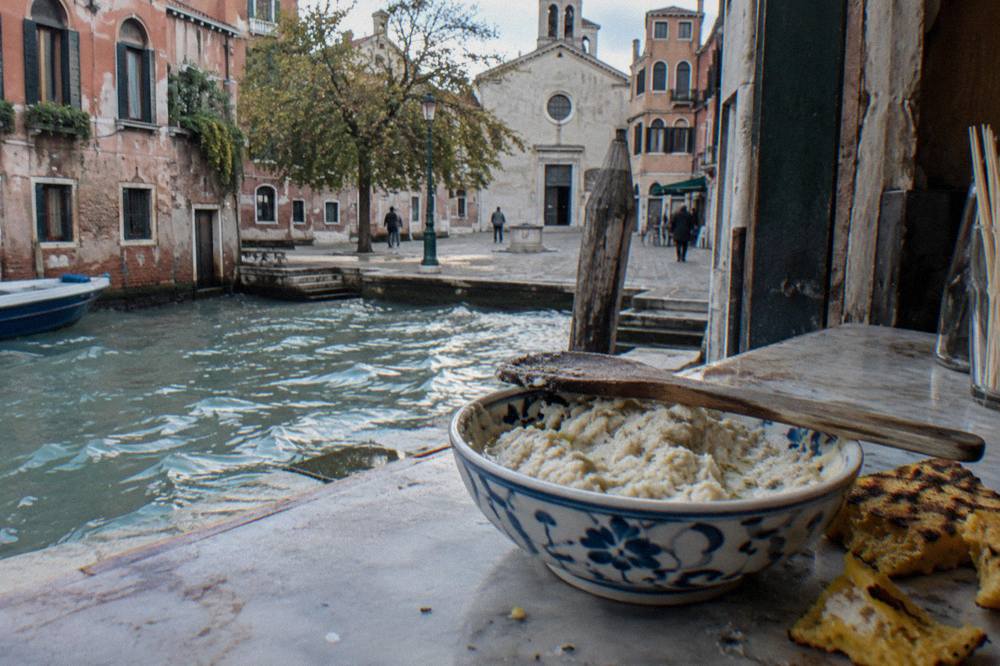
Polenta is the old backbone. Before rice arrived in quantity, ground cornmeal cooked slowly in a copper pot fed the peasant population of the entire Venetian mainland, and it still appears under stews, alongside baccalà mantecato, or crisp-fried as a snack. Rice, grown on the plains west of Venice and around Verona, gave the region its risotti: with radicchio, with quail, with the lagoon's own fish. Venice's most famous version, risi e bisi, rice and fresh peas, was traditionally a Doge's dish for spring.
Baccalà comes in two distinct regional dialects, and confusing them is a reliable way to start an argument. In Vicenza, baccalà alla vicentina means air-dried stockfish, soaked for days, then baked gently with milk, onion and oil until it collapses into a cream served over polenta. In Venice, baccalà mantecato means salt cod whipped with oil into a light, whipped spread piled on a small piece of bread or polenta, one of the most common cicchetti on any bacaro counter. Both are cod. They are not the same dish.
“We would highly recommend this tour. Maria was very friendly, offered recommendations for local restaurants and provided information on the areas we visited which was interesting. The food was amazing and very filling and the drinks were lovely too. So much so we went back to some of the places throughout our visit.”
For the full context of what the lagoon itself contributes, the traditional Venetian dishes worth knowing guide on this site walks through the Venetian plates one by one, and the guide to baccalà mantecato and polenta explains the lagoon staple in detail.
How Does Venice Fit Into The Veneto Food Story?
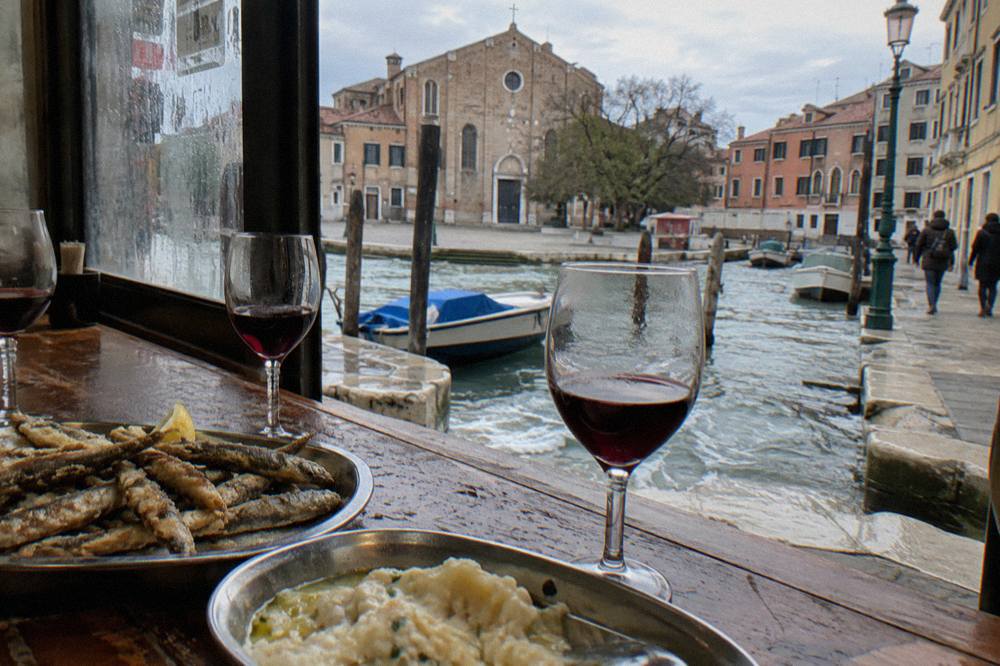
Venice is the regional capital and its food is a lagoon dialect of Veneto cooking: cicchetti instead of plated antipasti, ombre instead of bottles, seafood from the Adriatic and the lagoon, and spice-influenced dishes like sarde in saor that recall the city's centuries as a trading empire. Rialto's fish and produce markets have supplied this kitchen for centuries and still set the rhythm of the city's restaurant kitchens.
The cicchetti habit is the piece visitors fall into fastest. A bacaro is a small, standing-room bar; cicchetti are the bite-sized things on the counter, reported at around EUR 1.50 to 4 a piece in local spots, and an ombra is the small glass of house wine, reported at around EUR 1 to 2.50, that traditionally goes with it. Visit Venice's official food pages describe these price ranges for counter cicchetti, and they hold best away from the main tourist drags. Standing at the counter, rather than sitting, is both the local custom and the cheaper way to do it, since a coperto cover charge, reported at roughly EUR 1 to 4 where applied, is generally avoided on your feet.
Rialto is the region's most storied market. The produce market, the Erbaria, runs Monday to Saturday from 7:00 to 20:00 and closes Sunday; the fish market, the Pescheria, runs Tuesday to Saturday from 7:00 to 14:00 and closes Sunday and Monday, per the official Venezia Unica listing, and tour operators themselves warn that the fish market is also shut on Italian holidays. A morning walk through the Pescheria's gothic loggia is one of the most Venetian hours available, and it is free.
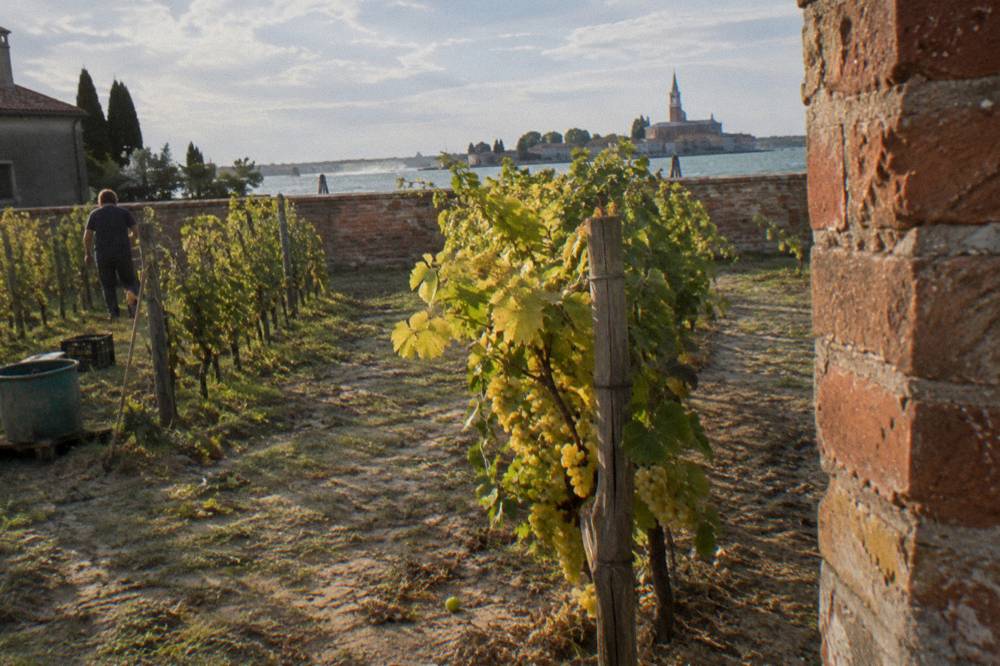
The lagoon islands add another layer. Burano brings bussolà, the ring and S-shaped butter biscuits, and risotto di gò, made with the lagoon's goby fish. Mazzorbo holds Venissa's walled vineyard, the only hectare in the world of the revived ancient Dorona grape, with vineyard walks and tastings reported on site. Sant'Erasmo, the market garden of the lagoon, supplies the small violet castraùre artichokes that appear briefly in spring. All of this is Veneto too, just reached by boat: ACTV's vaporetto line 12 runs from Fondamente Nove through Murano to Burano, on a reported daytime interval of about 20 minutes at peak times, with a single 75-minute ticket reported at EUR 9.50. The official ACTV fares page lists current ticket and day-pass prices, worth checking before you plan island hops.
The easiest way into the lagoon's food culture, if standing at a bacaro counter alone feels like a barrier, is a guided tasting walk. The Eat Like a Local three-hour small-group tour compared here is built exactly for this, moving through Venetian bacari with a local guide who orders, translates and explains while the group eats. Three hours is enough for a proper crawl and an early evening finish.
What Do People Drink With Their Food In Veneto?
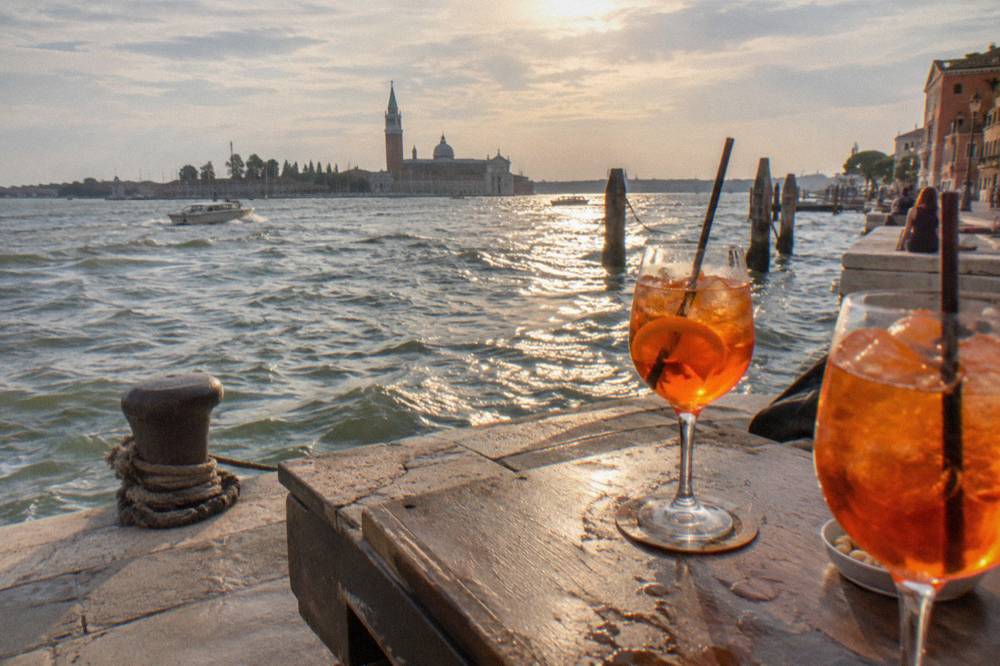
The Venetian aperitivo is the region's drinking ritual: a spritz, built from Prosecco, a bitter aperitif and a splash of soda, or simply an ombra of house wine taken standing at the bar. Beyond the city, the region drinks its own wines with its own food, Soave with fish, Valpolicella with the lighter courses, Amarone with the braised and aged cheeses of the winter table.
The spritz deserves its reputation even in its most commercial form. The drink predates the orange-bitter brands that now dominate it, and the local preference, many Venetians will tell you, leans toward Select, the Venetian aperitif created in the city, over the better-known international labels. Ordering a spritz with cicchetti in the late afternoon, the hours the evening food walk guide on this site covers in detail, is the region's most exportable habit.
Two rules shape drinking in public in Venice, and both are worth knowing before you plan a self-guided crawl. The municipal regulation prohibits drinking from glass containers outside permitted outdoor seating areas, and bans takeaway alcohol sales in glass bottles or glasses intended for public consumption, with reported fines of EUR 25 to 500; the rules exist to move drinking into bars and onto seated terraces, so plan to finish your ombra where you bought it. Separately, the day-visitor access fee that Venice trialled in 2026 no longer applies: per the official access-fee pages, as of 27 July 2026 no fee is charged and no payment or exemption is needed to visit, though the fee is expected to return in 2027 with arrangements to be announced.
Wine-wise, an ombra is the entry point and a guided tasting is the graduation. Raboso, the tannic native red, is the historic ombra grape, sharp and sour-cherry-fruited and increasingly rare on counters. A structured tasting lets you put Prosecco, Soave and a Valpolicella-family red side by side with someone explaining the differences, which is precisely the format of the one-hour Prosecco and Italian wines experience featured with this article. The booking page lists the current schedule and meeting point.
Can You Cook Veneto Food Yourself?
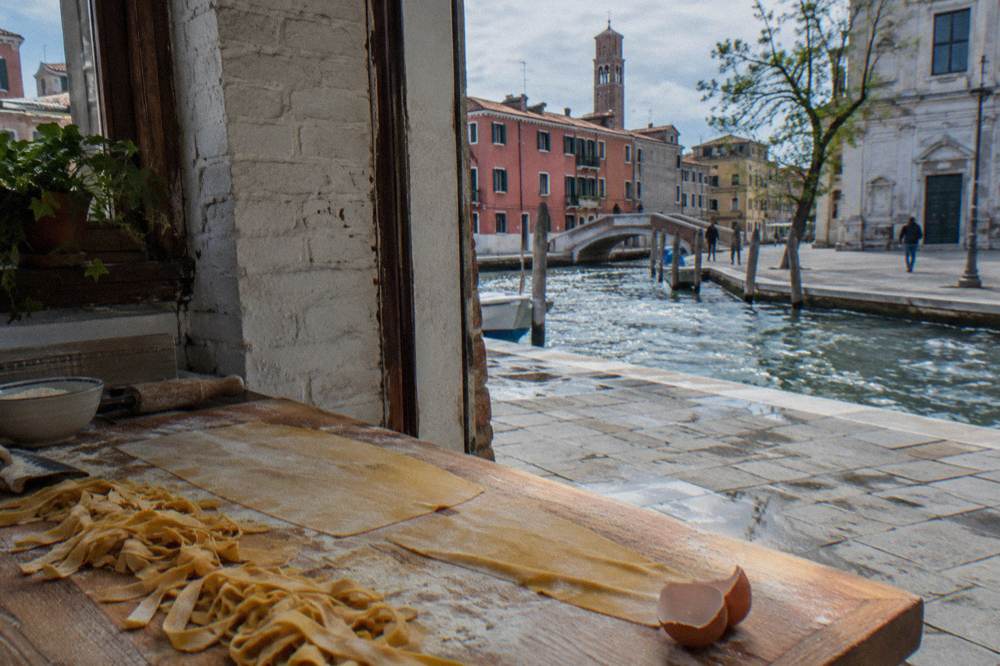
Yes, and in Venice the standard format is a three-hour pasta and tiramisu class, often in a local home or small studio, in which you roll fresh pasta dough, shape it by hand, assemble tiramisu and then eat what you made with wine. The classes compared here follow that pattern, several include a market visit first, and the region's shared classes typically cap at around 12 guests with smaller private options available.
Fresh egg pasta is the technique that travels home with you. Veneto's filled pastas, bigoli, the thick, rough-strand noodles traditionally pushed through a press, and the tiramisu that Treviso claims as its own make a coherent lesson: fat-based pastry it is not, and the skills, kneading, resting, rolling, shaping, are repeatable in any kitchen. The market-plus-class format is the deepest version, because it connects the Rialto stalls to the plate in a single morning. Market tour and cooking class combinations compared here run about four hours, including the class with a Venetian chef, the class with a Venetian sailor, and a Rialto market tour with cooking class and lunch.
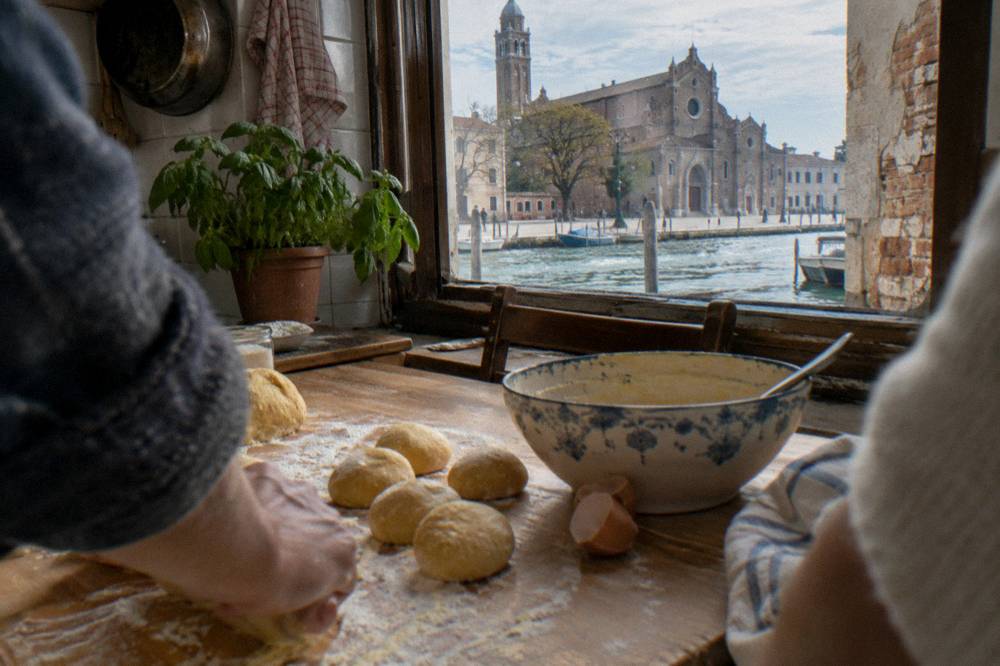
“Our market tour and cooking class with Lorenzo was a lovely experience. He is an engaging teacher, friendly and fun, and his kitchen provided a comfortable learning environment (and he played great music on the stereo, too). It was delightful to share the lunch we all cooked together: delicious ravioli, sea bass and tiramisu. A definite highlight of our trip to Venice!”
Class sizes matter more here than with walking tours, because shaping pasta by hand needs hands-on correction. Shared classes listed by regional hosts typically cap at 12, with private formats for families or small groups. If your dates sit in high season, book early rather than assuming same-week availability, and if anyone in your party eats vegetarian, vegan or gluten-free, message the operator before booking: the class listings do not all state dietary accommodations, and the booking page is the place to confirm what can be adapted.
The Venice Pasta and Tiramisu Cooking Class with Wine compared here is a representative three-hour choice: fresh pasta, tiramisu, wine with the meal, and a recipe base you take home. Check the booking page for the current schedule and meeting point.
How Do You Taste Veneto Without A Car?
You base yourself in Venice and use the city as the tasting room: a wine flight for the region's bottles, a bacaro crawl for its drinking food, a cooking class for its home tradition, and vaporetto lines to the lagoon islands for bussolà and lagoon fish dishes. None of it requires a car, and the wine hills around Valdobbiadene are the only major Veneto food destination that genuinely do.
This is the practical shape of a Veneto food trip. Venice's walkability and boat network do the work that a rental car does in rural wine regions. A sensible arc over several days looks like this: an aperitivo-height tasting walk or a one-hour wine flight early in the visit to calibrate, a market morning at Rialto mid-week when the Pescheria is open, a cooking class on a quieter day, and one long island day for Burano and Mazzorbo. The table below maps the region's signature tastes to how to reach them.
| Veneto signature | What it is | Where to taste it from Venice |
|---|---|---|
| Prosecco | Sparkling Glera-based wine from the Treviso hills | A guided wine tasting in the city, or the hillside zone by tour |
| Amarone and Valpolicella | Rich dry reds from dried grapes, Verona province | Wine bars and tastings in Venice |
| Radicchio di Treviso | Bitter forced chicory, grilled or in risotto | Seasonal restaurant menus, autumn and winter |
| Baccalà mantecato | Whipped salt cod on bread, a cicchetto | Any bacaro counter in Venice |
| Cicchetti and ombra | Counter snacks and a small glass of wine | Bacari across Cannaregio, San Polo and Dorsoduro |
| Bussolà and risotto di gò | Butter biscuits and goby risotto | Burano, on vaporetto line 12 |
For the wine hills themselves, the Prosecco hills day trip guide on this site covers the logistics, and the food-first itinerary guide helps you slot everything into the days you actually have. Whatever you choose, book the guided pieces ahead: tasting walks and classes both cap their numbers, and the best-reviewed time slots in high season go first.
Common Questions About What Veneto, Italy Is Known For
What Is Veneto, Italy Known For?
Prosecco, Soave, Valpolicella and Amarone wines, radicchio di Treviso, polenta, the rice dishes of the plains, baccalà in both the Vicenza and Venetian styles, and the lagoon food culture of Venice, from cicchetti and ombre in bacari to the Rialto markets.
Is Venice Part Of Veneto?
Yes. Venice is the regional capital of Veneto. Verona, Padua, Vicenza and Treviso are also Veneto cities, each with its own food traditions, and the lagoon's cooking is a distinct dialect within the region's table.
What Wine Is Veneto Most Famous For?
Prosecco, the sparkling wine from the hills north of Treviso, is the region's most exported and recognised wine. Amarone della Valpolicella, from dried grapes near Verona, is its most prestigious red, with Soave its best-known white and Bardolino and Raboso adding depth.
What Is The Difference Between Baccalà Mantecato And Baccalà Alla Vicentina?
Baccalà mantecato is Venetian: salt cod whipped with oil into a spread served on bread or polenta as a cicchetto. Baccalà alla vicentina is from Vicenza: air-dried stockfish soaked for days and slow-cooked with milk, onion and oil into a cream served over polenta.
Can You Taste Veneto Food Without Leaving Venice?
Yes. Bacaro counters carry the region's drinking food, wine tastings pour its bottles, cooking classes teach its home tradition, and vaporetto line 12 reaches Burano's bussolà and risotto di gò. Only the Prosecco hills truly require a dedicated trip.
How Much Do Cicchetti And An Ombra Cost In Venice?
Reported prices in local bacari run around EUR 1.50 to 4 for a piece of cicchetti and around EUR 1 to 2.50 for an ombra of house wine. Standing at the counter generally avoids the coperto cover charge, reported at roughly EUR 1 to 4 where it is applied.