What Is The Number One Thing To Do In Venice?
The single best thing to do in Venice, argued from how the city actually works: the Rialto market, a bacaro crawl, and the Grand Canal by vaporetto, with how a guided food walk fits in.
The number one thing to do in Venice is to eat and drink your way through it: a morning at the Rialto market, then a crawl from bacaro to bacaro for cicchetti and an ombra of house wine, with the Grand Canal ridden by vaporetto between stops. It costs less than a museum pass, needs no reservation, and it is the one activity that puts you inside Venetian daily life instead of looking at it.
That claim needs defending, because the standard answers are strong. Saint Mark's Basilica is genuinely extraordinary. The Doge's Palace carries six centuries of statecraft on its walls. A gondola glide at golden hour is one of the great travel images. But all of those are things you look at. Food in Venice is something you participate in, standing elbow to elbow at a counter, pointing at fried baccalà mantecato, holding a small glass of wine the locals call an ombra because it once hid in the shadow of the Rialto bell tower.
There is also a practical argument. Venice is small, expensive and crowded at exactly the hours most visitors do their sightseeing. The food-led day runs against that current: markets are liveliest early, bacari fill at aperitivo hour when the day-trippers are drifting toward the station, and the best viewpoints over the Grand Canal cost a single vaporetto fare. You see the famous city anyway, because in Venice the canal is never more than a corner away.
For travellers who want the counter culture explained rather than decoded by trial and error, a guided walk does in three hours what might otherwise take a whole trip to figure out.
Why The Rialto Market Area Rewards An Early Start
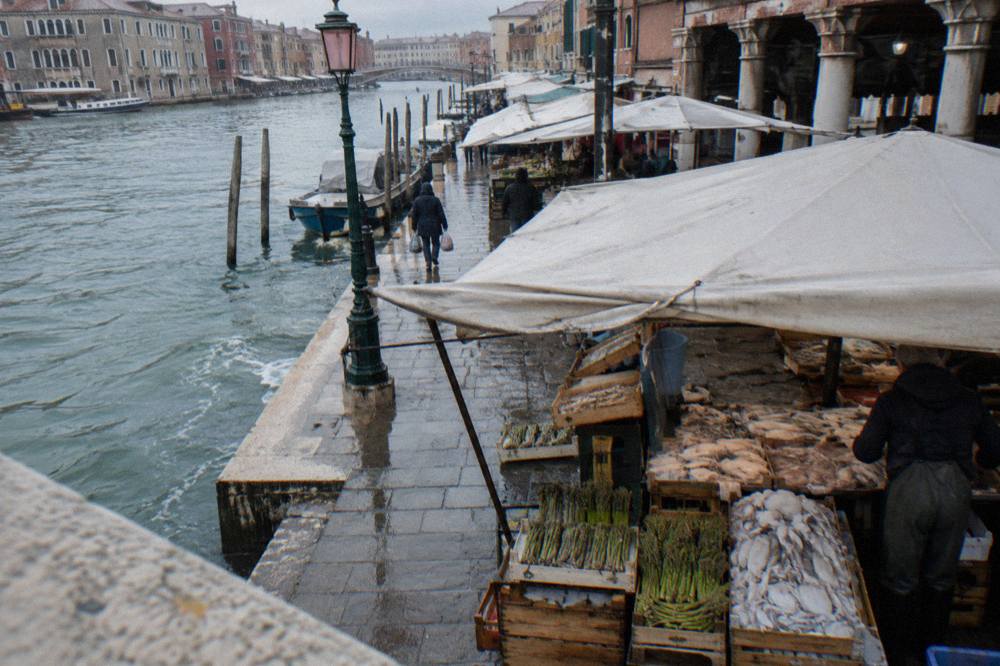
Start at Rialto because it is the working heart the city was built around: the produce market on the Erbaria side runs Monday to Saturday from 7:00 to 20:00, and the fish market, the Pescheria, runs Tuesday to Saturday from 7:00 to 14:00. By mid-afternoon the fish stalls are closed and the atmosphere thins, so the early hours are not a suggestion, they are the whole point.
These hours come from the official Venezia Unica listing of the city's daily markets, and they carry a consequence most first-time visitors miss. Arrive on a Sunday or a Monday and the Pescheria is dark, however photogenic its arcades look from the outside. Tour listings for market walks warn about exactly this, adding that the fish market also closes on Italian holidays. If your trip is short, checking the day of the week against the market calendar matters more than checking the weather.
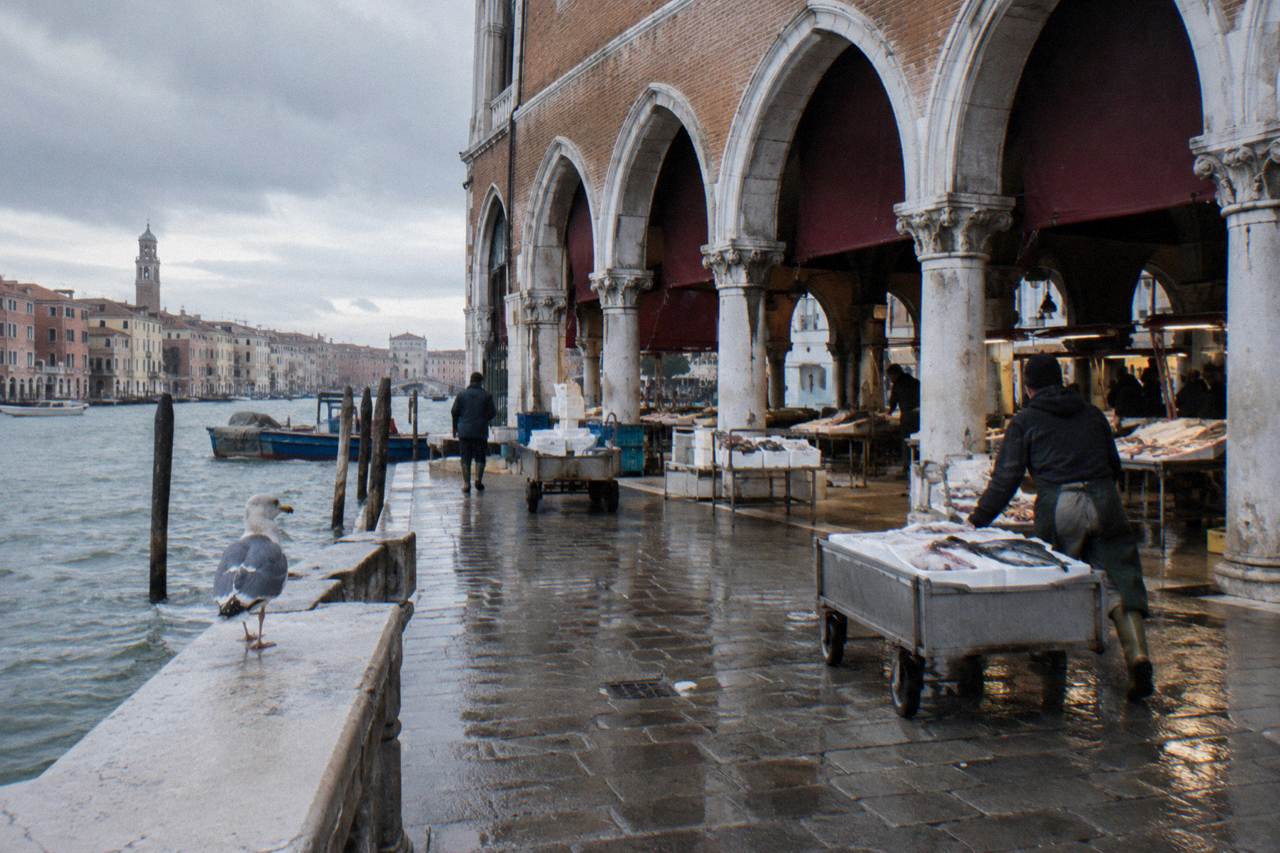
What you see there is not a show put on for visitors. Boats unload lagoon catch in the small hours; wholesalers and restaurant buyers work the stalls before tourists are awake; by 9:00 the balance tips toward locals shopping and visitors watching. The fish on the ice, tiny squids, cuttlefish, sardines, sand smelts, is the raw material of half the dishes on every menu in the city. Sarde in saor, the sweet-and-sour sardine dish, and baccalà mantecato, whipped salt cod on polenta, both begin at counters like these.
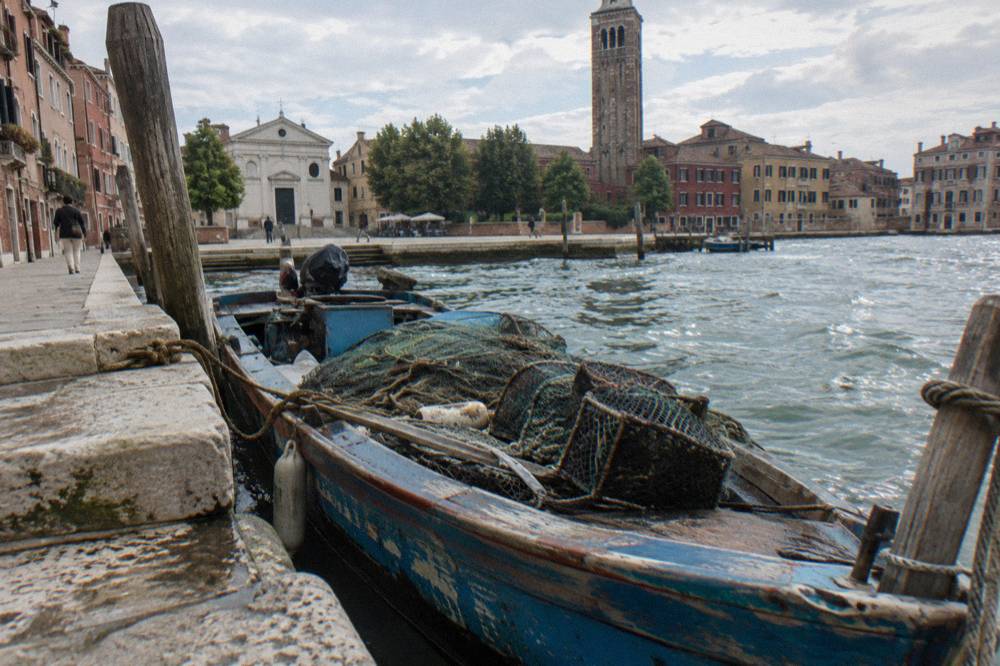
The market also anchors the geography of eating. The alleys around Rialto hold some of the densest clusters of traditional bacari in Venice, bars serving small snacks, so a market morning turns naturally into a crawl. That is the shape of the Venetian food day, and it is the reason this area, rather than Saint Mark's Square, is where a food-led itinerary begins. The basilica is a five-minute walk away when you are ready for it.
Even the approach to Rialto teaches you something about the city. Venice has no cars and no delivery vans, so everything you see on the stalls arrived by boat, carried hand over hand up the quays in the dark. Once you notice that, the whole food economy of the city makes sense: freshness is a matter of geography here, the lagoon is the farm next door, and the menu of any honest trattoria is a list of what the boats brought in that week.
If you want the market decoded rather than simply admired, a guided market walk with lunch turns the stalls into a lesson: what the fish are, what a menu is quietly advertising, and how the shopping becomes the cooking. The Rialto Market Food and Wine Lunchtime Tour runs four hours on exactly that pattern, market first, then food and wine.
How A Bacaro Crawl Turns Sightseeing Into A Meal
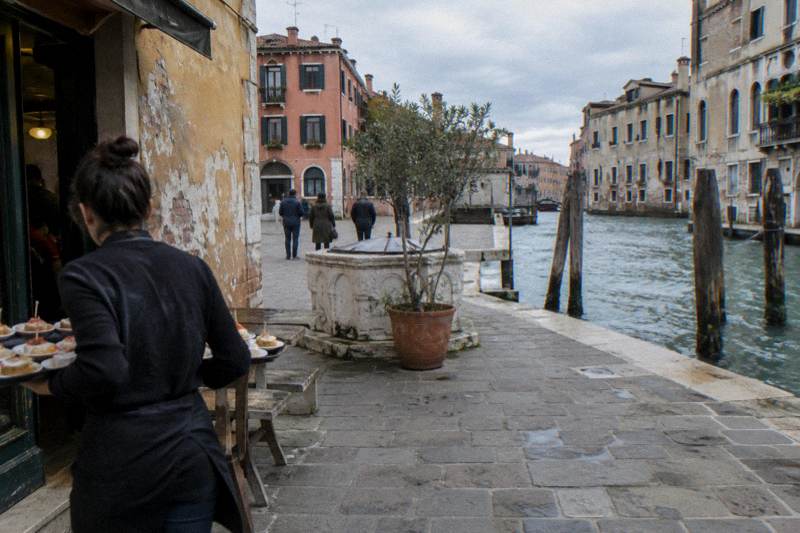
A bacaro crawl is the closest thing Venice has to a national sport: you walk from bar to bar, eat one or two cicchetti at each, drink a small glass of house wine, and move on. Reported prices from the official Visit Venice food pages put cicchetti at around EUR 1.50 to 4 a piece and an ombra at EUR 1 to 2.50, so a five-stop crawl can cost less than a single restaurant main course.
The mechanics matter more than the prices. Cicchetti are the small snacks displayed on the counter or behind glass: fried fish, crostini with baccalà mantecato, polpette, seasonal vegetables, whatever the bar made that morning. You point, you pay, you eat standing, often at a shelf along the wall or right at the counter. Nobody hands you a menu in the usual sense, and nobody expects you to linger for an hour. The pace is closer to a pub crawl with excellent food than to a restaurant meal.
Standing is also the budget lever. Where a seated restaurant applies a coperto, a bread and cover charge commonly reported at EUR 1 to 5 per person in Venice, counter service in a bacaro generally skips it. Tipping in the standing bacaro context is optional and light: rounding up or leaving small change is appreciated, but nobody will blink if you do not. The etiquette of the ombra, when to drink it, how to order it, and what it says about the bar pouring it, has its own rituals worth learning before you try.
The crawl is also, quietly, a walking tour. A good route stitches together San Polo's market alleys, a canal-side stop in Dorsoduro, and corners of Cannaregio you would never find on the way to a monument. You cover real distance, see real neighbourhoods, and the sightseeing happens between glasses rather than instead of them. Our guide to how a bacaro crawl works breaks the format down stop by stop.
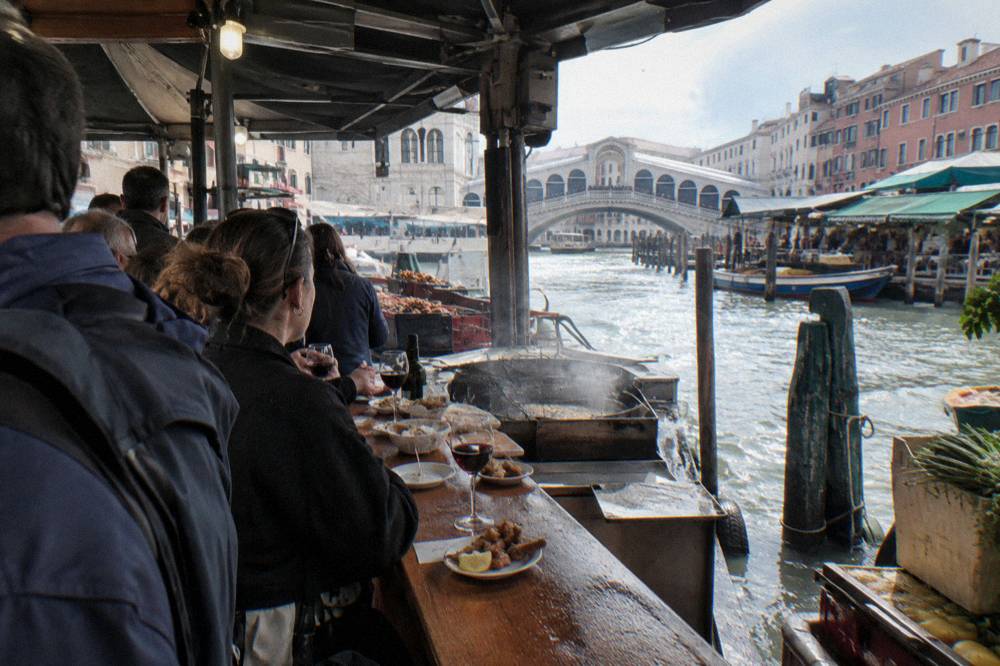
One caution from current city rules: a municipal regulation prohibits drinking in glass containers outside permitted seating areas and bans takeaway sales of drinks in untapped glass bottles, with fines reported from EUR 25 to 500. The regulation is on the Comune di Venezia site, and it is worth checking current rules before you plan to wander with a glass. The short version: drink your ombra where you bought it, at the counter, which is how it was always meant to work.
For visitors who would rather have a local choose the bars, the Street Food Tour with a Local Guide pairs the crawl format with a guide who orders for the group. It runs around two and a half hours, and the listing describes tastings included with a local guide leading the way.
The Grand Canal By Vaporetto: The Great Sight That Costs Least
Ride the Grand Canal by vaporetto, because line 1 the length of the canal delivers every palace facade, every bridge view and every water-bus choreography Venice is famous for, at the cost of an ordinary ticket. Reported ACTV prices put a single 75-minute ticket at EUR 9.50 and a 24-hour pass at EUR 25, children under 6 free, and those figures are the best value sightseeing in the city by a wide margin.
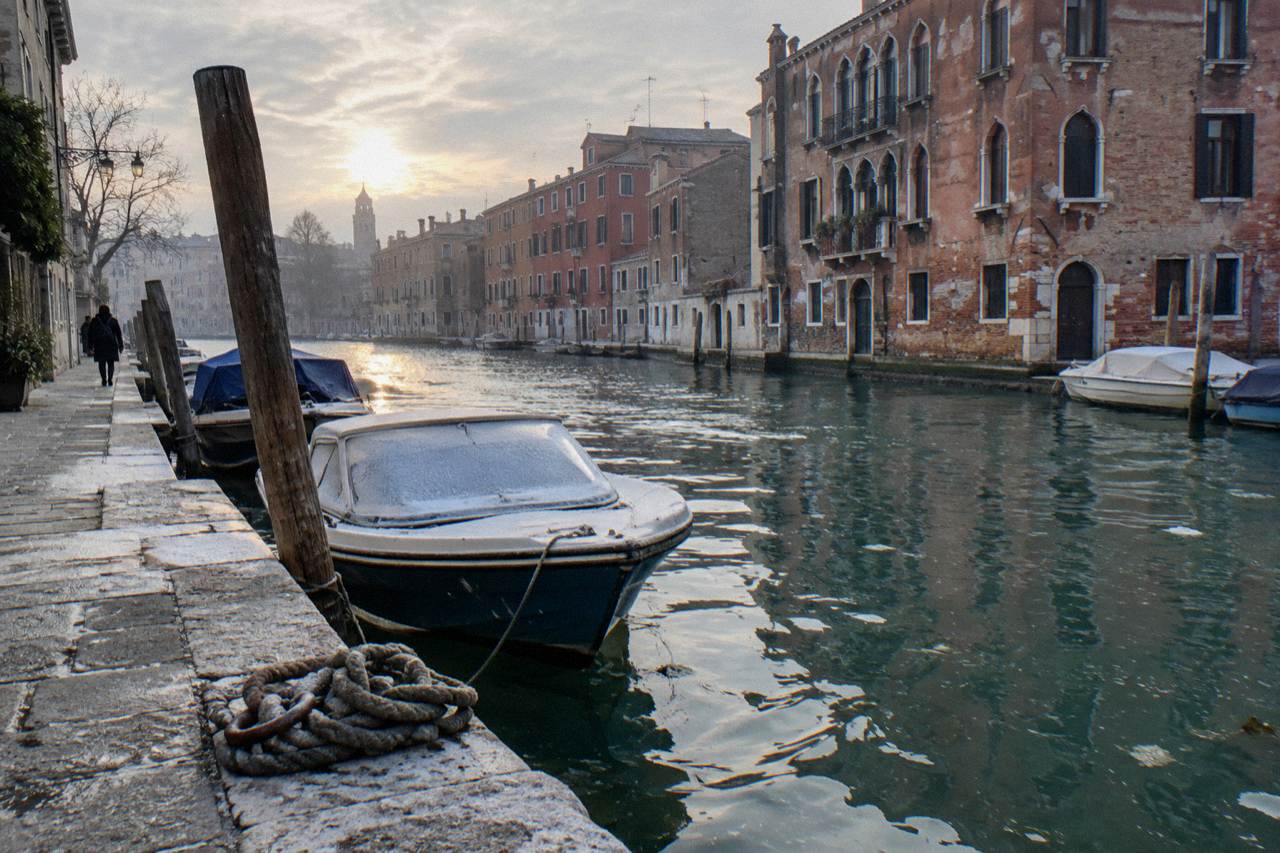
Sit at the front if you can, or stand at the open stern, and ride from Ferrovia toward San Marco in daylight. The canal is an architectural parade three and a half kilometres long: Ca' d'Oro's carved facade, the fish market's arcades at Rialto, the Salute church dome closing the view at the basin. A gondola gives you the silence and the romance; the vaporetto gives you the same water, the same palaces, and change left over for two rounds of cicchetti.
The same ticket logic opens the lagoon. Line 12 runs from Fondamente Nove via Murano to Burano on a reported daytime interval of roughly 20 minutes at peak times, and the short line 9 shuttle connects Burano to quiet Torcello. A lagoon day is the food-lover's extension of the canal ride: Burano for its buttery bussolà biscuits and risotto made with lagoon goby, Mazzorbo for the walled Venissa vineyard, the only hectare in the world of the revived Dorona grape, with tastings available on the island.
| Way to see the water | What you get | Reported cost | Best for |
|---|---|---|---|
| Vaporetto line 1 the Grand Canal | Every major palace facade, 30 to 40 minutes end to end | EUR 9.50 single, EUR 25 for 24 hours | First-timers on any budget |
| Gondola ride | Silence, narrow side canals, the classic image | Price set by the city, check at the gondola stands | A splurge or an occasion |
| Traghetto crossing at Rialto or Santa Sofia | A standing gondola ferry across the canal in under two minutes | A token fee, have coins ready | The most Venetian shortcut |
| Line 12 to Murano and Burano | Lagoon islands, biscuit and risotto traditions | Same ACTV ticket range, check current fares | A second day |
Two practical notes. Venice caps guided groups at 25 people in the historic centre and the lagoon islands, and bans loudspeakers, so guides use headsets; if you join any guided activity, the law is on your side about crowd size. And the 2026 day-visitor access fee trial ended: per the official page, from 27 July 2026 no fee applies and day-trippers need no payment or exemption, though the fee is scheduled to return in 2027 with arrangements to be announced. Check the official access-fee page before a spring 2027 trip.
The vaporetto also solves the food day's geography. A morning at Rialto, a crawl through San Polo, a canal ride down to Dorsoduro for a sunset spritz: the boats stitch it together, and the 24-hour pass pays for itself in three rides at reported prices. Our evening food walk guide covers what to do when the aperitivo hour arrives.
Pairing A Guided Food Walk With The Headline Sights
Book one guided tasting walk for the start of your trip, then sightsee on your own with the counter culture decoded: three hours with a local guide teaches you how bacari, cicchetti and the ombra work, so the rest of your days you can walk into any bar in the city and order with confidence. It is the single most useful booking a first-timer can make, ahead of any skip-the-line ticket.
The featured Eat Like a Local walk does exactly this: three hours, small group, a route through classic bacari with tastings as you go, price and current availability on the operator's live listing. It is the kind of booking that pays out across the whole stay, because the skill it teaches, reading a bacaro counter, ordering an ombra, knowing when a bar is a bar and not a tourist trap, is reusable every day after. You can see the tour's details and check availability alongside the other small-group walks compared on Venice Food Tours.
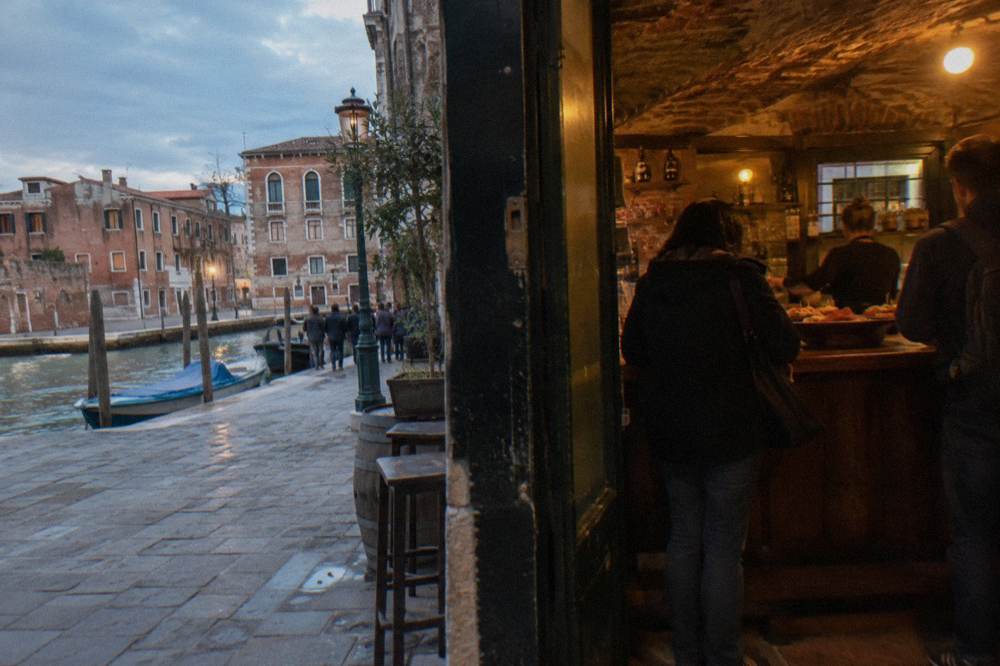
The pairing question is really a sequencing question. Day one or two, take the walk: it orients you geographically, since most routes pass through the Rialto area, and it calibrates your palate and your ordering habits. Days after that, use the basilica and the Doge's Palace for the mornings, the market alleys for early shopping, and your own self-guided crawl for the evening. Saint Mark's takes a couple of hours; the counter culture takes a lifetime, but a good guide compresses the first decade.
There is a dietary caveat that applies to every guided food experience in the city. If anyone in your party is vegetarian, vegan, gluten-free or keeps kosher, message the operator before booking: the listings do not uniformly describe dietary accommodations, and Venice's classic counter food leans heavily on fish and fried bread. Our vegetarian and vegan food guide covers what is reliably available in the city outside the tours.
Planning The Day Around Market Days And City Rules
Plan around two calendars: the market's and yours. The fish market is closed Sunday, Monday and Italian holidays, the produce market closed Sunday only, so Tuesday through Saturday mornings are the full experience; and the access fee does not currently apply, so no day-of payment or QR code stands between you and the vaporetto.
The rules that shape a Venice food day are few and mostly friendly. Groups on guided walks are capped at 25 by city rule. Alcohol in glass on the street is regulated, with fines reported from EUR 25 to 500, so the drinking happens in the bar. Standing at the counter avoids the coperto of EUR 1 to 5 per person that seated restaurants commonly apply. Tipping is optional and light everywhere. None of this is hostile; it is a small city protecting the ordinary life that makes it worth visiting.
“A fantastic Eat Drink, Repeat experience from start to finish. Even the weather did not dampen people’s mood. The food was amazing, the wines were delicious, and the whole event was very well organised. Sarah was an outstanding host, providing interesting history details about the city along the way and ensuring everyone had a great time. Highly recommended!”
Timing your hours matters as much as your days. Bacari are at their liveliest in the late afternoon and early evening, when Venetians stop for an ombra after work, which is also when the day-tripper crowds near the station are thinnest on the ground in the back alleys of Cannaregio and Dorsoduro. The morning belongs to the market, midday to a trattoria or a market-adjacent crawl, the afternoon to a canal ride or the basilica, the evening back to the counters. It is a rhythm rather than an itinerary, and it survives rain, heat and crowds better than any fixed schedule.
A final word on money. The vaporetto is the only fixed cost you cannot avoid, and the reported 24-hour pass at EUR 25 covers a market morning, a canal ride and a lagoon afternoon in one ticket. Everything else on the food-led day is pay-as-you-go, in pieces small enough that a mistake costs a couple of euros rather than a dinner reservation. That flexibility, more than any single dish, is why the counter culture is the answer to the question this page asks.
Common Questions About The Number One Thing To Do In Venice
What Is The Number One Thing To Do In Venice?
Eat and drink your way through it: a morning at the Rialto market, a bacaro crawl for cicchetti and an ombra, and the Grand Canal by vaporetto between them. It is the activity that puts you inside Venetian daily life, costs less than the headline museums, and still delivers the famous views.
How Much Does A Bacaro Crawl Cost?
Reported prices put cicchetti at about EUR 1.50 to 4 a piece and an ombra at EUR 1 to 2.50, so a five-stop crawl can cost less than a single restaurant main course. Standing at the counter also avoids the coperto charge that seated venues apply. Check posted prices in each bar.
When Is The Rialto Market Open?
The produce market runs Monday to Saturday from 7:00 to 20:00; the fish market runs Tuesday to Saturday from 7:00 to 14:00, and tour listings warn it also closes on Italian holidays. Sunday and Monday mornings are the wrong time for the full experience.
Do I Need To Pay The Venice Access Fee?
No. The 2026 trial ended and, per the official page, from 27 July 2026 the fee does not apply and no payment or exemption is needed. It is scheduled to return in 2027, with arrangements to be announced by 31 December 2026, so check the official page before a spring trip.
Is A Guided Food Walk Worth It For First-Timers?
For most first-timers, yes: a three-hour small-group walk teaches you how bacari and cicchetti work, so you can order with confidence on your own for the rest of the trip. Prices and availability are on the operator's live listing.
Can I See The Grand Canal Without A Gondola?
Yes, and cheaply: vaporetto line 1 runs the length of the canal past every major palace, at a reported EUR 9.50 single or EUR 25 for a 24-hour pass. The gondola has its romance, but the boat delivers the same water and facades with change left for cicchetti.