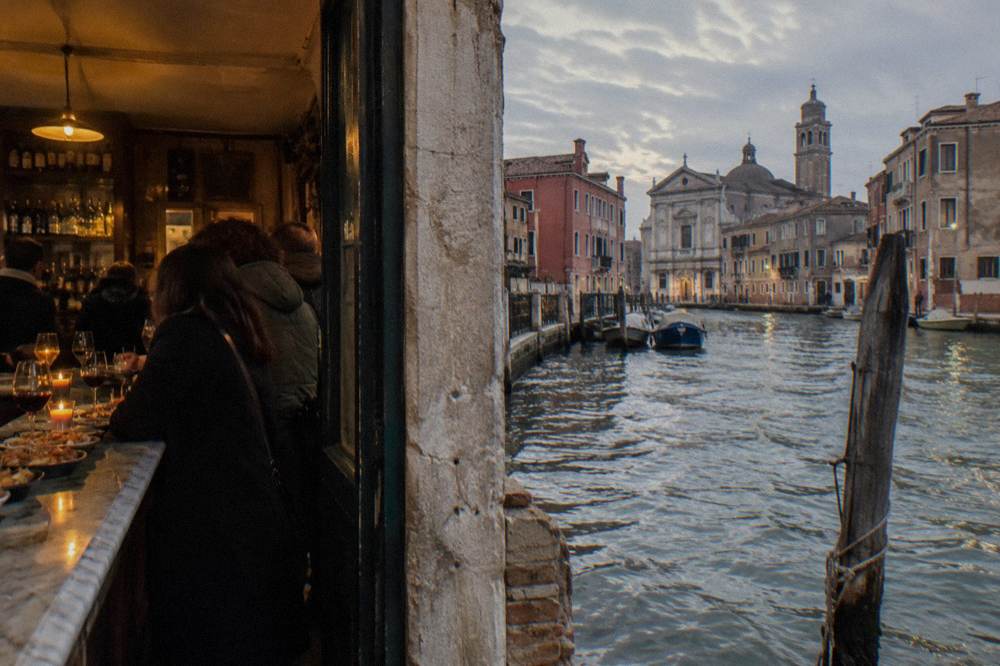
What Is The Most Famous Bar In Venice?
The bars whose names come up most when people ask about famous drinking spots in Venice, from Harry's Bar near St Mark's to the standing bacari the city actually runs on.
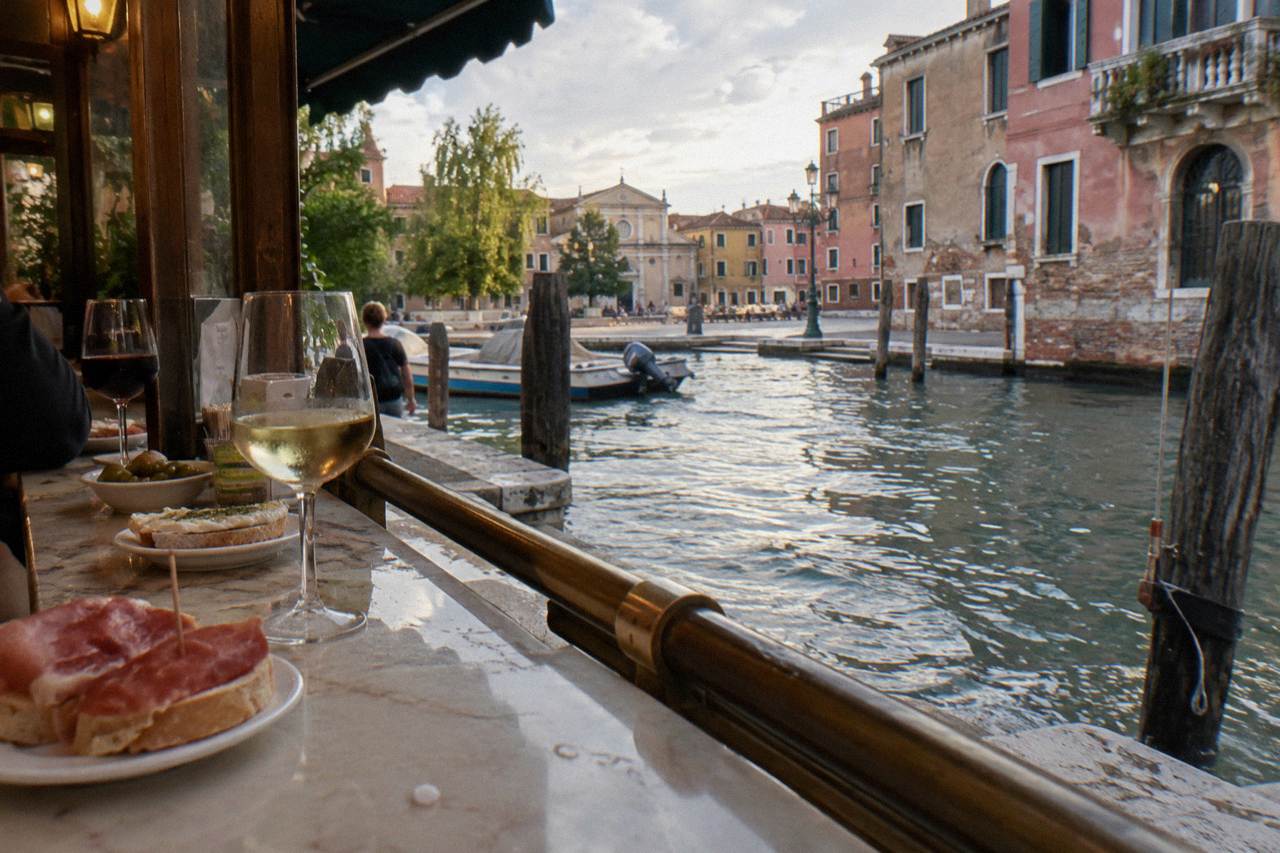
Ask ten people to name a bar in Venice and the same few answers come back: Harry's Bar, because of its history near St Mark's Square, then the historic caffè on the waterfront, and, from anyone who has spent real time in the city, the bacari. Those are three different institutions with three different jobs. One sells a gilded legend by the cocktail, one sells a view, and one sells small glasses of wine and cicchetti to people standing at a counter. This article untangles which name answers the question, why the answer depends on who you ask, and how the bacaro, the bar Venice actually runs on, works when you walk in yourself.
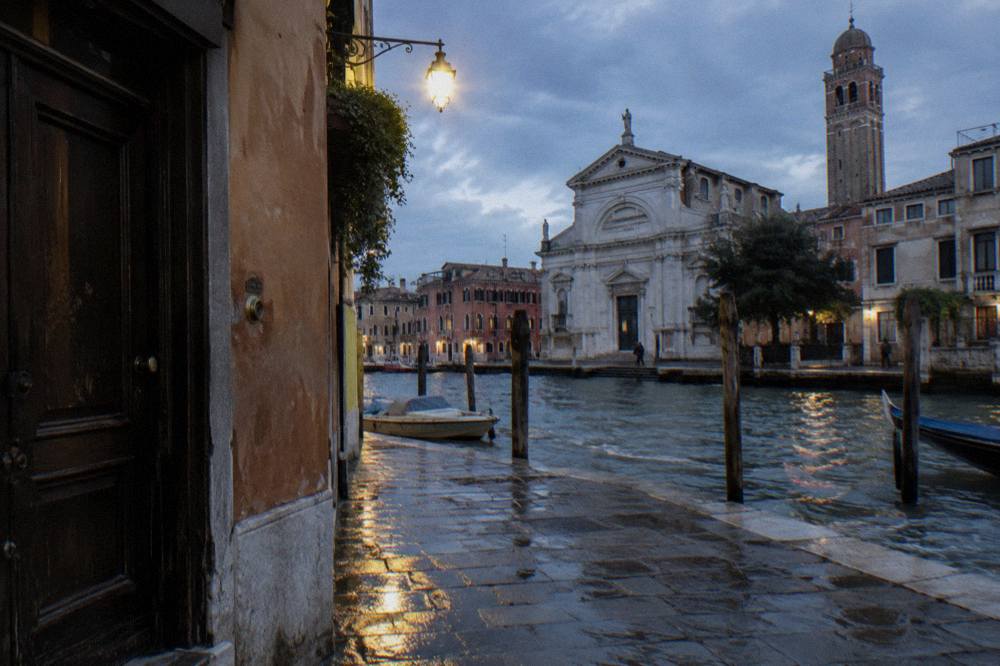
Harry's Bar, the historic bar a short walk from St Mark's Square, is the name most people give, because its fame rests on legend rather than on anything a local would drink on a Tuesday. It is closely associated with the Bellini cocktail and with carpaccio, both said to have been born there. No bar holds an official title, and the names that come up most are Harry's Bar among visitors and the bacari among Venetians.
That split is the real story. Fame in Venice has two currencies. The first is international: a bar whose name appears in novels and films, whose regulars included writers and film stars, and which every guidebook indexes. The second is municipal: the standing wine counters, the bacari, where the city's after-work ritual, the giro d'ombra, has happened for generations. A bar can be world famous and play almost no part in daily Venetian life. It can also be essential to a neighborhood and be unknown two bridges away.
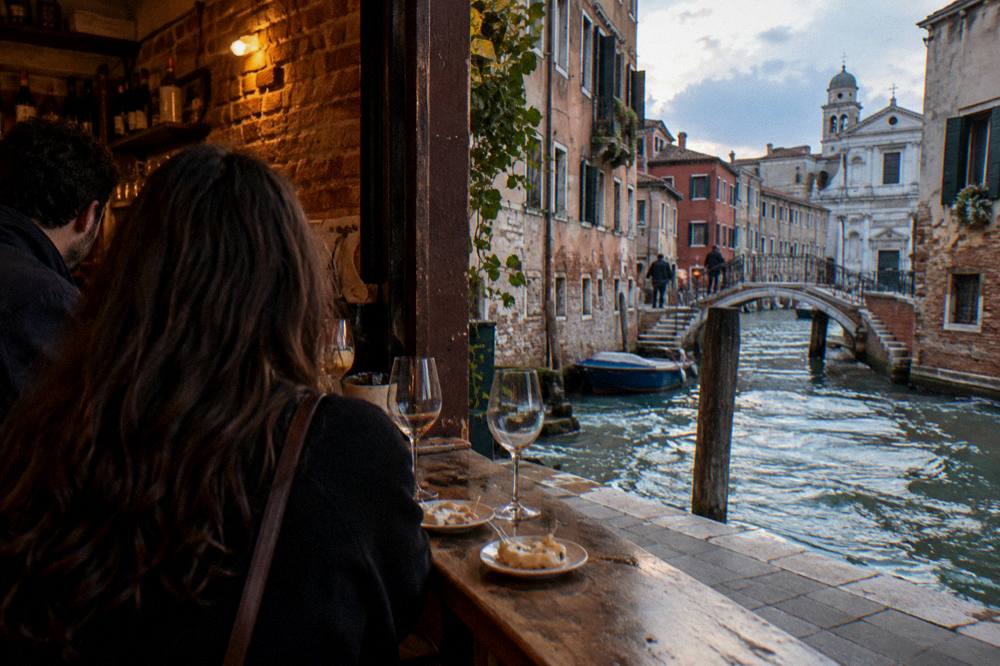
Neither kind of fame is a ranking, and no official body crowns a most famous bar. What can be said plainly is which names recur. Harry's Bar recurs in nearly every conversation in English about drinking in Venice. The historic caffè lining the water near St Mark's recur almost as often, largely because of their terraces facing the lagoon. And the word bacaro recurs the moment the conversation shifts from sightseeing to eating and drinking the way residents do. For a broader map of the food-first side of the city, the neighborhood guide to Venice food by neighborhood covers Cannaregio, Dorsoduro and San Polo, where most of the standing counters cluster.
If your interest in famous bars is really an interest in drinking well, a guided walk is the fastest bridge between the two worlds.
Between the legend and the counter culture there is plenty of room to plan badly. The question heading this section is usually asked by someone with one or two evenings in the city, deciding where to spend them.
“Maria C. delivered an outstanding Venice food tour, authentic dishes, quality wines, and sharp local insight. The stops were well chosen, the pacing smooth, and the experience felt genuinely local rather than touristy. Highly recommended.”
Is A Famous Bar Worth Your One Evening In Venice?
For most visitors, one famous splurge plus one bacaro evening beats two famous bars back to back, because the two experiences deliver completely different things: one delivers atmosphere and a story, the other delivers food, wine and the city's actual social rhythm. The mistake is treating them as substitutes. They are complements, and the order you do them in matters less than doing both.
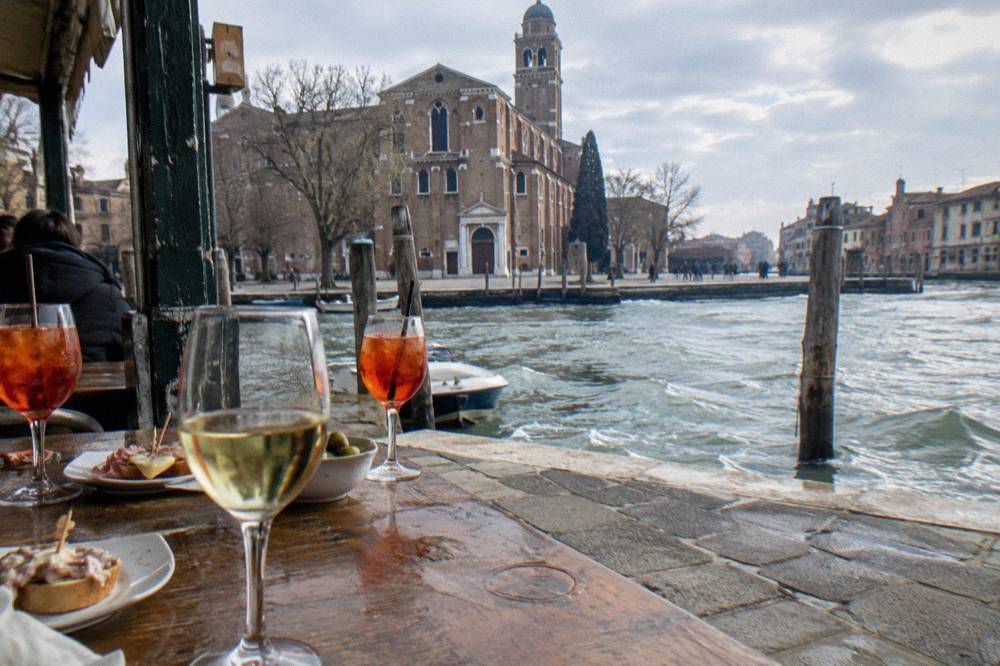
Think about what an evening at a celebrated bar buys you. You get a room with history on the walls, a professionally mixed cocktail, table service, and a bill that reflects all three. You get the story to tell afterward, and for many travelers that story is worth every cent. What you do not get is Venice. The room could, in feel, be in any great city. The bacaro, by contrast, could exist nowhere else: no tables, no menus in three languages as a rule, a counter of that day's cicchetti, and an ombra, the small house-wine glass that gives the ritual its name.
The practical difference is also pace. At a famous bar you sit, you order, you stay. On a bacaro crawl you move: one counter, one wine, two bites, then a bridge and another counter. A sunset walk format captures exactly this rhythm with someone else choosing the stops, and the sunset cicchetti and wine tasting covers it over three hours. The price and current availability sit on the operator's booking page rather than in any fixed figure here, which is the honest way to report anything that shifts with season and demand.
There is a third path worth naming: skipping the famous name entirely and letting a guide build the evening around the standing counters. The 3-hour small-group tasting walk in that role removes every point of friction, the ordering, the choosing, the worrying about whether you just ordered the wrong thing at a counter in front of regulars. Whether that convenience is worth it over exploring solo is a personal call, and one that depends on how comfortable you are pointing at food you cannot name.
Which Bars Do Venetians Name First?
Venetians name the bacaro nearest their front door, and beyond it a short list of historic caffè and old-school wine bars that carry the city's drinking history: the grand caffè on Piazza San Marco, the ornate former haunt of artists and writers in Dorsoduro, and a handful of family-run wine counters whose fame is entirely local. None of these carries an official title either, but together they form the list the city would give itself.
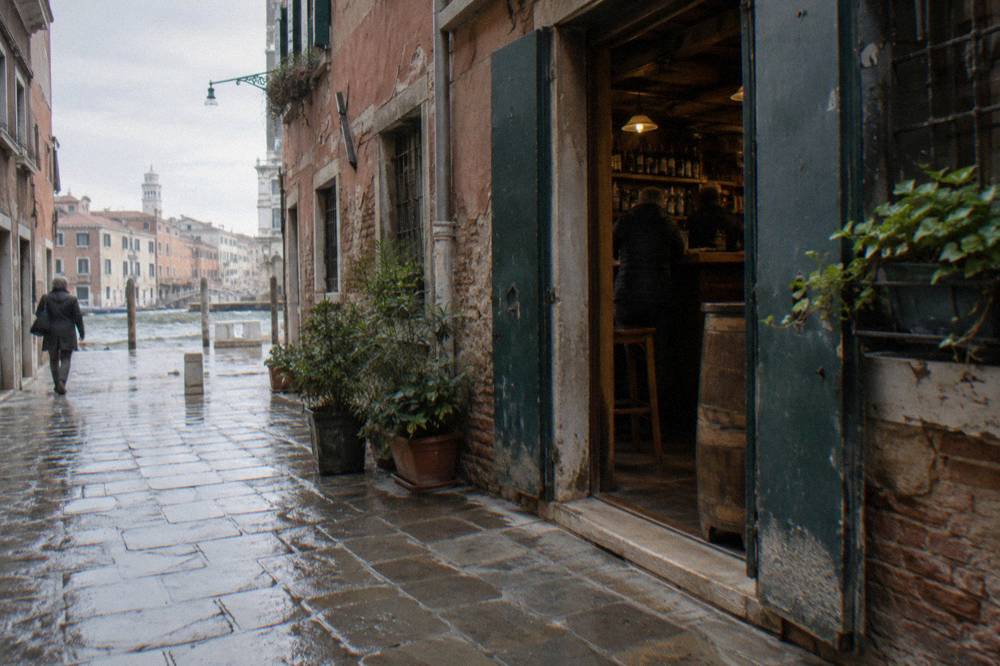
It is worth saying clearly what cannot be verified: no ranking of Venetian bars by fame or quality exists in any official source, and this article will not invent one. What follows is the short list of names that recur in the city's own conversation, grouped by what they are famous for. Treat it as a map of reputations, not a verdict.
| Name that comes up | Type of place | What its fame rests on |
|---|---|---|
| Harry's Bar | Cocktail bar near St Mark's | Century of celebrity regulars, the Bellini and carpaccio associations |
| Caffè Florian | Grand caffè on Piazza San Marco | Longest-running reputation among the caffè on the square, orchestra terrace |
| Caffè Quadri | Grand caffè on Piazza San Marco | Long history on the square, view dining, literary associations |
| The bacari of the calle | Standing wine counters | The giro d'ombra ritual, cicchetti, ombra, daily Venetian life |
The Piazza San Marco caffè deserve their fame on age and continuity alone. Florian is among the longest-running caffè in the world, and sitting inside its frescoed rooms is closer to visiting a museum that serves coffee than to visiting a bar. The orchestra charge and table prices on the square are famously separate from the menu, so check the posted terms before you sit down on the terrace; that caution applies to the whole piazza and is worth knowing before your first espresso there.
The Dorsoduro institution, the artists' haunt near the Accademia, earns its mentions for its carved interior and its past clientele of painters and poets. It is a sit-down, order-carefully, pay-accordingly kind of place, closer in spirit to the piazza caffè than to a bacaro. Then there is the fourth row of the table, which is not one bar at all but hundreds: the bacari. For how that counter culture actually works, and how to survive your first order, the companion guide to how a bacaro crawl works walks through the whole ritual step by step.
“We would highly recommend this tour. Maria was very friendly, offered recommendations for local restaurants and provided information on the areas we visited which was interesting. The food was amazing and very filling and the drinks were lovely too. So much so we went back to some of the places throughout our visit.”
What Exactly Is A Bacaro And Why Does It Matter?
A bacaro is a small, humble Venetian wine bar where customers stand at the counter, drink a small glass of house wine called an ombra, and eat cicchetti, the bite-sized snacks that range from baccalà mantecato on polenta to fried seafood; it matters because it is the only bar format Venice invented entirely for itself, and the format the whole city still uses to eat and socialize daily.
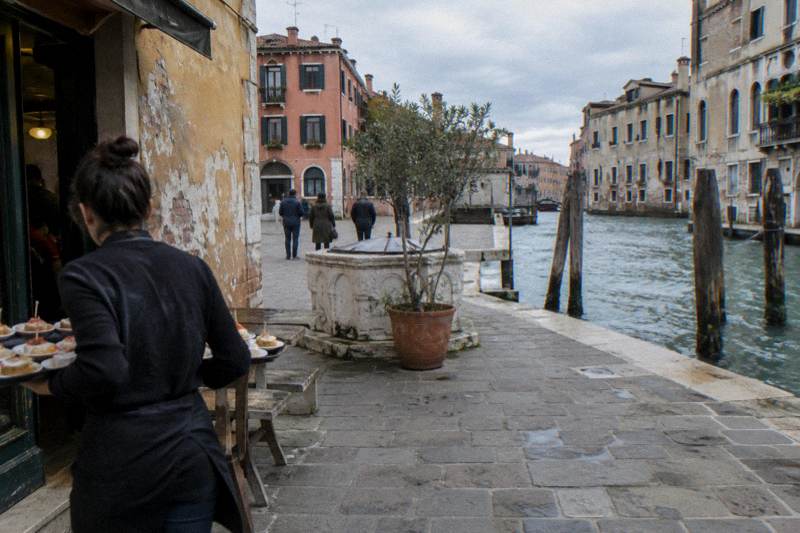
The word's origin is its own small story. Bacaro is said to come from Bacchus, the wine god, and it describes a specific kind of room: narrow, wood-panelled, with barrels or a marble counter, a handwritten list of wines, and a glass display of whatever the kitchen fried, braised or piled on bread that morning. Nothing about it is designed for lingering. You order an ombra and one or two cicchetti, you eat them where you stand, and you either order again or you leave. The whole transaction can take ten minutes, and that is the point.
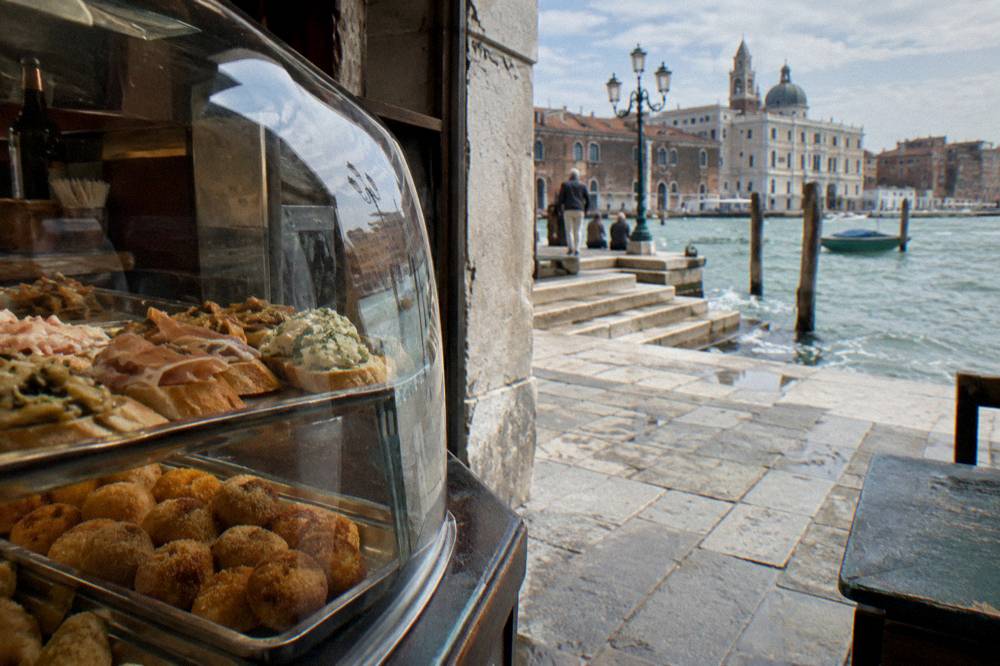
The giro d'ombra, literally a round or circuit of ombre, is the ritual built on that format: an evening spent moving from one bacaro to the next, a glass and a bite in each. It predates every tourism trend in the city, and it survives because it suits Venice's geography, a bar on every corner of a walking city, and its prices, which we will come to. For the vocabulary of ordering, from what an ombra actually is to how a spritz fits into the evening, the guide to ombra and the Venetian wine ritual covers the etiquette without inventing rules the city does not have.
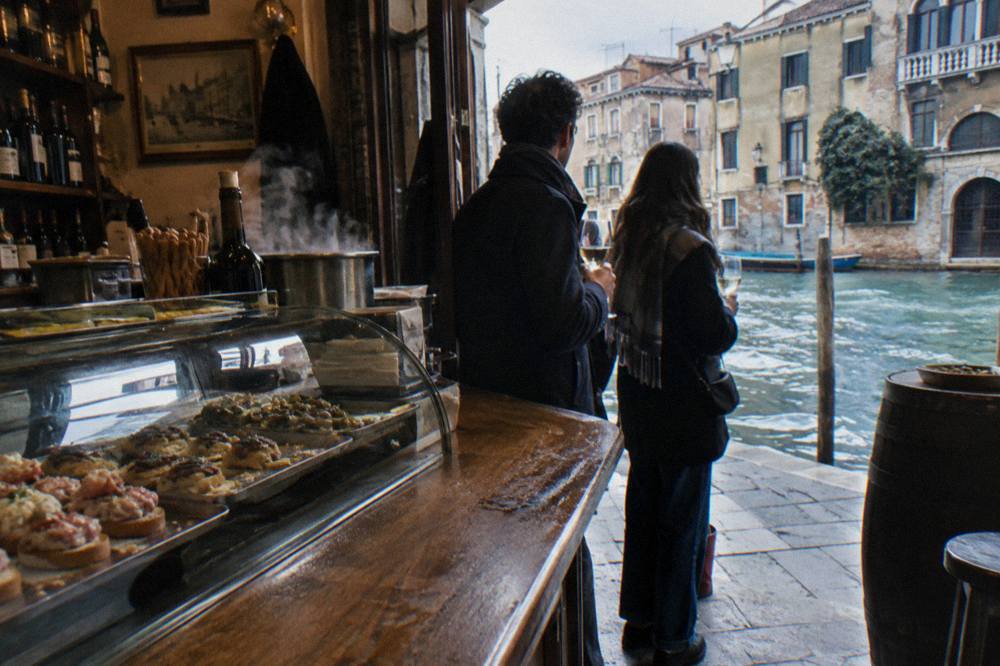
The bacaro is also where this site's own subject lives. Every guided food walk in the city, in one form or another, is a structured giro d'ombra: a guide who knows the counters, a route that avoids the tourist traps, and a set of tastings agreed in advance with the bars. That is worth remembering when a tour listing names its stops or its number of tastings; the format is ancient, only the guiding is modern.
Standing Versus Sitting: What A Drink Actually Costs?
Standing is the cheap and local way: cicchetti run around EUR 1.50 to 4 and an ombra around EUR 1 to 2.50, both reported figures, while sitting adds a coperto of typically EUR 1 to 4 and higher prices at the grand caffè, where terrace and music terms are posted separately. Sitting buys you the seat and the scene.
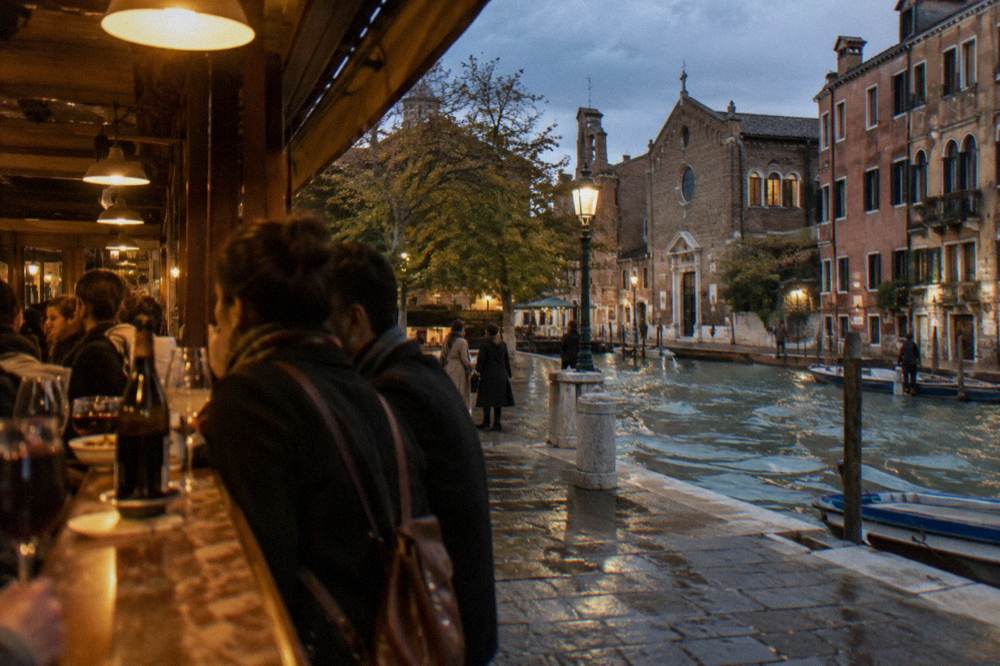
The numbers above are reported ranges from current visitor-information sources, not a tariff; every bar posts its own prices, and the spread between a backstreet counter in Cannaregio and a terrace on Piazza San Marco is enormous. The structure of the difference, however, is stable. At the counter you pay for what you consume. At a table you pay for what you consume plus the table, either explicitly through coperto or implicitly through a higher price list. The official visitor guidance on cicchetti and bacari culture confirms the posted-list principle: there is no fixed city price, the list on the wall is the law of that room.
Two cautions follow. First, the coperto is legal and standard practice, not a scam; it is disclosed on the menu, and if you do not see it, ask before ordering. Second, the grand caffè on the piazza commonly add a music charge when the orchestra plays, and that charge is separate from the drinks. Neither should surprise anyone who reads the posted terms, and both are cheaper to know about in advance. For the full picture of service, tipping and table etiquette, see the site's guide on tipping and coperto in Venice.
For travelers who would rather someone else handle the ordering arithmetic, a tasting walk prices the whole standing experience up front: one booking covers the stops, the glasses and the bites, and the operator's listing states exactly what is included. What the day looks like, where you meet and what tastings are in the package all sit on the booking page, and they differ enough between walks that checking them is the only reliable way to compare.
Can You Turn Bar-Hopping Into A Guided Evening?
Yes, and it is the format most first-time visitors end up wishing they had booked, because a guided cicchetti crawl converts the bacaro from a small challenge, ordering unfamiliar food at a crowded counter, into an evening where a local chooses the bars, the wines and the bites; guided groups in the historic centre are capped at 25 people as reported, and most food walks run well under that.
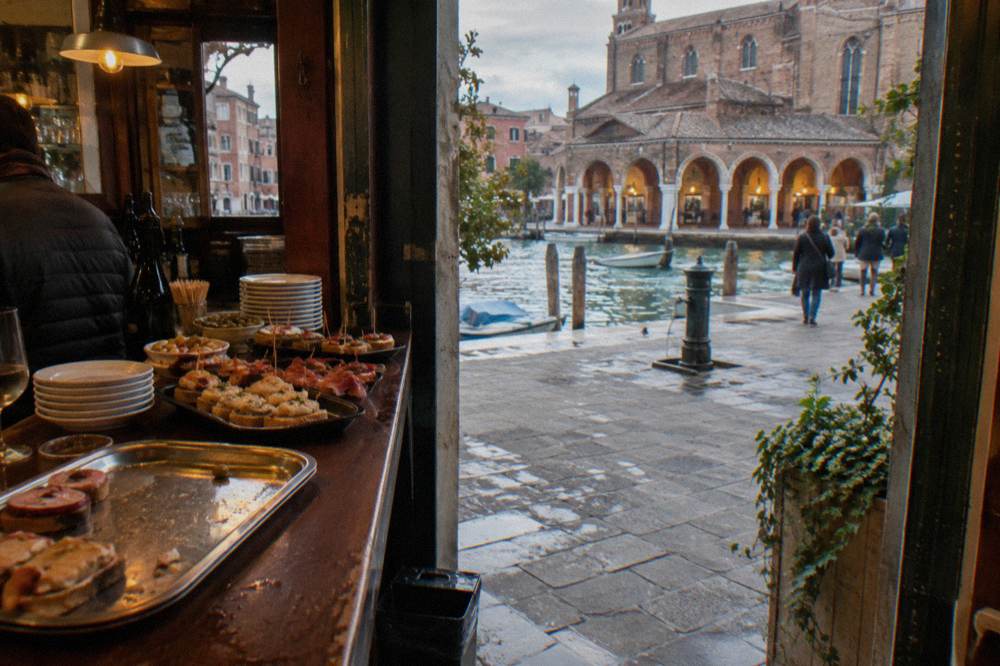
The guided version of the bacaro crawl solves three real problems. It solves the selection problem, since the guide's stops are chosen rather than stumbled into. It solves the language problem, because the counter is easier with someone who knows what baccalà mantecato is and when to order it. And it solves the pacing problem: a good route spaces the stops so the evening feels like a progressive dinner rather than a pub crawl. The cap on guided groups, a reported maximum of 25 with loudspeakers banned, keeps even the larger walks conversational; guides use headsets where needed.
The featured walk of this kind on Venice Food Tours is Taste Venice Like a Local, a 2.5-hour format built around food, wine and a spritz, which is to say around exactly the standing-counter culture this article has been describing. Its meeting point, inclusions and current price sit on the booking page. It sits in the same family as the sunset cicchetti walk mentioned earlier and the 3-hour small-group tasting tour, and choosing among them comes down to timing and group size preference more than substance, since all three walk the same streets and eat from the same counters.
The honest gap in a guided evening is the famous-bar half of this article. A food walk will hand you wine and cicchetti, not a Bellini at a legendary counter. If the Harry's Bar story matters to you, do it separately, on your own schedule, before or after the crawl. The two halves of Venetian drinking fame were never meant to share a table.
How Do You Behave In A Venetian Bar?
Order at the counter, pay at the counter, drink where you stand or carry your glass only where the rules allow, and keep your voice at the room's level: Venetian bars are small, local and lightly policed by custom rather than signage, and the municipal rules on glass containers and takeaway alcohol are enforced with reported fines of EUR 25 to 500, so the standing-and-staying habit is both the polite and the safe one.
The etiquette is shorter than visitors fear. In a bacaro, you look at the cicchetti display, you point at what you want, you order your ombra or spritz by name, and you pay when you order or when you finish, following the room's lead. Locals drink standing; tables, where a bacaro has them at all, are for longer sittings and may carry the coperto. In a grand caffè, the etiquette inverts: you wait to be seated, you order from the menu, and you stay seated. Mixing the two modes, standing around a table service room or demanding a table in a bacaro, is the only real misstep.
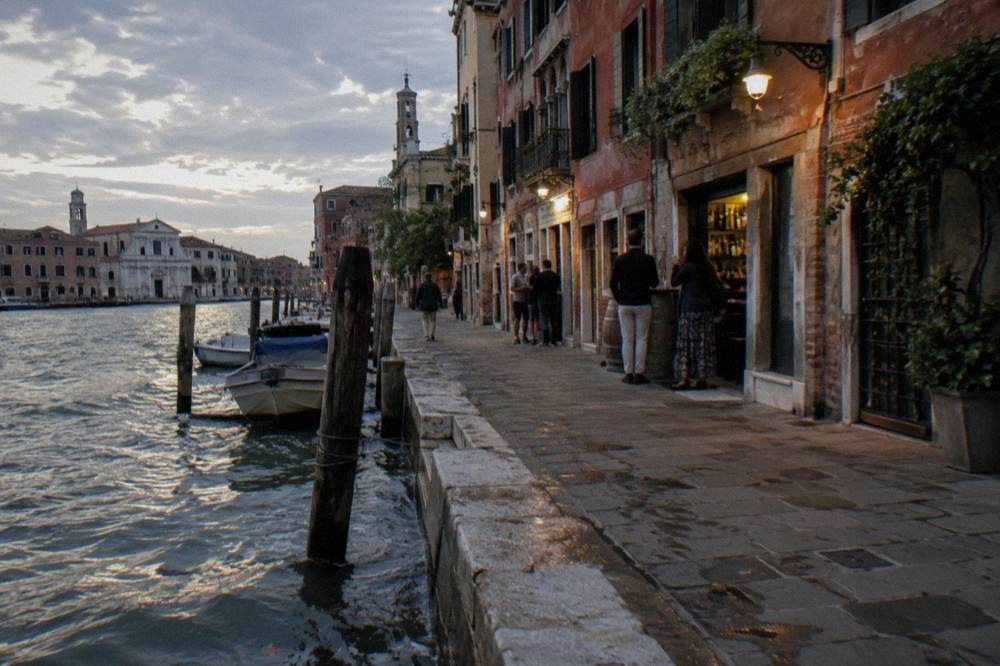
The one rule with legal teeth concerns the street. Venice prohibits consuming drinks from glass, ceramic or similar containers outside permitted seating areas, and bans takeaway sales of alcohol in glass for public consumption, under the municipal public-space regulation, with the fines reported above. The practical translation for a bar-hopper: finish your ombra at the counter before you cross the bridge. The current text of the municipal regulation on public space is published by the city, and checking it before your trip costs a minute.
One planning footnote while we are on official rules: the 2026 access fee for day visitors ended on 27 July 2026, so entering the city currently requires no payment or exemption, and the official access-fee page will publish the 2027 arrangements by 31 December 2026. None of it affects a drink at a counter, but day-trippers planning a bar evening for 2027 should glance at that page before assuming the rules are unchanged.
Common Questions About The Most Famous Bar In Venice
What Is The Most Famous Bar In Venice?
Harry's Bar, the historic cocktail bar near St Mark's Square associated with the Bellini and carpaccio, is the name that comes up most internationally. Among Venetians, the standing wine counters called bacari are what the word bar really means day to day. No official title exists; both answers are true for different audiences.
Can You Visit Harry's Bar Without A Reservation?
Current booking terms, opening hours and menu prices are not published in any verified source used here, so check the bar's own channels before you go. As a general rule for celebrated bars in the St Mark's area, expect queues at peak times and a dress code closer to smart than casual.
What Is An Ombra?
An ombra is the small glass of house wine, around 100 ml, that Venetians drink standing at a bacaro counter. Reported prices run from about EUR 1 to 2.50 in local spots. The word means shadow, and the evening ritual of moving between bars drinking them is the giro d'ombra.
Is It Cheaper To Stand At The Bar In Venice?
Yes, and by design. Standing at a bacaro counter commonly avoids the coperto cover charge, typically reported at EUR 1 to 4 per person where applied, and counters price cicchetti at around EUR 1.50 to 4 per piece. Tables at grand caffè add service and, on Piazza San Marco, sometimes a separate music charge.
Can You Walk Around Venice With A Drink?
No, not in glass. Municipal rules prohibit consuming drinks from glass or ceramic containers outside permitted seating areas and ban takeaway sales of alcohol in glass, with reported fines of EUR 25 to 500. Finish your drink at the counter; the bridge will still be there.
Do Food Tours Include Famous Bars?
Generally no. Guided food walks focus on the bacaro and cicchetti culture rather than celebrity cocktail bars. A walk such as Taste Venice Like a Local covers standing counters, wine and a spritz over 2.5 hours; its exact stops and inclusions are stated on the operator's booking page, and a legendary-bar visit is best arranged separately.
If the question that brought you here was really about where to drink in Venice, the answer splits in two: the famous name for the story, and the bacaro for everything else. A guided crawl hands you the second half without a word of Italian, and leaves the first half for an evening you plan yourself.