What Is A Typical Breakfast In Venice?
A typical Venetian breakfast is a brioche or cornetto with a cappuccino or espresso, taken standing at a bar counter. Here is how the ritual works, what to order and how a tasting walk fits the morning.
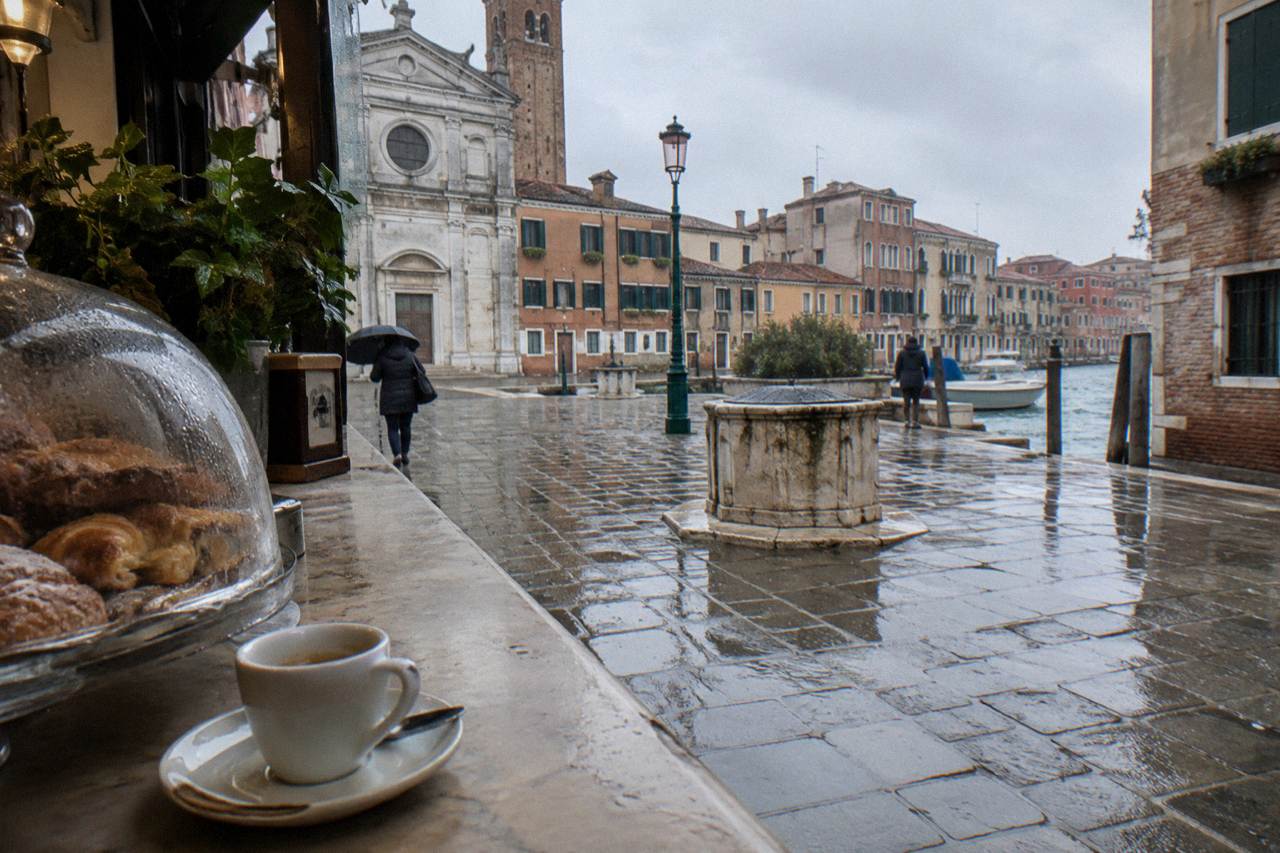
A typical breakfast in Venice is a sweet pastry, most often a brioche or cornetto, eaten with a cappuccino or a plain espresso, standing at the counter of a neighbourhood bar. It costs a couple of euros, takes ten minutes, and ends when the cup is empty. Sitting at a table changes the price; standing is the local way.
That single sentence surprises a lot of first-time visitors, because it is the opposite of the hotel buffet or the long weekend brunch many travellers expect from Italy. Venice runs on a quick, sweet, counter-service morning. The bar in this sense is not a pub: it is a coffee bar, the kind with a marble counter, glass cases of pastries, and a till where you often pay first and then show the receipt to the barman. Venetians stop in on the way to work, drink standing up, and leave. Tourists who sit down at the same bar's outdoor tables for an hour will pay table service for the same coffee and the same pastry, and that difference, more than any menu, is the real breakfast lesson of the city.
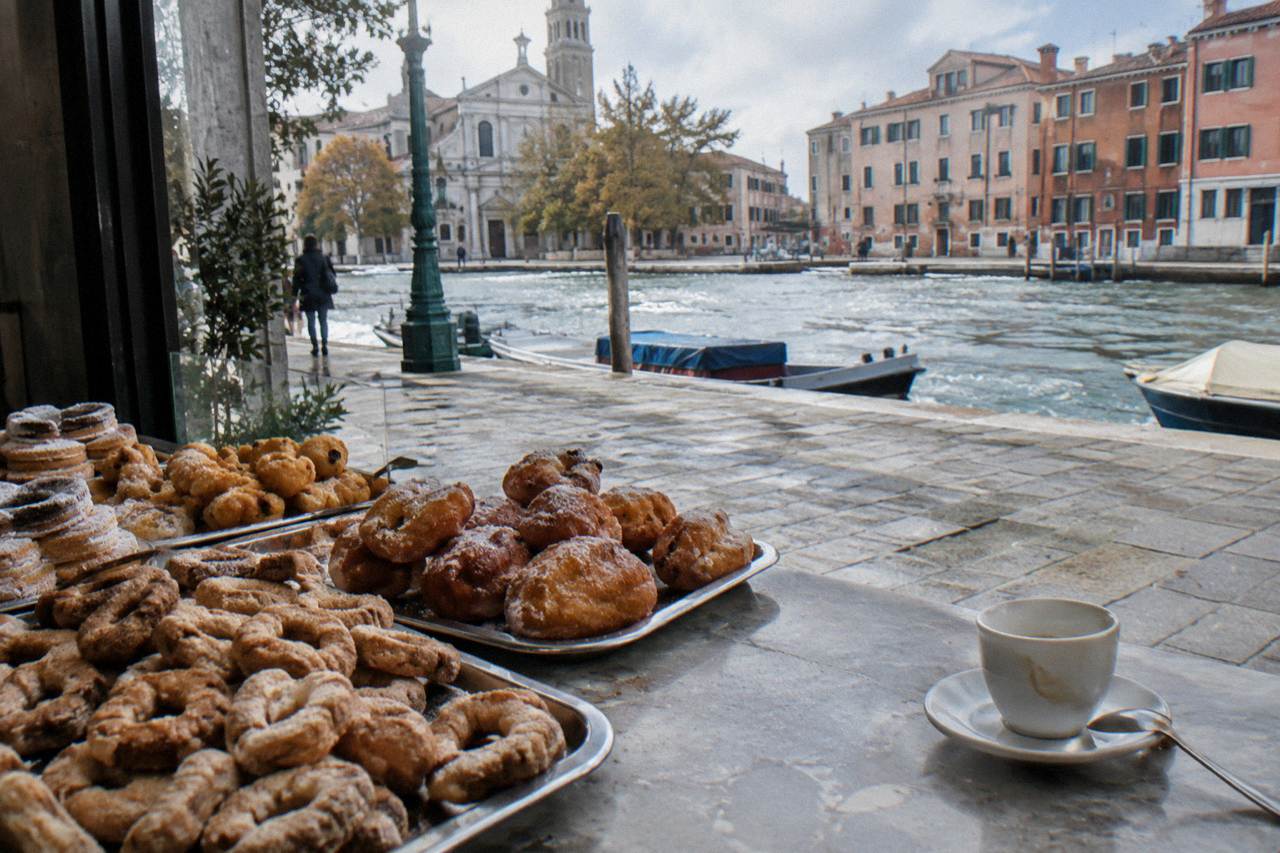
The pattern is sweet rather than savoury. Nobody in Venice orders eggs at seven in the morning; that is not what the city's bars are set up to serve, and asking for it usually produces a polite shake of the head or a pointed look at the pastry case. What the case holds is the breakfast: cornetti and brioche, sometimes filled with jam or custard or pistachio cream, and a rotating cast of local sweets that change with the season and with the bakery supplying the bar. Coffee is the other half of the ritual, and the rules around it are firm in a way that is worth knowing before you order.
If the standing-bar breakfast sounds appealing but you would rather have someone choose the stops, a guided tasting walk is a natural pairing. Several of the options compared here touch the same territory, the pastry counters, the coffee bars and the sweet shops, but with a guide doing the ordering.
The rest of this article walks through the ritual in order: where it happens, what to order at the counter, why it is sweet, when Venetians actually eat it, and how the morning pastry habit connects to the city's wider culture of sweets and snacks. Along the way it also covers the practical rules that catch visitors out, from coffee ordering etiquette to the city rules that apply to eating and drinking in the street.
Where Do Venetians Eat Breakfast?
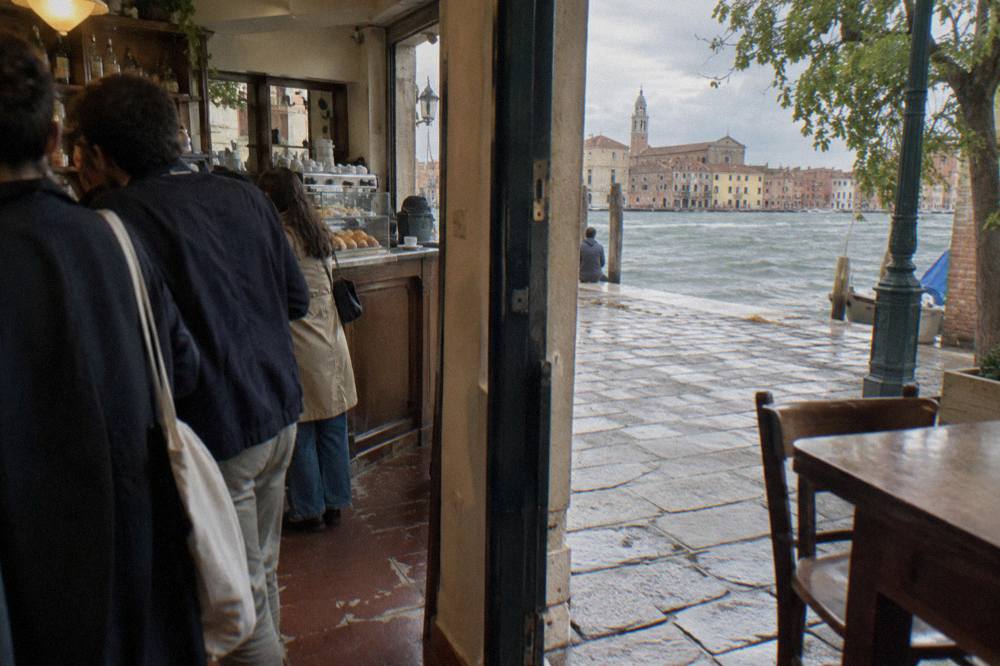
Venetians eat breakfast standing at the counter of a bar, usually the one nearest home or work, rather than sitting in a café or restaurant. The bar counter is the venue: you pay at the till, hand the receipt to the barman, and drink your coffee where you stand. Table service exists but costs more and marks you as a visitor.
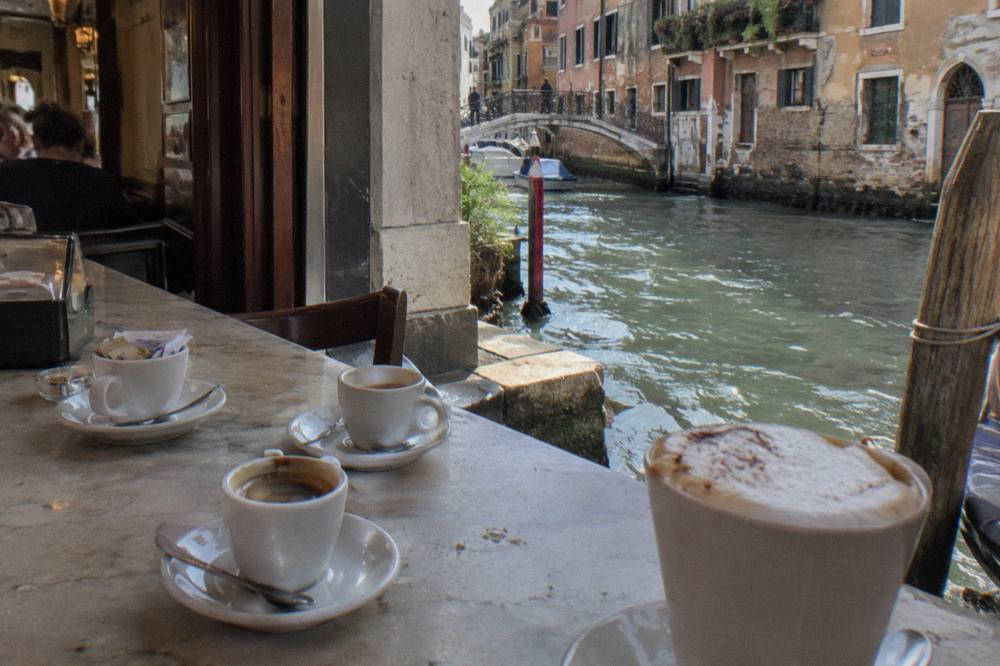
The standing rule is the part that feels strangest to newcomers. In much of Europe breakfast is a seated affair, and in North America it is practically a leisure industry. In Venice it is a transaction. A local walks into a bar a few steps from their door, greets the staff, orders a coffee and a pastry, consumes both in the time it takes to scan a phone, and is gone. The city's bars are built for this, with high marble counters, no queue culture to speak of, and a pricing structure that openly rewards standing: the same espresso can cost one price at the counter and a noticeably higher one at a table, and higher again on a terrace with a view. This is normal and legal, and every bar posts its price list, so there is no trap as long as you look at the list before choosing where to drink.
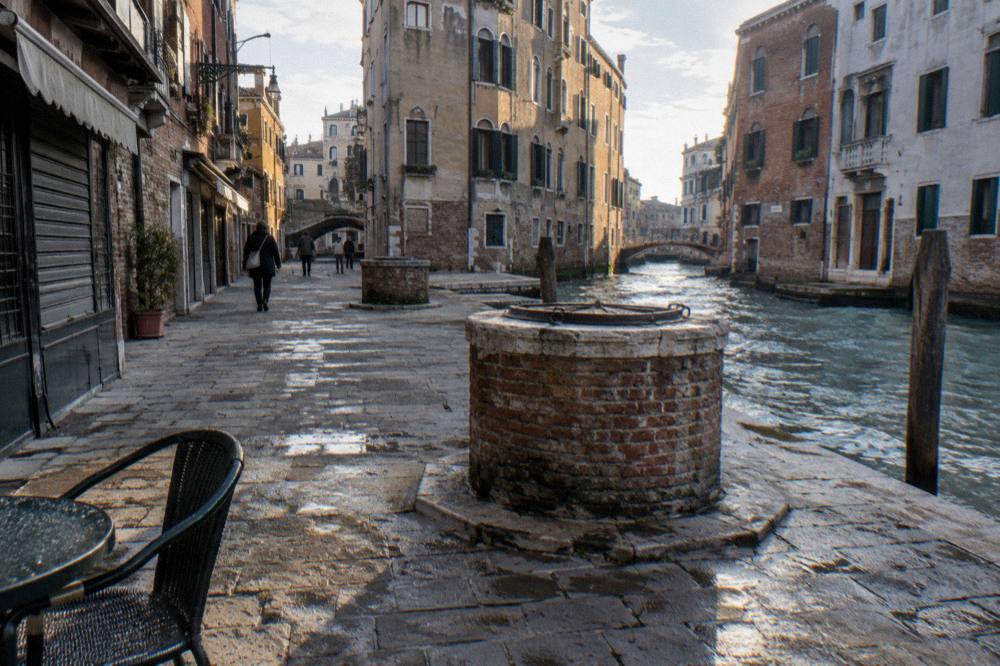
Choosing a bar matters less than you might think, because the breakfast items are broadly consistent across the city. Every bar will have coffee, and nearly every bar will have a case or basket of pastries supplied by a local bakery that morning. The differences are in quality and crowd: a bar deep in a residential sestiere, the word for one of Venice's six districts, will feel entirely local, while a bar within sight of a major monument will price and pace itself for visitors. The practical advice is simple. Walk two or three streets away from the main sightseeing axis, find a bar with a stream of locals stopping in, and join them at the counter.
One more thing belongs in this section, because it shapes the whole morning experience: Venice has rules about consuming food and drink outside. The municipal regulation, as reported from the city's own published rules, prohibits drinking from glass bottles or glass containers in public streets and bans takeaway sales of alcohol in untapped glass for street consumption, with reported fines running from EUR 25 to EUR 500. For breakfast this rarely bites, since a cappuccino is not portable anyway, but it explains why you do not see people wandering the calli with open glasses, and why the correct move is to finish at the counter rather than carry anything out. Check the current rules on the official municipal site if you plan to picnic.
What Do You Order At The Bar Counter?
The standard order is a cappuccino or a caffè, an espresso, plus one sweet pastry: a cornetto or brioche, plain or filled. Cappuccino with any meal is normal at breakfast and odd after about eleven. Ordering is short and direct, and paying first at the till is common practice in many bars.
Coffee etiquette in Venice follows the wider Italian script, and the breakfast window is when the rules are most relaxed. A cappuccino before eleven is entirely ordinary; it is the default morning drink alongside straight espresso, and a caffè latte or a latte macchiato is available too. What raises an eyebrow is milky coffee after lunch or with dinner, and no amount of explaining will make it feel normal to the barman. A caffè is understood to mean espresso; if you want it weaker ask for a caffè lungo, longer, and if you want it with a dash of milk, a caffè macchiato. The barman will make it in seconds and set it on the counter with a small spoon and sometimes a biscuit.
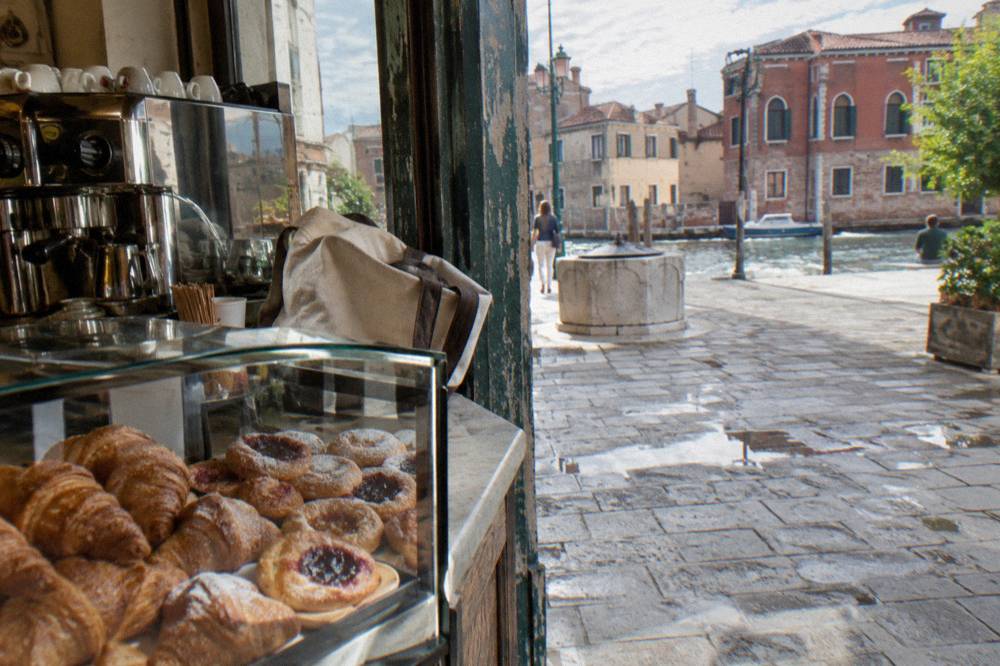
The pastry half of the order has its own small vocabulary. The cornetto, the Italian croissant-family pastry, is the workhorse; in Venice it is also commonly called a brioche, and in some bars the two names point to the same basket. Filled versions come with apricot jam, custard, or crema al pistacchio, pistachio cream, and a plain one with your coffee is the most traditional order of all. Beyond the cornetto the selection is seasonal and varies by supplier, which is part of the fun: you are tasting whatever the neighbourhood bakery sent over that morning, not a standardised citywide menu. If you see something unfamiliar under the glass, pointing and asking what it is works perfectly well.
| Order | What it is | When it fits |
|---|---|---|
| Cappuccino | Espresso with steamed milk, the default breakfast coffee | Any time before about 11:00 |
| Caffè | A straight espresso; ask this way and you get espresso | Any time of day |
| Caffè lungo | A longer, weaker-drawn espresso | Morning onward |
| Caffè macchiato | Espresso with a dash of milk | Any time of day |
| Cornetto or brioche | Croissant-family pastry, plain or filled with jam, custard or pistachio cream | The classic breakfast pastry |
| Tramezzini | Crustless soft sandwiches with savoury fillings | Mid-morning or lunch, not breakfast |
Paying is the step that trips people up. In many Venetian bars the flow is: go to the till first, say what you want, pay, then take the receipt to the counter and repeat the order to the barman. In other bars you order at the counter and pay as you leave. Both systems coexist, and the bar's regulars will show you which one is in force within seconds of watching them. Either way, prices are posted; this is required, and it protects you as much as the bar. Since no verified price for a bar breakfast appears in this site's research, no figure is printed here; the posted list at the counter is the authority.
There is a related habit worth knowing even though it belongs to the later day: the city's savoury snacking tradition. Cicchetti, the small bar snacks eaten in traditional bacari, are the evening counterpart of the morning pastry run, with pieces reported at roughly EUR 1.50 to 4 each at the counter and a small glass of house wine, an ombra, reported at EUR 1 to 2.50. A visitor who has understood the standing breakfast bar has already understood the mechanics of the evening cicchetti bar: same counter, same posture, different basket. The details of that ritual are covered in the guide to how a bacaro crawl works, which is worth reading if your day will run past lunch.
Is Breakfast Sweet Or Savoury In Venice?
Breakfast in Venice is sweet, almost without exception. The city's morning counter offers pastries, cakes and coffee; savoury morning food exists mainly in the form of tramezzini, crustless sandwiches, which locals treat more as a mid-morning or lunch item than a breakfast one. Do not arrive expecting eggs, bacon or cheese.
The sweetness is not a quirk of the bars; it is the structure of the Italian morning nationally, and Venice follows it faithfully. The reasoning usually given is practical: a sweet, quick, carbohydrate-and-caffeine hit suits a working start, and the bar model, small items, fast turnover, counter service, is built to deliver exactly that. Venice adds its own pastry traditions to the national ones, and these are where the city's character shows. Fritole, fried sweet doughnuts tossed in sugar, are historically a Carnival-season item; baicoli are thin, dry, long-keeping biscuits that go back centuries in the city's trading era; and bussolà, ring-shaped butter biscuits from the lagoon island of Burano, are dense with egg yolk and made to last, originally baked for fishermen and for Easter.
These older sweets matter to a visitor for one reason: they turn breakfast from a routine into a reason to explore. A morning spent trying a different pastry in a different sestiere each day is one of the cheapest and most enjoyable ways to see Venice on foot, and it needs no booking, no planning and no research beyond a willingness to point at the glass case. The Venetian sweets tradition, including fritole, baicoli and bussolà, has its own full guide on this site, venetian sweets and pastries explained, for readers who want the deeper background.
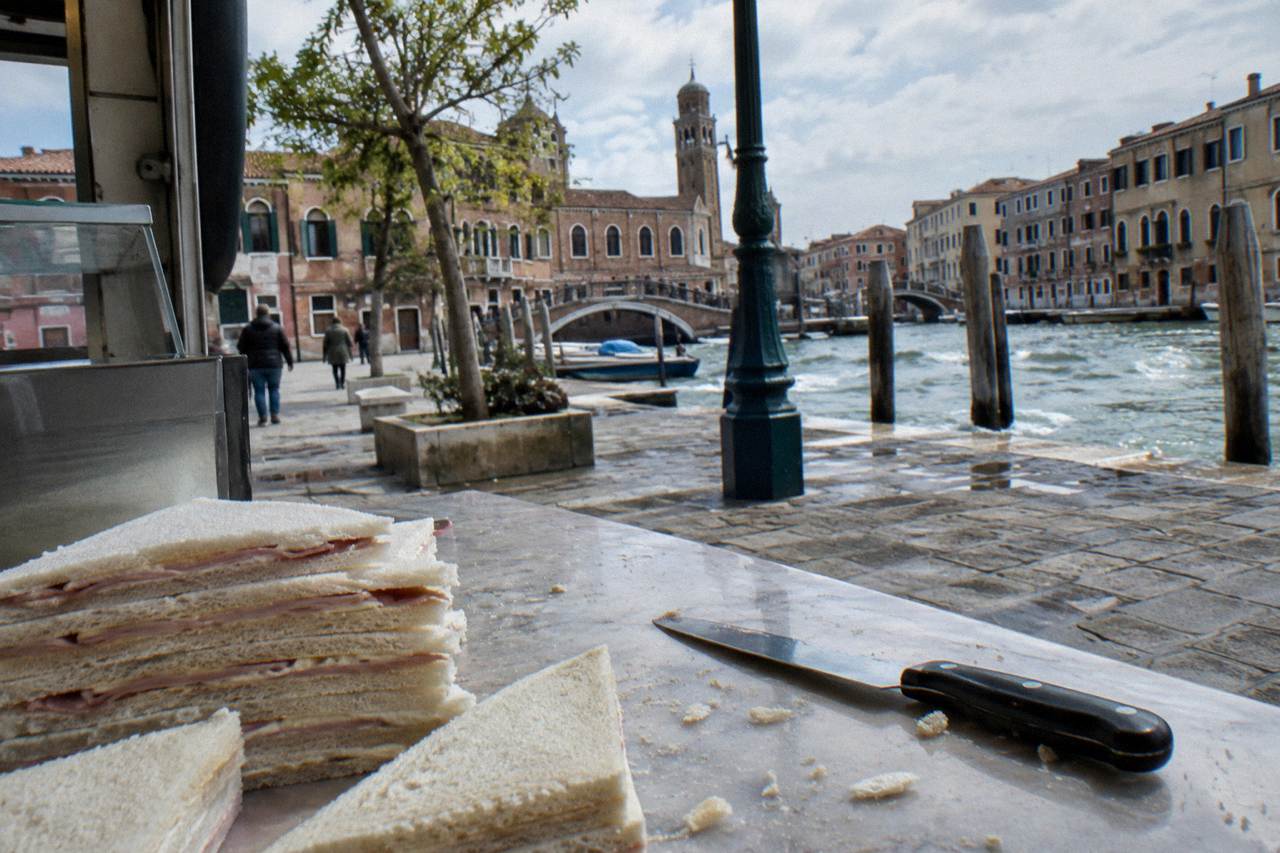
The savoury exception deserves one honest paragraph. Tramezzini, soft white crustless sandwiches stacked in bar cases across the city, are genuinely Venetian in style and genuinely good, filled with things like tuna, olives, artichokes or prosciutto and mozzarella. But they belong to the eleven o'clock break or a light lunch rather than the breakfast counter, and Venetians do not generally order them at seven or eight in the morning. If you want a savoury start, the realistic move is a late breakfast at mid-morning, or accepting that you are eating on a tourist timetable, which is fine, only different.
When Do People Eat Breakfast In Venice?
Venetians eat breakfast early and briefly: bars open from roughly seven or earlier, and the counter is busiest between seven thirty and nine on workdays. By ten the rush is over, and by eleven the bar has shifted to mid-morning coffee, tramezzini and the run-up to lunch. Sunday runs later and quieter.
The morning timeline matters to travellers mainly for two practical reasons. The first is that Venice's big sights and markets run early, so an early bar breakfast pairs naturally with an early start elsewhere. The Rialto produce market, for example, trades Monday to Saturday from 7:00 to 20:00, and the fish market Tuesday to Saturday from 7:00 to 14:00, both closed Sunday, with the fish market also closed Monday, according to the official Venezia Unica listing. A visitor who takes a standing breakfast near Rialto at eight can walk straight into a working market at its liveliest. The second reason is crowd logic: the breakfast bars near major sights fill with tourists from mid-morning, while the residential bars stay local throughout, so eating early keeps you in the authentic version of the ritual without any extra effort.
Timing also interacts with transport if you are staying outside the historic centre or arriving for the day. Vaporetto single tickets, as reported on the official ACTV operator page, run at EUR 9.50 for a 75-minute ticket, with 24-hour passes at EUR 25, and passes at higher tiers for longer stays; children under six travel free. One practical point for 2026 and 2027 visitors: the day-visitor access fee trial that ran on 60 dates from April to July 2026 ended, and per the official page, as of 27 July 2026 no fee applies and no payment or exemption is needed to visit. The fee is set to return in 2027, with dates already listed and amounts to be announced by 31 December 2026, so check the official page before a spring 2027 trip. None of this changes breakfast, but it changes the arithmetic of a day trip built around one.
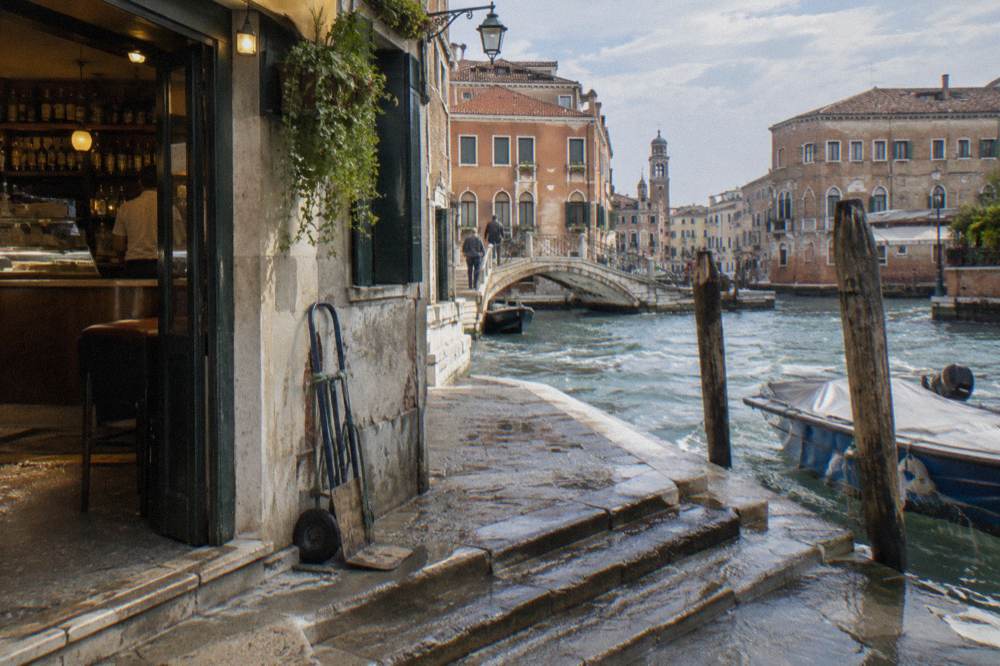
How Does A Pastry Walk Turn Breakfast Into A Tour?
A pastry walk turns the morning ritual into a guided route through several stops, with pastries, chocolate and gelato sampled along the way instead of a single bar's basket. It suits travellers who want the sweet side of Venice without choosing every stop themselves, and it typically runs about two hours.
The featured pairing for this article is exactly that idea. A Sweet Stroll Through Venice: Pastries, Chocolate, and Gelato is a two-hour walk built around the city's dessert counters, and it lines up neatly with everything described above: the same pastries a local grabs at seven, presented across multiple stops with a guide explaining what each one is and where it comes from. The tour's meeting point, inclusions and current price are on the tour page and the operator's booking page, so check those before booking rather than relying on any figure here, since pastry and tour prices both move with the season. It is worth saying plainly what the walk adds over doing it alone: not access, since bars are open to everyone, but selection and context, a chosen sequence of stops and an explanation of traditions like bussolà and fritole that a first-time visitor would otherwise walk past.
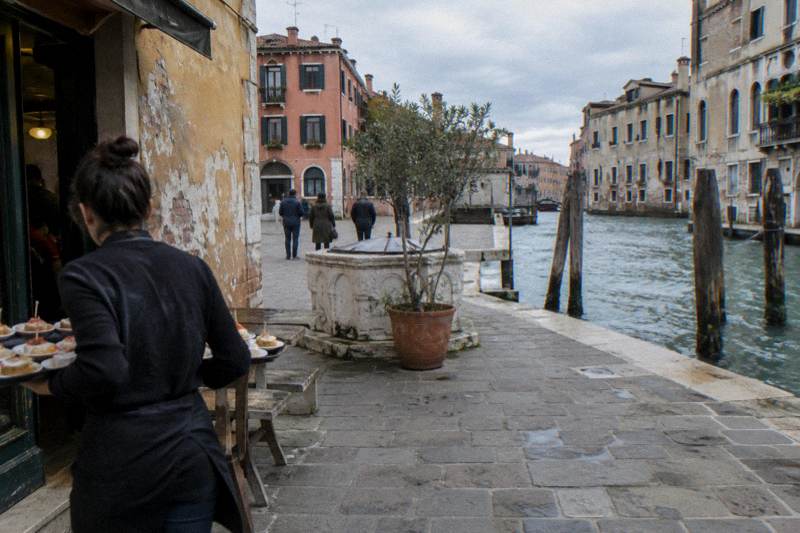
For readers whose curiosity runs past the sweet case, two other formats extend the same morning logic further into the day. A street-food walk with a local guide, around two and a half hours, folds the market and the savoury counters into one route, and pairs well with an early market visit given the Rialto hours above. A longer small-group tasting walk, Eat Like a Local, runs around three hours and builds a fuller sequence of stops and tastings; its inclusions, meeting point and price are stated on its tour page and the operator's booking page. Either can sensibly follow a standing bar breakfast, using the morning ritual as the first course of a day that keeps going.
Why Do Locals Defend The Standing Ritual?
Locals defend the standing breakfast because it is the last fully ordinary corner of daily Venice: a transaction between neighbours, at neighbourhood prices, on a schedule set by work rather than by tourism. It is also fast, cheap by the city's standards, and honest about what it is, which visitors come to appreciate once they try it.
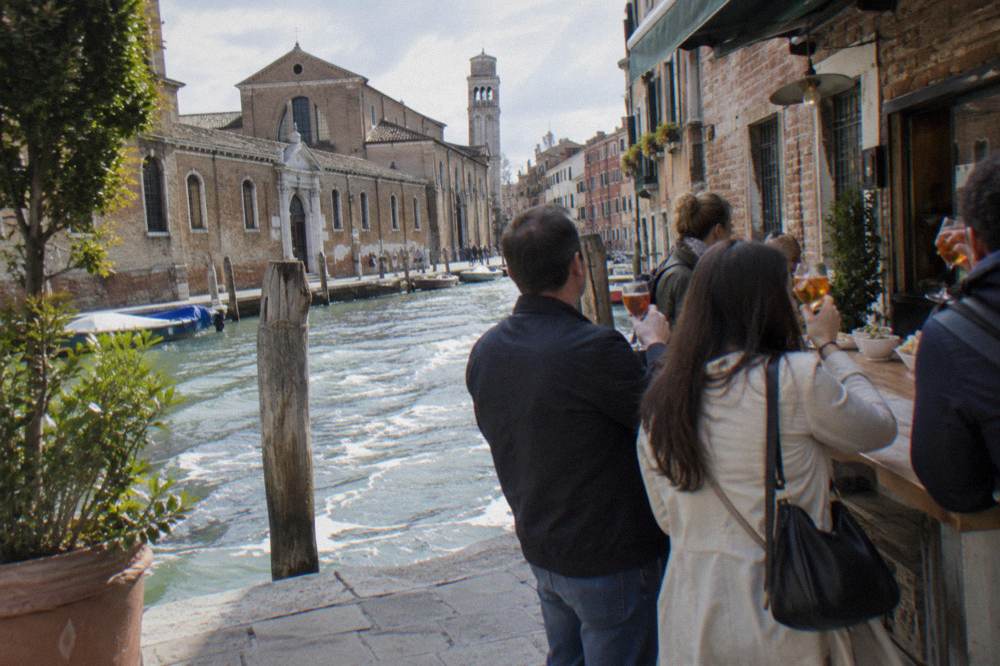
There is a quiet pride in the ritual that is easy to read at any counter at eight in the morning. The bar is one of the few places left where the city functions as a city rather than as a destination, and regulars guard its rhythms without ever needing to say so. For a visitor, joining in is one of the least extractive things you can do in Venice: you pay the posted counter price, you occupy a square metre of floor for ten minutes, and you leave. Compared with an hour at a canal-side table, it is lighter on your budget and on the neighbourhood alike, and it delivers the same coffee, often a better pastry, and a small dose of how the city actually runs. Reading where locals eat in Venice before your trip adds useful depth on the same theme beyond the morning hours.
“A fantastic Eat Drink, Repeat experience from start to finish. Even the weather did not dampen people’s mood. The food was amazing, the wines were delicious, and the whole event was very well organised. Sarah was an outstanding host, providing interesting history details about the city along the way and ensuring everyone had a great time. Highly recommended!”
The honest caveat is that the ritual is short, and short is not everyone's idea of a holiday morning. If a ten-minute standing coffee sounds more like a task than a pleasure, the alternatives are real: a sit-down pastry breakfast at a table service price, or a guided walk that stretches the sweets of the morning across two hours of strolling. What does not exist in Venice, at least not in the local tradition this site's research covers, is the long leisurely savoury brunch. Building that expectation into your plan will only lead to disappointment, while building in a standing coffee and a pistachio cornetto will almost certainly become the morning you remember. Venice Food Tours covers the rest of the eating day, from the market at dawn to the bacari at dusk, for readers planning the hours between the two.
Common Questions About Breakfast In Venice
What Is A Typical Breakfast In Venice?
A sweet pastry, usually a cornetto or brioche, taken with a cappuccino or espresso, standing at the counter of a neighbourhood bar. It is quick, sweet rather than savoury, and finished in minutes. Table service costs more; the standing counter is the local way.
Do Venetians Sit Down For Breakfast?
Rarely in the local routine. The standard is counter service, often after paying at the till first. Bars do have tables, and sitting is fine, but table service carries a higher posted price and is used mostly by visitors.
Is It Wrong To Order A Cappuccino In The Morning?
No, it is the default. Cappuccino or caffè latte with a pastry is exactly what the breakfast counter exists to serve. The unwritten rule only bites later in the day, when milky coffee gives way to straight espresso.
Can You Get Eggs Or A Savoury Breakfast In Venice?
Not in the traditional bar routine, which is built on pastries and coffee. Tramezzini, crustless sandwiches, are the savoury counter option, but locals treat them as a mid-morning or lunch item rather than breakfast.
How Much Does A Bar Breakfast Cost?
No verified bar price is published on this site's sources, so no figure is given here. Bars post a price list at the counter, and the standing price is lower than the table price; check the posted list before ordering.
What Time Do People Eat Breakfast In Venice?
Early: bars open around seven or before, and the counter rush runs roughly 7:30 to 9:00 on workdays. By eleven the bars have shifted to mid-morning coffee and tramezzini, and the breakfast window has closed.