What Are The Four Food Rules In Italy?
The commonly cited four food rules in Italy explained honestly, with the customs that actually matter in Venice, from cappuccino timing to coperto and bacaro etiquette.
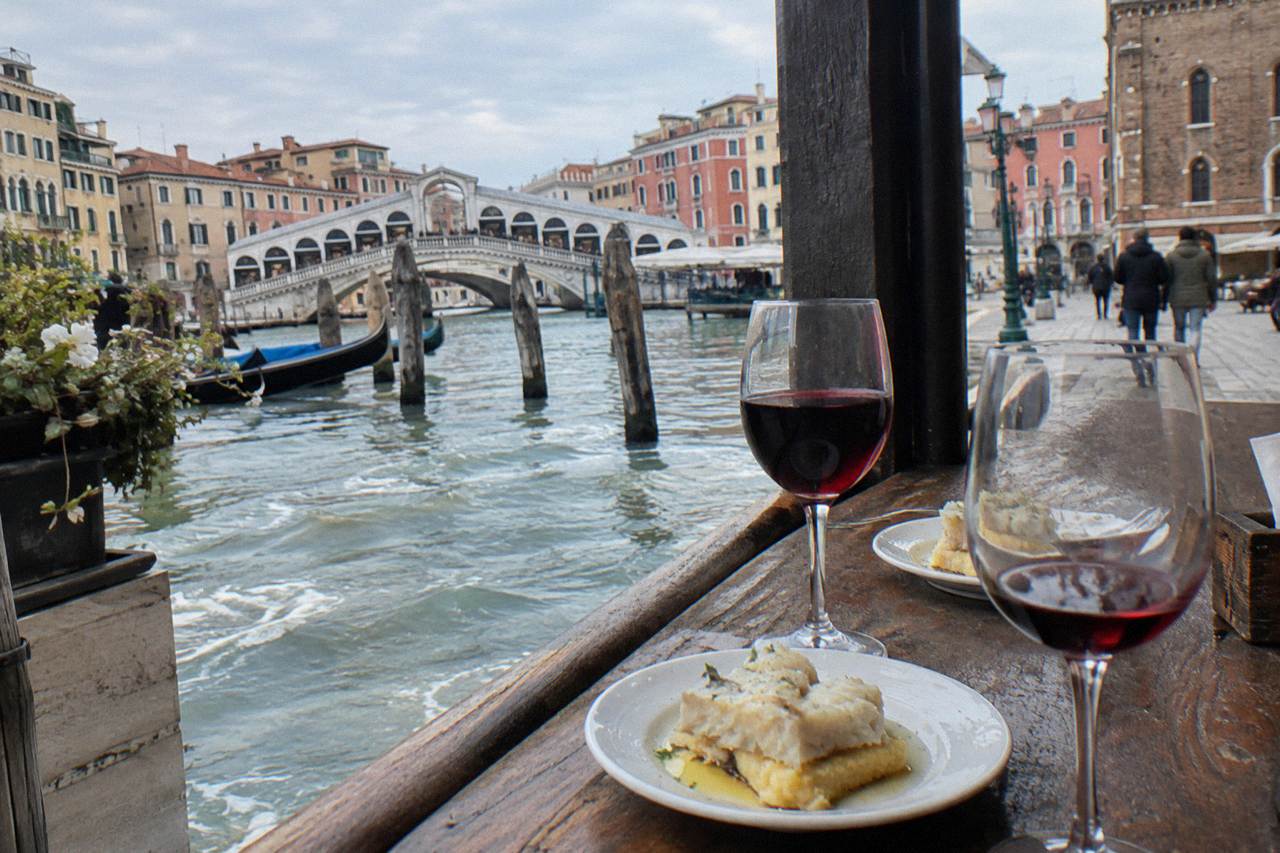
There is no single official list of four food rules in Italy. The phrase usually refers to a set of commonly cited customs: no cappuccino after late morning, no cheese on fish, pasta as a course rather than a side, and dinner later than most northern Europeans expect. None of these is law. All of them are habits with regional flexibility, and Venice adds its own layer on top, where standing at a bacaro counter with a small glass of wine is the local way to eat out.
Italy's food customs fascinate visitors precisely because they are visible everywhere and written down nowhere. A traveler who orders a cappuccino at 5 p.m. will not be refused, and nobody will be arrested for asking for parmesan on a seafood pasta. The rules, as Italians understand them, are closer to grammar than legislation: conventions so widely shared that breaking them marks you as an outsider, even when everyone is too polite to say so.
This article takes the question apart honestly. First, what the commonly cited four rules are and where they come from. Then, which customs actually matter day to day in Venice, a city that drinks wine standing up, eats small bites instead of big dinners, and adds a cover charge to the bill that confuses nearly every first-time visitor. Where figures are cited, they are reported amounts that vary by venue, so treat them as planning ranges and check the specifics wherever you eat or book.
Why There Is No Single Official List
No ministry, tourist board, or culinary academy publishes four official food rules for Italy, and no canonical list exists that anyone can quote or verify. Any article claiming otherwise is inventing a neatness the culture itself does not have, offering one writer's distillation of customs rather than an official standard. The framing is a travel-writing convention, a tidy way to bundle customs that Italians absorb from family and region rather than from any document. Different articles name different fourth rules: some list late dinners, some list no bread with pasta, some list respecting the seasons or not asking for alterations to a dish. The honest answer is that the number four is a convenience, and the customs themselves are the real content.
The commonly cited core, though, is remarkably stable across sources. Cappuccino belongs to the morning. Cheese does not meet fish. Pasta is a first course, not a garnish. And meals follow a rhythm, lunch around midday, dinner later in the evening, that a visitor can feel in the empty streets of Venice at 7 p.m. and the sudden life in the calli at 9. None of this is enforced. All of it is legible in how locals actually order.
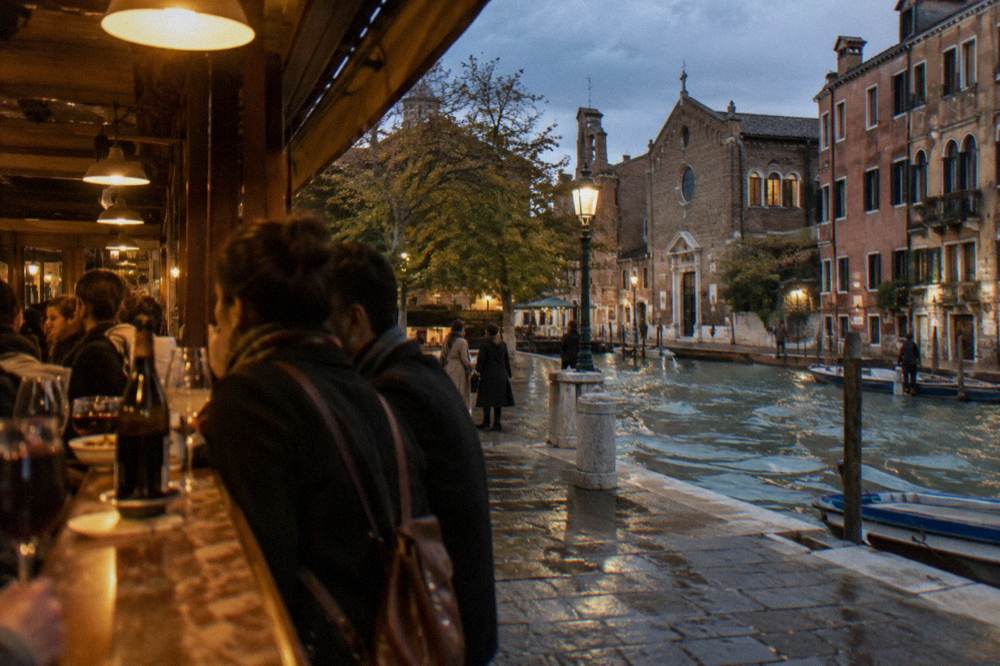
Venice complicates the picture in a useful way. The city's own eating tradition, the bacaro crawl with cicchetti and an ombra of wine, sidesteps half the formal rules entirely. There is no course structure when you are standing at a counter eating baccalà mantecato off a small plate. There is no cappuccino timing debate when the morning drink is a coffee taken quickly at the bar. A visitor who wants to see how Italians bend their own conventions will find Venice the most instructive classroom in the country.
How does a guided walk help with the rules? A guide who explains the customs while you order is worth more than any list read at home, because you learn the logic, not just the prohibition. The Eat Like a Local small-group tasting walk, a three-hour format, is built exactly around this: dishes in context, with the habits behind them explained stop by stop. Timing, meeting point and what is included are set out on the operator's listing, which is also where current pricing lives.
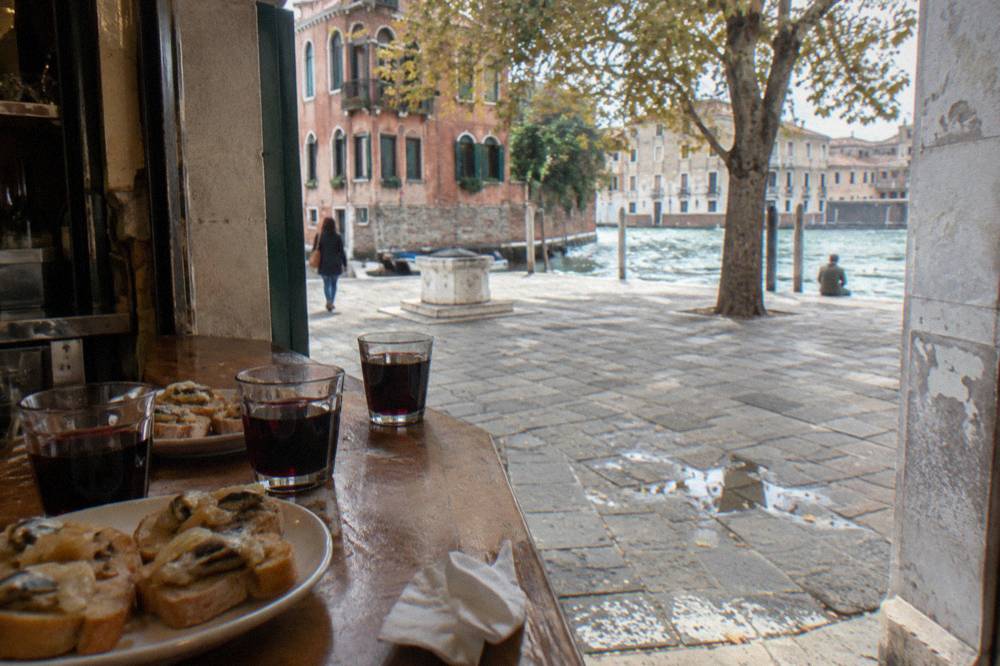
Cappuccino After Breakfast, And How Venice Drinks Differently
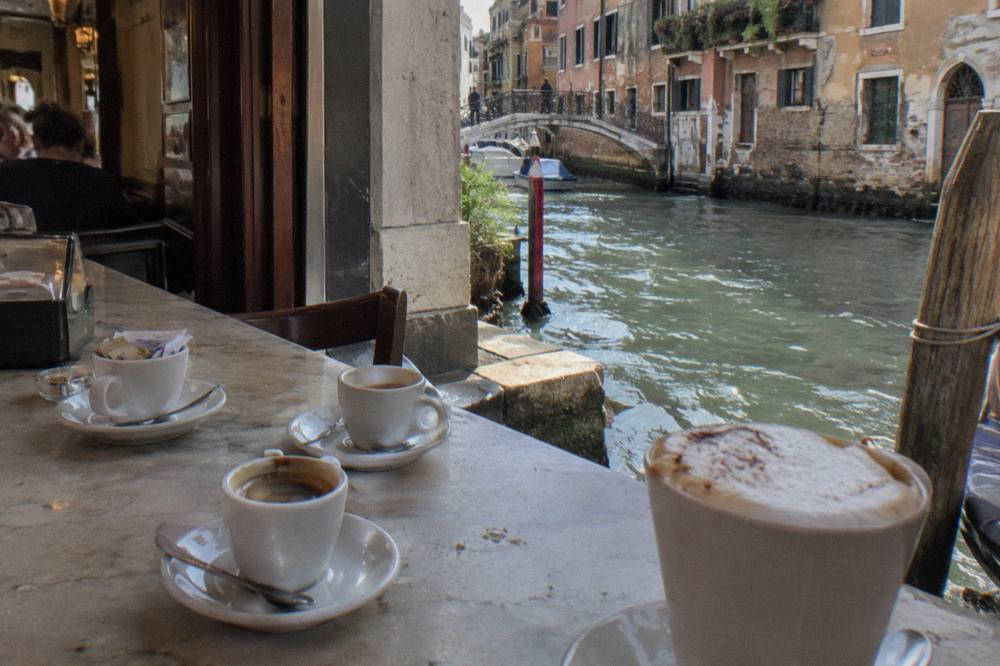
The most commonly cited food rule in Italy is that milky coffee belongs to the morning, with espresso taking over for the rest of the day, and the reasoning is digestive rather than arbitrary: Italians treat a large quantity of hot milk as a breakfast food that sits heavy on a stomach that already contains lunch or dinner. Order a cappuccino at 10:30 and nobody will blink. Order one at 16:00 and you may get a raised eyebrow, though tourist-facing bars serve it all day without comment.
Venice follows the same pattern with its own accents. Morning coffee here is often taken standing at the bar, which is itself a custom worth learning, because sitting at a table can cost noticeably more for the same cup. The city's other signature drink tradition inverts the sit-down logic entirely: the ombra, a small roughly 100 ml glass of house wine, traditionally drunk standing at a bacaro counter at almost any hour. Reported prices run from around EUR 1 to 2.50, often 1.50 to 2 at local spots, with tourist-oriented places charging more.
“Arrived to Venice this morning, and took the 5pm tour this evening. It was the best tour we have ever experienced! Giorgia was fun and informative. We had a huge and delicious variety of many food stops with beverages. I’d do it again with her in a heartbeat.”
What surprises many visitors is how unbothered the formal rules are by the bacaro habit. Wine before noon would raise eyebrows in some Italian dining rooms; at a bacaro counter mid-morning it is simply Venice being Venice. The lesson is not that the rules are fake but that they describe restaurant culture specifically. The counter, the standing ombra and the cicchetti bite alongside it run on their own older logic, and Venetians move between the two systems without friction.
For visitors who want a structured introduction to that second system, a tasting walk does in a few hours what would otherwise take days of tentative ordering. The guides choose the stops, translate the counter signs, and explain what to do with the toothpicks, which is a genuine question with a genuine answer: they are sometimes counted at the end, in the old bacaro tradition of tallying your bill by stick, though most places now simply add up the plates.
Fish And Cheese, Pasta Courses, And Meal Structure
The second and third commonly cited rules govern combinations and courses: no grated cheese on seafood pasta, and pasta served as a standalone first course rather than alongside meat, and both rules have roots in how the cuisine was actually built rather than in any purist doctrine imposed after the fact. The cheese rule has a practical root as most Italians explain it: aged cheeses overwhelm the delicate flavor of lagoon and sea fish, so the pairing was never built into the cuisine. Asking for parmesan with spaghetti alle vongole in a serious restaurant will likely get you a polite "perhaps not," and the kitchen is not being precious, it is protecting the dish.
The course rule reshapes the whole shape of a meal. A classic Italian dinner runs antipasto, then primo, a pasta or rice course, then secondo, the meat or fish, with a contorno side ordered separately. Venice's most famous primi lean on the lagoon: risotto, bigoli in salsa, and cuttlefish cooked in its own ink. Eating pasta as a side dish next to a cutlet reads as strange to locals in roughly the way putting ketchup on everything reads to an American chef: not criminal, just a signal that the meal's architecture has been missed.
Again, the bacaro tradition floats above the rules. Cicchetti are deliberately unstructured: a mound of baccalà mantecato on polenta, a fried mozzarella ball, sarde in saor on bread. There is no course order because there is no table. This is worth knowing because visitors sometimes worry they are breaking Italian food rules by grazing all afternoon, when in fact they are participating in one of the country's oldest informal eating customs. For more on what these small dishes are and how to order them, see the companion guide to what cicchetti are and how to order them.
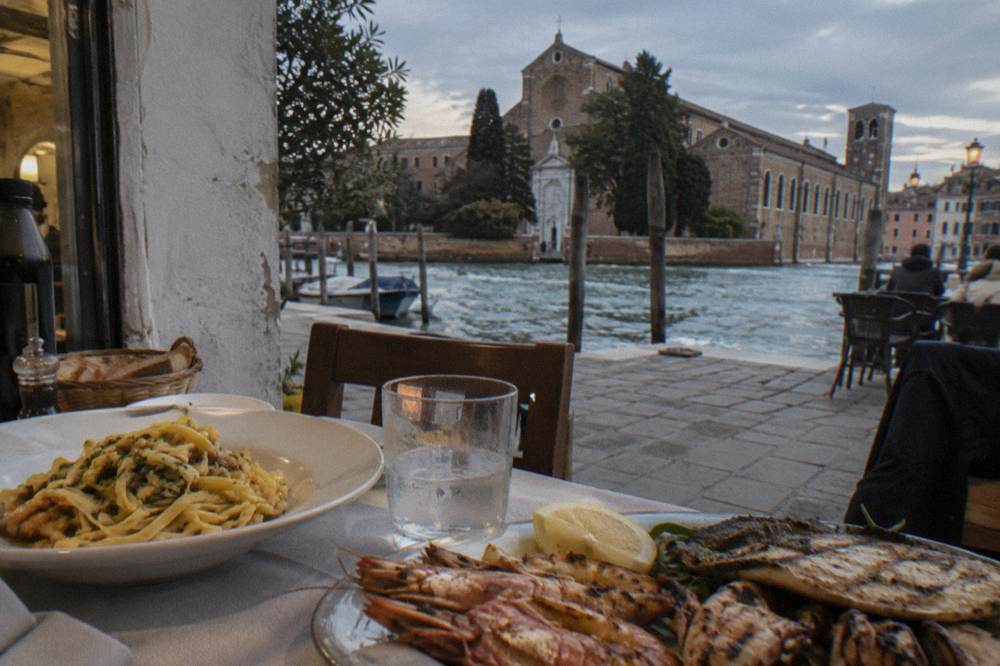
For travelers, the cheese rule is the easier of the two to apply, because it turns on flavor rather than etiquette. Where the point of the dish is the taste of the lagoon, spaghetti alle vongole, cuttlefish in its own ink, a lagoon-leaning risotto, the aged-cheese pairing simply never formed part of the recipe, so skipping it is not a concession but the norm.
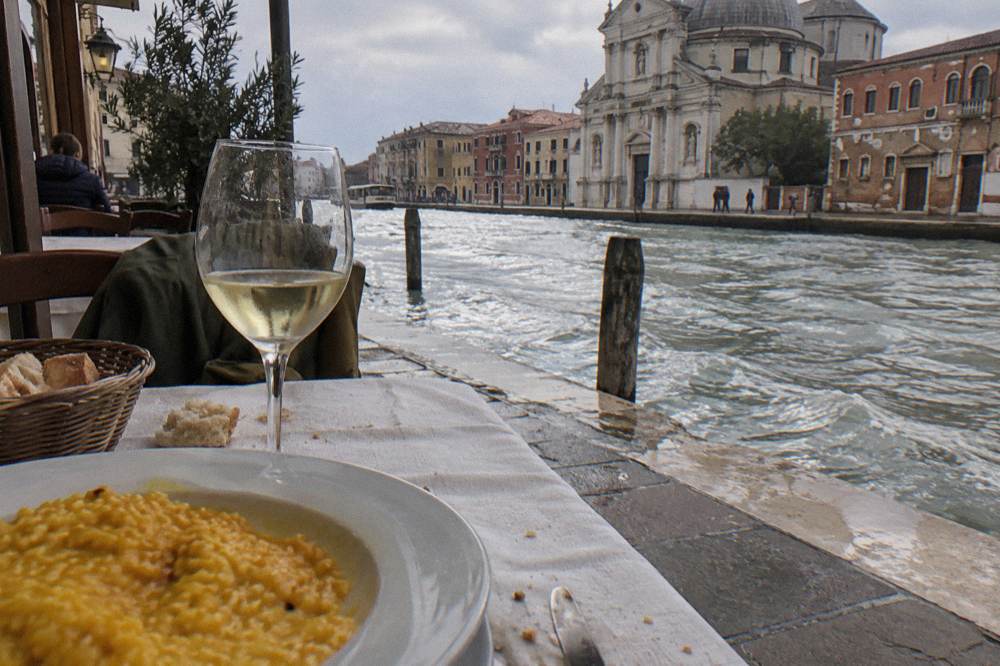
The course rule rewards the same relaxed reading. The antipasto, primo, secondo sequence gives each element its own moment, so the pasta is never asked to share a plate with a cutlet, and the contorno, ordered separately, arrives beside the secondo rather than as a shared plate for the table.
Neither rule, then, is a test visitors can fail in any serious way. One guards a flavor pairing, the other guards the structure of a seated meal, and the bacaro tradition suspends both without ceremony, since cicchetti were built for standing, not for courses. Reading them that way, as descriptions of how the cuisine actually works, keeps the meal enjoyable instead of anxious.
“This tour was really fun! Our guide Levy was very nice, and taught us a lot about Venetian Bacari. We were running a bit late after some issues at the airport, but Levy stayed in constant contact and ensured we could join along the way. The food and drink was delicious, and the experience was amazing! It was exactly what we needed to start our Italy trip.”
Coperto, Tipping, And The Bill Explained
Coperto is a per-person bread and cover charge that appears on many Italian restaurant bills, commonly reported at EUR 1 to 5 depending on the venue, and it is legal, standard and disclosed on the menu rather than a scam aimed at tourists, which makes it the one "rule" on this page that will affect every sit-down meal you eat in the city. It is not a service charge and not a tip; it covers bread, table setting and the general fact of sitting down. Tourist-heavy spots sit at the top of the range, neighborhood places at the bottom, and the amount must be shown before you order. If you do not see it listed, ask, which is normal and unremarkable.
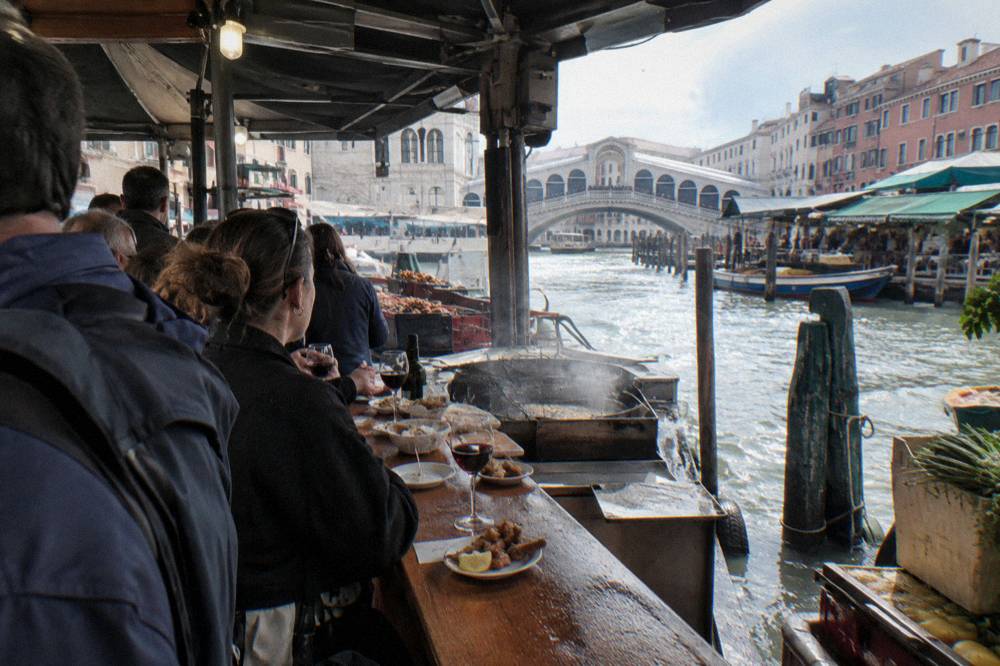
Tipping in Italy is genuinely optional in a way that surprises visitors from the United States. Service is included in menu prices by law, and the customary practice is to round up or leave a small amount for genuinely good service, a few coins or a couple of euros at most in a normal restaurant. In the standing bacaro context, tipping is essentially not expected at all: rounding up an ombra bill is appreciated but nobody will note its absence. More detail on the full etiquette sits in the guide to tipping, coperto and restaurant etiquette in Venice.
| Bill item | What it is | Reported range | Do you tip on top? |
|---|---|---|---|
| Coperto | Per-person cover charge, disclosed on the menu | EUR 1 to 5 | No, optional rounding is plenty |
| Servizio (where applied) | Service charge, some larger restaurants | Varies by venue | Not expected |
| Ombra at a bacaro counter | Small glass of house wine, standing | EUR 1 to 2.50 | Not expected, rounding appreciated |
| Cicchetti per piece | Small bites at the counter | EUR 1.50 to 4 | Not expected |
These are reported ranges, confirmed in 2026 sources and posted rather than standardized: each venue's own price list governs. The practical takeaway is that the bill in a sit-down restaurant will exceed the sum of your menu prices, while the bill at a standing counter rarely carries surprises. Many visitors find the counter habit saves real money over a week, and it happens to be the more Venetian way to eat anyway. Everything else covered here is indexed on Venice Food Tours.
One more bill-adjacent custom worth knowing: at many bars you pay the cashier first and show the receipt at the counter, or order at the counter and pay after. Watching locals for thirty seconds resolves the sequence. The system feels opaque exactly once, and after that first coffee at the bar it becomes second nature, which is a fair description of most Italian food rules in general.
“Maria C. delivered an outstanding Venice food tour, authentic dishes, quality wines, and sharp local insight. The stops were well chosen, the pacing smooth, and the experience felt genuinely local rather than touristy. Highly recommended.”
How The Rules Show Up On A Bacaro Crawl
On a bacaro crawl the formal rules mostly dissolve, replaced by a smaller set of counter customs: stand or perch rather than sit, order a few pieces at a time, and drink your ombra alongside the food rather than before it. Cicchetti cost a reported EUR 1.50 to 4 a piece depending on elaborateness, and there is no fixed city tariff, so posted lists apply everywhere. Two or three pieces with a glass of wine is a normal stop; a crawl of three or four stops is a full evening.
The etiquette here is light but real. Pointing at the counter display is acceptable. Asking what something is earns a better answer than guessing. Eating standing, elbow to elbow with regulars at peak times, is the point rather than a hardship, and it is also how you avoid the coperto conversation entirely, since most counter service skips it. The old toothpick tally survives in stories more than in practice, but the spirit of the tradition, a running informal count kept in the barman's head, still shapes how Venetian these places feel.
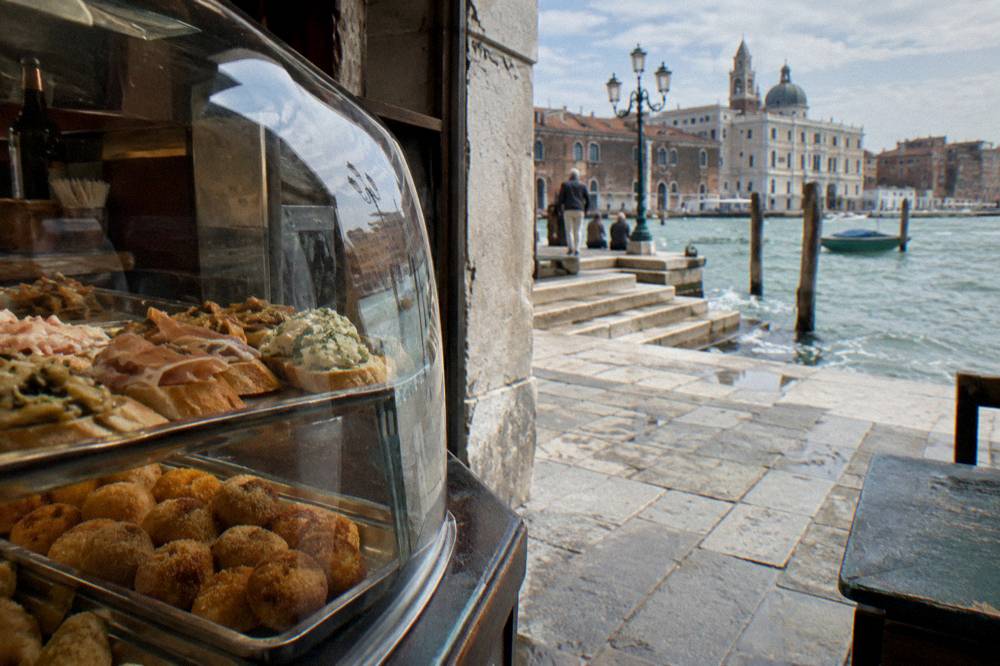
For travelers who would rather have the customs demonstrated than reverse-engineered, guided walks exist precisely for this. The Venice Bacaro Food Tour, a three-and-a-half-hour format, and the shorter Taste Venice Like a Local walk, around two and a half hours, both move through bacari with a guide ordering and explaining, which flattens the learning curve dramatically. Duration and inclusions for each are on the operator's listing, and per-person pricing there is the only figure worth trusting, since deals and date variations move it.
A walk also answers the question the rules lists never address: what to actually order. The deeper background on these dishes and their stories sits in the guide to what to eat in Venice.
The Rules That Are Actually Law In Venice
A few rules in Venice are genuine municipal regulations rather than customs, and they concern public space more than food: guided groups are capped at 25 people, loudspeakers are banned, and drinking from glass containers in the street is restricted. The group cap applies in the historic centre and the lagoon islands, which is why larger guided food walks split into smaller clusters and why guides use headsets. The glass rule, reported from the municipal regulation, prohibits consuming food and drinks in glass, ceramic or similar containers outside permitted seating areas, with reported fines of EUR 25 to 500, so a spritz taken away in a proper glass is not allowed even though the same drink at a table is.
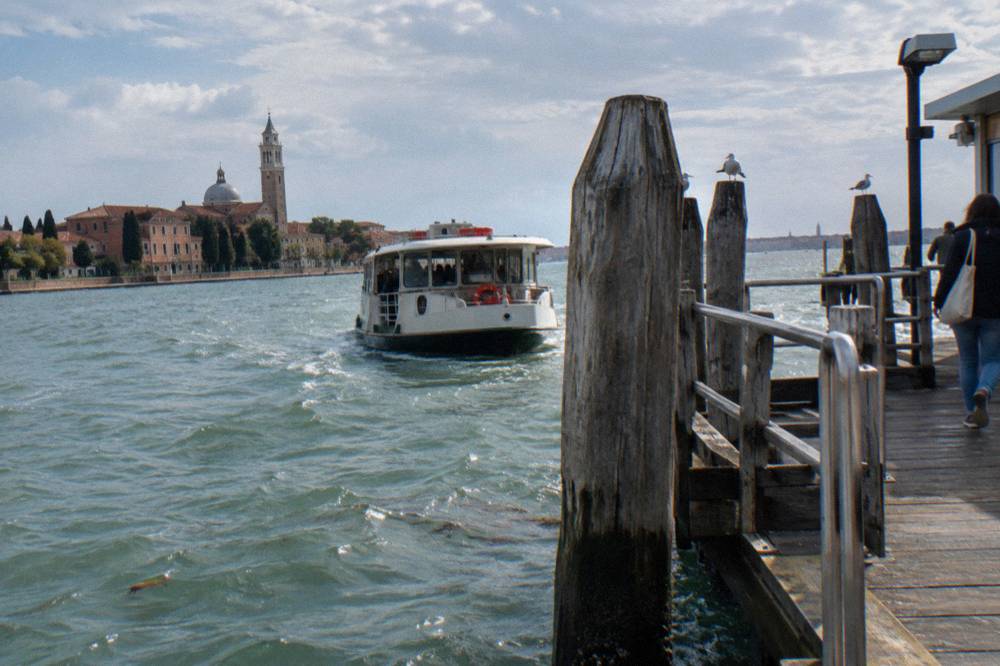
There is also money law to know. The 2026 day-visitor access fee trial, which charged EUR 5 or 10 on 60 selected days, ended, and per the official page no fee applies and no booking or exemption is needed from 27 July 2026 onward. It returns in 2027 with listed dates and arrangements to be announced by 31 December 2026, so anyone planning a spring 2027 trip should check the official access fee page before traveling. The separate tourist tax, charged per night by accommodations at reported rates of EUR 0.10 to 5 depending on the property, is unrelated and still applies.
None of this belongs on a "four food rules" list, yet it is exactly the regulatory layer that actually touches visitors: how big your tour group may be, where you may hold your drink, and whether entering the city costs anything on a given day. The customs govern the table; the rules govern the street. Knowing which is which saves both embarrassment and, occasionally, a fine. A visitor who confuses the two categories tends to over-worry about coffee and under-worry about glassware, which is precisely the wrong allocation of anxiety.
It is a nice symmetry that the city most associated with leisurely eating is also the one that regulates public consumption most specifically. Venice has been managing crowds and street life for centuries, and the current rule set is a modern chapter of an old habit. Checking current rules before a visit costs minutes and prevents the one kind of Italian rule with real consequences, and unlike the cappuccino convention, this kind is written down in an official document you can read for yourself.
Common Questions About The Four Food Rules In Italy
What Are The Four Food Rules In Italy?
There is no official list. The phrase commonly refers to four widely cited customs: no cappuccino after the morning, no cheese with fish, pasta as its own first course rather than a side, and meals eaten at Italian hours with lunch midday and dinner later in the evening. They are habits, not laws, and Venice adds its own standing-counter traditions on top.
Will A Restaurant In Venice Refuse A Cappuccino In The Afternoon?
Almost never. Tourist-facing bars serve milky coffee all day. You may get a polite comment or a slightly puzzled look in a very local place, but refusal is rare. Espresso after a meal is the local norm.
Is Asking For Parmesan On Seafood Pasta Rude?
It is seen as a mistake rather than an insult. The convention exists because aged cheese overwhelms delicate fish flavors. Many kitchens will decline to bring cheese for a seafood dish, politely, and the dish is considered complete as served.
What Is Coperto And Do I Have To Pay It?
Coperto is a standard, legal per-person cover charge covering bread and table setting, reported at roughly EUR 1 to 5 depending on the venue and disclosed on the menu. It is not a tip and not optional where applied, but standing at a bacaro counter usually avoids it.
Do I Need To Tip In Venice?
Tipping is optional. Service is included in menu prices, and rounding up or leaving a small amount for excellent service is the normal gesture. At a standing bacaro counter, tipping is essentially not expected.
Are The Four Food Rules Actual Laws?
No. They are social customs with regional variation. The rules that are genuinely enforced in Venice concern other things: guided group sizes capped at 25, a ban on loudspeakers, restrictions on drinking from glass containers in public, and the day-visitor access fee, which currently does not apply but returns in 2027.