Is It Free To Visit Venice?
The 2026 Venice access fee trial ended on 27 July 2026, so entry is currently free, but vaporetti, tourist tax and food still cost money. Here is what free really means.
Yes, for now it is free to enter Venice itself. The experimental day-visitor access fee ran on 60 dates from 3 April to 26 July 2026, at EUR 5 or EUR 10 per person, and it stopped applying on 27 July 2026. As of today no payment or exemption is needed to visit, though the fee returns in 2027 with dates already published and amounts still to be announced.
That headline answer surprises people who read about Venice charging admission. The trial was real, and it was widely reported as a turning point for overtourism, but the 2026 edition is over. The official access-fee portal states it plainly: as of 27 July 2026 the fee does not apply, and it is possible to visit without making any payment or requesting an exemption. Anyone telling you to budget EUR 5 or EUR 10 for entry today is working from an out-of-date page.
The nuance is that "free to visit" has never meant "free to experience". Walking the calli, crossing the bridges and browsing the Rialto market cost nothing. Getting there on the water, sleeping in the city, sitting down to eat and drinking a glass of wine all carry their own prices, some of them famously steep. A realistic budget question is not whether Venice charges admission but which parts of a Venice day add up and which ones genuinely do not.
The honest headline for 2026 into early 2027 is a window. Entry is free now, 2027 fee dates are already listed on the official page, and the amounts and arrangements will be announced by 31 December 2026. If your trip falls on one of those 2027 dates, the calculus changes again. Always check the official page before travelling, because this is the single most changeable rule in the city.
For many visitors the money that matters most is not the entry fee at all. It is the EUR 9.50 vaporetto ticket, the tourist tax added to the hotel bill, and the price of the first plate of cicchetti. Those are the numbers that shape a day, and they are the ones this page breaks down, with a look at where a paid food walk can actually save a budget traveler money by bundling tastings into one known price.
What Happened To The Venice Access Fee?
The 2026 access fee trial applied on 60 non-consecutive days between 3 April and 26 July 2026, charging EUR 5 if paid by the fourth-last day before a visit or EUR 10 otherwise, with children under 14 exempt. It ended on 27 July 2026, and the official page confirms no fee applies now. The fee returns in 2027, with dates published but amounts not yet announced.
The scheme targeted day-trippers, not overnight guests. People staying in accommodation inside the city were exempt from paying, as were children under 14 and several other categories. Paying visitors had to register in advance and carry a QR code. It was, in effect, a congestion charge for the busiest weekends and holidays of spring and early summer, not a general admission ticket for the city.
The 2027 dates are already listed: blocks in late March, then clusters of long weekends and weekdays running from April through to mid-August. What is not listed is the price. The official portal says arrangements will be announced by 31 December 2026, so anyone planning a 2027 trip on one of those dates should recheck the page after that deadline rather than assuming the 2026 figures carry over.
One point that trips people up: the access fee never applied to the smaller lagoon islands such as Murano, Burano and Torcello. Day trips to the islands were outside the trial zone entirely. So a traveler who skipped the historic centre and ferried straight to Burano never faced the fee even at the trial's peak, a detail worth knowing when old articles describe Venice as a pay-to-enter city without that qualification.
What Still Costs Money In Venice?
Entry is free, but the vaporetto network is not: a single 75-minute ACTV ticket is EUR 9.50 and a 24-hour pass is EUR 25, as reported on the official operator page. Overnight visitors also pay a tourist tax of roughly EUR 0.10 to EUR 5.00 per person per night depending on the accommodation, collected by the hotel and capped at five consecutive nights.
The vaporetto is the one cost almost nobody avoids. Unless you confine yourself to the area around Santa Lucia station and walk everywhere, the water bus is the city's transit system, and its fares are set at tourist levels. The single ticket, good for 75 minutes from validation, is reported at EUR 9.50. Passes scale from there: 24 hours at EUR 25, 48 hours at EUR 35, 72 hours at EUR 45, and a 7-day pass at EUR 65. Children under 6 travel free, and airport routes are excluded. The arithmetic favors passes from roughly three rides a day onward.
The tourist tax, imposta di soggiorno, is separate from the access fee and easy to confuse with it. It applies to overnight stays, is collected by your accommodation, and runs from about EUR 0.10 to EUR 5.00 per person per night depending on the property type and rating, with historic-centre hotels at the higher end. It is capped at five consecutive nights, and reductions and exemptions apply, including for children under 10. If a listing quotes you a room rate, ask whether the tax is included, because it is added at the property.
| Cost | Reported figure | Notes |
|---|---|---|
| City entry (access fee) | EUR 0 | Trial ended 27 July 2026; 2027 dates listed, amounts unannounced |
| Vaporetto single (75 min) | EUR 9.50 | Children under 6 free; airport routes excluded |
| 24-hour vaporetto pass | EUR 25 | Also covers buses, trams, People Mover |
| 48 / 72-hour passes | EUR 35 / EUR 45 | From first validation |
| 7-day pass | EUR 65 | Best value only for longer stays |
| Tourist tax | EUR 0.10 to EUR 5.00 per night | Varies by accommodation; capped at 5 nights |
| Coperto at restaurants | EUR 1 to EUR 5 per person | Disclosed on menus; often avoided standing at a bar counter |
The coperto line in that table is the one budget travelers most often meet by surprise. It is a legal bread-and-cover charge, commonly EUR 1 to EUR 5 per person depending on the venue, listed on the menu. Standing at a bacaro counter for cicchetti, rather than sitting at a table, is the traditional way Venetians avoid it, and it still works that way in most standing bars.
Tipping, by contrast, is one cost you can genuinely strike from the budget. Tipping in the standing bacari context is optional rather than expected, appreciated for exceptional service or by rounding up, and virtually none is anticipated when standing for cicchetti. Nobody will chase you for a gratuity, and adding one is a choice rather than an obligation.
What Can You Genuinely Do For Free?
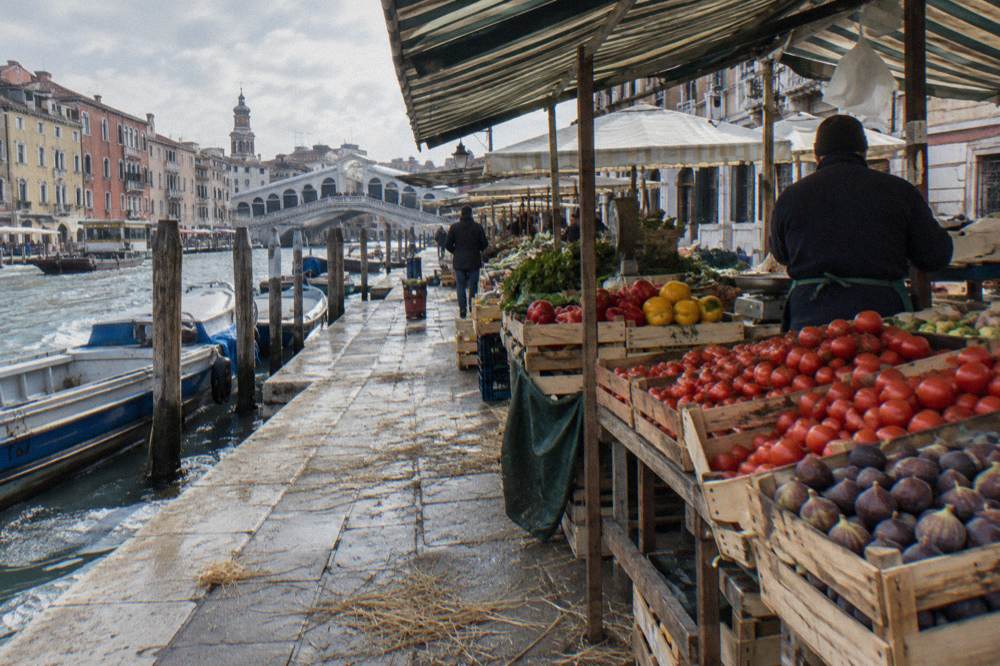
Walking the entire historic centre costs nothing, and browsing the Rialto produce market is free: it runs Monday to Saturday from 7:00 to 20:00, with the fish market Tuesday to Saturday from 7:00 to 14:00. There is no gate, no ticket and no charge to wander the markets, the squares or the canalsides at any hour.
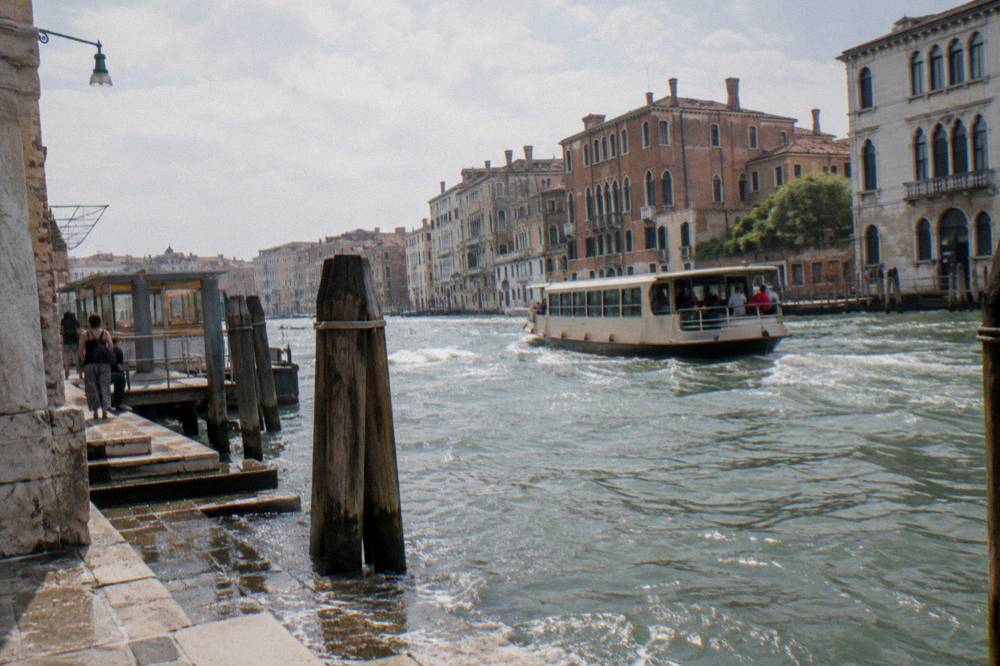
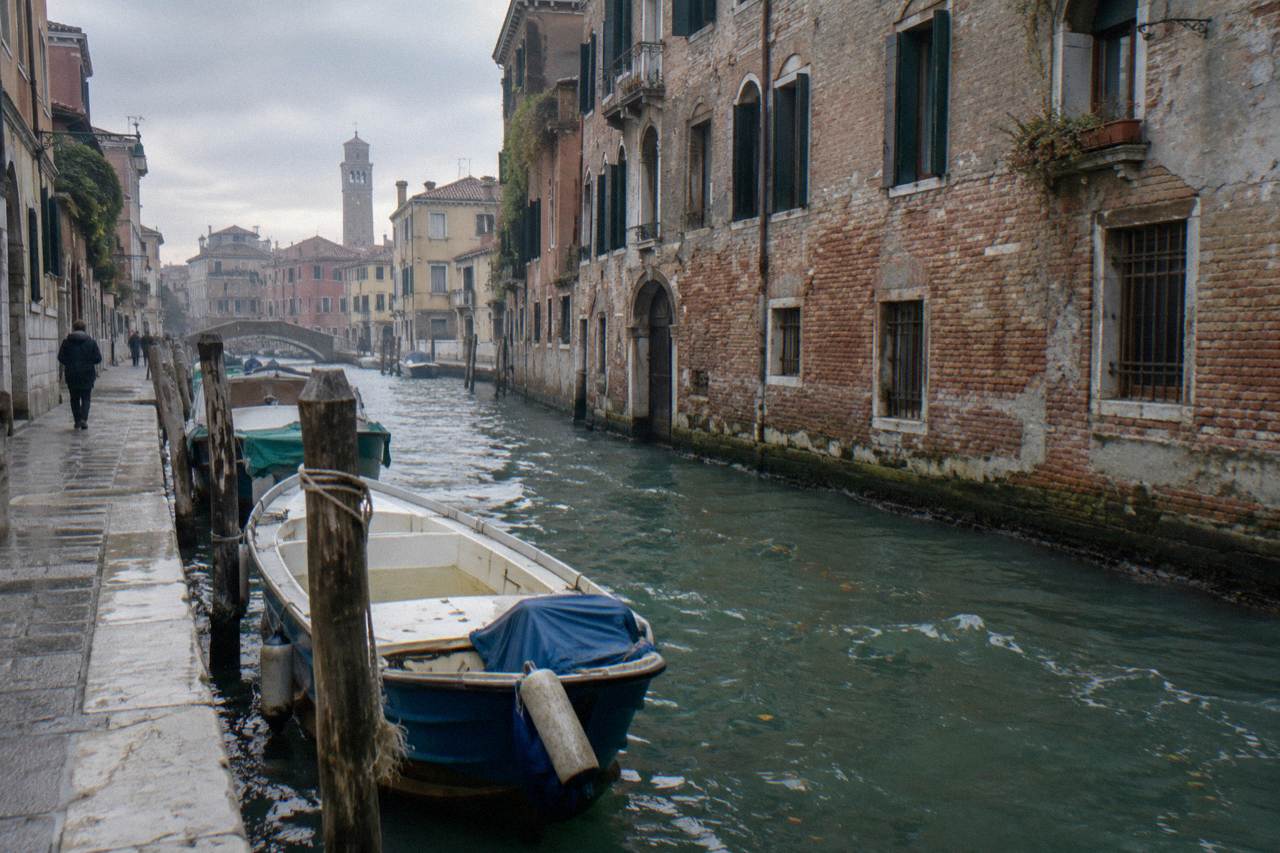
Venice is, structurally, an open-air city. There is no wall, no checkpoint and no central zone you must pay to enter, which is precisely why the access fee experiment was so unusual. The default Venice experience, getting lost in the back lanes of Cannaregio or Dorsoduro, crossing the Accademia bridge at sunset, watching the delivery barges negotiate a narrow canal, is free by design. The companion guide to free things to do and budget food in Venice covers this ground in depth for anyone building a zero-cost day.
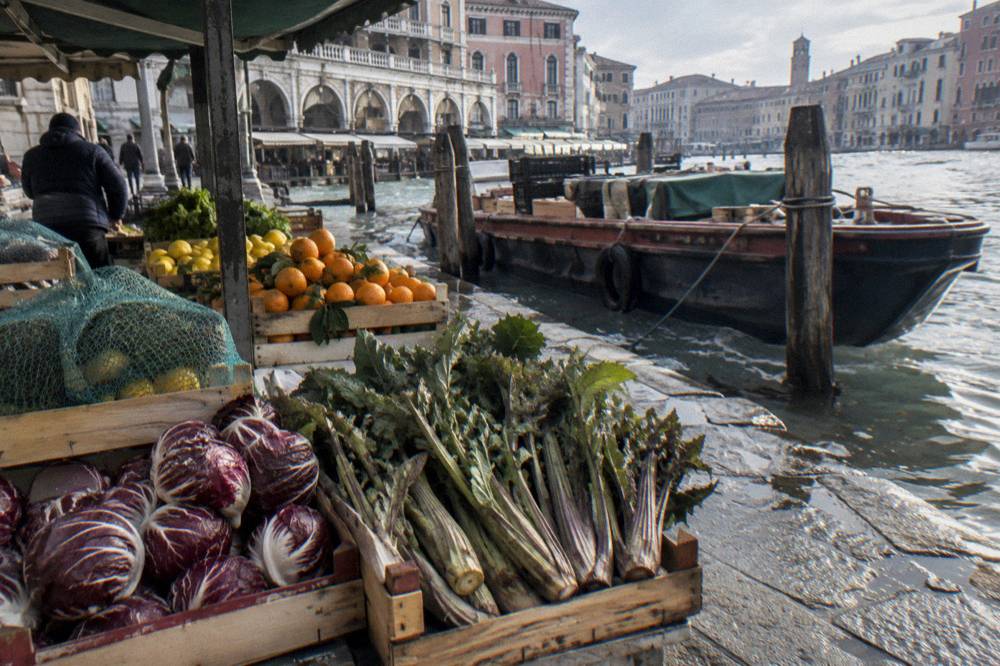
The Rialto markets reward the early riser precisely because browsing is free. The produce market, the Erbaria, opens at 7:00 and runs to 20:00 Monday through Saturday, closed Sunday. The fish market, the Pescheria under its loggias, runs Tuesday to Saturday from 7:00 to 14:00, closed Sunday and Monday, and tour listings themselves warn that Italian holidays close it too. Arrive mid-morning on a Tuesday and you see the lagoon's catch on ice, the radicchio from the island gardens, and the whole commercial machinery of the city, without spending a cent.
Window-shopping costs nothing, and in Venice the windows include pastry counters, mask workshops and the fishmonger's neon-lit hall. Photography is free. Sitting on a fondamenta with a view of the Giudecca canal is free, and frankly rivals things people pay for. The line between the free city and the paid city is drawn at consumption: the moment you sit down, board a boat, taste anything or enter certain museums, money enters the equation.
“Giovanni is so knowledgeable and hilarious. We had a fabulous time on this tour. It was one of the best we’ve done and it helped us to appreciate all of Venice, including the areas that are off the beaten path. The food was delicious (best pizza and gelato in Italy yet!).”
Churches and campi add to the free column too. Many of the city's smaller squares hold markets, fountains and centuries of architecture with no ticket booth anywhere in sight, and the daily rhythm of residents shopping, gossiping and hauling groceries over bridges plays out in public, at no charge to the spectator. Timing matters more than money here: the same lane that feels magical at 7:00 feels like a queue at 13:00, and the early start costs nothing but the alarm.
How Cheap Can Eating In Venice Be?
Reported prices put a piece of cicchetti at EUR 1.50 to EUR 4 in traditional bacari, with a small glass of house wine, an ombra, at EUR 1 to EUR 2.50, so a standing crawl of three pieces and three glasses can land around EUR 10 to EUR 15 in local spots. The range is reported, not a tariff, and posted lists in each bar apply.
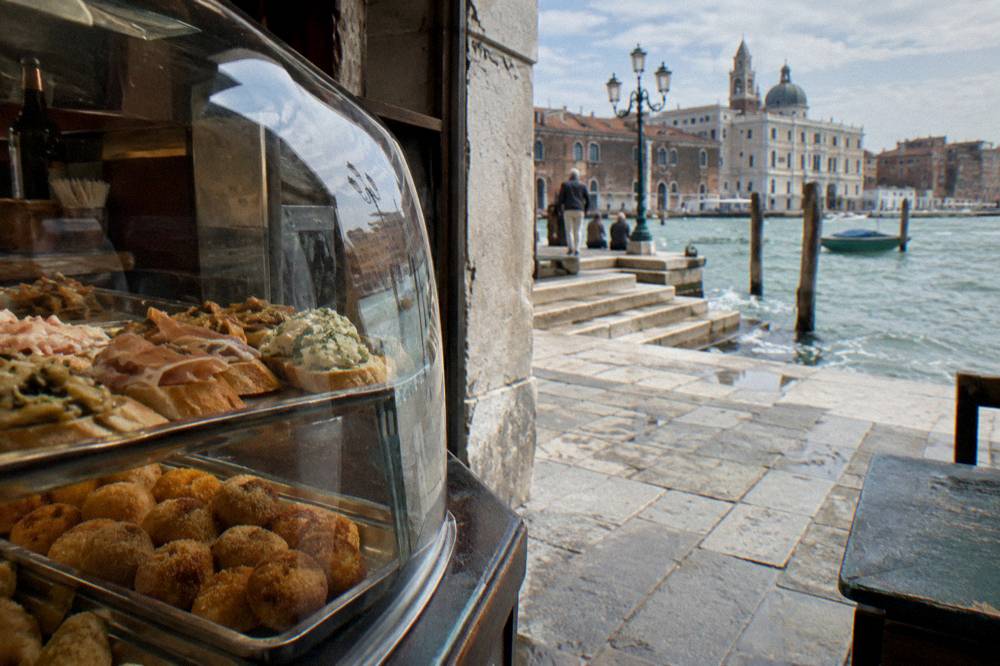
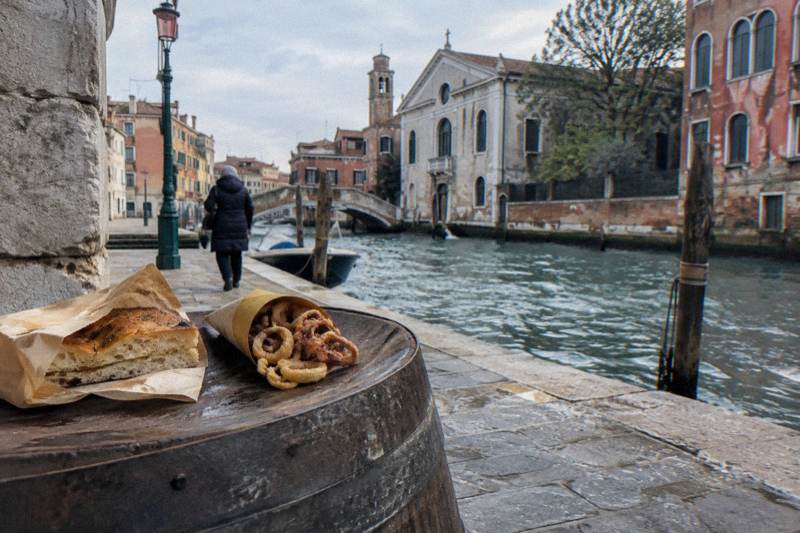
This is where budget travelers get to relax a little. The cheap-eating tradition in Venice is not a hidden hack, it is the native way of eating out. Venetians stand at bacaro counters, order a couple of pieces of cicchetti, drink a small pour of house wine and move on. The reported price band for cicchetti runs from about EUR 1.50 for a simple piece to EUR 4 for something more elaborate, confirmed on the official Visit Venice food pages, and an ombra, roughly 100 ml of house wine, sits between EUR 1 and EUR 2.50 outside the most touristy bars.
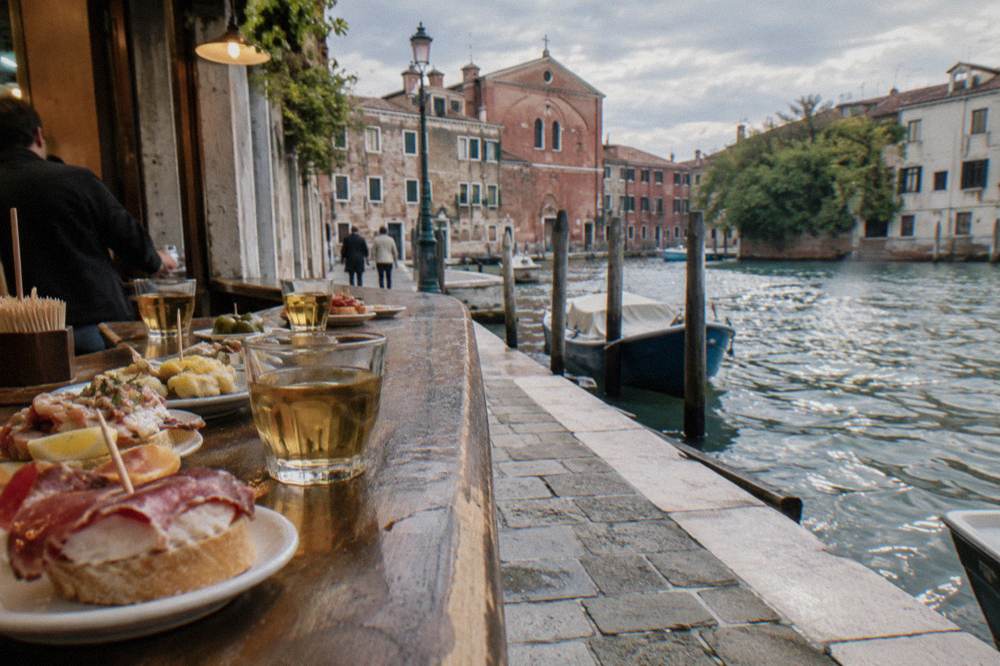
For a fuller picture of how a bacaro crawl works, the companion guide on how a cicchetti tour in Venice works walks through the format stop by stop, and the primer on what cicchetti is and how to order it covers the counter etiquette. The short version for budget purposes: stand, point, pay by the piece, and skip the table service that triggers the coperto.
Two cautions keep the budget honest. First, prices climb sharply in the bars nearest the Rialto bridge and St Mark's Square, so a five-minute walk into Cannaregio or San Polo changes the price of the identical snack. Second, drinking rules matter: Venice prohibits consuming drinks in glass containers outside permitted seating areas, and bans takeaway sales of alcohol in untapped glass bottles or glass glasses on the street, with reported fines of EUR 25 to EUR 500 under the municipal regulation. Drink your ombra at the counter, which is the custom anyway, and the rule never touches you.
“This tour was really fun! Our guide Levy was very nice, and taught us a lot about Venetian Bacari. We were running a bit late after some issues at the airport, but Levy stayed in constant contact and ensured we could join along the way. The food and drink was delicious, and the experience was amazing! It was exactly what we needed to start our Italy trip.”
What Rules Affect Visitors Beyond Money?
Guided groups in the historic centre and the lagoon islands are capped at 25 people and loudspeakers are banned, a standing rule confirmed as ongoing, so larger tours use headsets. The glass-container and takeaway-alcohol rule above is the other regulation most likely to touch a visitor's day, reported with fines of EUR 25 to EUR 500.
The group cap matters to anyone booking a guided walk, free or paid. It applies across the historic centre and the main islands, and it is why tour operators moved to headsets and earpieces rather than the old flagged-and-amplified format. A listing that promises a small group is describing its own cap; the city's ceiling is 25, and any tour running inside the rules stays under it.
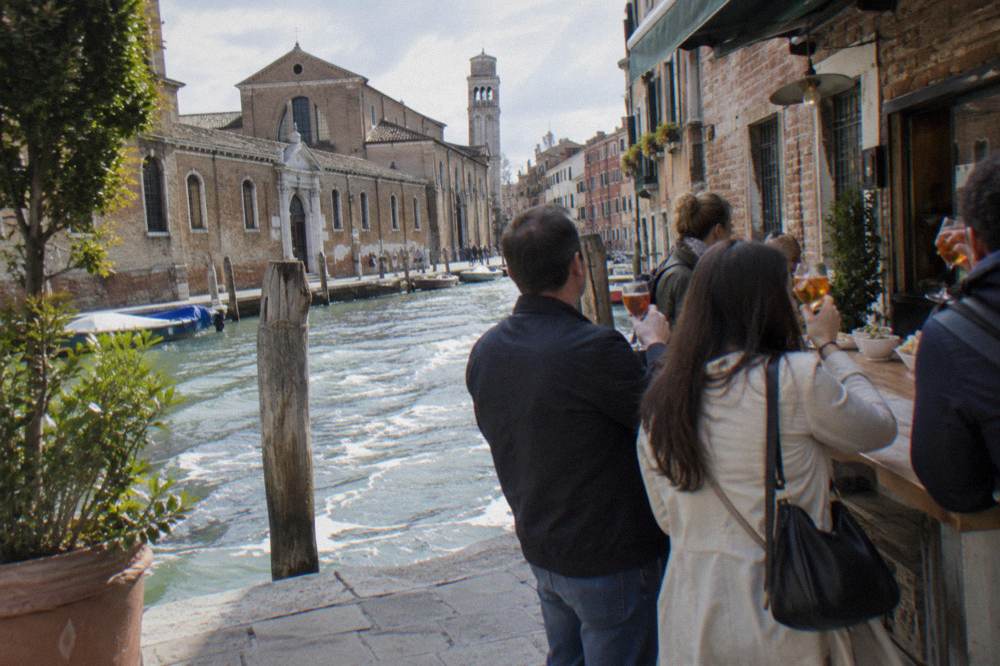
Both rules are worth checking on the official pages before a trip, and the practical takeaway is simple. The regulations that shape a Venice day are about how you consume the city, not whether you may enter it. Standing at a counter, walking in a group under 25, drinking where you bought: these are the behaviors the rules nudge everyone toward, and they happen to be the cheapest ways to experience the place anyway.
None of these rules is enforced at a gate, which is why they catch visitors off guard. There is no official at the station checking whether your group has 26 people instead of 25, and no sign on the bacaro door restating the glass rule. The enforcement happens where the fines land, on the operator who overbooks a group and the visitor who carries an open glass across a square. Knowing the rules in advance costs nothing and removes the only plausible way a free walk through Venice turns into a paid mistake.
When Does A Paid Food Walk Earn Its Price?
A paid tasting walk makes sense for a budget traveler when it bundles multiple tastings and drinks into one known price, replaces the guesswork of finding honest bacari in a tourist-priced city, and finishes cheaper per tasting than an improvised crawl. The walks compared here run from 2 to 4 hours and pair counted cicchetti with wine, with prices on each operator's live listing.
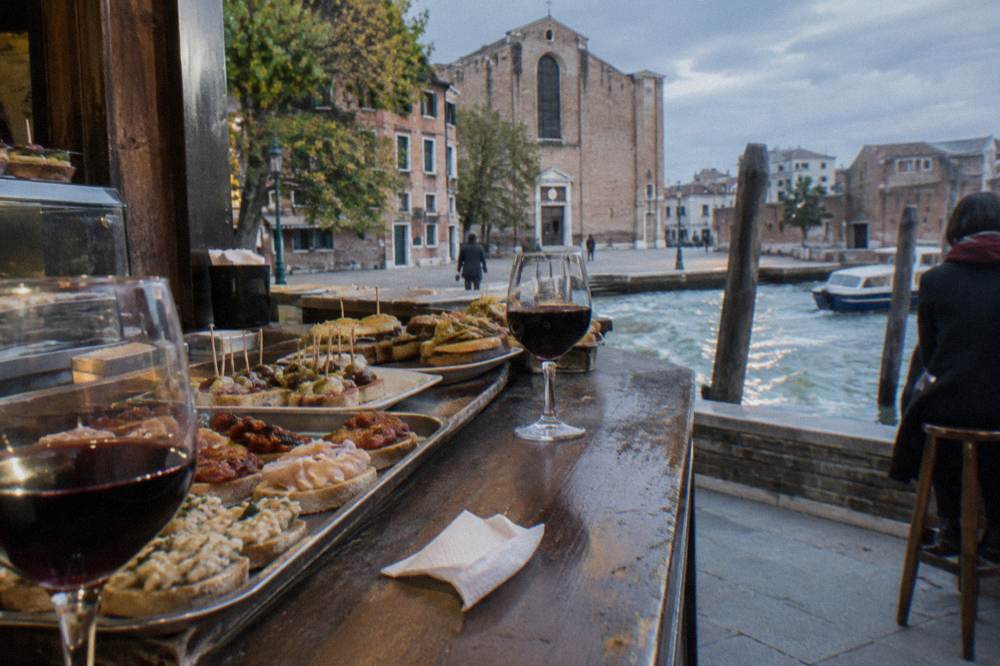
The case for paying, in a city you can visit free, rests on information. A first-time visitor improvising a bacaro crawl pays the learning tax: the overpriced bar by the bridge, the closed fish market on a Monday, the place that quietly adds a cover charge. A guided walk front-loads a local's map of where those traps are not, and the counted tastings convert an open-ended spend into a fixed one, which is exactly what a tight budget wants.
The street food walk led by a local guide is the closest format to a self-directed crawl, at 2.5 hours with tastings included, and its route is built around the market and street-food traditions rather than sit-down dining. The Rialto market food and wine lunchtime tour takes the other approach, at 4 hours, turning the market visit into a full midday meal with wine, timed to the hours when the Pescheria is actually trading. Prices for both sit on the live listings and vary by date, so check the booking page for the day you want. Check availability
“Ana was a great tour guide, providing lots of information about the history of Venice and it's food and drink culture. The food was all excellent, and is mostly chosen at each venue, making it easy for those with dietary requirements. The option to pay for a recommended drink pairing at some locations was also great.”
The featured small-group tasting walk, Eat Like a Local, is the format that most directly answers the free-versus-paid question. It runs 3 hours in a small group, and the philosophy is the same one this page has been describing: eat where Venetians eat, standing and moving, in the bars where the reported price bands actually hold. Details on meeting point and inclusions are on the booking page, and the small-group tasting walk listing shows the current price basis. As a starting point for exploring the city's food culture, Venice Food Tours compares walks across every format and neighborhood.
The honest framing is not free versus paid but free plus one. Walk free, browse the market free, pay nothing to enter. Then, on one evening or one lunchtime of the trip, put the food budget into a single ticket that covers the tastings, the wine and the local's route in one payment. For many travelers that one purchase is the difference between a cheap trip and a memorable one, and everything around it stays free.
Common Questions About Visiting Venice Free
Is It Free To Visit Venice?
Yes, entry is free as of 3 November 2026. The 2026 access fee trial ended on 27 July 2026, and no payment or exemption is needed to visit. The fee returns in 2027 on published dates, with amounts to be announced by 31 December 2026, so check the official page before travelling.
Do I Need To Book Anything To Enter Venice?
No. Since 27 July 2026 the access fee does not apply, and the official portal states you can visit without making any payment or requesting an exemption. For 2027 dates, recheck the official page after 31 December 2026, when arrangements will be announced.
Is The Vaporetto Free?
No. A single 75-minute ACTV ticket is reported at EUR 9.50, with a 24-hour pass at EUR 25, a 48-hour at EUR 35, a 72-hour at EUR 45 and a 7-day at EUR 65. Children under 6 travel free, and airport routes are excluded.
What Is The Tourist Tax In Venice?
The overnight tourist tax runs from about EUR 0.10 to EUR 5.00 per person per night depending on the accommodation type and rating, is collected by your accommodation, and is capped at five consecutive nights. It is separate from the access fee and applies to overnight stays, not day visits.
Can You Eat Cheaply In Venice?
Yes, reported prices put cicchetti at EUR 1.50 to EUR 4 a piece and an ombra, a small glass of house wine, at EUR 1 to EUR 2.50 in traditional bacari. Standing at the counter is the local custom and typically avoids the coperto charge that seated service can add.
Are There Rules About Drinking Outdoors?
Yes. Venice prohibits consuming drinks in glass containers outside permitted seating areas and bans takeaway alcohol sales in untapped glass bottles or glass glasses, with reported fines of EUR 25 to EUR 500. Drinking at the bar counter, as locals do, keeps you inside the rules. Check current rules before travelling.