What Are The New Rules For Tourists In Venice, Italy?
The Venice rules that matter to visitors right now: the access fee status after July 2026, the 25 person tour group cap, the glass container rule, transport fares and everyday etiquette.
The rules that matter now are these: the 2026 day visitor access fee trial ended and no fee has applied since 27 July 2026; guided tour groups are capped at 25 people in the historic centre and the lagoon islands; loudspeakers are banned; and a municipal rule restricts drinking from glass containers and takeaway alcohol in public streets. The access fee returns in 2027 on published dates, with amounts still to be announced. None of this makes Venice difficult to visit, but it does change how tours run and how you should plan a food-focused day.
Most of the headlines you may remember were about the access fee, the charge day trippers had to pay on selected dates in spring and early summer 2026. That trial is over. The rules that remain in force year round are quieter ones: group size limits for guided walks, a loudspeaker ban, the glass container rule, and the ordinary local expectations around meal times, market hours and standing at the counter. This page walks through each of them in plain terms, with the official figures where they exist and a note on what is still unconfirmed.
The pattern behind all of it is the same. Venice is a small city carrying visitor numbers built for a much larger one, and the rules are the city's attempt to spread the load and protect the daily life that makes the place worth visiting in the first place. For a food traveller that is not an obstacle. The bars, markets and bakeries the rules quietly protect are exactly the ones worth flying for.
If you are planning a food walk or a cooking class around these rules, Venice Food Tours compares the tasting walks, market tours and classes in one place, and the pieces below point to the ones that fit each rule best.
The Day Visitor Access Fee: What Actually Applies Now
No access fee applies as of 27 July 2026, when the 2026 trial ended, and day visitors need no payment and no exemption registration to enter the historic centre. The official access fee portal states this directly: the trial period has ended, and visiting requires neither payment nor an exemption request. For anyone whose plans were shaped by the spring 2026 coverage of EUR 5 and EUR 10 charges, that is the single most important update, and it holds for the rest of 2026.
The trial itself ran on 60 selected, non consecutive days between 3 April and 26 July 2026. Day visitors paid EUR 5 per person when paying by the fourth last day before their visit, or EUR 10 otherwise, with children under 14 exempt and paying visitors registered through the official portal with a QR code. Exempt categories also registered, but the whole machinery of payments, checks and QR codes applied only on the listed dates, and none of them has applied since late July.
That is the present tense. The future tense matters too, because the fee is not gone for good. The city has published a first batch of 2027 dates: 26 to 29 March; 2 to 4, 9 to 11, 16 to 18 and 23 to 30 April; 1 to 2, 7 to 9, 14 to 16, 21 to 23 and 28 to 31 May; 1 to 6, 11 to 13, 18 to 20 and 25 to 27 June; 2 to 4, 9 to 11, 16 to 18, 23 to 25 and 30 to 31 July; and 1, 6 to 8 and 13 to 15 August. That is the listed calendar, and it signals a longer season than 2026, stretching from late March into mid August.
What the official page does not yet say is how much the fee will be in 2027 or how exemptions and payment will work. The city has said the arrangements will be announced by 31 December 2026, and the 2027 FAQ section on the portal is not yet available. Anyone visiting on a 2027 date should check the official access fee page after that announcement and before travelling. Until the city publishes the amounts, treat any figure you see quoted for 2027 as guesswork.
One boundary worth knowing: the 2026 fee never applied to the smaller lagoon islands, including Murano, Burano, Torcello, Mazzorbo and Sant'Erasmo. Day trippers heading only to the islands were outside the scheme entirely. Overnight guests were also handled separately, through the tourist tax rather than the access fee, which is covered further down this page.
For food travellers the timing detail matters more than the money. The 2027 dates cluster around weekends and holidays in spring and early summer, which is also when the Rialto market is at its liveliest and when the small bacari are busiest. A traveller who books a market walk on a fee date in 2027 will want to budget for the fee once its amount is known; a traveller who shifts the same walk to a Tuesday outside the listed dates will not think about it at all.
Guided Groups Are Capped At 25, And Loudspeakers Are Banned
Guided tour groups in Venice's historic centre and on the lagoon islands are limited to a maximum of 25 people, and guides may not use loudspeakers or megaphones, so larger walks distribute headsets instead. The rule has been in force since 2024, applies across the historic centre and the islands of Murano, Burano and Torcello, and carries reported fines for violations. It is the rule most likely to touch your day directly.
For a traveller, this rule mostly works in your favour. A cap of 25 means no guide is legally leading a crowd of forty through a calle so narrow that two people struggle to pass. It also means the guide can physically get the group inside a bacaro rather than explaining it from the doorway. Venice's bars are small by design; a group that fits through the door and reaches the counter is a group that actually tastes things.
In practice many food walks run well under the cap, in groups small enough that everyone hears the explanation of what baccalà mantecato actually is, gets a glass without a wait, and can ask the guide questions mid-stop. When a walk does approach the limit, the headset requirement means you still hear the guide inside a busy bacaro, where the noise of a working bar would otherwise drown out a raised voice. Guides adapted quickly, and headsets are now a normal part of the equipment.
The practical takeaway for booking: check the group size stated on the operator's listing before you book, because it is one of the biggest drivers of how a tasting walk feels. A listing that does not state a group size is worth a message to the operator before you commit, especially in peak season when demand pushes numbers up. Our guide to choosing between food walks breaks the format differences down in detail.
The Glass Container Rule And Takeaway Drinks
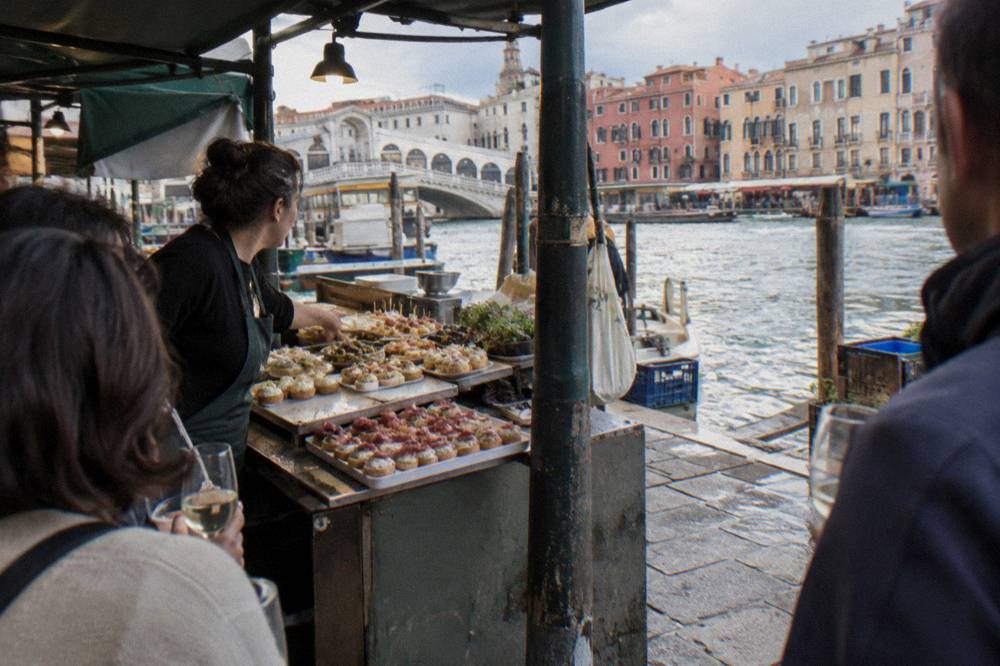
Venice's municipal rules prohibit consuming food and drinks from glass, ceramic or similar containers outside permitted outdoor seating areas of public establishments, and ban takeaway sales of alcohol in untapped glass bottles or glass glasses, with reported fines of EUR 25 to 500 under the city's public space regulation. In plain terms: an ombra stands at the counter, a spritz sits at a table, and neither travels down the street in your hand.
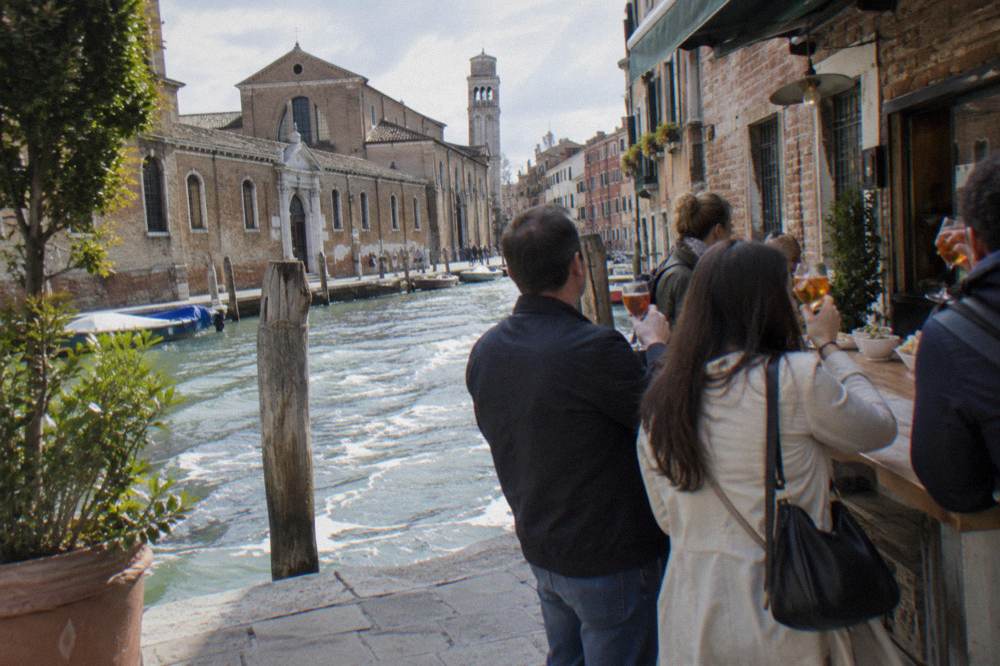
This matters more than visitors expect, because the Venetian drinking culture is built around standing. The whole rhythm of a bacaro crawl, the ombra of house wine beside a piece of cicchetti, happens at the counter or at a barrel outside the bar, within the establishment's own space. That is permitted. What is not permitted is carrying your glass away into the street to drink while walking, which is exactly the habit that feels natural after a bar hop anywhere else in Europe.
“Maria C. delivered an outstanding Venice food tour, authentic dishes, quality wines, and sharp local insight. The stops were well chosen, the pacing smooth, and the experience felt genuinely local rather than touristy. Highly recommended.”
The rule also explains something you will notice at bacari: wine sometimes arrives in a plastic cup for anyone drinking just outside the door, and bottles to take away are sold sealed rather than opened. The municipal regulation on the city's official site sets this out in full. Regulations get refined over time, so check current guidance before you travel rather than relying on a summary, including this one.
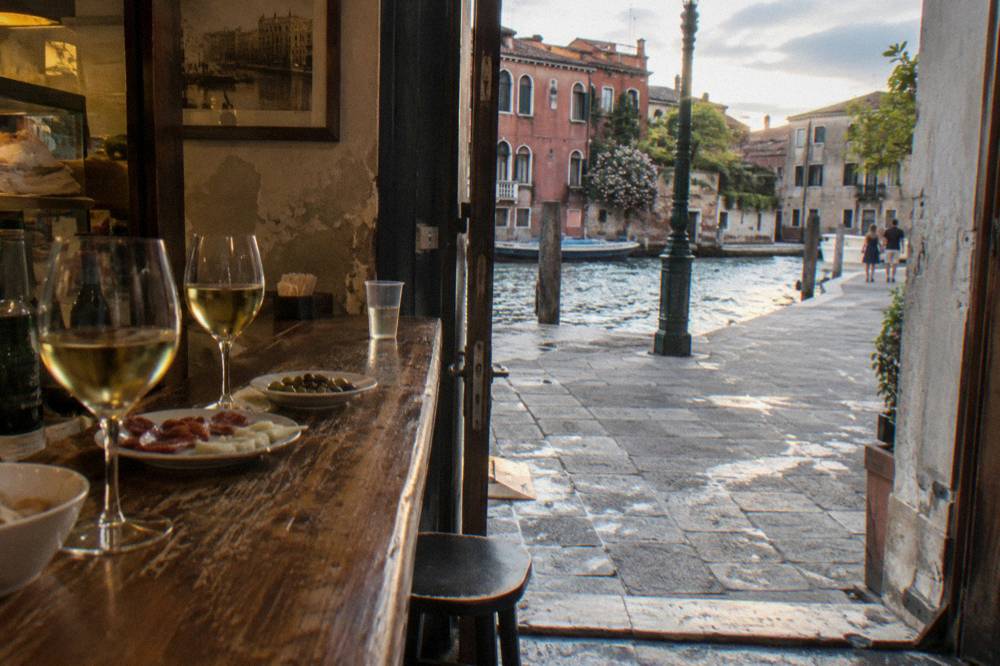
For context on what standing at the counter costs: cicchetti run around EUR 1.50 to 4 a piece as reported on the official Visit Venice site, and a small ombra of house wine runs around EUR 1 to 2.50, with the higher end at more tourist-facing bars. Coperto, the per person cover charge, is typically EUR 1 to 5 where applied and is usually avoided by standing rather than sitting, since it is a charge for table service. Tipping is optional and not expected when standing; rounding up is appreciated, and that is about the extent of it. Our etiquette guide to the ombra ritual covers the customs around all of this.
Transport Fares And The Tourist Tax
An ACTV single vaporetto ticket costs EUR 9.50 for 75 minutes, with day passes at EUR 25 for 24 hours, EUR 35 for 48 hours, EUR 45 for 72 hours and EUR 65 for seven days, all from first validation, as stated on the operator's official page. Children under 6 travel free, airport routes are excluded, and passes cover vaporetti, buses, trams and the People Mover where relevant. These are the figures to plan a lagoon day around, and they are the reason many visitors buy a pass the moment a second boat ride appears on the itinerary.
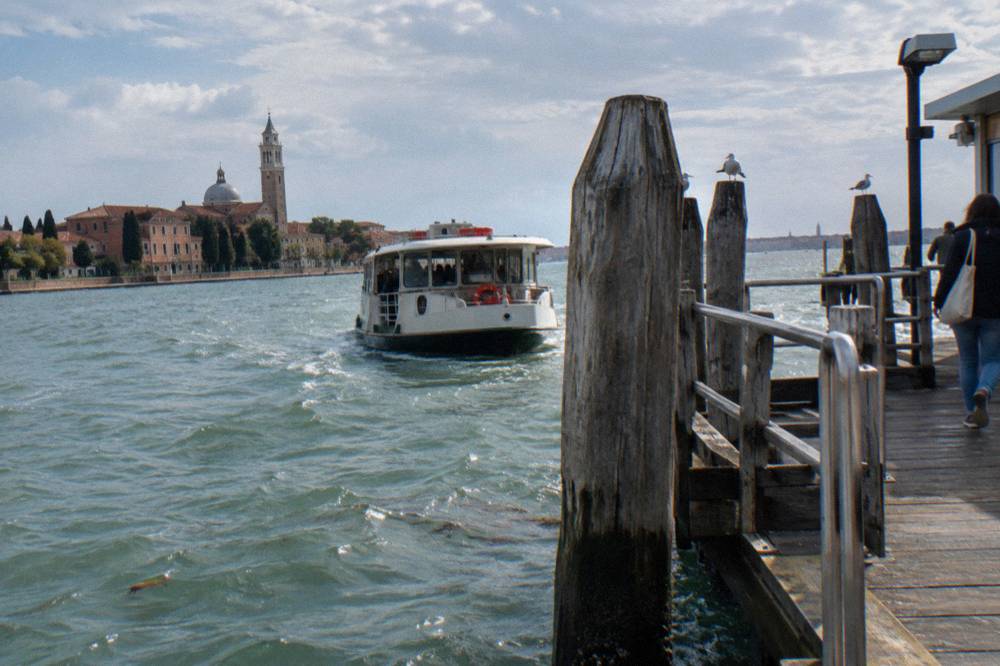
The arithmetic is simple even when the rule against deriving totals applies to tour prices: two single rides in a day already approach the 24 hour pass, and a Burano and Murano round trip plus an evening crossing settles it. Check the operator's page before travelling, since seasonal timetable shifts, such as the early November line adjustments, can change frequencies even when fares hold steady.
The tourist tax is separate and applies to overnight stays rather than day visits. Standing rates run from EUR 0.10 to 5.00 per person per night depending on the accommodation type and rating, with historic centre hotels typically in the EUR 1 to 5 band. It is collected by your accommodation, is capped at five consecutive nights, and reductions apply for children under 10 and several other categories. No new 2026 tariff resolution was found, so these roll over from previous years; the official visitor site's tourist tax page carries the current detail.
| Charge | Amount | Basis | Applies to |
|---|---|---|---|
| Access fee | None as of 27 July 2026 | Official portal | Day visitors, 2026 trial ended |
| Access fee 2027 | Not yet announced | Dates published, amounts due by 31 Dec 2026 | Listed 2027 dates, day visitors |
| Vaporetto single | EUR 9.50 | 75 minutes, official ACTV page | All riders, children under 6 free |
| 24 hour pass | EUR 25 | From first validation | Vaporetti, buses, trams, People Mover |
| Tourist tax | EUR 0.10 to 5.00 per night | Standing rates by accommodation | Overnight guests, capped at 5 nights |
| Coperto | EUR 1 to 5 per person | Typical where applied, on the menu | Sit-down restaurant guests |
Note what is not on that table: a fee to walk into Venice. Between now and the 2027 dates, a day trip costs nothing at the gate, only the boat you take and the food you eat.
Market Hours, Meal Times And Everyday Conduct
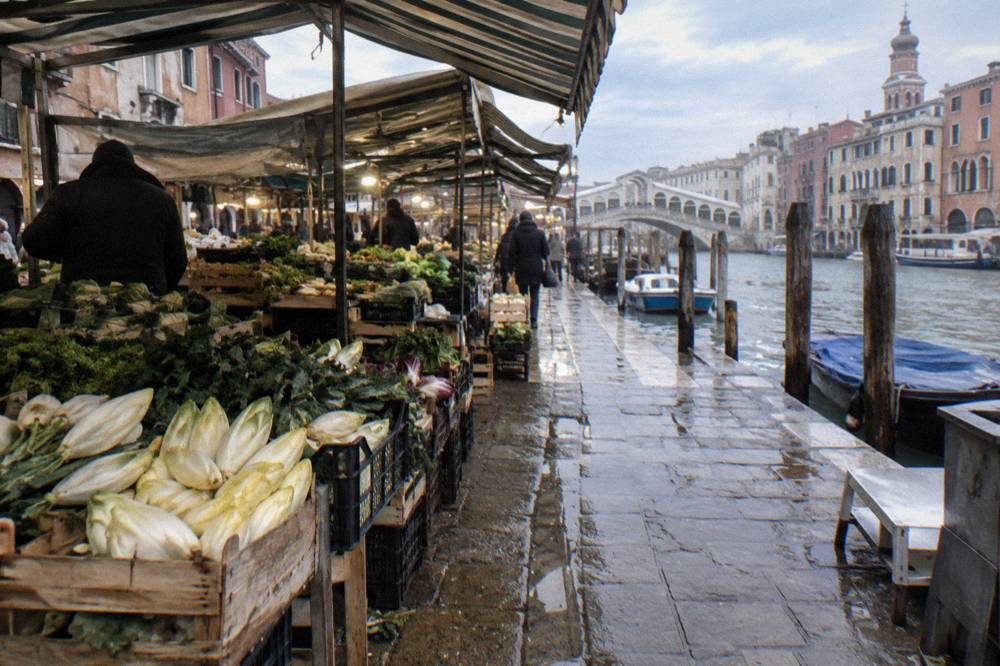
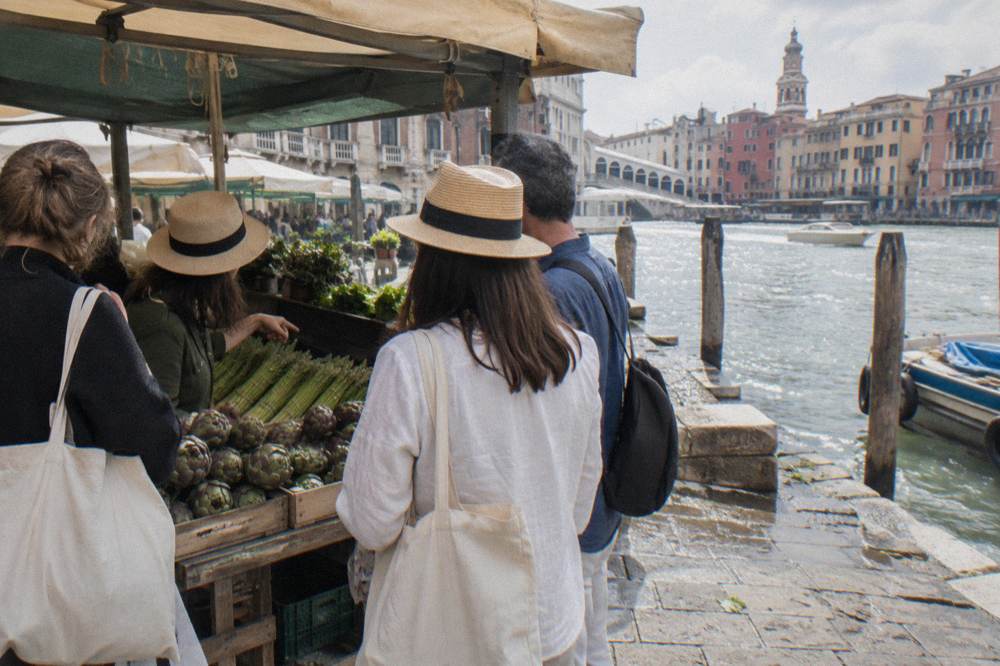
The Rialto produce market runs Monday to Saturday from 7:00 to 20:00 and the fish market Tuesday to Saturday from 7:00 to 14:00, both closed Sunday, per the official Venezia Unica figures, and tour listings themselves warn that the fish market is also closed Mondays and Italian holidays. That closing pattern is why morning market tours cluster early in the week and early in the day, and why a Tuesday or Wednesday booking buys you the full Pescheria spectacle while a Monday buys you empty loggias. If a fish market visit is the point of your booking, match the day to the calendar, not the other way round.
“Giovanni is so knowledgeable and hilarious. We had a fabulous time on this tour. It was one of the best we’ve done and it helped us to appreciate all of Venice, including the areas that are off the beaten path. The food was delicious (best pizza and gelato in Italy yet!).”
The unwritten rules matter as much as the written ones here. Venetians eat dinner late, standing costs less than sitting, and the market is a working wholesale operation before it is a photo opportunity. The traders are loading crates and pricing lagoon catch, not staging a scene, and the visitors who thrive are the ones who buy something, stand to the side, and let the hand trucks through. Behaviour rules that carry actual force are the obvious ones plus a few Venice specific habits: no swimming in canals, no sitting on bridges and monument steps to eat, and no picnic spreading in the narrow calli, all of which the city polices more actively than it used to.
A food walk happens to be a tidy way to stay on the right side of most of this. A guide who knows the market rhythm takes you at the hour the stalls are worth seeing, a walk structured around counter stops keeps the glass rule irrelevant because you finish each glass where it was poured, and a group capped at 25 keeps you welcome in bars that would groan at a crowd. The Rialto market hours guide has the full calendar detail, and the first-timers restaurant guide picks up where the market leaves off.
How The Rules Shape A Guided Food Walk
Venice's regulations push every guided food walk toward the same basic shape. The group cap keeps tours small, the headset rule adds order, and the counter drinking culture favors standing at the bar, so walks trend toward small parties, early start times and structured bacaro stops, which is exactly how the most reviewed walks on this site are built. A walk that hits several bacari in sequence gives the guide a controlled environment for every rule at once: numbers under the cap, glasses drunk on the premises, and stops timed to when each bar is actually pleasant to stand in. The format and the rules point in the same direction.
The featured walk on this site, Eat Like a Local, is a 3 hour small-group tasting walk, and the small-group format is the detail that makes it fit the current rules rather than fight them. Meeting point, inclusions and what the day looks like are all stated on the operator's listing, so check there before booking, and message the operator about any dietary needs since the listing is the only source for what the stops can accommodate. The listing is also where the current price and any date variation live.
Two alternatives cover different angles and different neighbourhoods. A market and street food walk builds the morning around the Rialto hours above, pairing the produce stalls with street tastings in the surrounding lanes, and a Cannaregio walk takes in the Jewish Ghetto quarter in a 4 hour format with wine included. Prices for all three vary by date and group size, so treat the operator's listing as the source of the figure rather than any number quoted second hand. If the choice between them is genuinely close, the food walk versus cooking class comparison may settle it.
What To Check Before You Travel
Check three official sources before a 2027 trip: the access fee portal after 31 December 2026 for the amounts and arrangements, the ACTV page for current fares and timetables, and your accommodation for the tourist tax you will owe on arrival. For 2026 travel, only the second and third matter, plus the ordinary booking page checks: group size, meeting point and dietary accommodation on any tour you book. None of the current rules require paperwork from a visitor who is simply walking in and eating well.
“Barbara and Martha were both fantastic, passionate and engaging. The tiramisu making process was explained precisely as was the making of the pasta. A great and rewarding experience with the ability to share the experience with other travellers. A must do in Venice!”
The one date to circle is 31 December 2026. That is the city's own deadline for announcing how the 2027 access fee will work, and it is the moment the practical picture for spring 2027 visitors becomes clear. Until then, every figure about 2027 amounts you might read anywhere is speculation, and the listed dates are the only firm fact. Set a reminder if you are booking spring travel, because the announcement window and the early booking window overlap.
For tour bookings, the checks are small but worth doing in order: confirm the group size on the listing, confirm the meeting point so you are not sprinting across a bridge at the start, and message the operator about vegetarian, vegan or gluten-free needs in advance rather than raising them at the first stop. The dietary question in particular is one no listing should be assumed to answer, since the described accommodations vary by walk.
Common Questions About Venice Tourist Rules
What Are The New Rules For Tourists In Venice, Italy?
The main rules in force are a 25 person cap on guided tour groups in the historic centre and lagoon islands, a ban on loudspeakers, restrictions on drinking from glass containers and takeaway alcohol in public, and standard transport fares. The 2026 day visitor access fee trial ended on 27 July 2026, so no entry fee applies now, though the fee returns on published dates in 2027.
Do I Need To Pay To Enter Venice In 2026?
No. The 2026 access fee trial ran on 60 selected days from 3 April to 26 July 2026 and has ended. As of 27 July 2026 no payment or exemption registration is needed to visit. The fee applies again in 2027 on dates the city has already listed, with amounts and arrangements to be announced by 31 December 2026.
How Many People Can Be In A Guided Tour Group In Venice?
A maximum of 25 people per guided group applies in the historic centre and on the islands of Murano, Burano and Torcello. Loudspeakers and megaphones are banned, so larger groups use headsets. Many food walks run below the cap; check the group size on the operator's listing before booking.
Can I Drink A Spritz Or A Glass Of Wine While Walking In Venice?
No. Municipal rules prohibit consuming drinks from glass, ceramic or similar containers outside permitted seating areas of public establishments, and ban takeaway sales of alcohol in untapped glass bottles or glass glasses. Reported fines run from EUR 25 to 500. Finish your drink at the counter or table where it was served.
What Is The Tourist Tax In Venice?
The overnight tourist tax runs from EUR 0.10 to 5.00 per person per night depending on accommodation type and rating, with historic centre hotels typically EUR 1 to 5. It is collected by your accommodation, capped at five consecutive nights, and separate from the access fee. Children under 10 and several other groups get reductions.
When Does The Venice Access Fee Come Back?
On listed dates in 2027, beginning 26 to 29 March and continuing through selected dates in April, May, June, July and August. The amounts and how payment and exemptions will work have not been announced yet; the city has committed to publishing arrangements by 31 December 2026. Check the official access fee page before a 2027 visit.