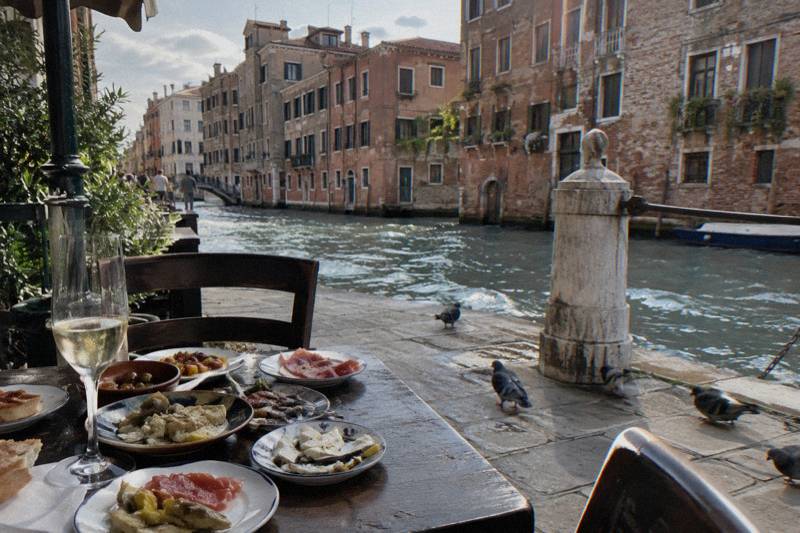
Is Cicchetti Expensive?
A plain answer to whether cicchetti are expensive in Venice, with reported price ranges for cicchetti, ombra wine and coperto, and how a self-guided crawl compares with a guided tasting walk.
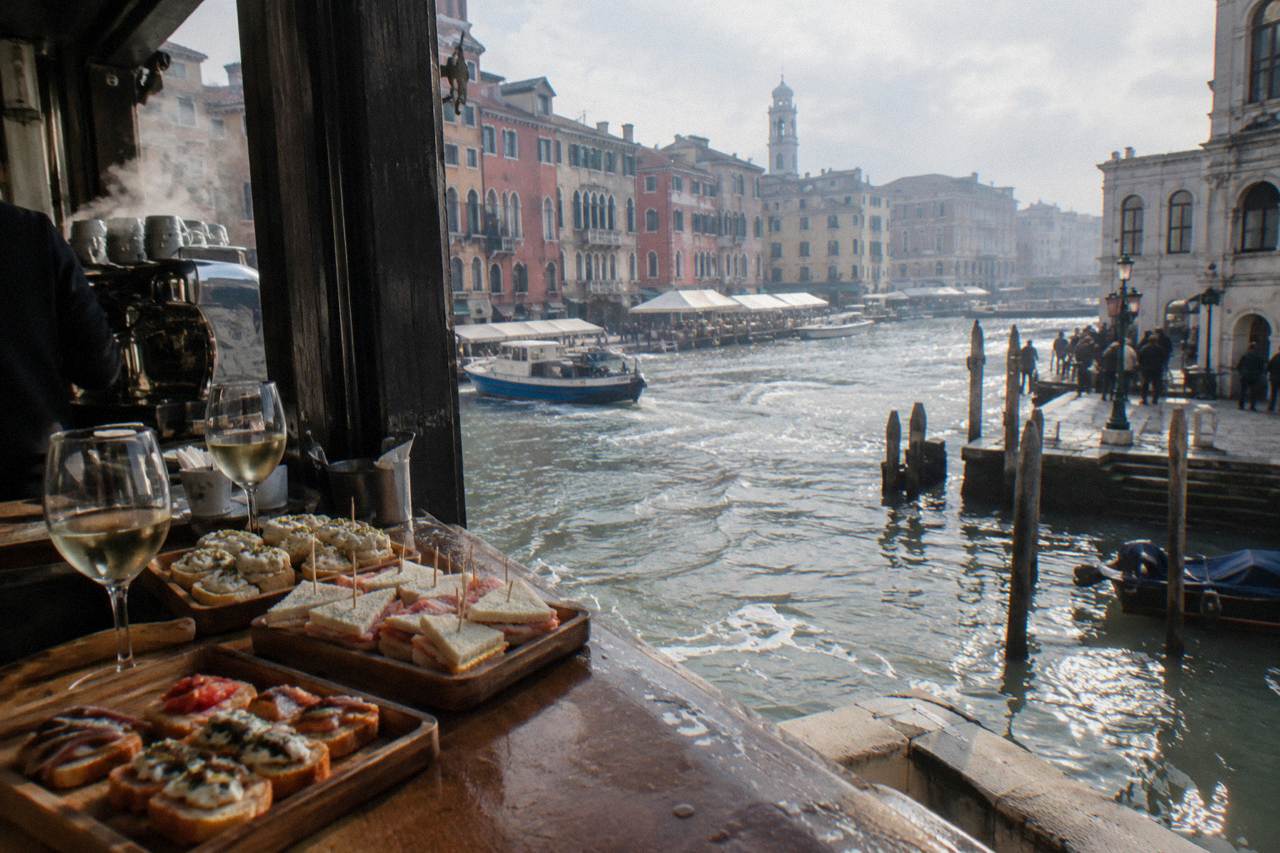
Cicchetti, the small snacks sold across the counters of Venetian bacari, have a reputation as both the city's great bargain and a tourist trap waiting to happen. Both reputations are earned somewhere. A single piece still costs less than a coffee in most of northern Europe, yet a long evening of grazing plus wine, in the wrong bar, can quietly rival a restaurant dinner. The honest answer sits in the arithmetic, and the arithmetic is mostly on your side.
No, cicchetti themselves are not expensive: reported prices run from about EUR 1.50 for a simple piece to around EUR 4 for an elaborate one, and a filling evening of five or six pieces with a couple of small wines typically lands far below a sit-down restaurant meal in the same city. The catch is that the pieces are only one line of the bill. What you drink beside them, whether you sit or stand, and which neighborhood you are standing in all move the total more than the food does.
The reported price band comes from the official Venice visitor site, which confirms the range of roughly EUR 1.50 to 4 per piece for counter cicchetti, with no fixed city tariff: each bar posts its own list, and the posted list is what applies. A plain polenta square with baccalà mantecato sits at the lower end; a stacked, garnished piece with lagoon seafood drifts toward the top. Nobody prints a fixed "official cicchetto price", and any bar that cannot show you a price list is a bar to walk out of.
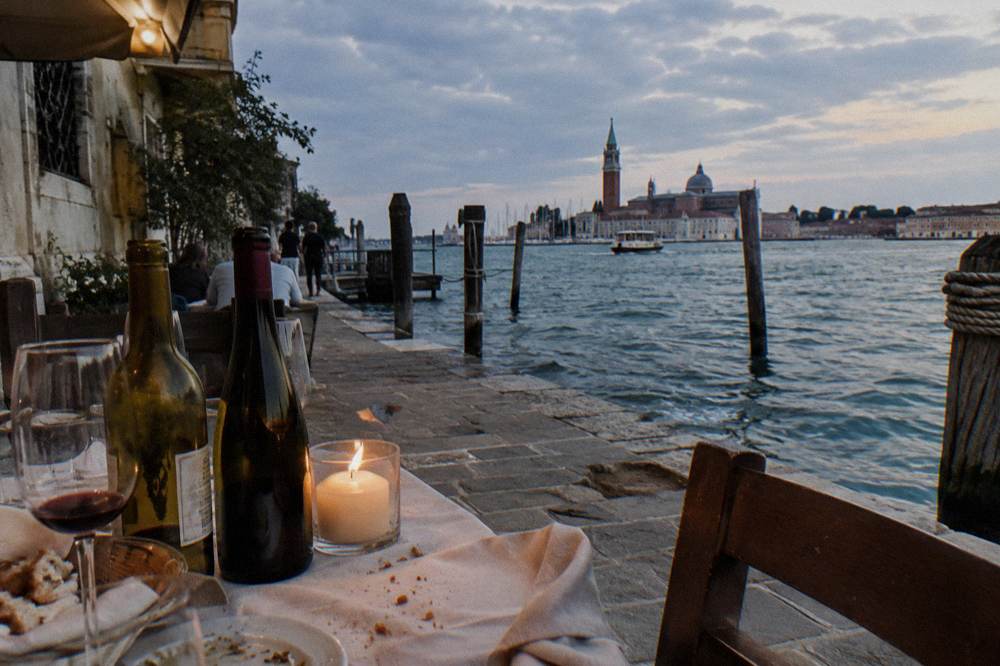
Context matters too. The same snack culture exists as a deliberate alternative to dinner. Venetians themselves eat this way, standing, one bar after another, and the format exists precisely because it is cheap. If the locals' own weeknight routine is a crawl, the format cannot be priced for tourists only. What is priced for tourists is the version served with a canal view and a chair, which is a different product wearing the same name.
For visitors who want the price question settled before arrival, a guided tasting walk bundles the pieces, the drinks and the bar-hopping route into one fixed payment. The Venice Bacaro Food Tour, this site's featured crawl, runs 3 hours 30 minutes and eats and drinks its way through several bacari with a local guide; the price and full inclusion list are on the operator's booking page. If you would rather count every euro yourself, read on, because the self-guided math is genuinely favorable.
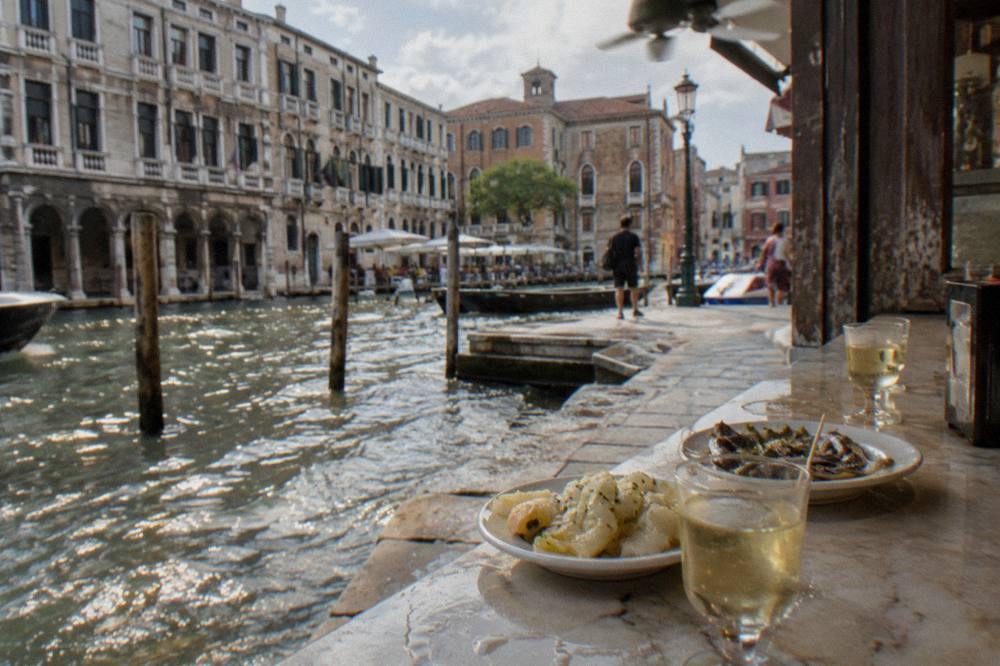
What A Piece Of Cicchetti Actually Costs
Reported prices for a single piece of cicchetti run from about EUR 1.50 to EUR 4, with simple items such as polenta with cod cream or a wedge of hard cheese at the bottom of the band and elaborate seafood-topped pieces at the top. Bars post their own lists, prices are per piece rather than per plate, and there is no citywide tariff, so two bars a bridge apart can differ by a euro on the same snack.
The distinction between simple and elaborate is the main driver inside that band. A piece of bread with baccalà mantecato, whipped dried cod, is a staple and usually priced near the floor. Anything involving shrimp, sardines in saor, or a generous slice of lagoon fish climbs toward the ceiling. Fried pieces such as a small fritto misto skewer tend to sit in the middle, and they also arrive in multiples, which is where people lose count.
“We would highly recommend this tour. Maria was very friendly, offered recommendations for local restaurants and provided information on the areas we visited which was interesting. The food was amazing and very filling and the drinks were lovely too. So much so we went back to some of the places throughout our visit.”
Counting is the real skill. Nobody hands you a running total; you accumulate pieces on a mental tab, and many bars settle up at the end from memory, which cuts both ways. Six pieces at the reported midpoint is still a modest sum, but six pieces plus two glasses plus a friend doing the same adds up to a real evening's spending. Decide your piece count before you order the second round, not after.
| Item at the counter | Reported price | Notes |
|---|---|---|
| Simple cicchetti (polenta, cheese, plain crostini) | around EUR 1.50 to 2.50 | The staples, posted per piece |
| Elaborate cicchetti (seafood, saor, stacked pieces) | around EUR 3 to 4 | Lagoon fish and garnished pieces |
| Ombra (small house wine, about 100 ml) | reported EUR 1 to 2.50 | Often EUR 1.50 to 2 in local spots |
| Coperto if you sit | reported EUR 1 to 5 | Disclosed on the menu; standing usually avoids it |
Every figure in the table is a reported range from current Venice visitor sources, not a promise: bars set their own prices and the posted list in each bar is the only number that counts. Check the wall or the counter card before ordering, which is normal behavior in Venice and never read as rude. The official visitor page on cicchetti carries the current reported ranges for pieces and ombre (visit.venice.it's cicchetti guide).
Why Standing At The Counter Changes The Bill
Standing at the counter is the single biggest saver in a cicchetti evening: the coperto, a per-person cover charge reported at EUR 1 to 5 where applied, is routinely avoided by eating standing, and tipping is optional rather than expected in that setting. The cover charge is a legal, disclosed menu item rather than a scam, but it applies to table service, and the bacaro tradition is built on not using the table.
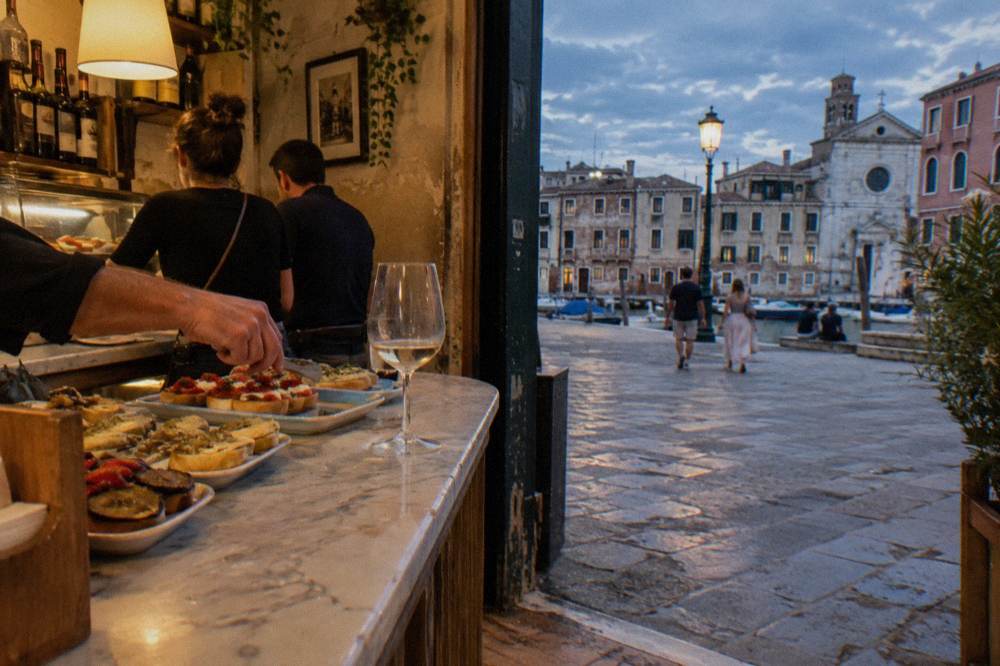
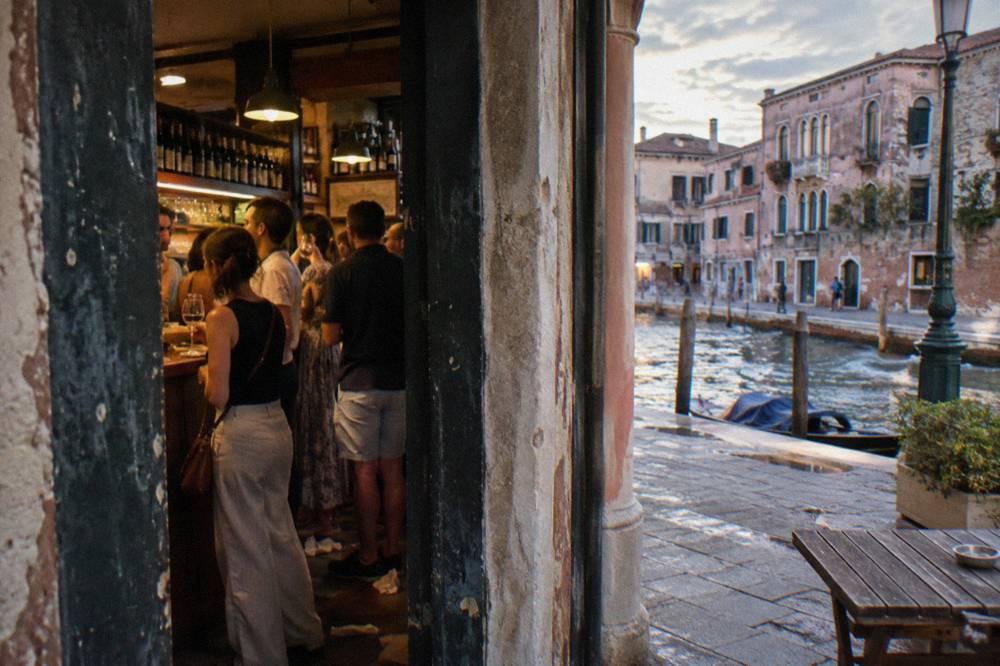
The economics are simple. A group of four that sits down for its cicchetti can add a cover charge for each person before a single piece is eaten, while the same group standing two meters away at the counter pays only for food and drink. In bars with both options, this is a genuine decision, not a style choice. The practice of eating upright with one hand and holding a small glass in the other is not a tourist hardship either; it is how the format has worked for generations of Venetian workers.
Tipping follows the same logic. Current Venice etiquette guidance reports that tipping is optional and not mandatory, appreciated for exceptional service or as a rounding-up, and that virtually nothing is expected when standing for cicchetti. Rounding the counter tab up to the nearest note or coin is a normal, appreciated gesture. Leaving fifteen percent on the counter would be a misunderstanding of the format, not generosity, and staff will not be waiting for it.
“Arrived to Venice this morning, and took the 5pm tour this evening. It was the best tour we have ever experienced! Giorgia was fun and informative. We had a huge and delicious variety of many food stops with beverages. I’d do it again with her in a heartbeat.”
One more rule quietly protects the standing culture. Venice bans drinking from glass containers outside permitted outdoor seating areas and bans takeaway sales of drinks in glass for public consumption, under a municipal regulation reported to carry fines of EUR 25 to 500. That is part of why wine at the counter comes in small glasses meant to be finished where you stand (the municipal regulation is on the comune's site). Check current rules before you travel, as enforcement details can change.
How A Bacaro Crawl Compares To A Guided Tasting Walk
A self-guided crawl is cheaper per piece but costs you the route, the context and the ordering confidence; a guided walk charges one fixed price for a counted set of tastings and drinks, so your bill is known before you leave home. Neither answer is universally right, and the price-sensitive question is really whether you value certainty and commentary over raw economy.
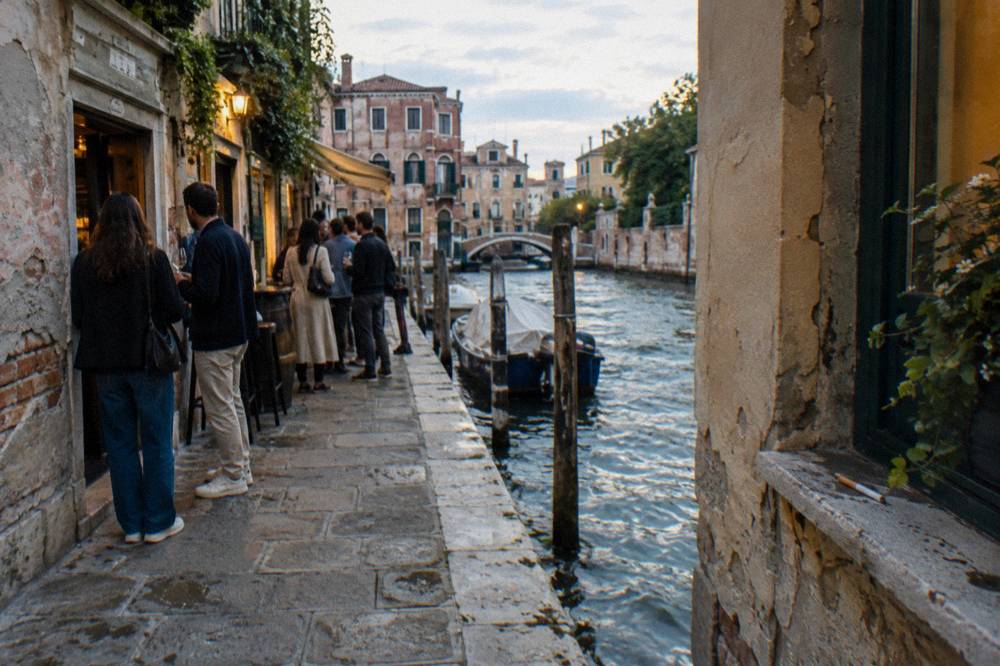
The self-guided version has no ticket. You walk in, point, eat, pay the posted price, and move on. Its hidden costs are time and misses: an hour spent finding bars that are closed, a bar that turns out to price its pieces at the top of the band, a dish you would never have known to order. The savings are real, and for confident travelers who read the guides on how a bacaro crawl works and how to order cicchetti, it is a genuinely good evening.
The guided version converts uncertainty into a fixed fee. The Venice Bacaro Food Tour runs 3 hours 30 minutes and its price and inclusions, tastings and drinks included or not, are stated on the booking page. Comparing a fixed tour price against a self-guided evening is honest only if you count everything on the self-guided side: your pieces at the reported band, your ombre at the reported band, and the value of the stops being pre-vetted. If a tour's fixed price seems high next to six pieces at EUR 2, that comparison has skipped the drinks and the misses. Everything else covered here is indexed on Venice Food Tours.
For price-checkers who want the comparison made concrete, this site's guide to what a Venice food walk costs and what is included breaks the fixed-price side down item by item. The short version: guided walks are not cheap, they are predictable, and for many visitors predictability is what they are buying. If you want the sunset version of the same format, the Venice Food Tour with Sunset Cicchetti and Wine Tasting runs 3 hours with the evening light built in, price on the booking page.
What Wine And Spritz Add To The Total
The drink beside the cicchetti often costs as much as the food: a small ombra of house wine is reported at EUR 1 to 2.50, while a spritz or a named wine pushes the per-stop cost well above the snack it accompanies. Budget the drinks as a separate line, because they are where an economical crawl quietly becomes an expensive one.
The ombra is the traditional pairing and the economical one. It is a small pour of the house wine, around 100 ml, and the reported band of EUR 1 to 2.50 keeps it in step with the cheapest pieces on the counter. Two ombre across two bars is a rounding error. A spritz, the bright orange aperitif the city is famous for, is a different product at a different price point, and it is not part of the cheap tradition even though it feels native. This site's guide to spritz in Venice and the local way of drinking it covers the options.
Named wines climb further. A glass of Prosecco from a recognized producer, or a Soave or a Raboso by the glass, will be priced like a wine-list item rather than a counter item, because that is what it is. None of this is a trap: it is a straightforward product ladder, from the EUR 1.50 ombra to the EUR 4 cicchetti to the named wine above them both. Know which rung you are standing on.
The practical rule for a budget crawl is to alternate. An ombra at the first bar, water at the second, a spritz at the third as the treat. The bacari do not expect a drink with every stop, and Venetians routinely eat a piece at a bar they drink nothing at. Anyone curious about the wider wine landscape behind the ombra can read the Venice wine tasting guide, from ombra to cellars for what lies beyond the house tap.
Where Cicchetti Prices Climb
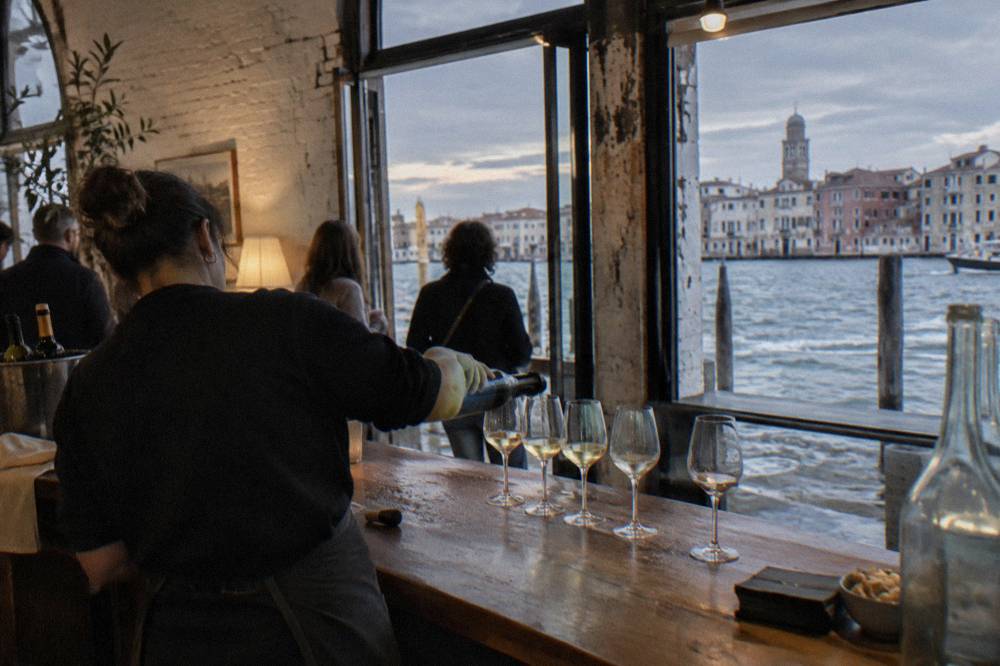
Prices climb toward the top of the reported band, and sometimes beyond the bargain reputation entirely, in the high-traffic strips around St Mark's Square and the main canal-side stretches, while the traditional drinking streets of Cannaregio, San Polo and Dorsoduro hold the lower end. Location pricing is not unique to Venice, but Venice concentrates its foot traffic into a few hundred meters more ruthlessly than most cities.
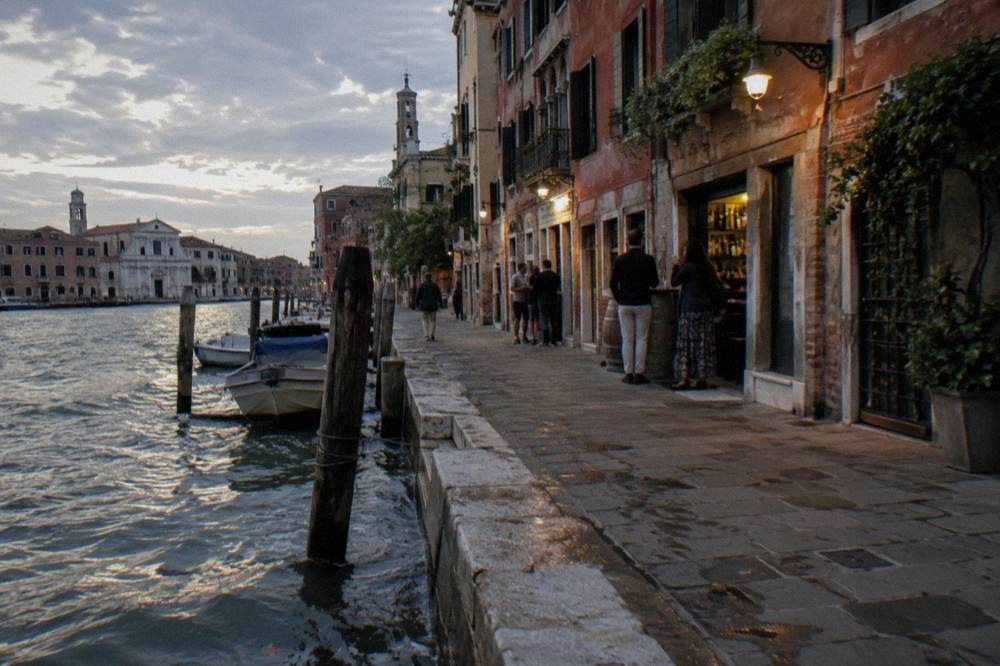
The mechanism is simple: a bar that every visitor passes has no incentive to price for repeat locals, and a bar three bridges away from the watermark has every incentive. The posted price list still applies everywhere, which is your protection. Before ordering anywhere with a view of a major monument, read the card. If the pieces sit at the top of the reported band or above it, walk; within ten minutes you will find a bar where they do not. The neighborhood guide to Venice food by neighborhood, Cannaregio, Dorsoduro and San Polo maps where the traditional drinking streets actually are.
Time of day moves the bill less than place, but it moves the experience. Early evening, when the after-work crowd stands at the counters, is when bars are at their most local and their counters fullest. Mid-afternoon, in a tourist strip, the same bar may feel like a snack kiosk and price accordingly. Neither is a scam; they are two different services, and the price card tells you which one you are getting.
“Loved this tour, learned so much about the history of venice, food, and wine. Would definitely recommend and got so many recommendations to go afterwards. Great to do at the beginning of your stay so you can explore more eateries after.”
Guided walks sidestep this problem entirely, which is a real part of what their fixed price buys. A tour operator's stops are chosen in advance and re-checked, so a crawl led by a local cannot accidentally deliver you into a EUR 4 per piece watermarked bar. That vetting is invisible when it works, which is exactly why it is easy to undervalue when comparing a tour price against a theoretical self-guided tab.
Is A Self-Guided Crawl Really Cheaper?
Yes, a self-guided crawl is almost always cheaper in cash terms, typically by a wide margin over a fixed-price guided walk, and the remaining question is what the saved money buys: your own route, your own pace, and your own mistakes. There are also a few city-level costs and rules that price-checkers should know about before doing the full comparison.
Walking Venice costs nothing, and the crawl neighborhoods sit within easy reach of each other. If your crawl spreads across the lagoon islands or you base yourself further out, vaporetti are the relevant cost: a single 75-minute ticket is reported at EUR 9.50 and a 24-hour pass at EUR 25, per the official ACTV operator pages (the ACTV fare page is the current source). For a crawl within one sestiere, that cost is zero.
The city's day-visitor access fee is not currently a factor. The 2026 trial applied on 60 dates between April and July 2026, at EUR 5 or EUR 10 depending on when it was paid, and it ended: as of 27 July 2026 no fee applies and day visitors need no payment or exemption. It returns in 2027, with dates listed on the official page but amounts not yet published, so check (the official access-fee site) before a 2027 trip. Overnight guests pay the separate tourist tax through their accommodation instead.
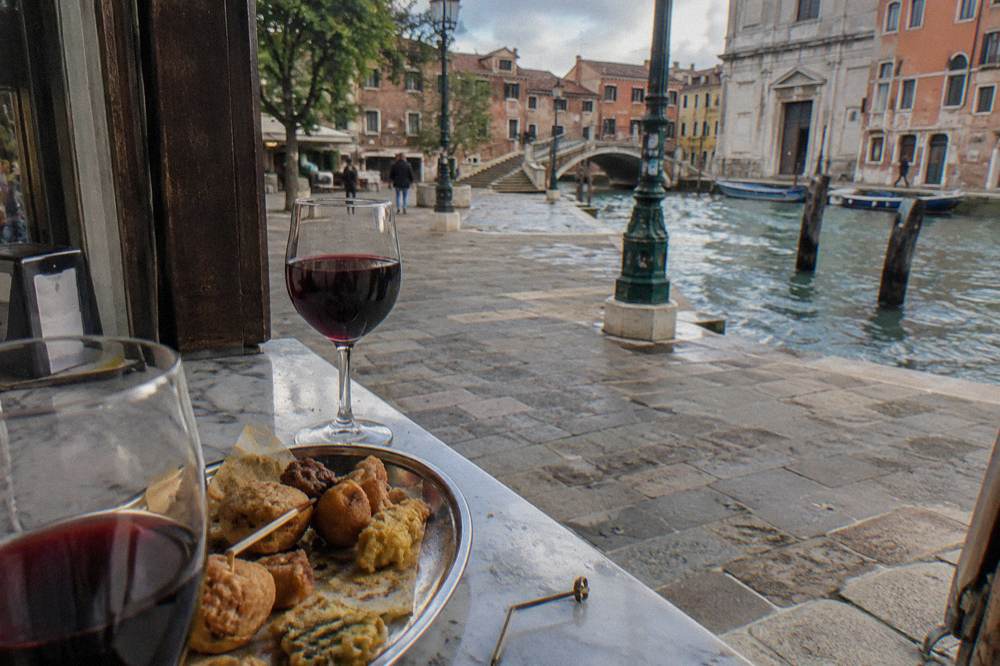
So the full comparison comes down to this. A self-guided evening of, say, five pieces and two ombre, all inside the reported bands, costs less than most sit-down dinners in the city and gives you the genuine local format. A guided walk such as the Venice Bacaro Food Tour costs a fixed price stated on the booking page and converts the whole evening into something you can plan, budget and delegate. Price-checkers who enjoy the hunt should self-guide; anyone who wants the evening guaranteed simple should book, and the sweet spot is often one guided crawl early in a trip to learn the format, then self-guided evenings after.
Common Questions About Cicchetti Prices
Is Cicchetti Expensive?
No. Reported prices run from about EUR 1.50 to 4 per piece, and an evening of several pieces with ombre at EUR 1 to 2.50 each is usually cheaper than a restaurant dinner. What makes it expensive is sitting down, adding spritz and named wines, or grazing only in the high-traffic strips near the main monuments.
How Many Cicchetti Make A Meal?
Five or six pieces is a filling evening for most people, especially with bread-based pieces in the mix. Pieces are priced individually and bars commonly settle the whole counter tab at the end, so keeping a rough count yourself avoids surprises.
Do You Pay Coperto When Eating Cicchetti?
Not usually if you stand at the counter, which is the traditional way. The cover charge, reported at EUR 1 to 5 per person where applied, is a disclosed menu item tied to table service, so taking a table at the same bar can add it to your bill.
Why Do Cicchetti Prices Differ Between Bars?
There is no fixed city tariff; every bacaro posts its own price list. Simpler pieces sit near the bottom of the reported band and elaborate seafood pieces near the top, and bars in the busiest tourist strips price toward the ceiling. Read the posted card before ordering.
Is A Guided Cicchetti Tour Worth It If Cicchetti Are Cheap?
A guided walk is not cheaper than doing it yourself, and it is not trying to be. It buys a fixed, known price, pre-vetted stops and a local who orders for you. For a first visit, one guided crawl plus self-guided evenings after is a common and sensible split.